“When the pandemic hit, it changed the whole atmosphere,” said Lauren Brown.
“You didn’t think it would ever happen here, and then when it started, it was just kind of a like a whirlwind,” added Lacie.
The 21-year-old fraternal twins graduated from Oklahoma City Community College in December. They quickly landed jobs, with the sisters now working together in the ICU at INTEGRIS Southwest Medical Center in Oklahoma City, treating critically ill and Covid-19 patients.
To say the twins are inseparable is an understatement.
“We’ve never had to walk into any situation alone,” said Lauren.
They played the same sports in high school, went to the same college for their undergraduate degrees, and now are both are pursuing their master’s degrees in nursing at Southwestern Oklahoma State University.
“We’ve always had each other. I can’t imagine it any differently; it just sounds lonely,” Lacie quipped in an interview with CNN.
The twins had an early interest in the medical field and decided to become nurses when they were about 12 years old after the family experienced a health crisis.
“My brother Hunter was diagnosed with leukemia at 16,” explained Lacie.
The family spent a lot of time at the hospital, seeing firsthand how much a compassionate and empathetic nurse could do to help patients and their families heal.
“Just seeing the impact that the nurses made that was really changing for me,” Lacie said.
“The nurse is that person there for you day in and day out to see that person get better.”
“It didn’t only change his life, but it also changed our whole family,” added Lauren.
Their brother, now in full remission, also works as a nurse.
For the Browns, helping patients — and their loved ones — is a family business.
“I find it really important to find that connection, they need someone to hold their hand and walk them through it just like those nurses did for our family,” said Lacie.
In this together
Frontline nurses around the world are acknowledging the physical and emotional toll this pandemic has taken on them. Both Lauren and Lacie say this experience is stressful, but they credit each other for the strength to keep going.
“We don’t have to explain it, we could just walk through it together,” said Lacie.
“We are built-in best friends, and I can’t imagine it any differently,” Lauren agreed.
As South Africans we’re suffering from anxiety, insomnia and depression. Plus we’re overeating and under-exercising. Apart from that, though, we’re absolutely fine. Thank you.
A study published by market research company Ipsos says these are all problems arising from the pandemic and lockdown.
And to top off this less-than-rosy picture, it seems that the image we have of ourselves as tough, no-nonsense, take-it-on-the-chin South Africans isn’t quite true either. Because, compared to much of the world, we’re actually faring notably worse than they are.
In fact, we’re whining even more than the Brits, which is surely a concern? Or perhaps South Africans are just more willing to tell the truth to market researchers?
Probing questions as to how we have been impacted
The question asked of us, in an online poll conducted from 7-10 May, was: “Are you suffering from any of the following as a result of Covid-19?â€
Respondents were then given the following list to respond to: insomnia; anxiety; depression; migraines; overeating; undereating; increased smoking; over-exercising; under-exercising; increased alcohol use; and decreased alcohol use. People also had the option to answer ‘none of these’ or ‘prefer not to answer’.
“Only three in every ten online South Africans (30%) indicated that they do not suffer from any of the listed conditions,†says Ipsos. “Males were slightly less open to answering the question than females were.â€
Nearly a third of us are experiencing anxiety
When it comes to anxiety, an average of 31% of South Africans said they were experiencing symptoms. Twenty-five percent of us said we were battling insomnia and 20% of South Africans have been struggling with depression.
It also turns out that we are overeating – 29% of us said ‘yes’ to this condition. The same percentage said ‘yes’ to under-exercising.
Our anxiety levels are the third highest of all the 16 countries included in the study. We were beaten only by Brazil (a mammoth 41%), Mexico (35%) and Russia (32%).
When it comes to insomnia, we’re also up there with the worst nations. Only Mexico (a whopping (38%) and Brazil (26%) are more sleep-stressed. Spain and South Africa tied at 25%.
Globally the big worry is lack of exercise
The biggest worry around the world, though, is lack of exercise. “About one-third of the respondents in 10 countries say they are under-exercising because of COVID-19, with this sentiment highest in Japan (38%), South Korea (37%), Italy (33%), China (31%), Mexico and Russia (30%),†says Ipsos. South Africa comes in at 29%.
“With unlimited exercise hours commencing on June [in South Africa], one can assume that less people will complain about insufficient exercise. But the Level 3 regulations will not make a difference to those suffering from anxiety, overeating, insomnia and depression. Interpreting the table above, women clearly feel that they are suffering more from these conditions than men are,†Ipsos notes.
“In my life, you will see glimpses of your life,” said veteran actor Anupam Kher on 29 May as he announced the digital launch of his autobiographical play Kuch Bhi Ho Sakta Hai.
Kher, through a video message on Twitter, shared that the play will go online on 7Â June 7, on his newly launched website.
In the video shared, the 65-year-old actor said: “15 years back on the 8th of August 2005, I did my play Kuch Bhi Ho Sakta Hai, my one-man autobiographical play when things were not looking good. I was almost on the verge of bankruptcy.”
“So I decided to do a play based on my life, not only on my life but also on the failures. Because frighten you with your shortcomings. So, here I was on stage, laughing at my failures, disasters, and everything that went wrong in my life,” he added.
“My first play, first kiss, first audition, first directorial venture etcetera. I looked at them and laughed. And you know what happened with that….it liberated me from the fear of failure,” the Kuch Kuch Hota Hai star said.
He further explained that he has been doing this play for the past 15 years, and did about 450 shows of the play worldwide.
Towards the end of the one-minute and 58-second video, Kher announced the launch of his website, and said: “the best thing to do is to launch this play on my website.”
“I hope you watch the play, see and discover that in life – Kuch Bhi Ho Sakta Hai (anything can happen),” Kher mentioned as he concluded the video.
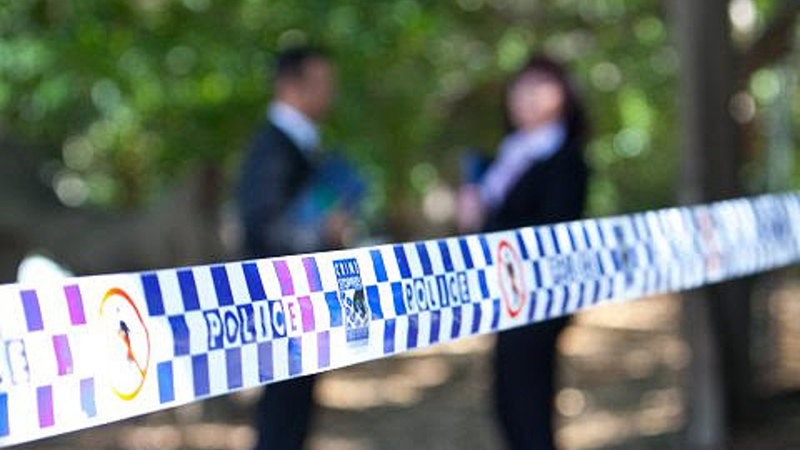
A man is in a critical condition after being shot in the stomach during a confrontation in north Queensland.
Three men arrived at a Collinsville home at 12.45am on Saturday where they argued with a 26-year-old man.
Police said the occupant grabbed a firearm from inside the home before shooting one man in the stomach.
The injured man, 29, was helped into a vehicle and taken to Collinsville Hospital before being airlifted to Townsville Hospital where he remained in a critical but stable condition.
The 26-year-old has been taken into custody and is assisting with the investigation.
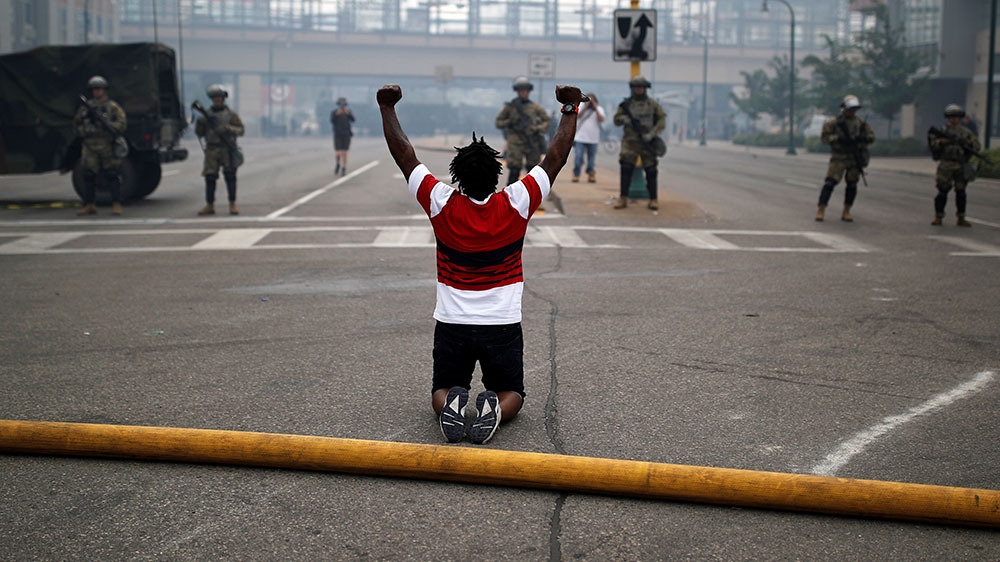
Protests spread widely across the country while Minneapolis defies a curfew.
Chanting “Hands up! Don’t shoot,†and “I can’t breathe,†thousands of protesters gathered in cities across the country on Friday night after a fired Minneapolis police officer was charged with third-degree murder in the death of George Floyd.
As unrest following Mr. Floyd’s death gave way to the third day of mass demonstrations, crowds shut down Los Angeles freeways, clashed with police in Dallas and looted stores in Minneapolis. Even as a curfew was taking effect in Minneapolis, protesters were defying it, gathering in the streets around the police station that was burned a night earlier.
They chanted, “No justice, no peace, prosecute the police!â€
In Atlanta, which saw some of the country’s biggest protests, Mayor Keisha Lance Bottoms declared, “This is not how we change America.†Demonstrators in many other cities, including New York, also gathered to voice their anger after Mr. Floyd’s death:
A large crowd in Washington chanted outside the White House, prompting the Secret Service to temporarily lock down the building. Video on social media showed demonstrators knocking down barricades and spray-painting other buildings.
A march in Houston, where Mr. Floyd grew up, briefly turned chaotic as the windows of a police S.U.V. were smashed and at least 12 protesters were arrested. As a standoff continued, the police shut all roads into and out of downtown. “We don’t want these young people’s legitimate grievances and legitimate concerns to be overshadowed by a handful of provocateurs and anarchists,†the city’s police chief, Art Acevedo, said in an interview.
Images from news helicopters above San Jose, Calif., showed protesters throwing objects at police officers, blocking a major freeway and setting fires downtown. Mayor Sam Liccardo said in an interview that he watched from City Hall as a peaceful protest — what he called people “expressing their righteous outrage on the injustice in Minneapolis†— turned violent.
“Black is not a crime,†declared a small crowd gathered outside Police Headquarters in Detroit. Mary Sheffield, a member of the City Council, led a chant, proclaiming, “I’m fired up. I’m fed up.†The demonstration later swelled to more than 1,000 protesters, who blocked traffic while marching on major thoroughfares leading downtown.
In downtown Dallas, protesters and the police clashed during a demonstration blocks from City Hall. Protesters blocked the path of a police vehicle and then started banging on its hood. Officers eventually responded with tear gas, and a flash-bang was later heard.
Hundreds of protesters converged on Civic Center Park in Denver, waving signs and chanting as Sam Cooke’s “A Change Is Gonna Come†played over a loudspeaker. Some thrust fists in the air and scrawled messages on the ground in chalk, according to a news broadcast.
Protesters in Milwaukee briefly shut down part of a major highway, according to WTMJ-TV, and demonstrators shouted “I can’t breathe†— echoing Mr. Floyd’s anguished plea and the words of Eric Garner, a black man who died in New York police custody in 2014. s
Police officers in Louisville, Ky., were filmed firing what appeared to be pepper spray balls at several hundred demonstrators protesting the police killing of Breonna Taylor. “I’m getting shot! I’m getting shot!†screamed a WAVE 3 News reporter, Kaitlin Rust, who was holding a microphone and wearing a yellow safety vest.
Fired officer is charged with third-degree murder after George Floyd’s death.
The former police officer who was seen on video using his knee to pin down George Floyd, a black man who later died, has been arrested and charged with murder, the authorities announced on Friday, after days of growing unrest in Minneapolis escalated with the burning of a police station and protests that drew attention from the White House.
The former Minneapolis police officer, Derek Chauvin, who is white, was arrested by the Minnesota Bureau of Criminal Apprehension on Friday, the authorities said. Mr. Chauvin, 44, was charged with third-degree murder and second-degree manslaughter, Mike Freeman, the Hennepin County attorney, announced on Friday afternoon.
Mr. Floyd’s relatives said in a statement that they were disappointed by the decision not to seek first-degree murder charges.
Third-degree murder does not require an intent to kill, according to the Minnesota statute, only that the perpetrator caused someone’s death in a dangerous act “without regard for human life.†Charges of first- and second-degree murder require prosecutors to prove, in almost all cases, that the perpetrator made a decision to kill the victim.
Mr. Chauvin was also charged with second-degree manslaughter, a charge that requires prosecutors to prove he was so negligent as to create an “unreasonable risk,†and consciously took the chance that his actions would cause Mr. Floyd to be severely harmed or die.
An investigation into the other three officers who were present at the scene on Monday was ongoing, Mr. Freeman said.
The developments came after a night of chaos in which protesters set fire to a police station in Minneapolis, the National Guard was deployed to help restore order, and President Trump injected himself into the mix with tweets that appeared to threaten violence against protesters.
The tensions in Minneapolis reflected a growing frustration around the country, as demonstrators took to the streets to protest the death of Mr. Floyd and other recent killings of black men and women.
Mr. Floyd, 46, died on Monday after pleading “I can’t breathe†while Mr. Chauvin pressed his knee into Mr. Floyd’s neck, in an encounter that was captured on video.
Gov. Tim Walz of Minnesota, a Democrat, expressed solidarity with the protesters during a news conference on Friday, but said that a return to order was needed to lift up the voices of “those who are expressing rage and anger and those who are demanding justice†and “not those who throw firebombs.â€
President Trump, who previously called the video of Mr. Floyd’s death “shocking,†drew criticism for a tweet early Friday that called the protesters “thugs†and said that “when the looting starts, the shooting starts.†The comments prompted Twitter to attach a warning to the tweet, saying that it violated the company’s rules about “glorifying violence.â€
The president gave his first extensive remarks on the protests later on Friday at the White House, declaring that “we can’t allow a situation like happened in Minneapolis to descend further into lawless anarchy and chaos. It’s very important, I believe, to the family, to everybody, that the memory of George Floyd be a perfect memory.â€
Addressing his earlier Twitter comments, Mr. Trump said, “The looters should not be allowed to drown out the voices of so many peaceful protesters. They hurt so badly what is happening.â€
The spectacle of a police station in flames and a president appearing to threaten violence against those protesting the death of a black manin police custody, set against the backdrop of a coronavirus pandemic that has kept many people from engaging with one another directly for months, added to the anxiety of a nation already plagued by crises.
The protests — some peaceful, some marked by violence — have spread across the country, from Denver and Phoenix to Louisville, Ky., and Columbus, Ohio, with more expected on Friday night.
Mayor Jacob Frey of Minneapolis imposed an 8 p.m. curfew to try to stem the escalating violence that has engulfed the city for the last three nights.
The curfew will extend through the weekend, according to the mayor’s order, expiring at 6 a.m. each morning. During the hours of the curfew, people are prohibited from traveling on public streets or gathering in a public place.
But even as the curfew was taking effect on Friday evening, protesters were defying it, gathering in the streets around the police station that was burned a night earlier.
They chanted, “No justice, no peace, prosecute the police!â€
Law enforcement officials fired tear gas into the streets and patrolled in military vehicles.
Late into the night on Friday, several hundred demonstrators continued to chant near a police station, and people were reportedly taking goods from an office products store.
Governor Walz, who activated the National Guard on Thursday as local police appeared to lose control over angry demonstrators, also extended the curfew to St. Paul and said guardsmen would return to the streets in anticipation of more protests.
In the unrest on Thursday night, more than 160 buildings were destroyed, damaged or looted, The Star Tribune reported. Nearly all businesses in the Seward neighborhood of Minneapolis were shut on Friday, many protected with plywood.
During a 90-minute news conference on Friday, the governor said officials should have anticipated that the protests could become violent, but he said it was unrealistic to expect law enforcement to stop people from coming out to demonstrate, even amid the social-distancing orders that have been imposed during the coronavirus pandemic.
“Watching what happened to George Floyd had people say, ‘To hell with staying home,’†he said. “The idea that we would go in and break up those expressions of grief and rage was ridiculous.â€
Camille J. Gage, 63, an artist and musician who joined the protests, said she was relieved that Mr. Chauvin had been charged. “How can anyone watch that video and think it was anything less?†she said. “Such blatant disregard for another living soul.â€
Kelsey Lindell, 27, an executive producer for a local film company, said all four officers at the scene of the incident should be arrested, charged and punished for murder. “I want to see a higher charge for all the officers,†she said, “but the biggest thing for me is that this guy gets jail time.â€
Mr. Walz acknowledged that the Minneapolis police had lost the trust of city residents,but he implored residents to see the National Guard as a peacekeeping force meant to keep “anarchists†from taking over and destroying more of the city.
“I need to ask Minnesotans, those in pain and those who feel like justice has not been served yet, you need to help us create the space so that justice will be served,†the governor said. “It is my expectation that it will be swift.â€
Days of protests had intensified on Thursday night when the Minneapolis Police Department’s Third Precinct station house was overrun by a crowd of protesters, with some people tossing fireworks and other items at officers, while the police fired projectiles back.
Officers retreated in vehicles just after 10 p.m. Thursday local time as protesters stormed the building — smashing equipment, lighting fires and setting off fireworks, according to videos posted from the scene.
Mr. Frey said at a news conference Friday morning that he had made the call for officers to flee the Third Precinct, saying, “The symbolism of a building cannot outweigh the importance of life.â€
Mr. Frey, a Democrat, said he understood the anger of the city’s residents but pleaded with people to stop destroying property and looting stores. “It’s not just enough to do the right thing yourself,†he said. “We need to be making sure that all of us are held accountable.â€John Harrington, the commissioner of the Minnesota Department of Public Safety, said that arrests had been made related to looting on Thursday night, but that he did not know how many. The arrests included people breaking into the grocery stores, Targets and pharmacies, he said.
A demonstration turned destructive in Atlanta on Friday night, as hundreds of protesters took to the streets, smashing windows and clashing with the police.
They gathered around Centennial Olympic Park, the city’s iconic tourist destination. People jumped on police cars. Some climbed atop a large red CNN sign outside the media company’s headquarters and spray-painted messages on it. Some threw rocks at the glass doors of the Omni Hotel, eventually breaking the glass. Others shattered windows at the College Football Hall of Fame, where people rushed in and emerged with branded fan gear.
Jay Clay, 19, an Atlanta resident and graphic designer, watched the protests from across a street with a mixture of curiosity and solidarity.
“After all this injustice and prejudice, people get fed up,†Mr. Clay said. “I wanted to come down and check it out. But this feels like it’s getting out of hand.â€
Mayor Keisha Lance Bottoms pleaded for calm as the demonstrations unfolded.
“It’s enough. You need to go home,†she said. “We are all angry. This hurts. This hurts everybody in this room. But what are you changing by tearing up a city? You’ve lost all credibility now. This is not how we change America. This is not how we change the world.â€
Bernice King, the youngest daughter of the Rev. Dr. Martin Luther King Jr., also spoke at the news conference, invoking her father’s legacy.
“Violence in fact creates more problems. It is not a solution,†Ms. King said. She said she felt and understood the anger of protesters but added, “There are people who would try to incite a race war in this country. Let’s not fall into their hands and into their trap. There’s another way.â€
As the protests went on, police officers in riot gear were gathering. By 9:30 p.m., tear gas canisters were launched, and a wave of protesters ran back toward the park.
Tensions flared in New York for the second night in a row as thousands of protesters stormed the perimeter of Barclays Center in Brooklyn, trading projectiles of plastic water bottles, debris and tear gas and mace with police officers.
The protest had begun peacefully Friday afternoon, with hundreds chanting “Black lives matter†and “We want justice†in downtown Manhattan. But the demonstrations took a turn in Brooklyn, where officers made between 50 and 100 arrests, a senior police official said.
Officers with twist-tie handcuffs hanging from their belts stood next to Department of Corrections buses and squad cars with lights flashing, encircling the perimeter. A police helicopter and a large drone whirred in the hot air overhead.
Protesters were later seen throwing water bottles, an umbrella and other objects at officers, who responded by shooting tear gas into the crowd.
As that crowd scattered, protesters gathered in the streets in the nearby Fort Greene neighborhood, continuing to chant at the police. An empty patrol van was set ablaze, then pillaged, as people pried the doors off the hinges. Fireworks were thrown into the burned shell of the vehicle. Scribbled on the hood was the phrase “dead cops.â€
By 10 p.m., riot police had descended on the neighborhood. Another police official had described the scene in parts of the borough as “out of control.â€
Earlier in the evening, several hundred people filled Foley Square near the city’s criminal courthouses. After a man in a green sweatshirt crossed a police barricade, he was swarmed by officers while protesters screamed. He was led away on foot in handcuffs.
“It was kind of his mistake,†said Jason Phillips, 27, of Queens. “But they were trying to push him back, and as they pushed him back, he slipped, and they took that as some type of threat.â€
Despite the frustrations of demonstrators on Friday, the police said the number of people detained was much smaller than the night before, when 72 people were arrested.
In a probable cause affidavit released on Friday after the charges against Mr. Chauvin were filed, prosecutors said that the former officer held his knee to Mr. Floyd’s neck for more than eight minutes. “Two minutes and 53 seconds of this was after Mr. Floyd was non-responsive,†the affidavit said.
But preliminary results from an autopsy indicated that Mr. Floyd did not die from suffocation or strangulation, prosecutors wrote, and that “the combined effects†of an underlying heart condition, any potential intoxicants and the police restraint likely contributed to his death. He also began complaining that he could not breathe before he was pinned down, the affidavit said.
The officers’ body cameras were running throughout the encounter, prosecutors said.
Four officers responded to a report at about 8 p.m. on Monday about a man suspected of making a purchase from a store with a fake $20 bill, prosecutors said. After learning that the man was parked near the store, the first two responding officers, who did not include Mr. Chauvin, approached Mr. Floyd, a former high school sports star who worked as a bouncer at a restaurant in Minneapolis.
Mr. Floyd, who was in a car with two other people, was ordered out and arrested. But when the officers began to move him toward a squad car, he stiffened and resisted, according to the affidavit. While still standing, Mr. Floyd began to say he could not breathe, the affidavit said.
That was when Mr. Chauvin, who was among two other officers who arrived at the scene, got involved, prosecutors said. Around 8:19 p.m., Mr. Chauvin pulled Mr. Floyd out of the squad car and placed his knee onto Mr. Floyd’s neck area, holding him down on the ground while another officer held his legs. At times, Mr. Floyd pleaded, the affidavit said, saying, “I can’t breathe,†“please†and “mama.â€
“You are talking fine,†the officers said, according to the affidavit, as Mr. Floyd wrestled on the ground.
At 8:24 p.m., Mr. Floyd went still, prosecutors said. A minute later, one of the other officers checked his wrist for a pulse but could not find one. Mr. Chauvin continued to hold his knee down on Mr. Floyd’s neck until 8:27, according to the affidavit.
The other officers, who have been identified as Thomas Lane, Tou Thao and J. Alexander Kueng, are under investigation. Mr. Freeman, the county attorney, said he expected to bring more charges in the case but offered no further details.
Richard Frase, a professor of criminal law at the University of Minnesota, said it was reasonable for prosecutors to charge Mr. Chauvin with third-degree murder, as opposed to a more severe form of murder, which would require proving that Mr. Chauvin intended to kill Mr. Floyd.
Professor Frase said the case against Mr. Chauvin appeared to be even stronger than the one that Hennepin County prosecutors brought against Mohamed Noor, a former Minneapolis police officer who shot and killed Justine Ruszczyk in 2017.
Mr. Noor was charged with the same combination of crimes, third-degree murder and second-degree manslaughter, and was convicted of both.
In that case, Professor Frase said, the officer had seemingly panicked and fired a single shot. “There’s a question of whether he even had time to be reckless,†he said, referring to Mr. Noor. “Here, there’s eight minutes.â€
The criminal complaint against Mr. Chauvin, Professor Frase said, did not identify any specific motive for officers to kill Mr. Floyd, which he said essentially ruled out first or second-degree murder unless additional evidence surfaced.
Ben Crump, a civil rights lawyer representing Mr. Floyd’s family, released a statement on Friday calling the arrest of Mr. Chauvin “a welcome but overdue step on the road to justice.†But he said the charges did not go far enough.
“We expected a first-degree murder charge. We want a first-degree murder charge. And we want to see the other officers arrested,†said the statement, which was attributed to Mr. Floyd’s family and to Mr. Crump.
“The pain that the black community feels over this murder and what it reflects about the treatment of black people in America is raw and is spilling out onto streets across America,†the statement said.
Professor Frase said he expected Mr. Chauvin’s lawyers to seize on the preliminary autopsy findings that showed that Mr. Floyd had not died of asphyxiation, which could form the basis for an argument that there was no way Mr. Chauvin could have expected him to die. But Professor Frase said another common strategy used by police officers facing charges of brutality — arguing that they were in harm’s way — may be unlikely to convince a jury.
“In this case, there was nobody but Mr. Floyd in danger,†he said. “And there was all that time when it seems there was no need to keep kneeling on his neck like that.â€
A government drone in the skies over Minneapolis stokes civil liberties concerns.
A Predator drone operated by the federal Customs and Border Protection agency flew a surveillance mission over Minneapolis on Friday morning as the city reeled from days of escalating violence, stoking suspicion and prompting criticism from civil liberties groups.
An agency spokesman said in a statement that the unmanned aircraft “was preparing to provide live video to aid in situational awareness at the request of our federal law enforcement partners in Minneapolis.â€
But after more than an hour flying in a holding pattern at 20,000 feet over the city, according to publicly available flight data, the drone returned to its base in North Dakota. “The requesting agency determined that the aircraft was no longer needed,†the statement said.
In recent years, U.S. government agencies have used surveillance aircraft to monitor protests in American cities. The American Civil Liberties Union, which is suing the Baltimore Police Department to block its surveillance plane program, called on Friday for Customs and Border Protection to immediately halt the use of its drone over Minneapolis.
“This rogue agency’s use of military technology to surveil protesters inside U.S. borders is deeply disturbing,†Neema Singh Guliani, a lawyer for the group, said in a statement.
The tweet from President Trump suggesting that protesters in Minneapolis could be shot violated Twitter’s rules against “glorifying violence,†the company said on Friday, escalating tensions between the president and his favorite social media megaphone and injecting Mr. Trump into a growing crisis over police abuse and race that will be another test of his ability to lead an anxious nation.
The company prevented users from viewing Mr. Trump’s message, which contained the phrase, “when the looting starts, the shooting starts,†without first reading a brief notice describing the rule violation and also blocked users from liking or replying to Mr. Trump’s post. But the site did not take the message down, saying it was in the public interest for the president’s words to remain accessible.
Mr. Trump attempted to explain his earlier tweets in new postings on Friday afternoon. “Looting leads to shooting,†he said, pointing to incidents in Minneapolis and Louisville, Ky., during protests in both places this week. “I don’t want this to happen, and that’s what the expression put out last night means.â€
When a reporter at the White House later asked whether Mr. Trump was aware of the racist history of the phrase he had used, Mr. Trump said he had heard it for years, but said he was not aware that it had been used by Walter E. Headley, a former Miami police chief, during a news conference in December 1967. The chief’s comment further inflamed racial tensions in that city, and riots broke out the following year.
“When there’s looting,†Mr. Trump said, explaining the intentions behind his tweet, “people get shot and they die.â€
Mr. Trump also said that he had spoken to members of Mr. Floyd’s family, calling them “terrific people.â€
Mr. Trump had begun tweeting about the unrest in Minneapolis around 1 a.m., as cable news showed a Minneapolis police station engulfed in a fire set by protesters. He called the protesters “thugs.â€
Chief Headley attracted national attention in the late 1960s for using shotguns, dogs and other heavy-handed policies to fight crime in the city’s black neighborhoods. “We haven’t had any serious problems with civil uprising and looting, because I’ve let the word filter down that when the looting starts, the shooting starts,†he said in 1967, adding, “we don’t mind being accused of police brutality.â€
When asked about Mr. Trump’s tweet on Friday, Governor Walz said, “It’s just not helpful.†“Anything we do to add fuel to that fire is really, really challenging,†he added.
Obama and Biden addressed Mr. Floyd’s death.
Former President Barack Obama on Friday called on the nation to work together to create a “new normal†in which bigotry no longer infects institutions, while former Vice President Joseph R. Biden Jr. used a short speech to call for “justice for George Floyd.â€
In a statement posted to Twitter, Mr. Obama said, “It’s natural to wish for life ‘to just get back to normal’ as a pandemic and economic crisis upend everything around us.†But for millions of Americans, being treated differently because of race is “normal,†Mr. Obama said, referencing two other recent cases: Ahmaud Arbery, who was killed after two men confronted him while he was running in South Georgia, and Christian Cooper, who was bird watching in Central Park when a woman called police to say she was being threatened.
“This shouldn’t be ‘normal’ in 2020 America,†Mr. Obama said, adding,
“It falls on all of us, regardless of our race or station, to work together to create a ‘new normal’ in which the legacy of bigotry and unequal treatment no longer infects our institutions or our hearts.â€
Mr. Biden, the presumptive Democratic presidential nominee, rebuked President Trump for his response to the protests in Minneapolis.
“This is no time for incendiary tweets,†Mr. Biden said in a brief speech delivered via livestream. “It’s no time to encourage violence. This is a national crisis, and we need real leadership right now. Leadership that will bring everyone to the table so we can take measures to root out systemic racism.†He did not mention Mr. Trump by name.
Describing the United States as “a country with an open wound,†Mr. Biden called for “real police reform†so that “bad cops†are held accountable.
Mr. Biden said he had just spoken with members of Mr. Floyd’s family, and he addressed them as he concluded his speech. “I promise you, I promise you, we’ll do everything in our power to see to it that justice is had in your brother, your cousin’s case,†he said.
Gov. Andrew M. Cuomo of New York, who has risen on the national political stage for his coronavirus response, spoke up in defense of the protesters in Minnesota.
“I stand figuratively with the protesters,†he said on Friday. “I stand against the arson and the burglary and the criminality and I think all well-meaning Americans stand with the protesters. Enough is enough.â€
Reporting was contributed by Victoria Bekiempis, Katie Benner, Nicholas Bogel-Burroughs, Audra D.S. Burch, Jo Corona, Maria Cramer, Julie Davis, Sopan Deb, Richard Fausset, Thomas Fuller, Katie Glueck, Russell Goldman, John Eligon, Matt Furber, Maggie Haberman, Christine Hauser, Jack Healy, Thomas Kaplan, Michael Levenson, Dan Levin, Neil MacFarquhar, Eric Melzer, Sarah Mervosh, Elian Peltier, William K. Rashbaum, Katie Rogers, Edgar Sandoval, Marc Santora, Nate Schweber, Derrick Bryson Taylor, Marina Trahan Martinez, Neil Vigdor, Mike Wolgelenter and Raymond Zhong.
Police in Louisville, Kentucky shot pepper balls at a news team as they were broadcasting live coverage of a Friday protest.
After indicating that she was “behind the line” created by officers, reporter Kaitlin Rust of television station WAVE was hit by a non-lethal offensive weapon by an alleged member of the Louisville Metro Police Department. In the video, the officer can also be seen aiming at the cameraman.
“I’ve been shot!” Rust screamed after the weapon was fired. She then said it was only a rubber bullet and that she was fine. Rust then corrected herself and said she had been shot with a pepper ball.
The officer then pointed his weapon at the news photographer. “They’re aiming at us,” Rust said. “They’re aiming directly at us.”
News anchors in the WAVE studio commenting off-screen said, “They’re shooting at our crew,” as Louisville Metro Police Department attempted to form a line across a street in the background. Another off-screen voice said, “Do they not know that—obviously, they can see the camera.”
Newsweek reached out to Rust and WAVE for comment. This story will be updated with any response.
Police in riot gear stand in formation during protests on Friday in Louisville, Kentucky. Brett Carlsen/Getty
Like other cities across the U.S., Louisville has been the location of demonstrations sparked by the death of Minneapolis resident George Floyd, who died while in police custody on Monday. Protesters have been calling for justice in the Floyd case. In Louisville, demonstrators have been decrying not only Floyd’s death but the shooting of Breonna Taylor by members of the LMPD.
In March, Taylor was shot at least eight times in her apartment as officers served a no-knock search warrant. The terms of the warrant stated that officers did not have to announce their presence or introduce themselves as police. Taylor’s partner, Kenneth Walker, believed their home was being invaded and fired upon the officers. Officers shot back, hitting Taylor in the process.
Although the officers were searching for narcotics, none were found in Taylor’s apartment.
Demonstrations in Louisville over Taylor’s shooting resulted in seven people being shot Thursday night. None of the injuries were reported as fatal. Louisville Mayor Greg Fischer said Friday that the LMPD had not opened fire during the demonstration.
Fischer also announced that the usage of no-knock warrants would be suspended in Louisville.
Taylor’s mother, Tamika Palmer, said Friday she was appreciative of people demanding that justice be done while decrying the violence evidenced during the protests.
“Please keep demanding justice and accountability,” Palmer said. “But let’s do it the right way, without hurting each other. We can, and we will, make some real change here.”
After the revocation of Jammu and Kashmir special status with the abrogation of Article 370 of the Constitution in August last year, the Indian Army has set out to buy land for its camps in the Valley.
In the first such instance, the Army has approached Baramulla administration, evincing interest in buying 129 kanal (6.5 hectares) of land at Kreeri high ground at Tapperwari in Pattan area of the north Kashmir district, where the troops are already temporarily stationed, according to a PTI report quoting defence sources.
The sources told PTI that the Quartermaster for Commanding officer of the 19 Infantry Division Ordnance Unit has written to the district administration, requesting it to inform if the administration wishes to sell the land to the Indian army.
The Army has sought the district administration reply by May 30, the PTI reported quoting the sources. It is perhaps for the first time that the Army has directly written to the department concerned for purchasing land in the Valley.
Prior to the abrogation of Article 370 on August 5 last year, the defence estates officer would write to Jammu and Kashmir government for getting lease of the land required by the Army.
Article 370 deals with special powers conferred upon the state of Jammu and Kashmir. It allows the state constituent Assembly to make its own Constitution, thereby giving it an “autonomous state†power. After the accession of the state to India in 1947, Article 370 served as a “mechanism for managing Centre-state relations with specific reference to Jammu and Kashmir,†senior journalist, late B G Verghese, had said in his book ‘A J&K Primer’.
Apart from the autonomy, Article 370 also lends other powers such as the need of “concurrence of the state government†if the central government plans to make amendments to the concurrent list of subjects.
A number of metropolitan areas have seen large-scale demonstrations on Friday over the death of a Minneapolis man in police custody on Memorial Day.
USA TODAY
Outrage over the death of George Floyd sparked protests in cities across the nation on Friday night, hours after a former Minneapolis police officer was arrested and charged with his murder.
Activists say it’s just another example of systematic racism in law enforcement, the latest in a series of high-profile black deaths that have exacerbated and inflamed racial tensions nationwide.Â
Former officer Derek Chauvin is facing third-degree murder and manslaughter charges after a bystander’s video circulated of him holding his knee to Floyd’s neck for more than eight minutes before Floyd died. But many protesters believe Chauvin’s should face more severe charges and other officers connected to the Floyd’s death should also be charged.
Demonstrators in many cities also gathered to protest local deaths at the hands of law enforcement.
In Indianapolis, they held a sign that read “Justice for Dreasjon Reed” — Reed died after a police pursuit that was broadcast on Facebook Live. In Milwaukee, they invoked the name of Joel Acevedo, who died after an altercation with a police officer in April.
As protests continue into their fourth night in Minneapolis, here’s what’s happening in cities around the nation:
Atlanta: Protesters clash with police, vandalize CNN headquarters
Protesters set a police car on fire, struck officers with bottles, vandalized the headquarters of CNN, and broke into a restaurant in downtown Atlanta as a demonstration that began peacefully became chaotic.
Protesters used barricades to break police vehicle windshields and jumped from car to car. Hundreds of the protesters confronted police outside CNN headquarters. They spray-painted the large, iconic CNN logo outside the building, breaking a windowed entrance. One protester climbed on top of the sign and waved a “Black Lives Matter†flag to cheers from the crowd.
Protesters were also walking on the interstate in downtown Atlanta and appeared to be trying to block traffic. The Georgia State Patrol was on the scene as of 9:30 p.m.
Earlier, as the protest appeared more calm, Kaity Brackett, 27, said she came out to the protest because she thinks the entire criminal justice system needs to be overhauled, starting with policing. She said the Ahmaud Arbery killing was a catalyst for her and referred to his death as a lynching. Arbery was killed on Feb. 23 by a former district attorney investigator and his son, who were not arrested until after video emerged months later.
Denver: Police use flash grenades, tear gas to hold off protesters at Capitol
People began to gather as early as 12:30 p.m. for a march to the Capitol, where protesters stood on the steps and chanted for change. They later took both sides of nearby North Broadway Street before heading to Civic Center Park to hear from speakers.
About an hour after the crowd had mostly dispersed, they regathered near the capitol, prompting law enforcement to push them back from the street to keep traffic moving through the area. Tensions escalated into the night.
– Bethany Baker, The Coloradoan (Fort Collins, Colo.)
San Jose, California: Protesters block five-lane Silicon Valley freeway
Protesters marched through the capital of the Silicon Valley, temporarily stalling traffic for about an hour on a five-lane freeway and prompting police intervention.
Video footage from KGO-TV showed vehicles at a virtual standstill on the southbound lanes of U.S. 101 in San Jose until protesters moved into the downtown area. Police later fired tear gas and nonlethal projectiles into a crowd that had grown to about 1,000 people, and officers in riot gear lined up to prevent them from further disrupting traffic near city hall, KPIX-TV reported.
Protesters smashed the windows of police cars and threw water bottles, according to TV station.
Elsewhere in California, hundreds of protesters demonstrated peacefully on the streets in the capital city of Sacramento, gathering near a police headquarters and shouting at police.
Des Moines, Iowa: Protest grows violent, bricks thrown at police carsÂ
Just before 8 p.m., protesters appeared to throw bricks at police cars, prompting officers in riot gear to push against protesters. The scene escalated, with at least one officer spraying chemical irritants on the crowd, including a Des Moines Register photographer.
Indianapolis: Black Lives Matter streams protest on Facebook Live
Dozens gathered in downtown Indianapolis to protest a fatal shooting earlier this month by an Indianapolis Metropolitan Police officer.
Around 7:30 p.m., the protest started to feel more tense, with the number of protesters growing to more than 50. They began engaging verbally with a vastly beefed up law enforcement presence, as the Indianapolis Metropolitan Police Department flooded the scene with officers and squad cars.
A local Black Lives Matter group broadcast the demonstration on Facebook Live, and called on “white allies” to move to the front to form a human barrier between black protesters and the assembled police officers.
Protesters linked arms and shouted “No justice! No peace!”
Hundreds of protesters gathered peacefully in front of police headquarters in Knoxville, Tennessee, in a rally hosted by Black Lives Matter Knoxville.
Davis Hayes, who ran for Knoxville City Council last year, led the crowd in a chant: “We have nothing to lose for our chains.â€
Alison Rose, who works with the National Alliance on Mental Illness, was the first white speaker at the protest, and she spoke directly to other white people.
“White people, get it together. Do the work. Educate yourselves,†she said into a microphone. “Get yourself so deep in history that you will find out the truth: Black history is this country’s history.â€
Louisville, Kentucky: Demonstrators gather again after Thursday violence
After violent protests erupted Thursday, groups of protesters continued to gather Friday night demanding justice for Breonna Taylor, an African American woman killed in her apartment by police officers in March.
Around 9:30 p.m. reports of loud bangs came followed by tear gas. Earlier, protesters pulled down the American and Kentucky flags in front of the Hall of Justice and set them ablaze. Moments later, some protesters threw objects at the building’s glass doors, more items were lit on fire and there was three loud bangs went off.Â
AÂ group of more than 1,000 people were estimated to be gathering around the Hall of Justice.
Memphis, Tennessee: About 300 protesters gather for third straight day
For the third straight day, protesters took to the streets of Memphis to speak out against police brutality and the recent deaths of three African Americans at the hands of police.
The first demonstrates arrived just before 6:30 p.m. Within an hour, the crowd had grown to about 300, the largest of the of the protests so far.
That was despite a series of road closures set up by the Memphis Police Department at every entrance into the area. While Wednesday, the overarching emotion seems to be anger, Friday night’s protest seemed to be about unity and healing.
– Desiree Stennett, Micaela A Watts and Laura Testino, The Commercial Appeal (Memphis, Tenn.)
Milwaukee: Protesters march in ‘solidarity,’ stop Interstate 43 trafficÂ
Hundreds rallied to denounce the police killing of George Floyd and other acts of police misconduct across the country before marching to Interstate 43 and shutting down part of the freeway.
The protest began with a moment of silence to honor Floyd, who died Monday after a Minneapolis police officer kneeled on his neck for more than eight minutes as he was gasping for air and pleading that he couldn’t breathe.
“We’re here in solidarity,” said Vaun Mayes, a community activist who organized the event outside the Wisconsin Black Historical Society.Â
Hours later, another demonstration took place in the city’s Jackson Park neighborhood to protest the death of Joel Acevedo, who died after an altercation with an off-duty Milwaukee police officer. The officer, Michael Mattioli, is accused of putting Acevedo in a fatal “choke hold” during a fight at his house and has been charged with reckless homicide.
Outside the White House on Friday, Secret Service could be seen after 7 p.m. taking at least one person into custody. Videos showed a large group of protesters gathering, with some burning flags and knocking over barricades. The protesters have moved from the White House to another part of the city.
Multiple reporters posted that they were inside the White House and that the Secret Service was not letting them leave the grounds during the lockdown.
Contributing:Â Savannah Behrmann, USA TODAY;Â The Associated Press
Read or Share this story: https://www.usatoday.com/story/news/nation/2020/05/29/george-floyd-protests-intensify-atlanta-memphis-indianapolis-milwaukee/5288305002/
Protesters in the United States city of Minneapolis welcomed Friday’s murder charge against the white officer who knelt on the neck of George Floyd, an unarmed black man, but demanded the three other officers involved be arrested as well.
“It’s an absolute outrage because it isn’t just one officer who is responsible for the murder of George Floyd,” said Ayaan Dahir, a Minneapolis resident and activist. “They all need to be arrested and charged.”
More:
Floyd died on Monday after policeman Derek Chauvin pinned him to the ground as he repeatedly pleaded: “I can’t breathe.”
An eight-minute video of the incident shows bystanders urging Chauvin to get off of Floyd, but the officer continues to pin him down even as he goes motionless.
Chauvin, who was fired after the incident, was arrested on Friday, more than three days after Floyd died. He was charged with third-degree murder and manslaughter.
“We have evidence, we have the citizen’s camera’s video, the horrible, horrific, terrible thing we have all seen over and over again, we have the officer’s body-worn camera, we have statements from some witnesses,” said Hennepin County Attorney Mike Freeman in announcing the charges.
A protester reacts while gathering with others outside the city hall in Minneapolis, Minnesota [Carlos Barria/Reuters]
Three other officers involved were fired but have not been charged, angering protesters and community leaders who have demanded all four officers be held accountable.
“The unfortunate situation here is that because police are involved, the law protects them as well as the system,” said Jaylani Hussein, the director of the Minnesota chapter of Council on American-Islamic Relations.
“If they didn’t listen to George’s cries for help, they should have listened to the bystanders who were there witnessing this unfortunate situation,” Hussein told Al Jazeera. “All four need to be arrested and offered no bail.”
Protesters undeterred by curfew
The killing of Floyd has set off angry protests in Minneapolis and in major cities across the US.
Protesters in Minneapolis rallied on Friday night, despite a city-imposed curfew that began at 8pm (01:00 GMT).
Some protesters said they will continue to defy the curfew until all the officers involved in Floyd’s death are arrested, local media reported.
“They can’t arrest us all,” one protest leader was quoted as saying.
The Minnesota Freedom Fund, an organisation that pays bail for low-income individuals who are arrested, encouraged protesters planning to stay past curfew to write the group’s and partner group’s phone numbers on their arms in case of arrest.
Friday’s curfew, which will last until 6am (11:00 GMT) on Saturday and begin again later that night, was announced after three nights of protests rocked Minneapolis, with thousands taking to the streets to demand justice for Floyd and an end to police violence.
While the protests started peacefully, they descended into chaos, with fires and looting. Police have responded to protesters with tear gas and non-lethal projectiles. Protesters also say police have antagonised them even when they are marching peacefully. At one point a cable television crew was arrested – an incident for which authorities later apologised.
A man reacts as he confronts US National Guard members guarding an area of Minneapolis, Minnesota [Carlos Barria/Daylife]
On Thursday night, officers retreated from a police precinct as protesters overran the building, chanting, “no justice, no peace”. Some set fires in the building. Protesters rallied outside a different police building on Friday, a livestream by Unicorn Riot, an independent media organisation showed.Â
“It’s very clear that there is a lot of anger, not just about the death of George Floyd, but all the people who have been killed by police,” Dahir told Al Jazeera.
Responding to the violence, Minnesota Governor Tim Walz declared a state of emergency and dispatched the National Guard to the city. National Guard members could be seen in Minneapolis and neighbouring Saint Paul by mid-Thursday.
In addition to charges brought against all the officers, protesters are also demanding a special prosecutor be named in the case, saying they do not trust Hennepin County Attorney Freeman and pointing to the fact it took more than three days for an arrest to be made.
“That arrest of the officer should have happened since day one. And everything that has happened since, I hold Mike Freeman directly responsible,” Dahir said.
“What’s been happening – this uprising, this rebellion – is something that organisers have been saying for years was going to happen eventually,” Dahir said. “This isn’t something that can be undone. It’s not an accident, it’s not a coincidence, it is something that has been brewing for a long time and this is the straw that broke the camel’s back.â€
You know, I just had an opportunity to speak with the Floyd family, a group of them, most of them. They’re a close, decent, honorable family, loving one another. And once again we heard the words, and they heard them, “I can’t breathe†— an act of brutality so elemental, it did more than deny one more black man in America his civil rights and his human rights. It denied him of his very humanity. It denied him of his life, depriving George Floyd as it deprived Eric Garner of one of the things every human being must be able to do: breathe. So simple, so basic, so brutal.
You know, the same thing happened with [Ahmaud] Arbery, the same thing happened with Breonna Taylor, the same thing with George Floyd. We’ve spoken their names aloud. We’ve cried them out in pain and in horror. We’ve chiseled them into long-suffering hearts. They’re the latest additions to the endless list of stolen potential wiped out unnecessarily. You know, it’s a list that dates back more than 400 years. Black men, black women, black children.
The original sin of this country still stains our nation today, and sometimes we manage to overlook it. We just push forward with the thousand other tasks in our daily life, but it’s always there, and weeks like this, we see it plainly that we’re a country with an open wound. None of us can turn away. None of us can be silent. None of us can any longer, can we hear the words “I can’t breathe†and do nothing. We can’t fail victims, like what Martin Luther King called “the appalling silence of good people.â€
Every day, African-Americans go about their lives with constant anxiety and trauma, wondering who will be next. Imagine if every time your husband or son, wife or daughter left the house, you feared for their safety from bad actors and bad police. Imagine if you had to have that talk with your child about not asserting your rights, taking the abuse handed out to them so, just so they can make it home. Imagine having police called on you just for sitting in Starbucks or renting an Airbnb or watching birds. This is the norm black people in this country deal with. They don’t have to imagine it. The anger and frustration and the exhaustion is undeniable.
But that’s not the promise of America. It’s long past time that we made the promise of this nation real for all people. You know, this is no time for incendiary tweets. It’s no time to encourage violence. This is a national crisis, and we need real leadership right now. Leadership that will bring everyone to the table so we can take measures to root out systemic racism. It’s time for us to take a hard look at the uncomfortable truths. It’s time for us to face that deep open wound we have in this nation.
We need justice for George Floyd. We need real police reform to hold cops to a higher standard that so many of them actually meet, that holds bad cops accountable and repairs relationships between law enforcement and the community they’re sworn to protect. We need to stand up as a nation with the black community, with all minority communities, and come together as one America.
That’s the challenge we face. You know, it’s going to require those of us who sit in some position of influence to finally deal with the abuse of power. The pain is too immense for one community to bear alone. I believe it’s the duty of every American to grapple with it, and to grapple with it now. With our complacency, our silence, we are complicit in perpetuating these cycles of violence.
Nothing about this will be easy or comfortable, but if we simply allow this wound to scab over once more without treating the underlying injury, we’ll never truly heal. The very soul of America is at stake. We must commit as a nation to pursue justice with every ounce of our being. We have to pursue it with real urgency. We’ve got to make real the promise of America, which we’ve never fully grasped: that all men and women are equal, not only in creation but throughout their lives.
Again, George’s family, thanks for taking the time to talk to me. I promise you, I promise you, we’ll do everything in our power to see to it that justice is had in your brother, your cousin’s case. I love you all, and folks, we’ve got to stand up. We’ve got to move. We’ve got to change.
I want to share parts of the conversations I’ve had with friends over the past couple days about the footage of George Floyd dying face-down on the street under the knee of a police officer in Minnesota.
The first is an email from a middle-aged African-American businessman.
“Dude I gotta tell you the George Floyd incident in Minnesota hurt. I cried when I saw that video. It broke me down. The ‘knee on the neck’ is a metaphor for how the system so cavalierly holds black folks down, ignoring the cries for help. People don’t care. Truly tragic.â€
Another friend of mine used the powerful song that went viral from 12-year-old Keedron Bryant to describe the frustrations he was feeling.
The circumstances of my friend and Keedron may be different, but their anguish is the same. It’s shared by me and millions of others.
It’s natural to wish for life “to just get back to normal†as a pandemic and economic crisis upend everything around us. But we have to remember that for millions of Americans, being treated differently on account of race is tragically, painfully, maddeningly “normal†— whether it’s while dealing with the health care system, or interacting with the criminal justice system, or jogging down the street, or just watching birds in a park.
This shouldn’t be “normal†in 2020 America. It can’t be “normal.†If we want our children to grow up in a nation that lives up to its highest ideals, we can and must be better.
It will fall mainly on the officials of Minnesota to ensure that the circumstances surrounding George Floyd’s death are investigated thoroughly and that justice is ultimately done. But it falls on all of us, regardless of our race or station — including the majority of men and women in law enforcement who take pride in doing their tough job the right way, every day — to work together to create a “new normal†in which the legacy of bigotry and unequal treatment no longer infects our institutions or our hearts.
We use cookies on our website to give you the most relevant experience by remembering your preferences and repeat visits. By clicking “Accept”, you consent to the use of ALL the cookies.
This website uses cookies to improve your experience while you navigate through the website. Out of these, the cookies that are categorized as necessary are stored on your browser as they are essential for the working of basic functionalities of the website. We also use third-party cookies that help us analyze and understand how you use this website. These cookies will be stored in your browser only with your consent. You also have the option to opt-out of these cookies. But opting out of some of these cookies may affect your browsing experience.
Necessary cookies are absolutely essential for the website to function properly. These cookies ensure basic functionalities and security features of the website, anonymously.
Cookie
Duration
Description
cookielawinfo-checbox-analytics
11 months
This cookie is set by GDPR Cookie Consent plugin. The cookie is used to store the user consent for the cookies in the category "Analytics".
cookielawinfo-checbox-functional
11 months
The cookie is set by GDPR cookie consent to record the user consent for the cookies in the category "Functional".
cookielawinfo-checbox-others
11 months
This cookie is set by GDPR Cookie Consent plugin. The cookie is used to store the user consent for the cookies in the category "Other.
cookielawinfo-checkbox-necessary
11 months
This cookie is set by GDPR Cookie Consent plugin. The cookies is used to store the user consent for the cookies in the category "Necessary".
cookielawinfo-checkbox-performance
11 months
This cookie is set by GDPR Cookie Consent plugin. The cookie is used to store the user consent for the cookies in the category "Performance".
viewed_cookie_policy
11 months
The cookie is set by the GDPR Cookie Consent plugin and is used to store whether or not user has consented to the use of cookies. It does not store any personal data.
Functional cookies help to perform certain functionalities like sharing the content of the website on social media platforms, collect feedbacks, and other third-party features.
Performance cookies are used to understand and analyze the key performance indexes of the website which helps in delivering a better user experience for the visitors.
Analytical cookies are used to understand how visitors interact with the website. These cookies help provide information on metrics the number of visitors, bounce rate, traffic source, etc.
Advertisement cookies are used to provide visitors with relevant ads and marketing campaigns. These cookies track visitors across websites and collect information to provide customized ads.