The failure to consider air pollution as a factor in the higher rates of coronavirus deaths among minority ethnic groups is “astonishing†and “wholly irresponsibleâ€, according to critics of a Public Health England review.
The PHE report released on Tuesday confirmed the disproportionate impact of Covid-19 on people from ethnic minorities but did not mention air pollution. Minorities in the UK, US and elsewhere are known to generally experience higher levels of air pollution, and there is growing evidence around the world linking exposure to dirty air exposure to increased coronavirus infections and deaths.
Scientists said air pollution should “absolutely†be considered and that it could have a double effect, with long-term exposure weakening lungs and hearts and short-term exposure potentially making viral infection more likely. Before the pandemic, air pollution was estimated to cause 40,000 early deaths a year in the UK, about the same number as the official UK coronavirus death toll to date.
“Air pollution is linked to diabetes, strokes, heart attacks, asthma attacks, and those with underlying health conditions are dying more from Covid-19,†she said. “So I expected the black and minority ethnic community to come out worse, because health inequalities are worst in the BAME community, let alone adding a lethal respiratory virus.
“Some people will say air pollution in itself is racism because, yet again, it disproportionately affects black people – Covid-19 has just made it more obvious.â€
Geraint Davies, the chair of the all-party parliamentary group on air pollution, said: “It is wholly irresponsible for PHE not to correct for air pollution and occupation. The review therefore wrongly projects the idea that [minority ethnic] communities may be more susceptible to coronavirus, when it should instead say they are put into harm’s way by living in more polluted areas and by being overrepresented amongst frontline workers.â€
Prof Jonathan Grigg, of Queen Mary University of London, a member of the Committee on the Medical Effects of Air Pollutants, which advises the government, said: “Air pollution absolutely should be part of the consideration. It’s entirely plausible [and] we should at least ask the question.
“You might get a double hit†from long- and short-term exposure to dirty air,†he said. “[Exposed groups] will have a vulnerability due to air pollution coming into Covid, so it will contribute to some extent, but it is difficult to say to what extent.â€
Prof Francesca Dominici, of Harvard University in the US, also said pollution was an important factor. “We have a large body of evidence that health risks associated with air pollution exposure are higher among ethnic minorities.†Her research has shown that even a small increase in previous pollution exposure is linked to an 8% rise in Covid-19 deaths.Â
The PHE report was heavily criticised for a lack of recommendations on how to reduce the disproportionate impact among people from ethnic minorities and for removing a section detailing responses from third parties, many of whom highlighted structural racism. On Thursday the equalities minister, Kemi Badenoch, rejected claims that “systemic injustice†was the reason for the disparities. Scientists say it is unlikely that any genetic factors play a major role.
Badenoch said it was clear “that much more needs to be done to understand the key drivers of the disparitiesâ€, and said PHE did not make recommendations because the data needed was not available. On Friday the Equality and Human Rights Commission said it would carry out an in-depth analysis and develop urgent recommendations to address the loss of lives of people from ethnic minorities.
A PHE spokeswoman said: “The review looked at factors including age, sex, geography, ethnicity, occupation and deprivation. These were set out in the terms of reference for the work. To further understand the disparities, PHE’s work will be complemented by studies to be undertaken in response to a research call.â€
Winston Morgan, a toxicologist and clinical biochemist at the University of East London, said: “The fact that we can map death rates from Covid-19 on to almost all other negative societal outcomes is all the evidence we need to know the main problem is with structural racism.Â
“A simple genetic cause linked to race does not make scientific sense. The data shows the affected groups transcend the classical definitions of both race and ethnicity. That is not to say when we examine all the data in the future we will not find a very tiny sub-population with a mutation which makes them more susceptible. But many find it easier to use race rather than racism as an explanation, partly because you can link it to something inherent in the victims.â€
Dominici said: “I really doubt that genetic factors play a bigger role than environmental and societal factors and racism.â€
Issy Bray, a health statistics expert at the University of the West of England, said: “We cannot rule it out, as other diseases do affect certain ethnic groups for genetic reasons, eg sickle cell anaemia. However, it is already clear that the relationship between ethnicity and risk of coronavirus is at least partially explained by a range of societal factors, and it is these inequalities that we should be tackling.â€
The scientists said the influence of air pollution could be singled out if carefully analysed alongside other important factors such as population density, deprivation, occupation and obesity, ideally using data on individuals. Bray said smartphone apps that monitor symptoms could be useful by providing large amounts of personal and location data.
The 19-year-old had been at a protest in downtown Minneapolis at around 8 p.m. on May 27. She was in the middle of a crowd across the street from the Minneapolis Police Department’s 3rd Precinct headquarters. All Green remembers is her boyfriend trying to push her out of the way as a flying object hit her bottom lip.Â
“There was this ringing in my ears,†Green said. “I knew my lip was gushing blood, but I didn’t know what was going on.â€
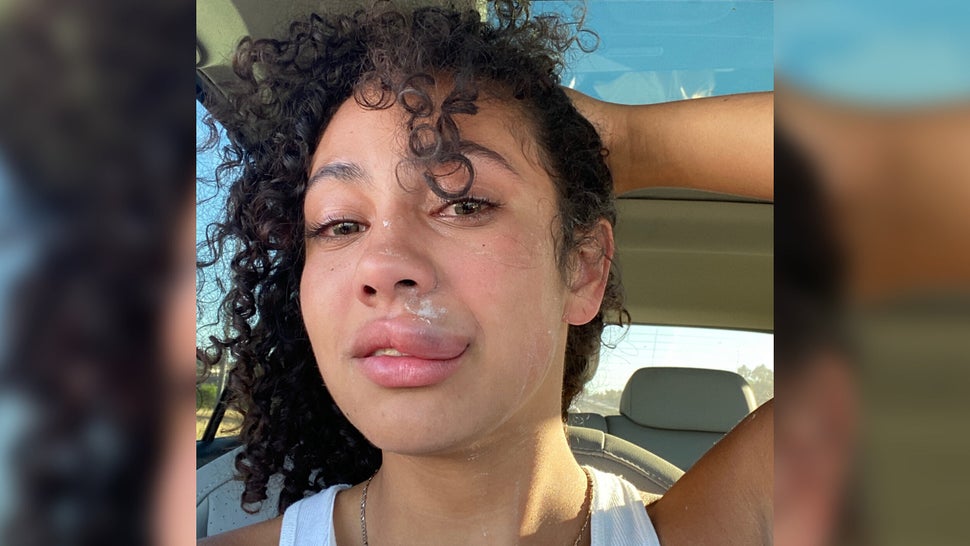
Fellow protesters helped Green and her boyfriend push through the crowd to an area where medical volunteers could appraise her injury. She was told to get to the emergency room, because she was going to need stitches. (Warning: graphic photo below.)
“My lip and chin had both been busted open,†Green said. “While they sewed me up, they told me that my jaw may have shifted, and I would maybe need reconstructive surgery.â€
Courtesy of Amara Green
Amara Green took this selfie at an emergency room in Minneapolis about an hour after police shot her with a rubber bullet while she was attending a protest on May 27.
The care will likely cost her thousands of dollars. Though she had previously been covered under her mother’s health insurance, her mom had recently lost her job. It wasn’t until a few days later that she learned her injury was from a “less lethalâ€Â weapon police had fired into the crowd: rubber bullets.
Rubber bullets are formally known as “kinetic impact projectiles,†and are not always made of rubber. Some are wood, plastic or even have a metal core. Rubber bullets have been used for decades to subdue riots, and are now being aimed at protesters, journalists and uninvolved bystanders as protests continue throughout the country over the deaths of George Floyd, Breonna Taylor and other victims of police brutality. And while researchers have known for years that “less lethal†can still be deadly, police units in the United States continue using them.
“To even use the word ‘safe’ is a misnomer,†said Ian Wittman, chief of emergency medicine at NYU Langone Hospital. “It is absolutely, unequivocally unsafe to use these ammunitions.â€
From Northern Ireland To The Civil Rights Movement
The use of kinetic impact projectiles can be traced as far back as the 1880s, when police in Singapore used the ends of wooden broom handles to subdue rioters protesting an array of social issues. By the 1970s, the British Ministry of Defence began using rubber bullets in Northern Ireland during the Troubles.
And with the civil rights movement underway in the U.S., President Lyndon B. Johnson created a blue ribbon commission in 1966 to explore less lethal ammunition for protests and riots. Manufacturers began producing less lethal weapons to sell to American police departments.
But in 2003, the BBC published declassified document from 1977 detailing legal advice for the Ministry of Defence to push for a settlement with the family of a young boy who had been blinded by a rubber bullet. The concern was that going to court would lead to further investigation that would expose how the bullets had not been tested properly and had caused more serious injuries in the past.
A National Center for Biotechnology Information study examining injuries from 1990 to 2017 found that over 71% of all injuries from rubber bullets and similar projectiles were severe, leading to at least 53 deaths and another 300 permanent disabilities during that period.
Zeelee Segura was attending a May 30 protest in La Mesa, California, when she was shot in the mouth, a high risk area, with a rubber bullet.
“I didn’t know you could actually see a bullet as it’s coming towards you,†Segura said. “I was just happy it hit me and not the pregnant woman next to me. There were some little kids not too far away from me either.â€
Courtesy of Zeelee Segura
Zeelee Segura shows her rubber bullet injury soon after leaving a May 30 protest in La Mesa, California.
In the first 24 hours after, Segura was in so much pain that she couldn’t touch her face. Nearly a week later, the 21-year-old is having nightmares from the incident. She often wakes up dry heaving from panic attacks. Although she’s seen a doctor, she is still worried about long-term damage to her teeth.
“If I close my eyes and try to remember what being hit felt like, it was like a real bullet,†Segura said. “In the moment, I couldn’t tell the difference.â€
Mike Griffin, 34, a senior organizer at Community Change Action, says he’s seen countless injuries from batons, tear gas canisters and rubber bullets every day in Minneapolis since demonstrations began.
“I’ve seen welts the size of a baseball, and I’ve seen people rushed to the hospital for internal bleeding or because a bullet hit an eye,†Griffin said. “I don’t even get why any of these are called ‘less lethal.’â€
Wittman said most physicians feel the same way.
“It’s a heavy object being shot out of a gun at a high rate of speed at a human body,†Wittman said. “The most common injuries are fractures or ruptured blood vessels and nerves. If it hits someone’s eyes, they have a high likelihood of losing vision, and there are sometimes skull and intracranial fractures.â€
Dangerous And Untrained
There aren’t any national standards when it comes to training police officers to use less-lethal weapons, so it’s often up to the discretion of each police department. And using a rubber bullet is a speciality skill, because where it’s aimed can make a huge difference in the damage it does.
Steve Ijames, a Missouri police officer who has traveled the world training police departments on how to use less-lethal weapons, believes that less-lethal ammunition can save lives when used correctly, but acknowledges that the level of training each police department receives on how to use them can vary.
“The adequacy of training varies from state to state,†Ijames said. “My training can be as long as a full eight-hour day, but it could also be a 15-minute briefing in the range where someone said, ‘Here’s a beanbag [bullet], just shoot the arms and legs.’ I’ve seen that before.â€
With protests occurring all across the country each day, police departments are running out of this ammunition, and turning to other departments for help.
“Most police agencies are poor planners, and historically very reactionary, so they have very little or no knowledge on less-lethal ammunition,†Ijames said. “Manufacturers right now are already overwhelmed by demand as is, so police departments are now trying to beg and borrow ammunition from other departments. It hasn’t been this bad since Ferguson.â€
This scramble is why Dennis Kenney, a criminal justice professor at John Jay College in New York City and a former police officer, thinks most rubber bullets are shot by people who don’t know how to use them.
“Most agencies also don’t have that kind of equipment just laying around, and training can be cumbersome if you have to take people out of service,†Kenney said. “So when you see all of this equipment during protests, they haven’t had a lot of time for the advanced training. It’s very safe to assume that very few of them have been properly trained.â€
Kenney also noted that shooting at a crowd means the target is constantly moving, which also decreases accuracy and increases the likelihood of severe injury.
“In general, nonlethal force is used to overcome resistance, not to maintain compliance,†Kenney said. “Rubber bullets are impact devices that tend to inflict pain, when the force used to overcome resistance is being met. But in a good deal of these cases, the resistance is low. It’s about getting a crowd to comply. Using a device of that significance seems to be excessive.â€
The number of reported injuries continues to climb. On May 31, 20-year-old Justin Howell was shot in the skull with a rubber bullet, and is expected to have permanent brain damage. A GoFundMe campaign has already raised nearly $150,000 as of Saturday to help cover his medical bills. Meanwhile, a federal judge is now temporarily prohibiting Denver police from using less-lethal weapons, including projectiles like rubber bullets, at protests.
Green has also started a GoFundMe to help cover her upcoming surgeries. In a few days, she was able to raise over $14,000.
“I was so overwhelmed, I broke down in tears,†Green said. “I mean, I don’t even know these people.â€
And while Green may be looking at months of rehabilitation, she thinks it was worth it.
“Even if this money hadn’t happened, I still wouldn’t regret going to the protest at all,†Green said. “It was really scary, but it made me stronger.â€
Calling all HuffPost superfans!
Sign up for membership to become a founding member and help shape HuffPost’s next chapter
SÃO PAULO and BRASÃLIA — Brazil’s death toll from the coronavirus surpassed Italy’s on Thursday after the nation’s health ministry reported 1,437 deaths in the previous 24 hours. The latest grim data was released three hours later than usual and came too late for evening news bulletins.
Brazil has now reported 34,021 deaths from COVID-19 as of Saturday afternoon, trailing only the United States and the United Kingdom. With 30,925 new confirmed cases reported Thursday, the total number of infections reached 614,941, second only to the United States.
But experts consider the tally a significant undercount due to insufficient testing.
Since the beginning of the pandemic, Brazilian President Jair Bolsonaro has downplayed the coronavirus, criticizing social distancing measures and urging regional governments to lift restrictions for the sake of the economy.
On Tuesday, Bolsonaro told Brazilians that death is “everyone’s destiny.†The impact of COVID-19 on Brazilians, however, has been far from equal.
From prevention measures and testing to access to health care and mortality rates, the virus is having a disproportionate impact on Brazil’s poorest and most vulnerable.
According to official figures from the Ministry of Health, coronavirus-related deaths have occurred at a higher rate in the north and the northeast of the country, regions that have a much lower GDP per capita than the rest of Brazil.
São Paulo, the country’s biggest city and the epicenter of the epidemic in Brazil, also shows how the poor are more likely to die from COVID-19. According to data collected up to April 21, there were more cases in the poor neighborhoods of Brasilândia, Sapopemba and São Mateus than in all 14 districts in central São Paulo.
The mortality rate is also higher among the Black population.
According to a recent study, Black people who lacked a formal education were 4 times more likely to die from the coronavirus than white people with a higher education. Among Brazilians with the same level of education, Black people were still 37% more likely to die from the coronavirus than white people.
The coronavirus is also spreading fast through Brazil’s Indigenous populations, with total deaths caused by the disease increasing more than fivefold in the past month, from 28 at the end of April to 182 on June 1, according to data collected by a national association of first peoples.
These numbers reflect underlying issues that range from access to clean water to the difficulty of maintaining isolation.
Almost 35 million Brazilians do not have access to clean water, including residents of 22 of the country’s 100 biggest cities, according to data from the National Water Agency. Without water, it is impossible to wash your hands, one of the most basic measures to contain the spread of the coronavirus.
In favelas and other vulnerable communities, hygiene essentials are difficult to come by, and social isolation is impossible.
“We are collecting donations and giving out basic hygiene items, because some families simply can’t afford them,†says Samantha Messiades, a member of the residents association for Cidade de Deus, one of Rio de Janeiro’s biggest favelas. “The other day I collected hygiene items for a friend of my neighbor. She has COVID-19, is completely isolated and did not have access to essential items.â€
Avener Prado/Especial para o HuffPost
Patients undergo exams conducted by health care workers with Doctors Without Borders.
Raquel Rolnik, a professor of architecture and urbanism at the University of São Paulo, said that inequality is stark within Brazilian cities. “We’re talking about millions of people without access to basic stuff. From the homeless, who have no access to a tap with running water, to many people who see water coming out of the tap infrequently.â€
Rolnik says the country must do more to support vulnerable groups. “Not only protecting them from the pandemic, because social isolation means economic hardship. We’re talking about people going hungry.â€
The informal economy
The loss of income has immediately been felt in the poorer neighborhoods of big cities, where many of those who rely on the informal economy (such as street vendors) live. At least 38.3 million Brazilians do not have formal employment contracts, but take part in the country’s large informal job market.
Moraes, the epidemiologist, says that this is the hardest hit population. “Working from home is not an option for these people. We need financial support from the government to mitigate the impact of the pandemic.â€
“We from the favelas are the first to be affected. It’s almost like we’re disposable. It’s very sad,†says Messiades, from Cidade de Deus.
“Everyone around here knows someone who no longer has income. There are manicurists, hairdressers, people who bake items at home to sell — none of them can work. Also, people who collect soda cans for recycling, people who watch cars, who work selling stuff on the beach. They are not making any money.â€
Messiades’ mother is one of them. She works cleaning houses in the fancy neighborhood of Barra da Tijuca. “She works informally, so they stopped calling, she’s not being paid. I try to help,†Messiades says. “In addition, I used to be an apprentice for a lawyer that works here [in the favela], but she had to let me go because there’s no demand.â€
With two kids, ages 6 and 11, Messiades says she’s uncertain about her future. “The father of my daughter works at a restaurant; the father of my son makes deliveries. Both jobs are impacted by the pandemic. It’s an avalanche, a domino effect. Companies are the first pieces to fall, followed by everyone else.â€
The situation is the same in other big Brazilian cities. In Cidade Estrutural, one of the poorest neighborhoods of BrasÃlia, the capital of Brazil, unemployment is the only subject of conversation.
“Everyone is worried. Our health is fragile, because our diet is fragile,†says Coracy Coelho, a resident of the neighborhood.
He says that people don’t want to be stuck at home. “Without work, everyone needs to rely on social programs. A lot of people depend on Bolsa FamÃlia [an assistance program run by the federal government]. Some had issues with the application process and are very anxious about it, because it is the only income source for the family,†says Coelho.
In April, the federal government announced that millions of Brazilians would be eligible for an emergency fund — 600 reais ($115) for informal sector workers and 1200 reais ($235) for mothers. The program has had some issues and delays, but now the government says 59 million people have received at least part of the money.
Private labs: more testing for the rich
There is also a huge disparity in how COVID-19 has been diagnosed. According to the preprint version of one study, which HuffPost Brazil obtained, economic inequality played a major role in limiting access to tests during the first phase of the coronavirus epidemic in Brazil.
According to the study, two-thirds (66.9%) of the tests in São Paulo and Rio de Janeiro until March 25 were taken in private labs. The cost of a test was between 300 and 690 reais ($60-$130).
Up to then, four weeks after the first confirmed case of the coronavirus in the country, 67,344 other suspected cases were reported in 172 cities.
“There was a clear link between testing and income, which revealed a big socioeconomic gap in testing as the number of cases grew,†the study says.
There was also an increase in the correlation between tested cases and income in the second, third and fourth weeks of the pandemic, according to the research.
The authors of the study say the socioeconomic barriers to testing must be addressed in order for Brazil to understand and stop the spread of the coronavirus. Universal access to testing and the success of interventions will be the keys to the fate of the pandemic in Brazil.
“Along with changes in surveillance guidelines, the socioeconomic bias in testing suggests that the number of confirmed cases can substantially underestimate the actual number of cases in the population,†the study says.
The federal government claims to have distributed more than 3 million tests that detect the presence of virus to state labs. More than 1.8 million tests have been taken, including serological tests — or 8,737 exams per million.
Courtesy Uildeia Galvão da Silva
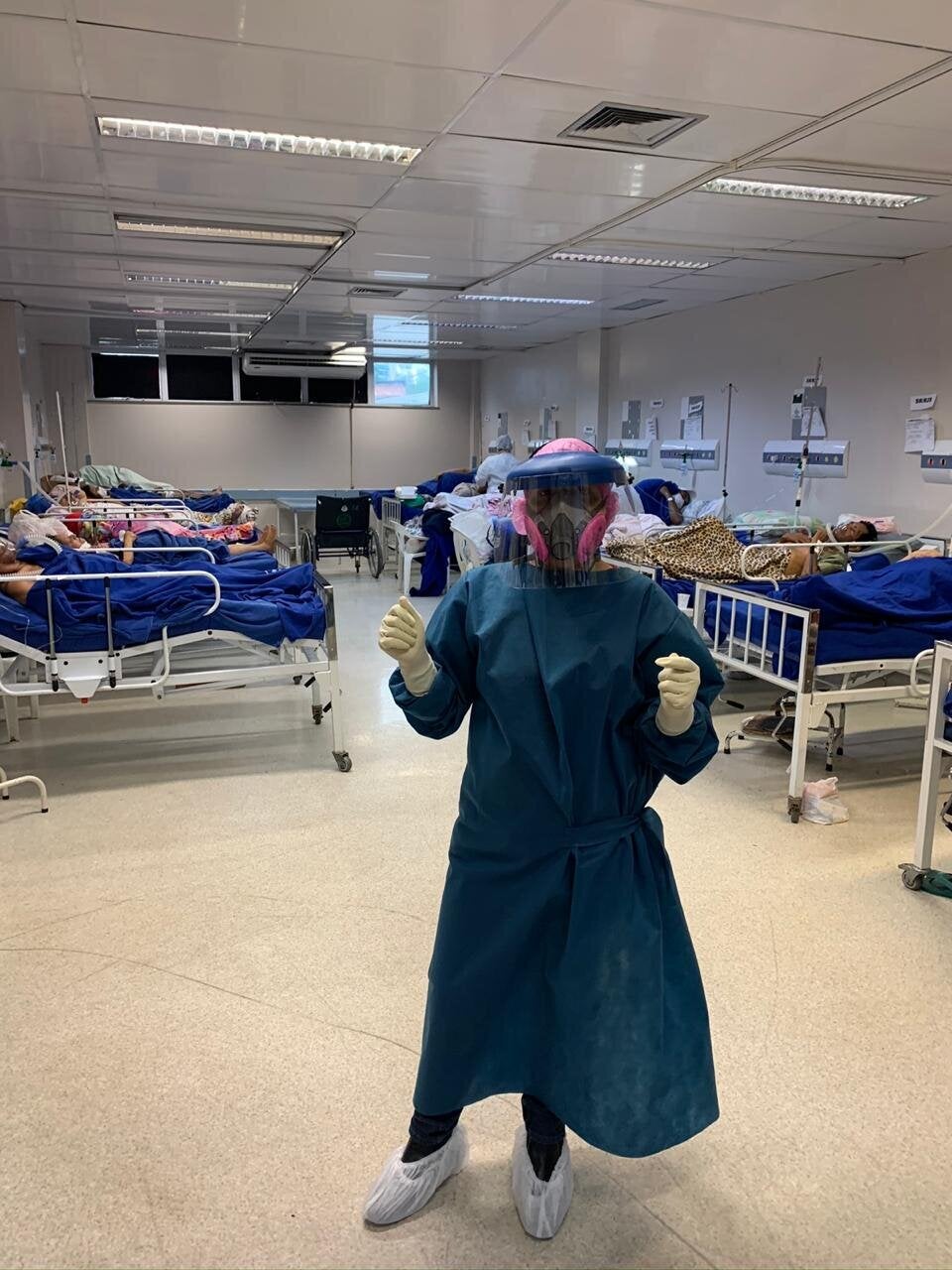
Uildeia Galvão da Silva works as a doctor at the main public hospital of Manaus, in the north of Brazil.
Public hospitals close to collapsing despite empty beds in private hospitals
“Look at this paradox: People dying in hospital hallways while there are empty beds,†Francisco Braga, a researcher at the Oswaldo Cruz Foundation in Rio de Janeiro, one of Brazil’s top public health research institutions, told HuffPost Brazil, decrying the lack of resources in Brazil’s public health system.
In private hospitals in São Paulo, between 20% and 30% of beds remain open. These hospitals usually cater to people with private health insurance, which in most cases is part of an employee’s benefits package from their job.
“In Brazil, around 23% of the population has private insurance. In São Paulo, the percentage is 50%, while in some state capitals in the north and the northeast, it stays below 10%,†says Gonzalo Vecina Neto, a professor of public health at the University of São Paulo and superintendent of SÃrio-Libanês, one of the biggest and better-equipped private hospitals in the city.
This regional disparity means that the burden on the public health care system is much greater in the country’s north and northeast regions. And it also explains why states like Amazonas have been on the verge of collapse for weeks due to the increasing number of COVID-19 cases.
Dealing with hundreds of patients with the new coronavirus is part of the routine for Uildeia Galvão da Silva, a doctor who has been working for 12 years in the emergency room of the main public hospital in Manaus.
She tells HuffPost Brazil that her life, and those of her fellow health care workers, “has been turned upside down†since the pandemic began.
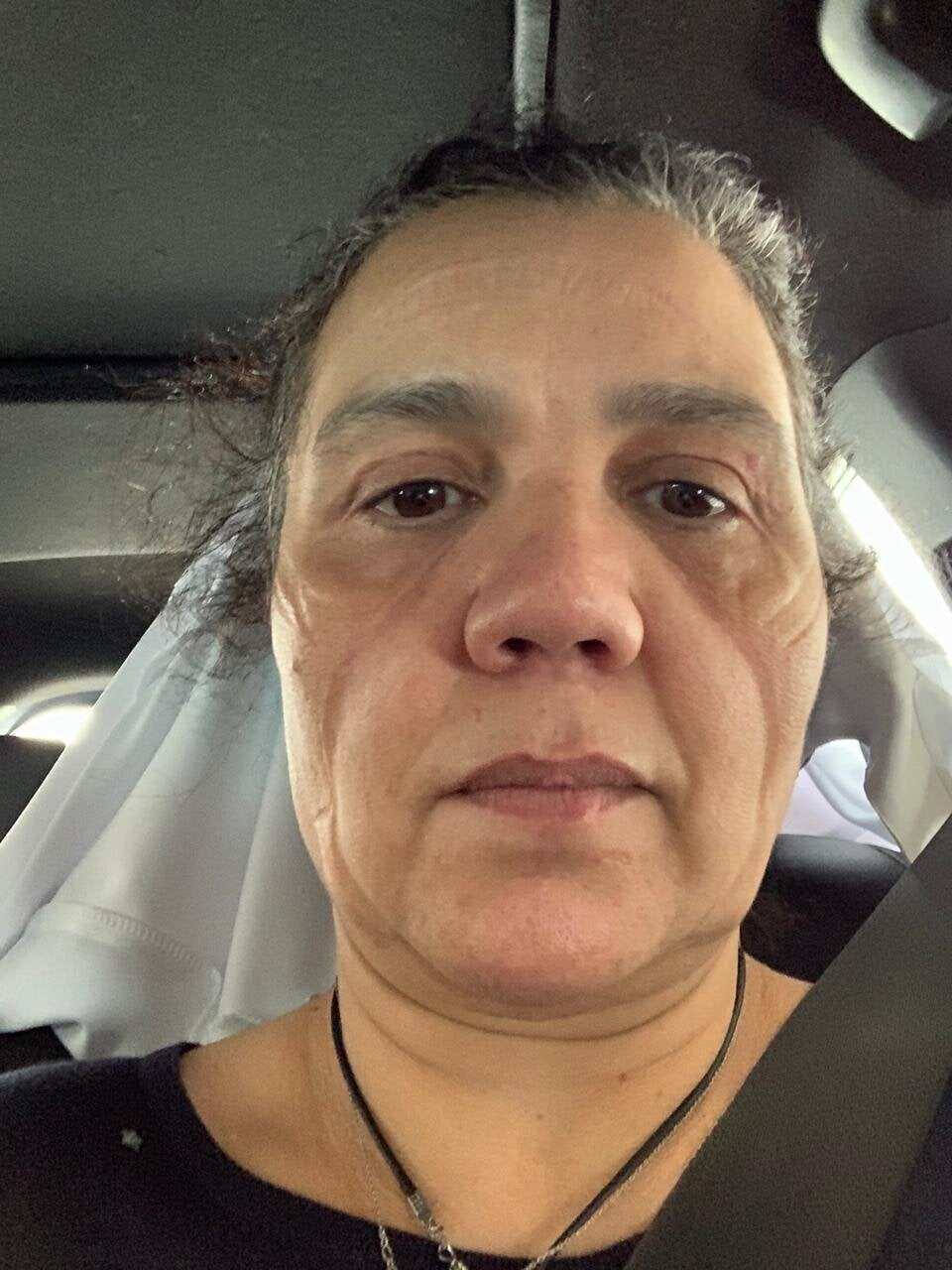
“The day-to-day is wearing us out too much. This gets to you, physically,†says Silva, who, like many other health care professionals, has marks on her face due to wearing protective gear for hours on end. “Everything hurts. And the mask makes us distant [from patients].â€
Courtesy Uildeia Galvão da Silva
The marks from the masks Silva wears the entire day.
Seeing her patients struggling for life day after day, Silva says the past few weeks have been the hardest in her career.
“There were so many patients that we were unable to save in the last two months. This changes us a lot. It is something drastic and dramatic, even for those who have been working in the health sector for 25 years like me,†she says. “Knowing that you won’t be able to save one, two, three patients. … It hurts your soul.â€
Thousands of people around the world are sending a dual message to Americans as they protest the death of George Floyd, the latest casualty of the systemic violence against Black residents of the U.S. Their message: We see your pain ― and we see your country for what it really is.
To those outside America’s borders, the nation’s state-sanctioned racism stands in stark contrast to its proudly proclaimed ideals of liberty and equality in the more than 100 years that the U.S. has been a global power.
Black Americans and members of other marginalized communities in the U.S. often share their stories abroad in search of solidarity, recognizing that international embarrassment could help drive reform at home. Representatives of the U.S. government have offered foreigners a different narrative of progress towards fulfilling America’s promise.
Since Floyd died after a white police officer pinned him down by the neck — sparking international protest and outcry — it’s clear that deep skepticism persists worldwide about America’s commitment to racial justice and that people connected to the U.S., officials or others, will be asked to answer for it for years to come.
“It’s such a burden to have to carry that additional weight into the world, and I think that may be true for everyone, but particularly for the people who are being oppressed or mistreated at home,†said Gina Abercrombie-Winstanley, a former ambassador who served in the State Department for more than 30 years before resigning in 2017. “Not only do we have to deal with our own sorrow, but we have to answer for our European Americans. I’ve got to try to explain white racism, white supremacy. I’ve got that extra burden of trying to explain that, not just dealing with my own pain and sense of heartbreak.â€
Abercrombie-Winstanley added: “Blacks have been in the foreign service being representatives of the United States since the late 1890s, when we were sent out as envoys, so we have struggled with the contradiction of representing the nation and being disdained by the nation at the same time, and even so, we have served well.â€
Before President Donald Trump threatened to violently suppress demonstrations in memory of Floyd, before the spread of recording equipment let the world witness how U.S. police brutalize non-white bodies and before “I can’t breathe†became a global rallying cry challenging American cruelty and injustice, America tried to explain its racism to the world. It largely failed.
How The Story Got Told
European settlers made racist treatment of people of African descent integral to the entity that became America 400 years ago, when they brought enslaved Africans to the colony of Virginia. Two centuries later, much of the economy of the independent U.S. still relied on slavery as nations in Europe began banning the inhumane practice (while preserving other ways to oppress millions of people of color).
Americans who escaped slavery began telling the country’s peers about their mistreatment in visits abroad and in their writings. Frederick Douglass saw his “Narrative†translated into French and Dutch and spent two years speaking to audiences across Ireland and Britain. There, “the chattel becomes a man,†he reflected. Other Black Americans later echoed that sense of feeling fully acknowledged as human beings when they were away from American racism, even in other societies designed to benefit white people.
The Civil War and subsequent emancipation brought the U.S. in line with most European countries in barring the treatment of people as property. But it didn’t end white elites’ interest in sustaining their own power or widespread prejudice ― and Reconstruction, the crucial period of efforts to allow Black Americans to truly exercise their rights, was brief.
A trio of developments in the next few years ensured racism remained central to America’s identity and how it was perceived abroad. White politicians instituted Jim Crow laws to ensure that millions of Black people across the South were denied full citizenship. The U.S. became more ambitious as its wealth and power grew, with the result that it announced itself as a major international player by successfully waging a war against Spain in 1898.
W.E.B. Du Bois, the sociologist and writer, saw a moment for Black Americans to redouble efforts to look beyond the U.S. in fighting for justice.
“It’s the era of post-slavery but really aggressive oppression so Du Bois is kind of Otto von Bismarck, writing to connect people,†said Stephen Casmier, an associate professor of English at Saint Louis University, referring to the German leader who drove the unification of German communities into one country. In his book “The Souls of Black Folk,†published in 1903, Du Bois argued “people of African descent all over the world were somehow connected together and involved in the same kind of struggle,†Casmier said.
Tying Black Americans’ plight to the pain of European colonialism in Africa showed that as America’s prominence grew, so would the world’s knowledge of its domestic failings ― and that as powerful Americans united with leaders of other countries to shape global affairs with little regard for most people of color, other international bonds would flourish, too. Du Bois co-organized his first Pan-African Congress to try to shape the settlement after World War I. In the years that followed, some Black Americans who left for Europe, such as Josephine Baker, became cultural icons.
Global awareness about how discrimination was endemic in the U.S. couldn’t force America to change its ways. But it helped make it harder to argue against reform.Â
By the middle of the 20th century, American officials often tried to describe their government as fundamentally opposed to racism and committed to tackling it for two major reasons, scholars said. Washington wanted to promote its defeat of the Nazis and their violent prejudice, and it was increasingly afraid of losing the global battle for public opinion to the Soviet Union.
“The United States is participating in this global war against racism. Then you say, ‘Wait a minute, the United States is doing this with a segregated army,’†said Moshik Temkin, a historian at Harvard University. “That becomes a problem from a PR perspective. How are you actually selling the United States as a world democracy? It then becomes a severe geopolitical problem.â€
Moscow highlighted American racism and atrocities such as the Birmingham church bombing in propaganda materials, particularly among the newly independent nations in Asia and Africa, whom both the Russians and the Americans wanted on their side in the Cold War and who were already angry with Europeans’ treatment of non-whites. U.S. officials promoted examples of progress — such as the Brown v. Board of Education ruling ending segregation in schools — and started such programs as a jazz diplomacy campaign featuring Black musicians such as Louis Armstrong, Temkin said.Â
Susan Wood/Getty Images via Getty Images
Louis Armstrong performed during a State Department-organized tour of Africa in late 1960. Three years earlier, Armstrong had refused to carry out a tour in the Soviet Union on behalf of the U.S. over the South’s treatment of Black Americans.
Many Black Americans helped resist Soviet efforts to “shape truth†internationally, said Abercrombie-Winstanley, the former ambassador. She cited Carl Rowan, who ran the United States Information Agency under President Lyndon B. Johnson and was the highest-ranking Black person in government. Rowan publicized events such as the 1963 March on Washington, noting Johnson’s support for it and calling it, in a rebuke to America’s authoritarian rivals, “a moving exercise of one of the most cherished rights in a free society: the right of peaceful protest.â€Â
But for others, it was crucial to challenge the narrative of a country whose reality they knew fell short of its sales pitch. Malcolm X traveled the world condemning American perfidy ― a headache for U.S. representatives abroad who reported back on him and confronted him after he spoke at the Kenyan parliament, Temkin’s research shows.
“The story is not African Americans against each other ― it’s more about what the American state was doing,†Temkin said.Â
For U.S. leaders, the goal of projecting a less racist image influenced key decisions about how to respond to demands from the civil rights movement throughout the 1950s and 1960s, he added.
American officials also cited evidence of greater equality at home to counter global criticism of American actions abroad, such as the Vietnam War and supporting right-wing coups. “It acts as a cover for the other things that we do, whether it is waging perpetual war or destroying entire civilizations in the Third World,†Casmier said.Â
Since the end of the Cold War and the development of an increasingly connected world dominated by American media and business, foreign familiarity with U.S. racial politics has likely only grown. Casmier, who is Black, thinks that could be a result of Black Americans’ experiencing what Du Bois called “double consciousnessâ€: the sense of “always looking at one’s self through the eyes of others.â€
“Maybe that sense of double consciousness also invades our performances, and that’s why the images that you often see coming out of American protests seem so perfectly forged,†Casmier said. “They get inside of you in a certain kind of way.â€
That can boost solidarity. But foreign racists are paying attention, too. In countries such as France, where Casmier studied and regularly travels, more white communities are developing American-style obsessions, such as the fear that people of color are exploiting national welfare systems, he said ― creating kindling for future conflict.
Being The Face Of A Troubled System
For representatives of the U.S. abroad, conversations about America’s racism are unavoidable, morally fraught and rarely easy.
Black diplomats “have had to learn early on how to navigate the spaces of being truthful about what’s happening in the United States ― of expressing our dismay, our disgust, our heartbreak ― at the same time as expressing our hope for the future and our belief in what this country says it stands for,†Abercrombie-Winstanley said.
Past experience offers something of a playbook.
In times such as this, in the aftermath of the Floyd killing, “we have to balance that hope with reality. … We have to redouble our efforts,†she said. And that work isn’t just for the disproportionately low number of people of color in the foreign service, she added: “We have to demand it of our European Americans. This problem isn’t an African American problem. This is a European American problem, and we are asking them to look to themselves: How are you dealing with your part of our greater community?â€Â
Abercrombie-Winstanley added: “This burden is a European American burden, to get rid of this poison.â€
Tom Perriello, who served as a special envoy to the African Great Lakes region under President Barack Obama and has previously worked in conflict zones worldwide, regularly heard concerns abroad about race in the U.S., he told HuffPost.Â
“Sometimes that was done in a ‘gotcha’ way by countries that we had been pushing on their human rights records. Sometimes it was from allies and friends asking what the hell was going on,†Perriello said.
Perriello recommended breaking with the historic approach of “a largely white establishment foreign service that said the American project was perfect with one sin.†Instead, Americans should acknowledge that they have problems to reckon with and even show they have learned from the experiences of other nations in confronting painful truths about their own. He pointed to recent efforts to take down Confederate memorials in his home state of Virginia as an example.
Former Ambassador Dana Shell Smith was in her native California during the 1992 uprising that followed a jury’s decision to acquit white police officers for beating Rodney King, a Black man. She recalled foreigners frequently bringing up the unrest early in her career. Â
“White people shouldn’t be trying to speak to the Black perspective, but what a white diplomat can do is find voices who can and make sure to elevate and amplify those voices,†Smith said. She attempted to do just that while working in public diplomacy throughout the Middle East by organizing events featuring Americans of color.Â
It also helps for international audiences to hear from figures outside official diplomatic roles such as visiting lawmakers, said Perriello, a former congressman himself and now the executive director of Open Society-U.S. He cited trips abroad by Reps. Karen Bass (D-Calif.) and Barbara Lee (D-Calif.).
And moments of deep symbolism beyond American representatives’ control can be invaluable in proving that faith in the U.S. is worthwhile. Obama’s 2008 election “was like the greatest advertisement for what I always believed our country stands for,†Smith said.Â
The conduct of Obama’s successor has made it even more difficult to make America’s case in what was already a losing battle for global public opinion. Many diplomats have resigned under Trump, leaving the State Department over his public humiliation of veteran public servants, his racist rhetoric or the agency’s complicity in his extreme policies.
Those who remain now have to explain both a centuries-old American system of racism and an unprecedented authoritarian turn from a president facing a national crisis.
“This has been a challenge for many of the people I know in the foreign service from the beginning of this administration, but it is just crystallized to an enormous extent this past week,†said Laura Kennedy, a former ambassador.Â
Kennedy recalled helping organize an American cultural exhibit in the old Soviet Union. In keeping with the regime’s goals, attendees would often ask questions designed to trip up the diplomats and the speakers they invited: Wasn’t the U.S. based on the genocide of Native Americans, and how could it justify how it treated Black citizens?
“We were encouraged to give our own answers and draw on our experience,†she said. “At least you could talk about the fact that we have a free press, and we debate these issues.â€
Today, Kennedy said, “we have our own president who is damning the free press in America.â€
Calling all HuffPost superfans!
Sign up for membership to become a founding member and help shape HuffPost’s next chapter
CAIRO — On May 31, the Egyptian armed forces announced in a statement that 19 militants had been killed during military strikes carried out during the previous week in Sinai.
The same statement said the strikes were based on intelligence information that confirmed the presence of extremists in several locations in the vicinity of the cities of Bir al-Abd, Sheikh Zuweid and Rafah in North Sinai. Two military strikes were carried out, the first of which resulted in the killing of three suspects found with automatic weapons, ammunition, grenades and RPG ammunition in their possession. Military engineering teams also discovered and destroyed five explosive devices that had been planted to target the Egyptian armed forces, officials said.
The army reported five deaths among its ranks; two officers, one noncommissioned officer and two soldiers. The Associated Press reported this occurred when an explosive device hit their vehicle.
During the operation, the Egyptian air force carried out a number of airstrikes to target “terrorist hideouts,” which resulted in the death of 16 suspects, bringing the total to 19, according to the army’s statement.
On April 30, an explosive device targeted a military vehicle near the city of Bir al-Abd, killing 10 soldiers, including an officer and a noncommissioned officer. On May 1, the Islamic State (IS) claimed responsibility for this attack.
Samir Ghattas, a security and strategic expert and head of the Middle East Forum for Strategic Studies and National Security, told Al-Monitor over the phone that Egyptian army forces have long been working to contain terrorism in Sinai, dry up its sources and confront it militarily, developmentally and intellectually.
He said the Egyptian state believes that security confrontation is inevitable with extremist groups that use their weapons to terrorize citizens, and the army and the police in particular.
Ghattas added, “The Egyptian armed forces launched Comprehensive Operation Sinai on Feb. 9, 2018, with the aim of confronting terrorism in Sinai, nipping it in the bud and eliminating the tunnels used by terrorist groups to smuggle weapons and commit illegal acts. This proves that the state has always been serious about fighting terrorism, but the problem is that the confrontation results in casualties among the army and the police, and it requires patience, great determination and a long time until the terrorists are completely and permanently eliminated.â€
He said security strikes have largely been successful in curbing extremists’Â operations in North Sinai. He said that while militants’ attacks have not disappeared completely, a decrease in their frequency and size means that the security forces have succeeded in reducing and controlling them.
Ghattas said militants were carrying out assassinations and bombings targeting civilians — as happened in the terrorist attack that targeted Al-Rawda Mosque in between Bir al-Abd and el-Arish in November 2017 that resulted in the death of 305 people — but that currently, extremists are being directly targeted by the military.
Ghattas said the state is working on implementing several projects aimed at developing and reconstructing Sinai and strengthening its connection with the rest of Egypt, because marginalization and poverty is what leads to the presence of terrorists.
He said the state has implemented several development projects and plans, most notably the expansion of agricultural areas in Sinai and a water desalination plant, in addition to projects by the Ministry of Water Resources and Irrigation in various parts of Sinai.
Meanwhile, Ali al-Rajjal, a researcher with Mominoun Without Borders who specializes in security affairs, told Al-Monitor that the repeated terrorist attacks in Sinai, and specifically in North Sinai, reveal a major security imbalance in this area. The security forces must be more vigilant and prudent when it comes to fighting off these armed men who rely on deception and ambush in carrying out their operations, he said.
He said a significant amount of data must be collected by tracking and analyzing suspects’ movements, plans and how and when they carry out their operations in order to thwart militants before they target the army and police.
Rajjal said the recent operation that killed 19 suspects and destroyed a number of weapons and ammunition is a perfect example of how to preemptively shut down suicide and other terrorist attacks. He called on the security forces to intensify such moves to eliminate extremists in North Sinai.
“We hope to launch many similar operations against terrorist strongholds in the next stage, although this could result in losses among the security forces, but it is very important in light of the repeated attacks targeting the army and police over the past years,†he added.
Rajjal said he believes that some extremist attacks and confrontations may continue for a while, as the anniversary of the June 30 Revolution approaches and it could be an important opportunity for terrorist groups who want to take revenge on the state, which excluded the Islamists from power following the June 30 demonstrations in 2013,. He said the groups may seek to also take revenge on the people who supported the demonstrations.
The U.K. government should condemn a “deliberate election strategy” by U.S. President Donald Trump, Lisa Nandy said | Christopher Furlong/Getty Images
Lisa Nandy says UK government should be consistent in its condemnation of foreign regimes.
The U.K. government should condemn a “deliberate election strategy” by U.S. President Donald Trump to use anti-racism protests to activate his electoral base, said Lisa Nandy, the shadow foreign secretary.
Asked on the BBC’s Andrew Marr show to comment on Trump’s response to the protests against the killing by police of George Floyd, that continued in several U.S. cities on Saturday, the Labour politician said: “I actually think that this is a deliberate election strategy. Now I’ve no idea whether Donald Trump is a racist or not a racist. What I do know is that in the run-up to the American elections, this is one of the ways that politicians try to activate their base. They divide people in order to try to advance their own cause.”
U.K. Foreign Secretary Dominic Raab has avoided commenting on Trump’s response to the protests. “I’m not going to start commenting on the commentary or indeed the press statements that other world leaders make or indeed the U.S. president,” he said last weekend.
But Nandy said the government should speak out. “Only this week the foreign secretary condemned police brutality in Hong Kong, and we welcomed that, but you have to be consistent about these things — otherwise it diminishes us in the eyes of the world and you lose all moral authority,” she added.
The Victorian “major event review†will examine the environmental protections of its Regional Forest Agreements (RFA) and be conducted over around 12 months by an independent panel, with members appointed by state and federal governments, a government spokesperson said.
VicForests will not harvest unburnt areas within the fire footprint in 2020, they said.
Regional forest agreements are made between state and federal governments. The state provides a plan to “balance†the impact of logging on flora and fauna with economic factors, and in return commercial logging operations are exempted from national laws that protect threatened species.
Sandy Greenwood, Gumbaynggirr Traditional Owner and spokesperson who has been leading a logging protest at Nambucca State Forest. Credit:Column Hockey.
The Victorian panel will produce a report with non-binding recommendations that “may mean changes for how we use and manage our forestsâ€, a government spokesperson said.
During Victoria’s review, timber harvesting operations can continue in accordance with regulatory requirements. Logging continues in NSW, where no review has been commissioned after the fires.
“They’re going too hard on the logging after the fires,†says Matt Ball, speaking from his forest home at Brooman on the NSW south coast. His property adjoins a coupe which is being logged now. “We’ve got some untouched creek lines, along the valleys which the fires didn’t get to and they’ll be hacking into it.â€
A greater glider in a tree at Stony Creek coupe. Credit:Lisa Roberts
“All the animals have moved into the green patches, trying to eke out a living, but there’s a lot of competition from feral cats and foxes,†Mr Ball said.
In NSW, the Environment Protection Authority (EPA) has given approval to the NSW Forestry Corporation to log in 15 coupes across 3100 hectares in southern NSW, where at least 85 per cent of harvestable native hardwood forests was burnt in the fires.
The Forestry Corporation said it had “greatly reduced the intensity of timber harvesting†after the bushfires and was following new site-specific conditions developed by the EPA.
Forest in the Stony Creek coupe area. Credit:Lisa Roberts
Several community groups have come together to protest logging in the Nambucca State Forest, which was spared from the summer fires. There are 15 sites either being logged now or set for harvesting soon.
“If we don’t act now our deeply significant cultural heritage will be desecrated, our beautiful old growth trees will be logged, rare flora will become extinct and our koalas and endangered species will literally have nowhere else to go,†said a Gumbaynggirr traditional owner and spokesperson, Sandy Greenwood.
NSW Forestry Corporation said it was carrying out a “low-intensity thinning operation†in regrowth forest that had previously been harvested that will “give trees more room to grow and retain forest cover across the entire areaâ€.
Green senator Janet Rice said an assessment of the impact of the unprecedented fires should take place but logging should not continue while it does. “By the time this review has finally concluded and the recommendations are in, it may be too little too late,†Ms Rice said.
*No surname used for privacy reasons.
Miki Perkins is a senior journalist and Environment Reporter at The Age.
Mike is the climate and energy correspondent for The Age and The Sydney Morning Herald.
Democratic Alliance (DA) insiders fear that the African National Congress (ANC) is muscling in on the Western Cape, using the province’s COVID-19 crisis, the Sunday Times reports.
The Western Cape is South Africa’s coronavirus epicentre, with over 30 000 of the country’s 45 973 known cases and accounts for 77% of the fatalities. It is also the only province out of the nine not governed by the ANC.
DA members rattled by ANC involvement in the Western CapeÂ
In response to the Western Cape’s towering numbers, national government has sent top officals to the province, including President Cyril Ramaphosa and Health Minister Dr Zweli Mkhize, who visited on Friday.
More ministers will be sent to the province, according to Minister in the Presidency Jackson Mthembu, who said there was nothing political about the move.
“The Western Cape is where we have the highest number of infections and the highest number of deaths. It goes without saying that the national government will send ministers there. We must drop politics out of this. We must not be political in matters that affect our ministers.â€
Jackson Mthembu
Premier Alan Winde has also cautioned against politicising government’s response to the pandemic in the province.
However, according to the Sunday Times, insiders in the DA have likened the step made by national government to an effort to micromanage Western Cape officials.
An unnamed official quoted by the publication expressed concern at the lack of consultation with the office of the premier.
The publication says the ministers set to descend on the province in the coming days include controversial figures such as Police Minister Bheki Cele and his transport counterpart, Fikile Mbalula.
Also said to be on their way to the Western Cape are Public Enterprises Minister Pravin Gordhan as well as Barbara Creecy and Ebrahim Patel at Environmental Affairs and Trade and Industry respectively.
Winde, on Saturday, confirmed that national government had indeed deployed cabinet ministers to the province, but also stated that he and Ramaphosa had not discussed details.
“We didn’t actually talk about that [the mandate of the ministers], so I am not too sure. Obviously, I would hope that kind of consultation happens before it actually gets deployed. And who gets deployed where and for what reason,†he said.
Alan Winde
As of Saturday night, the Western Cape had recorded 30 379 coronavirus cases, which accounts for 66% of the country’s total, and 729 deaths out of 952.
Hundreds of people held a private memorial in honor of George Floyd in his North Carolina birth town.
Wochit
A protest in Portland, Oregon, turned to unrest late Saturday, with police reportedly firing pepper balls and threatening force to disperse a crowd, after a day of peaceful demonstrations across the country and a stirring memorial service for George Floyd.
In Portland, a crowd protesting police brutality demonstrated for hours outside the county Justice Center, separated from officers by a chain-link fence. Protesters pushed on the fence, threw things over it and used homemade reflectors to shine light back at police, according to The Oregonian. Portland Police said demonstrators were trying to cut through the fence, pointing lasers at officers and throwing at them balloons filled with paint, water bottles, full beer cans, glass, fireworks and smoke bombs.
As midnight approached, police declared the assembly unlawful and told protesters to leave or they’d be “subject to use of force” or arrest. When most did not, groups of police herded crowds toward a nearby park. At least 50 people were arrested, Portland Police announced on Twitter early Sunday.
The unrest in Portland followed other peaceful demonstrations in the city by thousands of people on Saturday. It contrasted with the peaceful outcomes in several major protests nationwide.
Protesters have continued to call for justice for Floyd, a black man killed when a white Minneapolis police officer held his knee to Floyd’s neck for more than eight minutes as other officers stood by. Amid the demonstrations Saturday, multiple other police departments announced actions against officers tied to misconduct allegations.
Some recent developments:
Washington Mayor Muriel Bowser joined the crowd outside the White House and has demanded Trump withdraw military and federal law enforcement from the city.
Minneapolis officials voted Friday on the first changes to the police department since Floyd was killed on Memorial Day.Â
Facing pressure from players, NFLC commissioner Roger Goodell said he wants to do his part to fight against racism and systematic oppression. USA TODAY’s Christine Brennan writes how this could be a watershed moment.
Our live blog will be updated throughout the day. For first-in-the-morning updates, sign up for the Daily Briefing. Here’s the latest news.
Protesters briefly stopped traffic when marching across the Golden Gate Bridge in San Francisco, covered miles of highway near the LOVE statue in Philadelphia and chanted “Revolution, nothing less!†on Los Angeles’s Hollywood Boulevard Saturday. That’s in addition to the biggest day of demonstrations yet in Washington, D.C.Â
In Philadelphia, moms with strollers, priests and nuns, groups of school teachers and LGBTQ organizations were among the crowds that marched through downtown. Crowds surrounded the city’s police and National Guard troops at the Philadelphia Municipal Building. Still visible there: burn marks from patrol cars toppled and torched by demonstrators in protests that turned violent and destructive last weekend. Later Saturday, the Philadelphia Inquirer said its top editor had resigned after outcry over a headline that had declared “Buildings Matter, Too.”Â
Late-night protests in Atlanta ended at the Georgia Capitol, where dozens of demonstrators faced a statue of former Gov. John Brown Gordon, a Confederate general believed to have been a leader in the Ku Klux Klan. “Tear down Gordon!” they shouted before dispersing, according to the Atlanta Journal Constitution.
And in Minneapolis, Mayor Jacob Frey was booed by a large crowd after saying he did not support abolishing the city’s police department. As the mayor walked through the cr, chants of “Shame!” and “Go home, Jacob!” rang out in a video of the incident published by the New York Times.
Thousands gather in Washington on ninth day of protests
In the ninth – and by far the largest – day of demonstrations in the nation’s capital, thousands of protesters from all walks of life poured into downtown Washington Saturday.
Protesters gathered at the city’s most iconic sites – the Capitol building, the Lincoln Memorial and near the White House – for simultaneous marches and mass demonstrations with an almost festive air.  Even if protesters were not celebrating, the tension that had marked earlier demonstrations was not evident.Â
After marching down Constitution Avenue, thousands of protesters knelt at an intersection north of the Lincoln Memorial. Music blared up and down 16th Street, a main city artery. Most people wore masks to guard against COVID-19, but the idea of social distancing seemed a thing of the past.
The District of Columbia metropolitan police declined to provide a crowd estimate, and with thousands of protesters gathered at multiple sites across the city, it was difficult to get an accurate assessment.
Army Secretary Ryan McCarthy told reporters on Friday that local officials were projecting between 100,000 and 200,000 protesters.
President Donald Trump spent the day inside the White House and had no public appearances. Just before 7 p.m., he tweeted a message that seemed aimed at the scene outside his front door: “LAW & ORDER!”
After nightfall, half a dozen Secret Services agents engaged protesters outside the U.S. Treasury building in Washington Saturday. “Do you want an all-white police force?” asked one black officer. “When I take this uniform off, I’m still black.â€
– Rebecca Morin, David Jackson, Joey Garrison, Kristine Phillips, Nicholas Chu and John Fritze
Floyd’s death while in police custody sparked “a movement” nationwide, his eulogist said, as hundreds of mourners gathered Saturday in Raeford, North Carolina, to mourn his death while in police custody.Â
The memorial was held inside a church just outside Fayetteville, North Carolina, where Floyd was born. Before the service, the 46-year-old’s body was placed in the center of the lobby, where mourners from the public were allowed in groups of 10.
Rev. Christoppher D. Stackhouse delivered a stirring eulogy about Floyd, noting “there was something different about that day” he died under police custody in Minneapolis.
Floyd was a gentle giant who loved banana-and-mayonnaise sandwiches, Stackhouse said.Â
“A movement is happening today, and George Floyd sparked that fuel,” Stackhouse said. “He sparked the fuel that is going to change this nation.”
As the memorial started, a crowd of peaceful protesters lined the road outside. Â A group of black men on horses rode into the parking lot, followed a few minutes later by a local motorcycle group. Flowers and signs lined the street, including one that read “George Floyd changed the world.”
– Ken Alltucker, Melody Brown-Peyton, Michael Futch, Rachael Riley
Thousands rally in London, across Australia
Following a series of protests seen across the world, thousands of people took a knee and observed a minute of silence Saturday in London in solidarity with the Black Lives Matter movement. More protests were planned in the city and across England over the weekend.
In Australia, thousands of people also joined protests across the country. Dozens also gathered in Mexico City, Seoul, Tokyo, Rome and Berlin.
In Paris, police banned a protest planned for Saturday, citing fears of coronavirus spread and public unrest.
‘Love and humanity’: Couple married in Philadelphia amid protest
As thousands of people marched from Philadelphia’s Museum of Art to City Hall on Saturday, a bride and groom in wedding attire emerged from the Logan Hotel and joined the protesters in a celebratory moment of love and hope.
Rachel Lopez, a professor of law at Drexel University, told USA TODAY that she was marching along when she came upon the wedding party. In Lopez’s video of the moment, the crowd parts for the bride and groom as they hold hands and kiss in the middle of the street, the marchers cheering and holding up “Black Lives Matter” signs.
“With all of the horrifying and shameful videos circulating on the internet right now, I am glad that mine is one of love and humanity!” Lopez said.
— Rachel E. Lopez (@Rachel_E_Lopez) June 6, 2020
AG Barr unapologetic for ordering law enforcement to clear protesters
Attorney General William Barr was unapologetic for ordering law enforcement to clear protesters from a street near the White House on Monday, asserting that some in the demonstration were throwing “projectiles” and had defied at least three orders to move to accommodate a larger security perimeter.
In his first public comments on the aggressive federal action that continues to fan a firestorm of criticism, the attorney general also defended President Donald Trump’s controversial visit to a nearby church later that evening after the street-clearing operation.
“It was not a political act,” Barr said of the visit where the president was photographed with a bible. “It was entirely appropriate for him to do.”
Barr claimed that his decision to expand the security perimeter around Lafayette Square was made early Monday, well before Trump’s decision to visit St. John’s Church, and was not coordinated.
– Kevin Johnson
Judge limits police use of tear gas, rubber bullets in Denver
A federal judge is limiting police use of tear gas, rubber bullets and other non-lethal weapons against people protesting police brutality in Denver.
In a temporary restraining order issued late Friday, U.S. District Judge Brooke Jackson says the four people who sued the city had made a strong case the police had used excessive force. He says an on-scene supervisor with the rank of captain or above must approve the use of any chemical weapons and projectiles. They also must wear body cameras.Â
Denver police say they would comply with the order but would ask for some changes given the limitations of staffing and cameras.
– Associated Press
Seattle mayor bans use of type of tear gas
Seattle’s mayor has banned the police use of one type of tear gas as protests continue over the killing of George Floyd. Mayor Jenny Durkan said at a news conference Friday that the ban on CS gas would last for 30 days.
The move came hours after three civilian police watchdog groups urged city leaders to do so. Police Chief Carmen Best says officials will review police crowd control policies.Â
Local health officials had also expressed concerns over the use of the gas and other respiratory irritants based on the potential to increase spread of the coronavirus.
– Associated Press
Town hall on racism comes to ‘Sesame Street’
In a program aimed to educate children about racism, CNN and “Sesame Street” joined forces for a town hall Saturday.Â
Big Bird joined CNN commentator Van Jones, CNN anchor and national correspondent Erica Hill in moderating the event, featuring other “Sesame Street” characters talking to kids about racism, the recent nationwide protests, embracing diversity and being more empathetic and understanding.
– Bryan Alexander
Two Chicago officers relieved of police powers after brutal encounter seen in video
Bystander video of the Chicago incident posted to social media appears to show a swarm of about a dozen male officers surrounding a small car in a strip mall parking lot on a sunny day, beating the car and its windows with batons. Officers appear to pull a person out of the passenger’s side door and another person out on the driver’s side. At least two officers appear to hold down the person pulled out of the passenger’s side.
The Chicago Police Department relieved the two officers Friday, one day after the department’s civilian police oversight agency, the Civilian Office of Police Accountability (COPA), recommended the department “either modify their duty status or relieve them temporarily of police power until COPA can further assess the events and circumstances surrounding the use of force.”
More on protests, George Floyd and Breonna Taylor:
Michael Jordan, NFL say it’s time to address racial equality
Charlotte Hornets owner and Basketball Hall of Famer Michael Jordan and his Jordan Brand have pledged $100 million over 10 years to organizations “dedicated to ensuring racial equality, social justice and greater access to education,” Jordan Brand announced in a statement Friday afternoon.
And a day after a group of players released a video and challenged the NFL to join their fight against racism and systematic oppression, commissioner Roger Goodell responded with a video of his own and said he wants to do his part.
“Without black players, there would be no National Football League. And the protests around the country are emblematic of the centuries of silence, inequality and oppression of black players, coaches, fans and staff,” Goodell said in a statement. “We are listening. I am listening, and I will be reaching out to players who have raised their voices and others on how we can improve and go forward for a better and more united NFL family.”
The statement did not mention then-San Francisco 49ers quarterback Colin Kaepernick, who four years ago began kneeling during the national anthem to protest racism and social injustices, earning him banishment from the league the following offseason.
– Jeff Zillgitt and Mike Jones
Contributing: Associated Press;Â James McGinnis, Bucks County Courier Times; Khrysgiana Pineda, USA TODAY
Read or Share this story: https://www.usatoday.com/story/news/nation/2020/06/06/george-floyd-protests-raeford-north-carolina-memorial-dc-protest/3155096001/
I am deeply saddened and depressed that a minority of protesters became violent towards officers in central London yesterday evening. This led to 14 officers being injured, in addition to 13 hurt in earlier protests this week. We have made a number of arrests and justice will follow. The number of assaults is shocking and completely unacceptable.
“I know many who were seeking to make their voices heard will be as appalled as I am by those scenes. There is no place for violence in our city. Officers displayed extreme patience and professionalism throughout a long and difficult day, and I thank them for that.
“I would urge protesters to please find another way to make your views heard which does not involve coming out on the streets of London, risking yourself, your families and officers as we continue to face this deadly virus.â€
We use cookies on our website to give you the most relevant experience by remembering your preferences and repeat visits. By clicking “Accept”, you consent to the use of ALL the cookies.
This website uses cookies to improve your experience while you navigate through the website. Out of these, the cookies that are categorized as necessary are stored on your browser as they are essential for the working of basic functionalities of the website. We also use third-party cookies that help us analyze and understand how you use this website. These cookies will be stored in your browser only with your consent. You also have the option to opt-out of these cookies. But opting out of some of these cookies may affect your browsing experience.
Necessary cookies are absolutely essential for the website to function properly. These cookies ensure basic functionalities and security features of the website, anonymously.
Cookie
Duration
Description
cookielawinfo-checbox-analytics
11 months
This cookie is set by GDPR Cookie Consent plugin. The cookie is used to store the user consent for the cookies in the category "Analytics".
cookielawinfo-checbox-functional
11 months
The cookie is set by GDPR cookie consent to record the user consent for the cookies in the category "Functional".
cookielawinfo-checbox-others
11 months
This cookie is set by GDPR Cookie Consent plugin. The cookie is used to store the user consent for the cookies in the category "Other.
cookielawinfo-checkbox-necessary
11 months
This cookie is set by GDPR Cookie Consent plugin. The cookies is used to store the user consent for the cookies in the category "Necessary".
cookielawinfo-checkbox-performance
11 months
This cookie is set by GDPR Cookie Consent plugin. The cookie is used to store the user consent for the cookies in the category "Performance".
viewed_cookie_policy
11 months
The cookie is set by the GDPR Cookie Consent plugin and is used to store whether or not user has consented to the use of cookies. It does not store any personal data.
Functional cookies help to perform certain functionalities like sharing the content of the website on social media platforms, collect feedbacks, and other third-party features.
Performance cookies are used to understand and analyze the key performance indexes of the website which helps in delivering a better user experience for the visitors.
Analytical cookies are used to understand how visitors interact with the website. These cookies help provide information on metrics the number of visitors, bounce rate, traffic source, etc.
Advertisement cookies are used to provide visitors with relevant ads and marketing campaigns. These cookies track visitors across websites and collect information to provide customized ads.