THURSDAY, June 4, 2020 (HealthDay News) — You’ve watched police brutality protests unfold across America and you want to take part, but you fear that choice could raise your risk of coronavirus infection. Is there a way to express your outrage without endangering your health?
Yes, say doctors who offer tips on safely joining large protests on the streets of cities across the country.
“During this time when the American public is already mentally stretched thin due to the stresses of COVID-19, the expression of national outrage is a normal and understandable response,” said Dr. Steven Siegel, a psychiatrist with Keck Medicine of the University of Southern California (USC).
“During turmoil, as always, it is key that we acknowledge and address all forms of trauma, including the psychological trauma caused by racism,” Siegel noted in a USC news release.
Here are some tips for safely protesting during a pandemic:
Maintain a distance of at least six feet between you and others.
Regularly sanitize your hands with soap and water, if possible, or hand sanitizer; carry hand sanitizer with you.
Wear a mask or face covering at all times when you are around people.
Don’t bring unnecessary items with you that you will have to disinfect later.
Wash clothes and belongings immediately after returning home.
Dr. Neha Nanda is medical director of infection prevention and antimicrobial stewardship for Keck Medicine. She said, “After attending a protest, it is also important to closely monitor your health. Keep a close eye out for symptoms such as a cough, fever or chills, shortness of breath, muscle aches, headaches, new loss of taste or smell, sore throat, nausea, vomiting or diarrhea. Call your doctor if these symptoms develop.”
If you have any lung disease and are exposed to tear gas you should see your doctor or go to the emergency room, said Dr. Richard Castriotta, a pulmonary critical care doctor with Keck.
“Coughing is a normal reaction to tear gas, which clears out the lungs, but people should make sure they separate from others when coughing or around those coughing to avoid the spread of COVID-19,” Castriotta said.
Tear gas can also burn the eyes, said ophthalmologist Dr. Kimberly Gokoffski. “The best thing to do if tear gassed is to flush your eye with water for at least 30 minutes,” she advised. Make sure the eye is open when doing so, and that water is getting into the eye and under the eyelid. This should be done immediately with bottled water, if at all possible, Gokoffski said in the news release.
Other tips from the experts include: Bring a first-aid kit containing band-aids and antibiotic ointment with you; drink plenty of water to guard against dehydration; and don’t be afraid to go to the hospital. Hospitals are safe places and staff there take precautions against the coronavirus.
THURSDAY, June 4, 2020 (HealthDay News) — Since the start of the COVID-19 pandemic, it’s become clear that many people with the infection lose their sense of smell and taste. And doctors are concerned that some will never get back to normal.
At this point, it’s hard to know how common the symptom is. First, there were anecdotal reports of COVID-19 patients who had lost their ability to smell or taste, said Dr. Nicholas Rowan, an assistant professor of otolaryngology-head and neck surgery at Johns Hopkins University in Baltimore.
And then, he said, studies started to confirm “there’s a lot of truth to it.”
Rowan pointed to one study of patients hospitalized for COVID-19 that used objective tests to detect smell “dysfunction.” Nearly all patients — 98% — showed some loss of smell.
But the problem isn’t limited to severely ill patients. It appears to be common, and even a “cardinal” symptom, among people with milder COVID-19 infections. Cardinal symptoms are the key ones from which a diagnosis is made.
For example, in a study of European patients with mild-to-moderate COVID-19, 86% reported problems with their sense of smell, while a similar percentage had changes in taste perception.
As anyone who’s ever had a cold knows, smell and taste are closely intertwined, Rowan said. So the loss of smell — which doctors call anosmia — may be diminishing people’s perception of flavors.
But, Rowan noted, it’s also possible the coronavirus does have some direct effect on the sense of taste.
Fortunately, the issue resolves for most people. “But unfortunately,” Rowan said, “some patients are left with permanent olfactory [smell] dysfunction.”
That’s what has doctors worried — particularly since these sensory problems appear unusually prevalent in people with COVID-19.
“It does happen with other viruses,” said Dr. Daniel Coelho, a professor of otolaryngology-head and neck surgery at Virginia Commonwealth University in Richmond.
“But,” he added, “we’re seeing it a heck of a lot more with this virus.”
It’s not clear why, but Rowan said there’s some evidence that SARS-CoV-2 — the virus that causes COVID-19 — directly infects the area of the olfactory nerve. That might be how the virus gains entry into the body.
For some people, loss of smell and taste may be the first red flag that they are infected — or even the only symptom, both Rowan and Coelho said.
Coelho and his colleagues have undertaken a nationwide study to track changes in smell and taste related to COVID-19. Preliminary results, based on 220 survey respondents, indicated that nearly 40% had loss of smell or taste as a first, or only, symptom of COVID-19.
For some, improvement has been slow.
“We’re assuming that not all of these patients are going to return to their pre-COVID level of function,” Coelho said.
And that’s a concern, Rowan said. “There’s a well-described correlation between anosmia and depression and anxiety,” he noted.
Correlation doesn’t mean “cause-and-effect,” he added. On the other hand, Rowan said, there’s no doubt that much of the pleasure in life is related to the sense of smell — from enjoying meals to bonding with other people.
Coelho agreed that anosmia takes a toll on quality of life, and can even be dangerous — if a person can’t smell the smoke from a house fire, for example. “We really tend to take our sense of smell for granted,” he said.
As for treating lingering anosmia, the options are “not great,” according to Rowan. But some evidence supports smell training, he said. It works like other types of rehabilitation, where a person relearns a diminished ability — in this case by spending time each day sniffing essential oils or other scents.
“It’s not a cure, and it doesn’t work for everyone,” Rowan said. “But it’s a viable option and basically no-risk.”
As for people who develop a new problem with smelling ability, take it seriously, Rowan advised. “It might be the first sign of COVID-19,” he said.
Coelho echoed that point. “Presume you’re positive,” he said. “Then self-isolate and call your doctor about what to do next.”
SOURCES: Daniel Coelho, M.D., professor, otolaryngology-head and neck surgery, and director, division of otology/neurotology, Virginia Commonwealth University School of Medicine, Richmond; Nicholas Rowan, M.D., assistant professor, otolaryngology-head and neck surgery, Johns Hopkins University School of Medicine, Baltimore
THURSDAY, June 4, 2020 (American Heart Association News) — Current federal law requiring restaurants to post calories on their menus would help diners make healthier choices and could ultimately lead to fewer cases of heart disease and diabetes, according to new research.
Between 2018 and 2023, the public’s response to the nutritional labels at restaurants could prevent 14,698 cases of cardiovascular diseases, including 1,575 deaths and 21,522 Type 2 diabetes cases, the modeling study estimates. The findings were published Thursday in the American Heart Association’s journal Circulation: Cardiovascular Quality and Outcomes.
The Food and Drug Administration in May 2018 began mandating that calories be listed on menus and menu boards of restaurants that are part of a chain of 20 or more locations.
On April 1, the agency said it would provide temporary flexibility to restaurants until the coronavirus health emergency is over.
“We have a fast-moving pandemic overlaid on a slow-moving pandemic – a combination of acute infectious stress on top of our nation’s growing poor metabolic health over 40 years,” said Dr. Dariush Mozaffarian, one of the lead authors of the study and dean of Tufts University’s Friedman School of Nutrition Science and Policy in the Boston area. “COVID-19 highlights the critical need to ensure Americans have sufficient healthy food.”
He said diet-sensitive conditions, such as diabetes, hypertension and obesity, each raise the risk of severe symptoms from COVID-19 and increase the risk of hospitalization.
Mozaffarian and his colleagues used a computer prediction model to estimate that consumers choosing lower-calorie items in response to the menu calorie law over a lifetime could reduce obesity and produce net savings of $10.4 billion in health care costs and $12.7 billion in “societal” costs associated with less productivity and informal care. Plus, over a lifetime, the lower-calorie choices could help prevent 135,781 cases of cardiovascular disease, including 27,646 deaths, and 99,736 cases of Type 2 diabetes.
The study’s food intake data came from health and nutrition surveys of adults ages 35 to 80 conducted by the federal government.
The research further suggests the benefits would be even larger if the menu calorie labeling law stimulates restaurants to offer more lower-calorie menu options.
“If the restaurant industry reformulates its menu offerings, such as providing more lower-calorie healthy choices and/or reducing portion sizes, the estimated economic and health benefit could be twice as large as those based on changes in consumer choice alone,” said Junxiu Liu, one of the study’s lead authors. She is a postdoctoral scholar at Tufts University’s Friedman School of Nutrition Science and Policy. “Even modest changes in restaurant recipes could make a significant difference.”
The new study also points out the impact the menu label policy could have on certain population subgroups, she said. “For example, this policy, according to our study, could result in greater health gains among Hispanics and non-Hispanic blacks, Americans with less education, those with lower income, and those who are obese. So, the policy overall might help reduce health disparities.”
Norrina Bai Allen, associate professor of preventive medicine at Northwestern University Feinberg School of Medicine in Chicago, said she was surprised by the “sheer scale of the numbers” in the study.
“I would have expected to see an improvement from this research, but one of the most interesting parts was how these little changes add up to big results,” said Allen, who was not involved in the study.
Liu plans to further the research by studying the potential health and economic impacts if meal nutritional quality, and not just calorie counts, also improved. “How could this menu labeling policy influence nutritional quality, and could it result in consumers and restaurants making choices that result in Americans consuming healthier foods?”
SLIDESHOW
Diet-Wrecking Foods: Smoothies, Lattes, Popcorn, and More in Pictures See Slideshow
Allen agreed the temporary suspension of the menu calorie policy is necessary, but hopes the requirements return as soon as possible because the study’s estimates are promising.
“I do know any delay, whether for COVID-19 or another reason, results in a greater burden for heart disease,” she said. “In an ideal world we would have all of this calorie information easily accessible for consumers to make informed decisions.”
American Heart Association News covers heart and brain health. Not all views expressed in this story reflect the official position of the American Heart Association. Copyright is owned or held by the American Heart Association, Inc., and all rights are reserved. If you have questions or comments about this story, please email [email protected]
THURSDAY, June 4, 2020 (HealthDay News) — Black children appear to be particularly vulnerable to the rare but severe inflammatory syndrome striking kids with COVID-19, a new French study suggests.
The syndrome may be a delayed immune response to the virus that happens several weeks after infection, the researchers said.
Cases first emerged in New York City last month: A total of 195 children have contracted the syndrome, according to the city’s health department.
The syndrome affects blood vessels and organs, and has symptoms similar to Kawasaki disease and toxic shock.
A small number of cases have been diagnosed in other U.S. states, including New Jersey, California, Louisiana and Mississippi, the New York Times reported. At least 50 cases have been reported in European countries.
The new study, published June 3 in the BMJ medical journal, describes 21 children and adolescents (average age: 8) who had signs of Kawasaki-like disease and were admitted to a Paris hospital between April 27 and May 11. More than half of the children were of African ancestry.
Among the children, 90% had evidence of recent COVID-19 infection.
Seventeen children needed intensive care, but all patients were discharged without complications by May 15.
“These clinical findings should prompt high vigilance among primary care and emergency doctors, and preparedness during the coronavirus disease 2019 pandemic in countries with a high proportion of children of African ancestry and high levels of community transmission,” concluded the researchers led by Dr. Julie Toubiana, from Necker-Enfants Malades Hospital in Paris.
She and her group stressed that this is an observational study, so it can’t prove that being black causes a child’s risk for contracting the syndrome to rise. Still, they said the syndrome seems to be more common in children of African ancestry, suggesting either social and living conditions or genetic susceptibility are playing a part in the trend.
The researchers have added an important layer to the growing knowledge of this disorder, Dr. Mary Beth Son, from Boston Children’s Hospital, wrote in an accompanying editorial.
It seems highly likely that more reports will appear from around the globe, Son warned, but said in a journal news release that the French report “is the first step in this critical process” of understanding the syndrome.
THURSDAY, June 4, 2020 (HealthDay News) — More than 1 in 5 adults getting dialysis for kidney failure are sorry they started it, a new study finds.
Patients who began treatment to make their doctors or family members happy are least pleased with the decision, researchers reported.
On the other hand, patients who said they’d discussed life expectancy with their doctors and those with a living will were less likely to second-guess their decision.
Having a frank discussion with a kidney specialist to learn how dialysis can affect your life can make a difference in your satisfaction, the authors said.
The study, led by Dr. Fahad Saeed, from the University of Rochester Medical Center in Rochester, N.Y., and Paul Duberstein, of the Rutgers School of Public Health in New Brunswick, N.J., used survey responses from nearly 400 dialysis patients in the Cleveland area.
Twenty-one percent of the patients said they regretted starting dialysis.
The report was published online June 4 in the Clinical Journal of the American Society of Nephrology.
Saeed recommended three strategies to mitigate regret in patients with kidney failure. “The public should be educated about alternatives to dialysis, such as conservative management or active medical management without dialysis,” he said in a journal news release.
In addition, nephrologists should give patients and family members detailed information about life expectancy and quality of life with and without dialysis to help patients and family members decide whether to start the treatment.
Lastly, “patients should talk with their doctors about their life expectancy and complete a living will,” Saeed said.
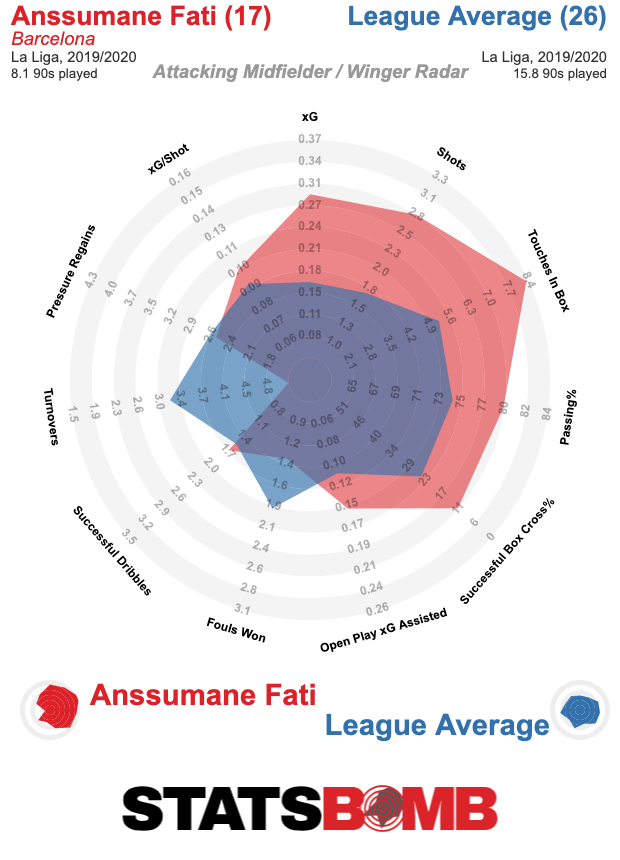
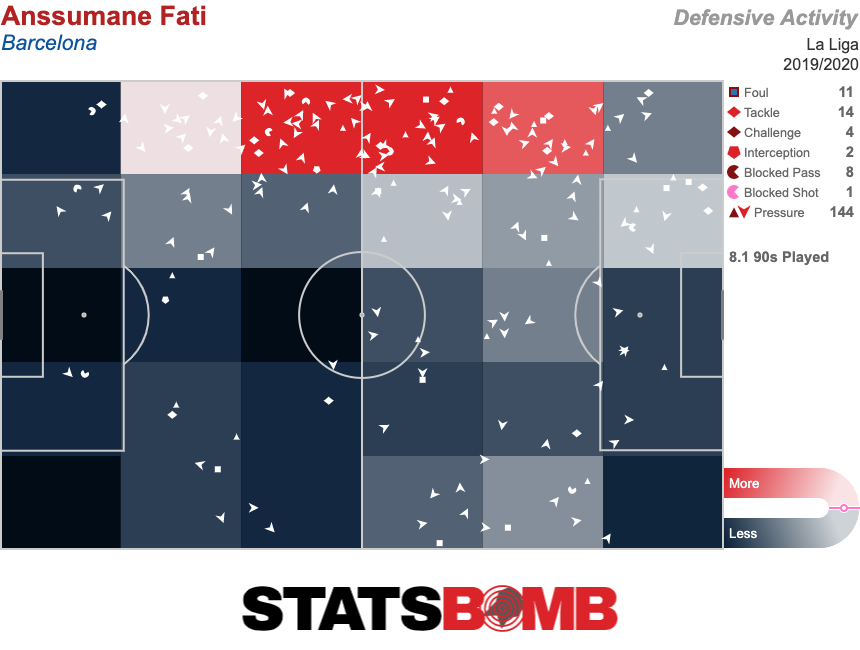
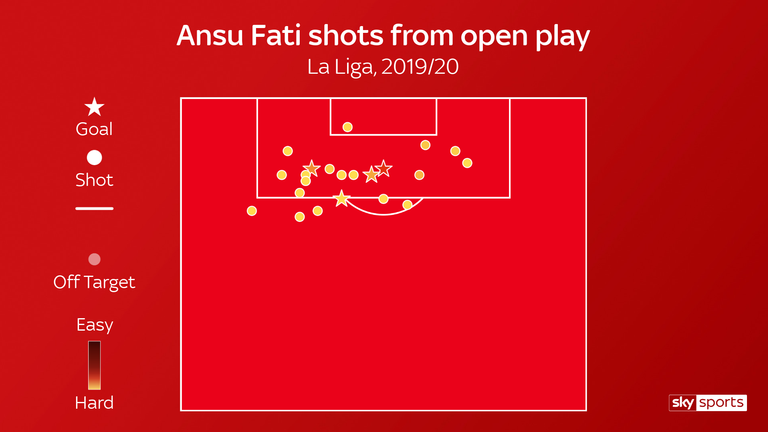
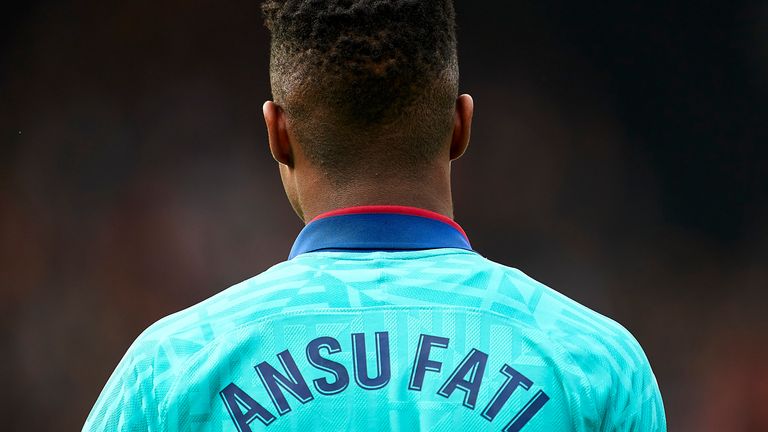
Barcelona’s Ansu Fati is a young player with the world at his feet
The brimming well that is Barcelona’s fabled La Masia training academy of excellence has somewhat dried up in recent years, but when it comes to Ansu Fati, the hype is real.
The Guinea-Bissau-born left winger, still almost five months shy of his 18th birthday, was mentioned as part of a swap deal involving Juventus’ Miralem Pjanic last week, but Fati was declared non-transferable a long time ago.
It has been a convoluted and disrupted season for many reasons at Barcelona, but one that will fondly be remembered by one of the world’s most exciting prospects, and a player who is destined to fill many column inches over the next decade and beyond.
Club: Barcelona
Age: 17
La Liga stats
Appearances: 16
Games started: 7
Minutes played: 683
Goals: 4
Recently, when asked by Jamie Carragher on the Football Show who Barcelona’s next superstar might be, Spanish football expert Graham Hunter was effusive in his praise of the youngster’s temperament and innate ability.
“Ansu Fati,” came his unequivocal response.
“There’s not as wide a supply of characters coming through as was once the case but when you watch Fati you see his pace, his ability to play and finish off either foot. When a big moment comes, some people get a bit jittery and some people go stone cold.
“How he matures and what his attitude to sudden wealth and profile is will determine whether he becomes an absolute stock superstar of European football.”
Spanish football expert Graham Hunter
“Ansu Fati has that mentality in him. He’s the youngest player to score for Barcelona in the league, the youngest player in Champions League history to score a goal – and that was at the San Siro against Inter Milan.
“He’s deeply exciting. How he matures and what his attitude to sudden wealth and profile is will determine whether he becomes an absolute stock superstar of European football in the next eight to 10 years but the repertoire, the mentality is there and, this is absolutely vital, Lionel Messi adores him, thinks very highly of him.
“You watch him in training, and now we get access to footage of training more than ever before. Messi’s regard for Ansu Fati is different from how he feels about a lot of the players that have been brought into the club.
“That is an enormous pair of shoulders to stand upon.”
Can Fati manage the weight of expectation?
Fati’s dribbling skills and quick feet has been a highlight of Barca’s season
Very little is certain about Barcelona’s future, with the current condition of the club described by Hunter described as a “mess”, but the club will certainly hope its rich tapestry becomes intertwined with the future of their most coveted youngster.
Josep Maria Bartomeu’s failure to reorganise the club and his front-page salary cut battle with Messi was played out like a soap opera, so Fati’s incredible potential cannot go to waste.
For that to happen, he must rise above Bartomeu’s administrative failure and attempt to replace Messi as the jewel in the crown. The wheels are in motion for the perfect environment in which that can take place.
Former Barcelona president Joan Laporta has announced his intentions to contest the 2021 presidential elections – and it is widely regarded that Xavi Hernandez will return to the club as head coach should Laporta be re-elected.
The club won 12 trophies in his seven years as president, and during the latter stages of his reign, he paved the way for some of the most successful seasons in the club’s history.
Xavi, along with Carles Puyol, Victor Valdes and Andres Iniesta owe their careers to Laporta for his emphasis on youth and frugal spending – and Fati will shoulder the burden of expectation on him to follow in the footsteps of those giants.
Fati is the street footballer, the precocious untrained talent that is the talk of La Rambla. And the records have tumbled.
The third-youngest player to score a goal in Spain’s top-flight behind Fabrice Olinga and Iker Muniain, it is now hard to imagine that the teenager could well have left the club last summer.
Having spent his childhood in the playgrounds of Bissau, the west African nation of Guinea-Bissau’s capital, Fati has elevated himself from the ground to the pinnacle of the game.
Only last summer, he was among those La Masia graduates who were considering whether they needed to leave Barcelona in pursuit of first-team opportunities abroad. But with both Manchester clubs circling, the Catalans instilled their faith in the player.
A three-year contract extension was agreed with the option of a further two years in addition to an eye-watering €100m release clause and the promise of a regular place in the B team.
The making of a star
The 17-year-old has been drawing comparisons with team-mate Lionel Messi
At the age of eight, Sevilla academy director Pablo Blanco enrolled him at the Andalucian club, and his very first coach Jose Luis Perez Mena knew after first watching Fati play that the club had someone special in their ranks.
Speaking to agency EFE, Perez Mena, the director of the Herrera football academy in Seville, recalled the day Fati arrived at the club in 2007.
“In Guinea he was used to playing with balls made of rags, but when he got a real ball for the first time it was incredible to see him,” Perez Mena said.
“I’ve been in the football game for 50 years and I’ve never seen anything like him. He’s got huge personality, he doesn’t fear anyone and you only need to see him on the pitch to see that.”
It wasn’t long before scouts from various clubs paid regular visits to Herrera to see Fati in action, with Barcelona prising him to the Nou Camp two years later in 2009, despite interest from Real Madrid.
It was at that stage in his formative years, aged just nine, that he formed a devastating relationship on the pitch with Japanese prodigy Takefusa Kubo for the club’s U12s, scoring a combined 130 goals in their first season.
Fati’s rise is all the more remarkable given the obstacles he would face over the next three years, a crucial time in the development of young players.
Barcelona were banned from registering foreign players during the 2014/15 and 2015/16 seasons as a punishment for buying underage players.
Kubo was forced to leave the club and return to Tokyo, but he has since joined Real Madrid and is currently on loan at Mallorca.
The pair remain friends, and while Fati stayed on and subsequently suffered an injury to his tibia and fibula, he kick-started his ascent while representing Barcelona’s Juvenil-B side in 2016/17.
Fati is the second youngest player to play for Barcelona’s first team
He was swiftly promoted into the Juvenil-A team – and he was the team’s top goalscorer during the 2018/19 season.
By now, his talent was the worst-kept secret in Spain, and an impressive pre-season with the senior squad last summer led to calls for him to be included in the first team this season.
Injuries to Messi, Luis Suarez and Ousmane Dembele meant that, at 16 years, 11 months and 25 days, Fati was fast-tracked to become Barca’s second-youngest debutant with a 15-minute cameo in the 5-2 win over Real Betis in the second league game of this season.
A week later, he became the youngest ever player to score a league goal for Barcelona when he netted an equaliser for the La Liga champions at Osasuna, aged just 16 years and 304 days.
Will Fati succeed where other pretenders have failed?
Fati became the youngest ever goalscorer in the Champions League in December
Barcelona must rebuild at a time when their prodigy is breaking through, and while the next stage may be to pin down a definitive position, it was famously said of Messi by Xavi that he could probably play in goal.
“His quality is that he can play in all of the attacking positions,” Albert Puig, La Masia’s former technical director, said.
“He can play at 9, 11, 7, 10. He’s very versatile. It makes a difference. He’s fast. He’s got a great imagination and he’s got this natural talent.
“It’s very important – this kind of player who plays so freely on the streets for hours and hours. It was the same with Messi as a kid, although Messi is obviously different in other aspects. Added to this. his natural talent helps to make the player he has become.”
There have been previous young debutants who have struggled to live up to the hype as Messi’s successor – Bojan Krkic, Gerard Deulofeu, Marc Muniesa and Adama Traore have all departed despite encouraging starts.
Quique Setien will be focused on securing Barcelona a fifth La Liga title in six years – and a first Champions League trophy since 2015 – but to the locals, it cannot come at the expense of Fati’s continued exposure to opportunity.
Suarez will be fit once the season resumes, but Dembele remains out after undergoing surgery for a hamstring injury – but whereas Fati may have earned his chance through their misfortune, he now stands shoulder to shoulder with those illustrious names.
The engineering marvel not only eased crushing traffic, but it also helped Johannesburg to partially fulfil its brand mandate to be a “world class African city.â€
Jozi finally gets a metro
The Gautrain rapid rail system is Johannesburg’s metro, its subway, its underground — though, like New York and London, much of the system is above ground or even elevated, save for the 15 kilometres between the Marlboro portal and Park Station. It is to Johannesburg what BART is to San Francisco and MARTA is to Atlanta. And, unlike most other urban centres (except for maybe San Francisco), what is particularly smart about the Gautrain is that it does not just serve Johannesburg. It extends into Ekurhuleni (for all intents and purposes part of Johannesburg, but separated for administrative purposes, as Greater Johannesburg would be too large to administer as a single city). Of course it also serves Pretoria, hence its naming as the train of Gauteng. This was a particular stroke of genius, to ease the traffic burden on the N1 between the two cities.
Planning the Gautrain
Like the Johannesburg Ring Road, whose planning began in the 1940s, a metro system for the city was actually planned as far back as the 1960s. Urban legend has it that the ground under Johannesburg was too porous to handle the drilling and tunnelling, honeycombed with mine diggings as it was. But aside from one unfortunate sinkhole in Oxford Road, where the road collapsed during construction (nowhere near the old mining activity), Gautrain and Jo’burg have taken to each other like a duck to water.
Planning began in earnest in the early 2000s, and by 2006, Parliament gave the go-ahead for the estimated R26 billion price tag. Rumblings and mutterings were heard around the country as non-Gauteng taxpayers were peeved that they should be saddled with the bill for a system they would never use. Credit must go to the government, however, for their forward thinking and planning: if Gauteng was contributing a third of national GDP to the country (it still does), but the country’s economic engine was being clogged up by traffic congestion, then surely the country could put aside the budget to ensure that the engine was given an overhaul, for the benefit of all.
Gautrain’s planning and construction took place before and apart from the Soccer World Cup in 2010 — although the coinciding times did much to bolster confidence in the country’s hosting of the event. Even so, no assurances were made that the system would be ready in time for the soccer spectacular. It took some sweet talking from national government to province (part owners of the Gautrain) — and some financial incentives — to try and have something up and running.
The airport line between Sandton and OR Tambo was opened to the public just two days before the opening match at Soccer City. A nation brimmed with pride. The north-south commuter line between Hatfield and Rosebank opened just over a year later in August 2011, while the last leg between Rosebank and Park Station — delayed because of water leak issues in the tunnel — opened a year after that, in 2012. In the interim, buses ran commuters from Rosebank into town. But the project was finally done, and it was every bit the flagship that so many hoped it would be.
The brains of the operation
Credit has to go to the people behind the project, too many to mention all of them here. These included, but are not limited to, Mbazima Shilowa, then premier of Gauteng, who was so enrapt with the undertaking that it was dubbed the Shilowa Express; Jack van der Merwe, project manager for Gautrain, who has also been enlisted to build phase 2; and Dr Barbara Jensen, who was tasked with integrating the communications of the brand. With its witty out-of-home advertising (one of the billboards proclaimed, “Quit smoking the M1â€), consistent use of the navy blue and gold corporate colours on all collateral including trains and buses, and the generous application of its logo and slogan (“For people on the move†— a clever double entendre if ever there was one), Gautrain’s clear and compelling communications have made it distinctive and given it great brand awareness.
A world-class system
Arguably, Gautrain is unremarkable when compared to other systems around the world. It’s not the longest — that honour would belong to Shanghai, which has been on a building binge of note to match the growth of the Chinese economy. It’s not the oldest — that honour would belong to London, which opened its underground in 1890, a mere four years after Johannesburg was founded (incidentally, London’s system housed residents underground as bomb shelters during the Blitz in World War 2). It’s not the busiest — that honour would belong to Tokyo, where professional “pushers†shove people onto the train to pack ‘em in, before the doors close. It’s not the most opulent — that honour would go to Moscow, where chandeliers and artwork hang in the train stations. And it’s not the most famous — that honour undoubtedly goes to New York, whose subway system has had the starring role in many a movie set in the city.
But there can be no doubt that Gautrain is world class. It’s clean, neat and tidy, a product of good planning and the Singapore-esque draconian application of the rules — no eating or drinking, no gum, no loud noise, no helmets, no bikes unless they are in bags, no rowdy behaviour, no vagrants and hawkers — the list goes on. For this reason, it was accused of being elitist, but the initial vision of an integrated transport system for all who can afford it, has become a reality, as attested to by its 30 million-plus annual users.
Mind the gap!
From a social perspective, it’s interesting to see how users have adopted the ways of London: as a train disgorges its passengers at a station — Sandton in particular — the people rapidly move up the escalators to exit. The slower ones keep left, the faster ones pass right. It’s the rule of the road, but one can’t help wondering if this interesting little slice of life came about because it naturally would, or because enough locals have been to London and learnt it there. And although the “train approaching, stand back from the platform edge†announcement in Gautrain stations is possibly a little less eloquent than the “mind the gap†one in London, the Gautrain would be at home in any international city. It reeks of professional, far more than the New York subway system — possibly because it’s so much newer.
Moreover, Gautrain is revolutionary and forward-thinking, being one of the very few metro systems in Africa (it was only the second in Africa after Cairo, and the only other one is in Algiers, which opened in 2011). It’s also one area where Johannesburg pipped Sydney to the post — a stripe it can wear with confidence. The first line of Sydney’s metro system only opened a year ago, in May 2019. But Jo’burg probably needed it more — there are no navigable waterways on the Highveld, so like Los Angeles, the city is heavily dependent on the car. LA’s own metro system was built for the same reason — to address that.
Future developments
Phase 2 planning for an extended Gautrain is already underway, and if the new vision is realised, the service will cover larger parts of Greater Johannesburg, including the East and West Rand, and bigger portions of Pretoria. The extension of the Gautrain system includes an airport line that will connect Lanseria and OR Tambo (including a possible link to the proposed midfield terminal there), service from Boksburg in the east to Krugersdorp in the west, and a link between Soweto in Johannesburg and Mamelodi in Pretoria.
The system has had a positive effect on areas near the stations, with a 200% increase in the price of properties in some cases — confirmed by the frenzy of building activity that is currently taking place. Aside from Rosebank and Sandton, numerous other reports suggest that the biggest benefactors have been Braamfontein and Centurion. Over time, however, it is likely that most of the areas close by will draw benefit, and as it expands, there can be no doubt that the Gautrain rapid rail transport system is on par with the best in the world.
This content has been created as part of our freelancer relief programme. We are supporting journalists and freelance writers impacted by the economic slowdown caused by #lockdownlife.
If you are a freelancer looking to contribute to The South African, read more here.
Ved Marwah, who served as the former Commissioner of the Delhi Police, died on Friday at a hospital in Goa.
Marwah had served as a former governor of Manipur, Mizoram and Jharkhand.
The Goa Police confirmed the news on their Twitter handle.
“We are deeply saddened at the loss of a great leader of the police force. Shri Ved Marwah, IPS, led the force from the front through difficult times and served as a Governor to three states. Our thoughts and prayers are with the family,” they said in a tweet.
We are deeply saddened at the loss of a great leader of the police force. Sh. Ved Marwah, IPS led the force from the front through difficult times and served as a Governor to 3 states. Our thoughts and prayers are with the family. @goacmpic.twitter.com/fBn5QnRSr7
Former Chief Election Commissioner SY Quraishi expressed his shock at Marwah’s demise.
I am shocked to know that Shri Ved Marwah former CP Delhi passed on. He was once my boss as JS Women’s Development, the best I ever had. He was President @StStephensClg Alumni Assn. I was VP with him. Pray for peace for his soul. @CafeSSC
— Dr. S.Y. Quraishi (@DrSYQuraishi) June 5, 2020
The NHS Providers deputy chief executive, Saffron Cordery, has said trusts received “little or no consultation†ahead of the government’s announcement on imminent changes to face covering regulations.
Matt Hancock, the health secretary, said on Friday that all hospital visitors and outpatients in England would need to wear face coverings and hospital staff must use surgical masks as of 15 June.
A health department spokeswoman added that while members of the public were “strongly urged†to attend hospital wearing a face covering, no one would be denied care and masks would be provided by the hospital if necessary.
But Cordery said in a statement that a lack of forewarning from the government had left NHS Trusts scrambling to find enough equipment to cater for hospital staff, patients and visitors.
“[The announcement] of compulsory mask wearing for all NHS staff working in any part of a hospital is clearly designed to help to ensure that both staff and patients are protected and feel safe,†she said.
“But as is the case for a number of announcements throughout the pandemic, this has come with little or no consultation with the NHS frontline and without a plan in place to ensure that all trusts will have access to adequate supplies of type one and two masks.â€
Cordery added trusts were nervous about the imminent lifting of some patient visiting restrictions from 15 June. “We know that trusts want to do all they can to ensure that patients can have contact with their loved ones while in hospital, but there is understandably nervousness and concern about opening up visiting too quickly,†she said.
“Trusts need time to put in place processes and guidance to ensure that patients can receive visitors safely and while adhering to social distancing and infection control measures.
“Important decisions like these should not come as a surprise to those expected to deliver them.â€
We use cookies on our website to give you the most relevant experience by remembering your preferences and repeat visits. By clicking “Accept”, you consent to the use of ALL the cookies.
This website uses cookies to improve your experience while you navigate through the website. Out of these, the cookies that are categorized as necessary are stored on your browser as they are essential for the working of basic functionalities of the website. We also use third-party cookies that help us analyze and understand how you use this website. These cookies will be stored in your browser only with your consent. You also have the option to opt-out of these cookies. But opting out of some of these cookies may affect your browsing experience.
Necessary cookies are absolutely essential for the website to function properly. These cookies ensure basic functionalities and security features of the website, anonymously.
Cookie
Duration
Description
cookielawinfo-checbox-analytics
11 months
This cookie is set by GDPR Cookie Consent plugin. The cookie is used to store the user consent for the cookies in the category "Analytics".
cookielawinfo-checbox-functional
11 months
The cookie is set by GDPR cookie consent to record the user consent for the cookies in the category "Functional".
cookielawinfo-checbox-others
11 months
This cookie is set by GDPR Cookie Consent plugin. The cookie is used to store the user consent for the cookies in the category "Other.
cookielawinfo-checkbox-necessary
11 months
This cookie is set by GDPR Cookie Consent plugin. The cookies is used to store the user consent for the cookies in the category "Necessary".
cookielawinfo-checkbox-performance
11 months
This cookie is set by GDPR Cookie Consent plugin. The cookie is used to store the user consent for the cookies in the category "Performance".
viewed_cookie_policy
11 months
The cookie is set by the GDPR Cookie Consent plugin and is used to store whether or not user has consented to the use of cookies. It does not store any personal data.
Functional cookies help to perform certain functionalities like sharing the content of the website on social media platforms, collect feedbacks, and other third-party features.
Performance cookies are used to understand and analyze the key performance indexes of the website which helps in delivering a better user experience for the visitors.
Analytical cookies are used to understand how visitors interact with the website. These cookies help provide information on metrics the number of visitors, bounce rate, traffic source, etc.
Advertisement cookies are used to provide visitors with relevant ads and marketing campaigns. These cookies track visitors across websites and collect information to provide customized ads.