Trump Shares Letter Saying White House Protesters Are ‘Terrorists’

President Donald Trump shared a letter on Twitter from one of his attorneys that describes the protesters outside the White House as “terrorists.”

Trump said the letter from John Dowd, who represented him during part of the Russia investigation, was “of interest to the American people.”

Dowd’s letter was in reply to former Defense Secretary Jim Mattis, who this week said he was appalled by the use of force against largely peaceful demonstrators in Lafayette Square, across from the White House. On Monday, those protesters were forced out with tear gas and rubber bullets so Trump could walk to St. John’s Episcopal Church to pose for a photo with a Bible. 

Mattis, who had previously avoided speaking out about his former boss, defended the protesters in a letter to The Atlantic. 

“The protests are defined by tens of thousands of people of conscience who are insisting that we live up to our values — our values as people and our values as a nation,” he wrote. Mattis also said leaders shouldn’t be “distracted by a small number of lawbreakers.”

But Dowd claimed, without evidence, that the protesters were violent. 

“The phony protesters near Lafayette park were not peaceful and are not real,” Dowd wrote. “They are terrorists using idle hate filled students to burn and destroy.” 

Read the full letter in Trump’s tweet: 

Earlier this week, Trump attacked Mattis by claiming it was an “honor” to fire him last year.

John Kelly, who was Trump’s chief of staff at the time, pointed out that Mattis was not fired.

“The president did not fire him. He did not ask for his resignation,” Kelly told The Washington Post. “The president has clearly forgotten how it actually happened or is confused.”

Trump later tweeted that he fired Mattis, but Kelly just didn’t know it because his chief of staff was not in his inner circle and was “totally exhausted” by his job.

In 2016, Trump vowed “to surround myself only with the best and most serious people.” Since then, he has repeatedly attacked many of the people he surrounded himself with, including Mattis and Kelly as well as former Secretary of State Rex Tillerson, former Attorney General Jeff Sessions, former national security advisor John Bolton, former chief strategist Steve Bannon, among others. 


Source by [author_name]

Thousands of Hong Kongers defy ban for massacre vigil

0

The rally, which has been held every year since the 1989 crackdown on pro-democracy protesters in China, had been banned over coronavirus fears, a move many viewed as political in a city where infections are down to a handful per month.

Early Thursday evening however, hundreds and then thousands of people defied the order, as well as signs and fences around Victoria Park, to occupy two large football pitches where the rally has been traditionally held. While numbers appeared down on previous years, and the usually well-organized memorial had a rather chaotic impromptu feel, they were by no means negligible, a major sign of defiance to Beijing.

Lee Cheuk-yan, an organizer and former lawmaker, led the crowd in chants of “end one-party rule,” and “democracy for China!”

Others chanted slogans from last year’s anti-government protests, including “fight for freedom, stand with Hong Kong,” and a more recent refrain, “Hong Kong independence, the only way out.”

Those slogans could be illegal in the near future, as Beijing moves to impose a national security law banning sedition, secession and separatism. Similar laws have been used to crack down on dissidents and pro-democracy activists in China.

National security law looms

That impending law is currently being drafted in Beijing and will be imposed automatically in Hong Kong via a rarely used constitutional backdoor, bypassing the city’s legislature. The law hung over this year’s Tiananmen memorial even before the event was officially banned, as both opposition and pro-government figures have predicted similar rallies could be illegal in future.

Hong Kong has long been the only place on Chinese soil where a mass commemoration of the June 4 crackdown is held. This fact has been a litmus test of sorts for the city’s autonomy from China, which has shrunk considerably in recent years, culminating in the national security law, which Beijing has said is necessary to prevent the type of violent unrest seen last year.

That unrest had been resuming as Hong Kong came out of the coronavirus crisis, and social distancing regulations relaxed. But police had responded to earlier protests with overwhelming numbers, and used tear gas and pepper spray to disperse several gatherings in recent weeks.

Thursday saw a complete reversal in tactics, as police stayed largely out of sight as several thousand people ignored fences and signs to gather illegally in Victoria Park. It was a striking contrast, perhaps a deliberate one, with protests in the US, which Hong Kong leader Carrie Lam on Tuesday pointed at to accuse critics of hers in Washington of “double standards.”

HSBC, Standard Chartered publicly support China's national security law for Hong Kong

Crowds began dispersing soon after 8 p.m. local time, following the lighting of candles and a moment of silence to remember the hundreds, possibly thousands, who were killed in the Tiananmen crackdown.

At its peak, the crowd spilled across two football pitches, and while there were considerably more gaps than in previous years, it was a major display of defiance in a city that has seemed somewhat shell-shocked in recent weeks by news of the national security law.

The next major test, of both the pro-democracy movement and the authorities, will come as early as next week, which sees two key anniversaries of last year’s protest movement.

About 1 million people marched against an extradition bill with China on June 9, 2019, while three days later, protesters blockaded the city’s legislature and clashed with police to prevent the law being passed. It was eventually withdrawn in September 2019, by which point the anti-government movement had grown substantially, with its goals expanded beyond a single bill.

Growing independence voice

One of the major concerns expressed by Beijing over last year’s protests — as well as the violence — was the growing clamor among many young activists for Hong Kong independence.

Separatism has traditionally been a fringe movement in Hong Kong. However it has grown in popularity in recent years, as space for regular pro-democracy activism shrank amid increasing pressure from Beijing.

Many of those who engaged in violent unrest last year self-identified as pro-independence, and flags calling for the city to split from China were a common sight at protests over the summer.

Yet they were never common sights at previous June 4 memorials. The Tiananmen vigil had actually been something of a wedge issue within the opposition movement, with many independence supporters seeing the massacre as irrelevant to the city and resenting the Hong Kong Alliance — which organizes the annual rally — for its strong commitment to a democratic China, which implicitly contains Hong Kong within it.

The upcoming security law — which will likely be used to target independence activists — and the pressure on the rally appears to have pushed these rival parts of the opposition together, with even the moderate, older crowd at Thursday’s rally joining in with chants of “Hong Kong independence, the only way out.”

Source link

Details of Britain’s impending #Coronavirus quarantine scheme

0

The British government plans to introduce a 14-day quarantine period for almost everyone entering the country from 8 June, writes Kylie MacLellan.

Below are details of the scheme:

WHO DOES IT APPLY TO?

Everyone arriving in the UK will be required to self-isolate for 14 days except those on a list of “limited exemptions”, which the government said it would publish later.

Those exempt will include:

– Road haulage and freight workers;

– medical professionals who are travelling to help with the fight against the coronavirus;

– anyone moving from within the Common Travel Area, which covers Ireland, the Channel Islands and the Isle of Man, and;

– seasonal agricultural workers will be able to self-isolate on the property where they are working.

The government said it would also continue to look at the option of things such as air bridges – agreements between countries who both have low transmission rates to remove the need for quarantine measures.

WHAT WILL PASSENGERS HAVE TO DO?

All arriving passengers will have to fill in an online contact form providing details and travel information so they can be contacted if they, or someone they may have been in contact with, develops the disease.

This will include giving details of their self-isolation accommodation and if it does not meet the necessary requirements, they will be required to self-isolate in facilities arranged by the government, at the passenger’s expense.

The government said people should use personal transport, such as a car, to travel to their accommodation where possible.

Once there, they should not go to work, school, or public areas, or use public transport or taxis. They should not have visitors, including friends and family, unless they are providing essential support.

They should also not go out to buy food or other essentials where they can rely on others.

WHAT PENALTIES WILL BE IN PLACE?

The new regime will be in place across the United Kingdom, although enforcement measures will be set individually by each of the devolved nations.

In England, a breach of the self-isolation rules would be punishable with a 1,000 pound fine or potential prosecution and unlimited fine. The level of fine could increase if the risk of infection from abroad increases.

Border Force may refuse entry to any non-British citizen who refuses to comply with these regulations and is not resident in the UK.

Failure to complete the contact form is punishable by a 100 pound fine. The government said public health authorities would conduct random checks in England to ensure compliance and removal from the country would be considered as a last resort for foreign nationals who refuse to follow the rules.

HOW LONG WILL THE SCHEME LAST?

The rules will come into force on June 8 and will be reviewed every three weeks.

The government said the first review would take place by June 29 and would look at factors such as:

– The rate of infection and transmission internationally;

– the measures international partners have put in place;

– levels of imported cases in other countries where there are more relaxed border measures, and;

– the degree to which antibody and other testing methodologies prove effective in minimizing the health risk.

Source by [author_name]

Gulf non-cooperation: Inside the flailing GCC

As fighting raged during the 1980-1988 Iraq-Iran war, neighbouring countries of the Gulf region decided it was time to organise militarily and economically to ensure strength in numbers.

Thirty-nine years later, the union that became known as the Gulf Cooperation Council (GCC) is in tatters because of a blockade imposed on one of its members, the natural gas-rich nation of Qatar.

More:

The GCC was fractured on June 5, 2017, when Saudi Arabia, the United Arab Emirates (UAE), Bahrain, along with Egpyt, a non-council member, severed all ties with Qatar and blocked air, land, and sea routes to and from the country.

Three years later, with the blockade still in full force, the fate of what once represented Gulf-Arab unity is now in question.

Bringing together Kuwait, Oman, Qatar, Bahrain, Saudi Arabia, and the UAE, the GCC faces “unprecedented” challenges – including the repercussions from the coronavirus pandemic and the diplomatic crisis caused by the siege, Secretary-General Nayef al-Hajraf said in a statement marking the bloc’s 39th anniversary last month.

The beginning

The GCC was formed on May 25, 1981, in Abu Dhabi, UAE, as the bloody war between Iraq and Iran was at its peak and the region was still reeling from the Islamic Revolution in Iran two years earlier.

The goals were lofty.

The GCC’s aim was to coordinate resistance to outside intervention in the Gulf, and a Unified Economic Agreement was signed in November 1981 and ratified in 1982. One of its goals was to include free trade among member states in all agricultural, animal, industrial, and natural resource products of national origin.

It also sought to strengthen cooperation among its six member states and regulate areas such as economic affairs, commerce, customs and communications, education and culture, social and health affairs, information and tourism, and legislative and administrative protocols.

The GCC – a region with a population of about 50 million people, half of those expatriate workers – also aimed to stimulate scientific and technological progress, establish scientific research centres, and encourage cooperation with the private sector.

With its headquarters in the Saudi capital, Riyadh, the GCC allowed the free movement of citizens and capital, but restrictions on some economic activities were left in place.

Military cooperation

The GCC formed a joint military ground force known as the Peninsula Shield in 1984 to rapidly deploy if any of the members were attacked.

In 1987, GCC nations declared any assault on a member state tantamount to an attack on the entire group. Despite these moves, however, the invasion of Kuwait by Saddam Hussein’s Iraq in 1990 was not met with Gulf troops.

The Middle East pro-democracy protests that erupted in 2011, known as the Arab Spring, were largely avoided in the GCC – with the exception of Bahrain.

In March 2011, about 1,000 Saudi soldiers entered the country to protect government facilities at Bahrain’s request, in line with the GCC defence pact. Dozens of protesters were killed, many arrested, and the uprising was put down.

Economics

Fossil fuels are the main driver of the GCC’s economic engine, accounting for about 90 percent of government revenues.

The GCC nations are facing their worst economic crisis in history amid the double shock of plunging oil prices and the coronavirus pandemic, the Institute of International Finance (IIF) noted this week.

Overall gross domestic product (GDP) will contract 4.4 percent this year, despite indications the coronavirus spread has been successfully contained.

Saudi Arabia, the region’s largest economy, could see its real GDP shrink 4 percent this year and its deficit widen to 13 percent.

Qatar, the world’s largest producer of liquefied natural gas, will also suffer from low energy prices, but it continues to develop its share of the North Field, the world’s biggest gas deposit.

Because of the air, sea, and land blockade, Qatar has been forced to seek out new trade routes and partners, and opened up its $74bn Hamad Port.

Business between Oman and Qatar is booming since the siege was imposed. Over the past three years, Qatar has also developed stronger economic relations with Turkey, Iran, and Pakistan.

Reports have emerged that Qatar, Oman and Kuwait may establish a free-trade zone independent of the GCC.

GCC Secretary-General al-Hajraf, Kuwait’s former finance minister, said last week the Gulf crisis and the pandemic represent “a common concern for all countries of the council”.

“This matter makes it imperative for all of us as the GCC system to enhance joint action and collective preparedness to deal with the post-coronavirus world with its economic, health, security, and labour dimensions in order to protect our people and preserve their gains,” he said in a statement marking the GCC’s 39th anniversary.

Ostracising Qatar

The blockade was not the first time Qatar faced internal GCC sanction. In 2014, the UAE, Saudi Arabia, and Bahrain withdrew their ambassadors to Qatar over concerns about Doha’s independent foreign policy.

Efforts to resolve the current crisis are reportedly continuing, with Kuwait acting as the main mediator since the beginning of the crisis in June 2017.

Three months after the blockade was imposed, Kuwait’s Emir Sheikh Sabah Al Ahmad Al Sabah told a press conference with US President Donald Trump: “What is important is that we have stopped any military action.”

The blockading nations immediately denied a military incursion had been planned.

James M Dorsey, a senior fellow at the S Rajaratnam School of International Studies, wrote in Modern Diplomacy that some Qatari officials believe “gaining control of Qatari gas reserves was a main objective of the Saudi-UAE boycott”.

Analysts have suggested the severe shift in GCC cooperation and solidarity occurred following the rise to power by Saudi Arabia’s current Crown Prince Mohammad bin Salman, after his father became king in January 2015. In tandem with the UAE’s Crown Prince Mohammad bin Zayed, the two countries moved to dominate the political agenda of the Gulf grouping.

“The organisation has been usurped by Saudi Arabia and the UAE to coerce the smaller states into followership,” said Andreas Krieg, an assistant professor at King’s College London.

GCC break-up?

Speculation has been rife that Doha may split with the GCC, though a Qatari official denied such a move was imminent.

“Reports claiming that Qatar is considering leaving the GCC are wholly incorrect and baseless,” Deputy Foreign Minister Lolwah al-Khater said last week.

“Such rumours must have originated from people’s despair and disappointment with a fractured GCC, which used to be a source of hope and aspiration for the people of the six member countries. As we are reaching the third year of the illegal blockade on Qatar by Saudi Arabia, UAE and Bahrain, there is no wonder why the people of the GCC are doubting and questioning the GCC as an institution.

“Qatar hopes the GCC will once again be a platform of cooperation and coordination. An effective GCC is needed now more than ever, given the challenges facing our region,” al-Khater said.

With discussions continuing, Kuwait’s Prime Minister Shaikh Sabah Al Khaled said on Wednesday “hopes are bigger than before” of ending the Gulf crisis.

“We used to move one step ahead and return two steps backwards. But now if we move forward a step, it is followed by another step,” Al Khaled told local media.

But one Western official in the Gulf, quoted by the Wall Street Journal on Wednesday, was far less optimistic.

“The regional conditions aren’t really there for some big rapprochement at the moment. My sense is this is the same old merry-go-round.”

Source link

Playing behind closed doors better than not playing at all: Thomas Muller

0


Bayern Munich’s Thomas Muller has said that playing behind closed doors is better than not playing at all despite admitting he misses the crowd reactions during the Bundesliga matches.


“You just miss the reactions of the crowd, especially during goal celebrations. The pre-match routines are also completely different. It’s a bit like at amateur level: You just walk onto the pitch without any big fuss and the referee blows for kick-off,” the club’s official website quoted Muller as saying.


“It’s a funny feeling when you’re used to playing in front of over 70,000 people in every home game. The only positive thing about the whole thing is that we can communicate a little better on the field now. Of course, it’s not the situation we’d like, but it’s better than not playing at all,” he added.


Bundesliga returned to action on May 16 after a long hiatus caused by the pandemic.


Bayern Munich has won all their four games after the league resumed. The club now has a seven-point lead at the top of the Bundesliga table.


The 30-year-old, Muller, also expressed his desire of playing like this until he is 35.


“Our fitness team has done an excellent job. Our cyber-training went pretty much like this digital press conference. I try not to get as muscular as one or two of the other players,” Muller said.


“I think my bones will have a longer life if they have to carry less weight around. I want to be able to keep running like this for the next five years and I have to stay in shape for that. That’s my secret,” he added.


Source link

Australia fines Sony $2.4 million for refusing refunds on faulty PlayStation games

0

FILE PHOTO: The logo of Sony PlayStation is displayed in Chiba, east of Tokyo, Japan, September 12, 2019. REUTERS/Issei Kato/File Photo

(Reuters) – A court has ruled that a unit of Japan’s Sony Corp broke the consumer law by denying customers refunds for faulty PlayStation games and ordered the company to pay a A$3.5 million ($2.4 million) fine, Australia’s consumer watchdog said.

The Australian Competition and Consumer Commission (ACCC) had filed a lawsuit against Sony Interactive Entertainment Network Europe Ltd in May last year for telling four customers it did not have to provide refunds for faulty games after they had been downloaded, or more than 14 days since purchase.

The court also rapped the global video game company for offering only store credits rather than cash to refund another customer.

“What Sony told these consumers was false and does not reflect the consumer guarantee rights afforded to Australian consumers under the Australian Consumer Law,” ACCC Chair Rod Sims said in a statement here on Friday.

Sony Europe had admitted liability and would contribute to the regulator’s legal costs for the case, according to the ACCC.

Sony did not immediately respond to a Reuters request for a comment.

($1 = 1.4343 Australian dollars)

Reporting by Shashwat Awasthi, additional reporting by Shriya Ramakrishnan in Bengaluru, Editing by Sherry Jacob-Phillips

Source link

UK #COVID-19 death toll passes 50,000

0

The United Kingdom’s COVID-19 death toll surpassed 50,000 on Wednesday (3 June), according to a Reuters tally of official data sources that highlighted the country’s place as one of the worst hit in the world, writes Andy Bruce.

New data from Scotland brought the toll to 50,059, a dire milestone for Prime Minister Boris Johnson as he tries to ease the stringent coronavirus lockdown. The figure is the highest in Europe and puts the UK behind only the much larger United States in a pandemic that has killed more than 379,000 people around the world.

Such a large death toll has prompted criticism of Johnson, who opposition parties say was too slow to impose a lockdown or protect the elderly in nursing homes or to build a test and trace system. The government says that while it may have made some mistakes, it is grappling with the biggest public health crisis since the 1918 influenza outbreak and that it has ensured the health service was not overwhelmed.

The Reuters tally comprises fatalities where COVID-19 was mentioned on death certificates in England, Wales and Northern Ireland up to 22 May, and up to 31 May in Scotland. Unlike the daily death toll published by the government, the death certificate figures include suspected cases. The tally also incorporates deaths that took place in English hospitals after 23 May, and in Wales and Northern Ireland.

The death toll surpasses even some projections by the government’s own scientific advisers. In March, Britain’s chief scientific adviser said keeping deaths below 20,000 would be a “good outcome”. In April, Reuters reported the government’s worst-case scenario was 50,000 deaths.

Epidemiologists say excess mortality – deaths from all causes that exceed the five-year average for the time of year – is the best way of gauging deaths from a disease outbreak because it is internationally comparable. Although these figures take longer to compile, Britain is faring badly here too. Some 62,000 more people than usual have died in the United Kingdom during this year’s pandemic, according to the latest available data, an expert from the Office for National Statistics said on Tuesday (2 June).

Source by [author_name]

Beijing’s military adventurism in the Himalayas is risky

0

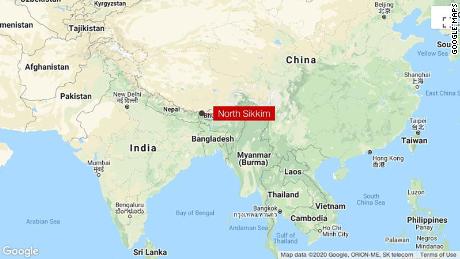
While the entanglement in North Sikkim was resolved locally, within the framework of mutually agreed-upon protocols, the ones in Eastern Ladakh have lingered, giving rise to speculation about China’s intentions.

The last major stand-off between the Asian giants was at Doklam in 2017, and lasted for 73 days. It was followed by informal meetings between Indian Prime Minister Narendra Modi and Chinese President Xi Jinping, first at Wuhan in April 2018 and then at Mamallapuram in Tamil Nadu in October 2019. During those interactions, both leaders reiterated the importance of peace in border areas for greater strategic gains. They also issued guidance to their respective militaries to exercise restraint and strengthen mutual understanding and trust.

At strategic and operational levels, both militaries have exercised restraint. However, at the tactical level, face-offs occur due to differing perceptions of where the actual border is as the LAC is not delineated on the ground. While face-offs get resolved locally, those related to the building of infrastructure, such as roads and defence fortifications, invariably take longer and require a combination of military and diplomatic initiatives.

The bilateral agreements signed between 1993 and 2013 have helped prevent the use of force beyond the occasional fistfights. Not a bullet has been fired by either side since 1975, and that is unlikely to change now.

Facing myriad internal and external challenges during the coronavirus pandemic, China can ill-afford any risky adventurism in the Himalayas. A conflict with India, its main regional strategic competitor, will not only compound its problems but will seriously impede its stated journey towards becoming a global superpower by 2050. Some of the challenges that Xi Jinping faces today include China’s contracting economy, its reignited trade war with the US, the departure of some manufacturing and the slowdown of its ambitious Belt and Road Initiative. Hong Kong protests, Taiwan’s intransigence, and the global demand to probe its role in the coronavirus pandemic have also added to its woes.

Moreover, barring Pakistan, which is its all-weather strategic partner in the region, Beijing’s assertive behavior coupled with its alleged pandemic-related role has generated anti-China sentiment in Asian countries it assiduously befriended as part of its containment strategy against India. India would do well to leverage this to its advantage.

Mutual deterrence

China is aware of the current combat potential of the Indian military, and has seen it evolve into an accountable, responsive and potent element of national power since the 1962 Sino-Indian conflict, over the still-disputed Himalayan border. Both militaries have been training together for many years to develop interoperability to undertake humanitarian assistance, disaster relief and counterterrorism operations. An understanding of each other’s military prowess helps create mutual deterrence as each side realizes the grim consequences of a conflict. India, under the present political leadership, has demonstrated its inclination to use force when provoked. The volatile and complex proxy war arena of Jammu and Kashmir has further helped the Indian army to battle-harden its soldiers.

The possibility of Beijing using the face-offs for strategic messaging to India cannot be ruled out. New Delhi has not only joined the international chorus for a probe into the origin and spread of coronavirus pandemic but has also blocked the automatic route for approving foreign direct investments from China. The strengthening strategic partnership between India and the US is another irritant for Beijing. China is known to employ inducement and intimidation means to deal with the external challenges and in the internal domain, whipping up nationalist fervor to eclipse various governance-related failures and inadequacies. The ongoing LAC rows serve both purposes. Unlike the earlier face-offs, this time around, the Chinese mainstream and social media have been extremely active in propagating patriotic narratives.
The reconciliatory statements issued by the Chinese embassy in New Delhi and the Foreign Affairs Office in Beijing point towards China’s desire to defuse the border tensions. However, there has been no forward movement on the ground. With India determined to develop the border infrastructure on its territory, as is its right, an early resolution of the entanglements could be difficult. This is a bilateral issue with no scope for any third-party intervention: both India and China have turned down the US proposal for mediation.

Although a conflict in the near future is a remote possibility, India must continue in earnest to develop its military capability to deter aggression and, should that fail, fight to win wars for the country. Relying on any external power to fight India’s wars is certainly not a good idea. As an emerging great power, India must carry its own big stick.

But for greater economic and geostrategic gains, a peaceful resolution is the answer. There is enough room in the world for the two Asian giants to grow simultaneously.

Source link

Fact Check: 5 Reasons Why The Coronavirus Is Not ‘Man-made’

0

AsianScientist (Jun. 5, 2020) – With the world fighting an unseen enemy, the origins of SARS-CoV-2, the virus behind COVID-19, have understandably received intense scrutiny.

In the absence of a clear answer, fringe theories regarding the virus’ supposed man-made origin have spread like wildfire. Though seemingly harmless, such theories create an atmosphere of “fear, rumors and prejudice that jeopardise our global collaboration in the fight against this virus,” as said by 27 international scientists in a strongly worded statement published in The Lancet.

Misinformation has also harmed the reputation of distinguished scientists, such as Japanese Nobel laureate Tasuku Honjo, who was impersonated in a fake Twitter account that falsely claimed the virus was deliberately manipulated.

Here, we examine the scientific evidence surrounding the origins of the coronavirus and spell out five reasons that support its natural origins.

  • Its purported genetically engineered sequences are also found in other organisms
  • By the end of January, a sinister theory that SARS-CoV-2 was deliberately engineered from HIV made its way into the mainstream. The theory was traced back to a now-withdrawn preprint uploaded on bioRxiv.

    Analyzing just four inserts in SARS-CoV-2’s spike protein, the bioRxiv pre-print claimed that these inserts bore an “uncanny” resemblance to sequences also found in HIV’s gp120 and Gag proteins. Because the sequences could not be found in other coronaviruses, the authors asserted that similarities were “unlikely to be fortuitous,” and that they may have been intentionally introduced into the virus.

    But the truth is that the sequences the team looked at are so short that it is easy to find them just about anywhere. A quick run through the BLAST database, which compares nucleic acid and protein sequences, reveals that they can be found even in organisms like spiders (Araneus ventricosus) and the malaria parasite (Plasmodium malariae). In summary, the sequences are too short and too common to be significant.

  • Nature designed SARS-CoV-2 far better than humans ever could
  • To bolster evidence that the coronavirus evolved naturally, researchers turned to the spike protein—used by SARS-CoV-2 to bind to and penetrate the outer walls of its host’s cells. One notable feature they examined was the spike protein’s receptor-binding domain (RBD), which helps the virus initially bind onto host cells.

    Laboratory experiments have so far shown that SARS-CoV-2’s RBD binds strongly to the host cell’s ACE2 receptor. And yet, computer simulations of the RBD’s mutations predict that this shouldn’t even be possible. In fact, the interaction is far from ideal; a different RBD mutation displays even better binding.

    If the coronavirus was genetically engineered, then logic dictates that scientists would have chosen the best RBD mutation. However, in this scenario, it is clear that nature has outsmarted us all—SARS-CoV-2 has evolved to be far better than humans could have ever imagined.

    As they say, the proof is in the pudding. Or in this case, the spike protein.

  • Its evolutionary history tells us so
  • Compared to common laboratory coronavirus strains, SARS-CoV-2’s evolutionary tree shows that it is more closely related to coronaviruses isolated from wild bats and pangolins. The bat coronavirus RaTG13, for instance, shares about 96 percent of its genome with SARS-CoV-2. Given their similarities, there’s been speculation that the novel coronavirus could’ve been derived from RaTG13.

    Though a genetic difference of four percent seems small, it’s huge in evolutionary terms. According to virologist Edward Holmes from the University of Sydney, this divergence is equivalent to an average of 50 years of evolutionary change. Generating SARS-CoV-2 in the laboratory would require a progenitor virus with even greater genetic similarity—certainly not one with half a century’s worth of divergence!

    Mutations in SARS-CoV-2’s RBD are also nearly identical to those found in pangolin coronaviruses, and not RaTG13. This provides stronger evidence that SARS-CoV-2 likely made the jump from bats to humans through a pangolin intermediate, instead of having been created in a laboratory.

  • Experimental tools to engineer such a virus do not exist
  • SARS-CoV-2’s spike protein has two other features that suggest its natural origin: the cleavage site and O-linked glycans. Its cleavage site allows the coronavirus to open and enter host cells, while glycans help shield it from antibodies.

    While viruses could evolve cleavage sites in laboratory conditions over long periods of time, it is just not possible for SARS-CoV-2’s O-linked glycan to have developed under a typical cell-culture setting. Developing the glycan shield requires evolutionary pressure from an intact immune system, which cells in petri dishes obviously lack.

    Could the coronavirus have been created in animal models, then? Fortunately, there are no known animal models that could have allowed SARS-CoV-2’s spike protein to develop both a glycan shield and a high affinity for the human ACE2 receptor. Therefore, SARS-CoV-2 could not have been created in a laboratory because the tools we have at the moment are inadequate for doing so.

  • It is highly unlikely the virus escaped from a lab
  • Whispers that the virus supposedly escaped from the laboratory date back to a preprint uploaded to ResearchGate in early February. Providing only the flimsiest of evidence to substantiate their claim, the authors cited the close proximity of the Wuhan Centers for Disease Control & Prevention and the Wuhan Institute of Virology (WIV) to the Huanan Wholesale Seafood Market, once considered as the outbreak’s ground zero.

    As the WIV was known to study bat coronaviruses, the authors suggest that the outbreak could have begun as a laboratory mishap. However, none of the COVID-19 patient samples match the coronavirus strains they had taken from bat caves, said Professor Shi Zhengli, head of the laboratory studying bat coronaviruses at WIV.

    Since then, scientists around the world have voiced their support for the WIV’s high standards for biocontainment.

    “I have worked in this exact laboratory at various times for the past two years. I can personally attest to the strict control and containment measures implemented while working there,” stated Assistant Professor Danielle Anderson, scientific director of Duke-NUS Medical School’s Animal Biosafety Level-3 laboratory, in a review on Health Feedback.

    As compelling evidence against the man-made virus theory mounts, it is worth noting that there hasn’t been any viable counterclaim against SARS-CoV-2’s natural origin so far. With all the uncertainty surrounding the virus, applying Occam’s razor is surely prudent in this scenario. The simplest explanation is likely the best one: the virus is not man-made.

    Copyright: Asian Scientist Magazine.
    Disclaimer: This article does not necessarily reflect the views of AsianScientist or its staff.


    Source link

    Coalition government’s grants for renovations and building criticised by economists and backbench MPs

    The Institute of Public Affairs has joined economists and backbench MPs in expressing concern about the $688m homebuilder package.

    The rightwing thinktank has labelled the $25,000 subsidy for new home builds and substantial renovations “a gross waste of taxpayer money”, as economists warn the payment will line the pockets of homeowners who have already obtained approvals and finance.

    The comments follow concerns expressed at the Coalition’s backbench economics committee on Wednesday evening and a regular town hall phone hook-up with Scott Morrison on Thursday.

    The concerns ranged from MPs nervous about the amount spent on stimulus, to Nationals and regional Liberals who argue the $150,000 minimum spend for renovations will put the subsidy beyond the reach of homeowners outside the capital cities.

    The IPA’s director of policy, Gideon Rozner, said the homebuilder policy was “a bank stimulus package by another name”.

    “No couple earning under $200,000 or individual on under $125,000 a year has a spare $150,000 lying around to spend on a home renovation to even be eligible,” he said.

    “So in order to access this Australians are going to be putting more money on their mortgage, and will end up paying the free $25,000 in interest payments.”

    Rozner called on the Morrison government to stop “wasteful stimulus measures”, arguing “we should not be putting home renovations on the national credit card”.

    The Nationals senator Matt Canavan and MP Barnaby Joyce both criticised the growing levels of public debt, expected to reach 26% of GDP in the next six months, well below comparable developed countries.

    “I completely get what the government is trying to achieve but I am very concerned about where our public debt levels are heading and where our private debt levels are already at,” Canavan told the Australian.

    Joyce reportedly said: “I understand how Keynesian stimulus packages work, but the government doesn’t have money. Taxpayers have money. You’ve got to pay it back.

    “We’ve got a very high private debt and our redeeming feature has been our low public debt … I’m concerned about the complexity of trying to pay back that debt.”

    Despite the Coalition unrest, Scott Morrison insisted the policy is not negotiable; opponents of the scheme are now arguing internally for the assistant treasurer, Michael Sukkar, to guarantee it won’t be extended beyond December.

    On Thursday evening, Morrison told A Current Affair that although “none” of the families in the suburbs he knew had $150,000 spare for renovations they “borrow the money to do those renovations” to provide room for growing families.

    Morrison said the program was estimated to be spent on 20,000 new home starts and 7,000 renovations and was necessary because of an anticipated drop-off in new home starts in the second half of the year.

    The Housing Industry Association estimates at least 14,000 renovations costing over $150,000 are undertaken every year.

    Brendan Coates, household finances program director at the Grattan Institute, said given the expected downturn, restoring construction to its normal levels “doesn’t necessarily mean a failure”.

    But he said about 110,000 homes are built a year, of which 75,000 would be eligible for grants because they cost $750,000 or less (with land). “It does suggest if there are 20,000 grants for new builds, not many houses wouldn’t otherwise have been built without the scheme.”

    Coates said it was “pretty clear” the 7,000 renovations expected to receive a subsidy are “not additional” because only those ready to build could fit the strict June to December timeframe to sign a contract. He cited the lead time to get plans drawn up, costed, engineering, building approvals and finance.

    However, the policy could help purchase new homes on the urban fringe on greenfields lots with a “simpler” process to build from scratch.

    “If there is a big problem with housing construction, I doubt this scheme will be large enough to fill the gap.

    “In terms of bang for its buck – it’s not the best way to go. Social housing would be a better stimulus per dollar spent, particularly compared with the renovation component [of homebuilder].”

    The St Vincent de Paul Society chief executive, Toby oConnor, said the government “can do better … it can boost economic activity in the building sector and address the chronic shortage of social housing at the same time”.

    “There’s an estimated shortfall of at least 438,000 dwellings and that’s before the anticipated Covid-19 recession fully hits and unemployment peaks in the next few months.”

    Source link