Anti-racism sites hit by cyber-attack wave

0

Image copyright
AFP

Cyber-attacks against anti-racism organisations shot up in the wake of the death of George Floyd, a leading provider of protection services says.

Cloudflare, which blocks attacks designed to knock websites offline, says advocacy groups in general saw attacks increase 1,120-fold.

Mr Floyd’s death, in police custody, has sparked nationwide civil unrest in the US.

Government and military websites also saw a notable increase in attacks.

DDoS attacks – short for Distributed Denial of Service – are a relatively simple cyber-attack tool, in which the attacker tries to flood a website or other online service with so many fake “users” that it cannot cope.

The effect is that it gets knocked offline for people trying to access information or services.

Media playback is unsupported on your device

Media captionEXPLAINED: What is a DDoS attack?

Cloudflare says that after Mr Floyd’s death and the ensuing violent clashes between police and protesters, it saw a noticeable jump in the amount of requests it blocked – an extra 19 billion (17%) from the corresponding weekend the previous month.

That equates to an extra 110,000 blocked requests every second, it said.

The problem was particularly acute for certain types of organisations. One single website belonging to an unnamed advocacy group dealt with 20,000 requests a second.

Anti-racism groups which belong to Cloudflare’s free programme for at-risk organisations saw a large surge in the past week, from near-zero to more than 120 million blocked requests.

Image copyright
Cloudflare

Attacks on government and military websites were also up – by 1.8 and 3.8 times respectively.

It follows a sudden swell of interest in the “hacktivist” collective Anonymous, which has said it will support the protesters, and threatened to target the police in the city of Minneapolis, where George Floyd was killed. The group has often used DDoS attacks in the past.

Cloudflare, meanwhile, invited at-risk groups to join its free protection programme.

“As we’ve often seen in the past, real world protest and violence is usually accompanied by attacks on the internet,” Cloudflare said in a blog post written by its chief executive and chief technology officer.

“Unfortunately, if recent history is any guide, those who speak out against oppression will continue to face cyber-attacks that attempt to silence them.”

Source link

Rod Rosenstein defends Mueller appointment, approval of FISA applications in Russia probe

WASHINGTON — Former Deputy Attorney General Rod Rosenstein on Wednesday defended his decision to appoint Robert Mueller as a special counsel overseeing the Russia investigation and his decision to approve flawed applications for surveillance warrants through the Foreign Intelligence Surveillance Act.

Rosenstein made the remarks in public testimony before the Republican-led Senate Judiciary Committee, whose GOP members have been looking into the origins of the Russia investigation into meddling in the 2016 election and the Trump campaign.

In his opening statement, the former deputy attorney general explained that he appointed Mueller to lead the Russia investigation after then-Attorney General Jeff Sessions recused himself from the probe and the firing of James Comey as FBI director because he was “concerned that the public would not have confidence in the investigation and that the acting FBI director was not the right person to lead it.”

“I decided that appointing a special counsel was the best way to complete the investigation appropriately and promote public confidence in its conclusions,” Rosenstein said. “As we now know, the eventual conclusions were that Russians committed crimes seeking to influence the election and Americans did not conspire with them.”

The acting FBI director at the time was Andrew McCabe, who Rosenstein said was “not fully candid” with him and “certainly wasn’t forthcoming” about the Russia probe. Specifically, Rosenstein said that McCabe didn’t reveal Comey’s memoranda from his interviews with President Donald Trump and the FBI’s suspicions about the president to him until a week after McCabe took over as acting director.

In a statement, McCabe responded that Rosenstein’s “claims to have been misled by me, or anyone from the FBI, regarding our concerns about President Trump and the Trump campaign’s interactions with Russia are completely false. Mr. Rosenstein approved of, and suggested ways to enhance, our investigation of the President. Further, I personally briefed Mr. Rosenstein on Jim Comey’s memos describing his interactions with the President mere days after Mr. Rosenstein wrote the memo firing Jim Comey.”

In his testimony, Rosenstein also defended his decision to sign off on FISA applications.

“Every application that I approved appeared to be justified based on the facts it alleged, and the FBI was supposed to be following protocols to ensure that every fact was verified,” Rosenstein told lawmakers.

Rosenstein, however, then acknowledged the findings from investigative reviews from last December and this past March that he said “revealed that the FBI was not following the written protocols, and that ‘significant errors’ appeared in applications filed in connection with the Crossfire Hurricane investigation,” the code name for the FBI counterintelligence probe.

Asked by Committee Chairman Lindsey Graham, R-S.C., whether Rosenstein would have approved an application to renew a FISA warrant for Trump campaign aide Carter Page knowing what he knows now, Rosenstein said he would not have done so.

But in an exchange with Sen. Patrick Leahy, D-Vt., Rosenstein said he agreed that the 17 errors in the FISA warrant application for Page, identified in the report by Justice Department Inspector General Michael Horowitz, did not undermine the broader Russia investigation.

He also agreed that those FBI errors further didn’t undermine unanimous intelligence assessments that Russia interfered in the 2016 election.

The former deputy attorney general said that the Department of Justice “must take remedial action” whenever agents or prosecutors “make serious mistakes or engage in misconduct.”

“While it is necessary to correct mistakes and punish wrongdoers, it should not go unsaid today that our law enforcement agencies are filled with men and women who act with integrity,” Rosenstein added. “As we watch them deal with extraordinarily difficult challenges throughout the country, we should take this opportunity to let them know that they have our appreciation and support.”

During the hearing, Sen. Dick Durbin, D-Ill., said that Graham plans to issue 53 subpoenas on Thursday to investigate the Russia probe. Durbin then ticked through Trump aides for whom he would like to seek subpoenas, including George Papadopoulos, Roger Stone, Rick Gates, Paul Manafort and others.

His testimony comes after former acting Director of National Intelligence Richard Grenell recently declassified documents that Republicans claim showed that the Obama administration was specifically targeting Michael Flynn, President Donald Trump’s former national security adviser. It also comes after the Justice Department recently recommended that the judge overseeing Flynn’s case dismiss the criminal charges against him.

Julia Ainsley contributed.


Source link

Trump Denies, Then Admits, Going to White House Bunker During Protest

WASHINGTON — President Trump on Wednesday first denied and then acknowledged that he had gone to a secure bunker in the White House over the weekend as protesters demonstrated nearby but said he went there for an “inspection,” not because of concerns over his safety.

“Well, it was a false report,” Mr. Trump said during an interview with Brian Kilmeade of Fox News Radio, who had asked if he had been brought to the bunker along with his family as protests continued.

But then Mr. Trump reversed himself, and said he had gone to the bunker with a group of people he could not name. “I wasn’t down — I went down during the day, and I was there for a tiny little short period of time, and it was much more for an inspection, there was no problem during the day.”

Mr. Trump did not say which day he had been taken to the bunker, but added that he had be there “two, two and a half” times before because he had “done different things” related to inspecting the bunker.

The president’s account was contradicted by a person with firsthand knowledge who told The New York Times that on Friday night, Secret Service agents nervous for his safety abruptly rushed him to an underground bunker used in the past during terrorist attacks.

A second official familiar with the events said the agents acted after the White House’s security status was changes to “red” amid the protests, a warning of a heightened threat. Officials said the president was never really in danger, but that he and his family were rattled by the sometimes violent protests near the White House.

Mr. Trump’s concern over the perception that he was hiding prompted him on Monday to tell his staff that he wanted to take some kind of action to address that impression. After a discussion over whether to send the military into American cities, he decided instead to walk across Lafayette Square to a church damaged by fire the night before, but not before law enforcement officers used-riot control tactics, including pepper spray and other chemical irritants, dispersed a crowd of demonstrators to clear his path.

In the interview, Mr. Trump covered a range of other topics. Here are some of the other things the president said in the interview:

  • When Mr. Kilmeade asked why he was focusing on things like fighting with the MSNBC host Joe Scarborough when so much turmoil was unfolding across the country, Mr. Trump again falsely claimed the former congressman was connected to the death in 2001 of Lori Klausutis, a young woman who worked for him.

    Mr. Trump said he “strongly felt” that Mr. Scarborough “got away with murder.” But a coroner determined that Ms. Klausutis’s death was an accident that happened when she fainted from an undiagnosed heart condition and died after hitting her head. The widower of Ms. Klausutis has pleaded that Mr. Trump stop using his wife’s death to attack Mr. Scarborough.

  • He suggested that religious leaders criticizing his visit to St. John’s were members of the “opposition party” and said that the evangelist Franklin Graham and “many other people” had loved the visit.

  • He dismissed recent polling showing Joseph R. Biden Jr., his Democratic challenger, with as much as a 10-point lead. “I have other polls where I’m winning,” Mr. Trump said, though he did not cite one. There are no public polls showing him beating Mr. Biden in the general election; a handful show the president statistically tied with Mr. Biden in some battleground states. Mr. Trump then bragged about his victory in the 2016 election.

  • He said the federal government would step in to deal with protests in New York City, where Gov. Andrew M. Cuomo and Mayor Bill de Blasio have been at odds over the best way to contain the unrest. “If they don’t get their act straightened out, I will solve it,” Mr. Trump said, without offering details. “I’ll solve it fast.”

At two points, Mr. Kilmeade tried to usher Mr. Trump off the phone, finally closing out the interview with “enjoy the rest of your day and all your meetings.”

Source link

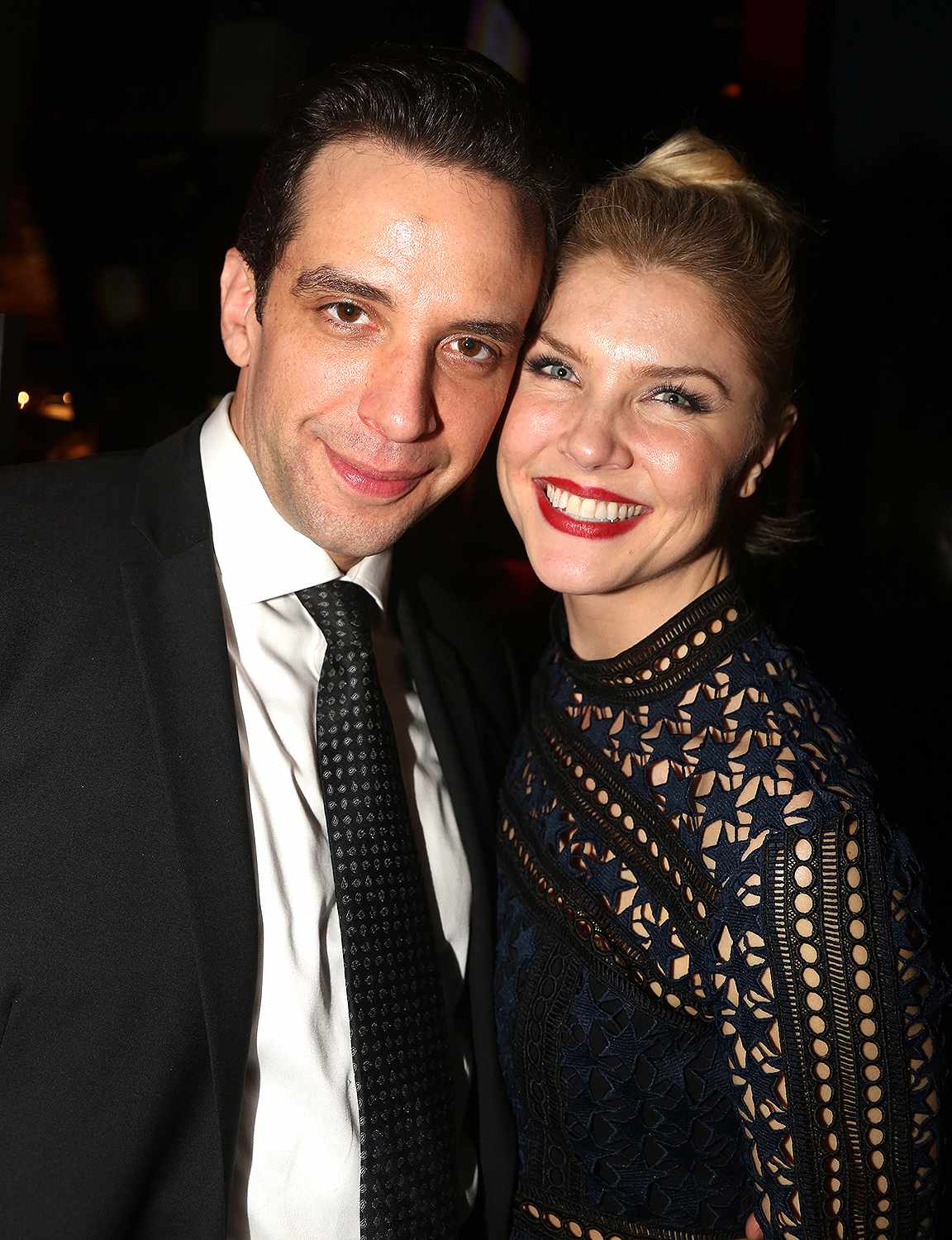
Nick Cordero’s Wife Says She’s Been ‘Told to Say Goodbye’ But Is Still Fighting as He Gets ‘Slightly Better’


Nick Cordero’s Wife Has Faith of Recovery as He Gets ‘Slightly Better’ | PEOPLE.com


this link is to an external site that may or may not meet accessibility guidelines.

Source link

Musicians Push Industry to Support Justice With Money, Not Hashtags

As the music world observed a voluntary “blackout” on Tuesday to reflect on issues of race and social justice, the industry also came under some criticism for making a solemn gesture without announcing more concrete plans.

The initiative, called #BlackoutTuesday or #TheShowMustBePaused, quickly spread online, turning many people’s social media feeds into grids of black squares — which drew complaints that the effort was muting debate rather than contributing to it. It also raised broader questions about the value and sincerity of corporate expressions of empathy.

“What if we posted donation and petitions links on instagram all at the same time instead of pitch black images,” the “Old Town Road” star Lil Nas X tweeted.

The Weeknd, who said this week that he would donate $500,000 to black-empowerment organizations, called on music’s corporate powers to “go big and public” with contributions. Echoing an initial statement from Jamila Thomas and Brianna Agyemang, the two black women who started #TheShowMustBePaused, about the music industry’s debt to black musicians, he wrote on Instagram: “No one profits off of black music more than the labels and streaming services,” and added: “It would mean the world to me and the community if you can join us on this.”

Record labels and tech platforms had already made some commitments, however. This week Spotify and Sony Music said they would match employee donations. Apple said it would give unspecified sums to a number of groups, including the Equal Justice Initiative, and SiriusXM, which also owns Pandora, said on Wednesday that it would be making undisclosed contributions.

The Universal Music Group announced a task force to examine the company’s efforts in inclusion and social justice, but so far has not announced any specific plans for donations.

Still, advocates have been careful to note that their efforts would not be limited to a single day, and further donations may be coming soon. Late on Tuesday, the organizers of the Blackout campaign tweeted: “You just witnessed Act 1.”

On Wednesday, the Warner Music Group — home to stars like Cardi B and Ed Sheeran — upped the ante by announcing a $100 million fund from the company and a foundation affiliated with its majority owner, Len Blavatnik of Access Industries, “to support charitable causes related to the music industry, social justice and campaigns against violence and racism.”

That statement came within minutes of another announcement from Warner about the pricing of shares in its much-anticipated initial public offering. The company will sell 77 million shares — seven million more than originally announced — at $25 each, raising $1.9 billion for Access, which issued the stock. Those seven million extra shares will bring in $175 million.

A spokesman for Access and Blavatnik said the fund “will not be directly funded from proceeds received from the I.P.O.” The fund is being financed by both Warner and the Blavatnik foundation.

Blavatnik, who has also invested in oil, chemicals and other industries, has been ranked by Forbes as the 51st richest person in the world, with a net worth estimated at $19.5 billion.


Source link

Lebanon money exchangers back at work after strike

Money exchangers in Lebanon have ended their strike and returned to work.

The government had blamed them for the devaluation of the local currency.

There now appears to be a deal to control the currency market.

But many warn that stabilising the exchange rate cannot happen as long as US dollars are in short supply

Al Jazeera’s Zeina Khodr reports.

Source link

‘My emotions were so raw’: The people creating art to remember George Floyd

0

Written by Ananda Pellerin, CNN

This feature includes artwork with language that some might find offensive.

In the wake of George Floyd’s death at the hands of a Minneapolis police officer, artists have been quick to respond with works that seek to memorialize, to provoke and to heal.
Los Angeles-based artist and activist Nikkolas Smith is using his work to convey the message that police violence is a reality for many African Americans.

“This latest case of police brutality was yet another injustice that moved me to paint a tribute to give honor and a voice to a voiceless victim,” said the 35-year-old over email.

A portrait of George Floyd by Nikkolas Smith Credit: Nikkolas Smith

Smith’s digital portrait of Floyd wearing a suit was shared by organizers of the Black Lives Matter movement and Michelle Obama on Instagram. Obama wrote: “Like so many of you, I’m pained by these recent tragedies … Right now it’s George, Breonna, and Ahmaud. Before that it was Eric, Sandra, and Michael. It just goes on, and on, and on.”

‘I can breathe now’

Closer to home in Minneapolis, Greta McLain, Xena Goldman and Cadex Herrera sprung into action to paint a wall mural at the corner of 38th Street and Chicago Avenue South, the spot where Floyd was arrested. A viral video showed Floyd saying “I can’t breathe” multiple times as police officer Derek Chauvin — who has since been fired and charged with third-degree murder and second-degree manslaughter — knelt on his neck.

For the artists, creativity is a powerful way for the community to speak out.

“George Floyd was killed in my neighborhood, where I have lived all of my life. It is a clear and unequivocal action of police brutality,” said community and public artist McLain over email.

The artists began painting the mural last Thursday, three days after Floyd died, and were finished within 12 hours. It shows a likeness of Floyd with his name in prominent lettering and a flaming sunflower behind him. It also features the names of other African Americans who have been killed by the police, including 26-year-old EMT Breonna Taylor, who was fatally shot in March, in her Louisville home. Her death has also been protested in the last few days.
Thirty-five-year-old McLain studied mural making at the University of California, Davis, and was mentored by Malaquias Montoya, a major figure in the Chicano art movement. She now owns the community mural studio GoodSpace Murals, and calls her hometown of Minneapolis a “hub for community art.”
The mural was painted on the wall of Cup Foods with the blessing of the shop’s owner, Mahmoud Abumayyaleh. (One of Abumayyaleh’s employees made the initial call that led to officers arriving on the scene to confront Floyd.)

McLain was approached by Goldman to join the project. “This was our first time all painting together,” she said of her co-artists, who had met the previous year at a training session for Latinx muralists. Though the process for such pieces is usually much longer, thley were looking for a “permanent shift” in the intersection’s “visual landscape.”

“It was very fast, organized over Instagram…like, ‘who’s ready, let’s go!'” McLain said. “My studio was able to provide the paint and we were able to move quickly.”

This was the first mural that 45-year-old Belize-born Cadex Herrera had completed, after he had started as a mural apprentice with a local non-profit last year. As an art educator and intervention specialist at an elementary school, he felt compelled to create something meaningful after hearing about Floyd’s death.

The artists stand in front of the George Floyd memorial mural that they painted in Minneapolis. From left to right: Niko Alexander, Cadex Herrera, Greta McLain, Xena Goldman, Pablo Helm Hernandez.

The artists stand in front of the George Floyd memorial mural that they painted in Minneapolis. From left to right: Niko Alexander, Cadex Herrera, Greta McLain, Xena Goldman, Pablo Helm Hernandez. Credit: courtesy Cadex Herrera

“My emotions were so raw,” he said over email. “The hurt is so deep and the wound won’t heal because it opens up every time a person of color is killed unjustly and it doesn’t stop.”

For him, art can help heal. “Art is therapy. Art can say things you cannot express with words. It brings the community together to reflect, to grieve, for strength and for support.”

He, McLain and Goldman were helped by artists Maria Javier, Rachel Breen, Niko Alexander, and Pablo Helmp Hernandez, however the final detail on the mural, the words ‘I can breathe now,’ were added by someone else, and reference the words repeated by Floyd in the video of the killing: “I can’t breathe.”

“The phrase came from an African American community member, Anjel Carpenter, who approached us and asked for it,” McLain said. “She then surveyed the community, asking them if they preferred ‘I can breathe now,’ ‘Let me breathe,’ and one more, and they voted for ‘I can breathe now.’ We asked another member of the community to paint those words in.”

“(Carpenter) expressed to us that the idea of not being able to breathe was fueling so much tension and anger,” McLain continued. “And that now George was with God and it was important for our community healing to claim our breath and ability to breathe.”

Justice for George

Thirty-three-year-old Shirien Damra says she is relatively new to Instagram, but her memorial image dedicated to George Floyd, “Justice for George,” has already received over three million likes since she posted it the day after Floyd was killed. Her work has been widely shared, including by congresswomen Alexandria Ocasio-Cortez and Rashida Tlaib.

A native of Chicago, Damra is the daughter of Palestinian refugees and wants her work, which brings together bold and soft colors, to resonate as “loving” and “calming, yet hopeful.”

“I know the power of color and the emotion it can implicitly evoke,” she said over email. “I hope that my colors and imagery help the viewers process difficult emotions and events and come out of it with some hope and inspiration.”

"Justice for Breonna" by Shirien Damra

“Justice for Breonna” by Shirien Damra Credit: Courtesy Shirien Damra

"Justice for Ahmaud" by Shirien Damra

“Justice for Ahmaud” by Shirien Damra Credit: Courtesy Shirien Damra

Damra works as a freelance designer for social justice organizations and has created similar memorial illustrations, including ones for Ahmaud Arbery, who was killed by two men in May while jogging near his home in Georgia, and Breonna Taylor.

“I wanted these pieces to be a gesture of solidarity with Black communities in their time of grieving,” she said. “I noticed a lot of people sharing the videos of Ahmaud and George’s deaths, so I wanted to create an alternative. These videos are very traumatic and triggering.”

She also hopes her illustrations will help combat stereotypes. “So often, I’ve seen victims of anti-Black violence demonized as some kind of justification for their deaths, implying that they did something to deserve it,” she said, citing the fatal shooting of high school student Trayvon Martin by George Zimmerman in 2012, as one example.
Zimmerman, a neighborhood watch volunteer, dialed 911 to report a “real suspicious guy” who was “up to no good … and he’s just walking around” before following and shooting Martin. He later claimed he was acting in self-defense and was acquitted of murder by a Florida jury.

“He was a 17-year-old kid who was seen as suspicious for wearing a hoodie,” Damra said. “It’s a disturbing pattern that happens each time we hear news of another victim of anti-Black violence. My way of challenging this was to carefully choose bright colors and florals to honor their memory and celebrate their lives in a beautiful way.”

Necessary acts

On Saturday, New York-based Láolú Senbanjo, an artist and former human rights lawyer, posted a photo on Instagram of his watercolor and charcoal painting that depicts Floyd with a target on his chest. The image also features a likeness of Donald Trump, vocalizing the incendiary Tweet he wrote in response to protests and violence in the streets: “When the looting starts, the shooting starts.”
"I can't breathe" by Láolú Senbanjo

“I can’t breathe” by Láolú Senbanjo Credit: Láolú Senbanjo

“When I see video of men like George Floyd treated as far less than human, I can barely comprehend it,” 39-year-old Senbanjo said over email. “His proud face smashed into the pavement. It breaks my heart apart. I’ve been black all my life, but for the first twenty years I was black in Africa (Nigeria). Now I’ve been black in America and it is a different experience. America doesn’t honor what they have in their black citizens. I couldn’t not make art about the killing of George Floyd.”

Senbanjo said that art can help with processing trauma: “Every time there is a new senseless death, or blatant manifestation of harmful white supremacy, art can help us to instigate, remember, imagine, discuss, and express these complex experiences and feeling states.”

Do the right thing

Theoplis Smith III was born and raised in St Louis, Missouri, and his recent artwork of Floyd presents him wearing the “Love” and “Hate” four-knuckle rings worn by Radio Raheem (played by Bill Nunn) in Spike Lee’s 1989 movie, “Do The Right Thing.” In the movie, the unarmed Raheem is choked to death by a police officer.

“Seeing this movie as a child, I never imagined that what happened to Radio Raheem the character in the movie, I would not only see on an eight-minute video happening to a man before my eyes, but have to sit and discuss with my 16-year-old black son,” the 38-year-old former banker said over email, referring to Chauvin’s use of a knee-to-neck restraint maneuver on Floyd, which allegedly led to his death. Smith’s post of his artwork was shared by Spike Lee’s own Instagram account.

Memorial artwork by Theoplis Smith III, depicting George Floyd as Radio Raheem, from Spike Lee's "Do The Right Thing." The character is choked to death in the film

Memorial artwork by Theoplis Smith III, depicting George Floyd as Radio Raheem, from Spike Lee’s “Do The Right Thing.” The character is choked to death in the film Credit: Courtesy Theoplis Smith III

Smith, who has created other memorial images, such as one for Michael Brown, a black teenager who was shot and killed by white police officer Darren Wilson six years ago in Missouri, said that making this type of art can be difficult.

“Unfortunately, having to create out of many negative circumstances isn’t my favorite thing to create, but it is often my most impactful.”

Art for now and the future

When art is used to bring attention to social issues, it can connect with people in ways that other forms of political engagement cannot, Damra in Chicago said.

“Art can touch the emotional core of what moves us toward social justice in ways that a strategy meeting or news or political analysis can’t. Murals, graffiti and paintings are a chance for communities to come together and speak their mind or represent themselves in public space.”

The message, for Damra, is clear: “We don’t want any more Black lives targeted by police and white supremacy.”

As protests erupt all over the US, memorials and demonstrations to Floyd are also appearing around the world, including one by street artist Eme Freethinker (aka Jesus Cruz Artiles), who painted a mural of Floyd’s likeness in Berlin.

McLain wrote that it was crucial for white people to be loud and active about the “decades of police violence and injustice directed at people of color,” adding: “The incredible racism and violence that our communities of color have been experiencing… is NOT ok and we all need to stand and demand change. We cannot be quiet!”

Similarly Herrera in Minnesota wants the mural to remind people of the message that “Black Lives Matter.” He wrote that we must all “stand up for people of color who are singled out, harassed, brutalized, mistreated and murdered by law enforcement every day.”

Smith in Los Angeles said the importance of social justice art is to galvanize people, and to help them look to a better future. “Art during these volatile times in history can either aggressively wake people up to reflect what is broken, or paint a hopeful picture of what could be, showing us a way forward.”

Source link

Global smartphone shipments to fall 12% this year on virus woes: IDC

0

People wearing face masks following the coronavirus disease (COVID-19) outbreak are seen at an Apple store as the new iPhone SE goes on sale, in Hangzhou, Zhejiang province, China April 24, 2020. China Daily via REUTERS ATTENTION EDITORS – THIS IMAGE WAS PROVIDED BY A THIRD PARTY. CHINA OUT.

(Reuters) – Global smartphone shipments will fall nearly 12% to 1.2 billion units in 2020, market research firm IDC said on Wednesday, citing lower consumer spending due to the economic impact of the coronavirus crisis.

The COVID-19 pandemic has not only disrupted business supply chains, with major smartphone makers such as Apple Inc and Samsung Electronics Co Ltd flagging financial hits, but also squeezed consumer spending worldwide.

“Nationwide lockdowns and rising unemployment have reduced consumer confidence and reprioritized spending towards essential goods, directly impacting the uptake of smartphones in the short term”, said bit.ly/3036tkj Sangeetika Srivastava, senior research analyst with IDC.

Apple, which was forced to shut retail stores in the United States and Europe following the outbreak, introduced discounts on the iPhone 11 in China and released a new low-price SE model to weather a plunge in global smartphone demand.

Research firm TrendForce said in April it expected global smartphone production to slump a record 16.5% in the June quarter from a year earlier.

That follows a 10% drop in output worldwide in the March quarter, when the outbreak spread and peaked in China before sweeping through Europe and the United States.

However, shipments from China’s factories to vendors rose 17% in April from a year earlier, suggesting signs of an early rebound in domestic demand in the world’s largest smartphone market.

In China, where the economy has begun to reopen and factories have resumed operations, IDC expects a single-digit decline in this year.

The research firm also expects upcoming 5G deployment to help the recovery of smartphone shipments next year, adding it does not expect growth to return until the first quarter of 2021.

Reporting by Ayanti Bera in Bengaluru; Editing by Ramakrishnan M.

Source link

Abhay Deol to celebrities against racism in US: Call out systemic problems in your own country too

Image Source : INSTAGRAM/ ABHAY DEOL

 Abhay said in the larger scheme of things, there is no “us” and “them”.

Bollywood actor Abhay Deol on Wednesday called out “woke” Indian celebrities who have expressed their stand against racism in America over the killing of George Floyd, while remaining silent about the “systemic problems” in their own country. There have been widespread protests in the US over the death of Floyd, a 46-year-old black man who was pinned to the ground in Minneapolis last week by a white police officer who kneeled on his neck as he gasped for breath.

Many from the industry, including Kareena Kapoor Khan, Disha Patani, Karan Johar, Tiger Shroff, Priyanka Chopra, condemned the death using the hashtag Black Lives Matter. The “Dev D” actor uploaded a picture on Instagram with hashtags “migrant lives matter, minority lives matter and poor lives matter”, the issues which have come to the fore in the wake of the coronavirus-led lockdown, preceded by the riots in northeast Delhi in February.

“Maybe it’s time for these now? Now that ‘woke’ Indian celebrities and the middle class stand in solidarity with fighting systemic racism in America, perhaps they’d see how it manifests in their own backyard?

“America has exported violence to the world, they have made it a more dangerous place, it was but inevitable that it would come back karmically,” Abhay captioned the picture. The actor said it’s not that Americans “deserve it” but urged people, including celebrities, to look at the larger picture.
“I’m saying look at the picture in its totality. I’m saying support them by calling out the systemic problems in your own country, because they turn out to be one and the same thing.

“I’m saying follow their lead but not their actions. Create your own actions, your own movement, relevant to your own country. That is what the black lives matter movement is all about!” Abhay said in the larger scheme of things, there is no “us” and “them”.

“There is not a country that’s real. But a planet in peril. #migrantlivesmatter #minoritylivesmatter #poorlivesmatter Black Lives Matter (find out why not to use the hashtag and still support the movement),” he added.

Many Bollywood celebrities have been called out on social media for their selective outrage about oppression in the US and their silence regarding events happening in India.

Fight against Coronavirus: Full coverage


Source link

Successes and shortcomings: How Algeria’s Hirak can inform Lebanon’s protest movement

In February 2019, following then-President Abdelaziz Bouteflika’s announcement of his intention to run for a fifth consecutive term, Algeria saw a mass protest movement erupt across the country. Millions of citizens took to the streets to demand that the president rescind his candidacy, ultimately driving Bouteflika to step down in April 2019 after two decades in office. Despite the president’s resignation, the protest movement (known in Arabic as the Hirak) continued to hold demonstrations for months thereafter — only halting in March 2020 due to the COVID-19 pandemic — with protesters’ demands expanding to encompass broad-based democratic reform.

Meanwhile, in October 2019, roughly a million demonstrators across Lebanon, constituting nearly a quarter of the country’s population, converged en masse in the streets to rally against their government. Like in Algeria, these protests initially began in response to a particular trigger — in Lebanon’s case, a planned government tax on voice over internet protocol (VoIP) calls — but continued even after the government reversed course on the tax and Prime Minister Saad Hariri tendered his resignation. Lebanese protesters are now focusing on comprehensive political change and are calling for the end of the country’s long-standing sectarian power-sharing arrangement.

While the countries’ protest movements have achieved significant victories, Algeria and Lebanon’s underlying governance structures — and the ruling class that benefits from their retention — have remained fundamentally intact, and protesters’ goals of meaningful, democratic reform remain elusive. Algeria’s December 2019 presidential elections, which featured a set of “approved candidates,” resulted in the victory of Abdelmadjid Tebboune, a long-time regime insider who previously served as prime minister under Bouteflika. Although Tebboune has embarked on a transitional reform process since taking office, opposition groups and legal experts have criticized his administration’s proposed changes as cosmetic. And similarly, while Lebanon formed a new “technocratic” government following the dissolution of Hariri’s cabinet, many of the new government members are affiliated with the country’s powerful political parties and business leaders.

As Lebanese protesters look to advance the systemic reforms they seek and contend with an entrenched ruling elite with little incentive to change, they can draw on their Algerian peers’ successes and shortcomings.

Algeria’s successes: Maintaining nonviolence and independence

  • Non-partisan, non-identitarian character: A core element of the Hirak’s success has been its non-partisan, non-identitarian nature; the movement, at least initially, united citizens from a wide array of generational, economic, demographic, political, and ethnic groups to collectively demand democratic change. While the regime attempted to foment identity-based fissures within the movement — including by arresting demonstrators for holding the Amazigh flag under charges of “undermining national unity” — these tactics failed to undermine the movement’s cohesion, as protesters continued to emphasize their solidarity. This emphasis on inclusion of all identity groups has been a hallmark of the Hirak, strengthening the movement’s perceived legitimacy and clout.           
     

  • Ethos of peacefulness: Another major factor in the movement’s traction and resilience is its steadfast commitment to nonviolence. Recognizing citizen unease with large demonstrations since the “black decade” of 1991 to 2002, Hirak protesters have been careful to showcase their dedication to peacefulness and their civic-mindedness, including through cleaning up the streets and painting their neighborhoods after holding protests and regularly chanting silmiya (“peaceful”) at demonstrations. Protesters handed out flowers to the police at demonstrations, and in response to the threat of the police firing water cannons at them, Hirak members humorously brought house plants to the protests — ostensibly for watering. These efforts likely went a long way toward gaining support from Algerian citizens, who otherwise might have been apprehensive that the demonstrations would jeopardize the country’s stability, and almost certainly mitigated retribution from security forces.

Algeria’s shortcomings: Lack of leadership or a clear roadmap for reform

  • Leaderless structure: A defining characteristic of Algeria’s Hirak is its leaderless, consensus-based nature. Instead of a set of representatives who plan and direct demonstrations, the protests are collectively organized by a web of animators on a set of hundreds of Facebook pages, on which activists also vote on protest slogans. This decentralized, grassroots structure has made it difficult for the regime to coopt, discredit, or stifle the movement — but it has also proven to be a double-edged sword, leaving the Hirak without a concrete mechanism for countering internal fragmentation. Hirak members were split on their judgment of the legitimacy of the December 2019 elections, for instance, and the movement has seen diminishing participation since the polls were held. Without a set of leaders who can broker compromises among differing groups and establish a unifying platform for the movement, the Hirak risks being further fragmented and ultimately losing mainstream support.
     

  • Lack of a roadmap: An additional weakness of the Hirak is its lack of a coherent strategic vision for Algeria’s future. Although members have convened numerous times to produce manifestos outlining the movement’s shared objectives, the plans that have gained approval among activists have generally reiterated protest slogans and focused on vague, long-term aspirations, with little in the way of immediate, specific, or realistic recommendations. A February 2020 platform produced by members of the Hirak, for instance, underlined the movement’s commitment to a “new political contract representing popular will” and “combating political and economic corruption,” but offered no details on how to achieve these goals. Similarly, a roadmap created by civil society groups in June 2019 included demands for a transitional government and an independent electoral commission — the latter of which the regime implemented — but remained ambiguous on the specific contours or process for establishing these structures. In turn, the movement’s lack of a pragmatic shared vision or master plan has allowed the regime’s limited change program to take up all of the political oxygen and slowly become the only realistic option for reform — without any meaningful input from the Hirak.

The path forward for Lebanon

As it currently stands, in the absence of a compelling reform narrative or realistic, clearly-articulated plan from the Hirak, the Tebboune-fronted version of Algeria’s pouvoir is creating a new normal while changing very little of the power structure the Hirak railed against. Nevertheless, both the successes and shortcomings of Algeria’s Hirak present several takeaways for Lebanese protesters to better position themselves to drive long-term political change.

First, maintaining nonviolence and remaining above the partisan and sectarian fray are necessary for gaining mainstream support and building movement legitimacy. Lebanese protesters would do well to mirror their Algerian counterparts by continuing to resist singling out any particular political or ethnic group and remaining inclusive and peaceful. Second, protesters must work to establish clear goals and strategies for their movement to avoid growing obsolete or falling prey to infighting while the regime advances its own cosmetic reforms. Lebanese activists should work to outline coherent, detailed, and realistic roadmaps for reform. Finally, protest movements without leadership structures and practical roadmaps for reform can be successful in bringing about short-term changes. But to dislodge a firmly embedded ruling elite and force the government to go beyond offering a symbolic sacrifice and moving on, activists must select a group of representatives who can maintain movement discipline and unify protesters under a clear and realistic agenda for change — otherwise, they risk losing relevance and momentum as the regime further entrenches the status quo.


Mahpari Sotoudeh is a senior program officer for the Middle East and North Africa at the National Democratic Institute. The views expressed in this piece are her own.

Photo by Farouk Batiche/picture alliance via Getty Images

Source link