This article was originally published by Sarah Wray on Cities Today, the leading news platform on urban mobility and innovation, reaching an international audience of city leaders. For the latest updates follow Cities Today on Twitter, Facebook, LinkedIn, Instagram, and YouTube, or sign up for Cities Today News.
By 2026, more than a million drones could be carrying out retail deliveries, up from 20,000 today, according to new analysis from Gartner.
Drones have played a part in the response to the coronavirus pandemic and this could speed their longer-term adoption in a wider range of areas. City leaders have a key role to play in adoption and deployment, Pedro Pacheco, Senior Director Analyst, Gartner, told Cities Today.
During the COVID-19 crisis, drones have been used to deliver medication and test samples in remote locations in Ghana, Rwanda, Chile and Scotland. From today, drones will deliver personal protective equipment and supplies to frontline teams in Charlotte, North Carolina, after the Federal Aviation Administration (FAA) granted a waiver to not-for-profit Novant Health. The initiative is part of the North Carolina Department of Transportation’s (NCDOT’s) Unmanned Aircraft System Integration Pilot Program (IPP). Unmanned aerial vehicles have also been used in several cities around the world to monitor compliance with virus-related safety measures as well as to spray disinfectant in India and China.
These uses could demonstrate how drones can enable faster transportation of goods and how, along with other robot deliveries, they could disrupt transport and mobility beyond COVID-19, Pacheco said.
Last year, DHL launched drone operations to tackle last-mile delivery challenges in urban areas of China. DHL claims the service reduces delivery time from 40 to eight minutes for an eight-kilometer distance and can save costs of up to 80 percent per delivery, with reduced energy consumption and a lower carbon footprint compared with road transportation.
“Autonomous drones offer lower cost per mile and higher speed than vans in last-mile deliveries,†said Pacheco. “When they deliver parcels, their operational costs are at least 70 percent lower than a van delivery service.†The estimates are based on several studies, assume a level of scale and include a safety co-efficient to make the figures more conservative, he said.
City implications
With a number of emerging applications for drones in cities, there are several issues for city planners and officials to consider. Pacheco notes that regulation remains one of the main roadblocks to the adoption of drone technology.
“In the US and China there have been fast-track approvals to use drones for COVID-19-related purposes,†he commented. “Even if these work on a regime of exception, they do open the door for a lot more in the future. This is an opportunity to show regulators, organizations and even citizens that drones, including delivery drones, are a very useful solution for several critical missions, which can only accelerate future adoption.â€
Cities also need to address the privacy issues related to drones. A Paris court recently suspended the use of drone surveillance to monitor compliance with COVID-19 measures, citing privacy concerns. The Westport Police Department in Connecticut also dropped plans to pilot drones to enforce social distancing and detect COVID-19 symptoms following concerns from citizens and civil liberties groups.
Privacy and no-fly zones “should be captured by cities or governments centrally and enforced onto drone operators,†Pacheco commented.
Cities also have a role to play in security and making sure drones and their cargo are not victims of vandalism or theft, and officials will need to consider making space available for drone package pick-up and drop-off points, Pacheco added.
Los Angeles’ police chief is facing calls to resign after he cast blame on looters for the death of George Floyd, a sentiment he retracted and apologized for shortly after.
“His death is on their hands, as much as it is on those officers’,â€Â Chief Michel Moore said Monday at a news conference while speaking out against violence and destruction during citywide protests.
Moore returned to the lectern minutes later to walk back what he had said.Â
“I misspoke when I said his blood was on their hands, but certainly their actions do not serve the enormity of his loss and cannot be in his memory,†he said.Â
ASSOCIATED PRESS
Police officers arrest a protester in Lost Angeles on Sunday during a demonstration over the death of George Floyd, who died last week in Minneapolis after a white police officer knelt on his neck.Â
“What his name should stand for is the catalyst for change,†Moore added. “I regret the remarks of that characterization but I don’t regret, nor will I apologize to those out who are out there today committing violence, destroying lives and livelihoods and creating this destruction.â€
He repeated this retraction on Twitter hours later, calling his comments “terribly offensive.â€
“Looting is wrong, but it is not the equivalent of murder and I did not mean to equate the two. I deeply regret and humbly apologize for my characterization,†he said.Â
While I did immediately correct myself, I recognize that my initial words were terribly offensive. Looting is wrong, but it is not the equivalent of murder and I did not mean to equate the two. I deeply regret and humbly apologize for my characterization.
— Chief Michel Moore (@LAPDChiefMoore) June 2, 2020
His apology appeared to do little for some of his critics, however, who ordered him on social media to resign.
Floyd, a 46-year-old Black man, died on May 25 after a white police officer in Minneapolis pressed his knee onto his neck for nearly nine minutes. Floyd laid restrained and unarmed on the ground, and three other officers who were present did not intervene. He had been arrested over allegedly using a counterfeit $20 bill at a store.Â
Bystanders took video that shows Floyd crying and saying he can’t breathe. He then appears to lose consciousness and his body is lifted onto a gurney.
Los Angeles Police Chief Michel Moore addresses protesters over the weekend.Â
Protests have erupted across the country, with demonstrators seeking racial reform and justice for Floyd and the other Black people who have been killed by police.
“We call for an END to systemic racism that allows this culture of corruption to go unchecked and our lives to be taken,†the Black Lives Matter movement tweeted over the weekend as protesters rallied across the country.
Calling all HuffPost superfans!
Sign up for membership to become a founding member and help shape HuffPost’s next chapter
Genetic clues extracted from slivers of the famous Dead Sea
Scrolls are helping to piece together related scroll remnants and reveal the
diverse origins of these ancient texts, including a book of the Hebrew Bible.
The scrolls are made of sheepskin and cow skin, which retain
DNA from those animals. Analyzing that DNA represents a new way to figure out
which of the more than 25,000 Dead Sea Scroll fragments come from the same animals,
and thus likely the same documents, say molecular biologist Oded Rechavi of Tel
Aviv University and his colleagues.
Researchers estimate that the Dead Sea Scrolls were written between the third century B.C. and the first century A.D., during what’s known as the late Second Temple period. That was a critical time in the development of Judaism and the emergence of Christianity. “Our results demonstrate the heterogeneity inherent in Second Temple Judaism, which formed the matrix for [early] Christianity,†says Tel Aviv University Biblical scholar and study coauthor Noam Mizrahi.
Sign Up For the Latest from Science News
Headlines and summaries of the latest Science News articles, delivered to your inbox
The Dead Sea Scrolls consist of about 1,000 ancient
manuscripts, including the earliest known versions of books of the Hebrew Bible
and non-biblical religious, legal and philosophical documents. Most scrolls and
scroll fragments were found between 1947 and the 1960s. The largest set of
finds comes from 11 caves near Qumran, a site located in the Judean desert on
the Dead Sea’s northwest shore.
Many researchers have surmised that scrolls from the Qumran
caves reflect the beliefs of a
small Jewish sect that broke from mainstream Judaism and settled in Qumran
(SN: 11/17/17). But DNA evidence in the new study suggests that ideas in
those documents also extended beyond the Qumran community.
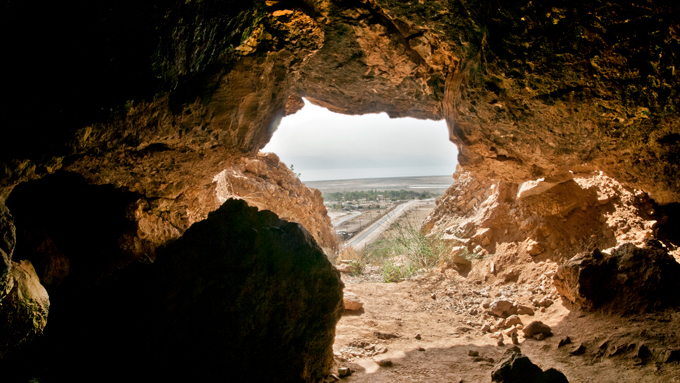
DNA gleaned from Dead Sea Scroll pieces, many of which were found in caves such as this one near a site called Qumran, has yielded clues to the geographic spread of ideas and beliefs in those ancient manuscripts.Shai Halevi, Courtesy of the Israel Antiquities Authority
Rechavi’s group obtained DNA from minuscule bits that either
fell off or were removed from 26 Dead Sea Scroll fragments. Those samples
contained no writing.
After excluding DNA left by people who had handled the
scrolls, the scientists identified DNA of animals used to make the ancient parchments.
All fragments were made of sheepskin except for two made from cow skin.
Comparisons of mitochondrial DNA, typically inherited from
the mother, and nuclear DNA, inherited from both parents, enabled the
researchers to identify close or distant relationships among sheep used to make
the scroll fragments. The researchers assumed that fragments from closely
related sheep were more likely to come from the same document than those from
distantly related sheep or from cows.
Studies of the texts had previously suggested that many
Qumran scrolls display spellings and other features of a writing tradition
particular to a small group of scribes, and the genetic evidence supports that
proposal. Seven of eight fragments containing writing previously classed as
part of that “Qumran scribal practice†came from closely related sheep,
suggesting that those fragments represent manuscripts that had originated in
the same place.
“For the first time, this theory [of a Qumran scribal
practice] has been supported by independent ancient DNA research,†says
Biblical scholar and linguist Emanuel Tov of Hebrew University of Jerusalem.
Tov is past editor in chief of what’s now the Dead Sea Scrolls Digital Project.
Sign Up For the Latest from Science News
Headlines and summaries of the latest Science News articles, delivered to your inbox
Four Qumran fragments from the Hebrew Bible’s book of
Jeremiah likely came from two different versions of that book, the
investigators find. Two sheepskin fragments belonged to one book and two cow
skin fragments belonged to another. Cows couldn’t have been raised in the
parched Judean desert, so cow skin scrolls must have been produced elsewhere,
Mizrahi says.
Scholars had already noted that the style of writing on the
cow fragments differed from that on other pieces from the book of Jeremiah.
DNA findings also indicate that a non-biblical text about
religious practices known as the Songs of the Sabbath Sacrifice was popular beyond
Qumran. Fragments from three copies of this text found in two Qumran caves were
made from skins of closely related sheep. But a fragment from another copy
found at Masada, about 55 kilometers south of Qumran, came from a genetically
separate line of sheep, suggesting that people there assembled their own copy
of the text.
Distinctive sheep DNA from a Qumran fragment of the biblical
book of Isaiah suggests it came from outside Qumran at a site that’s yet to be
identified.
When it comes to standing up for animal rights and environmental issues, Anushka Sharma has always led from the front and made a difference. In the run-up to World Environment Day, that falls on June 5, Anushka is urging the people of India to treat all plant and animal species with equality.
The superstar has come forward to support actress Bhumi Pednekar’s initiative Climate Warrior that is trying to raise awareness on several important issues plaguing our climate through a campaign called ‘One Wish For The Earth’. Bhumi’s campaign will see Bollywood’s biggest thought leaders come forward to discuss climate justice. The platform will see the stars urge citizens to take climate change seriously and, along with them, also do their bit to protect the planet.
Anushka says, “My wish for Earth is, I wish that we would treat the plant and animal species to be just as significant a part of nature as the human species. We should treat all animal and plant species with kindness and equality. I wish we would not treat them as a means to an end because at the end of the day we are all one. I am a climate warrior. Are you?â€
• Radio 3/Wigmore Hall’s lunchtime concert series of live recitals began on 1 June and runs throughout the month. Watch or listen at 1pm BST each day or catch up on demand. Full listings here.
Stephen Hough performs in the opening concert in the Radio3/Wigmore Hall lunchtime concert series. Photograph: Tristram Kenton/The Guardian
•A secondBang on a Can Marathon will be live-streamed on Sunday 14 June from 3-9pm EST (8pm-2am BST). There will be 25 live performances from musicians in the US, Canada, Czech Republic, Switzerland, Scotland, Italy, Ireland and Japan, plus ten world premieres of newly commissioned works. The concert will begin with a performance by Rhiannon Giddens, and concludes with a performance by Terry Riley, live from Japan.
• Outstanding young artists are live-streaming concerts from their homes via recitalstream.org, that features two or three new events each week. Check the schedule for the next concert.
Operas and concerts on demand
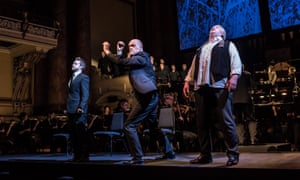
Moses und Aron, staged by Komische Oper Berlin in 2015, streaming on OperaVision from 12 June.
• [NEW] Glyndebourne Open House virtual season launched on Sunday 24 May – the day the festival should have opened, and features a different opera streamed from the festival’s archive each week. Currently streaming is Jonathan Kent’s production of Don Giovanni, followed on 7 June by Nicholas Hytner’s staging of Così fan tutte.  Check the website for details and for upcoming streams.
•A new online film, The Goldberg Variations: Meditations On Solitude features poetry read by Sir Simon Russell Beale, Bach’s Goldberg Variations performed in an arrangement for strings by the Ysaÿe Trio, and photographic artworks by Kristina Feldhammer. It’s ticketed, but on a “pay what you want†basis; 20% of proceeds will be donated to the Royal Society of Musicians.
•The Royal Opera House is streaming a new ballet or opera production on its Facebook and YouTube channels (then available on demand for several weeks). A stunning 2009 revival of Richard Eye’s Traviata with Renee Fleming, Joseph Calleja and Thomas Hampson is currently on offer. Joyce DiDonato in Massenet’s Cendrillon is currently streaming, Puccini’s Il trittico comes online on 5 June, and David McVicar’s much-loved staging of The Magic Flute on 19 June. More ROH content is available on Marquee TV (see below).
Symphonie Fantastique performed by the Aurora Orchestra at the proms 2019 Photograph: Mark Allan
• Watch one of the highlights of last year’s Proms season – the Aurora orchestra’s imaginative and thrilling staging of Berlioz’s Symphonie Fantastique. The performance opened the orchestra’s new Aurora Play series that will see new content each week alongside introductions by conductor Nicholas Collon and other special guests.
•Scottish Opera’s world premiere production of Anthropocene by Stuart MacRae and Louise Welsh is available until mid-July via OperaVision. Read our four-star review here.
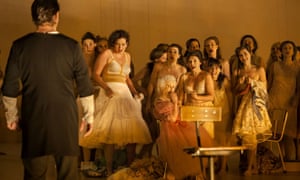
Wagner’s Parsifal, in a staging for Opera Ballet Vlaanderen Photograph: Aanemie Augustijns
The iconic CD cover images for the Bach Cantatas series by the Monteverdi choir and English Baroque Soloists
•The Monteverdi Choir and English Baroque Soloists are celebrating the 20th anniversary of their acclaimed Bach Cantata Pilgrimage with a new cantata every Sunday on their YouTube channel, selected to match the liturgical calendar. The series kicked off with BWV 67 Halt im Gedächtnis Jesum Christ, composed for the first Sunday after Easter, and first performed on 16 April 1724. It’s audio only, but EBS leader Kati Debretzeni has recorded a lovely introduction, and there’s listening notes from John Eliot Gardiner. There’s plenty of other music to explore on the Monteverdi Choir and Orchestra’s YouTube channel, including Monteverdi’s L’Orfeo, recorded in 2017 in Venice’s historic Teatro La Fenice, and his Vespro della Beata Vergine recorded in the Palace of Versailles.
• There’s a new concert each night – the “concert du jour†(available for 24 hours only) – plus a great selection of on-demand content from thePhilharmonie de Paris, including Samstag, from Stockhausen’s Licht opera cycle, and Hans Krása’s children’s opera, Brundibar – plus jazz, chamber music and masterclasses. A well-designed search facility helps you navigate the wide variety of music.
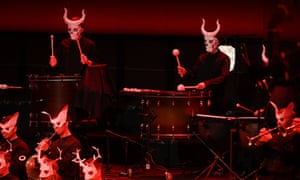
Stockhausen’s Samstag aus Licht staged by le Balcon, in June 2019 at the Philharmonie de Paris
• Each evening at 7.30pm EST, New York’s Metropolitan Operais also streaming a past production from its award-winning Live in HD series. Each opera is available to stream, free, for 23 hours. More details on Twitter @MetOpera.
•Violinist Isabelle Faust live-streamed a solo Bach recital on 5 April from Leipzig’s Thomaskirche, the church where JS Bach was Kapellmeister from 1723 until his death in 1750. The spine-tingling 60-minute concert is on Arte.tv, free to view until 4 July.
• Amsterdam’s Concertgebouw Orchestrahas a huge array of past concerts to watch, organised by composer (including a Beethoven and a Mahler symphony cycle), by conductor (well represented are former chief conductors Bernard Haitink, Mariss Jansonsand, Daniele Gatti, Andris Nelsons and Ivan Fischer ( women on the Concertgebouw podium are conspicuous by their absence), and soloists. There are also conducting masterclasses, portraits of the orchestra’s members, and documentaries – enough to keep you engaged for weeks to come.
• The Bavarian State Opera (Bayerische Staatsoper) is livestreaming a chamber music concert each Monday evening, which is then available on demand for a fortnight. The first, featuring Christian Gerhaher, the Schumann Quartet, and pianist Igor Levit was watched by almost 50,000 live. Check the schedule here.
• The EU-wide Early Music Day was, of course, online-only this year but featured livestreamed concerts that can all be watched on demand alongside plenty of previous concerts and shorter performances. Don’t miss Steven Devine’s performance of Bach’s 48 Preludes and Fugues on the harpsichord at the York Early Music Centre, or if you need a lift, Bach’s Toccata and Fugue (other Baroque composers are available) arranged for four very nimble-fingered recorder players.
• The Gstaad Menuhin Festival and Academy has an online space where you can watch performances, backstage interviews and masterclasses from previous festivals. Registration is required, but this will also enable the non-German speakers among us to access the English-language version of the written content.
•Berlin’s Pierre Boulez Saal’s Intermission series features a regularly updated selection of past concerts each available for two or three days.
•Deutsche Oper Berlin has a regularly changing programme of past productions available on demand. Check for details.
• Arts and culture streaming platform Marquee TV is offering a 14-day trial period, giving free access to a huge range of theatre and ballet productions and a large and varied collection of operas that includes most of Glyndebourne festival’s recent productions (from Brett Dean’s Hamlet to Jonathan Kent’s glorious staging of Purcell’s Fairy Queen, bonking bunnies and all). Other must-sees include Arvo Pärt’s Adam’s Passion, and Opera North’s award-winning production of Jonathan Dove’s children’s opera, Pinocchio, and one of the greatest opera events of the last decade: Aldeburgh festival’s outdoor production of Peter Grimes, staged on the beach where Britten’s opera is set. Registration (and thus credit card details) are required to activate the free trial period, but you can cancel anytime.
Opera North’s semi-staged Ring Cycle with Andrew Foster-Williams (Gunther); Mats Almgren (Hagen) and Mati Turi (Siegfried) Photograph: Clive Barda/CLIVE BARDA/ ArenaPAL
•Opera North’s acclaimed semi-staged Ring cycle from 2016 is available on its website. The 2017 production of Trouble in Tahiti is available via Now TV and Sky on-demand services, and, on operavision (more of which below) you can watch its production of Britten’s Turn of the Screw, recorded live on 21 February 2020.
• The Teatro Massimo in Palermo has several concerts and recent opera productions recorded live available to watch on demand. At the time of writing the operas include Madame Butterfly, La Traviata, a Barber of Seville (check out the witty animated opening) and a Cav and a Pag. And there’s more to come, we are promised.
•The Teatro Regio’sYouTube channel, Opera on the Sofa, is making available past productions from the historic Turin theatre. The opening offering is Nabucco, staged last February, and there’s also Madama Butterfly, La Sonnambula and a Carmen.
•Vienna State Opera is making a different opera available to watch each day via its streaming platform. There’s also a large archive of previous ballet and opera productions that can be watched with a subscription.
• Many UK organisations live stream concerts and make them available via YouTube or other channels. Check out Wigmore Hall, which has a huge selection of its past chamber music concerts free to watch, or try the BBC Scottish Symphony Orchestra’s YouTube channel or Melbourne Symphony Orchestra.
• Part of its new portal, Lincoln Center at Home, the New York arts venue is posting on Facebook past concerts from its Live from the Lincoln series. Highlights include Jaap van Zweden conducting the New York Philharmonic in Mahler 5 or Joshua Bell’s Seasons of Cuba. Check for regular additions.
• The Academy of Ancient Music’s streaming Sunday sees a new concert uploaded each week that you can watch on its YouTube channel. Scotland’s Dunedin Consort has a recent all-Bach programme on Facebook, recorded at Washington DC’s Library of Congress.
• The London Mozart Players’ “At Home†series features a daily changing selection of imaginatively-curated streams, workshops, family-friendly broadcasts and even live recitals. Check its YouTube channel or its website.
•The London Symphony Orchestra is streaming full-length concerts on Sunday and Thursday evenings on its YouTube channel. Each performance will be available up to midnight (UK time) on the day of broadcast, and thereafter on streaming site Stingray Classica (currently offering a free 30-day trial).
• [NEW] Chineke! Orchestra’s concert (Coleridge-Taylor, Bruch and Beethoven) from Sunday 23 February 2020 has just been made available on YouTube. It was filmed at the Queen Elizabeth Hall, conducted by Fawzi Haimor, and featured Tai Murray as soloist.
Easter music
•English Touring Operahas uploaded its staging of Bach’s St John Passion which premiered in London on 5 March 2020 and had been due to tour across the UK featuring local choirs. The broadcast weaves together footage of the live performance at the Hackney Empire, with 90 individual video contributions made by choir members in isolation from Cumbria to Cornwall who were due to participate in performances across the country.
• An abridged version of Bach’s oratorio St Matthew Passion, with Streetwise Opera (who work with people affected by homelessness)and The Sixteen, is available to watch on YouTube. It was filmed live at Campfield Market, Manchester, in March 2016.
• The Royal Scottish National Orchestra’s Sunday Sounds series features a different RSNO musician performing from their home live at 3pm. Watch on its website, on Facebook or YouTube. There’s also new concerts from previous years made available to watch each Friday online or on the Glasgow orchestra’s YouTube channel.
• Outstanding young artists are livestreaming concerts from their homes on impressive new platform, Recital Stream.Concerts are then available on demand for a fortnight. It’s free, but donations – that go direct to the performers – are welcome.
The Kanneh-Masons performing at the 2019 Royal Variety Show Photograph: Matt Frost/ITV/REX/Shutterstock
• [NEW] What’s lockdown life like in Nottingham with Britain’s most musical family (or at least surely a prime contender for the title)? Have a peek inside the Kanneh-Mason household with regular Facebook livestreams featuring short performances from cellist Sheku and his siblings. Don’t miss their scratch chamber orchestra arrangement of the first movement of Beethoven’s third concerto – a work that Isata had been due to perform at the Royal Albert Hall on 18 April.
• Violinist Elena Urioste and her pianist husband Tom Poster are posting short clips each day of their performances of anything from Mozart to Messiaen, Nat King Cole to nursery rhymes. Don’t miss the Come on Eileen/Toxic/Baby Shark mashup, or their themed costumes to match the music. Send in your requests, and drop in to #UriPosteJukeBox to brighten your day. Wonderful stuff.
‘Welcome to my living room’ – violinist Daniel Hope and pianist Christoph Israel livestreaming the first Hope from Home concert Photograph: PR
• Violinist Daniel Hope’s hugely successful Hope at Home series has come to an end but you can catch all 30+ episodes on demand via the ARTE Concert website.
• Every evening at 6.30pm BST there’s a live organ recital from Worcester Cathedral on Facebook Live.
• PianistIgor Levit has now finished his two month run of nightly house concerts on Twitter (52 concerts), but you can still catch up with his wonderful series of mini recitals.
• Cellist Yo-Yo Ma is playing short pieces that give him comfort and is posting them regularly on Twitter, Facebook and Instagram. Search hashtag #SongsofComfort.
• Fellow cellist Gautier Capuçon, on lockdown in Paris, is posting daily doses of Bach on Twitter.
• And Alisa Weilerstein has embarked on a #36daysofBach project – each day a different movement of Bach’s six Cello Suites will be streamed on Twitter, Instagram and Facebook.
Dogs will act instinctively to protect their owners (Credits: Getty Images)
Dogs are hardwired to help their human owners, new research claims.
In a new study, researchers found dogs will instinctively try to help people in distress, even without emergency training.
Until now, little research has been done on why dogs will rush to aid someone in trouble – in spite of many people expecting this behaviour from our canine companions.
Psychologists Joshua Van Bourg and Clive Wynne, of Arizona State University’s canine science laboratory assessed how likely 60 pet dogs were to rescue their owners. None of the dogs had training in such an endeavour.
In the main test, each owner was confined to a large box equipped with a light-weight door, which the dog could move aside. The owners feigned distress by calling out ‘help,’ or ‘help me.’
The owners were coached so their cries for help sounded authentic.
In addition, owners were not allowed to call their dog’s name, which would encourage the dog to act out of obedience, and not out of concern for their owner’s welfare.
Prof Van Bourg said: ‘About one-third of the dogs rescued their distressed owner, which doesn’t sound too impressive on its own, but really is impressive when you take a closer look.
‘That’s because two things are at stake here. One is the dogs’ desire to help their owners, and the other is how well the dogs understood the nature of the help that was needed.
The scientists explored this factor in control tests, something which had not been done in previous studies.
In one control test, when the dog watched a researcher drop food into the box, only 19 of the 60 dogs opened the box to get the food. More dogs rescued their owners than retrieved food.
More dogs rescued their owners than retrieved food (Credits: Getty Images/EyeEm)
Prof Van Bourg said: ‘The key here is that without controlling for each dog’s understanding of how to open the box, the proportion of dogs who rescued their owners greatly underestimates the proportion of dogs who wanted to rescue their owners.
‘The fact that two-thirds of the dogs didn’t even open the box for food is a pretty strong indication that rescuing requires more than just motivation, there’s something else involved, and that’s the ability component.
‘If you look at only those 19 dogs that showed us they were able to open the door in the food test, 84% of them rescued their owners.
‘So, most dogs want to rescue you, but they need to know how.’
In another control test, the researchers looked at what happened when the owner sat inside the box and calmly read aloud from a magazine. They found that four fewer dogs, 16 out of 60, opened the box in the reading test than in the distress test.
The fact that dogs did open the box more often in the distress test than in the reading control test indicated that rescuing could not be explained solely by the dogs wanting to be near their owners.
During the three scenarios, the researchers spotted behaviour which indicated stress, such as whining, walking, barking and yawning.
Prof Van Bourg said: ‘During the distress test, the dogs were much more stressed. When their owner was distressed, they barked more, and they whined more. In fact, there were eight dogs who whined, and they did so during the distress test. Only one other dog whined, and that was for food.’
In the second and third attempts to open the box during the distress test didn’t make the dogs less stressed than they were during the first attempt. That was in contrast to the reading test, where dogs that have already been exposed to the scenario, were less stressed across repeated tests.
Lassie was right after all (Picture: Getty)
Prof Wynne added: ‘What’s fascinating about this study is that it shows that dogs really care about their people.
‘Even without training, many dogs will try and rescue people who appear to be in distress – and when they fail, we can still see how upset they are.
‘The results from the control tests indicate that dogs who fail to rescue their people are unable to understand what to do – it’s not that they don’t care about their people.’
A new security fence has been constructed around the White House to keep Black Lives Matters protesters and race rioters at bay hours after US President Donald Trump freely walked Washington, DC’s streets and declared himself an “ally of all peaceful protesters”.
The streets around the White House complex were shut Tuesday morning, guarded by a mix of Secret Service officers and FBI agents.
Overnight, the fence was constructed around Lafayette Park and along 17th St at Pennsylvania Ave, two areas that have been focal points for protests.
Work crews were still at work boarding up businesses in the area and attempting to remove graffiti from federal buildings.
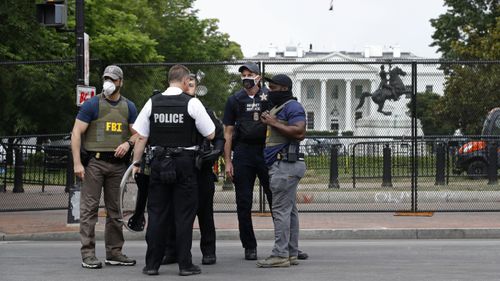
The security fence was constructed overnight on Monday. (AP)Members of police and the US Secret Service stand near Lafayette Park across from the White House, June 2, 2020, in Washington, following protests over the death of George Floyd, who died after being restrained by Minneapolis police officers. (AP)
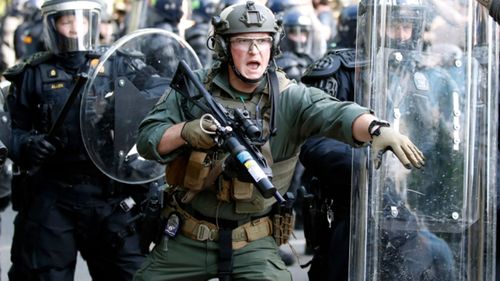
Trump addressed the nation from the Rose Gardens on Monday as protesters outside the White House gates were dispersed with tear gas and flash bangs.
He said in the speech that he was “dispatching thousands and thousands of heavily-armed soldiers, military personnel, and law enforcement officers” to stop the rioting, looting, vandalism, assaults, and destruction of property seen during protests over the death of African American George Floyd in Minneapolis.
A 7pm curfew was also announced and has been strictly enforced in Washington, DC.
By 4am, however, 9News’ US Correspondent Amelia Adams had reported the new security fence had been erected in preparation for the coming day’s protests.
It comes as Trump described some of the actions of protesters across the United States as “domestic terror, the destruction of innocent life and the spilling of innocent blood”.
President Donald Trump addressed the nation from the Rose Gardens on Tuesday as protesters outside the White House gates were dispersed with tear gas and flash bangs. (AP)The President and his entourage then left the White House precinct and walked nearby streets. (AP Photo/Patrick Semansky)
“I want the organisers of this terror to be on notice that you will face severe criminal penalties and lengthy sentences in jail. This includes Antifa and others who are leading instigators of this violence,” he said.
The President and his entourage then left the White House precinct and walked nearby streets.
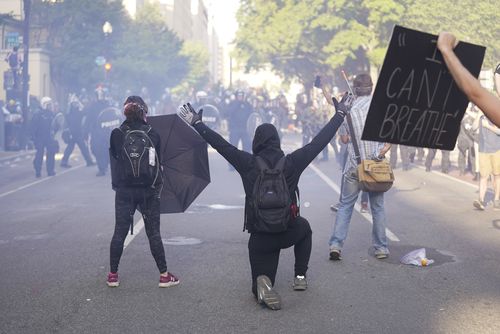
Police begin to clear demonstrators gather as they protest the death of George Floyd near the White House in Washington DC. (AP Photo/Alex Brandon)Demonstrators kneel in front of a line of police officers during a protest for the death of George Floyd, near the White House in Washington (AP)
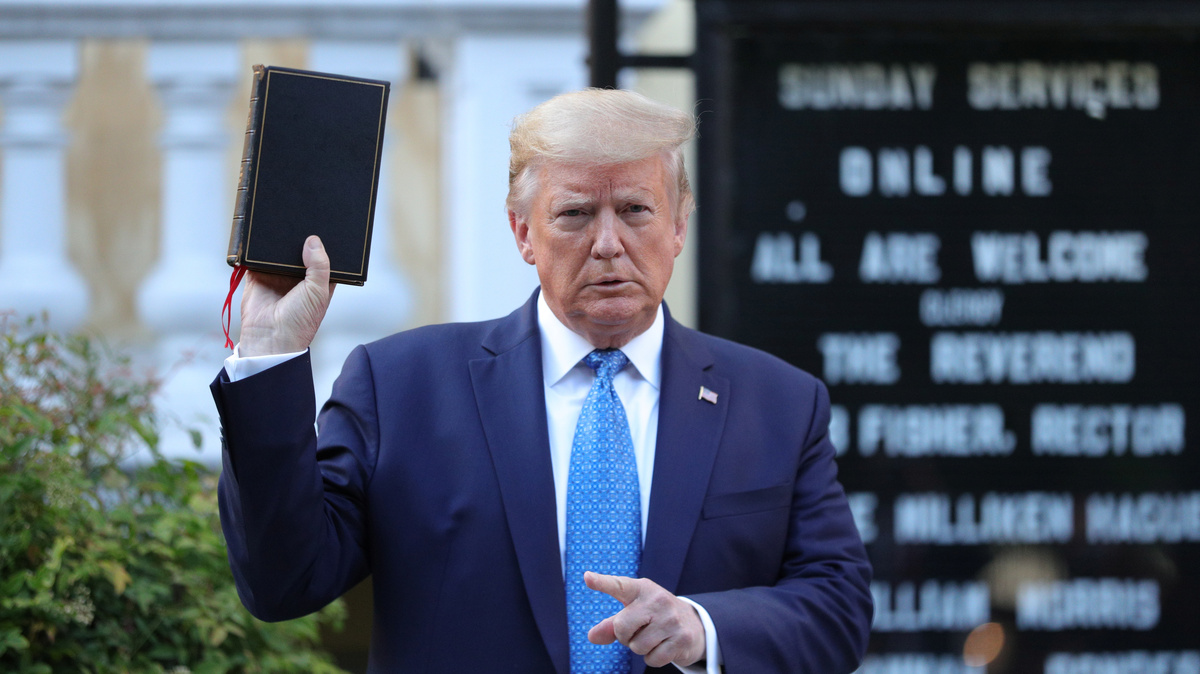
Flanked by police, Mr Trump carried a bible to St John’s Church which had been damaged by fire in the riots.
After a moment of silence, Mr Trump said the US nation was “the best in the world” and he pledged to “keep it nice and safe”.
Could your kids power the electrical grid, if you could only figure out how to tap that energy? Someday, all the hours spent cooped up at home will be a memory, not a daily reality. But if your children are bouncing off the walls with schools and day care still closed and summer coming, here are five active ideas to safely channel their energy. Pandemic or not, preschoolers benefit from active play throughout the day, and children ages 6 to 17 should rack up at least 60 minutes of activity daily, according to the Centers for Disease Control and Prevention. And since regular activity boosts health and lifts mood, everyone stands to benefit.
Pick a card
Annelieke Rietsema, an employee health coach and fitness specialist at Newton-Wellesley Hospital, suggests this simple strategy. Take a pack of playing cards and assign different exercises to each suit. For example, hearts could be jumping jacks or bear crawl; diamonds could be burpees or somersaults (if you have room); spades could be mountain climbers or cat-cow; clubs could be knee pushups or squats. Now shuffle or mix up the cards (face down), then start going through the deck. Kids do the number of each exercise on cards numbered 2 to 9. They do 10 of an exercise if a card is an ace, jack, queen, or king. So, a jack of hearts in the spades suit could equal 10 mountain climbers. For an exercise without discrete repetitive movements, like the bear crawl, try assigning a number of seconds based on the card selected (a five of hearts equals five seconds of bear crawl).
Children can do the shuffling and assign exercise choices, even picking simpler or harder exercises depending on age or ability.
Top of the hour
Five-minute or 10-minute energy burns at the top of each hour may help keep the peace. Have kids set a timer and choose easy exercises: running in place, jumping jacks, skipping rope, practicing sit-ups and squats. Children can compete with each other or with friends — from one week to the next, is it getting easier to do certain exercises? Can you do more than you could before?
Creature moves
Challenge younger children to think up and enact the moves of animals and other creatures: waddle like a duck, small hops like a bunny, giant hops like a kangaroo, slither like a snake, jump high like a frog, crawl-walk like a bear, inch forward like a turtle, waggle-dance like a honeybee, flap arms like a bird, crawl sideways like a crab, and so on. Set up indoor races for the quieter moves (crab, duck, snake) and occasional outdoor races for louder critters, to see who reaches the finish line in the least and most time. Extra points for unusual choices.
Personal best
Record how long a child can hop or balance on one foot or the number of push-ups, sit-ups, jumping jacks, or other exercises a child can do in a row. Practice three times a week and track the results once weekly.
Teens and some younger children may enjoy setting goals and logging progress in virtual races. The Healthy Kids Virtual Running Series for children in pre-K to grade 8 has a state-by-state locator to find local races. Many charities are encouraging people of all ages to raise money while walking, running, biking — or even dancing — in virtual events.
Yoga and fitness classes online
Two engaging options are Cosmic Kids, which combines yoga and storytelling into a calming, enjoyable workout for many children, and Go Noodle, which has high-energy video or app games to get kids moving and silly costumes to amuse them. Or you can find free online options, or sample classes available through local gyms, recreation centers, or YMCAs. Be sure to screen fitness videos aimed at children, to check if they are appropriate for your child.
Whatever you choose to help children burn energy, do give a thought to your neighbors. Quieter exercises are best if you live above someone, and mixing in safe outdoor time is good for everyone, parents included. If there’s enough room to move freely while maintaining safe distances, a game of tag or soccer, a bike ride, or just a run, skip, or kangaroo-hop to the end of each block could be fun.
President Trump’s photo opportunity in front of St. John’s Episcopal Church in Washington has set off criticism, as police used tear gas and force to clear a path for him to walk from the White House.
Tom Brenner/Reuters
hide caption
toggle caption
Tom Brenner/Reuters
President Trump’s photo opportunity in front of St. John’s Episcopal Church in Washington has set off criticism, as police used tear gas and force to clear a path for him to walk from the White House.
Tom Brenner/Reuters
President Trump’s controversial foray to St. John’s Church on Monday is generating widespread criticism, after police and National Guard troops physically cleared out demonstrators and used tear gas to allow a photo opportunity outside the church. The bishop who oversees St. John’s is among the critics.
“He used violent means to ask to be escorted across the park into the courtyard of the church,” Bishop Mariann Edgar Budde of the Episcopal Diocese of Washington tells NPR’s Morning Edition. “He held up his Bible after speaking [an] inflammatory militarized approach to the wounds of our nation.”
The bishop continued:
“He did not pray. He did not offer a word of balm or condolence to those who are grieving. He did not seek to unify the country, but rather he used our symbols and our sacred space as a way to reinforce a message that is antithetical to everything that the person of Jesus, whom we follow, and the gospel texts that we strive to emulate … represent.”
Every president since James Madison has visited St. John’s Church, which opened in 1816 and sits across the park from the White House. Despite that longstanding relationship, Budde says her diocese had no warning of Monday’s visit.
“There was no reaching out, no sense that it would require some sort of authorization before using the church as a backdrop in that way,” Budde told NPR’s Tom Gjelten hours after the incident.
The president had used the Bible, and her church, as a prop, she said.
“I was outraged that he felt that he had the license to do that, and that he would abuse our sacred symbols and our sacred space in that way,” the bishop told Gjelten.
Within hours, the White House had assembled footage of the brief outing into a triumphant video that shows the president pumping his fist as he strides past a row of riot police, culminating in him standing in front of the church. Set to swelling orchestral music, the video shows nearly no sign of the destruction and debris that days of intense protests have wrought near the White House.
The president, accompanied by his daughter Ivanka, several Cabinet members and Secret Service agents, walked to St. John’s nearly 30 minutes before Washington’s just-installed 7 p.m. curfew was to begin – timing that added to the chaos and confusion among demonstrators, and which incensed Mayor Muriel Bowser.
“Shameful!” Bowser said via Twitter, saying that after “federal police used munitions on peaceful protestors in front of the White House,” the city’s police force’s job of keeping the peace would be made more difficult.
I imposed a curfew at 7pm. A full 25 minutes before the curfew & w/o provocation, federal police used munitions on peaceful protestors in front of the White House, an act that will make the job of @DCPoliceDept officers more difficult. Shameful!
DC residents — Go home. Be safe
— Muriel Bowser #StayHomeDC at 7 pm (@MurielBowser) June 2, 2020
When the federal force rushed at protesters outside the White House, journalists were also pushed out. Officers attacked Australian reporter Amelia Brace and also hit cameraman Tim Myers, prompting Australia’s Prime Minister Scott Morrison to call for an investigation. The scene played out on live TV, during Australia’s breakfast-time Sunrise show.
“While live on air, Myers was struck in the chest by a riot shield and Brace was clubbed with a police baton,” Channel 7 News reports.
Brace tells Australia’s ABC that she repeatedly identified herself as a journalist as officers quickly closed in on them during the rush to clear a path for Trump.
“Despite that as I ran away, clearly stating that we were media, with my cameraman with a camera on his shoulders, I was hit across the back with the baton,” she says. “We were then fired upon by the National Guard with those rubber bullets, who are the exact people I had shown my media pass to … and then we ended up getting tear-gassed.”
The situation, she said, was “absolutely terrifying.”
“I also managed to get a rubber bullet to the backside, and Tim got one in the back of the neck, so we’ll have a few bruises tomorrow — but we’re feeling perfectly safe,” Brace says.
Shock and anger over the incident led U.S. Ambassador to Australia Arthur B. Culvahouse Jr. to issue a statement saying, “Freedom of the press is a right Australians and Americans hold dear. We take mistreatment of journalists seriously, as do all who take democracy seriously.”
Trump’s use of force to allow him to walk across the park has also prompted Arlington County, Va., to pull its police officers out of the nation’s capitol.
The county had sent a police contingent to help keep peace in Washington. But it says the officers were put in a dangerous position that exposed them and others to risk “for a purpose not worthy of our mutual aid obligations.”
“All ACPD officers left the District of Columbia at 8:30 p.m. Monday,” Arlington County says.
The church has suffered damage during the unrest in Washington against police violence, including a fire that was lit in its basement. While Budde is thankful to first responders who put out that fire, she says she wants the focus remain on the death of George Floyd and others who have died at the hands of police.
“I want to acknowledge the loss of property, but in no way equate it with the loss of life,” she said. “I want to be a church that stands in solidarity with those who are making peaceful protest.”
Biden called for police reform and also condemned violence and vandalism. But he faulted Trump most of all, zeroing in on the president’s Rose Garden address Monday evening when he announced a military response to the protests and riots that have emanated from Minneapolis to rock cities across the U.S., including Washington.
Moments before Trump spoke, law enforcement used flash-bang grenades and rubber bullets to clear an apparently peaceful crowd from Lafayette Square, across from the White House. With the park cleared, Trump walked across to visit St. John’s Church, where a small fire had been set during the weekend amid rioting, and held up a Bible for a photo up.
“The president held up the Bible at St John’s Church yesterday. I just wish he opened it once in a while, instead of brandishing it,†Biden said. “If he opened it, he could have learned something that we’re all called to love one another as we love ourselves. It’s really hard work. But it’s the work of America. Donald Trump isn’t interested in doing that work.â€
Biden said Trump, instead, is sweeping away “the guardrails that have long protected our democracy.â€
“In addition to the Bible, he might also want to open the U.S. Constitution. If he did, he’d find the First Amendment,†Biden said, reading the passage about the “the right of the people peaceably to assemble, and to petition the government for a redress of grievances.’â€
Biden’s speech marked the latest evolution of a campaign that until recently was literally stuck in the basement of his home in Wilmington, Del., where he has ridden out the coronavirus pandemic since mid-March. Though he has been criticized from both the left and right for the strategy, Biden has seen his poll numbers rise against Trump, whose handling of the pandemic was widely panned.
As the nation began slowly opening back up amid the pandemic, Floyd’s death led to the nationwide unrest and gave Biden impetus to start leaving quarantine for the campaign trail to contrast his leadership style with Trump’s. Biden met with protesters in Delaware over the weekend and with black leaders at a Wilmington church on Monday.
In reaction to the speech, the Trump campaign zeroed in on Biden’s campaign staffers offering to bail out people arrested in Minneapolis after the protests in the city that turned violent.
“Joe Biden spent days hiding in his basement while the country was rocked to its core. When Joe Biden and his team finally emerged, their initial reaction was to bail out the criminals that burned, looted and destroyed Minneapolis,†Trump spokeswoman Melissa Reed said.
“While livelihoods were decimated, the Biden team was focused on raising money to bail out the criminals arrested. President Donald Trump was focused on restoring peace and pursuing justice for George Floyd and the victims of the violence. A stark contrast in values.â€
Biden, though, leveled a values-based attack against Trump, pointing to incendiary comments by the president that echoed the words of two segregation-era law enforcement officers in Miami, Fla., and Birmingham, Ala.
“When you tweet the words ‘when the looting starts, the shooting starts’ — those weren’t the words of a president. They were the words of a racist Miami police chief from the 1960s,†Biden said. “When he tweeted that protesters ‘would have been greeted with the most vicious dogs … that’s when people would have been really badly hurt.’ Those weren’t the words of a president — those were the kind of words a Bull Connor would have used unleashing his dogs.â€
Biden emphasized how Floyd’s last words — “I can’t breathe†— first became a rallying cry in 2014 when another black man, Eric Garner, died after a struggle with New York police officers that was caught on video.
The officer in Floyd’s death has been charged with third-degree murder and second-degree manslaughter. But protests against widespread racial injustice in the U.S. have persisted, with some calling on prosecutors to charge other officers as accomplices in Floyd’s death.
Though Biden condemned both the violence and police brutality, his speech focused heavily on racial injustice and the unrest. He reiterated his pledge to establish a national police oversight board, called on Congress to pass “real police reform†and plugged Democratic legislation to outlaw police choke holds as well as “to stop transferring weapons of war to police forces, to improve oversight and accountability, to create a model use of force standard.â€
“I promise you this,†Biden said, “I won’t traffic in fear and division. I won’t fan the flames of hate. I will seek to heal the racial wounds that have long plagued this country — not use them for political gain.â€
We use cookies on our website to give you the most relevant experience by remembering your preferences and repeat visits. By clicking “Accept”, you consent to the use of ALL the cookies.
This website uses cookies to improve your experience while you navigate through the website. Out of these, the cookies that are categorized as necessary are stored on your browser as they are essential for the working of basic functionalities of the website. We also use third-party cookies that help us analyze and understand how you use this website. These cookies will be stored in your browser only with your consent. You also have the option to opt-out of these cookies. But opting out of some of these cookies may affect your browsing experience.
Necessary cookies are absolutely essential for the website to function properly. These cookies ensure basic functionalities and security features of the website, anonymously.
Cookie
Duration
Description
cookielawinfo-checbox-analytics
11 months
This cookie is set by GDPR Cookie Consent plugin. The cookie is used to store the user consent for the cookies in the category "Analytics".
cookielawinfo-checbox-functional
11 months
The cookie is set by GDPR cookie consent to record the user consent for the cookies in the category "Functional".
cookielawinfo-checbox-others
11 months
This cookie is set by GDPR Cookie Consent plugin. The cookie is used to store the user consent for the cookies in the category "Other.
cookielawinfo-checkbox-necessary
11 months
This cookie is set by GDPR Cookie Consent plugin. The cookies is used to store the user consent for the cookies in the category "Necessary".
cookielawinfo-checkbox-performance
11 months
This cookie is set by GDPR Cookie Consent plugin. The cookie is used to store the user consent for the cookies in the category "Performance".
viewed_cookie_policy
11 months
The cookie is set by the GDPR Cookie Consent plugin and is used to store whether or not user has consented to the use of cookies. It does not store any personal data.
Functional cookies help to perform certain functionalities like sharing the content of the website on social media platforms, collect feedbacks, and other third-party features.
Performance cookies are used to understand and analyze the key performance indexes of the website which helps in delivering a better user experience for the visitors.
Analytical cookies are used to understand how visitors interact with the website. These cookies help provide information on metrics the number of visitors, bounce rate, traffic source, etc.
Advertisement cookies are used to provide visitors with relevant ads and marketing campaigns. These cookies track visitors across websites and collect information to provide customized ads.