The ending to ‘Mortal Kombat 11’ Aftermath explained

By now, Mortal Kombat fans are playing through the Aftermath DLC, an expanded story of NetherRealm Studio’s latest game.

Aftermath continues the narrative set by Mortal Kombat 11 and expands upon it to show what could happen in this time-bending story. However, what many Mortal Kombat players may not expect is that there are two endings to the Aftermath story, and each one has major implications to the franchise.

Of course, we’re going to be delving into major spoilers for the Mortal Kombat 11 Aftermath story so if you haven’t completed already do so and return.


NetherRealm Studios/Warner Bros

MORTAL KOMBAT 11 AFTERMATH ENDING EXPLAINED

The story of Mortal Kombat 11 Aftermath sees Shang Tsung, Nightwolf and Fujin emerge from “The Void” that Kronika put them in during the events of the main story. The titan of time tried to recruit the three men to help her reshape history, but when they refused they were put in this special prison.

When Kronika was defeated and killed by Thunder Fire God Liu Kang at the end of the main story, they were released. In Aftermath, Shang Tsung warns our heroes that they need Kronika’s crown–which was destroyed in the final battle–to reshape history once again.

Liu Kang decides to trust Shang Tsung to go back to the past and retrieve the crown. Through the course of the Aftermath story we see betrayal after betrayal, as one would expect when Shang Tsung is at the center of the plot, which leads to the final battle.

Just as Shang Tsung has taken the crown for himself, defeated Kronika and absorbed her powers Liu Kang returns from the future to face him. Liu Kang knew this would happen all along, but he needed Shang Tsung to defeat Kronika.

This leads to the final battle between Shang Tsung and Liu Kang, a match both men have been looking forward to for years and brings the Mortal Kombat story full circle.

Here is where, players will have to decide whether to fight as Shang Tsung or Liu Kang. Each choice comes with its own ending, but don’t worry you can replay this final battle to see both.

SHANG TSUNG ENDING

The Shang Tsung ending as it’s the most straightforward and predictable.

Choosing the evil sorcerer and defeating Liu Kang will have Shang Tsung absorb Kang’s soul and gain the power needed to run Kronika’s hourglass.

Shang Tsung uses the hourglass to create a new era in his image where he’s a deity and Raiden and Fujin are seen reporting to him. They inform him that Outrealm, Earthrealm and NetherRealm are under his rule, and the rest of the realms will soon follow.

A pleased Shang Tsung laughs and utters, “it has begun.”

This ending is way more cynical in terms of the fate of the world, but it could be what unites the realms in the next Mortal Kombat. As every fighting game needs a villain for the characters to stand up against, and a god-like Shang Tsung would do the trick.

LIU KANG ENDING

Choosing the side of good will have Liu Kang defeat Shang Tsung and take Kronika’s crown to restart history. Players are transported to the Shaolin temple where Liu Kang appears before one of the monks.

He introduces himself to the monk whose name is Kung Lao the descendent of Liu Kang and the present day Kung Lao. Liu Kang even quips about this Kung Lao being more humble than the one he knew. He tells Kung Lao that he has chosen him as his champion and must be trained.

When Kung Lao asks what he needs to be trained for, Kung Lao simply smirks as the credits roll. Liu Kang has restarted history and is likely bringing back the Mortal Kombat tournament. If NetherRealm Studios chooses this ending to pick up where MK 11 left off, then it’s like a reboot of the franchise similar to how MK 9 was.

What did you think of both endings to Aftermath? Which did you prefer? Let us know in the comments section.

Source link

5 takeaways as Boris Johnson faced MP supergroup

0

LONDON — It took Boris Johnson 10 months to pluck up the courage to face the House of Commons’ liaison committee. He may not return any time soon.

The committee, made up of the chairpeople of the cross-party select committees, (which scrutinize government) is effectively a supergroup for MPs — “a sort of parliamentary Traveling Wilburys,” as the Times newspaper’s sketch writer Patrick Kidd put it.

Prime ministers typically appear before it three times a year, but Johnson, in office since July 2019, made his first appearance Wednesday.

Often a drab affair, this session — conducted in the midst of immense pressure on Johnson over alleged breaches of coronavirus lockdown rules by his chief adviser Dominic Cummings — yielded plenty of memorable moments.

Johnson was immoveable on Cummings, and had a good news story to tell on the government’s new testing and tracing regime, but otherwise seemed off-color and short on detail. The team in Downing Street will likely be pleased things other than Cummings will make headlines, though with Tory MPs still coming out against his adviser, the prime minister has by no means put that episode to bed.

Here are five takeaways from Johnson’s committee showing:

Cummings not going 

To no one’s surprise, the first thing MPs wanted to talk about was Cummings.

Johnson didn’t budge from his support for his top aide — he called the affair “a political ding-dong about what one adviser may or may not have done” — but couldn’t satisfy MPs’ questions on what that means for parents with symptoms of COVID-19 concerned about securing child care locally.

Can they travel for family support like Cummings did, Labour’s Yvette Cooper asked. “If you have exceptional problems with child care then that may cause you to vary your arrangements, that’s clear,” Johnson said, not very clearly.

He added that he understands “public indignation” but insisted it is “time to move on” and indicated there will be no inquiry as this would not be “a very good use of official time.” No. 10 are still very much determined to tough this one out.

Unlock lockdown 

Johnson also came prepared with a big announcement — the launch of England’s “NHS Test and Trace” system of contact tracers, which will go live on Thursday morning.

The prime minister called it “the tool that other nations have used to unlock the prison.” It will be combined with close monitoring of the spread of the virus at a local level and the potential for localized lockdowns, a process Johnson compared to a game of “whack-a-mole.”

Admission time

He also came with a big admission — or was it more of an accusation?

Johnson told health committee Chair Jeremy Hunt the U.K. should have learned more from Asian nations that have dealt with coronavirus epidemics in the recent past and ramped up its disease testing capacity long ago.

“To be absolutely blunt, we didn’t have the enzymes, we didn’t have the test kits, we just didn’t have the volume, nor did we have enough experienced trackers ready to mount the kind of operation they did in some other East Asian countries, for instance,” he told Hunt. “And I think the brutal reality is this country didn’t learn the lessons of SARS or MERS and we didn’t have a test operation ready to go on the scale that we needed.”

Indeed, Britain began the coronavirus pandemic with a test and trace program but was quickly forced to abandon it because it could not process enough tests each day. The new regime will be rolled out on Thursday after the nation spent months building its testing capacity up to more than 100,000 each day.

But the admission felt particularly pointed, because it was made to Hunt — Johnson’s former leadership rival — who, until 2018, served for six years as health secretary, at a time when, Johnson seemed to imply, the country could have done some groundwork.

A big to-do

The prime minister came away from the session with a sizeable to-do list.

On the economy, he promised to put forward a recovery package for the post-coronavirus period and talk to Chancellor Rishi Sunak about self-employed people registered as limited companies who are unable to access sufficient support.

He also suggested the government could overhaul the “no recourse to public funds” rule — a visa stipulation many non-EEA citizens face as a condition of their “temporary right to remain” immigration status, which prevents them claiming benefits.

Johnson had to have the issue explained to him by work and pensions committee Chair Stephen Timms. This was a surprise all round after opposition MPs — including former Labour leader Jeremy Corbyn — have raised it regularly with ministers over the past months.

The PM promised to act. “Clearly people who have worked hard for this country, who live and work here, should have support of some kind or another,” Johnson said, pledging to look into the issue.

But he was careful to avoid too much homework. Asked by Hunt when the government would set a target of producing coronavirus test results within 24 hours, he said: “I’ve been forbidden from announcing any more targets and deadlines.”

Mind the gap

Johnson gave other hints about how the nation will squeeze its way out of the coronavirus prison, noting that the rule that people must remain 2 meters apart will be reviewed by scientific advisers. “My own hope is that, as we make progress in getting the virus down, in reducing the incidence, we will be able to reduce that distance,” he explained.

Reducing the distance will be particularly useful for the transport and hospitality sectors, he said — meaning getting more people on trains and buses and allowing them back into restaurants, cafés and pubs.

Asked more specifically about hospitality, Johnson suggested the light at the end of the tunnel might be approaching at pace. Currently, the government says some cafés and restaurants might be able to open at the start of July as long as they adhere to social-distancing rules, but the classic Johnsonian optimism came out to play.

“It is very difficult to bring forward hospitality measures in a way that involves social distancing, but I am much more optimistic about that than I was and I think we may be able to do things faster than I previously thought,” he said.

Is an announcement looming that British pubs might be open again soon? That would knock even Dominic Cummings out of the headlines for a day or two.


Source by [author_name]

COVID-19 Antibody Tests Can Be Wrong Half The Time, CDC Says

Antibody tests for the new coronavirus are capable of being incorrect roughly half of the time and should not be used to determine whether physical distancing or use of personal protective equipment is no longer necessary, the Centers for Disease Control and Prevention said.

These serologic tests, which test blood for antibodies created in response to the virus, SARS-CoV-2, should be used for research and virus surveillance purposes and not to make public health recommendations or to determine immunity, the federal health agency said in new interim guidance posted to its website.

If only a small percentage of those being tested are infected, the tests’ margin of error will be higher, whereas if the rate of infection is higher among those being tested, the positive predictive value increases, the CDC explained.


A staff member works on coronavirus serology tests at the Biogroup-LCD laboratory’s technical platform in Levallois-Perret, near Paris, France.

“When a test is used in a population where prevalence is low, the positive predictive value drops because there are more false-positive results, since the pre-test probability is low,” the CDC’s website states.

“In most of the country, including areas that have been heavily impacted, the prevalence of SARS-CoV-2 antibody is expected to be low, ranging from less than 5% to 25%, so that testing at this point might result in relatively more false positive results and fewer false-negative results,” the CDC said. It’s possible that in areas where only a small percentage of those being tested are infected, “less than half of those testing positive will truly have antibodies.”

Until more information is available, the CDC advises that serologic testing is used for research and virus surveillance purposes. Those with a confirmed past infection are also urged to continue to practice social distancing and other safety protections, especially when it comes to health care workers and first responders.

For now, the benefits of serologic testing include helping determine which communities may have experienced a higher infection rate and may have higher rates of herd immunity. It can help determine who can donate blood used to manufacture a possible treatment for those seriously ill from COVID-19. It can also help diagnose later complications of COVID-19 illness, such as multisystem inflammatory syndrome in children, the CDC said.

It was reported last week that the CDC began reexamining its national COVID-19 case count after separating the viral test results and antibody tests, partially because of how unreliable and confusing serological testing can be.

A HuffPost Guide To Coronavirus


Source by [author_name]

Coalition politics and law: The fight over Tshwane – The Mail & Guardian

ANALYSIS

The bunfight over the City of Tshwane Metropolitan Municipality will be back in court tomorrow (Thursday, May 28), with the Democratic Alliance and the Gauteng provincial government each accusing the other of using the courts for political point scoring. 

The metro has been dysfunctional since February, after the relationship between the DA and the Economic Freedom Fighters began to sour in November. The DA is seeking a court order that would force councillors back to work, even while an appeal over putting the city under administration works its way through the courts.

In an exchange of court papers leading up to the hearing on Thursday, the DA blames the ANC and EFF for the mess and the provincial government blames the DA and EFF. With coalition politics on the rise, particularly in local government, this kind of court case will probably become more common, bringing to the surface new questions of law.

After the DA and EFF’s relationship broke down, ANC and EFF councillors simply stopped turning up for meetings. The council was then unable to achieve a quorum, leaving it hamstrung. As the politicians slug it out, residents of Tshwane have borne the brunt, including a crippling water crisis in Hammanskraal that saw residents without drinkable water for months. 

Eventually the Gauteng province stepped in and put the city under administration. But the DA went to court and this was set aside.The high court also ordered councillors back to work and to attend meetings. The order was suspended until five days after the end of the hard lockdown — so would have come into effect on May 8. One day prior, on May 7, the Gauteng government appealed, which had the effect of suspending the high court order, leaving the city under the control of an administrator.

The Constitution allows a province to put a municipality under administration but only in exceptional circumstances and only for 90 days. The DA says the “convoluted” appeal by the province and the realities of appealing to the Constitutional Court means it will take far longer than that. If the province remains under administration, an “extraordinary” amount of power would be in the hands of an unelected administrator and defeat the democratic choices of the people of Tshwane. 

The DA wants the order implemented now. “If this application is not granted, the effect will be that an unelected administrator will be in total control of every function of the municipality, for an indeterminate period of time,” said DA’s Randall Williams. “There is a real risk that he will remain in control of the municipality for the bulk of the remainder of this municipal council’s term, which is due to end when the local government elections are held in 2021.” 

On the other hand, if the councillors were back at work, the democratic choices of the people of Tshwane would be respected. 

But the Gauteng province argues that, in law, an appeal suspends a court order. An order to implement pending appeal is only granted in “truly exceptional circumstance”. There is nothing exceptional about the timeline for the appeal, in this case, says Lebogang Maile, the Gauteng MEC for cooperative government. 

Maile instead accuses the DA of “using these proceedings as a political manoeuvre. The DA is not serious about having the appeal resolved on an urgent basis. It merely uses the argument to score mileage with this court.” 

Maile also said that forcing the councillors back to work will not solve the problem. “The fact that there is a court order preventing councillors from leaving council meetings does not solve the problem of dysfunctionality. Its roots are political. They lie in the collapse of the working-together agreement between the DA and the EFF. This is not a legal problem. It is a political problem.” 

Even if councillors were forced to attend meetings, the order does not require that they vote, said Maile. But attendance is what secured a quorum, not voting, said the DA. 

Williams also said the prospects of a successful appeal are remote. “The Gauteng MEC’s affidavit in the Constitutional Court directs vitriol at the applicants and at the judgment of this court and is full of righteous outrage. But it is notable primarily because of the extent to which it is based upon misrepresentations, omissions and misunderstandings of the facts …. I am advised and submit that once those misunderstandings and misrepresentations are cleared away, very little remains of the proposed appeal.”

Maile rejects the DA’s “descent into accusations of misrepresentations … there is no basis for that serious allegation”. He says this is a novel area of law and the appeal has “excellent prospects of success”. 

The case will be heard in the high court in Pretoria tomorrow. 


Source link

Watch: Generations The Legacy latest Episode 133 S29 – Wednesday, 27 May 2020

Tonight on Generations The Legacy: People seem to be pitching at the commune at the worst possible time… Mavusana issues a grim warning to one of his men. Jerah is under pressure and takes it out on his ex.

Watch: Generations The Legacy latest episode – 27 May 2020

The latest episode will appear here after it aired. You might need to refresh or restart your browser if you are on a mobile and do not see the episode. Episodes are available for seven days after they first aired. Catch Tuesday’s episode here.

Thursday on Generations: The Legacy

Lesedi takes her power back. Lucy warns their big secret better not get out… or else! Mpho and Rabbit are ready to end things once and for all.

What is Generations: The Legacy?

Nontle is worried when it seems like her love potion worked. Jerah’s lies are fast catching up with him. Mazwi is furious about his brother’s betrayal.

A place where drama, suspense and intrigue are the name of the game when you’re up against enemies you don’t even know you have. A place where people will stop at nothing to get their lovers even if it means resorting to violence, seduction and even murder.

Where can I watch Generations: The Legacy episodes?

Episodes air on SABC1 Mondays to Fridays at 20:00, DSTV Channel 191. If you’re unable to catch the latest episode when it airs, we’ll be publishing full episodes from the SABC. Stick with us, and you’ll never miss an episode again.


Source link

Extradition of Huawei Executive Clears a Major Legal Hurdle in Canada

0

VANCOUVER, British Columbia — The chief financial officer of the Chinese technology giant Huawei came one step closer to standing trial in the United States on sweeping fraud charges after a Canadian court ruled on Wednesday that prosecutors had satisfied a critical legal requirement for her extradition from Canada.

The executive, Meng Wanzhou, will have another chance to fight for her release at a June 15 hearing on the defense’s argument that her rights were violated during her arrest. That hearing may be delayed, however, because the defense and prosecution are wrangling over the release of documents.

Her arrest immediately thrust Canada into the middle of a diplomatic struggle between the United States and China — over trade, theft of technology secrets and whether Huawei’s efforts in helping countries build 5G next-generation mobile networks present a threat to national security.

It also severely strained Canada’s own relations with China. Shortly after Ms. Meng’s arrest, China detained — in retaliation, some say — two Canadians and accused them of espionage. They are still in secret jails in China.

The relationship has since become even more fraught, with Canadians criticizing China’s handling of the coronavirus pandemic and its human rights policies. Wednesday’s decision is expected to aggravate those tensions.

“We are likely in for several more years of worsening relations between Canada and China, with both sides hardening their stances at a moment when countries are already questioning China’s role in the pandemic,” said Guy Saint-Jacques, a former Canadian ambassador to China.

Wednesday’s court ruling, from Heather Holmes, associate chief justice of the British Columbia Supreme Court, found that prosecutors had cleared a fundamental hurdle for Ms. Meng’s extradition under Canadian law — demonstrating that the conduct she is accused of in the United States, if proved, also constitutes a crime in Canada.

The legal concept is known as “double criminality.”

The judge ruled that double criminality was met in this case, because the conduct Ms. Meng is accused of meets the essence of fraud, by “the making of intentionally false statements.”

“Canada’s law of fraud looks beyond international boundaries to encompass all the relevant details that make up the factual matrix, including foreign laws that may give meaning to some of the facts,” the judge wrote.

In their indictment against Ms. Meng, now 48, United States prosecutors charged her with fraudulently deceiving four banks into making transactions that would help Huawei evade United States sanctions against Iran.

Her defense team argued that the extradition request did not satisfy the requirement of double criminality because it was based on the accusation that U.S. sanctions against Iran had been breached — sanctions that Canada no longer has in place

Prosecutors said Ms. Meng lied to representatives of the bank HSBC in 2013 about Huawei’s relationship with Skycom, a company that would clear transactions between Huawei and HSBC in Iran, by saying Skycom was a partner, rather than a subsidiary of Huawei.

They said that misrepresentation amounted to fraud by exposing HSBC to reputational and economic risk in light of the American sanctions.

“Lying to a bank in order to get banking services that creates a risk of economic prejudice is fraud,” said Robert Frater, Canada’s chief general counsel for the Department of Justice, arguing the United States’ case in court earlier this year.

Ms. Meng, the eldest daughter of Huawei’s founder, Ren Zhengfei, one of China’s most prominent businessmen, has denied the allegations.

The U.S. indictment charging Ms. Meng also accused Huawei of stealing trade secrets, and obstructing a criminal investigation into whether the company tried to evade economic sanctions on Iran by destroying or concealing evidence.

The United States has repeatedly accused Huawei of stealing technology from its Western rivals and argues that the company’s ties to the Chinese government make it a threat to the national security of countries who adopt its technology in their next generation mobile networks. Huawei vehemently denies that.

The Trump administration escalated its campaign against the company this month by restricting its ability to work with chip makers that produce many crucial components in its smartphones and telecom equipment.

Canada itself has been reviewing whether it should allow Huawei technology in the country’s 5G network.

China experts said the Meng case has spurred Canadians to rethink how to deal with the economic superpower.

In addition to detaining the two Canadians — the former diplomat Michael Kovrig and the businessman Michael Spavor — China also restricted imports of pork, canola oil and other Canadian products after Ms. Meng’s arrest.

David Mulroney, another former Canadian ambassador to China, said China’s handling of the coronavirus pandemic, its jailing of the two Canadians, its infringements of human rights in Hong Kong and its mass detention of minorities in Xinjiang meant Ottawa could no longer return to the status quo in its relations with Beijing.

“There has been a global awakening prompted by the pandemic that China is an unreliable partner,” he said.

Last week, Prime Minister Justin Trudeau said China had linked the detention of the two Canadians with Ms. Meng’s case from the beginning, and had failed to understand that Canada had an independent judicial system, free from “political intervention.”

“China doesn’t work quite the same way,” he said.

Ms. Meng’s defense has filed a separate civil case against Canadian authorities, arguing that her rights were breached when border officials questioned her for three hours before making an arrest, seized her phones, asked for her passcodes and searched her eight pieces of luggage.

The defense also argues that Canadian officials improperly shared Ms. Meng’s SIM cards and her phone’s serial numbers with American law-enforcement officials.

Government prosecutors counter that the border guards had every right to search her and were just doing their jobs.

In early 2019, Ms. Meng was released on bail of 10 million Canadian dollars. She has spent the time since living in two different mansions that her family owns in wealthy areas of Vancouver.

Most recently, she has lived in a gated $14 million, seven-bedroom mansion in the city’s exclusive Shaughnessy neighborhood. Until the pandemic hit, she was able to travel relatively freely around the city — shopping and attending musical concerts — though she had to wear a GPS tracker on her ankle.

She takes daily painting lessons and her mother has been living with her.

Last weekend, she appeared at the steps of the imposing modernist British Columbia Supreme Court, making a thumbs-up gesture for photographers.

Many in Canada have noted the contrast between her circumstances and those of the Canadians imprisoned in China, whose access to lawyers and their families is severely limited.

Ms. Meng appeared in court for several hearings, cutting a glamorous figure in either casual outfits or colorful designer dresses and at times wearing stiletto heels adorned with glitter, which drew attention to the GPS tracker on her left ankle.

On the 70th anniversary of the founding of the People’s Republic of China, she wore a bright red Gucci dress, adorned with an enamel Chinese flag pin.

Ms. Meng could appeal a final decision on extradition to the Supreme Court of Canada, a protracted process that experts say could drag on for years.

After a ruling from the Supreme Court, the case would move to the political arena, with the justice minister of Canada making the final decision on whether she must be sent to the United States to stand trial.

Tracy Sherlock reported from Vancouver, British Columbia, and Dan Bilefsky from Montreal. Raymond Zhong contributed reporting from Taipei, Taiwan.


Source link

In Pictures: Hundreds in US demand justice for George Floyd

Protesters in the United States state of Minnesota on Tuesday filled the Minneapolis intersection where George Floyd, an unarmed black man, was pinned down by a white officer before dying at a hospital on Monday. 

Protesters chanted: “I can’t breathe” and “Jail killer KKKops.”

The protesters eventually marched to a city police precinct, where police used tear gas to disperse the crowd. Police said some protesters damaged windows and a squad car and sprayed graffiti on the building.

The death of Floyd has caused outrage nationwide. 

A bystander’s video of Monday’s incident showed an officer kneeling on Floyd’s neck for several minutes, even after Floyd pleaded that he could not breathe. Floyd eventually appeared motionless, with the officer’s knee still on his neck.

Four Minneapolis officers involved in the arrest were fired on Tuesday, but community leaders and members have called for the officers to be prosecuted. 

The FBI and the Minnesota Bureau of Criminal Apprehension are investigating the incident. 

Source link

High court declares Dudu Myeni delinquent – The Mail & Guardian

Disgraced former SAA chairperson Dudu Myeni has been declared a delinquent director by the high court in Pretoria, over her conduct while leading the broke airline’s board of directors.

The lifetime order means Myeni will no longer be considered fit and proper to hold the position of director of any entity, and will have to vacate several directorships she currently holds, including her position on the board of Centlec, the state-owned utility that supplies power to several municipalities, including Mangaung metro.

Although the order is for the rest of Myeni’s lifetime, she can apply to have it suspended after three years if she has rehabilitated, high court Judge Ronel Tolmay said.

During her tenure as chairperson of SAA’s board, Myeni, a close friend of former president Jacob Zuma and current chairperson of his foundation, presided over some of the airline’s most disastrous years, which have led to the airline being on the brink of falling over.

So precarious is the state of SAA, which has received no less than R50-billion in government aid since 2009, that its government shareholder sees no other option but shut it down and start over, while the business-rescue practitioners appointed to try to save it see closure and sale of its assets as the only viable way out. 

“It will not be inappropriate for this court to take judicial notice of the immense harm done to the country and its people in the last years due to the mismanagement, not only of SAA, but also other SOEs [state-owned entities] and the suffering that it brought and continues to bring millions of South Africans,” Tolmay said.

“To serve on the board of an SOE should not be a privilege of the politically connected. Government has, as a custodian of the common good, an obligation to ensure that suitably qualified people with integrity are appointed in these positions,” she added.

In her 114-page judgment on the matter, which was brought by the Organisation Undoing Tax Abuse (Outa) and the South African Pilots Association (Saapa), Tolmay labelled Myeni “dishonest”, reckless, and grossly negligent. 

“Myeni not only proved to be dishonest in her dealings at SAA, but he has also been dishonest with this court,” Tolmay said of Myeni’s conduct since the matter was enrolled before the courts in 2015. 

She also ordered that Myeni pay her legal costs, as well as those of the plaintiffs on an attorney and client scale, including the costs of two counsel. In addition, she ordered that the judgment, as well as evidence led during proceedings, be referred to the National Prosecuting Authority for investigation for possible criminal conduct.

Myeni’s trial was not without drama and has seen several delays, including when she did not attend court, arguing that she did not have money to travel from Richards Bay, where she stays, to Gauteng to attend trial. 

At the time, Tolmay noted in her judgment, Myeni was sitting on the boards of several companies, including Centlec, and earned hundreds of thousands of rands in fees. At SAA she earned R4.3-million in directors fees, and another R3.5-million in fees at the Mhlathuze Water Board. 

“She claimed that it was unfair to expect her to spend her own money on litigation, in circumstances where she believed that SAA’s insurers ought to have paid for her costs. This entirely contradicts previous pleas of poverty, demonstrating that she perjured herself [in an affidavit. She admitted that she exercised a deliberate choice not to come to court,” said Tolmay. 

“Such dishonesty and disrespect of the court’s processes is worthy of the punitive costs order,” she added. 

Myeni also unsuccessfully attempted to have the courts declare that Outa has no standing to bring a delinquency application against her. 

Her trial, in which four former SAA executives — Nico Bezuidenhout, Wolf Meyer, Thuli Mpshe, and Frenchman Sylvain Bosc — gave evidence, centred on two incidents when she willingly broke corporate governance rules and interfered in the running of SAA, to the detriment of the airline. 

Evidence led by the four painted a picture of an environment of fear and intimidation at the airline under Myeni’s tenure, including one meeting to which Myeni allegedly brought armed guards, and from which executives who defied her instructions or were seen to be in her way were removed. 

Myeni was also accused of using her relationship with Zuma to have her way, including using his name to pressure former SAA chief executive Bezuidenhout into pulling SAA out of a memorandum of understanding with Emirates airways that would have earned SAA R1.5-billion in revenue a year. 

In another example, Myeni brought the country within hours of a cross default — which would have had severe implications for the fiscus — when she failed to call an urgent board meeting to agree on an aircraft-swop deal that would have averted the airline defaulting on R1.6-billion in pre-delivery payments for aircraft it could not longer afford. 

A cross default is a provision in a loan agreement that stipulates that should a borrower default on one loan, they are considered to have defaulted on all their loans. With the government guaranteeing SAA’s debt, this would mean it would have to pay all of it immediately, or face the possibility of the default triggering debt held by other creditors. That would have had huge implications across the entire economy, particularly at power utility Eskom.    

In a statement issued on its website, Outa chief legal officer Stephanie Fick said: “We are extremely pleased to see justice meted out in a prominent matter related to state capture.

“When we set out on this matter three years ago, we knew it would take time and would be very costly. But every minute and every rand spent was worth it.

“We believed then, as we do now, that it is important to hold people like Ms Myeni to account, as opposed to seeing them get away with acts of gross misconduct, year after year,” she added. 


Source link

Photos: SpaceX’s historic launch

After a decade without U.S. launches, SpaceX ushers in new era of space travel for NASA.


Source link

We’ve been addressing mental health issues of non-contracted and U-19 players during lockdown, says NCA chief Rahul Dravid- Firstcricket News, Firstpost

0

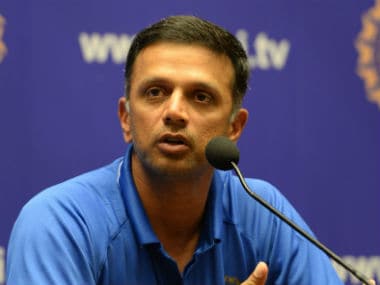
National Cricket Academy (NCA) chief Rahul Dravid on Wednesday said that they have been addressing mental health issues of non-contracted and U-19 players amid the ongoing nationwide lockdown due to the COVID-19 pandemic.

It is an uncertain period for cricketers and it could affect them mentally.

“It’s something we tried in this lockdown (addressing mental health of players through professionals). We identified outside of the contract list and with the U-19 players. We have given the opportunity to connect to professionalism,” Dravid said during a Rajasthan Royals webinar on on Mental Health and Wellbeing.

File image of Rahul Dravid. AFP

“As a former cricketer I truly believe that former cricket players, cricket coaches rarely don’t have the expertise to deal with the issues that some of the youngsters have these days. The right thing for us to direct them to professionals and take it forward,” said the former India captain.

Stressing that mental health has been an in issue in cricket, Dravid said it’s heartening to see frequent conversations around it now.

“It is high-pressure environment. In the past there was a certain stigma associated to admit it but with a few players coming out definitely there has been some better conversation around it,” he said.

Dravid has been working on junior cricketers for a while, earlier as India U-19 and India A coach and now as NCA head.

Dealing with the insecurities in his younger days was challenging for him and that is one of the reasons why he loves nurturing the young talent.

“It’s quite unnerving for a lot of young players which is why I love working with the Under-19 boys or India A who I think going through the same amount of insecurities whether I make it or not.

“I kind of identify with them, that something I had experienced myself as a young boy,” said Dravid.

Dravid, who went on to become the ‘Wall of Indian Cricket’, holds a graduate degree in commerce and was doing MBA when he was picked for India as he had to go through a long phase in First-Class cricket.

“I think trying to get into the Indian team was one of the most challenging phases. I made my First-Class debut at the age of 17 or so… It took me about five years of First-Class cricket to play for India.

“If I look back the most complicated time for me would me before when I played for India when you had those risky decisions to take with doubts and insecurities around it.

“When you had the choices of going down with a career in something else and you commit to cricket and take that risky decision and going through it.

“You had to sacrifice your education in some ways to take a punt, take a gamble on cricket. It kind of worked out. I never used that degree ever luckily,” he recalled.

Updated Date: May 27, 2020 23:13:19 IST

Find latest and upcoming tech gadgets online on Tech2 Gadgets. Get technology news, gadgets reviews & ratings. Popular gadgets including laptop, tablet and mobile specifications, features, prices, comparison.


Source link