#USA – Arrest of CNN journalists a clear violation of their First Amendment rights of freedom of speech and of association

0

The death of George Floyd in Minneapolis earlier this week, whilst being apprehended by police officers for alleged offences, has triggered international attention on police behaviour in the USA, and has sparked riots, arson and looting in Minneapolis.

The world is watching international media and trying to understand what is happening, so that they can be informed about the facts and the reasons that have led to these tragic events – writes Colin Stevens, President of PressClub Brussels and Publisher of EU Reporter.

As an international press organisation, standing up for the rights of journalists, and the behaviour and conduct of the media to report faithfully without fear or favour the situation on the ground so that the public can be informed by objective and professional reporters, the Press Club Brussels was astonished to watch the CNN News team being arrested in Minneapolis on live TV.

The TV reporter and his team were heard on the broadcast to be deferential, polite and cooperative with the needs of the security officers.

CNN called the arrests a “clear violation of their First Amendment rights” in a tweet. The First Amendment to the US constitution protects freedom of speech and of association.

The Minneapolis State Patrol confirmed the arrests and said those detained were released “once they were confirmed to be members of the media”.

As an organisation representing journalists, the Brussels Press Club is used to defending the rights of reporters against oppressive governments that routinely harass them and deny their rights to report the news.

We are frankly shocked to discover that such a thing can also be tolerated in the United States of America, which we and the rest of the free world have always looked up to as the global champion of free speech.

The CNN team were later released without charge.

Minnesota governor Tim Walz has apologised, describing the incident as “unacceptable”.

He added that there was “absolutely no reason something like this should happen”.

I and all journalist members of the Brussels Press Club agree.

Colin Stevens is President of PressClub Brussels and the Publisher of EU Reporter.


Source by [author_name]

Driver arrested for failing to stop after double fatal crash

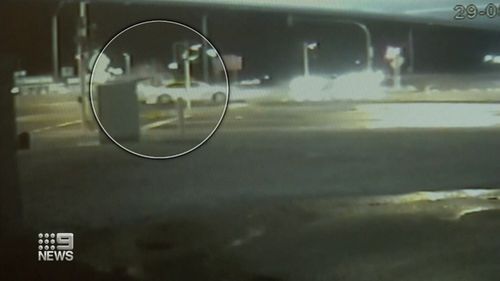
Two women have been killed in a crash in Perth’s south, with the driver of the other car involved arrested after failing to stop.

Police say the driver, a man in his 50s, did not help after his four-wheel drive collided with a smaller car as it was turning right in Coolongup last night.

The 27-year-old driver of the other car died in hospital and her passenger, also aged 27, died at the scene.

Two women have been killed in a crash in Perth’s south. (9News)
Police say the driver, a man in his 50s, failed to stop after crashing into a smaller car in Coolongup last night. (9News)

The man was arrested shortly afterwards and taken to Royal Perth Hospital where he is assisting police with their inquiries

A male passenger in the four-wheel drive, who was not believed to be injured, fled the scene and is being urged to come forward.

Anyone who witnessed the crash or who has dashcam footage is also being asked to contact police.

A motorcyclist aged in his 30s also died last night in what’s believed to have been a single-vehicle crash in Quinns Rock, north of Perth.

Anyone who witnessed the crash or who has dashcam footage is also being asked to contact police. (9News)

Source by [author_name]

SA Rugby welcomes return to training under level 3

SA Rugby welcomed the announcement that professional sports teams could begin returning to training under Level 3 lockdown.

Minister of Sport, Arts and Culture Nathi Mthethwa, announced the updated terms of the lockdown at a briefing on Saturday 30 May.

Mthethwa gave sports teams 14 days to submit proposals to the department on how they would ensure the safety of the players and officials, and accommodate journalists and broadcast crews.

The minister left the door open for football and rugby to resume play when he announced that non-contact sports could resume if they observed all the necessary regulations and put in place protocols that prevented super-spreading events.

SA Rugby welcomes return to training

SA Rugby’s CEO Jurie Roux welcomed the department’s announcement, first hinted at by Cooperative Governance Minister Nkosazana Dlamini-Zuma earlier in the week.

The announcement allows SA Rugby to move forward with return to play, giving them a fighting chance of recovering some of the income lost due to the pandemic.

Rugby will liase with the department of sport, arts and culture in the coming days to ensure they are able to welcome franchise players back to training in June.

“This is the news sport has been waiting to hear as it allows us to begin to ramp up preparations for an eventual return-to-play,” said Roux.

“We submitted a comprehensive, staged return-to-play protocols document to the department five weeks ago and we are ready to begin medical screening of players immediately.

“We will seek further clarity from the department on the application of the guidelines as they apply to contact training.

“But this is an opportunity for our players to enhance their lockdown training regimes by increasing their fitness work for an eventual return to play.”

Bosses optimistic about 2020 season

SA Rugby announced the suspension of all rugby on 18 March. The 2020 Super Rugby season was called off with the Sharks topping then table when play was halted.

The inbound international tours planned for July have been cancelled, but World Rugby hope to be able to go ahead with the November Tests in Europe.

Government have made it clear that sporting events will not be allowed to host fans until lockdown alert level 1, which could only be in 2021 or even 2022.

SA Rugby plan to stage a six-team domestic franchise tournament behind closed doors. The four Super Rugby franchises (Bulls, Lions, Sharks and Stormers) together with the two Pro14 teams (Cheetahs and Kings) would take part.


Source link

‘Mad As Hell’ Killer Mike Delivers Impassioned Speech On Death Of George Floyd

Musician Killer Mike, one half of the Run the Jewels rap group, early Saturday delivered an impassioned plea for people in his home city of Atlanta, Georgia, to stop protesting the death of George Floyd with violence.

Instead, the rapper called ― during a press conference held by Atlanta Mayor Keisha Lance Bottoms ― on people to organize, mobilize and beat elected officials up at the voting booth. He also called out Donald Trump’s inflammatory language on the protests, describing the president as a “dumbass.”

“We have to be better than burning down our own homes because if we lose Atlanta, what else we got?” asked the rapper, whose real name is Michael Render.

Killer Mike revealed he’d been made “mad as hell” by the death of Floyd in Minneapolis on Monday. Floyd, a Black man, died after a white police officer knelt on his neck.

The killing was caught on camera and has sparked anger and protests nationwide.

“I woke up wanting to see the world burn down. I’m tired of seeing Black men die,” he said. “He casually put his knee on a human being’s neck for nine minutes as he died like a zebra in the clutch of a lion’s jaw, and we watch it like murder porn, over and over again.”

“That’s why children are burning things to the ground,” added the musician, who was vocal during and after the protests in Ferguson, Missouri, in 2014 following the death of Michael Brown.

“They don’t know what else to do,” he said. “And it’s the responsibility of us to make this better, right now. We don’t want to see Targets burning, we want to see the system that sets up systemic racism, burn to the ground.” 

Check out Killer Mike’s full comments here:


Source by [author_name]

Glad you’re not here: stag party capitals vow to ‘do tourism differently’

For the first time in years, the few remaining local residents of Budapest’s party district can fall asleep without a nocturnal chorus of drunken stag groups outside their windows. The sweeping expanse of Kraków’s central square is no longer teeming with tour groups, and it is possible to traverse Prague’s Charles Bridge without elbowing through hordes of selfie-takers.

Coronavirus travel restrictions are proving tough to bear for the hundreds of thousands who work in the region’s hospitality industry, but are also giving the many beautiful cities of central Europe time and space to think about how to deal with their overtourism problems.

Budget flights and low prices have been a mixed blessing for these places, as a trickle of tourists turned to a flood in the decades since the Iron Curtain fell. “The residents have been complaining for a very long time that the city doesn’t belong to them any more,” said Barbora Hrubá of Prague City Tourism, a municipal body that works on the Czech capital’s tourism strategy.

With 9 million international visitors a year, Prague has become Europe’s fourth most visited city, after Paris, London and Rome. Tourists are not usually interested in seeing the rest of the country, or even much of the city. The average length of stay is just 2.4 days, and the majority of tourists crowd into the city’s old town, which over the years has pushed out much local life from the area.

“This is a great opportunity for us to rebuild and restart tourism in the city differently. We want a different type of visitor who visits more than the most famous monuments in the centre,” said Hrubá.

In Budapest, officials are having similar thoughts. “Like in so many other big European tourist destinations, people have been getting exhausted by the scale of tourism,” said the city’s mayor, Gergely Karácsony, in a recent interview at his office. “We want to spread out the spots in the city that are touristically interesting, and change the type of people who come. It shouldn’t only be bachelor parties and booze – we want to rebrand ourselves a bit,” he said.

These sentiments are not new, and there has been frequent talk of reclaiming cities for the locals across central Europe over the past few years. But the pandemic has provided the kind of opportunity for a rethink that would have been much more difficult when the usual flows of visitors were still arriving.


Budapest’s normally busy Zrinyi street, dominated by St Stephen’s Basilica, during Hungary’s Covid-19 lockdown. Photograph: Tamás Kovács/EPA

“I really hope that Budapest can build up a new face of tourism when this is over. Sometimes we surrendered to tourists, with local interests pushed back, and it definitely isn’t sustainable,” said Gábor Manek, who owns a number of restaurants and bars in Budapest and runs an electronic music festival.

“There are parks in Prague where all of the infrastructure was designed with tourists in mind, rather than locals, and we need to change that,” said Hrubá.

This summer, there will be a new focus on domestic tourism. The central European nations implemented some of Europe’s earliest and strictest lockdowns, and have largely avoided the overwhelming numbers of coronavirus cases seen in western Europe. Already, most countries in the region are well on their way out of lockdown, but strict travel restrictions on foreign arrivals are likely to stay in place for some time.

Budapest is looking into exchanges with other Hungarian cities, while Prague has launched a series of offers to tempt Czechs to discover their own capital. Previously, visitors would come to Prague for concerts or events but usually would not even stay the night, due to the crowds of tourists and inflated prices.

In Poland, the government is mulling handing out 1,000 złoty (£202) vouchers for those in full-time employment to use on domestic travel, to help kickstart the tourism economy. Employers would have to contribute just 10% of the value of the voucher.

For some older residents of central Europe, the deserted streets have provided a semi-nostalgic window back to their youth during the Communist period, before the arrival of mass tourism. But while many people have enjoyed seeing the sights of their own cities, the novelty has worn off as the severity of the economic impact of losing tourism becomes clear.

“A lot of people I know who wouldn’t dream of going to Market Square on a weekend because of the crowds had the initial reaction that it’s really nice now. But after a while, they admit it’s just eerie,” said Piotr Krasnowolski, a Kraków-based translator.

In Budapest, Manek said that, from conversations with fellow owners, he estimates that between 25% to 30% of bars and restaurants will simply not reopen. Many were only profitable due to the custom of passing tourists.

The hope is that by taking some time to rethink tourism strategies with the locals at the forefront, the cities will also become more satisfying destinations for tourists. “When the locals are happy, the visitors will be as well,” said Hrubá.

Source link

Thousands ignore Minneapolis curfew as U.S. protests spread

Minneapolis police said shots had been fired at law enforcement officers during the protests but no one was injured.

As the night dragged on, fires erupted across the city’s south side, including at a Japanese restaurant, a Wells Fargo bank and an Office Depot. Many burned for hours, with firefighters again delayed in reaching them because areas weren’t secure.

Shortly before midnight, scores of officers on foot and in vehicles moved in to curb the violence, one day after city and state leaders faced blowback for their handling of the crisis. On Thursday, protesters had torched a police station soon after it was abandoned by police and went on to burn or vandalize dozens of businesses.

The new round of unrest came despite Gov. Tim Walz vowing early in the day to show a more forceful response by the state than the one Thursday run by Minneapolis city leaders. But by early Saturday morning, Walz was acknowledging he didn’t have enough manpower, even with some 500 Guard soldiers.

“We do not have the numbers,” Walz said. “We cannot arrest people when we are trying to hold ground.”

Walz said he was moving quickly to mobilize more than 1,000 more Guard members, for a total of 1,700, and was considering the potential offer of federal military police. But he warned that even that might not be enough, saying he expected another difficult night Saturday.

The Minnesota Police and Peace Officers Association urged Walz to accept any help.

“You need more resources,” the group said in a tweet. “Law enforcement needs leadership.”

Not all the protests were violent. Downtown, thousands of demonstrators encircled a barricaded police station after the 8 p.m. Friday curfew. “Prosecute the police!” some chanted, and “Say his name: George Floyd!” Some protesters sprayed graffiti on buildings.

Anger filled the streets of Minneapolis.

Ben Hubert, a 26-year-old local resident, said he wasn’t surprised people were breaking curfew and setting fires.

“I’m outraged,” he said of the Floyd case. “But I’m also sad. The injustice has been going on for so long. It’s been swelling for years.”

Chauvin was also was accused of ignoring another officer who expressed concerns about Floyd as he lay handcuffed on the ground, pleading that he could not breathe while Chauvin pressed his knee into his neck for several minutes. Floyd, who was black, had been arrested on suspicion of using a counterfeit bill at a store.

Chauvin, who was fired along with three other officers who were at the scene, faces more than 12 years in prison if convicted of murder.

An attorney for Floyd’s family welcomed the arrest but said he expected a more serious murder charge and wants the other officers arrested, too.

Prosecutor Mike Freeman said more charges were possible, but authorities “felt it appropriate to focus on the most dangerous perpetrator.”

Protests nationwide have been fueled by outrage over Floyd’s death and years of police violence against African Americans. Protesters smashed windows at CNN headquarters in Atlanta, set a police car on fire and struck officers with bottles. Large demonstrations in New York, Houston, Washington, D.C., and dozens of other cities ranged from people peacefully blocking roads to repeated clashes with police.

“You are disgracing our city,” Atlanta Mayor Keisha Lance Bottoms told protesters. “You are disgracing the life of George Floyd and every other person who has been killed in this country.”

Police were trying to put Floyd in a squad car Monday when he stiffened and fell to the ground, saying he was claustrophobic, a criminal complaint said. Chauvin and Officer Tou Thoa arrived and tried several times to get the struggling Floyd into the car.

Chauvin eventually pulled Floyd out of the car, and the handcuffed Floyd went to the ground face down. Officer J.K. Kueng held Floyd’s back and Officer Thomas Lane held his legs while Chauvin put his knee on Floyd’s head and neck area, the complaint said.

When Lane asked if Floyd should be rolled onto his side, Chauvin said, “No, staying put is where we got him.” Lane said he was “worried about excited delirium or whatever.”

An autopsy said the combined effects of being restrained, potential intoxicants in Floyd’s system and his underlying health issues, including heart disease, likely contributed to his death. It revealed nothing to support strangulation as the cause of death.

There were no other details about intoxicants, and toxicology results can take weeks. In the 911 call that drew police, the caller describes the man suspected of paying with counterfeit money as “awfully drunk and he’s not in control of himself.”

After Floyd apparently stopped breathing, Lane again said he wanted to roll Floyd onto his side. Kueng checked for a pulse and said he could not find one, according to the complaint.

Chauvin’s attorney had no comment when reached by The Associated Press.

The prosecutor highlighted the “extraordinary speed” in charging the case four days after Floyd’s death and defended himself against questions about why it did not happen sooner. Freeman said his office needed time to gather evidence, including what he called the “horrible” video recorded by a bystander.

Trump said Friday that he’d spoken to Floyd’s family and “expressed my sorrow.”

He called video of the arrest “just a horrible thing to witness and to watch. It certainly looked like there was no excuse for it.”

Attorney Benjamin Crump, who is representing Floyd’s family, asked to take custody of Floyd’s body for an independent autopsy.

The doctor who will do the autopsy is Michael Baden, former chief medical examiner of New York City, who was hired to do an autopsy for Eric Garner, a black man who died in 2014 after New York police placed him in a chokehold and he pleaded that he could not breathe.

State and federal authorities also are investigating Floyd’s death.

Source link

Vincy Premier T10 League 2020, FCS vs DVE Live Score Updates: Semifinal day

0

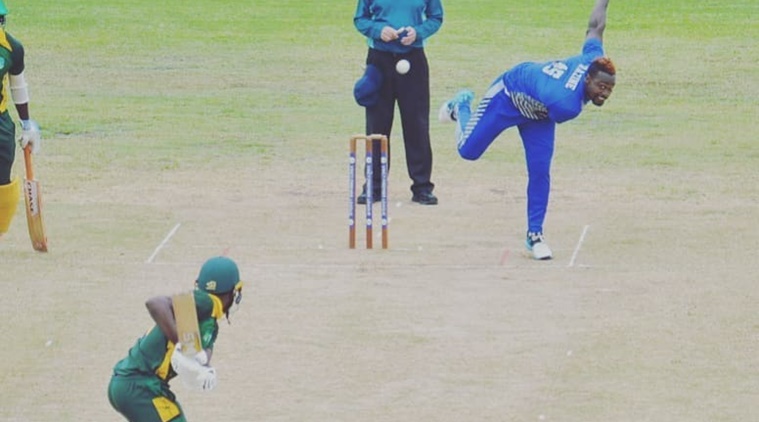
VPL T10 Live Updates: Razine Browne bowls during Day 8 of the VPL.

Vincy Premier T10 League 2020 Live Score, Fort Charlotte Strikers (FCS) vs Dark View Explorers (DVE) Live Score Updates: The T10 carnival in the St Vincent and the Grenadines islands heads into its penultimate day on Saturday, with final positions in the maiden edition of the league to be decided. The semifinals to decide who will feature in Sunday’s final will take place today.

First up is the 5th place match between Fort Charlotte Strikers (FCS) vs Dark view explorers (DVE) at 6 pm. This will be followed by the two semifinals: Salt Pond Breakers (SPB) vs Grenadine Divers (GRD) at 8 pm and La Soufriere Strikers (LSH) vs Botanical Garden Rangers (BGR) at 10 pm IST.

Live Blog

VPL T10 Live Updates:

© IE Online Media Services Pvt Ltd

Source link

Is the coronavirus airborne? When it comes to COVID-19 spread through air, size matters.

One reason why measles — a notoriously contagious disease — is so difficult to contain is because its infectious viral particles can linger in the air for up to two hours. Can the coronavirus do the same?

It’s a question health officials appear to be grappling with: On Thursday, the San Francisco Department of Public Health said people must wear masks if they are within 30 feet of someone not in their household, a far greater distance than the widely recommended 6 feet of social distancing. Meanwhile, the Centers for Disease Control and Prevention website reads, “It is unknown how long the air inside a room occupied by someone with confirmed COVID-19 remains potentially infectious.”

Full coverage of the coronavirus outbreak

While scientists say it is possible that the coronavirus can drift through the air, many note there’s no evidence these tiny bits of virus are enough to make people sick.

To understand how the virus travels by air, it’s important to know whether it’s hitched a ride on a jumbo jet — or a paper airplane.

“It’s basically a size difference,” said Dr. Ronald Collman, referring to the size of the droplets that contain viral particles. Collman is a professor of medicine in the Division of Pulmonary, Allergy and Critical Care at the University of Pennsylvania’s Perelman School of Medicine.

When a person with COVID-19 coughs or sneezes, they spew relatively large droplets — at least 5 micrometers in diameter — into the air. These droplets are filled with viral particles.

Studies have demonstrated how those globs of saliva and sputum are so big and heavy — compared to other respiratory emissions, that is — that they generally come into contact with another person’s face, or fall to the ground or surfaces, within about a six-foot radius.

The CDC believes those respiratory droplets are responsible for the majority of COVID-19 transmissions.

But some studiesshow viral particles can get stuck in tiny aerosols less than 5 micrometers in diameter. They’re too light to fall to the ground, thus becoming airborne.

This is much like the water vapor you can see in your breath when it’s cold, wafting through the air before slowing dispersing.

The potential for the coronavirus to linger in the air is concerning to scientists who study aerosols. Kimberly Prather, a distinguished professor in atmospheric chemistry at the University of California, San Diego, addressed the possibility in a paper published this week in the journal Science.

“Aerosol transmission of viruses must be acknowledged as a key factor leading to the spread of infectious respiratory diseases,” Prather and her co-authors wrote.

But evidence is lacking that this particular virus is indeed infectious in aerosolized form, Prather told NBC News.

“How long does it live when it’s in the air? We still have a lot of work to do to answer that,” Prather said.

Other experts agreed.

“Just because some viral element is detected does not mean it is infectious,” said Dr. Aditya Shah, an infectious disease fellow at Mayo Clinic in Rochester, Minnesota.

That’s because when it comes to making a person sick, viruses tend to get their strength in numbers.

Any pathogen — including SARS-CoV-2, the type of coronavirus that causes COVID-19 — generally requires larger amounts of particles to become infectious. The smaller the particle, scientists say, the less likely it is to carry enough virus to survive a breezy journey into another person’s body.

“I think it is plausible that there could be some level of aerosol transmission,” Collman said. “But if it occurs, it’s probably not very important or common.”

Still, as evidence grows that people can spread the virus without having any symptoms, doctors overwhelmingly support the use of face masks to reduce the risk for infecting others with emissions of all sizes.

“People who don’t wear face masks think that they’re saying, ‘I’m tough. I’m strong. I’m not afraid of getting COVID,'” Collman said.

“What they’re really saying is, ‘I don’t give a damn about other people.'”

Face masks at home?

While the CDC recommends wearing face coverings in public places to cut the risk of spreading potentially infectious droplets, a study published Thursday in the journal BMJ Global Health suggests benefits to masking at home.

Researchers in China surveyed 124 families in which at least one person had been diagnosed with COVID-19. Households that were able to isolate the ill family member, as well as use disinfectants, had a lower chance of viral spread.

Download the NBC News app for full coverage of the coronavirus outbreak

What’s more, the study suggested wearing face masks in the home was 79 percent effective in curbing spread of COVID-19 among family members.

“This is the first study to show effectiveness of precautionary mask use, social distancing and regular disinfection in the household,” the study authors wrote.

The research also illustrated the elevated risks of transmitting the virus in close quarters, such as sitting around a dinner table or watching TV together. Still, it appears to be too soon for physicians to recommend wearing masks inside the home routinely.

Dr. Katie Passaretti, medical director for infection prevention at Atrium Health in Charlotte, North Carolina, said it may be reasonable to wear a mask inside the home if one family member is often exposed to members of the public, or perhaps is caring for a vulnerable person.

“What’s the biggest bang for your buck?” Passaretti asked. “It probably makes the most sense to encourage [masks] in households with individuals who are at higher risk for more severe disease,” such as older adults or people who have weakened immune systems.

Follow NBC HEALTH on Twitter & Facebook.


Source link

Tracking Africa’s coronavirus cases

The outbreak of the new coronavirus has reached every nation in Africa, a continent of 1.2 billion people.

As of May 30, the confirmed coronavirus death toll on the continent stood at 3,922, with fatalities including the former President of the Republic of the Congo Jacques Joachim Yhombi-Opango and Somalia’s former Prime Minister Nur Hassan Hussein.

More:

There are 135,292 confirmed infections and 56,416 recoveries, according to the Africa Centres for Disease Control and Prevention.

Experts warn fragile healthcare systems in many African countries could be overwhelmed in the face of a severe outbreak of COVID-19, the highly infectious respiratory disease caused by the coronavirus.

Below is an interactive map tracking all the coronavirus cases in Africa.

Source link

Mass riots erupt in at least 20 US cities

Protests are raging in at least 20 US cities including Minneapolis, Houston and Phoenix following the death of African American man George Floyd at the hands of white law enforcement officers in Minneapolis.

At least 50 people were arrested in Minneapolis after protesters defied a curfew, with around 2500 police officers dispatched to keep the peace.

Major General Jon Jensen of the Minnesota National Guard predicted more than 1700 National Guard soldiers could be called in by Sunday — the largest national deployment in the state’s history.

In Houston, more than 200 people were arrested following Friday night’s protests, with Houston Police tweeting that most will be charged with obstructing a roadway. Meanwhile, police said four officers suffered minor injuries and eight police vehicles were damaged.

Phoenix also saw protests spark extensive vandalism. According to a tweet by Phoenix Police, some demonstrators broke windows and doors to municipal and private businesses, and also “destroyed” parked cars.

In Portland, Oregon, police declared a riot following several shootings and fires – including one at Portland’s Justice Center – and asked those downtown to leave the area. According to a tweet by police, two arrests have since been made.

Elsewhere, in Detroit, a 19-year-old man was killed after shots were fired into a crowd of protesters late on Friday. Police haven’t yet confirmed whether the victim, who died of his injuries in hospital, was part of the protests.

According to CNN, protests took place Friday night in numerous cities across California (Los Angeles, Bakersfield, Sacramento, San Jose, Oakland, San Francisco), Denver, Atlanta, Chicago, New York City, New Orleans and Las Vegas, among others.

As previously reported, an Atlanta protest earlier on Friday began peacefully but took a destructive turn, as demonstrators smashed the doors of CNN headquarters, sprayed graffiti on the television news building and set a police cruiser on fire, according to WSB-TV 2 Atlanta.

The news outlet’s live feed also showed protesters picking up a barricade in what appeared to be an attempt to hit a police car.

Earlier on Friday, CNN correspondent Omar Jimenez and a CNN camera crew was arrested live on air as they were covering the unrest in Minneapolis.

The demonstrations marked the fourth night of protests.

Unrest across the US has swelled after video surfaced of Minneapolis police officer Derek Chauvin using his knee to pin down Floyd, a black man, on his neck. Floyd later died.

Chauvin was on Friday arrested and charged with third-degree murder and manslaughter. His wife has also filed for divorce in the wake of his charges.

Source by [author_name]