Coronavirus: Which countries have confirmed cases?

New cases of the novel coronavirus that emerged in the central Chinese city of Wuhan in late December are being reported daily around the world.

More than 350,000 people have died from COVID-19, the disease caused by the new coronavirus, while some 5.6 million infections have been confirmed in at least 188 countries and territories. More than 2.3 million people have recovered to date.

More:

Here are the countries that have so far confirmed coronavirus cases:

United States – 1,691,342 cases, 99,742 deaths

Brazil – 391,222 cases, 24,512 deaths

Russia – 370,680 cases, 3,968 deaths

United Kingdom – 268,616 cases, 37,542 deaths

Spain – 236,259 cases, 27,117 deaths

Italy – 231,139 cases, 32,955 deaths

France – 182,847 cases, 28,533 deaths

Germany – 181,524 cases, 8,428 deaths

Turkey – 159,797 cases, 4,431 deaths

India – 158,077 cases, 4,534 deaths 

Iran – 141,591 cases, 7,564 deaths

Peru – 129,751 cases, 3,788 deaths

Canada – 88,201 cases, 6,759 deaths

China – 84,104 cases, 4,638 deaths

Chile – 82,289 cases, 841 deaths 

Saudi Arabia – 78,541 cases, 425 deaths

Mexico – 74,560 cases, 8,134 deaths

Pakistan – 59,151 cases, 1,225 deaths

Belgium – 57,592 cases, 9,364 deaths

Qatar – 48,947 cases, 30 deaths

Netherlands – 45,970 cases, 5,890 deaths

Belarus – 38,956 cases, 214 deaths

Bangladesh – 38,292 cases, 544 deaths 

Ecuador – 37,355 cases, 3,275 deaths

Sweden – 35,088 cases, 4,220 deaths

Singapore – 32,876 cases, 23 deaths

United Arab Emirates – 31,969 cases, 255 deaths

Portugal – 31,292 cases, 1,356 deaths 

Switzerland – 30,776 cases, 1,917 deaths

Ireland – 24,803 cases, 1,631 deaths

South Africa – 24,264 cases, 524 deaths 

Indonesia – 23,851 cases, 1,473 deaths

Kuwait – 23,267 cases, 175 deaths 

Colombia – 23,003 cases, 776 deaths

Poland – 22,473 cases, 1,028 deaths

Ukraine – 21,905 cases, 658 deaths

Egypt – 18,756 cases, 816 deaths

Romania – 18,594 cases, 1,227 deaths

Israel – 16,793 cases, 281 deaths

Japan – 16,623 cases, 846 deaths

Austria – 16,591 cases, 645 deaths 

Dominican Republic – 15,723 cases, 474 deaths

Philippines – 15,049 cases, 904 deaths

Argentina – 13,228 cases, 492 deaths

Afghanistan – 12,456 cases, 227 deaths

Denmark – 11,680 cases, 565 deaths

Panama – 11,447 cases, 313 deaths

Serbia – 11,275 cases, 240 deaths 

South Korea – 11,265 cases, 269 deaths
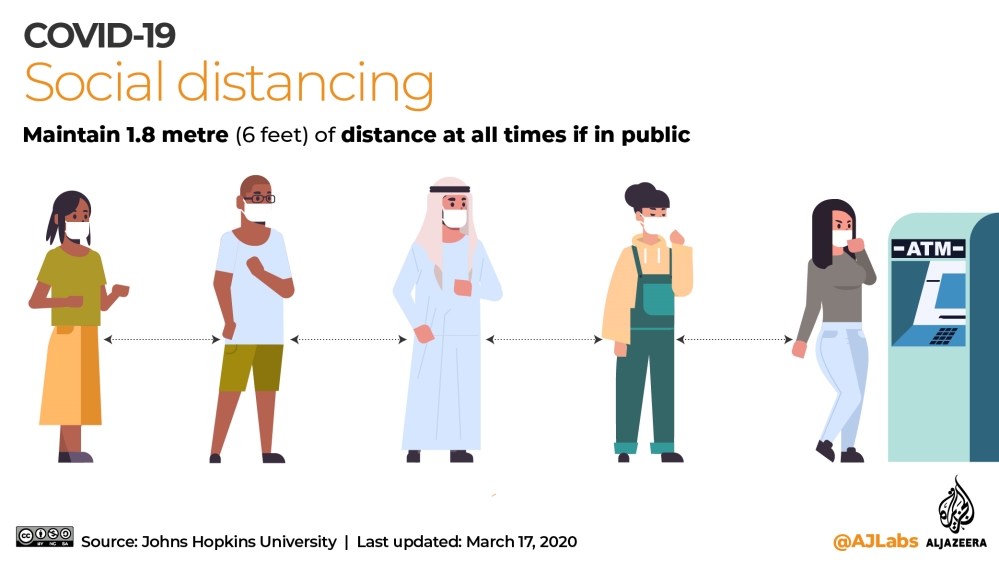
INTERACTIVE: Covid-19 Social distancing

Bahrain – 9,366 cases, 15 deaths

Kazakhstan – 9,304 cases, 37 deaths

Czech Republic – 9,069 cases, 317 deaths

Algeria – 8,857 cases, 623 deaths

Norway – 8,391 cases, 235 deaths
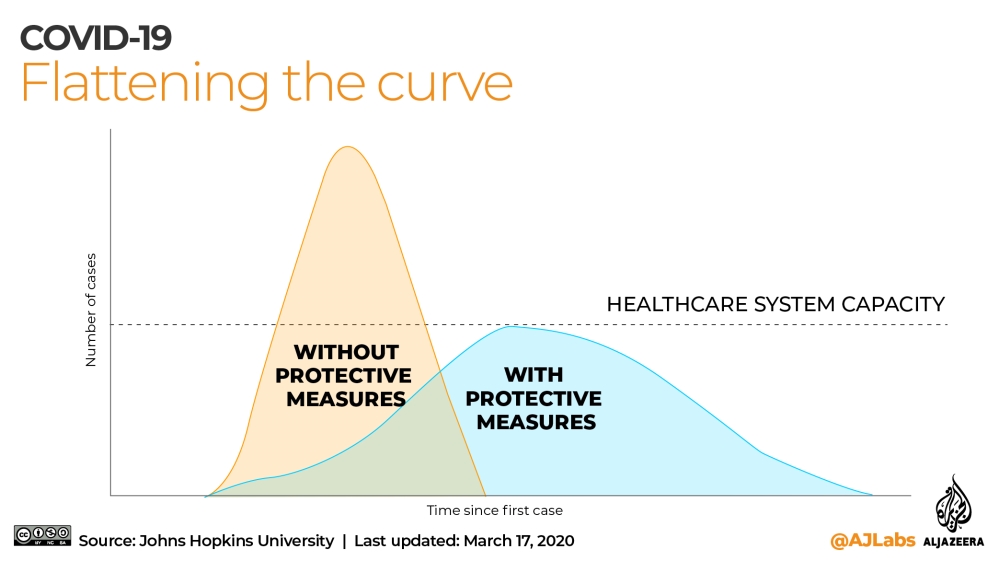
INTERACTIVE: Covid-19 Flattening the curve

Oman – 8,373 cases, 39 deaths

Nigeria – 8,344 cases, 249 deaths

Armenia – 7,774 cases, 98 deaths

Malaysia – 7,619 cases, 115 deaths 

Morocco – 7,601 cases, 202 deaths

Moldova – 7,537 cases, 274 deaths 

Australia – 7,139 cases, 103 deaths

Bolivia – 7,136 cases, 274 deaths

Ghana – 7,117 cases, 34 deaths

Finland – 6,692 cases, 312 deaths 

Cameroon – 5,436 cases, 175 deaths

Iraq – 5,135 cases, 175 deaths

Azerbaijan – 4,568 cases, 54 deaths

Honduras – 4,401 cases, 188 deaths

Sudan – 4,146 cases, 184 deaths 

Luxembourg – 4,401 cases, 110 deaths

Guatemala – 3,954 cases, 63 deaths

Hungary – 3,793 cases, 505 deaths

Tajikistan – 3,424 cases, 47 deaths

Uzbekistan – 3,353 cases, 14 deaths

Guinea – 3,275 cases, 20 deaths

Senegal – 3,253 cases, 38 deaths 

Thailand – 3,054 cases, 57 deaths

Greece – 2,892 cases, 173 deaths

Democratic Republic of the Congo – 2,546 cases, 68 deaths

Ivory Coast – 2,477 cases, 30 deaths 

Djibouti – 2,468 cases, 14 deaths 

Bulgaria – 2,460 cases, 133 deaths

Bosnia and Herzegovina – 2,416 cases, 149 deaths

Croatia – 2,244 cases, 101 deaths
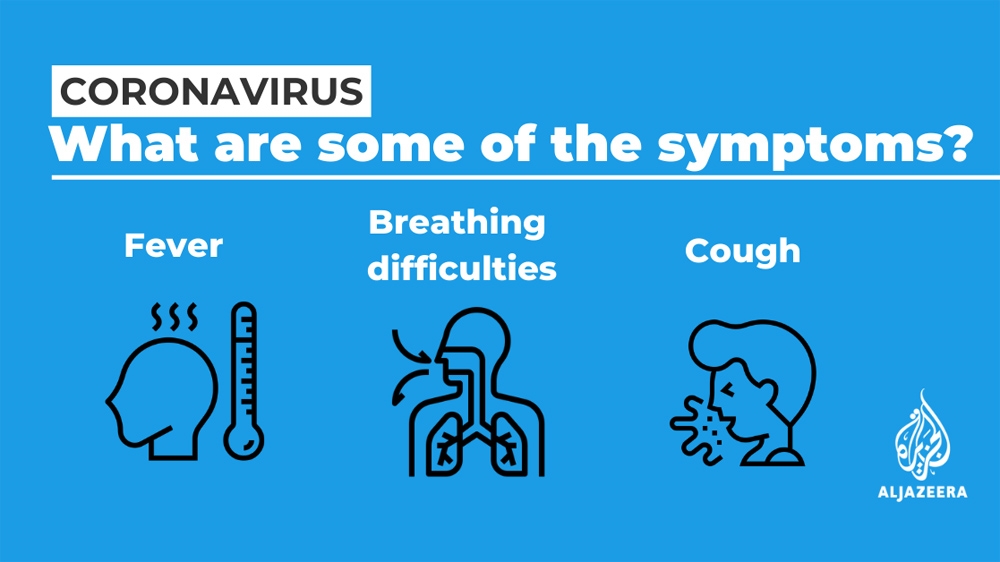
Coronavirus symptoms

Gabon – 2,238 cases, 14 deaths

El Salvador – 2,109 cases, 37 deaths

North Macedonia – 2,014 cases, 119 deaths

Cuba – 1,963 cases, 82 deaths

Estonia – 1,840 cases, 66 deaths 

Iceland – 1,804 cases, 10 deaths

Somalia – 1,711 cases, 67 deaths

Lithuania – 1,647 cases, 66 deaths

Kyrgyzstan – 1,520 cases, 16 deaths

Slovakia – 1,515 cases, 28 deaths

New Zealand – 1,504 cases, 21 deaths

Slovenia – 1,469 cases, 108 deaths

Maldives – 1,438 cases, 5 deaths

Kenya – 1,348 cases, 52 deaths 

Sri Lanka – 1,319 cases, 10 deaths

Venezuela – 1,211 cases, 11 deaths

Guinea-Bissau – 1,178 cases, 7 deaths

Haiti – 1,174 cases, 33 deaths 

Lebanon – 1,140 cases, 26 deaths

Mali – 1,077 cases, 70 deaths

Latvia – 1,057 cases, 23 deaths

Tunisia – 1,051 cases, 48 deaths

Albania – 1,050 cases, 33 deaths

Equatorial Guinea – 1,043 cases, 12 deaths 

Kosovo – 1,038 cases, 30 deaths 

Costa Rica – 956 cases, 10 deaths

Niger – 952 cases, 63 deaths

Cyprus – 939 cases, 17 deaths 

Zambia – 920 cases, 7 deaths 

Paraguay – 877 cases, 11 deaths

Burkina Faso – 845 cases, 53 deaths

South Sudan – 806 cases, 8 deaths

Uruguay – 789 cases, 22 deaths

Nepal – 772 cases, 4 deaths

Andorra – 763 cases, 51 deaths

Nicaragua – 759 cases, 35 deaths 

Sierra Leone – 754 cases, 44 deaths 

Georgia – 735 cases, 12 deaths

Jordan – 718 cases, 9 deaths

Ethiopia – 701 cases, 6 deaths 

Chad – 700 cases, 62 deaths

Central African Republic – 671 cases, 1 death 

San Marino – 666 cases, 42 deaths

Malta – 612 cases, 7 deaths

Madagascar – 586 cases, 2 deaths  

Jamaica – 564 cases, 9 deaths

Tanzania – 509 cases, 21 deaths

Republic of the Congo – 487 cases, 16 deaths

Sao Tome and Principe – 441 cases, 12 deaths

Taiwan – 441 cases, 7 deaths 

Occupied Palestinian territories – 434 cases, 3 deaths

Togo – 391 cases, 13 deaths

Cape Verde – 390 cases, 4 deaths 

Rwanda – 339 cases

Mauritius – 334 cases, 10 deaths

Vietnam – 327 cases

Montenegro – 324 cases, 9 deaths

Mauritania – 268 cases, 13 deaths 

Liberia – 266 cases, 26 deaths

Eswatini – 261 cases, 2 deaths

Uganda – 253 cases

Yemen – 249 cases, 49 deaths

Mozambique – 213 cases

Benin – 208 cases, 3 deaths

Myanmar – 206 cases, 6 deaths

Mongolia – 148 cases

Brunei – 141 cases, 2 deaths

Guyana – 139 cases, 11 deaths

Cambodia – 124 cases

Syria – 121 cases, 4 deaths 

Trinidad and Tobago – 116 cases, 8 deaths

Malawi – 101 cases, 4 deaths

Bahamas – 100 cases, 11 deaths

Monaco – 98 cases, 4 deaths

Barbados – 92 cases, 7 deaths

Comoros – 87 cases, 1 death
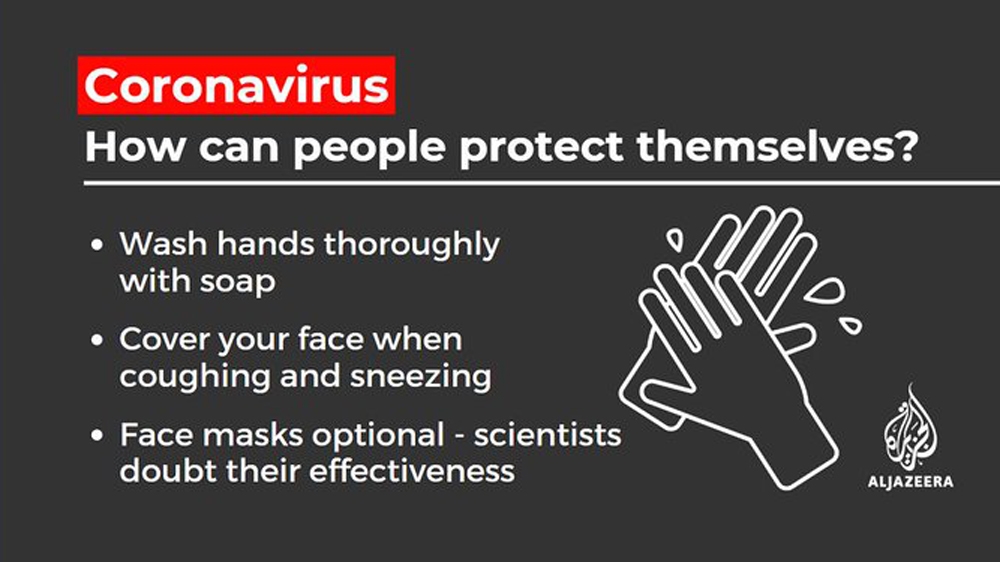
Coronavirus: How can people protect themselves?

Liechtenstein – 82 cases, 1 death

Libya – 77 cases, 3 deaths

Angola – 71 cases, 4 deaths

Zimbabwe – 56 cases, 4 deaths

Burundi – 42 cases, 1 death

Eritrea – 39 cases

Botswana – 35 cases, 1 death

Bhutan – 27 cases

Antigua and Barbuda – 25 cases, 3 deaths

Gambia – 25 cases, 1 death

East Timor – 24 cases

Grenada – 23 cases

Namibia – 22 cases 

Laos – 19 cases

Belize – 18 cases, 2 deaths

Fiji – 18 cases

Saint Lucia – 18 cases

Saint Vincent and the Grenadines – 18 cases

Dominica – 16 cases

Saint Kitts and Nevis – 15 cases

Vatican – 12 cases

Seychelles – 11 cases

Suriname – 11 cases, 1 death

Western Sahara – 9 cases, 1 death

Papua New Guinea – 8 cases

Lesotho – 2 cases


SOURCE:
Al Jazeera and news agencies

Source link

Merkel: No budget deal in June, but must come by fall

0

Chancellor cautions she expects ‘difficult’ negotiations ahead.

EU leaders won’t reach a compromise on the next seven-year budget and the economic recovery fund at their next summit in June but should get a deal before the fall, Angela Merkel said today.

The German chancellor told reporters that last week’s Franco-German proposal “provided a good building block” for the €750 billion recovery fund that European Commission President Ursula von der Leyen proposed Wednesday, alongside a new proposal for the EU’s Multiannual Financial Framework.

Yet Merkel cautioned that she expects “difficult” negotiations ahead, which “will not be concluded at the next European Council” on June 19.

A similar message came from Paris, where a French official today told reporters that the Elysée palace does not think that June “will be the meeting where we reach an agreement.”

“We’ll need a dedicated meeting in person at the beginning of July to have a budgetary agreement, postponing till September would be too late and would not send the right political signal,” the French official said.

Merkel echoed that remark, telling reporters that EU leaders must find a compromise before fall to give national parliaments and the European Parliament “enough time” to discuss and ratify the proposed mechanisms so that they can enter into force on January 1, 2021.

The chancellor added that it was important for her that money paid via the fund “serves the recovery and future [of EU countries]” and that there are checks on spending.


Source by [author_name]

George Floyd was ‘very loving’ and a ‘gentle giant,’ friends and family say

Those who knew George Floyd, the man who died after a Minneapolis police officer pinned Floyd’s neck under his knee for more than 8 minutes, say he was a “gentle giant” who was quick to help and easy to adore.

“If you got a chance to know him, you would have loved him,” said Floyd’s brother Rodney on MSNBC Wednesday. “You can’t name someone that never had a great experience around him.”

Rodney Floyd added that his brother was “very loving” and “trusting.”

Floyd, 46, a former high school football and basketball star, would coach kids in his spare time, Rodney Floyd said.

Floyd also loved to rap, his brother said. Christian hip hop artists who knew Floyd took to Twitter after his death to share stories about him ministering to his community.

“He’d help us when we had church at the basketball court in the middle of the hood,” wrote musician Corey Paul on Twitter. “When we did community outreach in the hood he was a ‘person of peace.’ He wanted to see us come together as a people.”

An artist who goes by Reconcile on Twitter said Floyd had once helped him drag a pool to a basketball court in the projects “so we could baptize dudes in the hood.”

“The man that helped put down & clean up chairs at outreaches in the hood. A man of peace! A good man,” the musician wrote.

“I mean, he had a great understanding of life and [he was a] great people person — walk in a room and absorb the whole room,” Floyd said. “He was an all-around man, and good to his family, kids, mother, brothers, friends. He would help anyone who needed help.”

Jessi Zendejas can attest. She wrote on Facebook Tuesday that Floyd, who was a security guard at Conga Latin Bistro, would watch after her when she went to the Minneapolis restaurant and dance club. He would make sure no one got too close without her say so and would keep her jacket in his closet when she forget cash for the bar’s coat check.

George Floyd.Courtesy photo

“Everyone who knows him knew he loved his hugs from his regulars when working as a security guard and would be mad if you didn’t stop to greet him because he honestly loved seeing everyone and watching everyone have fun,” Zendejas wrote, adding that Floyd was a “gentle giant.”

Floyd’s other brother, Phil, also called him a “gentle giant” on CNN Tuesday night.

“I love my brother. Everybody loves my brother. Knowing my brother is to love my brother,” Phil Floyd said. “He was a very loving person. And he didn’t deserve what happened to him.”

Video of the Monday night incident showed a white police officer with his knee on Floyd’s neck as Floyd pleaded, “Please, please, please, I can’t breathe.”

Bystanders begged the officer to remove his knee, before and after Floyd became silent. The officer did not move for at least eight minutes, at which point paramedics carried Floyd away. He was later pronounced dead.

Minneapolis police said in a statement early Tuesday that the officers were responding to a report of a forgery when Floyd “physically resisted” and that he died after “suffering medical distress.”

Civil rights attorney Benjamin Crump, who is representing Floyd’s family, said he has received further footage from security cameras and bystanders, “and it doesn’t seem like he was posing a threat to police officers.”

The Minnesota Bureau of Criminal Apprehension and the FBI are both independently investigating Floyd’s death.

The four officers involved in the incident were fired Tuesday night, but Floyd’s family is calling for them to be arrested and charged with murder. Minneapolis Mayor Jacob Frey on Wednesday called for swift charges to be brought against the officer who pinned Floyd to the ground, and kept him there with his knee.

Rodney Floyd said he saw the video of his brother being pinned to the ground early on Tuesday morning. He said he both immediately knew it was his brother and couldn’t believe what he was seeing. “That’s not him,” he thought “I know he’s not no violent person like that, you know. And, I mean, it just, it just took me.”

Jovanni Thunstrom, the owner of Conga Latin Bistro, said when he realized the man in the harrowing video he woke up to was his employee and his friend, he sobbed.

“My body is full of emotions, of questions without answer,” Thunstrom wrote on Facebook. “My employee George Floyd was murdered by a police officer that had no compassion, used his position to commit a murder of someone that was begging for his life.”

Floyd’s sister, Bridgett Floyd, says that the faith she shared with her brother leads her to believe justice will be done.

“Faith is something that me and my brother always talked about because he was a God-fearing man, regardless of what he does,” she said Wednesday in an interview with “TODAY.” “We all have our faults. We all make mistakes. Nobody’s perfect. But I believe that justice will be served. I have enough faith to stand on it.”


Source link

Myanmar Lays Terrorism Charges Against 5 Rakhine Men Beaten in Viral Video

0

Five ethnic Rakhine men who were filmed being beaten by Myanmar military soldiers on a naval vessel in late April have been charged under the country’s Counter-Terrorism Law for suspected ties to an ethnic armed group, their lawyer said Wednesday.

The men were arrested by government forces on suspicion of having links to the Arakan Army (AA), a mostly ethnic Rakhine group fighting government army for greater autonomy in western Myanmar’s Rakhine state.

The Myanmar government in March declared the AA an unlawful and terrorist organization.

The Myanmar military also announced that seven others deemed fugitives are linked to the case, he said.

Myanmar military Major Tint Naing Tun filed the charges against Myo Lin Oo, Nyi Nyi Aung, Htay Win, Kyaw Win Aye, and Min Soe, who face a maximum penalty of life in prison if found guilty, Kyaw Nyunt Maung said.

The five men were among a group of 38 civilians detained days after Myanmar forces shelled Kyauk Seik village in Rakhine’s Ponnagyun township on April 13, killing eight civilians and injured more than a dozen others.

Myanmar soldiers later released the other detainees.

The plight of the five men came to light when a cellphone video showing soldiers on board the naval vessel punching and kicking them was posted on social media on May10 and went viral.

Family members of the men told RFA in an earlier report that those arrested had been forced to confess to being AA fighters, though the relatives and friends denied that that was the case.

Following their court hearing, the five men were taken to Sittwe Prison where they are being held during the court proceedings, Kyaw Nyunt Maung said. Their next hearing is scheduled for June 6.

Military investigation

Earlier this month, Myanmar’s military admitted that the soldiers used unlawful and improper interrogation techniques while detaining the five Rakhine men as they were being transported by boat to Sittwe.

Myanmar military spokesman Brigadier General Zaw Min Tun said at a press conference on May 22 that the defense forces chief ordered an investigation into the alleged abuse.

He also said that the military takes legal action against soldiers found guilty of torturing civilians during questioning.

RFA was unable to reach Zaw Min Tun Wednesday for an update.

“If they asked us about whether we are pleased because these soldiers will be  charged under military law, then there is no reason to be pleased because the villagers have already been hurt,” said Soe Thein Maung, uncle of Nyi Nyi Aung, one of the five men charged.

“We need laws and people who can prevent this kind of case,” he added.” It’s not good to take action against people after [the abuse] occurs.”

AA spokesman Khine Thukha said the charges illustrate the shortcomings of the country’s judiciary.

“The villagers who were abused and terrorized have been charged under the Counter-Terrorism [Law]. It shows how much Myanmar’s judicial system has been ruined,” he said.

Myanmar soldiers often detain and question civilians suspected of having ties to the AA. More villagers caught in conflict zones are now being charged under the Counter-Terrorism Law following the government’s declaration of the AA a terrorist group.

Rakhine state Attorney General Kyaw Hla Tun said during a state parliament meeting on May 20 that there are more than 100 court cases in 13 townships in which people have been charged under the Counter-Terrorism Law.

Fighting between government and Arakan forces has left 154 people dead and 350 injured people in Rakhine state and in Paletwa township of neighboring Chin state since the beginning of the year.

Reported by RFAs’ Myanmar Service. Translated by Khet Mar. Written in English by Roseanne Gerin.


Source link

The ‘lockdown generation’ has been hit hardest by Covid-19 – The Mail & Guardian

Young people are disproportionately affected by the jobs purge triggered by the Covid-19 economic crisis.

This is according to a report recently released by the International Labour Organisation (ILO), which tracks the continued effects of the pandemic and global efforts to curb infections.

Fifteen-to-25-year-olds “are facing multiple shocks from the Covid‑19 crisis, which could lead to the emergence of a ‘lockdown generation’”, the report reads. Because global youth employment is concentrated in some of the hardest-hit sectors — including manufacturing and hospitality — and in the informal economy, the economic blow to this age group has been “faster and harder”.

According to the report, before the pandemic, more than four in 10 young workers globally were working in the four sectors that are most adversely affected by the crisis. And almost three-quarters of those young people (131-million) were informally employed.

“When employed, young people are concentrated in types of work that render them vulnerable to income and job losses during the current crisis,” the report notes, adding that this group is more prone to income shocks,owing to their already lower salaries and savings. 

Statistics South Africa’s most recent quarterly labour force survey put the country’s youth unemployment rate at 58.1% in the last quarter of 2019, up by 3.4% from the previous year.

As a result of this shocking statistic, the government has focused its employment efforts on young people. In his State of the Nation address in February, President Cyril Ramaphosa described youth unemployment in South Africa as “a crisis”.

Now, faced with the new crisis triggered by the pandemic, legislators  have questioned the success of existing plans to create more jobs.

The agendas of two recent portfolio committee meetings were almost derailed by criticism of the employment and labour department’s ability to fulfil its employment mandate, levelled in the main by Democratic Alliance MPs Michael Cardo and Michael Bagraim.

Last week, in a meeting on the annual performance plans of the Unemployment Insurance Fund (UIF) and the Compensation Fund, Bagraim likened its agenda to “moving the deck chairs on the Titanic”. He said much that was presented by the entities at the meeting was “absolutely irrelevant”, considering the inevitable economic shocks of the Covid-19 pandemic.

The ILO’s report paints a dire picture of the future of global job security, even as many governments ease lockdown regulations and workers return to their jobs.

According to the report, estimates show a decline in working hours of about 10.7% relative to the last quarter of 2019. This is equivalent to 305-million full-time jobs.

On Tuesday night, during a committee meeting on the department’s draft budget, Cardo pushed for his colleagues to make a statement about  whether the department is “fit for purpose in tackling this huge unemployment crisis”.

“I think we should reflect on whether the department of employment and labour has been successful in incorporating that employment focus into its everyday work,” he said. 

“This observation would seem to be all the more important to make now that we are facing an unemployment crisis of unprecedented proportions in South Africa, with the prospect of three to seven million people joining the ranks of the unemployed.”

Although others disputed that the meeting was the right time to make such a statement, Bagraim said: “If you look at that expanded mandate, we were the worst in the world percentage-wise for unemployment … This was before Covid-19 … So to say that they had some intervention like the … surely, we need to say that the department has failed?”

During the earlier meeting employment and labour director general Thobile Lamati said the department is “currently sharpening our instruments and our tools” to deal with the effects of the lockdown on jobs.

UIF commissioner Teboho Maruping said the fund planned to set aside 10% of its assets to fund job creation schemes by March 2025, and to create 5 000 jobs by 2021 through its investments. 

The Compensation Fund plans to create an additional 4 000 jobs through the president’s youth employment scheme and 7 000 jobs through its investments by 2025.

Employment and Labour Minister Thulas Nxesi said the department’s job-creation plans will be dealt with at a later date, as part of “an integrated strategy coming from government, because there is a lot of debate about this relating to the future”.

He added: “Once the storm comes, we will be able to talk about that.”


Source link

The ‘lockdown generation’ has been hit hardest by Covid-19 – The Mail & Guardian

Young people are disproportionately affected by the jobs purge triggered by the Covid-19 economic crisis.

This is according to a report recently released by the International Labour Organisation (ILO), which tracks the continued effects of the pandemic and global efforts to curb infections.

Fifteen-to-25-year-olds “are facing multiple shocks from the Covid‑19 crisis, which could lead to the emergence of a ‘lockdown generation’”, the report reads. Because global youth employment is concentrated in some of the hardest-hit sectors — including manufacturing and hospitality — and in the informal economy, the economic blow to this age group has been “faster and harder”.

According to the report, before the pandemic, more than four in 10 young workers globally were working in the four sectors that are most adversely affected by the crisis. And almost three-quarters of those young people (131-million) were informally employed.

“When employed, young people are concentrated in types of work that render them vulnerable to income and job losses during the current crisis,” the report notes, adding that this group is more prone to income shocks,owing to their already lower salaries and savings. 

Statistics South Africa’s most recent quarterly labour force survey put the country’s youth unemployment rate at 58.1% in the last quarter of 2019, up by 3.4% from the previous year.

As a result of this shocking statistic, the government has focused its employment efforts on young people. In his State of the Nation address in February, President Cyril Ramaphosa described youth unemployment in South Africa as “a crisis”.

Now, faced with the new crisis triggered by the pandemic, legislators  have questioned the success of existing plans to create more jobs.

The agendas of two recent portfolio committee meetings were almost derailed by criticism of the employment and labour department’s ability to fulfil its employment mandate, levelled in the main by Democratic Alliance MPs Michael Cardo and Michael Bagraim.

Last week, in a meeting on the annual performance plans of the Unemployment Insurance Fund (UIF) and the Compensation Fund, Bagraim likened its agenda to “moving the deck chairs on the Titanic”. He said much that was presented by the entities at the meeting was “absolutely irrelevant”, considering the inevitable economic shocks of the Covid-19 pandemic.

The ILO’s report paints a dire picture of the future of global job security, even as many governments ease lockdown regulations and workers return to their jobs.

According to the report, estimates show a decline in working hours of about 10.7% relative to the last quarter of 2019. This is equivalent to 305-million full-time jobs.

On Tuesday night, during a committee meeting on the department’s draft budget, Cardo pushed for his colleagues to make a statement about  whether the department is “fit for purpose in tackling this huge unemployment crisis”.

“I think we should reflect on whether the department of employment and labour has been successful in incorporating that employment focus into its everyday work,” he said. 

“This observation would seem to be all the more important to make now that we are facing an unemployment crisis of unprecedented proportions in South Africa, with the prospect of three to seven million people joining the ranks of the unemployed.”

Although others disputed that the meeting was the right time to make such a statement, Bagraim said: “If you look at that expanded mandate, we were the worst in the world percentage-wise for unemployment … This was before Covid-19 … So to say that they had some intervention like the … surely, we need to say that the department has failed?”

During the earlier meeting employment and labour director general Thobile Lamati said the department is “currently sharpening our instruments and our tools” to deal with the effects of the lockdown on jobs.

UIF commissioner Teboho Maruping said the fund planned to set aside 10% of its assets to fund job creation schemes by March 2025, and to create 5 000 jobs by 2021 through its investments. 

The Compensation Fund plans to create an additional 4 000 jobs through the president’s youth employment scheme and 7 000 jobs through its investments by 2025.

Employment and Labour Minister Thulas Nxesi said the department’s job-creation plans will be dealt with at a later date, as part of “an integrated strategy coming from government, because there is a lot of debate about this relating to the future”.

He added: “Once the storm comes, we will be able to talk about that.”


Source link

Hong Kong, Stimulus, Huawei: Your Thursday Briefing

0

The U.S. is considering slapping tariffs on exports from Hong Kong — the same as those applied to goods from mainland China — in response to Beijing’s plan to enact new security laws and tighten its grip on the city.

A strong police presence prevented the protesters from surrounding the city’s government offices. Demonstrators who chanted slogans in malls were quickly rounded up and herded onto police buses.

The police appear more determined to quash the protests and better equipped to do so, our correspondents report. This raises questions about the future of Hong Kong’s pro-democracy movement, which has relied heavily on marches and outdoor rallies to drum up support.

The National People’s Congress, meeting in Beijing today, is expected to adopt a resolution calling for the new security legislation, which democracy advocates say will target dissent.

Dive deeper: Here’s a guide to the protests, which have increasingly become a direct challenge to China’s ruling Communist Party rather than to the territory’s leadership.

The Japanese cabinet approved more than $1 trillion in stimulus funding that includes a combination of subsidies to companies and to people. Parliament is expected to approve the measure next month.

In Brussels, the European Union’s executive arm said it wanted to issue bonds in capital markets to raise 750 billion euros, or $860 billion, to finance the bloc’s economic recovery.

The fund will distribute €500 billion worth of grants — free money that will not be added to national debt — to all 27 member states, with Italy getting the largest slice, followed by Spain.

Related: The main partners in the world’s largest automaking alliance — Renault, Nissan and Mitsubishi — announced a plan to survive the coronavirus’s devastating impact on the car industry. Under the new arrangement, Nissan will be the dominant partner in Japan, China and the United States, while Renault will take the lead in Europe, Russia, Africa and Latin America. Mitsubishi will be in charge of the rest of Asia.

A Canadian court ruled that prosecutors had satisfied a critical legal requirement to extradite Meng Wanzhou, the chief financial officer of the Chinese technology giant, to the U.S., where she would face trial on sweeping fraud charges.

Mrs. Meng will have another chance to fight for release at a June 15 hearing on the argument that her rights were violated during her arrest.

She was arrested in Vancouver in December 2018 at the request of the United States and indicted the following month.

Background: The case has thrust Canada into the middle of a diplomatic struggle between the U.S. and China: over trade, theft of technology secrets and whether Huawei’s efforts to help countries build 5G mobile networks present a threat to national security. The court decision is expected to further strain Canada’s own relations with China.

The Michelin-starred chef has overcome logistical hurdles, corruption and unwanted marriage proposals to send food packages and hot meals to those in need in his home country.

SpaceX launch: Two NASA astronauts are scheduled to blast off from U.S. soil to the International Space Station, the first U.S. launch of a crewed mission in nearly a decade. Liftoff is scheduled for 4:33 p.m. Eastern at the Kennedy Space Center in Florida on Wednesday (that’s 6:33 a.m. today in Sydney).

Anime studio fire: Shinji Aoba, 42, recovered enough from the injuries he suffered in a fire at an animation studio in Kyoto last July to be arrested on suspicion of setting it. The attack killed 36 people and injured dozens more, and further shocked Japan for its targeting of a symbol of the country’s popular culture and a major soft-power export.

Locusts in India: With coronavirus infections steadily rising, a heat wave in the capital, and 100 million people out of work, the country now has to fight off a new problem. Scientists say a locust invasion blanketing half a dozen states in western and central India is the worst in 25 years.

Trump tweets: In a first, Twitter has added information to refute inaccuracies in some of President Trump’s tweets, after years of pressure over its inaction on his false and threatening posts.

Snapshot: Above, the Quai d’Anjou in Paris during the coronavirus lockdown. Our photographer Mauricio Lima has followed in the footsteps of Eugène Atget, an early 20th-century father of modern photography who shot an empty city, getting up early to capture Paris’ architecture during a moment of stillness.

What we’re reading: This essay by Marilynne Robinson in The New York Review of Books. Steven Erlanger, our chief diplomatic correspondent for Europe, writes, “The author of ‘Gilead,’ one of the best American novels, tries to think through what this virus shows about the United States, and asks what kind of country we want it to be.”

Watch: “Douglas” is the new Netflix special by the comedian Hannah Gadsby. The Times Magazine interviewed her about life on the autism spectrum, online trolls and how trauma plays into comedy.

Listen: Here are seven works of music that speak to the coronavirus time warp, in which days creep along but months vanish in a flash.

Maggie Astor, one of our political reporters based in New York, and her husband became sick with Covid-19 in late March and managed to recover at home.

Maggie wrote about the ordeal and shared some valuable advice, especially on how to maintain a healthy state of mind during the illness. Here’s an excerpt:

Having Covid-19 is intensely stressful. It’s not unusual to feel depressed or anxious, or to have panic attacks. Don’t be embarrassed to talk to your doctor about your mental health — it’s just as important as your physical health.

It’s also OK to not be OK. You don’t have to handle this “well,” whatever that means. You just have to get through each day. So go ahead and cry, binge Netflix, do a jigsaw puzzle, reread the entire “Animorphs” series — whatever gets you through the day.

Some people have mild symptoms for the first few days and then suddenly get sicker. Some have fevers that go up and down repeatedly. Some are sick for two weeks straight, then have a few symptom-free days, then relapse. Some have lingering symptoms for months.

This is both maddening and very common. Give yourself as much time to rest as your job and financial situation will allow. For me and for several colleagues, that meant nearly three weeks of sick time.

Since tweeting about my experience last month, I’ve received many emails from people in the “this will never end” phase. I share the same screenshot with all of them: a text I sent to a friend on April 5.

“Why do I even bother giving good news when it’s only going to last a few hours?” I wrote. “I’m just so tired of this. I don’t know how to keep dealing with it.”

Every day, more people will hit that wall — and every day, more people will find their way past it. They will feel alone, but they won’t be.


That’s it for this briefing. See you next time.

— Carole


Thank you
To Theodore Kim and Jahaan Singh for the break from the news. You can reach the team at briefing@nytimes.com.

P.S.
• We’re listening to “The Daily.” Our latest episode is about the threat that the coronavirus is posing to the U.S. Postal Service.
• Here’s our Mini Crossword, and a clue: Prize for Malala Yousafzai (five letters). You can find all our puzzles here.
• Jeffrey Gettleman, our South Asia bureau chief, recently appeared on CBS News to talk about the coronavirus in Mumbai.

Source link

Merkel vows a ‘tough fight’ with Brussels over Lufthansa rescue

0

BERLIN — Germany’s Lufthansa bailout is putting German Chancellor Angela Merkel and European Commission competition chief Margrethe Vestager on a collision course.

After weeks of back-and-forth over the terms of a €9 billion rescue for Lufthansa that includes a 20 percent ownership stake for the German government, the flag carrier said Wednesday it could not accept conditions imposed by the EU’s competition department.

The Continent’s second-largest airline felt Brussels’ demands “would lead to a weakening” of its core Frankfurt and Munich hubs by forcing it to relinquish prized landing slots, it said in a statement.

“We won’t allow that to happen,” Merkel is reported to have told her party colleagues earlier this week in response to suggestions the Commission would play tough.

Merkel is said to have pledged a “tough fight” should EU officials, principally Vestager, try to water down Lufthansa’s position in the European aviation market to get the deal through.

The new rules allow the European Commission to demand concessions “to preserve effective competition,” when the public money top-up is greater than €250 million.

Lufthansa’s decision to delay its approval of the rescue tees up a conflict between the two over how far Brussels should drag on German economic policy in what Merkel has called the worst crisis since the close of World War II.

Even before the pandemic, Vestager had dashed hopes for a mega rail merger between Germany’s Siemens and France’s Alstom, a pet project for Merkel’s ally Economy Minister Peter Altmaier. He also helped broker the Lufthansa deal, Europe’s biggest pandemic airline bailout.

France stumped up €7 billion to help Air France and Italy pitched in €3 billion to renationalize Alitalia. In Berlin, the fear is that the Commission wants to make an example of Lufthansa.

“The French and Italians put their money in the airlines that they want,” one senior German aviation executive complained, insisting that giving away slots would do nothing to boost competition. “Slots in the next two years are not our issue at all. Everyone is flying less.”

Buckle up

Brussels recently adopted temporary bailout rules that apply during the coronavirus crisis. They impose strict conditions on EU countries willing to support their champions in distress, aimed at preventing states from helping struggling companies to take over markets once the crisis ends.

The new rules allow the European Commission to demand concessions “to preserve effective competition,” when the public money top-up is greater than €250 million, a Commission spokesperson told POLITICO. France and Germany agreed to the rules, after forcing Brussels to back off some of its original demands.

In previous aviation competition cases, the European Commission asked airlines to divest slots at airports, but this is a no-go for Berlin.

The fear is that giving up slots at Frankfurt and Munich — where the company holds roughly two-thirds of take-off rights — endangers Germany’s links to destinations in Asia and North America. What’s more, workers argue that vacated slots would otherwise go to low-cost airlines with looser labor standards.

But those low-costs argue that such measures are the only way of paying fair. Ryanair threatened to appeal the German bailout, arguing the deal amounted to “illegal state aid.” It is also planning a bloc-wide legal attack against other rescues.

To save their national flag carriers, Paris provided a €7 billion loan package, while Italy is planning to take a stake in exchange for fresh money, the same idea proposed by Berlin.

The Commission doesn’t treat those types of rescues in the same way.

“There is a substantive difference in nature” between public loans that have to be repaid and injecting public money into a company, and in how it affects competition, according to the Commission official.

Lufthansa felt Brussels’ demands “would lead to a weakening” of its core Frankfurt and Munich hubs | Christof Stache/AFP via Getty Images

Injecting equity “does not increase the debt exposure of the company and ensures that the company is supported by a strong shareholder,” she added.

This explains why the Commission did not request that Air France divest slots at airports where it has a strong market position. But there is no doubt, according to two competition experts, that Brussels will ask Alitalia to make important concessions to preserve competition.

The Lufthansa Group, which also includes the Austrian, Brussels, Swiss and Eurowings brands, has been desperate to keep the state off its board, insisting Berlin only appoint “independent experts” rather than occupy the two supervisory board seats its 20 percent stake would warrant.

The problem for Lufthansa is that the airline which says it is losing €1 million an hour and is flying only 1 percent of its normal passenger load needs help. A German government bailout is the “only viable alternative for maintaining solvency,” it said in the statement, but said it would hold off on taking the deal to a shareholder vote “for the time being.”

“The resulting economic impact on the company and on the planned repayment of the stabilization measures, as well as possible alternative scenarios, must be analyzed intensively,” said Lufthansa.

Want more analysis from POLITICO? POLITICO Pro is our premium intelligence service for professionals. From financial services to trade, technology, cybersecurity and more, Pro delivers real time intelligence, deep insight and breaking scoops you need to keep one step ahead. Email pro@politico.eu to request a complimentary trial.


Source by [author_name]

Turkey conducts rare strike in Iraq’s Sulaimaniyah province against PKK

May 27, 2020

Turkey bombed Kurdistan Workers Party (PKK) targets in Iraq’s Sulaimaniyah province, Turkish authorities announced today. Turkey-PKK clashes in this area in the Kurdistan Region near the Iranian border are relatively uncommon.

Turkish armed forces and intelligence operatives either killed or captured five PKK fighters in the Asos area, Turkey’s state-run Anadolu News Agency reported today. The fighters died in an aerial attack, the Turkish Ministry of Defense said. Anadolu also reported today that five PKK fighters were either killed or captured in the Hakurk and Haftanin areas. Turkey often does not specify whether it has killed or captured PKK fighters, instead using the term “neutralized.”

Turkey frequently bombs PKK targets in Iraqi Kurdistan territory. The PKK also attacks Turkish forces in the region, most recently opening fire at a Turkish base near the border this month.

What makes the Asos attack significant, however, is that it took place in Sulaimaniyah province. Asos is a mountain about 35 miles north of the city Sulaimaniyah, which is the second-largest in the Kurdistan Region. The area is controlled by the Patriotic Union of Kurdistan (PUK), which historically has had warm relations with the PKK and relatedly poor relations with Turkey. The PKK and its Iran-based affiliates have operated there in recent years, and Turkey bombed the area twice in 2017, according to the Iraqi Kurdish outlet Kurdistan 24.

Most of Turkey’s airstrikes against the PKK are near the Turkish border in the Erbil and Dahuk provinces — like Haftanin and Hakurk. Turkey has several military bases in these provinces that are controlled by the Kurdistan Democratic Party (KDP). The KDP has an oil-based relationship with Turkey, but many in KDP strongholds oppose Turkey’s military actions there as well as the PKK’s presence. The PUK has historically been closer to Iran.

The PKK says it fights for greater political and cultural rights for the Kurds in Turkey. The group is motivated by the repression of the Kurdish language and arrests of Kurdish politicians throughout Turkish history. Turkey, on the other hand, views the PKK as a terrorist organization, and continues to blame it for attacks on civilians in the country, including a bombing that killed workers in southeast Turkey last month.

The PKK has based itself on the mountains border between the Kurdistan Region of Iraq and Turkey since 2013. A majority of Turkey-PKK fighting has occurred in Iraq — not Turkey — in 2020, according to the conflict data-focused nongovernmental organization ACLED. More than 4,800 people, including civilians and fighters, have been killed during fighting between Turkey and the PKK since 2015 when peace talks broke down, according to the International Crisis Group.


Source link

Intel: US, Italy to co-host virtual meeting of anti-IS coalition

May 27, 2020

Secretary of State Mike Pompeo and his Italian counterpart, Foreign Minister Luigi Di Maio, will co-host a virtual meeting for members of the US-led coalition against the Islamic State (IS) on June 4, the State Department announced today.

“Ministers will discuss ways to keep continuous pressure on [IS] remnants in Iraq and Syria and strengthen our collective approach to defeat [IS’] global ambitions, while managing the challenges the coalition faces due to the COVID-19 pandemic,” the State Department said in a statement.

Why it matters: The meeting comes before Washington and Baghdad convene for a separate strategic dialogue later next month, where the two sides will hammer out the future US troop presence in Iraq. The Iraqi parliament passed a nonbinding resolution calling for the expulsion of US troops after President Donald Trump ordered a January airstrike that killed Iranian Maj. Gen. Qasem Soleimani and a top leader of the Iraqi Popular Mobilization Units, Abu Mahdi al-Muhandis, at the Baghdad airport. The coronavirus pandemic and the threat of Iranian proxy attacks also prompted the United States to withdraw hundreds of troops from some Iraqi bases. After Baghdad suspended training programs, various coalition countries withdrew or redeployed troops they had in Iraq.

What’s next: The United States has said it anticipates inviting coalition partners back to Iraq to resume training within two months, Pentagon Correspondent Jared Szuba reports.

Know more: Elizabeth Hagedorn reports on the IS prison riots in detention facilities maintained by the US-backed, Kurdish-led Syrian Democratic Forces.


Source link