Trump’s Looting and ‘Shooting’ Remarks Escalate Crisis in Minneapolis

President Trump issued a violent ultimatum to protesters in Minneapolis on Friday and inserted himself in a harshly divisive fashion into the growing crisis there, attacking the city’s Democratic mayor and raising the specter that the military could use armed force to suppress riots that erupted after the death of George Floyd, a black man, at the hands of a white police officer.

Mr. Trump’s threat to have unruly protesters shot — “when the looting starts, the shooting starts” — stirred an outcry in Minnesota and from his national critics, with his Democratic challenger in the presidential race, Joseph R. Biden Jr., expressing indignation that Mr. Trump was “calling for violence against American citizens during a moment of pain.”

The president framed his comments in explicitly ideological terms, as a denunciation of a liberal local government that had failed to maintain order, before abruptly retreating from them some 14 hours later in a slapdash effort to claim he had been misinterpreted. At an event in the Rose Garden on Friday afternoon, he made no mention of events in Minneapolis, took no questions and offered no acknowledgment of the spiraling conflagration over his initial outbursts on Twitter.

“I can’t stand back & watch this happen to a great American City, Minneapolis,” Mr. Trump wrote shortly before 1 a.m. on Friday. “A total lack of leadership. Either the very weak Radical Left Mayor, Jacob Frey, get his act together and bring the City under control, or I will send in the National Guard & get the job done right.”

Mr. Trump’s mix of demands and attacks came despite the fact that Gov. Tim Walz of Minnesota had already activated and deployed the National Guard in response to a request from local leaders.

Mr. Trump began talking about the unrest in Minneapolis overnight as cable news showed a police station engulfed in a fire set by protesters. The four city police officers involved in the death of Mr. Floyd were assigned to that station.

Mr. Floyd was killed on Monday after one of the officers, who were responding to a call about an alleged counterfeit bill used at a store, knelt on his neck while he was handcuffed and lying face down on the ground. Mr. Floyd called out, “I can’t breathe.” The officer, Derek Chauvin, and the three others were fired the next day. On Friday afternoon, Minnesota officials said that Mr. Chauvin had been arrested.

Mr. Trump, in his tweets, denigrated the protesters and issued demands in a situation that was already spiraling out of control.

“These THUGS are dishonoring the memory of George Floyd, and I won’t let that happen,” the president wrote in another post, which was flagged by Twitter. “Just spoke to Governor Tim Walz and told him that the Military is with him all the way. Any difficulty and we will assume control but, when the looting starts, the shooting starts. Thank you!”

In saying “when the looting starts, the shooting starts” Mr. Trump echoed a phrase coined by a Miami police chief in the 1960s about crackdowns on black neighborhoods during times of unrest. Walter Headley, the Miami police chief in 1967, warned that young black men who he called “hoodlums” had “taken advantage of the civil rights campaign,” and added, “We don’t mind being accused of police brutality.”

Shortly before his event in the Rose Garden — a statement announcing punitive measures against China — Mr. Trump tweeted in a puzzling construction that his remarks overnight had been “a fact, not a statement,” and said he had not been urging further violence but rather describing it as a natural consequence of looting.

Twitter officials appended Mr. Trump’s “shooting starts” tweet with a note saying the remark was “glorifying violence.” That provoked another tweet from the president accusing Twitter of having targeted “Republicans, Conservatives & the President of the United States” and prompting his aides to repost his original tweets on the official White House Twitter account. It was also flagged by Twitter.

On Friday afternoon, Mr. Biden condemned the president’s remarks, without naming Mr. Trump.

“This is no time for incendiary tweets,” Mr. Biden said over a livestream from his basement. “It’s no time to encourage violence.”

“The original sin of this country still stains our nation today and sometimes we manage to overlook it,” Mr. Biden said. “We just push forward with a thousand other tasks in our daily life, but it’s always there, and weeks like this, we see it plainly that we’re a country with an open wound. None of us can turn away.”

In a statement posted on Twitter, former President Barack Obama described hearing anguished reactions from African-Americans to the images of Mr. Floyd lying facedown with a knee on his neck. Mr. Obama said he shared their feelings.

“For millions of Americans, being treated differently on account of race is tragically, painfully, maddeningly ‘normal,’” in even the most ordinary situations, he said.

“This shouldn’t be ‘normal’ in 2020 America,” Mr. Obama said, calling for officials to investigate Mr. Floyd’s death and for all Americans to help end “the legacy of bigotry and unequal treatment.”

When the video of Mr. Floyd lying on the ground under the police officer’s knee first circulated, Mr. Trump called it “shocking,” and at the White House on Thursday, the press secretary, Kayleigh McEnany, said the president was “very upset” seeing it.

But the protests in Minneapolis have recalled some of the worst scenes of unrest in response to police brutality in the treatment of black men over the last 30 years.

When conflicts involving race has arisen during his presidency, Mr. Trump has often avoided taking a clear position. When neo-Nazis marched in Charlottesville, Va., in 2017 and a counterprotester was killed, Mr. Trump condemned the death but told reporters there were “very fine people” on “both sides” of the matter, prompting outrage. Mr. Biden referred to Mr. Trump’s comments about Charlottesville when he declared his campaign in 2019.

Mr. Trump’s hostility to black activists and his admiration of suppressive government force have been consistent features of his worldview for decades, stretching back even to a 1990 interview in which he spoke admiringly about the Chinese government’s crackdown on protesters in Tiananmen Square. (“That shows you the power of strength,” he told Playboy magazine.

The crisis in Minneapolis recalled scenes of police violence and civil unrest that scarred the 2016 presidential campaign, and that Mr. Trump seemed to use to his advantage in his contest with Hillary Clinton, his Democratic opponent. During the campaign, Mr. Trump criticized Black Lives Matter protesters seeking to call attention to police brutality, describing the activists as a “threat” in the summer of 2016.

A series of killings that summer — two incidents involving black men killed by police officers in Louisiana and Minnesota, and a mass shooting of police officers in Texas by a black gunman — set a bloody backdrop for Mr. Trump’s nominating convention and may have helped reinforce his law-and-order pledge to “make America safe again.”

Yet it was far from clear on Friday that Mr. Trump’s instinct for the mailed fist would offer him comparable political rewards in his re-election campaign.

Americans typically expect their president to be not just an enforcer but also a unifier and a healer, roles that Mr. Trump has repeatedly shown no interest in performing. His threat early Friday morning to have unruly protesters shot exemplified his preference for escalating conflict, often in violent terms, rather than easing it.

Should scenes of violence, rioting and arson continue to dominate television screens in the coming weeks, it could ultimately make Mr. Trump’s brute-force message more appealing to some of the white swing voters who embraced him reluctantly in the 2016 election.

But that, too, might carry a political price: Mr. Trump’s campaign has been making selective efforts to reach out to black voters, particularly young men, and it is difficult to see how that pursuit could have the desired effect if the president demonizes police protesters in harsh terms.

And as in other arenas of the 2020 campaign, Mr. Trump is confronting an elusive rival in Mr. Biden, who is one of only a few major figures left in the Democratic Party who can claim both a deep bond with black voters and a relatively conservative record on matters of law enforcement.

At a virtual fund-raiser on Thursday, Mr. Biden opened his remarks with a somber reflection on Mr. Floyd’s death, calling it a “brutal, brutal death.” He described the nation as struggling with “an open wound” and nodded to “an ingrained systemic cycle of racism and oppression” in America.

“It’s ripped open anew this — this ugly underbelly of our society,” he said.

Black activists and political groups responded to Mr. Trump’s statements with shock, accusing the president of using race as a political wedge at the expense of vulnerable communities. They pointed to Mr. Trump’s previous statements regarding protesters in Charlottesville as a counterexample, saying that his willingness to defend protesters who included racist and anti-Semitic individuals in 2017 did not extend to black protesters in Minneapolis.

Progressive groups said that the protests and actions in the Minneapolis community should not be seen in isolation, but a culmination of sustained police aggression and systemic inequality — present long before Mr. Floyd’s death.

“This is a clear representation of a president who has always seen those who stand up to injustice as enemy combatants, and has been uninterested — at every turn — in the role of uniting people,” said Rashad Robinson, president of Color of Change, a racial justice organization.

Katie Glueck and Astead W. Herndon contributed reporting.


Source link

Covid-19 crisis: Over to states as next phase of lockdown set to kick in

0


Two days before 4.0 comes to a close, the Centre and states engaged in hectic parleys to chalk out the road ahead. After taking chief ministers’ views on the contours of the next lockdown, Union Home Minister met Prime Minister on Friday before finalising the guidelines. Sources indicated that the focus this time would be on further easing the curbs on economic activities, including opening shops in malls, while maintaining stringent norms in the containment zones. Also, states are likely to have a bigger role than the Centre in deciding how 5.0 will play out from June 1.

After a first of its kind meeting between Shah and chief ministers, officials said from now on, measures would be reviewed every fortnight and restrictions would largely be decided by states. While many states opted to wait for the Centre’s guidelines, expected on Saturday, chief minister led the way in announcing significant relaxations from June 1.


ALSO READ: India GDP growth slows to 3.1% in Q4 as Covid-19 lockdown hits economy

Even as there’s no consensus among states on the shape of the next lockdown, many favoured extension of curbs to contain the spread of Covid-19 cases. Kerala, and are among those concerned that economic reasons outweighing health considerations could sharply increase the number of cases.

Therefore, they want the lockdown extended. ‘’Considering the cases are going up, the recommendations are not in favour of lifting of the lockdown,’’ a government official told Business Standard.

However, others such as West Bengal, Karnataka, Punjab, and Goa supported further relaxations to spur economic activity. After his meeting with Shah, Goa CM said he felt the lockdown may be extended for 15 more days. “However, we want some more relaxations like opening of restaurants with social distancing at 50 per cent capacity,” he said.

government on Friday allowed offices — private and government — to operate at full capacity from June 8; jute and tea industries would also be allowed to deploy full workforce. To facilitate this, public transport, particularly buses, would be allowed to ply, though crowding and standing will not be allowed.

ALSO READ: Govt unlikely to press for hike in GST rates for non-essentials next month

Banerjee also approved opening religious places from June 1 with restrictions. “Considering the sorry state of affairs in the country, let us come forward and pray together,” Banerjee said on Friday.

Karnataka, too, has decided to open the doors to religious places from June 1. Pujas can be offered through an app which would soon start taking bookings. The state is also in favour of opening restaurants and theatres from Monday, but the Centre will take a final call on the issue.

Punjab CM Amarinder Singh told a group of industrialists that his government wants to ensure 100 per cent operationalization over the next few days. He said 78 per cent of the industry had resumed operations, and 68 per cent of the migrant labour has opted to stay back in Punjab.

States’ stand

  • allows offices to operate at full capacity from June 8; religious places to open from June 1
  • Karnataka, too, will open religious places from June 1; pujas can be offered through app
  • Punjab wants to ensure industry functions at 100% capacity
  • Maharashtra has asked for resumption of suburban trains in Mumbai for emergency service
  • Jharkhand, Odisha, favour lockdown extension

While educational institutions will remain shut, the view was divided on whether the Centre should allow resumption of metro services, opening of restaurants, hotels and theatres from June 1.

International air travel is likely to remain suspended for some time.

The Centre-state talks on Friday also revolved around resumption of economic activities in the worst Covid-19 hit cities including the biggest urban centres of the country such as Mumbai, Delhi, Chennai, Ahmedabad, Pune, Hyderabad, Kolkata, Indore, and Jaipur. The Centre is concerned at the increase in cases in 30 municipal areas across states accounting for 80 per cent of the positive turnout in the country. Most states agree that the Centre should continue to restrict inter-state bus, train and flight operations.

ALSO READ: GDP to contract 10.8% without more fiscal stimulus, says Pronab Sen

Sources indicated that parts of Tamil Nadu — that had not reported new Covid cases or seen a decline in the number of cases — would see relaxations. But it may not be the same in Chennai as the numbers in the metro were increasing.

Telangana and Andhra Pradesh were treading cautiously as the number of cases was on the rise. No additional relaxations have been sought by the two state governments. Not much is expected to change in Maharashtra, which accounts for the highest share of confirmed Covid cases and fatalities. CM is understood to have asked for resumption of suburban trains in Mumbai for emergency service.

CM said his government was in no hurry to open the lockdown, and could go for an extension depending on the pattern of the spread.

Delhi health minister Satyendra Jain said large congregations should not be allowed. Schools, colleges, cinemas should remain shut, he said on a day when two floors of Parliament Annexe building were sealed after an officer tested positive.

In UP, the was slated to take stock of the situation with top district officials on Friday night. At present, there are about 1,200 hotspots in the state with a population of more than 5 million people belonging to 960,000 households, UP additional chief secretary Awanish Kumar Awasthi told the media.

ALSO READ: Coronavirus LIVE: Trump says US ‘terminating’ relationship with WHO

The fresh guidelines by the MHA are set to ask states to implement social distancing more strictly and increase fines on those violating this. Punjab on Friday increased fine on those found spitting in public places to Rs 500. CM has said he has received representations from many religious leaders to open religious places. Among others, Rajasthan plans to restrict the lockdown to “curfew and non-curfew zones”. Odisha, after an increase in the spread, favours extending the lockdown. home minister has said lockdown should continue beyond May 31 and justified strictness at the state’s borders with Delhi since free movement was likely to result in a surge in Covid cases in the state.


(With inputs from Avishek Rakshit, Samreen Ahmad, Virendra Singh Rawat, T E Narasimhan, Dasarath B Reddy, Aneesh Phadnis & Archis Mohan)


Source link

Tune into Die Heuwels Fantasties’ lockdown live stream launch of ‘2021’

With touring in the foreseeable future being off the cards, the South African alternative electronic band have decided to venture online for the launch of their new album, 2021.

And joining them on Saturday 30 May for this state-of-the-art live stream experience will be well-known musos Francois van Coke, Arno Carstens, Jack Parow and Tarryn Lamb.

“The whole band is amped for our first full-on online live show,” said DHF frontman Pierre Greeff.

“It’s an exciting experience to be able to ‘send’ our album into the homes of fans across the world through the cyber realm. It’s going to be an audio visual treat!”

Double whammy: Free digital album

And to top off this what promises to be a memorable first for the band, tickets to the live stream includes a free 2021 digital album.

Their latest album boasts 16 brand new tracks and also features the likes of legendary musical powerhouse Arno Carstens, Tarryn Lamb, rapper Jack Parow, Francois van Coke, Johnny de Ridder, Ampie, TJ Terblanché and Pierre Pressure. 

A taste of ‘2021’:

Soulful decade for DHF

Die Heuwels Fantasties is considered one of the most successful Afrikaans electronic acts. They released their self-titled debut album in March 2009, features contributions from popular names on the South African music scene, such as Francois van Coke (Fokofpolisiekar and Van Coke Kartel), Laudo Liebenberg (aKING), Adriaan Brand (Springbok Nude Girls), Neil Basson (Foto na Dans) and Jack Parow. 

Die Heuwels Fantasties is composed of Hunter Kennedy (also a member of Fokofpolisiekar and formerly of aKING), Pierre Greeff (also member of Lukraaketaar), Fred den Hartog (also member of Thieve) and Sheldon Yoko (also a member of Die Gevaar).

‘2021’ tracks:

  1. Mis Oor Die See (feat. Arno Carstens)
  2. Ons Moet Leef (feat. Ampie)
  3. Plekkie In Die Son (feat. Early B)
  4. Naweek (feat. Jack Parow)
  5. Lieg Net Vir My
  6. Kan Iemand My Hoor? (feat. TJ Terblanché)
  7. Ek Mis Jou (feat. Tarryn Lamb)
  8. Vat My Saam 
  9. Mejuffrou Sonneblom
  10. Kom Na My Toe (feat. Johnny De Ridder)
  11. Jy Stel My Teleur
  12. Min Worries (feat. Francois Van Coke)
  13. Bly By Die Huis 
  14. Nog Een (feat. Loki Rothman) [Bonus Track]
  15. Doin’ It Right (feat. Pierre Pressure) [Bonus snit]
  16. Leja (Live at Francois van Coke en Vriende 2019, Pretoria) [Bonus Track]

Get your tickets here:

Tickets for the live stream show which will take place from 20:00 to 21:30 on Saturday is available for R150 on www.howler.co.za.  

DMCA.com Protection Status


Source link

Arakan Army Kills Myanmar Policemen in Attack on Border Guard Outpost

0

The Arakan Army attacked a paramilitary border guard outpost in western Myanmar’s war-ravaged Rakhine state on Friday, capturing six policemen and three of their family members, and killing several others, the Myanmar military and local residents said.

The ethnic armed force raided the Thazin Myaing police outpost in rural Rathedaung township from the northwest, according to a statement on the website of the Office of the Commander-in-Chief of Defense Services.

“Around 100 AA terrorist insurgents attacked in droves using heavy and light artillery and guns at about 2:10 a.m. today on the main station of Thazin Myaing police outpost which has been undertaking law enforcement in the region,” the statement said.

The ambush resulted in four deaths and the abduction of nine others, including some of officers’ relatives, it said.

The attacks killed four policemen, while six more policemen and three family members, including a child, are missing,” the statement said.

Similar AA raids on police outposts in late 2018 and in early 2019 triggered the conflict pitting the ethnic Rakhine rebel group against the Myanmar military that has engulfed much of northern Rakhine state — a region already devastated by the national army’s campaign to expel 740,000 Rohingya Muslims in 2017.

Some residents from a nearby village estimated that at least 30 security forces were deployed at the outpost and that as many as 10 of them may have died during the armed assault.

“There were heavy losses of servicemen from the government side during the battle last night in the village, [and] the AA abducted some policemen,” said a resident of Thazin Myaing village who requested anonymity for security reasons.

AA soldiers took away nine police officers, the resident said, adding that the exact number of deaths is unclear.

“Another 10 policemen who left the outpost are staying on the mountain, and they haven’t come down,” he said. “They asked us for help with food supplies. We promised to help them.”

The remaining 10 or so are assumed to have been killed during the assault, the villager said.

Myanmar military spokesman Brigadier Gen Zaw Min Tun told RFA that only a handful of policemen were assigned to the outpost and that authorities were still trying to determine the number killed and abducted.

Myanmar security forces are now following AA soldiers and conducting clearance operations to eliminate them from the area, he said.

Another local villager who also requested anonymity for the same reason said AA troops also torched two police outpost buildings following the cessation of artillery fire at about 3 a.m.

“They burned down two buildings,” the villager said. “One is on the hill, and the other one for support staff is at the foot [of the hill].”

Almost all the residents of Thazin Myaing, except for the elderly, have now fled the community — a purpose-built village with about 40 houses that was set up as an outpost to protect the area against attacks by the Arakan Rohingya Salvation Army (ARSA), a Muslim militant group active in the region.

Military ‘support station’

The Myanmar military said the AA’s strategy of targeting border guard outposts and police stations as well as civilians related to officers stationed at these places are war crimes.

“The AA terrorist insurgent group committing such consistent attacks targeting police outposts and policemen is [tantamount to] committing war crimes,” the military’s statement said.

AA spokesman Khine Thukha confirmed the attack on outpost saying that “the facility nominally called a police outpost is actually a support station for the military’s operations.”

He said that security forces at the outpost cannot be classified as civilian forces because they are under the command of the military, and that AA troops had seized a rocket launcher and 14 other weapons there.

Khine Thukha said that the AA is assessing the policemen it detained at the scene and would soon release all nonmilitary personnel and well as information about the number of deaths and injuries that occurred during the attack.

A violent AA ambush on four border outposts in neighboring Buthidaung township on Jan. 4, 2019, killed 13 policemen and injured nine others, amid an escalation of hostilities with Myanmar forces that began in late 2018 and has now raged for nearly 17 months.

The AA conducted additional deadly attacks on other police outposts and barracks in Rakhine’s Ponnagyun, Mrauk-U, and Buthidaung townships in 2019.

The Myanmar government in March declared the AA an illegal association and a terrorist group.

Reported by RFA’s Myanmar Service. Translated by Ye Kaung Myint Maung. Written in English by Roseanne Gerin.


Source link

Govt says testing lab not possible in each district, Bombay HC expresses ‘displeasure’

0

Written by Omkar Gokhale
| Mumbai |

Published: May 30, 2020 2:33:08 am


The bench expressed its displeasure over the state’s reply and sought the presence of Advocate General Ashutosh Kumbhakoni. (File)

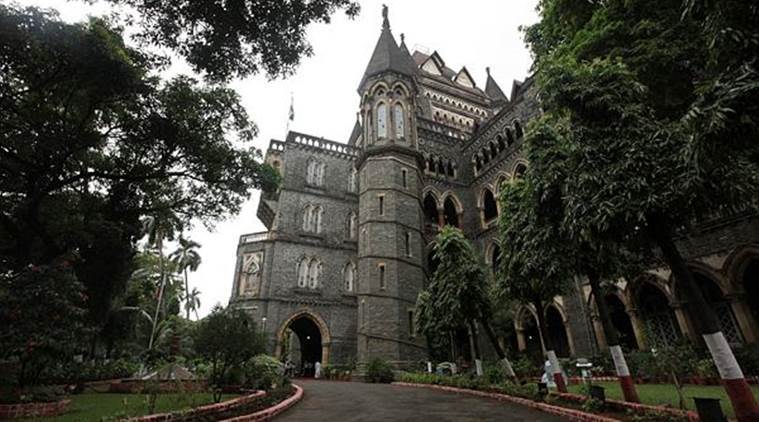
The Bombay High Court on Friday expressed displeasure after the Maharashtra government stated it was not possible to have full-fledged Covid-19 testing facilities in all the districts of the state and that it had fulfilled the Indian Council of Medical Research (ICMR) guidelines prescribing testing lab within 250 km.

A division bench of Chief Justice Dipankar Datta and Justice K K Tated was hearing a plea filed by a fisherman seeking proper testing facilities in Ratnagiri, a non-red zone, in the light of thousands of stranded migrant workers returning to the district from red zones, such as Mumbai and Pune.

In his petition, filed through advocate Rakesh Bhatkar, 58-year-old Khalil Ahmad Hasanmiya Wasta claimed that if migrants, returning from red zones to Ratnagiri, were not tested due to lack of facilities, it would endanger the lives of local residents there.

On May 26, the high court had sought to know from the state government whether Covid-19 testing facilities are available in each district of Maharashtra, including Ratnagiri, and inquired if mobile clinics can be started across the state.

On Friday, assistant government pleader for the state government submitted a note in response and informed the court that a testing facility had been established at the Civil Hospital at Ratnagiri as per a government resolution and same would be functional within eight days.

Responding to the court’s query on whether separate laboratory for each district can be established, the state lawyer, through the note, responded: “It can be seen that there is no need to have a separate laboratory in each district due to the procedure which gives sufficient time to send the samples to the designated laboratory within a radius of 250 km as recommended by the ICMR. Also, new laboratories cannot instantly be set up due to severe constraints in the availability of the technical infrastructure in each district.”

The bench expressed its displeasure over the state’s reply and sought the presence of Advocate General Ashutosh Kumbhakoni. When Kumbhakoni appeared, through video-conference, the bench said such an approach by the state was not acceptable.

📣 The Indian Express is now on Telegram. Click here to join our channel (@indianexpress) and stay updated with the latest headlines

For all the latest India News, download Indian Express App.

© The Indian Express (P) Ltd

Source link

‘Something to hide’: government accused over Covid-19 tests

The government has failed to disclose the number of people tested for Covid-19 for the seventh day running, prompting criticism from senior scientists who said this risked a perception that there is “something to hide”.

On Friday, figures showed that less than 131,500 daily tests were carried out the previous day. No 10 insisted that it was “on target” to hit 200,000 daily tests by 1 June, as promised by health secretary Matt Hancock.

However, no figure for the total number of people tested was provided – and hasn’t been for a week – which experts said makes it impossible to judge whether an adequate regime is in place to support the newly launched test-and-trace system.

Paul Hunter, professor of medicine at the University of East Anglia, said: “Whether or not the Department of Health is trying to hide these figures … not making them publicly available could be perceived as that.

“If the government is setting targets that it’s then going to judge itself by, the results should be publicly available so that people outside the small group of advisers to the government are able to judge them independently. It does feel that the openness is not there.”

Prof Allyson Pollock, director of the Newcastle University Centre for Excellence in Regulatory Science, said the lack of transparency was concerning at a critical time when testing was required to ensure restrictions can be eased safely without triggering a resurgence of infections.

“I have no idea whether we’ve got adequate testing [for track and trace] because we just don’t have enough information,” she said. “We should know how many people have been tested, why they’ve been tested, where they’ve been tested, who has done the test, the test results. We haven’t got those figures.”

The latest figures provide the number of people tested in Pillar 1 (people in hospital and health and care workers), but not for Pillar 2 (tests for the wider population carried out at drive-through centres or through home testing) or overall figures. These numbers were last made available on 22 May.

The Department of Health website states: “Reporting on the number of people tested has been temporarily paused to ensure consistent reporting across all pillars.”

The most recent available figures for Pillar 2 show that there had been around 1.6 million tests to date, but just 1.1 million people tested in this category. The gap of roughly 500,000 is understood to be accounted for by people who have had retests and because tests mailed out for home testing and to satellite labs are only counted as “people tested” once they return to the system.

Only a “small percentage” of people in Pillar 2 have retests, according to the Department of Health, suggesting that hundreds of thousands of tests mailed out to homes and satellite labs – potentially more than a third of those mailed out – had not returned to the system by last week.

“If this service is working properly we need to know that the tests are being done and not just disappearing into the postal service never to be seen again,” said Hunter.

The Department of Health declined to say how many tests have been mailed out, but have not returned to the system or are awaiting use in satellite laboratories.

Source link

COVID-19 Pandemic ‘Greatest Threat to Cambodia’s Development’: World Bank

0

Concerns over the spread of coronavirus have severely damaged Cambodia’s economy, with the country’s important tourism, export, and construction sectors especially hard hit, the World Bank said in a new report on Friday.

These three sectors together account for more than 70 percent of Cambodia’s economic growth and about 40 percent of its paid employment, the World Bank said in its latest economic update for the Southeast Asian nation, Cambodia in the Time of COVID-19.

“As a result, [Cambodia’s] economy is expected to register its slowest growth since 1994, contracting by between -1 percent and -2.9 percent,” the World Bank said, adding that poverty among affected households could increase between 3 to 11 percentage points higher than in the years before the virus spread.

At least 1.76 million jobs in Cambodia are now at risk, according to the report.

“The global shock triggered by the COVID-19 pandemic has significantly impacted Cambodia’s economy,” Inguna Dobraja, Cambodia Country Manager for the World Bank said, urging that policies be quickly put in place in Cambodia to provide economic relief and protect public health.

“The World Bank is committed to helping Cambodia deal effectively with the COVID-19 crisis and strengthen the economy for recovery and future resilience,” Dobraja said.

Cambodian Ministry of Economy spokesman Meas Soksensan said that the easing of the COVID-19 pandemic will restore normalcy to the economy, but that the government is also taking measures of its own.

“It is up to the government measures that we are implementing now through 2021 and 2022,” he said.

“We will then find any possibility to see if we can inject more cash [into the economy], and if we don’t have enough resources we will look into debt,” Soksensan said, adding that he thinks Cambodia’s debt levels are manageable.

To date, 124 cases of coronavirus infection have been confirmed in Cambodia.

Reported by RFA’s Khmer Service. Written in English by Richard Finney.


Source link

Professor Karim explains why it’s difficult to stop the spread of COVID-19

Professor Salim Abdool Karim explained that without natural immunity or a vaccine, most of the population may be at risk of contracting COVID-19, which would lead to increasing the number of patients who may need hospital care.

Vital to flatten the curve as soon as possible

Several factors are in play, including the rapid infection rate of the novel coronavirus, super spreading and repeated infections waves. The infection rate only slowed down once lockdown measures were implemented.

Flattening the curve as early as possible is vital as we’ve seen from the United Kingdom’s caseload that it’s difficult to curb the spread of the disease in advanced epidemics.

In addition, curbing the spread of the disease also leads to slower community transmission and provides time for health care facilities to prepare, increase capacity and equip facilities and personnel.

Why not just eradicate the virus?

“Why talk about flattening the curve, why not talk about eradicating or eliminating the virus? Why don’t we aim for a situation to just get rid of the virus?”

Professor Karim explained that it’s extremely difficult to eliminate a virus altogether. Here’s why:

Pre-symptomatic infectiousness

Karim explains that even before a person becomes ill with COVID-19, they are already infectious – for several days – before they begin to display symptoms themselves.

They could be spreading the virus to the people they interact with, in a range of different situations, without being aware of it.

Asymptomatic infectiousness

In addition, some people may be carriers of the virus without falling ill themselves. In fact, they may never even beware that they’ve contracted COVID-19, but could still infect others.

A recent study in China showed that transmissibility of the asymptomatic cases among close contacts is comparable to that of symptomatic cases.

Rapid spread

COVID-19 also spreads much more rapidly than other infections, such as the common flu.

“Before we can even catch up or try to find the cases, the virus has already spread. We know that each infected person can infect up to two others”.

Superspreaders

In addition to the above, COVID-19 is also associated “with superspreading events”. Professor Karim explains that a patient in South Korea infected a large portion of her community.

A 61-year-old woman from Daegu tested positive for COVID-19 in February. It seemed like a standard case; however, it was revealed through contact tracing that Patient 31 attended two worship services.

She exposed more than 1 000 people. The rate of infection in the area doubled within 24 hours. By the end of the week, it had increased 30-fold. Kim Chang-yup, a professor for health policy at Seoul Nation said at the time:

“What made this case so much worse was that this person spent a considerable amount of time in a very crowded area. There’s growing fear and resentment among the people right now.”

Repeated waves

Lastly, we are in the first wave of the virus. Even when the initial spread is controlled, the risk of repeated waves and outbreaks of new epidemic waves remain. Singapore is one such example.

“It is very difficult for us to simply eliminate the virus. We have chosen the alternative, which is to flatten the curve”.

Professor Karim


Source link

Can Saudi Arabia fix Yemen’s anti-Houthi coalition?

May 29, 2020

President of Yemen’s Southern Transitional Council (STC) Aidarous al-Zubaidi arrived in Riyadh May 19 to address the latest apparent impasse with the government of exiled President Abed Rabbo Mansour Hadi.

The STC initially said the trip was scheduled to last three days. On May 26, an STC official told Al-Monitor the talks had reached day eight.

The visit is the STC’s first since last year’s Riyadh agreement broke down, with each side blaming the other. Earlier this month, government forces launched attacks against STC positions outside Zinjibar in Abyan province, just 60 kilometers (37 miles) from the de facto capital Aden.

The fighting came after the STC declared administrative autonomy in Yemen’s south in April, likely a grasp at domestic legitimacy rather than a stroke at genuine secession. But the move has only served to renew the conflict between the ostensible allies, further distracting from their shared fight against Yemen’s Houthi rebels in the north.

With war-weary Saudi Arabia eyeing a delicate exit to the war and the United Arab Emirates likely to remain deferential to Riyadh’s coalition leadership, observers are left wondering how the Saudis will be able to patch up the broken coalition yet again.

The supposed partners have fought numerous times during the current civil war, which has now entered its sixth year and has been dubbed by the United Nations the world’s worst humanitarian crisis.

The recent fighting underscores that the STC’s deeper grievances will not soon be remedied by another quick fix in Riyadh. “From the moment the Riyadh agreement was signed, it was clear that implementation of the deal was going to be problematic,” said Hannah Porter, a Yemen analyst at DT Global, an international development firm based in Washington.

“The details were vague. This allowed each side to come away from the agreement with two very different ideas of what implementation would look like,” Porter told Al-Monitor.

The deal also stipulated security arrangements be carried out on an impossibly short timeline, and did not specify in what sequence certain obligations were to be implemented.

Both sides nominally agreed in November that the STC should give up its heavy weapons and integrate into the Yemeni government’s forces. But the STC has refused to hand over its weapons until it reaches a political settlement for inclusion in the government. The government insists the STC give up its weapons first.

Though the November agreement affirmed the STC’s place at the table in future UN-led peace talks, the Houthi’s apparent rejection of a coronavirus cease-fire in April has brought the wider war no closer to the finish line.

Experts say the situation has left the STC with two options if it wants to secure its future in Yemen: It can seize control of the country’s south — which it has so far failed to do — or continue to vie for a seat at UN-led peace talks through a political agreement with Hadi.

“The STC is not just going to dissolve the Riyadh agreement, because they would lose their chance at participating in peace talks,” said Elana DeLozier, a research fellow at the Washington Institute for Near East Policy.

“That’s why they likely will not give up their weapons unless a deal to include them in the government is faithfully implemented with Hadi,” DeLozier told Al-Monitor by phone. Although the Saudis can bring the Yemeni president to the table, there is no indication they can force him to compromise, she has argued.

At least publicly, Hadi remains defiant. The recent offensive in Abyan was aimed directly at the STC’s already limited leverage in the south. And with an unclear role in Yemen’s future, observers say Hadi’s intentions are not always easy to discern.

For all the challenges, Crown Prince Mohammed bin Salman appears to have few other options. Saudi Arabia cannot simply exit the war unilaterally without risking further Houthi consolidation, potentially leaving the Iran-linked Zaidi Shiite rebels in control of a state armed with ballistic missiles on Saudi’s southern border. Meanwhile, the Houthis stand to benefit from each subsequent day of coalition infighting.

Furthermore, if the STC is left out of future UN-led talks between the Hadi government and the Houthis, it could potentially act as a spoiler to a peace settlement, DeLozier said.

No matter how the current meetings in Riyadh turn out, some of the STC’s grievances against Hadi’s government will almost certainly endure.

What is often described as Yemen’s “war within a war” has deep roots in South Yemen’s civil war in 1986. The bad blood between Hadi and the STC is personal, congealed when the southerner president — then North Yemen’s defense minister — led the war effort against the independent south in 1994. The STC accuses the government of neglect, corruption and mismanagement to this day.

“On the one hand, you have a set of completely legitimate grievances on the part of southerners who want to reinstate their own independent country,” Porter said. “On the other hand, there is no realistic plan in place for South Yemen or South Arabia to be its own country. Regional and international players would need to buy into this idea of secession, and I don’t see that happening.”

Gerald Feierstein, former US ambassador to Yemen and fellow at the Middle East Institute in Washington, said he believes southern Yemen’s deeper grievances cannot be adequately addressed until the broader war with the Houthis ends.

“The first order of business is to stabilize the economy and get everyone back to the negotiating table,” Feierstein told Al-Monitor by phone. “That’s going to take some time. You need to settle the big war first.”

“Until that happens,” he said, “there won’t be any kind of economic stabilization or post-conflict reconstruction.”

“Yemeni history is replete with negotiations and agreements, none of which have ever actually been implemented because the parties never had the intention of following through on commitments,” Feierstein concluded. “Therefore, you are constantly reinventing the wheel.”


Source link

Bioethicist: ‘Immunity Passports’ Could Do More Harm Than Good

A woman’s blood is collected for testing of coronavirus antibodies at a drive-through testing site in Hempstead, N.Y., to determine whether she may have some immunity to the virus.

Seth Wenig/AP


hide caption

toggle caption

Seth Wenig/AP

A woman’s blood is collected for testing of coronavirus antibodies at a drive-through testing site in Hempstead, N.Y., to determine whether she may have some immunity to the virus.

Seth Wenig/AP

“Immunity passports” have been proposed as one way to reboot economies in the wake of the coronavirus pandemic.

The theory is this: The approval of the so-called passports would rely on the positive results from an antibody test of your collected blood sample. If you have antibodies to the coronavirus after recovering from an infection, you might be immune from future infection and therefore could be authorized to work and circulate in society without posing a risk to yourself or others.

At least, that’s the idea.

But it “could create a lot more harm than it does good,” says Natalie Kofler, who teaches bioethics at Harvard Medical School.

As she argues in a recent essay for the journal Nature, Kofler says a system that hinges on a blood test could cut off already marginalized populations from access to critical public resources, wherein “an immunoprivileged sort of status or an immunodeprived status” would dictate “where and what they can go do.”

In any case, she says, scientists aren’t certain that it’s even possible to achieve immunity from the coronavirus and how long that immunity would last.

“I am really concerned that too much attention time and funding is being given to a policy that’s likely to firstly, not work, and also create more risks than it does benefits,” Kofler says in an interview with NPR’s All Things Considered.

Here are excerpts from the interview:

Who is interested in using “immunity passports”?

Governments including the U.K., the United States — as well as Chile has actually already begun to roll out a version of an immunity passport.

Private companies are also interested, particularly in partnering with certain app developers to create applications that would allow for people on their phones to validate and show their immunity status, in which case could allow private companies, like certain hotels and even sporting events, to control who can enter their premises.

Another issue that you raise is equity — that the poor will simply not have as much access to these immunity passports. Explain what you mean.

Those that are already marginalized by society — the poor, minority groups — they end up being often last in line for access to these precious resources. So we have a lot of concern about who would actually be able to have their immunity status validated. You could have people that just aren’t able to access society because they can’t even be able to certify their immune status.

If immunity passports aren’t the answer, what is then?

I really think that attention needs to be given right now to really developing a vaccine is effective but also that is going to be universally available. And I also do support maybe thinking about ways that we can protect particularly vulnerable locations and spaces.

It may be that, for example, to enter certain nursing homes or [long-term care] facilities to enter certain penitentiaries where there’s high density — people who are [at] higher risk of COVID-19 — that we might have health check status there. We may want to check for presence of virus in people who entering and exiting.

But not on the individual level where everybody is gonna either have an immunoprivileged sort of status or an immunodeprived status to be able to depend on where and what they can go do. I think that that could create a lot more harm than it does good.

Listen to the full interview at the audio link above.

Source link