SpaceX Ready To Launch NASA Astronauts, Back On Home Turf

CAPE CANAVERAL, Florida (AP) — A SpaceX rocket is ready to boost two NASA astronauts into orbit Wednesday, the first launch of Americans from the U.S. in nearly a decade.

Liftoff is set for 4:33 p.m. EDT from the same spot at Kennedy Space Center where men flew to the moon and the last space shuttle blasted off in 2011.

“This is a big moment in time,” NASA Administrator Jim Bridenstine said on the eve of the launch. “It’s been nine years since we’ve had this opportunity.”

The launch puts Elon Musk’s SpaceX on the cusp of becoming the first private company to put astronauts in orbit, something achieved by just three countries — Russia, the U.S. and China.

Riding aboard the brand new SpaceX Dragon capsule for the historic flight: veteran NASA astronauts Doug Hurley and Bob Behnken. The test flight will take them to the International Space Station.

“We are ready!” Behnken tweeted Tuesday night.

Bridenstine describes the duo as bold American heroes who are “laying the foundation for a new era in human spaceflight.”

Wednesday’s weather in Florida has been a concern; it was raining with low clouds in the morning.

NASA pushed ahead with the astronaut launch despite the coronavirus pandemic, but asked spectators to stay at home to lower the risk of spreading the virus. Beaches and parks along Florida’s Space Coast are open again, and local officials and businesses put out a socially distanced welcome mat. Signs on local businesses wished “Godspeed SpaceX.”

Hours before the launch, cars and RVs lined the causeway in Cape Canaveral, with prime views of the pad.


The SpaceX Falcon 9, with the Crew Dragon spacecraft on top of the rocket, sits on Launch Pad 39-A on May 25, 2020, at Kennedy Space Center, Fla. 

President Donald Trump and Vice President Mike Pence are expected to be at Kennedy, where visitors will be limited.

NASA will have input throughout the countdown, but in the end, it will be SpaceX giving the final go — with NASA’s concurrence.

“SpaceX is controlling the vehicle, there’s no fluff about that,” said Norm Knight, a NASA flight operations manager.

Besides good weather at the launch site, SpaceX needs relatively calm waves and wind up the U.S. and Canadian seaboard and across the North Atlantic to Ireland, in case astronauts Hurley and Behnken need to make an emergency splashdown along the route to orbit.

If SpaceX does not launch during Wednesday’s split-second window, the next try would be Saturday.

The last time astronauts launched from Florida was on NASA’s final space shuttle flight in July 2011. Hurley was the pilot of that mission.

Hurley, 53, and Behnken, 49, are both two-time shuttle fliers.

NASA hired SpaceX and Boeing in 2014 to transport astronauts to the space station, after commercial cargo shipments had taken off. Development of SpaceX’s Dragon and Boeing’s Starliner capsules took longer than expected, however, and the U.S. has been paying Russia to launch NASA astronauts in the interim.

The Associated Press Health and Science Department receives support from the Howard Hughes Medical Institute’s Department of Science Education. The AP is solely responsible for all content.


Source by [author_name]

Satellite Imagery Shows Myanmar Military’s Arson Attack on Rural Rakhine Village, HRW Says

0

Satellite imagery of a town in Myanmar’s restive Rakhine state proves that almost 200 homes and other structures were destroyed by fire on May 16, Human Rights Watch said Tuesday.

In a statement, the New York-based NGO called for an impartial investigation into what it called a “mass destruction of residential property” in Let Kar village, a mostly ethnic Rakhine community in Mrauk-U township.

Fighting in the area flared up again in January 2019 between Myanmar’s military, called the Tatmadaw, and the Arakan Army (AA), an insurgent group of ethnic Rakhine rebels. According to HRW, the satellite images show similatity to the Tatmadaw’s arson attacks on Rohingya villages in Rakhine dating back as far as 2012.

RFA reported the incident last week, interviewing a villager who declined to be named, citing security concerns, who said that 194 of the village’s 301 homes and a middle school were set alight by the Tatmadaw. The military denied purposefully torching the buildings and blamed the AA, while AA spokesman Khine Thukha said he would enlist the help of international organizations to investigate.

“The burning of Let Kar village has all the hallmarks of Myanmar military arson on Rohingya villages in recent years,” said Phil Robertson, HRW’s deputy Asia director.

“A credible and impartial investigation is urgently needed to find out what happened, punish those responsible, and provide compensation to villagers harmed,” he said.

The satellite record showed that at 10:30 a.m. on May 16 Let Kar is free of significant damage, however as of 2:12 p.m. fires were raging in buildings there. HRW said that their estimate of 200 buildings engulfed in flames might be an underestimate because the internal damage to buildings is not visible in the imagery.

Witnesses in neighboring Bu Ywat Ma Nyo village, about one kilometer way from Let Kar,  told local media that they saw soldiers of the Tatmadaw go past their village toward Let Kar at about 2 p.m. on May 16, leaving at about 5 p.m, which corresponds to the imagery.

The neighboring villagers said they heard gunfire and observed flames and smoke along with two drones, one in Let Kar and the other in Bu Ywat Ma Nyo.

HRW interviewed an aid worker from Mrauk-U, who said that after 2 p.m. on May 16, it appeared that there was smoke originating from Let Kar.

“There was no one living there after the fighting last year as [the residents] had fled, but the older people really have nowhere to go now,” he said.

“They had been sheltering in IDP [internally displaced persons] camps in Tein Myo and Bu Ywat Ma Nyo villages and had at least been able to go home and collect their belongings or check their homes from time to time. Now they don’t have anything – it’s very sad.”

According to HRW, most of Let Kar’s residents residents left the village more than a year ago, when hostilities increased.

“On April 10, 2019, the military raided Let Kar and detained 27 men for questioning about alleged ties to the Arakan Army. By April 22, three of the men had died in custody, attributed to “heart failure” by the military-owned Myawaddy newspaper,” the HRW statement said.

“No autopsies were performed because the security forces swiftly cremated the bodies. The authorities contested allegations that the men were tortured but refused to investigate the deaths. The 24 others, two of whom are minors, remain detained in Sittwe,” it added.

According to a local source, a former resident of Let Kar entered the village the next day after the attack to inspect the damage, telling the source that at least 194 buildings had been burnt down, including a school and the resident’s former home. The resident and several others went to Let Kar by motorbike, passing 50 Tatmadaw soldiers without being stopped.

Tun Thar Sein, a member of parliament from Rakhine State, confirmed to HRW that the Tatmadaw were in the area and that he and others would urge the government to provide aid and compensation to the residents.

Also on May 17, the Tatmadaw released a statement saying that troops entered the village while on patrol on May 16 after being attacked by the AA. Myanmar’s army also released an aerial image of the burning buildings, most likely taken by one of the drones.

According to the Tatmadaw, the fires were started by the AA, who fled into the mountains after damaging more than 20 houses.

The AA on May 19 denied the accusation in a statement, with spokesperson Khine Thuka asking the media to investigate.

“Myanmar Army is not only accusing unilaterally the Arakan Army of committing the crimes that they have committed but also reporting fabricated news about Lakka’s case on the media belonging to Myanmar Army and their sponsored media. This is just an act of trying to blame the other organization for their crimes,” said the AA statement.

HRW in the statement accused the Tatmadaw of war crimes, saying that under the laws of war, attacks on “civilians and civilian objects, such as homes, are prohibited.”

The NGO said Myanmar has a responsibility to investigate the alleged crimes and hold its soldiers accountable, in addition to providing compensation and condolence payments to victims.

“Myanmar’s government should not leave the investigation of this incident to the military, which has repeatedly covered up atrocities and exonerated its troops,” Robertson said.

“To ensure a credible investigation, the government should request UN assistance,” he added.

RFA attempted to contact a spokesman for the military for comment but he could not be reached.

RFA also contacted U Zaw Htay from the presidential office’s Reporters Online group, but he did not answer inquiries on the matter.

Tatmadaw said responsible for civilian deaths

Meanwhile, RFA has learned that in another part of Rakhine, in the rural town of Ann, a 51-year old villager was shot and killed by the Tatmadaw in early May.

Sources say that U Aung Thein and three other villagers from the same town were pushing a bamboo raft to the next closest town of Kan Htaung Kyi, when they were unexpectedly fired upon by soldiers stationed at a bridge.

“The three men, including [my husband] were shot as they approached Kazugaing bridge,” U Aung Thein’s wife, who declined to be named, told RFA’s Myanmar Service.

“They say the shooters were government soldiers. We have not yet found the body of [my husband],” she added.

According to U Aung Thein’s wife, since the army has closed the road into the area, she has been unable to bring back her husband’s body.

Reports of villagers disappearing in Rakhine after encountering Tatmadaw troops are becoming increasingly common.

In an unrelated incident, two men from Minbya Township were killed by military troops and their bodies were missing for four months until they were found in a forest, according to a relative of one of the men, who requested anonymity to speak freely.

“There were all kinds of rumors about them,” the relative told RFA.

“Some said they had been detained in an army camp. But at last, their bones and clothes were found on the hill of Shew Kyet Yet pagoda. They were buried in a hole [in the hill],” the relative said.

The relative said when the bodies were discovered, it was impossible to tell which victim was which, so their families had to guess based on the clothes they were wearing.

“Wood cutters found the pieces of bones and told us to come check,” the wife of one of the victims, who requested anonymity for legal reasons told RFA.

“They were buried together in a hole. When they disappeared we notified the police and human rights groups, but there wasn’t any news about them,” she said.

“People are unlawfully arrested and accused of being part of the AA,” said U Myat Tun of the Rakhine Human Rights Protection Group.

“On the other hand, the AA also arrests people and accuses them of being informers for the army. Both sides accuse each other whenever villagers are killed or they disappear,” he said.

AA spokesperson Khine Thukha told RFA, “The government’s army has targeted [and] killed Rakhine civilians, cut out the Internet, enforced a media blackout, and is planning genocide.”

According to statistics compiled by RFA, there have been 149 civilian deaths and 350 wounded in fighting between the Tatmadaw and AA since the beginning of 2020.

Reported by RFA’s Myanmar Service. Translated by Maung Maung Nyo.


Source link

Are the foreign patrons of the Libyan war ready to end it?

Absent major military escalation by his foreign patrons, Khalifa Hifter has now lost the war he initiated against Libya’s internationally recognized government in Tripoli. The question remains, however, of how to end Libya’s proxy war and restart the necessary political process to bring about sustained peace.

The May 18 capture of Watiya air base by fighters aligned with the Tripoli-based Government of National Accord (GNA) from Hifter’s Libyan National Army (LNA) not only represented a profound strategic loss for Hifter, but also the apparent collapse of his effort to take Tripoli and establish personal rule over all Libya.

Reflecting the magnitude of the loss amid the withdrawal of Hifter’s troops from Tripoli’s southern frontlines, the two major big-power patrons of the warring parties, Russia and Turkey, have again called for a cease-fire and the resumption of political talks. Russia appears to have gone further — evacuating its mercenaries from Tripoli to an undisclosed location — perhaps the al-Jufra air base in central Libya, where Russia has reportedly sent six MiG-29 fighters and two Su-24 attack jets.

Meanwhile, Hifter’s main Middle Eastern backers, Egypt and the UAE, have begun to state quietly that supporting Hifter’s war was a bad bet that they will never make again.

Amid Hifter’s humiliating defeat, his foreign patrons have renewed diplomatic outreach to Aguila Saleh Issa, the speaker of the House of Representatives, Libya’s Tobruk-based Parliament. On April 27, Hifter announced that the UN-brokered Libyan Political Agreement establishing the GNA was “null and void” and declared himself ruler of all Libya. In response, Aguila stated that since Hifter had now lost the war, Russia was supporting him instead.

What happens next?

The main scenarios for Libya in the near term were laid out on May 19 by the UN acting special representative of the secretary-general, Stephanie Williams, in a brutally tough-minded briefing to the UN Security Council. They include the possibility of a last-ditch war effort by Hifter that his air force chief promised would be the “largest aerial campaign in Libyan history” against Turkish targets in the country. On May 26, AFRICOM warned publicly that the newly arrived Russia military aircraft could be providing air support for that — or preparing to seize bases on Libya’s coast, threatening Southern European air security for the long term.

Consistent with their public call for a cease-fire, Russia, the UAE, Egypt, and France for the LNA, and Turkey for the GNA could shut down air attacks by both sides through ceasing to provide the intelligence and guidance needed to make them effective. Each of these countries has repeatedly endorsed a cease-fire since the Jan. 19 Berlin summit sponsored by German Chancellor Angela Merkel, even as they have engaged in rearming their Libyan clients and participated in attacking their Libyan opponents. But despite Russia’s deployments, Turkey is currently seen by the Western countries as the main foreign barrier to a cease-fire, despite its public stance, for obvious reasons: Turkey’s side is now winning and could well retake control of additional Libyan territory if Turkey continues to provide air support (and mercenaries from Syria) for a little while longer. On May 21, Germany, the UK, and France jointly asked Turkey to stand down. U.S. Secretary of State Mike Pompeo reiterated the message to Libyan Prime Minister Fayez al-Serraj the following day. President Donald Trump then made the same point to Turkish President Recep Tayyip Erdogan on May 24.

A sustainable end to the proxy war would have to address arms shipments by land through Egypt and from Sudan involving Russia and/or the UAE, as well as Turkish shipments by sea, and transport by air of military materiel by the principal patrons of the war. It would also have to address the respective parties’ asserted economic interests in Libya, including Turkey backing off from its plans to begin drilling for oil in the eastern Mediterranean in derogation of other — especially Greek — interests.

Any cease-fire deal should include resumption of Libyan oil exports, shut down by Hifter in January to intensify pressure on the GNA. Resumption of these exports would provide renewed hard currency for the country to buy food, medical supplies, and other vital imports.

Stopping the proxy war would help counter the growing COVID-19 humanitarian crisis, exacerbated by rocket attacks on hospitals that have killed doctors and damaged the country’s ability to respond to the pandemic.

A return to the UN roadmap

The UN political roadmap for Libya remains the only realistic path to regain economic viability, political stability, and physical security against terrorists, criminals, and civil conflict. Any short-term deal could enable Libya to generate sufficient revenue to provide the basics to its people. Political stability in even the medium term could put money in the pockets of ordinary Libyans, enable efforts to rebuild national institutions, and distribute revenues to localities to provide services locally, giving every Libyan a stake in the country’s future.

None of this is possible until the foreign actors in the proxy war accept Libya as an independent sovereign country with its own national interests, rather than treating it as a playground for their competing ambitions.

The U.S. could play an important role in achieving an agreement to reinforce the UN process and combat foreign military involvement in domestic Libyan affairs through confidence building measures to assure the foreign patrons that a unified Libyan government would not be dominated by any other foreign state. It is far from certain that Russia, Turkey, Egypt, and the UAE would accept this result rather than one in which they retain competing, if inherently unstable, spheres of influence. But one can at least imagine their accepting some deal so long as their opponents don’t “win” and they don’t “lose.”

Given his character, history, and intentions, Hifter will do what he can to turn any cease-fire into an opportunity to resupply and restart the war as circumstances permit. Hifter first declared himself in charge of Libya in February 2014. His forces have carried out apparent war crimes. For Hifter, there is no Plan B. Even as he loses support among Libyans, the question of what to do with him remains. Previously, Hifter spent decades in exile in the United States. If his foreign sponsors want to see Libya stabilize, and choose to accept pluralistic solutions rather than winner-takes-all, perhaps one of them could make the humanitarian gesture of providing him a home in a quiet gated community somewhere in the Gulf.


Jonathan M. Winer is a scholar at MEI and has been the U.S. special envoy for Libya, the deputy assistant secretary of state for international law enforcement, and counsel to U.S. Senator John Kerry. The views expressed in this piece are his own.

Photo by Amru Salahuddien/Anadolu Agency via Getty Images

Source link

Garden offers sense of community for New Yorkers

As New York grapples with the COVID-19 outbreak and the city’s shutdown, a small community garden is offering solitude and a sense of belonging. (May 27)


Source link

Woman Removes Mask, Spits In Shopper’s Face For Flouting Distancing Rules

Police in Connecticut say a woman removed her face mask and spit in another shopper’s face after he flouted social distancing measures aimed at slowing the spread of the coronavirus.

Martine Shanchuk told officers she “felt it necessary” during her visit to a Big Y store in Newtown on May 18 to “enforce” its aisle rules herself after a young man started walking the wrong way down a one-way zone, according to a Newtown Police Department report obtained by HuffPost.

When the unidentified man refused to turn around, Shanchuk allegedly “stopped in the aisle to prevent him from continuing down the aisle in the wrong direction,” said police.

Shanchuk “continued to yell at the other individual in the store and that because he was not listening to her she removed her face mask and spit in the males face,” police determined.

Police arrested and charged Shanchuk with one misdemeanor count of second-degree breach of peace, which could carry a six-month jail sentence. She will appear in court on July 7.

A HuffPost Guide To Coronavirus


Source by [author_name]

Best of cartoons, May 28, 2020

Best of cartoons, May 28, 2020

10 Images

The news of the day as interpreted by our talented artists, illustrators and cartoonists.

1/10

Illustration: John Shakespeare

2/10

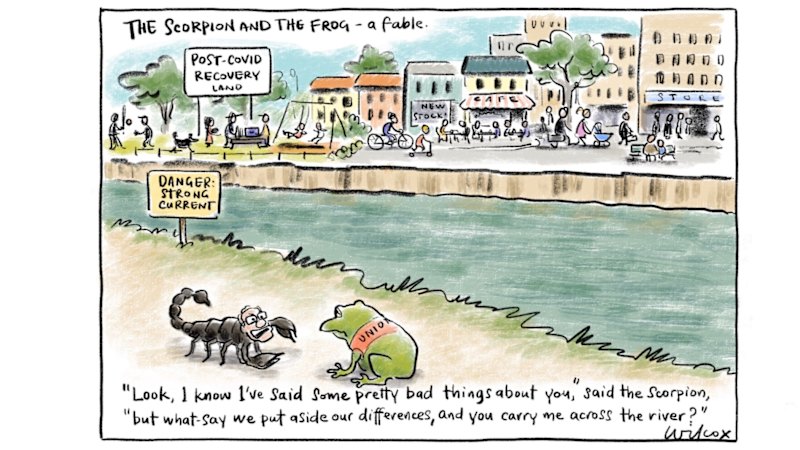
Illustration: Cathy Wilcox

3/10

Illustration: Matt Golding

4/10

Illustration: Andrew Dyson

5/10

Illustration: Dionne Gain

6/10

Illustration: Matt Golding

7/10

Illustration: Andrew Weldon

8/10

Illustration: Matt Golding

9/10

Illustration: Dionne Gain

10/10

Illustration: John Shakespeare

Source by [author_name]

Why Are People Protesting in Hong Kong?

0

The protests in Hong Kong this past week have many of the hallmarks of the antigovernment demonstrations last year that came to define the territory’s biggest political crisis in decades. Protesters have tried to target the legislative chambers. They have marched on the streets and waved banners. They have tried to stop traffic.

This year, there is a key difference. The protests are increasingly a direct challenge to China’s ruling Communist Party rather than to the territory’s leadership.

This latest round of demonstrations, the city’s biggest rallies in months, has been fueled largely by the party’s move this month to impose new national security legislation for Hong Kong.

To China, the rules are necessary to protect the country’s national sovereignty. To critics, they further erode the relative autonomy granted to the territory after Britain handed it back to China in 1997.

Here’s a guide to the protests, and why they have returned.

The rules would take direct aim at the antigovernment protests and other dissent in Hong Kong.

They are expected to prevent and punish secession, subversion as well as foreign infiltration — all of which Beijing has blamed for fueling unrest in the city. The legislation would also allow the mainland’s feared security agencies to set up their operations publicly in Hong Kong for the first time, instead of operating on a limited scale in secrecy.

The legislation has evoked fear that the Communist Party is undermining the freedoms that Hong Kong has enjoyed since China reclaimed the region from Britain. The political framework in Hong Kong, known as “one country, two systems,” ensures the right to assembly and an independent judiciary.

Hong Kong’s mini Constitution, the Basic Law, requires the territory to introduce national security legislation. But the government had not dared to do so after an earlier attempt was stymied in 2003 by huge protests.

Now, Beijing is bypassing the Hong Kong government, and the legislation is instead being pushed by China’s rubber-stamp legislature, the National People’s Congress.

But Beijing had been signaling for months that it would move against the intensifying protests.

A Chinese Communist Party leadership meeting in late October called for steps to “safeguard national security” in Hong Kong, without releasing further details. In January, Beijing abruptly replaced its top representative in Hong Kong, installing a senior Communist Party official with a record of working closely with the security services.

The national security legislation drew immediate criticism from the United States.

Secretary of State Mike Pompeo warned that the Trump administration could revoke Hong Kong’s status as a separate economic entity from mainland China, an important underpinning of the territory’s easy trade access to the United States. And President Trump said on Tuesday that he was preparing to take action against China in response to the national security laws on Hong Kong, but did not give details.

The mass antigovernment protests started nearly a year ago over contentious legislation in Hong Kong that would have allowed extraditions to mainland China. After months of protests, the bill was withdrawn in September.

Since then, the demonstrations have morphed into a broader movement calling for increased democracy, an investigation into police brutality and greater autonomy from mainland China. At its core, the movement is aimed at protecting Hong Kong’s autonomy and resisting encroachment from the mainland.

What began as peaceful mass rallies in the streets later devolved into intense and often-violent, drawn-out clashes between some protesters and police officers. The most intense of clashes at times transformed large swaths of the global financial hub into fiery urban battlegrounds.

All sides appeared ready for a protracted fight until pro-democracy candidates notched a stunning victory in Hong Kong elections in November, in what was seen as a pointed rebuke of Beijing and its allies in Hong Kong.

The protests then quietened. For the first few months of this year, fears of the new coronavirus and social distancing orders kept demonstrators indoors.

The emergence of a mysterious virus in the central Chinese city of Wuhan in late December immediately prompted concerns in Hong Kong. Many residents remember the 2002-03 outbreak of severe acute respiratory syndrome, or SARS, which killed nearly 300 residents.

Though Mrs. Lam, Hong Kong’s top official, moved to limit arrivals from mainland China, she initially resisted a complete travel ban. Then, in early February, more than 2,500 medical workers in Hong Kong formed a union and held a strike that eventually forced the government to impose quarantines on all travelers arriving from the mainland.

The mobilization by the hospital workers was one of the first signs of how the protest movement had evolved to pose a more organized challenge to the government.

The public widely credits the travel restrictions for keeping the virus out of the territory, which by late May had recorded just over 1,000 cases of the coronavirus and four deaths.

Though the virus appears to have been tamed in Hong Kong, local officials recently announced that they would be extending social distancing orders and that group gatherings with more than eight people in public places would be banned until at least mid-June.

Some protesters frustrated with the government’s response have adopted increasingly violent tactics, attacking the police with bricks and Molotov cocktails. Officers have responded with a heavy hand, deploying rubber bullets, pepper balls, tear gas, water cannons and, on several occasions, even guns, to repel the protesters.

Chinese officials have seized on the unrest to label the protesters “separatists” and “violent terrorists” backed by “meddling foreign forces.” They have said the demonstrations were evidence that national security legislation was urgently needed.

“The troublemakers in Hong Kong cannot be allowed to collude with foreign anti-China forces to impose sanctions on the city and confront China,” Xie Feng, China’s foreign affairs commissioner in Hong Kong, said at a news briefing in May. “The ‘Hong Kong independence’ separatists cannot be left unchecked, and the extremists cannot have a free pass to commit violent terrorist acts.”

Only a few protesters have openly called for Hong Kong’s independence, however, and Chinese officials have so far declined to produce substantive evidence of official foreign involvement in the protests.

Source link

Boris Johnson Won’t Sack His Top Aide For Breaking Lockdown. Here’s Why.

0

LONDON – Prime Minister Boris Johnson’s defense of the seemingly indefensible – his refusal to sack top aide Dominic Cummings after he traveled during lockdown – has left many people asking one question.

Why is a newly elected prime minister with an 80-seat majority, who is beginning to turn the tide on coronavirus, burning through so much political capital to save one senior adviser?

Cummings has helped deliver victory after improbable victory for Johnson – from winning the referendum on European Union membership with Vote Leave to surviving half a year of chaotic minority government before delivering a thumping election win and getting Brexit “done.”

But now the prime minister is facing open revolt from members of Parliament, with one even suggesting he should leave Downing Street himself if he needs a “svengali” to “tell him what to say.”

And insiders question whether Cummings, seen as one of those political figures who “gets” voters’ concerns, has in fact now “lost it” amid an extraordinary political backlash and tanking poll ratings.

Either way, Johnson is sticking by Cummings for now, perhaps in a belief that their fates are intertwined.

Here’s why that might be.

‘He’s a winner’ 

Cummings had been a relatively minor figure until the Brexit referendum of 2016, when he took charge of Vote Leave and won an underdog victory for the ages after coining the “take back control” slogan.

Of course, many derided his campaign for spreading disinformation about the cost of EU membership and the threat of mass Turkish immigration.

Cummings also had a trump card in Johnson, the flawed politician but ace campaigner who made an agonizing choice to back Brexit having written both pro-Leave and pro-Remain articles before deciding.

The faces of Johnson and ally Michael Gove the morning after the result told a story – they had not expected to win.

“Boris had a lot of trust in Cummings from that,” says a former colleague. “He saw someone who is steely, determined [and] focused, and he stayed in touch on and off after that point.”


Michael Gove (left) and Boris Johnson holding a press conference at Vote Leave HQ in Westminster, London, after David Cameron announced he would quit as prime minister following a humiliating defeat in the EU referendum. 

The “Dom” legend was born as he spent the next three years fighting allegations of wrongdoing in the referendum campaign, deriding the “thick as mince” government for failing to deliver Brexit, and being immortalized by Benedict Cumberbatch in a Channel 4 film.

Johnson, meanwhile, enjoyed a checkered stint as foreign secretary before quitting the government in protest at former Prime Minister Theresa May’s Brexit deal.

On the backbenches, it looked like he would struggle to realize his lifelong ambition to be prime minister.

But when May was finally ousted with the Tories in civil war, Johnson was perfectly placed to take over: the party feared an imminent election and needed to win.

There was little surprise when Johnson decided to get the Vote Leave campaign back together in Downing Street to fight a new insurgency against the EU (which was refusing to renegotiate the Brexit deal) and parliament (where May had lost the Tories’ majority).

From then on, the Johnson and Cummings team swept all aside and did not care who got in their way – from the Remainer Tory MPs they purged and the judges who overturned their decision to prorogue parliament, to their confidence and supply partners the DUP, who they sold out on Northern Ireland to get a Brexit deal over the line.

The end result was December’s election victory and Britain leaving the EU on Jan. 31.

“Forget everything that’s happening now, as hard as that is, and rewind,” the former colleague says.

“Put yourself in Boris’s position.

“You’re on the backbenches towards the end of Theresa May. It doesn’t look like it’s going anywhere. You’re not necessarily favorite for next leader even if there was a leadership election, which doesn’t look like it’s going to happen, and the Tories look in all kinds of trouble.

“You’ve got the best opposition leader you can hope for in Corbyn and the Tories still aren’t doing that well in the polls.

“You’re Boris in that position and this guy [Cummings] says to you: ’I can help you be prime minister. Not only that – if we get in, we can get Brexit done or get us into a place where it’s not such a wedge issue, and then we’re going to call an election and you’re going to be prime minister and you’re going to have a majority.” 

Johnson driving a Union flag-themed JCB, with the words "Get Brexit Done" inside the digger bucket, through a fake wall embla


Johnson driving a Union flag-themed JCB, with the words “Get Brexit Done” inside the digger bucket, through a fake wall emblazoned with the word “gridlock”, during a visit to JCB cab manufacturing centre in Uttoxeter, while on the general election campaign trail. 

One government source, meanwhile, believes Cummings’ winning record goes back even further – highlighting his past campaigns against devolution in his native north-east and against the UK joining the euro.

“He’s a winner,” they said.

“He’s always won – from North-East Says No to the euro campaign, and then Brexit.

“I know he didn’t work directly on the election but all the strategy setting it up almost as a sort of people-versus-parliament thing has his fingerprints all over it.

“That’s almost as important as the campaign, to be honest.”

‘Whatever the anti-zeitgeist is, you become that’

Since entering Downing Street, Cummings has no doubt ruffled feathers.

He has overseen a clear-out of special advisers, including having one frogmarched out of Downing Street, threatened to completely overhaul the civil service and other British institutions like the Supreme Court, and declared war on sections of the press.

But some of those who remain in government see his value to Johnson, designing and overseeing the “leveling up” agenda for Brexiteer voters in neglected parts of the country on behalf of a prime minister who likes to delegate.

“Cummings is incredibly productive – he gets a lot more out of a day than anyone else would,” the government source said.

“I’ve seen him be in two meetings at the same time, walking between them – he’s obviously got the brainpower to deal with two quite complicated policy meetings at the same time.

“He’s a massive driving force behind what happens – a lot of the long-term delivery, the project management stuff. He’s got a key role.”

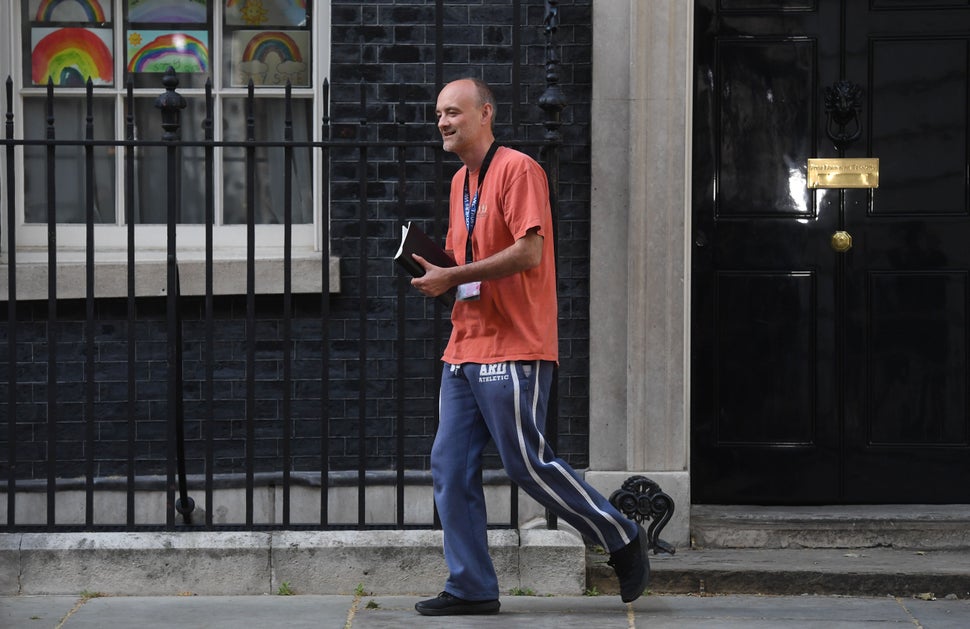
Cummings leaving 10 Downing Street, London, as lockdown questions continue to bombard the government after it emerged that he


Cummings leaving 10 Downing Street, London, as lockdown questions continue to bombard the government after it emerged that he travelled to his parents’ home during lockdown.

The former colleague meanwhile highlights Cummings’ “focus and balls,” his willingness to “keep going on what you think is right even in the face of intense opposition.”

“You’ve got MPs, donors, the cabinet, commentators, saying: ‘This is nuts – you can’t prorogue parliament.’

“Alastair Campbell had that. Thatcher had that.”

They also credit Campbell and Thatcher with basing their battles on a deep understanding of voters, just like Cummings – who “spends days and weeks going up and down the country, going to focus groups, listening to people and putting together ideas.”

But the ex-colleague questions whether his reaction in recent days has been a “mistake.”

“I think now his judgment’s off,” they said.

“I think you would find it hard to argue that even the comms [communications officers] over the last few days have understood what the public mood is on this – they haven’t.

“That doesn’t mean he’s lost it for good – it may be that it’s too personal.”

They added: “We know it happened with Thatcher and we know it happened with Campbell. You get to a point when you are not in sync with the public.

“Whatever the anti-zeitgeist is, you become that.

“It could just be a blip but there is clearly a point where that happens.”

‘He actively doesn’t like us’

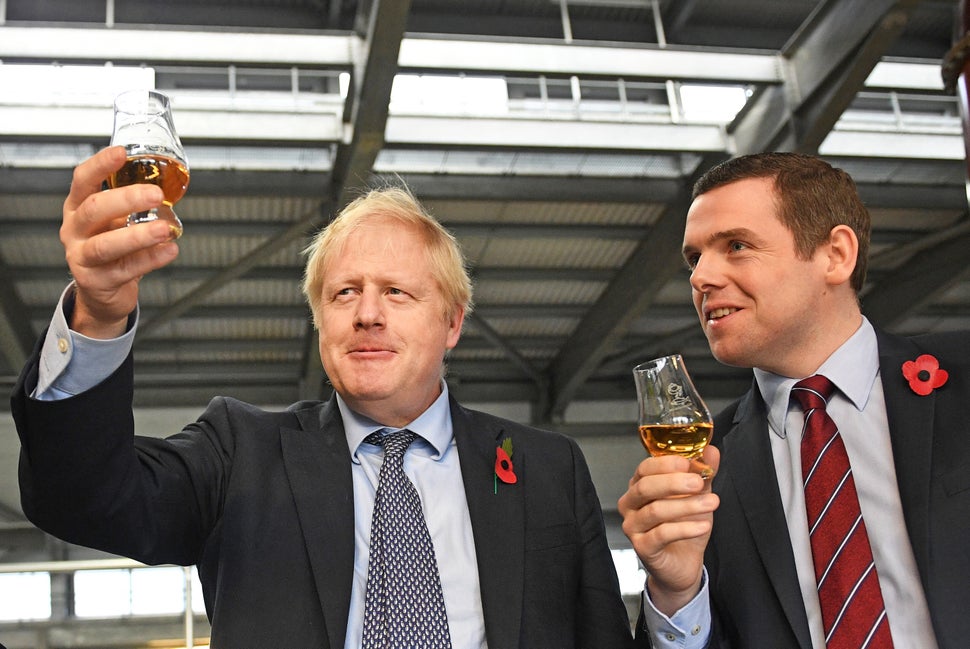
Johnson alongside Douglas Ross, who quit as a Scotland minister over Dominic Cummings' alleged breach of lockdown rules.


Johnson alongside Douglas Ross, who quit as a Scotland minister over Dominic Cummings’ alleged breach of lockdown rules.

There is one reason why Cummings is not yet out of the woods – and that’s the drip-drip of Tory MPs coming out calling for his head and the potential of further resignations to follow junior minister Douglas Ross.

The aide has always insisted he is not a Conservative and has often plowed ahead in the face of intense opposition from the party’s MPs, even managing to alienate arch Brexiteers like Steve Baker.

Asked why Johnson values him so much, one Tory says: “There is obviously something there in which people very much value what he does.

“I can’t really comment on that because they don’t spend any time explaining to us, and Cummings actively doesn’t like us in the parliamentary party. We just don’t get to see it so we have to take it on face value that he’s very useful.

“He’s obviously bright and he obviously knows what he’s doing in referendums.

“But we can’t answer that question, either.”

Another is damning: “I don’t know the bloke, all I know is he’s caused huge embarrassment on more than one occasion to the Conservative party.

“He’s not a Conservative and I don’t understand why the prime minister is so dependent on him unless the prime minister believes he’s got to have a svengali – someone to tell him what to say.

“And, if he has, he shouldn’t be prime minister.”

Johnson and Cummings may hold the media in utter contempt but they may not be able to ignore their own MPs and constituents.


Source link

Lessons need to be learned, admits Chief Medical Officer

The Chief Medical Officer (CMO) has admitted lessons need to be learned from Ireland’s response to the spread of Covid-19 in nursing homes.

Dr Tony Holohan was speaking after the Dáil heard that private nursing homes were left floundering during the pandemic due to a lack of knowledge within the Health Service Executive (HSE) – even though the vast majority of nursing homes were privately run.

In statement to the Special Committee on Covid-19 Response, Health Information and Quality Authority (HIQA) Chief Executive Phelim Quinn said they provided the HSE with “key information, such as the locations of nursing homes, the number of residential beds and staffing levels” as the crisis unfolded.

The HSE and the Department of Health, he added, also availed of HIQA’s online notification system to ensure the timely distribution of information to all nursing homes.

“Currently 80 per cent of nursing homes are operated by private providers,” Quinn said.

“Although funded through the Nursing Home Support Scheme (Fair Deal), the HSE did not know this sector. As a consequence, the infrastructure required by the HSE to support the private sector was under resourced and became increasingly challenged.”

Hours later, Dr Holohan admitted there were “lessons to be learned” regarding the State’s response to the impact the disease was having on the residential sector.

Latest figures show that 54 per cent (884) of Covid-19-related deaths in Ireland occurred in nursing homes.

Speaking at the National Public Health Emergency Team (NPHET) briefing last night (May 26), Dr Holohan said: “We’ll never get everything perfectly right. If there are things to be learned that will help us in terms of that environment, then they will be added to our response and that’s why we’ve proactively put that process in place, because we don’t believe we got it perfectly right.”

There have now been a total 1,615 Covid-19-related deaths in Ireland, after the Health Protection Surveillance Centre (HPSC) was informed yesterday that another nine people with the disease have died.

The HPSC also said that as of Monday midnight (May 25), the total number of confirmed cases of the virus had increased by 37 to 24,735.

Dr Holohan added NPHET plans to meet tomorrow to discuss the case definition used in testing.

“As of midnight Monday 25 May, 325,795 tests have been carried out,” he said.

“Over the past week, 30,169 tests were carried out and of these 633 were positive, giving a positivity rate of 2.1 per cent.”vSpecial Committee on Covid-19 Response

The latest HPSC data also revealed that as of midnight May 24, when there were 24,629 cases, 57 per cent of cases were female and 43 per cent male.

The median age of confirmed cases was 48 years, 3,233 cases (13%) have been hospitalised, and 7,852 cases were associated with healthcare workers.

Of those hospitalised, 395 cases have been admitted to intensive care.

Dublin has the highest number of cases at 11,894 (48% of all cases) followed by Cork with 1,440 cases (6%) and then Kildare with 1,395 cases (6%).

Of those for whom transmission status was known community transmission accounted for 59 per cent, close contact for 38 per cent, and travel abroad for 3 per cent.

peter.doyle@imt.ie

Source link

Caregiver Health: MedlinePlus

0

What is a caregiver?

A caregiver gives care to someone who needs help taking care of themselves. The person who needs help may be a child, an adult, or an older adult. They may need help because of an injury, chronic illness, or disability.

Some caregivers are informal caregivers. They are usually family members or friends. Other caregivers are paid professionals. Caregivers may give care at home or in a hospital or other health care setting. Sometimes they are caregiving from a distance. The types of tasks that caregivers do may include

  • Helping with daily tasks like bathing, eating, or taking medicine
  • Arranging activities and medical care
  • Making health and financial decisions

How does caregiving affect the caregiver?

Caregiving can be rewarding. It may help to strengthen connections to a loved one. You may feel fulfillment from helping someone else. But caregiving may also be stressful and sometimes even overwhelming. Caregiving may involve meeting complex demands without any training or help. You may also be working and have children or others to care for. To meet all of the demands, you might be putting your own needs and feelings aside. But that’s not good for your long-term health. But you need to make sure that you are also taking care of yourself.

What is caregiver stress?

Many caregivers are affected by caregiver stress. This is the stress that comes from the emotional and physical strain of caregiving. The signs include

  • Feeling overwhelmed
  • Feeling alone, isolated, or deserted by others
  • Sleeping too much or too little
  • Gaining or losing a lot of weight
  • Feeling tired most of the time
  • Losing interest in activities you used to enjoy
  • Becoming easily irritated or angered
  • Feeling worried or sad often
  • Having headaches or body aches often
  • Turning to unhealthy behaviors like smoking or drinking too much alcohol

How can caregiver stress affect my health?

Long-term caregiver stress may put you at risk for many different health problems. Some of these problems can be serious. They include

What can I do to prevent or relieve caregiver stress?

Taking steps to prevent or relieve caregiver stress may help prevent health problems. Remember that if you feel better, you can take better care of your loved one. It will also be easier to focus on the rewards of caregiving. Some ways to help yourself include

  • Learning better ways to help your loved one. For examples, hospitals offer classes that can teach you how to care for someone with an injury or illness.
  • Finding caregiving resources in your community to help you. Many communities have adult daycare services or respite services. Using one of these can give you a break from your caregiving duties.
  • Asking for and accepting help. Make a list of ways others can help you. Let helpers choose what they would like to do. For instance, someone might sit with the person you care for while you do an errand. Someone else might pick up groceries for you.
  • Joining a support group for caregivers. A support group can allow you to share stories, pick up caregiving tips, and get support from others who face the same challenges as you do.
  • Being organized to make caregiving more manageable. Make to-do lists and set a daily routine.
  • Staying in touch with family and friends. It’s important for you to have emotional support.
  • Taking care of your own health. Try to find time to be physically active on most days of the week, choose healthy foods, and get enough sleep. Make sure that you keep up with your medical care such as regular checkups and screenings.
  • Considering taking a break from your job, if you also work and are feeling overwhelmed. Under the federal Family and Medical Leave Act, eligible employees can take up to 12 weeks of unpaid leave per year to care for relatives. Check with your human resources office about your options.

Dept. of Health and Human Services Office on Women’s Health

Source link