“They noted overnight ‘online traffic and conversion have exploded in the past six weeks with a 63 per cent jump in new online customers’,†said Mr Mitchell.
RBC analysts said Afterpay’s latest trading update suggested 2020 financial year consensus forecasts “have been cut too far in recent months,” but the share price showed markets have “arguably shrugged this off, reflected in valuation multiples sitting back at the top end of historical ranges.”
Record highs
Afterpay’s stock has been testing record highs since WeChat owner Tencent emerged with a 5 per cent stake this month, which was interpreted both as a validation of the deferred payment concept and an opportunity to use the investor as a potential partner to expand into new markets.
Afterpay’s stock traded 4.3 per cent higher at $44.72 at about 10:30am on Thursday in Sydney.
Analysts had already flagged Afterpay’s stellar progress in the US. Citi reported this month that Afterpay’s web site visits increased 208 per cent in April – compared to April 2019 – and noted “Afterpay also overtook [Commonwealth-Bank-backed rival] Klarna to have the highest app downloads in the US.”
“At a time in which ecommerce has become the primary way people are shopping, there is a growing interest and demand among consumers to pay for things they want and need over time using their own money – instead of turning to expensive loans with interest, fees or revolving debt,” said Afterpay co-founder Nick Molnar.
Growing confidence
The company said that on average, its merchant partners saw customer conversion rates on sales [customers paying to complete their purchases] lift by more than 20 per cent, and average order values increase more than 25 per cent compared to all other payment methods.
The Tencent investment hasn’t been the only factor driving Afterpay’s shares to record highs.
Investors are growing increasingly confident that the COVID-19-induced recession will not be a near-death experience for the buy now pay later sector as customers lose their jobs and their ability to buy and pay for goods using the service.
Loading
Rival Zip reported that its business actually received a boost as customers and merchants were forced to transact online.
“The key question is whether the momentum and shift to e-commerce persist,” said Citi’s Siraj Ahmed. “If the current trends continue, then we see upside risks to our [second half FY2020 forecasts] for GMV [gross merchant volume] forecast of $5 billion … and active customer forecast of 9.3 million.”
RBC, with a 12-month share price target of $29 for Afterpay, is more cautious.
“We feel plenty of growth is factored in at these levels, however we acknowledge the current structural tailwinds and probably won’t get a good feel for loss rates until the large government stimulus programs roll off later in the year,” its analysts said.
Ophir’s Mitchell also expressed some caution and said his firm will be closely watching how these trends play out longer term.
“We are keeping a keen eye on whether online will slow as bricks and mortar [shops] reopen, and what this will do to overall customer growth,†he said.
Colin Kruger is a business reporter. He joined the Sydney Morning Herald in 1999 as its technology editor. Other roles have included the Herald’s deputy business editor and online business editor.
Fox News host Dana Perino got more than she bargained for on Wednesday when she challenged Biden campaign adviser Symone Sanders to provide “one example of a lie from the White House on the coronavirus pandemic.â€Â
Perino had played comments from presumptive Democratic presidential nominee Joe Biden’s virtual commencement address for Columbia Law School on Wednesday, during which Biden said, “You can build a truly representative democracy with more facts than lies.â€
“So, I’m assuming that former Vice President Biden is saying that President Trump is the one that he’s talking about there, and lies about the coronavirus,†Perino said. “What specifically would he be talking about?â€
Sanders responded that there has been a lot of misinformation about the virus, and “some of it, in fact, has come from the White House.†She pointed out the Trump administration’s failure to “act quickly and with urgency†in January and February. Biden would continue to call these failures out, Sanders added.
“But you, you don’t have [a lie] off the top of your head? I can’t think of one,†Perino insisted. “I would just like even one example of a lie from the White House about the coronavirus pandemic,†she added after Sanders noted there were “so many†to choose from.
Pretty great: Dana Perino thinks she’s gonna stump @SymoneDSanders into a viral moment of being unable to name check a Trump lie on coronavirus. Instead, Symone rattles off so many that Perino has to interject to change the subject.pic.twitter.com/FxN1q2Uf8K
Sanders quickly listed two things Trump had lied about: testing availability and access to personal protective equipment.
“Everyone that wants a test can get a test. How about that lie? Because everyone who wants or needs a test in this country is not able to access testing,†she said.
“How about all the governors have the PPE and the ventilators that they need? We know that’s not true. There are folks in places from California to Michigan to Florida and in between who are sewing masks for front-line workers because they don’t have the proper PPE.â€
Perino conceded that the lack of PPE was an issue. Sanders noted that those were just a couple of lies from the president, adding, “I don’t want to take the whole interview to run through them.â€
“No, I don’t either,†Perino concluded.
Watch the exchange above.
A HuffPost Guide To Coronavirus
Calling all HuffPost superfans!
Sign up for membership to become a founding member and help shape HuffPost’s next chapter
Ismael Fernández thought his pet donkey Baldomera would not remember him after he had been under quarantine, but the beloved animal gave him an unexpectedly emotional reunion.
Michael Cohen, President Donald Trump’s former fixer and longtime attorney, will be released from prison early and serve the remainder of his three-year term under home confinement, according to multiple media reports.
Cohen will be released from a facility in New York later this week, The Wall Street Journal reported. He has served about a year of his sentence after being convicted on charges of lying to Congress and violating campaign finance laws when he directed hush-money payments to women who said they had sex with Trump. Cohen was scheduled to be released in November 2021.
Cohen’s attorneys initially asked the courts to let him serve the remainder of his sentence at home as the coronavirus began to spread, but a federal judge rejected the request, saying he believed the plea was “just another effort to inject himself into the news cycle.â€
The Associated Press reported last month, however, that Cohen was scheduled to be released early as the outbreak grew. The Bureau of Prisons has the authority to release inmates to home confinement without a judicial order.Â
As the coronavirus spread around the nation, Attorney General William Barr ordered the Bureau of Prisons last month to expand its guidelines for prisoners who are eligible for early release or home confinement. Barr said the agency should work to protect “the most vulnerable†in affected facilities.
“We are experiencing significant levels of infection at several of our facilities,†Barr wrote in a memo obtained by Politico. “We have to move with dispatch in using home confinement, where appropriate, to move vulnerable inmates out of these institutions.â€
More than 1.5 million people in the U.S. have tested positive for COVID-19. Prisons and jails have been hit hard by the virus due to their low rates of testing and inconsistent reporting of outbreaks, according to investigations.
Several other high-profile people have been released from prison in recent weeks, including Paul Manafort, Trump’s former campaign chairman, and Michael Avenatti, who represented Stormy Daniels, one of the women who received a hush-money payment from Cohen.
The Bureau of Prisons has more than 137,000 federal inmates and 36,000 staff members. The agency says more than 2,200 inmates had tested positive for COVID-19.
A HuffPost Guide To Coronavirus
Calling all HuffPost superfans!
Sign up for membership to become a founding member and help shape HuffPost’s next chapter
Whether it’s advisable or not, many people going stir crazy from weeks of social distancing are looking to take a drive or even a road trip.
Though the Centers for Disease Control and Prevention recommends that people restrict car travel to essential trips only, folks are ready to skirt the rules a little. About 1 in 3 Americans are planning to take a road trip this summer, according to a recent survey conducted by travel app GasBuddy. (The lower gas prices of the last few months have made road travel extra alluring, but don’t get too used to it. As states reopen, gas prices are slowly creeping back up.)
If you are jonesing to travel, there are precautions you should take to make your trip a little safer. Below, health and travel experts offer their best advice on how to hit the road in the age of COVID-19.
Consider taking a shorter trip. If it’s longer, plan the trip to a T.
Gauge the risk factors involved in traveling away from home for however long you’re out: Do you have a weak bladder that’s going to require lots of bathroom breaks? Are you in a high-risk group for the coronavirus? How many people are in the car? What is their health status? (The bottom line remains that the more people who go, the more opportunities for others to contract the virus.) How long will you be out there?
“Longer distances may mean more stops and more exposures, but if you take precautions you can minimize your risk of exposure,†said Rachel Patzer, an associate professor at Emory University School of Medicine.
Jose A. Bernat Bacete via Getty Images
Plan your trip as thoroughly as possible.Â
Prepare for those dreaded bathroom breaks.
Let’s address the elephant in the room: If you can’t hold it, what are some best practices for using a public toilet? Gas stations, which are essential businesses, may be your only option for restroom facilities. While hopefully they’re cleaned often and well stocked with toilet paper, prepare for the worst by bringing your own TP and soap.
In fact, it’s not a bad idea to bring a whole emergency kit that includes hand sanitizer, toilet paper, soap and travel-size packs of toilet seat covers, said Krutika Kuppalli, an infectious diseases physician and biosecurity fellow at the Johns Hopkins Center for Health Security.
No judgment if you want to hover over the toilet in a squat. After using the bathroom, wash your hands like you’ve been chopping jalapeños all day and really need to get it all off you.
“Use extremely good hand hygiene if you go to the restroom,†Kuppalli said. “Remember, we know that you get infected with the virus via infection of the mucous membranes ― eyes, nose, mouth.â€
Per the CDC guidelines, wash for 20 seconds, use a clean disposable paper towel to turn off the faucet, and then wipe your hands dry.
If you have kids who have trouble not touching everything in sight, Patzer recommends bringing a potty training chair in the trunk of your car.
“We used to do this for long trips when our kids were younger anyway because they never liked to use the public toilets!†she said.
RealPeopleGroup via Getty Images
Wash your hands thoroughly when using a public restroom. Don’t forget your mask, either.Â
Do more research about your route than you normally would.
The CDC recommends checking with the state or local authorities where you are, along your route and at your planned destination to learn about any local issues or travel restrictions. Federal law cannot bar you from traveling to another state, but local authorities can require self-quarantine for as long as 14 days once you arrive. (To check whether the state you’re planning to visit has such a policy, call the state health authority on this handy list provided by the CDC.)
Identify whether rest stops are open along your route, said Jim Stratton, the public relations manager at AAA National. The closures vary from state to state.
It’s also a good idea to check the COVID-19 infection rates for the counties you’re considering driving through and to, said travel writer Wendy Perrin.
“Basically, you want to know where the hot spots are so you can avoid them,†she told HuffPost.
Pick a destination that shouldn’t be too crowded ― and have a Plan B if there are too many people there.
When determining where you’ll go, outdoor places with wide-open spaces and a lot of fresh air are obviously ideal. In many states, hiking trails and other outdoor recreational areas are now open. Just consider whether your destination might be swarmed with people.
“If you know a park or beach is popular, stay away from them right from the get-go,†Perrin advised. “Instead, choose lesser-known nature destinations so that social distancing is easier.â€
But you might still arrive at your go-to spot and find it full or closed. It pays to have some backup plans in mind, especially if you have a car full of antsy kiddos.
Aim for less-populated recreational sites right now.Â
When you get gas, be aware of high-touch areas.
If you’re pumping gas, gloves are a smart idea ― the gas pumps could be contaminated from frequent use. Dispose of those gloves in a nearby trash container, not on the ground. (We never thought we’d have to say that, but people are throwing them everywhere.)
Kuppalli said she’d also be concerned about high-touch areas where the virus could live in your own car: the steering wheel, the cup holders, the buttons you press to change the radio station or control the air conditioning, the dashboard and the seats. They’re all worth cleaning with sanitizing wipes or a soapy paper towel.
Make sure your car is up to the stress of a long drive.
Before any lengthy road trip, AAA advises drivers to have a full vehicle inspection, making sure fluids are topped off and there isn’t any underlying issue that could cause a breakdown. Stratton has a simple acronym to remind drivers off what needs to be checked before heading out.
“All drivers should make a good B-E-T to keep their road trips on track by having a car’s battery, engine and tires checked before embarking on a long trip,†he said.
A battery on the brink of dying rarely warns a driver before it fails, but a simple battery test can uncover potential problems, Stratton said. (AAA offers its members free testing of a vehicle’s battery.)
Additionally, have a well-stocked emergency kit on hand. Stratton recommends including a cellphone car charger, a flashlight with extra batteries, a first-aid kit, a jug of drinking water, extra food for people (and pets, if you’re bringing them), jumper cables, and emergency flares or reflectors.
Guido Mieth via Getty Images
It’s not a bad idea to check your car’s oil status before heading out.
If it’s a long trip, prepare to use rest stops or possibly stay at a hotel.
If your trip is more than just a quick jaunt to the beach or the mountains for a hike, you’ll want to take the occasional break. If it’s especially long, you may need to stop somewhere for sleep, so you’re not driving drowsy. (According to the National Safety Council, more than 100,000 accidents in 2019 were the result of drowsy driving.)
To that end, call ahead to make sure that rest stops you’re familiar with are open.
If you plan to stay at a hotel or motel (also call ahead), be extra cautious. Clean high-touch areas in the room, like doors, tables, faucets, toilets, sinks, light switches, phones, remotes and curtain handles, Kuppalli said.
“Just like with public bathrooms, I recommend bringing sanitizer wipes to wipe down all of these high-touch areas in case the hotel hasn’t done that,†she said.
If you don’t have a car but really need to get away, some options are better than others.
Your safest bet if you don’t own a car is to rent a vehicle.
Perrin recommends turning on the air conditioning and rolling down the windows so you’re not breathing in the last driver’s air. And of course, wipe down all those high-touch areas mentioned above.
If you’re not renting a car, consider Uber or Lyft, Kuppalli suggested.
“Just make sure you’re wearing a mask,†she said. “You could also consider a train depending on what type of options are available. For instance, sleeper cars may have better options for physical distancing.â€
However you travel, plan on being as self-sufficient as possible on the road.
“Bring everything you might need with you to minimize stops and reduce services en route,†Perrin said. “Water, snacks, lunch, disinfectant wipes, mask, extra mask, gloves, extra gloves, phone charger, Ziploc bags, a towel or even a change of clothing.â€
“Take whatever you might need,†she said. “You really want to factor in a range of ‘what if’ scenarios.â€
Experts are still learning about the novel coronavirus. The information in this story is what was known or available as of press time, but it’s possible guidance around COVID-19 could change as scientists discover more about the virus. Please check the Centers for Disease Control and Prevention for the most updated recommendations.
Ruby Rose is leaving her groundbreaking role on “Batwoman†after just one season.
Rose, who portrayed the first queer title-role superhero on a live-action TV series, said in a statement:
“I have made the very difficult decision to not return to ‘Batwoman’ next season. This was not a decision I made lightly as I have the utmost respect for the cast, crew and everyone involved with the show in both Vancouver and in Los Angeles.â€
Neither Rose nor the producers indicated why she was departing. Deadline suggested the parting was mutual and was unrelated to a stunt injury in which she said she herniated two discs and underwent emergency surgery to avoid potential paralysis. Variety, citing an unnamed source, said Rose’s health was not a factor.
The grind of playing a lead had taken its toll on the “Orange is the New Black†alum, according to Deadline.
Rose, who had played Batwoman before, made history when the CW announced it was picking up a full series featuring Batwoman in May 2019. “Batwoman†became the first superhero live-action TV series to feature a gay or lesbian title character.
The coronavirus pandemic has pushed the second-season premiere of “Batwoman†to January 2021, leaving producers with sufficient time to recast the lead. They pledged in a statement to fill the role with an actor who, like Rose, is from the “LGBTQ community.â€
WASHINGTON, May 20 (Reuters) – Nancy Pelosi, the top elected U.S. Democrat, compared President Donald Trump on Wednesday to a child “with doggy doo on his shoes,†as the spat between the two leaders escalated.
The speaker of the U.S. House of Representatives and the Republican president have not spoken directly for seven months but have exchanged barbs this week as Congress and the White House work to respond to a coronavirus pandemic that has killed more than 91,000 people in the United States.
“It’s like a child who comes in with mud on their pants,†Pelosi told a news conference when asked about provocative comments Trump has made about MSNBC television host Joe Scarborough, including references to him as “psycho.â€
“He comes in with doggy doo on his shoes and everybody who works with him has that on their shoes, too, for a very longtime to come,†Pelosi said, referring to canine excrement.
Trump, famous for his name-calling and insults, toldreporters earlier in the week during a visit to Capitol Hill: “Pelosi is a sick woman. She’s got a lot of problems. A lot of mental problems.â€
The president was responding to Pelosi’s comments on Monday that he should not be taking the malaria drug hydroxychloroquine as a preventive medicine against the coronavirus because of his age and being in a weight group she said was “morbidly obese.â€
Pelosi, who is second in line for the presidency, has not spoken directly to Trump since Oct. 16, when she attended aWhite House meeting on Syria.
Treasury Secretary Steven Mnuchin and other Trump administration officials led the negotiations with Pelosi and other congressional Democrats that resulted in $3 trillion in coronavirus relief over the past two months.
(Reporting by Richard Cowan; Editing by Scott Malone and Peter Cooney)
Calling all HuffPost superfans!
Sign up for membership to become a founding member and help shape HuffPost’s next chapter
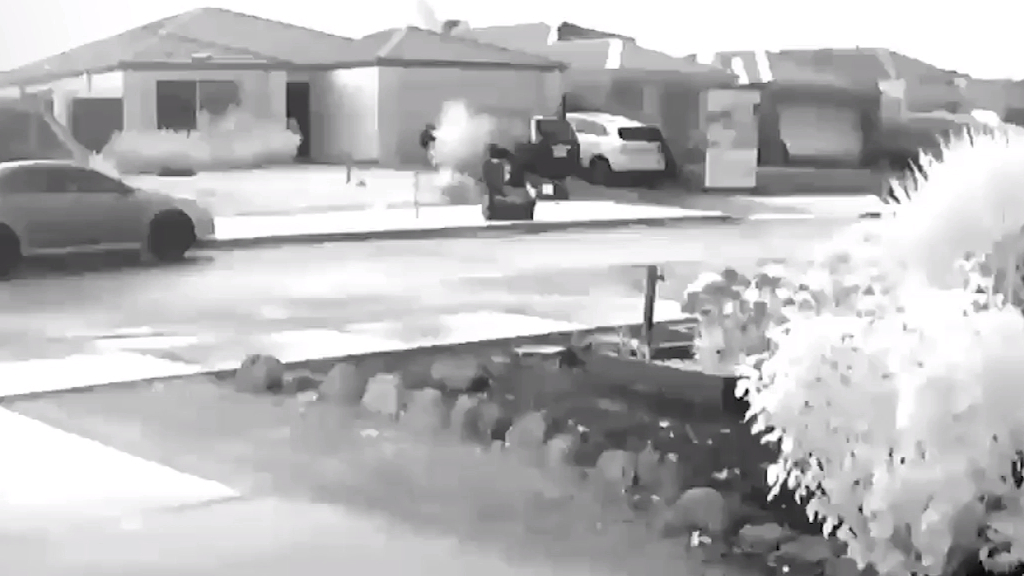
A major clean-up operation is continuing in Geelong after a powerful storm cell ripped rooves off homes, uprooted trees and littered debris following another night of heavy rain.
Severe weather experts have travelled to the Victorian city to investigate what caused this storm, which was possibly a mini tornado.
Meteorologists say wind gusts reached 150kms/h causing damage to at least 100 homes.
Geelong suffered another night of severe weather that left about 100 homes damaged. (Nine)Residents in Geelong face big damage bills after a storm ripped through the city. (Nine)
The hardest-hit areas were Waurn Ponds and Mt Duneed near Geelong.
Residents of damaged homes faced a race against time to protect their properties from heavy rain that fell overnight and is forecast to continue today.
It followed Tuesday night’s severe weather in the area that damaged an estimated 60 properties.
Volunteers spent Wear Orange Wednesday, the day of thanks to the State Emergency Service, assessing the damage.
Weather experts are investigating the cause of the severe weather in Geelong. (Nine)CCTV captures lightening in Geelong. (Supplied Nine)
The Bureau of Meteorology said a strong cold front moved across the state on Tuesday night, bringing the line of thunderstorms and lightning.
Victorians should expect more rain over the coming days, but no severe storms would arrive with it and further damage was unlikely.
A Russian Yars RS-24 intercontinental ballistic missile system drives during the Victory Day military parade in Moscow on May 9, 2015 | AFP via Getty Images
The option is part of a strategy that would also seek a broader agreement with Moscow that possibly includes China.
The U.S. is weighing a face-saving strategy for keeping an Obama-era nuclear treaty from expiring while it pursues a more sweeping arms pact with both Russia and China, according to current and former Trump administration officials with direct knowledge of the deliberations.
Under the plan, the White House would temporarily extend the New Strategic Arms Reduction Treaty while seeking a new agreement with Moscow that also tries to convince China to come to the table, they said.
The diplomatic formula is viewed at the U.S. State Department and National Security Council as a promising way to both prevent the New START from expiring in February and getting Russia to agree — at least in principle — to more comprehensive limits on nuclear arms.
“Both approaches are available, or a mix thereof,” said a State Department spokesperson who asked not to be named.
New START is one of the last remaining pacts aimed at keeping the world’s largest atomic arsenals in check. But concerns have grown among Republicans and Democrats that President Donald Trump could walk away just as he has jettisoned the 1987 Intermediate-Range Nuclear Forces Treaty with Russia and the Obama-era nuclear pact with Iran.
The administration’s potential approach has gained traction in recent weeks as the Trump administration faces growing criticism that Trump’s goal of negotiating a broader nuclear treaty with both Moscow and Beijing before New START expires is unrealistic and, if it fails, risks igniting a full-blown nuclear arms race.
“There are a host of options or steps that could be taken to accomplish the president’s direction, some of which could be done in fairly short order,†said an administration official also involved in the deliberations. “There’s not a one-size-fits-all model.â€
Arms control experts raised a number of questions and concerns, noting that the approach still poses a risk to New START with no guarantee that any follow-on pact would be as enforceable.
But it also has intriguing possibilities, said Jon Wolfsthal, who oversaw nuclear policy on the National Security Council in the Obama administration.
“A six-month extension to buy yourself some time to negotiate something new with the Russians — and call on the Chinese to join — inherently isn’t bad,” said Wolfsthal, who is now a senior adviser to Global Zero, a disarmament group. “It might be a way to square the circle — if you can also be sure that the next administration has the leeway to extend [New START] more.”
New START, which was signed by President Barack Obama and Vladimir Putin in 2010 and ratified by the Senate, limits strategic nuclear arms on both sides to 1,550. It also includes detailed verification measures such as on-site inspections to ensure both sides are complying.
Russia said publicly late last year it is willing to extend the treaty the full five years without preconditions. So far, the Trump administration has insisted that the treaty is flawed because it doesn’t cover a series of nuclear arms in the Russian arsenal such as tactical warheads.
The U.S. has not committed to an extension of the treaty and says Trump instead wants to replace it with a more comprehensive agreement that covers more classes of weapons to include stringent verification measures.
“This is crucial because we’re talking about two countries with abysmal track records in terms of treaty compliance,†Marshall Billingslea, Trump’s special envoy for arms control, recently told the Washington Times. “Russia has violated nearly every single agreement we’ve ever had with them — and the Chinese stand in violation of a number of agreements that they’ve also signed.â€
Officials said the first element of the strategy now under serious consideration would be an extension of New START, but for a significantly shorter duration that the maximum five years permitted under the treaty.
Wolfsthal said one major issue is whether the treaty could legally be extended again if the U.S. and Russia — not to mention China — failed to reach any follow-on agreement before the New START extension ran out.
“Could you have multiple extensions as long as those multiple extensions don’t exceed a five-year period?” he asked. “There is some concern that this administration, in order to kill New START, would say we are going to extend six months, but then you burn your bridge. Others are saying, ‘No, you can extend for six months and then extend for four-and-a-half years or three years, as long as the extension periods don’t total more than five years.'”
An even more controversial move would be to pursue a new agreement with Moscow that doesn’t clearly spell out how compliance would be guaranteed.
A former government official who closely tracks nuclear policy described the administration’s evolving thinking as reflecting a growing reality that this late in the president’s term — and as relations with Russia and China continue to suffer — the administration is not likely to be able to achieve the kind of historic diplomatic breakthrough Trump has been promising.
“I don’t think anybody ever thought they were going to get an official deal but they wanted at least [a] gentleman’s agreement,†the former official said. “I’ve heard that used many times in terms of what they want to get from the Russians.â€
The administration could seek a “one-year or two-year extension of the treaty while they get something — a gentleman’s agreement is probably too light, I think they wanted something in writing,†the former official explained. “But it wouldn’t be a binding legal document. I think it would just be in principle.â€
Added the State Department spokesperson: “It doesn’t necessarily need to look just like New START.”
Some officials have held out the prospect of a follow-on agreement more akin to the 2002 Strategic Offensive Reductions Treaty, also known as the Moscow Treaty.
Signed by Putin and then-President George W. Bush, it called for further cuts to nuclear arms on both sides but was less prescriptive than similar treaties and included fewer constraints on how each side could carry out its commitments. Some critics used its acronym to call it the “sort of” treaty.
But a major element at the time was that START I, which predated New START, was still in place for seven more years, and the Moscow Treaty was able to piggyback on its verification measures.
“You still had inspectors on the ground in both countries,” said Wolfsthal. “You still had a fence around their missile production facilities and X-rayed what went out. The intelligence community could certify that we have high confidence that Russia’s was complying with the Treaty of Moscow because of the START verification provisions.”
Without new verification procedures, a short extension of New START would unlikely offer such backup — and that gives arms control advocates pause.
“Gambling with the benefits that New START provides on a very low-odds-of-success bet that a short-term extension will convince the Russians and the Chinese to come to the table and meet our terms does not strike me as a smart or responsible approach,” said Kingston Reif, director for disarmament and threat reduction policy at the Arms Control Association.
The State Department, however, says it hopes to restart talks with Russia as soon as possible and reiterated its invitation for China to join the discussions.
“Russia has stated that it has no preconditions to extension, which is a position that we will remember,” said the spokesperson. “In December 2019 we separately formally invited China in good faith to begin a strategic security dialogue on nuclear risk reduction, arms control, and their future. We hope to begin this as soon as possible. We await Beijing’s response.”
But the biggest immediate question, says Wolfsthal, may be whether Trump can be convinced to take the first step.
“The central question is whether there is a way to convince Trump to extend an Obama treaty,” he said. “There is a lot of doubt about that.”
Lara Seligman and Nahal Toosi contributed to this report.
The person who helps you land your next job is likely to be someone you don’t know personally: an older alumnus of your college, the person who attends the same yoga class, the professional you admire from afar on social media, the friend of a friend.
Sociologist Mark Granovetter, who has researched the power of these low-stakes relationships, found that people are more likely to get new jobs through “weak ties†with people they see rarely and don’t know well than through relationships with people they see often and do know well.
These connections are powerful because they expand beyond those of your friends and family. “The more people that you are connected to, the more opportunities you are connected to,†saidAshley Watkins, a job search coach with corporate recruiting experience.
Career experts say they have seen the power of these weak ties firsthand during the coronavirus pandemic.
“I had two job seeker clients this week in the midst of the pandemic tell me that they got offers because of targeted, cold outreach to people in their industry,†said Sarah Johnston, a former corporate recruiter and founder of Briefcase Coach. She has benefited from this type of outreach herself: “It was the kindness of strangers who helped me land my last two professional jobs.â€
But this doesn’t mean you should spam people with a demand for help; that makes networking transactional. To actually get a response from a stranger, you have to be thoughtful about what you say in your initial message and find a shared point of connection.
You need to make yourself less of a stranger, in other words. Here’s how:
1. Before reaching out, do your homework.
A good networking connection is someone who has access to the kind of career you want. They can be a recruiter, someone who works in the department you’re eyeing, or the direct hiring manager of your target company, Watkins said.
To find a shared point of connection, research what you may have in common that you can bring up as an icebreaker, Watkins said. That may include Googling their career story, the schools they attended, the organizations they’ve joined, posts they have written or initiatives they are passionate about.
It doesn’t have to be a person or activity in common; it can be a shared career experience. “What is it that you’ve experienced that they’ve gone through? Did they have an unusual shift in their career around the time that you did?†Watkins said you can ask. “Did they switch from accounting into marketing and you did the same? That’s a conversation opener.â€
That way, “People feel like, ‘Oh yeah, they did this, they did that, this is what they do currently, I see why they are reaching out to me,’†she said.
2. Make it more about them initially.
When you first reach out, do ask a question to keep the conversation going, but don’t bombard someone with your life story. “It’s always about give to get,†Watkins said.
Cynthia Pong, the founder of Embrace Change, a coaching business that focuses on helping women of color transition in their careers, said when people approach her in cold emails and messages, the most successful are those who focus on her career journey with requests like, “I would love to hear how you got started or grew your business.â€
These inquiries work because they don’t feel like the person is “going to leverage that into pitching me something,†she said.
If you’ve been supportive of the person’s work in the past, say it, and ask how you can do so in the future. Pong said messages like, “I would love to hear how I can support your work†are effective because they feel a lot less extractive.
Watkins said that it helps to make your job-related requests specific when you do finally ask. If you were recently laid off and want advice on how to pivot your career, you could ask the person, “Do you have any advice you could give me on x, y, z?†Or, if you really want to work at a company but you don’t see the right position yet, you can ask, “Do you know of any openings in the pipeline?†she said.
“It was the kindness of strangers who helped me land my last two professional jobs.â€
– Sarah Johnston, former corporate recruiter
3. Engage with them on social media.
Once you identify the people you want to network with, another approach is to take it slow over social media.
See the potential connection as a relationship you want to build, instead of as a transaction in which you expect an immediate result like a job referral. Before you reach out directly, engage with them on social media by commenting and liking their posts, Pong recommended.
“People appreciate that as long as it’s not too much, too soon,†she said. “It feels more organic and natural, so by the time you actually message them individually, you have something to talk about.â€
If your social media engagement is sharing your appreciation for their work, get specific. “Don’t just say, ‘Oh I loved your article.’ Be able to say what resonated with you,†Watkins said.
4. Leverage shared connections to broker an introduction.
5. To summon your courage, remember it’s low-risk.
It can be nerve-wracking to send a message to someone you admire or don’t know, but if fear is preventing you from networking with a stranger, put that anxiety in perspective.
And if you do get silence or a rejection, don’t let that stop you from reaching out to someone else.
“Not everyone is going to get back to you and it’s not personal … Maybe they’ve just done 10 of these, and they’re like, ‘I can’t do another one,’ maybe they’ve had people get sick and die,†Pong said. “A lot of times, you are not going to hear back. Don’t focus on that. Focus on reaching out politely with integrity, clearly and compassionately. And then move on to the next thing.â€
We use cookies on our website to give you the most relevant experience by remembering your preferences and repeat visits. By clicking “Accept”, you consent to the use of ALL the cookies.
This website uses cookies to improve your experience while you navigate through the website. Out of these, the cookies that are categorized as necessary are stored on your browser as they are essential for the working of basic functionalities of the website. We also use third-party cookies that help us analyze and understand how you use this website. These cookies will be stored in your browser only with your consent. You also have the option to opt-out of these cookies. But opting out of some of these cookies may affect your browsing experience.
Necessary cookies are absolutely essential for the website to function properly. These cookies ensure basic functionalities and security features of the website, anonymously.
Cookie
Duration
Description
cookielawinfo-checbox-analytics
11 months
This cookie is set by GDPR Cookie Consent plugin. The cookie is used to store the user consent for the cookies in the category "Analytics".
cookielawinfo-checbox-functional
11 months
The cookie is set by GDPR cookie consent to record the user consent for the cookies in the category "Functional".
cookielawinfo-checbox-others
11 months
This cookie is set by GDPR Cookie Consent plugin. The cookie is used to store the user consent for the cookies in the category "Other.
cookielawinfo-checkbox-necessary
11 months
This cookie is set by GDPR Cookie Consent plugin. The cookies is used to store the user consent for the cookies in the category "Necessary".
cookielawinfo-checkbox-performance
11 months
This cookie is set by GDPR Cookie Consent plugin. The cookie is used to store the user consent for the cookies in the category "Performance".
viewed_cookie_policy
11 months
The cookie is set by the GDPR Cookie Consent plugin and is used to store whether or not user has consented to the use of cookies. It does not store any personal data.
Functional cookies help to perform certain functionalities like sharing the content of the website on social media platforms, collect feedbacks, and other third-party features.
Performance cookies are used to understand and analyze the key performance indexes of the website which helps in delivering a better user experience for the visitors.
Analytical cookies are used to understand how visitors interact with the website. These cookies help provide information on metrics the number of visitors, bounce rate, traffic source, etc.
Advertisement cookies are used to provide visitors with relevant ads and marketing campaigns. These cookies track visitors across websites and collect information to provide customized ads.