In Pictures: Hundreds in US demand justice for George Floyd

Protesters in the United States state of Minnesota on Tuesday filled the Minneapolis intersection where George Floyd, an unarmed black man, was pinned down by a white officer before dying at a hospital on Monday. 

Protesters chanted: “I can’t breathe” and “Jail killer KKKops.”

The protesters eventually marched to a city police precinct, where police used tear gas to disperse the crowd. Police said some protesters damaged windows and a squad car and sprayed graffiti on the building.

The death of Floyd has caused outrage nationwide. 

A bystander’s video of Monday’s incident showed an officer kneeling on Floyd’s neck for several minutes, even after Floyd pleaded that he could not breathe. Floyd eventually appeared motionless, with the officer’s knee still on his neck.

Four Minneapolis officers involved in the arrest were fired on Tuesday, but community leaders and members have called for the officers to be prosecuted. 

The FBI and the Minnesota Bureau of Criminal Apprehension are investigating the incident. 

Source link

High court declares Dudu Myeni delinquent – The Mail & Guardian

Disgraced former SAA chairperson Dudu Myeni has been declared a delinquent director by the high court in Pretoria, over her conduct while leading the broke airline’s board of directors.

The lifetime order means Myeni will no longer be considered fit and proper to hold the position of director of any entity, and will have to vacate several directorships she currently holds, including her position on the board of Centlec, the state-owned utility that supplies power to several municipalities, including Mangaung metro.

Although the order is for the rest of Myeni’s lifetime, she can apply to have it suspended after three years if she has rehabilitated, high court Judge Ronel Tolmay said.

During her tenure as chairperson of SAA’s board, Myeni, a close friend of former president Jacob Zuma and current chairperson of his foundation, presided over some of the airline’s most disastrous years, which have led to the airline being on the brink of falling over.

So precarious is the state of SAA, which has received no less than R50-billion in government aid since 2009, that its government shareholder sees no other option but shut it down and start over, while the business-rescue practitioners appointed to try to save it see closure and sale of its assets as the only viable way out. 

“It will not be inappropriate for this court to take judicial notice of the immense harm done to the country and its people in the last years due to the mismanagement, not only of SAA, but also other SOEs [state-owned entities] and the suffering that it brought and continues to bring millions of South Africans,” Tolmay said.

“To serve on the board of an SOE should not be a privilege of the politically connected. Government has, as a custodian of the common good, an obligation to ensure that suitably qualified people with integrity are appointed in these positions,” she added.

In her 114-page judgment on the matter, which was brought by the Organisation Undoing Tax Abuse (Outa) and the South African Pilots Association (Saapa), Tolmay labelled Myeni “dishonest”, reckless, and grossly negligent. 

“Myeni not only proved to be dishonest in her dealings at SAA, but he has also been dishonest with this court,” Tolmay said of Myeni’s conduct since the matter was enrolled before the courts in 2015. 

She also ordered that Myeni pay her legal costs, as well as those of the plaintiffs on an attorney and client scale, including the costs of two counsel. In addition, she ordered that the judgment, as well as evidence led during proceedings, be referred to the National Prosecuting Authority for investigation for possible criminal conduct.

Myeni’s trial was not without drama and has seen several delays, including when she did not attend court, arguing that she did not have money to travel from Richards Bay, where she stays, to Gauteng to attend trial. 

At the time, Tolmay noted in her judgment, Myeni was sitting on the boards of several companies, including Centlec, and earned hundreds of thousands of rands in fees. At SAA she earned R4.3-million in directors fees, and another R3.5-million in fees at the Mhlathuze Water Board. 

“She claimed that it was unfair to expect her to spend her own money on litigation, in circumstances where she believed that SAA’s insurers ought to have paid for her costs. This entirely contradicts previous pleas of poverty, demonstrating that she perjured herself [in an affidavit. She admitted that she exercised a deliberate choice not to come to court,” said Tolmay. 

“Such dishonesty and disrespect of the court’s processes is worthy of the punitive costs order,” she added. 

Myeni also unsuccessfully attempted to have the courts declare that Outa has no standing to bring a delinquency application against her. 

Her trial, in which four former SAA executives — Nico Bezuidenhout, Wolf Meyer, Thuli Mpshe, and Frenchman Sylvain Bosc — gave evidence, centred on two incidents when she willingly broke corporate governance rules and interfered in the running of SAA, to the detriment of the airline. 

Evidence led by the four painted a picture of an environment of fear and intimidation at the airline under Myeni’s tenure, including one meeting to which Myeni allegedly brought armed guards, and from which executives who defied her instructions or were seen to be in her way were removed. 

Myeni was also accused of using her relationship with Zuma to have her way, including using his name to pressure former SAA chief executive Bezuidenhout into pulling SAA out of a memorandum of understanding with Emirates airways that would have earned SAA R1.5-billion in revenue a year. 

In another example, Myeni brought the country within hours of a cross default — which would have had severe implications for the fiscus — when she failed to call an urgent board meeting to agree on an aircraft-swop deal that would have averted the airline defaulting on R1.6-billion in pre-delivery payments for aircraft it could not longer afford. 

A cross default is a provision in a loan agreement that stipulates that should a borrower default on one loan, they are considered to have defaulted on all their loans. With the government guaranteeing SAA’s debt, this would mean it would have to pay all of it immediately, or face the possibility of the default triggering debt held by other creditors. That would have had huge implications across the entire economy, particularly at power utility Eskom.    

In a statement issued on its website, Outa chief legal officer Stephanie Fick said: “We are extremely pleased to see justice meted out in a prominent matter related to state capture.

“When we set out on this matter three years ago, we knew it would take time and would be very costly. But every minute and every rand spent was worth it.

“We believed then, as we do now, that it is important to hold people like Ms Myeni to account, as opposed to seeing them get away with acts of gross misconduct, year after year,” she added. 


Source link

Photos: SpaceX’s historic launch

After a decade without U.S. launches, SpaceX ushers in new era of space travel for NASA.


Source link

We’ve been addressing mental health issues of non-contracted and U-19 players during lockdown, says NCA chief Rahul Dravid- Firstcricket News, Firstpost

0

National Cricket Academy (NCA) chief Rahul Dravid on Wednesday said that they have been addressing mental health issues of non-contracted and U-19 players amid the ongoing nationwide lockdown due to the COVID-19 pandemic.

It is an uncertain period for cricketers and it could affect them mentally.

“It’s something we tried in this lockdown (addressing mental health of players through professionals). We identified outside of the contract list and with the U-19 players. We have given the opportunity to connect to professionalism,” Dravid said during a Rajasthan Royals webinar on on Mental Health and Wellbeing.

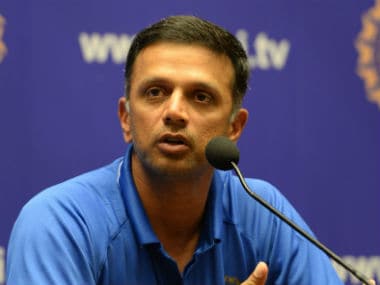
File image of Rahul Dravid. AFP

“As a former cricketer I truly believe that former cricket players, cricket coaches rarely don’t have the expertise to deal with the issues that some of the youngsters have these days. The right thing for us to direct them to professionals and take it forward,” said the former India captain.

Stressing that mental health has been an in issue in cricket, Dravid said it’s heartening to see frequent conversations around it now.

“It is high-pressure environment. In the past there was a certain stigma associated to admit it but with a few players coming out definitely there has been some better conversation around it,” he said.

Dravid has been working on junior cricketers for a while, earlier as India U-19 and India A coach and now as NCA head.

Dealing with the insecurities in his younger days was challenging for him and that is one of the reasons why he loves nurturing the young talent.

“It’s quite unnerving for a lot of young players which is why I love working with the Under-19 boys or India A who I think going through the same amount of insecurities whether I make it or not.

“I kind of identify with them, that something I had experienced myself as a young boy,” said Dravid.

Dravid, who went on to become the ‘Wall of Indian Cricket’, holds a graduate degree in commerce and was doing MBA when he was picked for India as he had to go through a long phase in First-Class cricket.

“I think trying to get into the Indian team was one of the most challenging phases. I made my First-Class debut at the age of 17 or so… It took me about five years of First-Class cricket to play for India.

“If I look back the most complicated time for me would me before when I played for India when you had those risky decisions to take with doubts and insecurities around it.

“When you had the choices of going down with a career in something else and you commit to cricket and take that risky decision and going through it.

“You had to sacrifice your education in some ways to take a punt, take a gamble on cricket. It kind of worked out. I never used that degree ever luckily,” he recalled.

Updated Date: May 27, 2020 23:13:19 IST

Find latest and upcoming tech gadgets online on Tech2 Gadgets. Get technology news, gadgets reviews & ratings. Popular gadgets including laptop, tablet and mobile specifications, features, prices, comparison.


Source link

Hong Kong is no longer autonomous from China, Pompeo says

Washington: US Secretary of State of Mike Pompeo has notified Congress that the Trump administration no longer regards Hong Kong as autonomous from mainland China.

In a statement, Pompeo said China’s plan to impose new national security legislation on Hong Kong was “only the latest in a series of actions that fundamentally undermine Hong Kong’s autonomy and freedoms”.

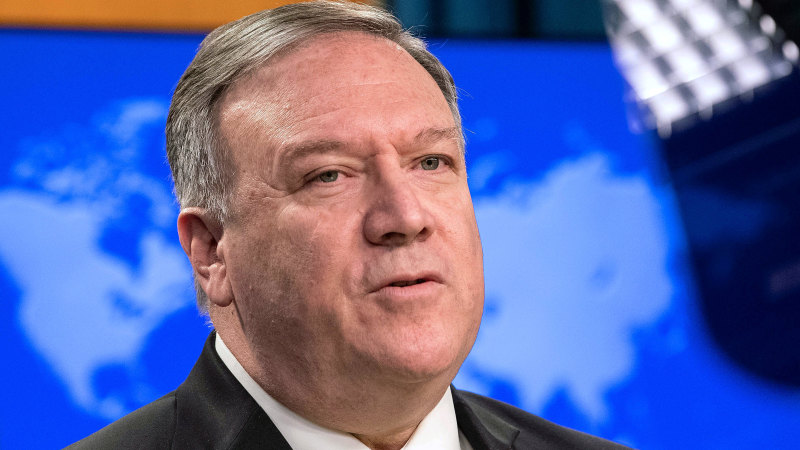
US Secretary of State Mike Pompeo, pictured, said it was “clear that China is modelling Hong Kong after itself”.Credit:AP

“No reasonable person can assert today that Hong Kong maintains a high degree of autonomy from China, given facts on the ground,” he said on Wednesday, local time.

“After careful study of developments over the reporting period, I certified to Congress today that Hong Kong does not continue to warrant treatment under United States laws in the same manner as US laws were applied to Hong Kong before July 1997.

Source by [author_name]

Renault and Nissan Unveil Plan to Patch Tattered Alliance

0

TOKYO — Nissan and Renault, the quarrelsome main partners in the world’s largest automaking alliance, announced a plan on Wednesday to try to reset their troubled relationship as they seek to survive the coronavirus’s devastating impact on the car industry.

The plan seeks to more clearly delineate each company’s turf so they can better absorb catastrophic declines in sales while developing new technologies they need to remain competitive.

For example, Nissan will take the lead on development of autonomous driving technology and Renault will be in charge of developing electric vehicles.

Nissan will be the dominant partner in Japan, China and the United States, while Renault will take the lead in Europe, Russia, Africa and Latin America. Mitsubishi, which is also a member of the alliance, will be in charge of the rest of Asia.

However, there are no plans to merge the companies, said Jean-Dominique Senard, the chairman of the alliance. “We don’t need a merger to be efficient,” he said during an online news conference Wednesday.

The alliance has been in crisis since the arrest of its former chairman, Carlos Ghosn, in 2018 on accusations of financial wrongdoing, which he has denied. Without Mr. Ghosn’s dominant presence at the top, simmering tensions and jealousies burst into the open.

But breaking up was not an option. On the contrary, the pandemic has made it even more essential for the companies to cooperate and share the enormous cost of developing new models and technology. Global demand for automobiles has gone into free fall during the lockdowns to curb the spread of the virus, battering both companies when they were already in a weakened state.

Renault sales in the European Union, its most important market, fell almost 80 percent in April when dealerships were closed and most buyers were not leaving their homes. The French government, fearful that Renault will be forced to close factories, on Tuesday pledged 8 billion euros, or $8.8 billion, to encourage sales of electric cars and help companies develop new digital technologies. The French government is a significant shareholder in Renault.

Nissan, which reports its annual financial results Thursday, has seen a steady drop in sales and profit in the last year that accelerated in recent months. Shares of both companies have plunged by more than half in the last year.

Mr. Senard, who is also chairman of Renault, insisted Wednesday that the companies had buried old grievances, identified common strengths and planned to work together in harmony.

“There is absolutely no doubt about how it will work in the future,” Mr. Senard said during an online news conference. “If there had been some few doubts in the markets these days, well, this is over today.”

The companies, Mr. Senard said, would seek to cut costs by reducing competition between them in product development and global markets. They will combine back office operations and some other functions while looking for other ways to cooperate in coming years.

“We looked back on the alliance activity, what is good activity where we can further continue to enhance, where are the areas that we are going to look to really reinforce,” said Makoto Uchida, Nissan’s chief executive.

But for years, the alliance has been promising benefits it failed to deliver, said Ferdinand Dudenhöffer, director of the Center Automotive Research in Duisburg, Germany.

“The main problem, which could be seen after the divisions of recent years, is unresolved in our view,” Mr. Dudenhöffer said in an email.

By improving the division of labor, the companies will aim to cut the costs of developing new models by up to 40 percent by 2025, they said in a joint statement. For example, Nissan will be in charge of developing larger SUVs while Renault will focus on compact SUVs.

The companies combined forces in 1999, when Nissan was on the brink of bankruptcy. Mitsubishi joined in 2016.

Nissan, which produces far more cars than Renault, has long bristled at French domination of the alliance. Renault holds a 43 percent stake in Nissan, while Nissan holds only a 15 percent share in Renault and has no voting rights.

The stresses blew wide open after the arrest in Japan of Mr. Ghosn, the architect and leader of the arrangement. Mr. Ghosn has described his arrest as a coup engineered by Nissan insiders who were afraid that he was planning to merge the company with Renault. In December, Mr. Ghosn fled Japan for Lebanon, where he has waged a media campaign to clear his name.

Mr. Senard sought Wednesday to put aside speculation he would push to combine the carmakers. “There is no plan for the merger of our companies,” he said.

Nissan has blamed its recent poor sales on decisions made under Mr. Ghosn’s leadership, including a drive to substantially expand the alliance’s market share at the expense of profits. Executives at the company have said that the push left them overstretched and diverted funds from the development of new cars.

“In the past few years, we focused too much on an expansion strategy,” Osamu Masuko, the chief executive of Mitsubishi said, adding that the strategy introduced by Mr. Ghosn had pushed the alliance’s costs to an unsustainable level.

Renault will not be searching for new partners, Mr. Senard said. Last year, Renault aggravated tensions in the alliance by pursuing a merger with Fiat Chrysler without Nissan’s knowledge. The deal eventually fell through, and Fiat later agreed to merge with PSA, Renault’s French rival, which makes Peugeot, Citroën and Opel brand cars.

“The priority is to strengthen the alliance,” Mr. Senard said. “That’s the top priority.”

Ben Dooley reported from Japan, and Jack Ewing from Frankfurt.

Source link

Pompeo: China has taken Hong Kong’s autonomy away

0

U.S. Secretary of State Mike Pompeo | Mark Wilson/Getty Images

‘No reasonable person can assert today that Hong Kong maintains a high degree of autonomy from China, given facts on the ground,’ said the US secretary of state.

By

Updated

WASHINGTON — U.S. Secretary of State Mike Pompeo formally certified to Congress on Wednesday that the Trump administration no longer views Hong Kong as an autonomous region of China, a move that effectively terminates the city’s special status under U.S. law that has helped it flourish as destination for trade and investment.

The announcement comes as China says it plans to impose national security legislation on Hong Kong, a move that has raised worries that Beijing is doing away with the “one country, two systems” principle that has allowed Hong Kong to have its own legislative body, currency and trade status.

“Beijing’s disastrous decision is only the latest in a series of actions that fundamentally undermine Hong Kong’s autonomy and freedoms and China’s own promises to the Hong Kong people under the Sino-British Joint Declaration, a UN-filed international treaty,” Pompeo said in a statement.

The Hong Kong Policy Act passed by Congress last year in response to Beijing’s moves to increase control over the former British colony requires the State Department to assess whether Hong Kong continues to govern itself to sufficient degree to still be considered autonomous.

“After careful study of developments over the reporting period, I certified to Congress today that Hong Kong does not continue to warrant treatment under United States laws in the same manner as U.S. laws were applied to Hong Kong before July 1997. No reasonable person can assert today that Hong Kong maintains a high degree of autonomy from China, given facts on the ground,” Pompeo said.

Pompeo said the United States still stands with people of Hong Kong and he took “no pleasure” from the decision, which could jeopardize Hong Kong’s standing as a hub for international trade and investment.

“But sound policy making requires a recognition of reality. While the United States once hoped that free and prosperous Hong Kong would provide a model for authoritarian China, it is now clear that China is modeling Hong Kong after itself,” Pompeo said.


Source by [author_name]

Woman Fired After Racist Central Park Confrontation

The racist incident is prompting discussions about the long history of white people falsely reporting Black people to the police.

Source by [author_name]

Pompeo Declares Hong Kong No Longer Autonomous From China

0

WASHINGTON, May 27 (Reuters) – Secretary of State Mike Pompeo said he had certified on Wednesday to Congress that Hong Kong no longer warranted special treatment under U.S. law in the same way that applied when the territory was still under British law before July 1997.

In a statement, Pompeo said China’s plan to impose new national security legislation on Hong Kong was “only the latest in a series of actions that fundamentally undermine Hong Kong’s autonomy and freedoms.”

“No reasonable person can assert today that Hong Kong maintains a high degree of autonomy from China, given facts on the ground,” he said.

“After careful study of developments over the reporting period, I certified to Congress today that Hong Kong does not continue to warrant treatment under United States laws in the same manner as U.S. laws were applied to Hong Kong before July 1997,” Pompeo said.

“It is now clear that China is modeling Hong Kong after itself,” he added.

The “Hong Kong Human Rights and Democracy Act” approved by the U.S. Congress and President Donald Trump last year requires the State Department to certify at least annually that the former British colony retains enough autonomy to justify the favorable U.S. trading terms that have helped it maintain its position as a world financial center.

Under it, officials responsible for human rights violations in Hong Kong could be subject to sanctions, including visa bans and asset freezes.

It now falls to Trump to decide to end some, all or none of the economic privileges Hong Kong currently enjoys.

Trump said on Tuesday the United States was working on a strong response to China’s planned national security legislation for Hong Kong and it would be announced before the end of the week. (Reporting by Humeyra Pamuk and David Brunnstrom; Editing by Howard Goller)


Source link

Hong Kong is ‘No Longer Autonomous,’ Pompeo Tells US Congress After China Intervention

0

Secretary of State Mike Pompeo said Wednesday he had told the U.S. Congress that Beijing’s imposition of a draconian national security law in Hong Kong show that the former British colony is not autonomous from China, setting the stage for review of the city’s trade privileges.

“Today, I reported to Congress that Hong Kong is no longer autonomous from China, given facts on the ground. The United States stands with the people of Hong Kong,” tweeted.

Washington has been reviewing reviews the city’s separate trading status in the U.S. market under the Hong Kong Human Rights and Democracy Act, passed in November 2019. The separate status was based on China’s promises that the city would maintain “a high degree of autonomy” and a separate legal jurisdiction.

China’s ruling Chinese Communist Party on Monday said it will carry through its plan to impose a feared sedition and subversion law on Hong Kong, claiming it is part of a crackdown on “terrorism” in the city.

China’s National People’s Congress (NPC) — which usually rubber stamps any government proposal put before it — will “vote” on the plan on Thursday.

“Last week, the People’s Republic of China (PRC) National People’s Congress announced its intention to unilaterally and arbitrarily impose national security legislation on Hong Kong,” Pompeo said in a statement Wednesday.

“Beijing’s disastrous decision is only the latest in a series of actions that fundamentally undermine Hong Kong’s autonomy and freedoms and China’s own promises to the Hong Kong people under the Sino-British Joint Declaration, a UN-filed international treaty,” the statement said.

“After careful study of developments over the reporting period, I certified to Congress today that Hong Kong does not continue to warrant treatment under United States laws in the same manner as U.S. laws were applied to Hong Kong before July 1997. No reasonable person can assert today that Hong Kong maintains a high degree of autonomy from China, given facts on the ground,” added Pompeo.

“Hong Kong and its dynamic, enterprising, and free people have flourished for decades as a bastion of liberty, and this decision gives me no pleasure,” he said.

“But sound policy making requires a recognition of reality. While the United States once hoped that free and prosperous Hong Kong would provide a model for authoritarian China, it is now clear that China is modeling Hong Kong after itself.”

“The United States stands with the people of Hong Kong as they struggle against the CCP’s increasing denial of the autonomy that they were promised,” Pompeo concluded.

Pompeo’s decision, which his spokeswoman said last week had been delayed to observe developments in Beijing, was published after Hong Kong police arrested more than 300 people amid renewed street protests ahead of China’s imposition of the sedition laws on the city, bypassing its Legislative Council (LegCo).

Adding to the concern about Beijing’s intervention, state security police from mainland China will be allowed to set up shop in Hong Kong to fulfill their duties under the new law, according to a precis of the decision supplied by state-run Xinhua news agency.


Source link