‘Overtaken by Aliens’: India Faces Another Plague as Locusts Swarm

0

NEW DELHI — Magan Doodi, a groundskeeper at a golf course in Jaipur, was making his rounds earlier this week when he saw the sky suddenly turn a weird pink.

It wasn’t some quirk of the weather. It was locusts — millions of them, “like a spreading bedsheet,” he said.

“The locusts have attacked the golf course!” Mr. Doodi yelled into his cellphone during the battle Monday morning. “It’s man versus locusts!”

Scientists say it’s the worst attack in 25 years and these locusts are different.

“This time the attack is by very young locusts who fly for longer distances, at faster speeds, unlike adults in the past who were sluggish and not so fast,” said K.L. Gurjar, the deputy director of India’s Locust Warning Organization.

The locusts poured in from the east, from Iran and Pakistan, blanketing half a dozen states in western and central India. Because most of the crops were recently harvested, the hungry swarms have buzzed into urban areas, eager to devour bushes and trees, carpeting whatever surface they land on.

On Monday, Jaipur, a sprawling city of 4 million and the biggest in the state of Rajasthan, was besieged. A blizzard of bugs flew over concrete buildings and the wealthier neighborhoods, swooping in on trees and plants, crossing graveyards and jewelry markets, attracted to the manicured golf course in the heart of the city.

After he saw what was happening, Mr. Doodi, the groundskeeper, yelled out to the caddies and other key personnel, urging them to make whatever loud noise they could to drive the bugs away. Some grabbed firecrackers. Others steel plates to bang on. Another person ran up to the roof of a maintenance building and started thumping on empty plastic containers, like drums.

Residents clamored to protect themselves and their flora, spilling onto the streets banging plates with spoons and jumping into parked cars to honk horns.

“I got out of my room and came out on my terrace at around 10 a.m. and saw a long shadow on the ground,” recalled Nikhil Misra, a lawyer in Jaipur. “I just stood still. It was something I had never seen in my lifetime.”

“I looked up and saw a cloud, not the cloud that gives you rainfall, but a cloud of locusts, thousands and thousands of them hovering over my head,” he said. “It was a silent attack. It was a strange kind of fear, as if being overtaken by aliens.”

Scientists say that this outbreak, though separate from recent outbreaks in East Africa, is driven by the same factors: unusually warm weather and more rain. They blame climate change.

“All this started in late 2019, when there were warm waters in the western Indian oceans,” said Roxy Mathew Koll, a climate scientist at the Indian Institute of Tropical Meteorology in Pune. “These waters triggered lot of rains over the East African regions and the Arabian Peninsula. This seems to have triggered an ideal condition for breeding of locusts.”

The movement of the swarms depends on the winds, which are blowing west to east and a little south right now. That could put the swarms in India’s bushy center very soon.

The Indian government wants to tackle this regionally and has offered to set aside some of its differences with Pakistan to provide the neighboring country with pesticide to spray on its side of the border. India has made the same offer to Iran, which responded positively, Indian officials said.

Indian scientists said that in a single day, a modest locust swarm can travel 200 kilometers and eat as much food as about 35,000 people.


Source link

Historian Slaps Trump With Disastrous Grade For Coronavirus Response

Barry noted Trump downplayed the threat of the virus that has gone on to kill almost 100,000 people nationwide. Although the president eventually began to take the outbreak more seriously, he continued to give out “inaccurate information on a daily basis.”

The United States’ response to this pandemic will be remembered in 100 years’ time as “incomprehensibly incoherent,” Barry said, arguing that the most important lesson was to “tell the truth.”


Source by [author_name]

Bihar Board Class 10 result: How to file for scrutiny? What is compartment exam?

0

By: Education Desk | New Delhi |

Published: May 27, 2020 2:04:50 pm


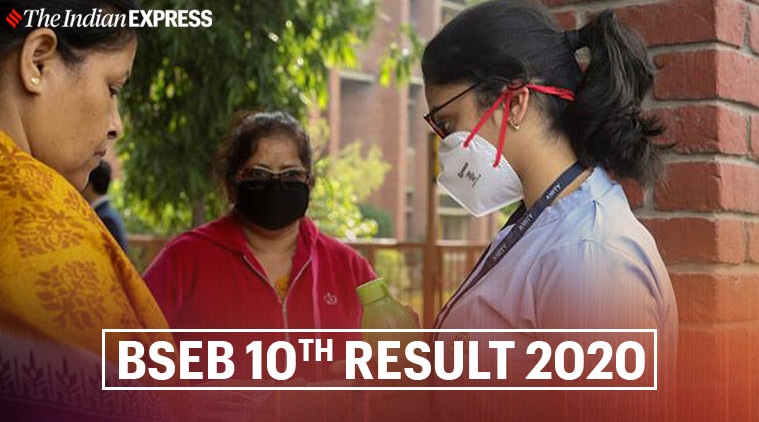
Bihar Board result declared on May 26 (Representational image)

BSEB class 10 result: The Bihar Board announced its class 10 result for nearly 15 lakh students on Tuesday, with over 80.5 per cent having cleared the test. However, over 2.89 lakh candidates have failed the exam. An additional 1,019 will have to appear for the compartmental exam of which 550 are women and 469 are male students.

These students can apply for the scrutiny process. The dates for matric are yet to be announced, while the process is underway for class 12. The intermediate students have time till June 3 to apply for revaluation. A fee of Rs 70 will be applicable per subject. Once the link is activated, candidates can apply at the official website, biharboardonline.bihar.gov.in.

BSEB class 10 result: How to apply for scrutiny

Step 1: Visit the official website
Step 2: Click on the evaluation or scrutiny link
Step 3: Click on the subject you wish to apply for
Step 4: Make the payment, submit

During his address, the Bihar state education board congratulated the toppers and motivated students who could not make it through. He said, “Those who have not been able to clear the exam due to some reason, do not be disappointed. Work so hard that the world appreciates your efforts.”

Himanshu Raj, who scored 96.20 per cent, became the topper of this year’s matric exam. He hails from a family of farmers and said that his consistent study daily for over 12 hours helped him achieve success. Read full interview here

The pass percentage is 80.59 this year. Last year, as many as 80.73 per cent of matric students passed the exam. The result is available at onlinebseb.in and biharboardonline.com. The board had checked as many as 90 lakh answer scripts for class 10 exams and 75 lakh for class 12. Every answer script had the photograph of the individual student along with a barcode and lithocode to prevent cheating or impersonation, the board chairperson informed.

📣 The Indian Express is now on Telegram. Click here to join our channel (@indianexpress) and stay updated with the latest headlines

For all the latest Education News, download Indian Express App.

© IE Online Media Services Pvt Ltd

Source link

The Strandfontein shelter touches a societal and political nerve – The Mail & Guardian

COMMENT

The City of Cape Town is expected to close the now infamous and much-criticised temporary homeless shelter at Strandfontein this week. 

The establishment of the shelter involved a large-scale operation, which included the removal and transportation of hundreds of homeless people off the streets of Cape Town, the initial accommodation in three large marquee tents, the use of shared ablution and sanitation facilities and congregations of large numbers of people in queues at meal times. The city, as it likes to repeatedly remind the public, provided meals, mattresses, ablution facilities and some healthcare assistance. 

The first striking aspect of this operation is the rationale to establish a mass-tented camp on the outskirts of Cape Town. According to the mayor, Dan Plato, the site was selected for logistical and management advantages, being large enough to accommodate up to 2 000 homeless people and close to transport routes and hospitals. The decision to encamp homeless people (the majority of whom are black and coloured) touched a deep nerve for many South Africans.

Cape Town is no stranger to the creation of transit camps as a response to a public health crisis. In a country with a long history of forced removals and land dispossession, it is difficult not to see the similarities with the manner in which the Cape Colony responded to the outbreak of the bubonic plague in 1901. In order to prevent further spread of the plague and isolate the Cape Town central business district from infection, the authorities forcibly moved about 6 000 Africans to what is now called Ndabeni, where they were housed in approximately 600 tents. 

As Professor Maynard W Swanson explains in a 1977 article titled: The Sanitation Syndrome: Bubonic Plague and Urban Native Policy in the Cape Colony, 1900-1909, “many officials and white citizens considered the move a major success, pointing the way to future policy and practice”. 

Forced removals of black people close to white areas was also effected through the Public Health Act 36 of 1919. Public health laws were also used in tandem with the Slums Act 53 of 1934 to facilitate the building of housing on the Cape Flats. This shows a pattern of using highly infectious contagions as a justification to forcibly relocate black people from inner city slums and urban black townships to the outskirts of the city to protect the interests of the white minority population from the spread of diseases. It would appear, 120 years later, that the establishment of the Strandfontein shelter came straight from the colonial playbook. 

Although the city will likely deny any continuity of prejudicial — racially motivated — thinking that may have informed its action at Strandfontein, it does nevertheless raise some serious questions about the operation. Why was the suburb of Strandfontein chosen over many other well-located areas and sports grounds such as Green Point Urban Park, Green Point cricket grounds or Rondebosch Common which are even closer to hospitals? Did the city consider how this type of mass relocation of homeless people would reignite collective and generational trauma reminiscent of colonial and apartheid forced removals, especially considering the use of a public health disaster to effect social cleansing? 

Did the city perhaps think that the local Strandfontein residents would not object or object less than residents in the white suburbs? Or worse, were the decision-makers ignorant of the deep psychosocial trauma inflicted by past forced removals? 

Whatever it was, there are too many similarities for it to be coincidental. 

The city adopted a large-scale police operation to actively search for and remove homeless people from around the city. In the week the shelter was established, the city of Cape Town mayoral committee member for transport, Felicity Purchase, proudly posted on social media that she would go with private security to scout for homeless people who were “hiding out” in Fish Hoek, Clovelly and Sun Valley. 

During that week, a voice note of an unknown city official went viral, warning that all homeless people who refused to go to the shelter would be taken straight to Pollsmoor Prison. The voice note said: “So basically, because today is the first time of this lockdown transportation of the vagrants and so forth, we taking those that want to come, right? So you want to fight with us or whatever, we say ok. We leave you and then tomorrow we joined, we bringing SAPS and the army and we going to do forceful removals. If they are still around on Wednesday, after the forceful removals has been done, they are being sent straight to Pollsmoor for a 12-month quarantine. So they going to go to jail for a year. All the paper has already been set in. So they not going to the holding cells. We put them in the back of the van and taking them straight through to Pollsmoor.  So, basically in those three days, there will be no vagrants on the street … [laughing] … So ja, that’s the plan now. I’ve just got information from my senior. So that’s the plan happening here at the moment.”    

Perhaps this is the moment that the city had been waiting for — a chance to finally round up all homeless people to “cleanse” the streets of Cape Town? Although not all homeless people were forcibly removed, some individuals were forced into the back of police vans against their will. It is hard to make sense of the Pollsmoor threat and Alderman Purchase’s exuberance in tracking homeless people down and threatening incarceration. One explanation perhaps lies in the general approach of the city towards homelessness. Both the fining of homeless people last year as well as the recent amendment of the Streets, Public Places and the Prevention of Noise Nuisances By-law of 2007 reflect a general approach that criminalises, rather than cares for, homeless people.

Another serious concern that warrants reflection is allegations of mistreatment at the Strandfontein shelter. For instance, why were homeless people from Somerset West informed that they were only going to the shelter for an hour to get tested, only to learn that this was more permanent? It implies that those involved knew that taking homeless people off the streets was fundamentally misconceived and could never be achieved without manipulation. 

When the Somerset West group tried to leave, they were met with violence. Watching videos of this altercation personally reminded me of the state force used against workers in the Marikana massacre, which sadly resulted in the death of 36 miners. Although, thankfully, the situation did not escalate to the same level, it is again unfortunate that violence is often the first response by peace officers in situations of unrest. 

The treatment of homeless people at the shelter was worsened by the arbitrary policing of their behaviour. In particular, some homeless people at the Strandfontein shelter were fined by law enforcement officers for using foul language. Maybe this was a lack of judgment by the officer? Perhaps, he simply didn’t consider that homeless people had been removed from their communities, felt encaged, were potentially suffering from severe drug withdrawals or other medical issues? Whatever the mind of the law enforcement officer, the fine was imposed and the homeless person may now have a criminal record. 

Perhaps most concerning is the manner in which the city has responded to issues publicly. The city reacted defensively when the conditions at the shelter became public through the media, civil society organisations, human rights monitors appointed by the South African Human Rights Commission (SAHRC) and politicians. 

The mayor derrided comments by politicians as “shameful”. In statements, he alleged that criticism of the shelter was politically motivated, referring to “political organisations and politically-aligned NGOs” or to “political and related groups”. 

It is concerning that the city regards all political party views as illegitimate solely because these views are expressed by politicians. The city’s attempts to delegitimise free speech is exceptionally dangerous to upholding the democratic values of accountability, participation and transparency. Government should never hold absolute power over public opinion. 

That the city felt the need to censor and control how the shelter (and criticism against it) was perceived raises some interesting questions. Why does the city feel the need to act so defensively? Is it possible that the city is trying to conceal something? What else happened at the Strandfontein shelter that the public doesn’t know about? We know that a young woman was raped at the shelter. We know that a person died. But what else? The truth is that we don’t know, and won’t know for sure, because as public criticism of the shelter heightened, access to it was closed off. The city first denied access to news reporters, and then, alarmingly, to SAHRC human rights monitors. 

The city was so aggrieved (or threatened) by the SAHRC that it approached the Cape Town high court for an order to interdict the SAHRC monitors from accessing the shelter and “publishing and/or disseminating reports relating to the site which are untrue, have not been presented to the city for comment before publication and/or dissemination”. On May 14, the court granted an interim order allowing monitors to access Strandfontein and monitor potential human rights abuses. The matter is due back in court on June 9.

Public interest in what happened at Strandfontein, as well as with the mistreatment of homeless people during the Covid-19 lockdown, will probably not wane. Many of these issues have touched a deep societal and political nerve that needs to be dealt with further care and scrutiny.

Jonty Cogger is an attorney at Ndifuna Ukwazi Law Centre, an activist organisation in Cape Town, where he specialises in constitutional and human rights litigation


Source link

Opinion | Trump’s scapegoating of Asian Americans is an affront to all Americans

A boy landed in the hospital after being beaten up by his classmates on school grounds. A little girl was pushed off her bike in the middle of a park. A nurse was assaulted on the subway, and another was spit on while delivering medicine to a sick patient. A father was hit over the head by a man swearing at him on the street.

In the past several months, countless Asian Americans have been punched and kicked and threatened, told that they’ll be sorry if they don’t leave this country — their country. They’ve been blamed for COVID-19: yelled at by strangers in parking lots, refused service at stores and needlessly, cruelly scapegoated by the most powerful man on the planet, President Donald Trump, who has racialized the pandemic and stoked xenophobia every time he’s uttered the term “Chinese virus.”

In a nation founded on the principle that we’re all created equal, such bigotry is downright un-American.

Deflecting blame for his own failure to heed the warnings of experts to prepare for this crisis, Trump has stood in the White House briefing room day after day and pulled from the same cynical playbook he’s relied on so many times before, stoking grievances and using the same politics of division that helped him get elected in the first place, this time by casting Asian Americans as the “other.” As if they are a deviation from those who are “actually” American. As if they don’t truly belong.

The comments Trump has made have ranged from the dangerous to the absurd. But the sentiment behind them has been clear.

So let us be even clearer.

The American story as we know it would not exist without the strength of the Asian American and Pacific Islander community. In a literal sense, Asian Americans helped build and unite this country — laying the railroad tracks, tilling the fields, starting the businesses and picking up the rifles necessary to develop and defend the nation we love.

No insult, no insinuation — even when it comes from the president in the middle of the Rose Garden telling an Asian American reporter to “ask China” — can change the fact that Asian Americans are just as American as anyone else lucky enough to be a daughter or a on of the United States.

Ironically, May marks Asian American and Pacific Islander Heritage Month. In the face of such intolerance, this month reminds us that it’s as important as ever to honor the AAPI community’s service to this country — as teachers, doctors, troops, you name it — as well as recognize the consequences of the fear-mongering and outright racism that have been on the rise throughout Trump’s presidency.

Because that’s the kind of prejudice that led to Japanese Americans’ being interned on U.S. soil even as their loved ones fought to defend this nation overseas during World War II. It’s a version of what we’ve seen in debates over everything from segregation to immigration, where those who aren’t white are portrayed as if they’re somehow dirty or dangerous or, now, contaminated — and then cast off as second-class citizens. In a nation founded on the principle that we’re all created equal, such bigotry is downright un-American.

The United States is great because, by and large, Americans look out for one another and are good to one another. We’ve witnessed that time and again, and we’re seeing it now in the midst of this crisis. Landlords are waiving rent for tenants struggling to get by. Medical students not yet allowed to take care of patients in the ICU are instead taking care of health care workers, offering to look after their kids or do chores. Teachers are driving through their students’ neighborhoods to say hello.

Trump has proven he will never get it. He will never understand that the reason the U.S. has led the world for decades is not just by the example of our power, but by the power of our example.

Each of those people understands our country better than Trump ever will. They understand that at its best, America is a roughly 3.8 million-square-mile community whose members don’t just want to do well for themselves, but to do good for others. No matter the color of their skin.

Trump has proven he will never get it. He will never understand that the reason the U.S. has led the world for decades is not just by the example of our power, but by the power of our example. As much as we all wish and hope, it is clear that Trump will never rise to the awesome responsibility that comes with the title President of the United States.

As our neighbors are spit on and beat up because of the color of their skin, it is more obvious than ever how important it is that we make this the last Asian American and Pacific Islander Heritage Month with Trump in the White House.

Source link

Paedophile jailed for 17 years for persistent abuse of young girl

Judge Wells said Buckmaster admitted that he “feigned interest in nudism” as a way of encouraging young girls, including the victim, to take off their clothes.

“He was motivated by a sexual interest and he pursued this complainant ruthlessly,” she said.

“It would seem to me that he well knew the harm that he was inflicting, but was incapable of controlling himself.”

Buckmaster told a psychologist he wanted to be surgically castrated, but Judge Wells said he “has made no steps” to start this process while in custody, such as approaching Justice Health.

He was previously jailed for nine years for the aggravated indecent assault of three other children, two of whom he used to make child abuse material. He was not released on parole because he had not completed a jail program for sex offenders.

Judge Wells said Buckmaster, who later completed the sex offender program, wrote in a letter to the court that he had done “some abominable things”.

He told a psychologist he continued to struggle with deviant sexual thoughts in custody.

The psychologist diagnosed him with persistent depressive disorder, paedophilic disorder and avoidant personality disorder.

Judge Wells said it is clear Buckmaster “retains the urges that led him to this position”, despite there being “substantial changes” to his behaviour.

In a victim impact statement, the girl detailed specific instances of how the abuse has significantly changed her life. She said she began to self-harm afterwards and also attempted to take her own life.

“There is no doubt that she’s suffered immensely as a result of the three years of serious sexual abuse,” Judge Wells said.

Buckmaster watched his sentence remotely from jail in Goulburn.

He will be eligible for parole in January 2026.

Most Viewed in National

Loading

Source by [author_name]

In vast Kenya camp, refugee journalists on coronavirus front line

For more than a decade, KANERE, the world’s first fully independent refugee camp news outlet, has defied funding shortages and other challenges to publish investigations and reports about life in Kenya’s remote Kakuma camp.

Now, with the vast settlement registering its first COVID-19 case, the publication arguably faces its biggest challenge yet.

More:

“KANERE’s work is more important than ever,” Tolossa Asrat, managing editor at KANERE, told Al Jazeera via WhatsApp.

“Journalists are always on the front line next to health professionals in providing clear information to society to combat the pandemic, [and] KANERE is the only media which can provide information about the COVID-19 situation on the ground.”

Asrat’s team of refugee journalists is on a mission to keep residents informed about the dangers of the coronavirus pandemic amid increasing concerns that a potential outbreak could devastate the camp’s vulnerable population.

Accommodation for the nearly 200,000 people living in Kakuma, one of the world’s largest camps for displaced people, is typically squalid and cramped. Water is limited to public pumps, meaning physical distancing and good hygiene – the cornerstones of the World Health Organization’s (WHO) coronavirus guidelines – are near impossible.

For more than two months now, KANERE’s 10 reporters and editors have been working long hours to provide news and updates about new restrictions and hygiene advice, posting information on social media as well as printing copies and attaching them to notice boards around the camp.

The KANERE team in 2016. The current team is working to inform people about new restrictions and hygiene advice [Credit: Qabaata Boru]

This week, a man in his early 30s tested positive for the novel coronavirus after being placed at a quarantine facility at Kakuma upon his return from Kenya’s capital, Nairobi, despite a decision by Kenya’s interior ministry to prohibit all exit and entry to the camp in late April. The patient has since been moved to an isolation centre while the test results of people who had come in contact with him came back negative.

“In this case, he was found in a quarantine facility, meaning that hopefully there is no local transmission,” Eujin Byun, spokesperson for the UN refugee agency, UNHCR, told Al Jazeera.

Still, the first appearance of COVID-19 in Kakuma serves as an uneasy reminder for camp authorities and residents of the need to remain on high alert.

Two cases have already been recorded in Dadaab, another major refugee camp on the Somali border whose residents also face movement curbs as part of strict measures imposed by the government to slow the spread of the pandemic.

To date, Kenya has registered 1,286 confirmed coronavirus cases and 52 related deaths, according to a tally by Johns Hopkins University.

‘We’re able to build trust’

Though Kakuma has so far avoided an outbreak, the travel restrictions and a night-time curfew have upended daily life in the camp.

The UNHCR, which runs the camp, has adapted by limiting contact between aid workers and residents, distributing food monthly rather than every second week, and promoting the WHO’s WhatsApp information service.

But KANERE, short for Kakuma News Reflector, offers another perspective, sometimes corrective, to the camp’s officialdom – like when it recently highlighted the insufficient physical distancing precautions taken at food distribution centres.

Launched in 2008, the publication’s staff are drawn from across the camp’s diverse population, among whom its voice carries weight that aid organisations do not always enjoy.

“We are the first people in contact with the community, and we have a very good collaboration with the community leaders. Through this, we’re able to build trust,” said founding editor Qaabata Boru, who now lives in Vancouver, Canada, but continues to edit the paper remotely.

“People have acceptance from KANERE, as opposed to some other organisations flying to Kakuma or those driving around.”

In recent weeks, the news outlet’s coverage has included speaking to restaurant owners whose premises have been shuttered and shopkeepers who can no longer order stock from outside the camps, as well as students struggling to study for exams while schools are closed.

Its journalists have also kept track of various rumours circulating in the camp in a bid to counter the flow of misinformation about the virus, including claims that it can be cured by drinking tea or that it only affects white people or Christians. Having debunked these, their coverage urges readers to heed the advice provided by the UNHCR and the WHO.

Like their colleagues across the world, KANERE’s staff have had to find new ways to report during the pandemic, as curfews and physical distancing make it more difficult to conduct face-to-face interviews. Most are now done by WhatsApp, a tricky task given the poor network coverage in the camp.

Another persistent challenge is a lack of funding. KANERE has in the past declined funding from the UN that would jeopardise its editorial independence, so the publication relies on contributions from its own staff and occasional donations of cash and equipment from abroad to stay afloat.

However, a recent grant from a German NGO has allowed KANERE to expand its coronavirus coverage to broadcast in collaboration with a local radio station. Under the initiative, a white jeep now roves through the camp’s dirt thoroughfares, a generator and loudspeakers strapped to its roof, playing recorded messages in several languages that urge residents to maintain good hygiene and physical distancing.

Asrat and Boru understand the urgency of reaching as wide an audience as possible due to the already overstretched health infrastructure in the camp.

Kakuma is serviced by just one hospital, whose five doctors can see up to 100 patients, many of whom have underlying health conditions, in the course of a regular day. Oxygen supplies, crucial for pneumonia patients, are low, and there are no intensive care beds or ventilators, the nearest of which are over 100km (62 miles) away by road.

“We have 16 isolation units, which is really little [since] Kakuma refugees is a crowded place,” said Titus Rufo, health manager for the International Rescue Committee, which runs the hospital.

A series of cholera outbreaks, most recently in March, show just how quickly disease can spread through the camp, Rufo added.

“God forbid if that infection comes. It will be able to spread at a very high rate, and we may not be able to handle the cases.”


Source link

GOP Group Gives Trump A Harsh Reminder Of His Biggest Coronavirus Blunder

A group of conservative critics of President Donald Trump is out with a stark new video highlighting the growing death toll due to the COVID-19 coronavirus pandemic. 

And it puts one of the president’s most infamous statements about the disease into a harsh spotlight.

Trump in February predicted that the 15 infected patients in the country at the time “within a couple of days is going to be down to close to zero.” 

Now, the Lincoln Project ― a group launched last year by conservative attorney George Conway and GOP strategists Rick Wilson, Steve Schmidt and John Weaver, among others ― uses that phrase at the center of its video:

Another group of conservative critics, Republicans for the Rule Law, also uses the president’s own words against him ― pointing out his litany of tweets implying that MSNBC’s Joe Scarborough might have killed congressional intern Lori Klausutis in 2001. 

The video slams Trump for fixating on the baseless conspiracy theory to attack one of his critics instead of the nearly 100,000 Americans who’ve died due to the virus.

And it calls out Republicans in Congress for failing to hold the president accountable. 

The spot urges Americans to vote against him in November’s election to “make it stop”: 


Source by [author_name]

Amnesia Nation: Why China Has Forgotten Its Coronavirus Outbreak

0

“It’s like nothing had happened,” Mr. Chan said in an interview. “I’m dumbfounded. How could they make a U-turn so fast?”

Mr. Chan wrote “The Fat Years” as a cautionary tale. Today, it seems all too real. A disaster brings suffering and death. Collective amnesia sets in. The Communist Party emerges stronger than ever.

Outside China, readers are turning to books capturing the mood of the moment, like Albert Camus’s “The Plague.” “The Fat Years” hasn’t enjoyed the same kind of resurgence. For starters, it is banned in China. Its pirated version was a sensation, but that was a decade ago. Few young readers know it.

Those who read it now, however, can come away unsettled. A young professional told me that she felt like she was reading about the past few months. One character, a nationalistic youth, reminded her so much of a relative that it made her shiver.

I was curious to find out how Mr. Chan feels to see his vision come true. I also wanted to know why his blissful dystopia — more “Brave New World” than “1984” — didn’t predict the harsher reality of today’s China.

Mr. Chan, 67, was born in Shanghai, raised in Hong Kong and made his name in journalism, film and literature in the Chinese-speaking world. For decades, he has kept his hair shoulder-length, parted in the middle and now gray.

He has lived in Beijing since 2000 — he is too fascinated by its people to leave, he said — but he has been hunkering down in Hong Kong since late March, when his newest novel, “Zero Point, Beijing,” was published in Hong Kong by Oxford University Press. The Chinese government may not be happy with it: Its main character is the spirit of a boy killed during the 1989 crackdown on protesters in Beijing’s Tiananmen Square. Though quite a few of his books have been banned in China, Mr. Chen had never before taken the precaution of leaving.

The boy spends days and nights searching for historical truth in a city that has seen so much brutality, even though he can’t find a reader for his writing. Mr. Chan based the protagonist on his Beijing friends who can no longer get anything published but continue their research and writing anyway.

“It’s a dark novel written in a dark time,” Mr. Chan said. “The Fat Years” was dark too, he added, but he was able to lighten it with satire.

“There’s nothing funny about the present,” he said, calling it “Xi Jinping’s Golden Age,” referring to the Chinese leader, adding, “there’s no more room for jokes.”

In “The Fat Years,” China plunges into anarchy for a month in 2011, during a second global financial crisis. Looting and arson break out. The Communist Party imposes martial law and jails and executes many, including the innocent.

The book begins two years later. While the world still wallows in crisis, China’s people are happy and prosperous. The country is ascendant. Starbucks is a Chinese name. The violence has been mysteriously forgotten. The main characters want to find out what happened.

Mr. Chan said he wrote “The Fat Years” after witnessing Beijing’s exuberance in 2008. It was a year of tragedies: a deadly winter, a Tibetan uprising, a devastating earthquake, the global financial crisis and the arrest of the prominent dissident Liu Xiaobo. But many people in China seemed to remember only the Beijing Olympics and how China came out of the financial crisis stronger than Western countries. Even the elite intellectuals enjoyed what they saw as a new openness in business and online.

Mr. Chan wanted to throw cold water on that wishful thinking. He believed that the party intends to govern forever and will do anything to survive.

“I felt that the Communist Party would never change,” he said. “But I’ve never expected that Xi Jinping could be so severe.”

Since then, as the party under Mr. Xi has tightened its grip on power, Mr. Chan has seen his friends detained, jailed and silenced.

But nothing prepared him for how quickly many people decided to forget about the suffering during the pandemic.

The Chinese internet was filled with grief and outrage when the epidemic first broke out. By the time the virus spread to Europe and the United States, Beijing boasted that it had “turned the tide” and urged other countries to learn from its playbook.

Public outrage was directed away from the local officials who covered up the outbreak. Instead, it was directed at critics like Fang Fang, the author who kept an online diary about Wuhan under lockdown and demanded accountability.

A Wuhan woman banging a homemade gong from her balcony while begging for a hospital bed for her mother in early February attacked Fang Fang online this month for using her as a tool. Fang Fang had simply retweeted one of her Weibo posts with a comment saying the public should remember Wuhan people’s experiences.

How could people forget so easily? Of course, the Communist Party controls the media and history. As George Orwell wrote, “Who controls the past controls the future. Who controls the present controls the past.”

According to Mr. Chan, there’s another dynamic at work.

Spoiler alert: The protagonists of “The Fat Years” kidnap a high-level Communist Party official. He confesses that the government spiked the drinking water with Ecstasy, making the public docile and happy.

But how did the people forget the violence of 2011? Did the government use some kind of amnesia drug? No, the official tells them.

“It would be wonderful if we did have one,” he says. “Then our Communist Party could rewrite its history any way it wanted to.”

“If you ask me for the real reason,” he continues, “I can only tell you that I don’t know! You shouldn’t think that we can control everything.”

China is a country of bad memories. In the last century it endured civil war, invasion, famine, the Cultural Revolution and the Tiananmen Square crackdown. Its people have been urged to look to the future.

Yes, the government controlled the official outbreak narrative, Mr. Chan said, “but it couldn’t possibly be so powerful. The public collectively decided to forget, then the government simply gave it a push.”

Just like in the novel, he believes, the Chinese people get the rulers they deserve.

But aren’t the Chinese victims of information control themselves? I asked. With more information, they might wake up one day.

“Yes, they are victims. But they sometimes play the roles of perpetrator and victim at the same time,” said Mr. Chan. He cited the Red Guards of the Cultural Revolution, who brutalized imagined enemies. Few later apologized to their victims, Mr. Chan said.

“If the Chinese don’t try to hold the power accountable after waking up,” he said, “the rulers can always change the narratives based on their needs.”

Too much of China, we concluded, defies explanation. Mr. Chan said he doesn’t understand why some people put patriotism above truth or care more about Fang Fang’s diary than holding officials accountable. He doesn’t know why the young generation tolerates growing restrictions on movies, TV, games and the internet. And he doesn’t know why they forget so quickly.

“If you hear good explanations,” he said, “I’m all ears.”

As for my question about why “The Fat Years” didn’t predict China’s darker turn, Mr. Chan said he hadn’t imagined it. But I saw a hint of it in the novel, when the party official sneers at the naïveté of his captors.

“I can see that you lack the imagination to comprehend genuine evil,” he tells them, the images of a few party leaders who harbor true fascist ambitions coming to his mind.

“If any of these men came to power,” he thinks to himself, “not only China but the whole world would be in for terrible trouble.”

Source link

SA Tobacco Alliance blasts ‘political power play’ upholding cigarette ban

The South Africa Tobacco Transformation Alliance (SATTA) has issued a scathing response to government, following President Cyril Ramaphosa’s declaration concerning the continued prohibition of cigarettes under Level 3 lockdown.

The organisation, which represents farmers and supports transformation within the tobacco industry, has argued that government’s decision to uphold the cigarette ban was not related to health concerns amid the COVID-19 outbreak but was, instead, a result of political subversion and possible collusion with illicit traders.

Government fails submissions process

Ntando Shadrack Sibisi, SATTA chairman and founding member of the Black Tobacco Farmers’ Association (BTFA), confirmed that the Tobacco Alliance had submitted input calling for the prohibition of tobacco to be overturned. Sibisi noted, with deep concern, that government had chosen to overlook the arguments made by SATTA, industry stakeholders and hundreds of thousands of consumers. Sibisi added:

“But it’s clear the whole consultation process around the lockdown regulations was a sham, and the anti-legal tobacco lobby — which is actually the pro-illegal tobacco lobby — had won the day a long time ago.”

Cigarette ban has played no role in flattening the curve

Echoing similar arguments made by the Fair Trade Tobacco Association (Fita) — which is currently locked in a convoluted legal battle with the National Coronavirus Command Council (NCCC) – Sibisi said that government’s motives were not based on scientific evidence and the cigarette ban had no role in flattening the virus’ curve.

Sibisi argued that the prohibition has had the opposite effect to what was initially espoused by both President Cyril Ramaphosa and Health Minister Zweli Mkhize. Recent surveys show that the tobacco ban increased unnecessary movement as millions of smokers searched for high and low for cigarettes.

A more sinister political agenda?

The illicit tobacco trade, as a result of the ban, has boomed in recent weeks, robbing government coffers of much-needed excise taxes and putting ordinary South African smokers in contact with criminal elements. Sibisi noted:

“Government chooses to ignore the illicit trade problem — and the loss of billions in excise revenue – because of its double-sided campaign to turn the national lockdown into an anti-smoking drive while at the same time providing free range for cigarette bootleggers to do their fund-raising.

The irrationality behind both the health and economic reasons for the continued ban of the legal tobacco industry does not make any sense and begs the question, is there a more sinister agenda behind this decision?”

Sibisi called on government to be transparent and reveal any links between politicians and illicit cigarette traders. This comes after Cooperative Governance Minister and NCCC head, Nkosazana Dlamini-Zuma, denied ‘being friends’ with self-confessed cigarette smuggler Adriano Mazzotti.

The alleged links between Dlamini-Zuma and Mazzotti were detailed by journalist Jacques Pauw. It’s alleged that Mazzotti funded Dlamini-Zuma’s presidential campaign against Ramaphosa. Both Mazzotti and Dlamini-Zuma have been pictured together on more than one occasion.


Source link