
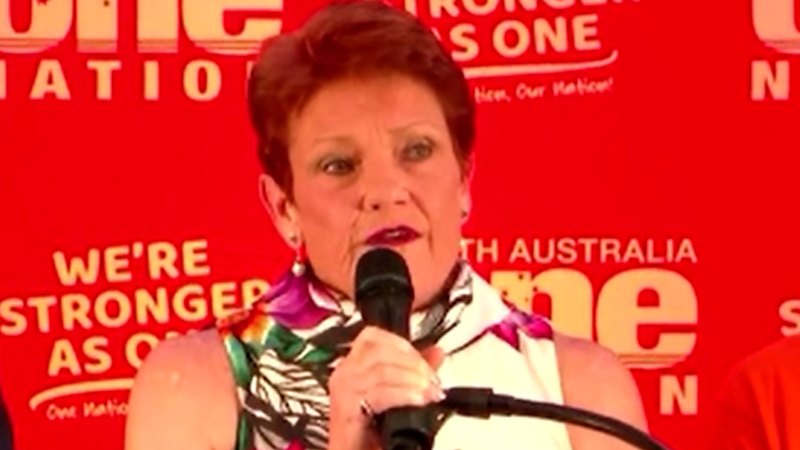
One Nation’s cannibalisation of the Liberal vote in the South Australian election has highlighted the depths to which the Liberal Party has sunk.
The party’s vote crashed by more than 16 per cent as One Nation picked up 22 per cent of the primary vote off the back of a 19 per cent swing.
The Liberals face another heart-stopper at the Farrer byelection in May. The Labor Party has chosen not to enter the race, preferring to let conservative parties fight one another and popular, battle-hardened independent Michelle Milthorpe.
Next November, the party faces a rampant One Nation in Victoria, where Labor is seeking a fourth term, weighed down by an unpopular leader and poor polling. Then, next March, comes the NSW election.
There has been a transformative surge in support for One Nation over the past six months as disaffected conservative voters, driven by deepening distrust and discontent, drifted from both the Liberals and Nationals while MPs indulged in leadership battles and failed to address policy failures that sent them into opposition.
Their self-obsession made the times right for One Nation.
And while Pauline Hanson has fulminated against Labor ever since she walked onto the national stage as a disendorsed Liberal candidate in 1996, the weekend’s result shows she has now started to feast on her own side of politics.
The issues driving conservative voters’ changes of heart – immigration, cost of living and housing affordability – are within the remit of the Albanese government. But rather than punish Labor, their protest votes are so far playing out in Liberal and National heartlands.
While state elections will gauge One Nation’s continuing impact, federal politics are not immune.
The Nationals generally held their seats or strengthened margins at the last election, so One Nation may not prove an ongoing threat, but the dilemma facing the Liberals is whether to go further right or stay the moderate course in an endeavour to win back urban voters who have gone to the teals or elsewhere.
Polls suggest One Nation may nibble federal outer suburban and regional seats held by Labor, but the Albanese government’s huge election win provides a lot of padding.
Hanson’s party has historically been handicapped by a preferential voting system that allows the election of upper house members on small voting turnouts while restricting lower house success. And when One Nation MPs do get elected, experience in the federal, NSW and Queensland parliaments suggests their propensity for fighting with their figurehead and quitting to become independents makes them unlikely government material.
For her part, Hanson has made a career of populist stunts and being able to get away with sloganeering without any policy responsibility.
Finishing behind One Nation is a wake-up call for the Liberal Party and its Coalition partner; they only have a few months to rebuild bridges and address the economic and cultural fears driving their voters towards Hansonism.
Get a weekly wrap of views that will challenge, champion and inform your own. Sign up for our Opinion newsletter.
 The Herald’s View – Since the Herald was first published in 1831, the editorial team has believed it important to express a considered view on the issues of the day for readers, always putting the public interest first.
From our partners
Discover more from PressNewsAgency
Subscribe to get the latest posts sent to your email.