
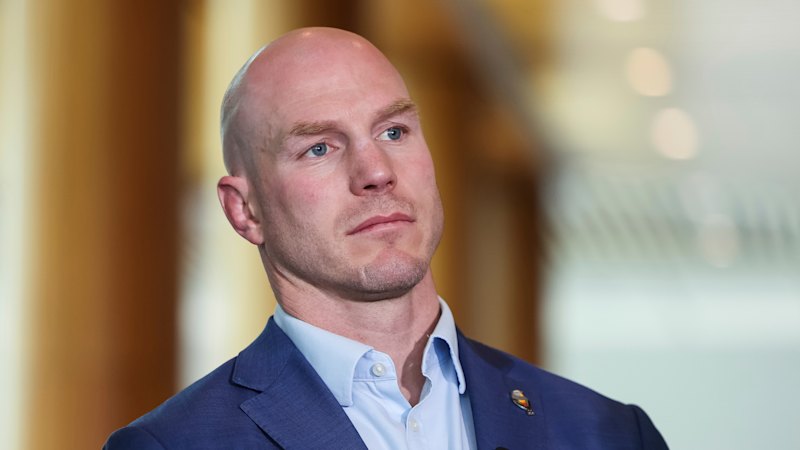
There was a moment after last year’s federal election when David Pocock’s Senate career could have taken a very different turn.
The independent ACT senator had spent his first three-year term holding one of Canberra’s most coveted commodities: leverage.
The Albanese government needed crossbench votes to pass legislation, making Pocock central to negotiations on everything from climate policy to industrial relations reforms. Then the election reshaped the Senate arithmetic. Labor no longer needed him in quite the same way.
Rather than fade into the background, Pocock gathered his staff and did something politicians rarely admit to doing. They sat down and worked out a new strategy.
“It’s obviously very different with the numbers,” Pocock, 38, says. “We actually looked to use it to our advantage.”
If he could no longer exercise influence by negotiating every government bill, he would spend more time identifying issues before they reached Parliament, campaigning publicly and building enough political pressure that governments could not ignore them.
“You actually have to create enough tension to make change,” he says. “You have to make it uncomfortable enough for the government of the day to say, ‘Actually we’re going to do something. I know we’ve said that this thing isn’t a problem. Yeah, we’ve tried to fob you off, but it’s getting to the point now where we’re getting 1000s of emails.”
When the federal government last month announced a dramatic overhaul to the way paid lobbyists engage with parliament it was, in many ways, down to Pocock.
Not long after arriving in parliament in 2022, the former Wallabies captain was outraged when a tobacco lobbyist with an anonymously sponsored parliamentary pass wandered into his office uninvited.
After years of joining a push for greater transparency, his office last year created a voluntary online register identifying holders of privileged parliamentary passes and who sponsored them. The database infuriated some MPs and triggered thousands of constituent emails demanding greater disclosure.
The irritation was, for Pocock, evidence the tactic was working. After eight months of shaming them, it is now government policy.
“Maybe a bunch of people don’t like me for doing it,” he says. “But I’m here to actually get outcomes.”
The government’s eventual transparency changes, he argues, were only a first step.
“The next step is not allowing the government to get away with the bare minimum.”
That phrase — “the bare minimum” — recurs repeatedly throughout our conversation.
Last week, as the government and Greens rammed contentious tax legislation through the Senate without debate, Pocock highlighted the so-called “widows tax”, where investment properties jointly owned before the May budget would lose grandfathered capital gains and negative gearing exemptions if one owner died or the couple divorced.
Initially dismissed, the government quickly reversed course and tried to limit blowback. Rubbing salt into the wounds of a hapless Coalition, the issue was initially revealed through probing by Liberal finance spokeswoman Claire Chandler. But it was Pocock’s intervention which drew the spotlight.
Pocock, despite his introverted nature, has harnessed social media in a way few of his peers have managed. During the past sitting fortnight he surpassed Prime Minister Anthony Albanese’s 656,000-odd Instagram followers.
Much of that momentum came from a February Senate estimates exchange.
Pocock asked Treasury deputy secretary Shane Johnson to confirm what was already in the budget papers: Australia collected more revenue from beer excise than from the Petroleum Resource Rent Tax on offshore gas. Johnson confirmed it, then paused when asked how that could be explained.
Clipped and circulated online, the exchange was viewed about 8 million times.
It was picked up across the political spectrum — from One Nation’s Pauline Hanson to ACTU boss Sally McManus and business figures including Matt Comyn — each drawing different conclusions, but converging on the same point: Australia was not extracting enough value from its gas exports.
Konrad Benjamin, the creator and presenter of social media and podcast accounts Punters Politics, weaponised it too. Pocock sponsors Benjamin’s parliamentary pass as a self-proclaimed “people’s lobbyist” and disclosed it on his own register.
The prime minister was eventually drawn in. Asked by Karl Stefanovic about the comparison, an irritated Albanese replied: “I think David Pocock is someone who seeks to promote grievance”.
When asked about that assessment, Pocock said he wasn’t surprised.
“The thing I’ve realised here is that there’s a certain type of politician that when they’re feeling the pressure they pivot straight from the issue to get personal,” he says. “That’s when you know you’re onto something.”
He often returns to a line from Desmond Tutu, the South African Anglican bishop and human rights activist, who he describes as one of his heroes.
“Don’t raise your voice,” Pocock says. “Improve your argument.”
Growing up in Zimbabwe, he says he was aware early that politics shaped everything from food supply to economic stability. After his family fled to Australia in 2002 amid violence triggered by Robert Mugabe’s land seizures, he remembers his mother asking what people would talk about if not politics.
That contrast still informs how he sees his role.
Pocock clearly gets under Albanese’s skin. Asked last year about Pocock questioning the prime minister’s role as honorary president of the Australian Parliament Sports Club and its conflict with the lobbying register, Albanese replied: “I think that’s David Pocock being David Pocock, getting himself in a story.”
His popularity in the ACT has put Finance Minister Katy Gallagher’s own seat under pressure while outshining many independent and minor party colleagues.
It has also fuelled speculation of a potential lower house move, which he dismisses. He says he has no interest in joining Zali Steggall and Allegra Spender’s Community Strong party and is determined to maintain his independence.
Critics inside Parliament House, especially within Labor and among the corporate set, dismiss him as self-righteous, hypocritical and downplay his influence as more social media influencer than serious politician.
They believe he gets an armchair ride from the media.
Opponents note that while he rejected Climate 200 funding at the election and declared “don’t call me a teal”, many of his $920,294 in donations during 2025 still came from longstanding teal supporters.
Labor was furious he escaped more criticism for demanding Albanese recall parliament after the Bondi terror attack before voting against the hate crimes legislation.
During the gas tax debate, Nationals senator Susan McDonald attacked Pocock over funding received by his wife Emma’s charity, Frontrunners, from Denmark’s KR Foundation.
“This is an organisation that states on its home page that it wants to phase out fossil fuels,” she said. “What other organisations are out undermining our national security with no disclosure about where their money comes from yet are happy to attack me and other people for standing up and defending the industries that pay our bills?”
Still, many — albeit begrudgingly — describe him as one of the most effective sole operators Parliament House has seen in years.
Liberal senator, Andrew Bragg, this week called Pocock “a great and welcome disrupter”.
“He’s highlighted integrity issues, waste and misalignment in Australian politics,” Bragg says. “He is worth about 10 regular senators.”
Former Test cricketer Usman Khawaja first met Pocock after being invited to Parliament House while lobbying the federal government to impose further sanctions on Israel.
“I’ve been following him on Instagram for a few years now,” he says. “His enquiries and questions were just so articulate and precise I was an instant fan.”
Khawaja, who has become increasingly outspoken on Gaza, gambling and multiculturalism, says he admires Pocock’s courage.
“People try to dismiss athletes by using the old ‘stick to sport’,” he says. “You gotta be willing to accept that everyone won’t agree with you, be fine with that and still perform. But for some reason people are very dismissive of athletes’ political views. I think they forget that athletes are more than the sport they play. It’s not for the faint-hearted.”
On the government’s environment laws last year, Pocock convened roundtables involving NGOs, industry, scientists and lawyers to test where consensus existed and what amendments were needed. It’s become a common way he engages stakeholders and forms a view on contentious issues.
Professor David Lindenmayer, one of Australia’s leading conservation scientists, says what stood out from their first meeting, on a walk in a bush reserve, was that Pocock listened.
“I thought it was going to be like other elite athletes that I’ve met, and by and large they’re people who are keen to tell you about their own story.
“He asked a question. I gave an answer. He actually processed what I’d said and then asked another question that built on it.”
After 25 years working with politicians, he says that is rare.
“You hear politicians saying things like, are we listening? We’re listening, we’re listening. No, they’re not. They’re not listening at all. They’ve just got in their minds what they want to say
Instead, Lindenmayer says, Pocock seeks evidence before forming positions.
“He weighs things up. He canvasses experts. He doesn’t give knee-jerk reactions. There’s very high integrity there.”
Pocock keeps his brother Steve, with whom he founded the Rangelands Regeneration Trust in Zimbabwe, a 70,000-hectare community-owned wildlife conservancy, and wife Emma, a former adviser to Greens senator Sarah Hanson-Young, as close counsel. Fiona Scott, a former adviser to Rudd and Gillard government ministers Kim Carr and Martin Ferguson and the Property Council, is a driving force in his political team.
Pocock’s diagnosis of Australia’s political mood is straightforward. Housing is dominating everything.
“You can’t function as a human without housing,” he says, pointing to families spending more than half their income on rent or mortgages.
That economic pressure, he believes, is driving declining trust in politics and creating fertile ground for populism.
“The status quo isn’t delivering,” he says. “What comes next?”
Emma, who gave birth to the couple’s first child in December 2024, says the most significant difference this term is the team’s emphasis on engaging with the community and “really listening” — even reading social media comments.
“I guess we’ve kind of always seen it as a bit of a joint project, which I think is kind of unavoidable, because it is such a consuming job,” she says.
“But it’s given us such a new way of being part of this community. We’ll go to Bunnings, or the supermarket, or we’ll be out walking on a bush trail, and we’ll bump into people who offer up incredible insights into how we’re governed and the kind of future that they’d like to see and build together.”
Four years in Parliament have not changed Pocock’s belief in the system so much as sharpened his view of its limits.
He’s determined to keep up his crusade on transparency, gambling, housing reform and better quality debate.
Parts of it, he acknowledges, have been frustrating. Slow, incremental and, at times, performative.
But he remains convinced political pressure still works and that institutions respond, eventually, to sustained scrutiny. And he’s not prepared to accept the bare minimum.
Cut through the noise of federal politics with news, views and expert analysis. Subscribers can sign up to our weekly Inside Politics newsletter.
 Rob Harris is the national correspondent for The Sydney Morning Herald and The Age based in Canberra. He is a former Europe correspondent.Connect via email.
From our partners
Discover more from PressNewsAgency
Subscribe to get the latest posts sent to your email.