
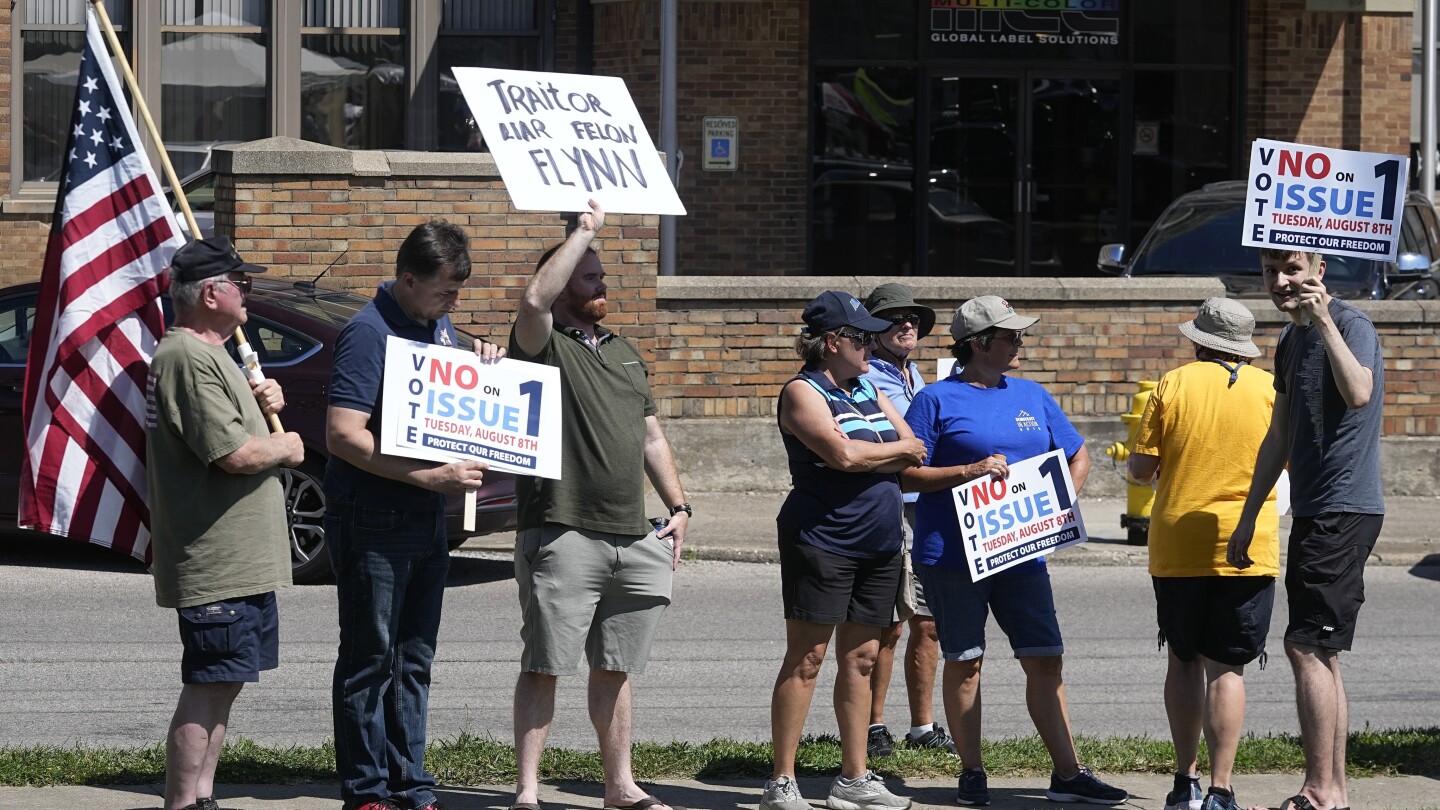
COLUMBUS, Ohio (AP) — Ohio wraps up a hastily called and highly charged special election Tuesday, a contest that could determine the fate of abortion rights in the state and fuel national political strategies for 2024.
On the ballot is Issue 1, a proposal to raise the threshold to pass future changes to the state constitution by a simple majority of 60%. But most passionately in the view of supporters of the proposal, including Republican officials, it is a proposed constitutional amendment on the November ballot calling for enshrining access to reproductive care in the state’s founding document.
The measure resonated clearly with voters, who turned out in large numbers during the early voting period, which ended on Sunday. The number of early ballots cast, a mix of mail-in ballots and in-person early ballots, reached nearly 700,000, more than double the early voting during the state’s two previous midterm primary elections in 2022 and 2018.
Historically, Ohio’s August election has focused on local issues and been plagued by chronically low turnout.
Republican lawmakers who backed Edition 1 maintained the measure was not about thwarting the fall abortion amendment, despite reinstating an August special election like the ones they recently voted to scrap.
Raising the bar to pass citizen-driven constitutional amendments could make it difficult, if not impossible, for the fall proposal to succeed, according to polling figures. voters in various stateseven deeply conservativehave affirmed the right to abortion since the US Supreme Court struck down Roe v. Wade last year, though usually with less than 60% of the vote.
Last year’s AP VoteCast poll found that 59% of Ohio voters say abortion should be generally legal.
money out of state has spilled over to both sides of the race above the 60% threshold, even as both supporters and opponents say one of its main goals is to prevent special interests from having more influence over state policy than the average US citizen. Ohioans.
The campaign for Issue 1, Protect Our Constitution, has told the voters that raising the threshold will prevent wealthy interest groups from pushing redistricting, gun control and minimum wage policies in Ohio. One Person One Vote, the opposition campaign, argues that raising the threshold for passing future amendments would prioritize the interests of the increasingly conservative Ohio GOP supermajority in the state house over those of ordinary voters.
But abortion rights are at the epicenter of the fight, as Ohio and other states have been given control of their own abortion policies by following the Supreme Court. reversing Roe v. Wade last summer. Ohio’s ban on most abortions was suspended under Roe and then briefly allowed to take effect after it was struck down by the court. It has since been frozen again while a challenge alleging it violates the state constitution unfolds.
The abortion amendment would give people the right to make their own decisions about reproductive health care, including contraception, fertility treatment, abortion, and miscarriage care, until the fetus is viable outside of the womb.
At the same time, a broad bipartisan coalition opposes Issue 1 for other reasons. Former Ohio governors and attorneys general from both parties have spoken out against the constitutional change, calling it bad public policy. If passed, it would reverse 111 years of direct democracy that has the potential to affect future citizen-led electoral efforts.
Protect Women Ohio, the campaign against the abortion issue this fall, has spent millions on the August election, running ads that suggest the measure not only codifies abortion, but could pressure children to receive care that affirms their gender and undermine parental rights.
Several legal experts have said there is no language in the amendment to support the ads’ claims, but it follows a pattern throughout this election cycle of misinformation and alarmism being used to influence voters.
Opponents of Number 1 have issued announcements and mobilized a large coalition, including voting rights, labor, religious and community groups, as well as the state Democratic Party.
It was because of chronic low turnout that lawmakers voted last year to scrap the summer election, prompting a failed trial alleging that the special election in August of this year violated the new law and further questioning whether it was reinstated solely to thwart Ohioans’ abortion rights.
___
The Associated Press receives support from several private foundations to improve its explanatory coverage of elections and democracy. See more about the AP democracy initiative here. The AP is solely responsible for all content.
___
Samantha Hendrickson is a staff member of the Associated Press/Report for America Statehouse News Initiative. Report for America is a nonprofit national service program that places journalists in local newsrooms to report on covert issues.
Discover more from PressNewsAgency
Subscribe to get the latest posts sent to your email.