
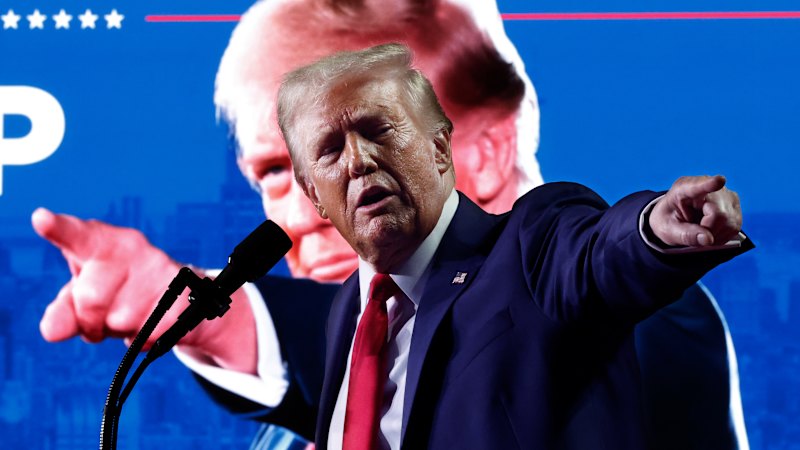
The US midterm elections are not just about the cost of living. The explosive growth of data centres, political integrity and the popularity of President Donald Trump himself are under scrutiny in this election cycle, which is on track to be the most expensive in US history, thanks to massive donations by the world’s richest man, Elon Musk, and the Trump-friendly crypto industry.
Alaska: The ‘Decoy Dan’ race
Surging heating fuel, electricity and grocery prices are disproportionately whacking residents of this remote, traditionally red state. Here, Democrat candidate Mary Peltola, who says Alaskans endure the highest healthcare costs in the country, is facing off against Republican senator Dan Sullivan, and an unaffiliated retired teacher who goes by the same name – Daniel J. Sullivan Jr.
With control of the Senate potentially at stake, this race has been particularly bitter: the Trump administration’s Department of Justice last week filed a lawsuit requesting Alaska not to certify its Senate results if Peltola wins, arguing that having two Dan Sullivans on the ballot threatened the integrity of the vote count. Peltola retorted that the bid raised “profound constitutional concerns”.
Iowa: A referendum on Trump
The Senate race between Republican congresswoman Ashley Hinson and Democratic state legislator Josh Turek in Iowa is something of a case study on the popularity of Trump. (Trump has, of course, asked voters to pretend he’s on the ballot these midterms, despite his weakened approval rating.)
Traditionally red Iowa could be on the cusp of turning blue, with Turek neck and neck with self-described “common-sense” mum, Hinson.
Inflation is hitting the state hard – even Hinson has been recorded asking supporters to donate “gas money” for her campaign bus. After voting in favour of the Iran war, Hinson has since criticised the president’s decision to buy oil from Russia and stated that a vote for her is not necessarily a vote for the president.
“I do want to see the war come to an end as soon as possible,” she told NBC. “A vote for me is a vote for Iowa.”
Turek, a former Paralympian who was born with spina bifida, says if elected, he will push for an end to the Iran war and the repeal of Trump’s widespread tariffs, but has no interest in voting to impeach the president.
Texas: Feisty Democrat makes the fight about integrity
Democrat James Talarico, who is trying to become the first Democrat elected to the US Senate from the conservative state of Texas since 1988, has used concerns about political corruption in his campaign.
“This is a people-powered movement to take on this broken, corrupt political system,” Talarico has told supporters. “We are a threat to their corrupt system.”
Musk has ploughed hundreds of millions into Republican campaigns this election cycle. This included payments of $US75 million ($106 million) on September 9 and $US83 million on September 23 to the Senate Leadership Fund PAC, which were transferred the next day to the campaign of Republican candidate Ken Paxton, the state’s attorney-general.
“Elon Musk is trying to buy this Senate seat,” said Talarico, whom Trump likes to refer to as “Talafreako”. “There is something deeply wrong with a political system that allows one trillionaire to buy his own personal US senator.”
Ohio: A taste for crypto
The Trump family has made a motza from cryptocurrency, and the crypto industry has poured $US176 million into promoting allies in these midterms, Reuters reports.
The industry’s main target is Ohio Democratic candidate Sherrod Brown, a former senator who chaired the Senate banking committee from 2021 to 2024, when he was a vocal critic of crypto. Ad-tracking business AdImpact says the crypto sector has spent $US68 million on defeating Brown, who is up against Republican incumbent Jon Husted.
A spokesperson for Brown told Reuters the “special interests are panicking”.
In the gubernatorial race, a deeply controversial TV advertisement aired by Republican candidate Vivek Ramaswamy has put his race against Democrat Amy Acton firmly in the spotlight.
The ad featured Donna Arthur, Acton’s estranged mother, calling her daughter a lifelong liar despite having had no contact with her for nearly 50 years. Arthur lost custody of her children in 1978 after her husband, their stepfather, was indicted for raping Acton when she was 12.
The ad had been widely seen as having crossed an ethical line. Even several prominent Republicans have called for it to be taken down. But Trump had encouraged Ramaswamy to keep airing the ad, saying it was “hitting pay dirt”. Ramaswamy said during a campaign appearance in Ohio on Thursday that the ad’s planned run was over.
Michigan: Anti-Muslim rhetoric
In the swing state of Michigan, Abdul El-Sayed – a doctor, unionist and Muslim – and Republican Mike Rogers are locked in a tight race for the Senate seat being vacated by Democrat Gary Peters.
El-Sayed has galvanised young voters but has faced anti-Muslim rhetoric from Trump, who delights in calling him “Mohamed”. And after a bitter primary, some Democrats have refused to support him over his criticism of Israel, past remarks and association with controversial podcaster Hasan Piker.
The progressive Democrat believes he is being targeted because he is Muslim, and calls it out. Trump has seized on this, labelling it arrogance. “He’s a nasty guy … he’s worse than I am,” Trump recently said.
Trump’s trade stoush with Canada and high petrol prices due to the Iran war are deeply unpopular in Michigan, but it may be the Republicans’ best chance to flip a seat in a state that has not elected a GOP senator in decades.
Pennsylvania: Bracing for ‘techlash’
The data centre backlash is real among Republicans and Democrats in both the city and countryside. This so-called “techlash” could have “momentous ramifications for everyone”, the Brookings Institution says.
“If several of the high-profile backers of data centres lose and their opponents win, it could encourage politicians to embrace more data centre moratoriums, pauses and audits”, which would then create financial difficulties “not only for specific firms, but the overall economy”.
In the swing state of Pennsylvania, Democratic governor Josh Shapiro has changed tack from broadly supporting data centres to imposing new rules on them.
His Republican rival, Stacy Garrity, has accused Shapiro of “opening Pennsylvania’s door to data centres and giving away state tax dollars and resources to a company [Amazon] on the other side of the country”.
With AP
Get a note directly from our foreign correspondents on what’s making headlines around the world. Sign up for our weekly What in the World newsletter.
 Madeleine Heffernan is an Explainer reporter for The Age and Sydney Morning Herald. She has also reported on education, city, business and consumer affairs for the publications.Connect via X or email.
From our partners
Discover more from PressNewsAgency
Subscribe to get the latest posts sent to your email.