

The UK has provisionally recorded its warmest ever January temperature, as components of Scotland hit 19.6C.
The temperature was recorded at Kinlochewe village in Wester Ross, within the Highlands, additionally making it a brand new winter file for Scotland, based on the Met Workplace.
Meteorologist Becky Mitchell informed Sky Information southern winds have dragged milder air from Africa throughout the UK, which have triggered higher-than-normal temperatures.
The winds are additionally bringing a Saharan mud cloud to components of the UK, which can end in pink mud selecting streets and automobiles over the following 24 hours.
A yellow warning for wind has additionally been issued by the Met Workplace for northwest Scotland, which incorporates Kinlochewe, till 5pm on Sunday.
Elsewhere within the Highlands, a wildfire has been reported in Lochinver, which is additional north in Scotland.
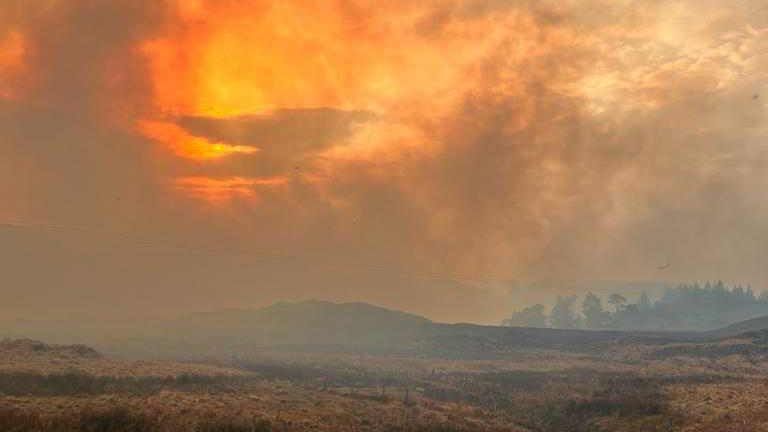
Smoke rising in Lochinver. Pic: Kirsty Gammons
Scottish Hearth and Rescue Service confirmed crews are on the scene, with the hearth stretching over a mile.
The brand new file temperature beats the earlier January highs of 18.3C set at Inchmarlo and Aboyne in 2003 and Aber in 1958 and 1971.
Why the Scottish Highlands?
A part of the rationale for the spike is what’s referred to as the foehn impact, which is the motion of air from the moist and chilly aspect of a mountain to hotter and drier circumstances on the opposite aspect.
When a distant wind hits mountainous components of the nation, the air can typically be pushed as much as the highest – with the air shedding its moisture and changing into drier because it rises.
By the point it comes down on the opposite aspect of the hill, the comparatively dry air warms because it descends.
The phenomenon is commonest in mountainous areas, such because the Scottish Highlands.
This could create a distinction in circumstances in Scotland, because the west might expertise moist climate, whereas the lower-lying east enjoys heat and sunshine.
Learn extra:
Spanish area second-highest January temperature in 38 years
Icon of the Seas: World’s largest cruise ship units sail
The foehn impact can be harmful in snowy peaks, with an elevated danger of avalanches in some areas.
In January 1972, a foehn occasion triggered the temperature in Montana, within the US, to rise from -48C to 9C – a rise of 57 levels.
Discover more from PressNewsAgency
Subscribe to get the latest posts sent to your email.