
Updated ,first published
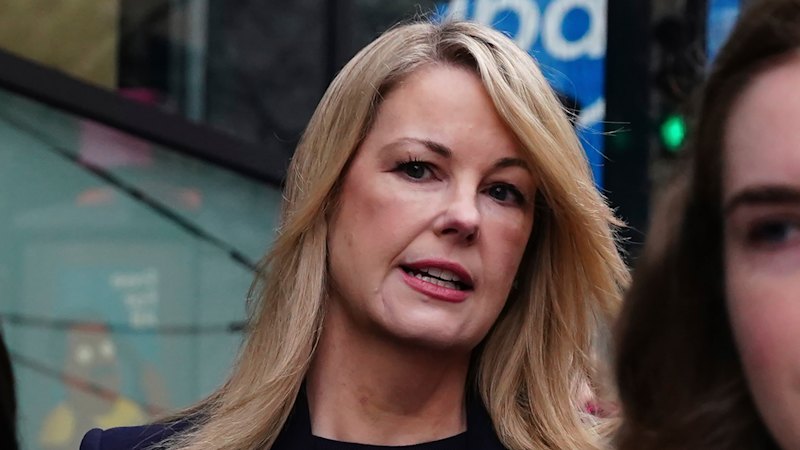
When Monash University vice chancellor Sharon Pickering first heard students were planning a pro-Palestinian protest encampment on her campus in April 2024, she was on a flight stopover at John F. Kennedy Airport in New York.
“Fortunately, I had Wi-Fi,” she told the Royal Commission on Antisemitism and Social Cohesion on Thursday. “I sat in the lounge at JFK, and I watched the police come onto campus at Columbia [University], and I watched what happened. I needed to get home.”
On the fourth day of the commission’s scrutiny of Australian universities, Pickering’s evidence suggested she did things differently to some of her colleagues.
When she became aware non-students were on campus in the 40-tent encampment – and at pro-Israel counter-protests – Pickering had them removed using existing powers to get police to issue exclusion orders.
Monash set up CCTV cameras, and Pickering declined to negotiate directly with the protesters, insisting they go through the democratically elected student union –which they did not do.
When she saw an Instagram post saying “Zionists are not welcome on campus” she judged it was a “watershed” – that the words of the protest had moved from simply causing “offence … to real harm”.
The university made it clear to protesters in a statement that it would “not tolerate thinly disguised antisemitism”.
When it came to the controversial chants of “globalise the intifada”, and “from the river to the sea”, Pickering, a criminologist by training, said she had sought advice, then issued a warning to protesters that they faced investigation and possible sanction if they used them.
“There had been increasing, what I’m calling the atmospherics of hostility on campus, and we needed to calm things down,” Pickering told the commission on Thursday.
“What you’re contending with is, where are the justifiable limitations in a real community with real people, not as a legal abstract argument.
“The encampment had brought a level of hostility that was unacceptable … so we worked really hard with student organisations, the police, with our community … We did not seek to use any special powers. We simply used the policies and procedures that we had.”
Other vice chancellors from Sydney, Melbourne and Canberra who provided evidence to the commission this week have been more equivocal, saying a commitment to academic freedom had made a crackdown difficult, and they had wanted to avoid conflict with protesters.
University of Sydney vice chancellor Mark Scott, who apologised to Jewish staff and students, said on Wednesday that because the chants did not break the law, the issue was “hard for us to deal with”.
He also admitted he did not know whether non-students had been protesting on his campus.
Monash’s campus’s encampment lasted 17 days – compared to 110 days at the Australian National University (ANU) and 56 days at the University of Sydney.
Professor Rebekah Brown, the interim vice chancellor of the ANU, apologised to Jewish staff and students in her evidence.
“Jewish students and staff have an absolute right to feel safe, respected and heard on our campus, and I’m sorry that they didn’t,” Brown told commissioner Virginia Bell on Thursday.
“I’ve committed in my role, as long as I am the interim vice chancellor, to do better.”
Brown said she had been “very moved … very affected” by the evidence of former ANU student Liat, who gave evidence this week that she had felt unsafe when being taunted as a “baby killer” and “genocide supporter” during the encampment that ran between April and August 2024.
An expert on psychosocial hazards later told the university its encampment, Australia’s longest, “could lead to serious injury”.
Under questioning on Thursday, Brown agreed that freedom of academic expression meant nobody had a right not to be offended. However, she said the university had not acted as well as it should have.
It had since upped the strength of its policies on psychosocial risks, was implementing an antisemitism policy and rolling out training, Brown said.
Though she had not been vice chancellor at the time, Brown agreed there “had been failures” with how ANU handled the protests in mid-2024.
Brown’s evidence came after the ANU’s acting provost, Professor Joan Leach, said the encampment was not broken up earlier because of a fear it would cause US-style violent confrontations with students.
Leach told the royal commission only one student had been disciplined as a result of the encampment, and not for antisemitism. She also related how students who appeared to mimic a Hitler moustache and a Nazi salute on a student livestream had been cleared in an internal investigation.
Asked about the encampment, Leach said the students were directed twice in May 2024 to disband for health and safety notices. They did not.
It was almost two months later, on July 23, 2024, that university authorities cut power to the site for reasons of electrical safety.
Despite a number of complaints from Jewish students that they felt unsafe on campus, particularly due to chants, the protest did not move until August 17, 2024.
Leach said the “images of students being pulled by police off campuses” in the US had been “very much on people’s minds”. The university wanted to bring the encampment to a close “peacefully, without violence, and with some agreement with the students”.
“In hindsight, that might appear naive or inadequate, but I do believe at the time there was a hope that the encampment could be brought to a peaceful end,” Leach said.
In the end, the university agreed to publish on its website details of investments it had with defence manufacturing firms.
During the protest period, the ANU Students’ Association held a notorious meeting in which Jewish students proposed that Hamas be condemned as a terror organisation.
During the meeting, allegations were made that a student performed a Nazi salute, and that another made a gesture indicating a Hitler moustache.
Leach told the royal commission an investigation cleared both students.
One student, Leach said, was found to have been using her finger to cover a facial feature they were uncomfortable with – “not a moustache gesture but a gesture this student commonly made in multiple contexts in multiple events”.
The alleged Nazi salute was not fully visible on the video, Leach said, and it was “very, very difficult to discern exactly what was going on”.
Both students were cleared, but the findings were not communicated to the Jewish students involved. The Jewish students did not find out the result of the investigation until the university revealed them at a Senate estimates hearing.
After the encampment at ANU, eight students were charged with misconduct because they had disobeyed university directions. None was charged over allegations of antisemitism and Leach told the royal commission seven of the eight were cleared.
The university has since begun a review into student conduct rules, and has prohibited tents and banned sleeping on campus.
Yasser Bakri, a lawyer representing the Australia Palestine Advocacy Network, put to Leach that the university had acted poorly towards a Palestinian student during the encampment.
Bakri said the student applied for special consideration because multiple members of her family had been killed by Israel’s bombardment of Gaza.
The course co-ordinator told the young woman she needed to provide a death certificate for every member of her family killed for the extension to be considered, Bakri said.
“After those death certificates were procured, which was very difficult given the circumstances in Gaza, the student was then told to obtain a notarised translation for the death certificates,” Bakri said. The lawyer said the entire process took the student more than a year.
Leach agreed that, if true, the university should do better.
Start the day with a summary of the day’s most important and interesting stories, analysis and insights. Sign up for our Morning Edition newsletter.
 Michael Bachelard is a senior writer and former deputy editor and investigations editor of The Age. He has worked in Canberra, Melbourne and Jakarta, has written two books and won multiple awards for journalism, including the Gold Walkley.Connect via X or email.
From our partners
Discover more from PressNewsAgency
Subscribe to get the latest posts sent to your email.