
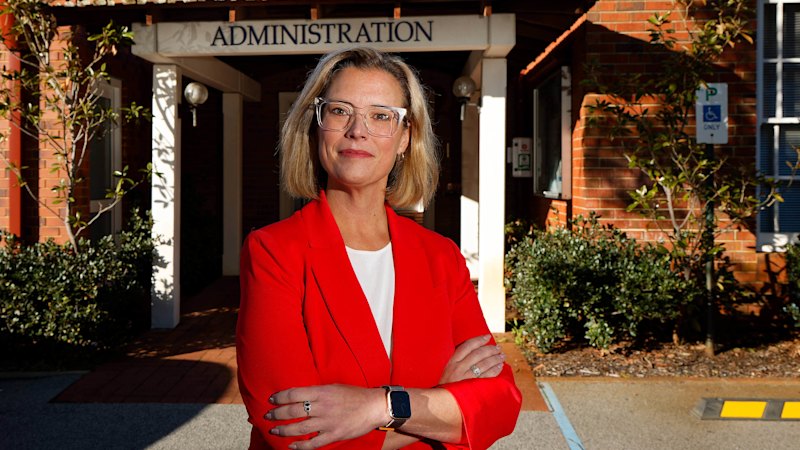
A Perth council is taking a stand against any amalgamation with its neighbouring mega local governments, claiming it could drag them into dysfunction and tap into their hefty reserves.
The Town of Cambridge has drawn a line in the sand to say they will not entertain any amalgamation proposals from financially troubled councils.
The council unanimously voted to support a motion on Tuesday night which would maintain the current municipal boundaries and not initiate or pursue an amalgamation proposal unless it could “demonstrate a clear net benefit to the Town and its community”.
Councillor Michael Le Page told the meeting he didn’t want to see the administration and the council spend a lot of time on proposals if “clearly from the outset they have no value to us”.
“If someone comes up with a proposal, and we look at the local government – I don’t want to give any examples – and we find that they’re financially in a very bad shape, we simply don’t want to go there,” he said.
“Because we would then need to contribute funds to fix up a range of things that may be existing in that local council.”
The Town of Cambridge neighbours the cities of Nedlands, Stirling, Subiaco and Vincent.
The City of Nedlands has been one of the most notable councils to be embroiled in dysfunction over recent years, when five councillors resigned from their position last July.
The mass exodus meant all remaining elected members – including then-mayor Fiona Argyle – were let go from their roles and replaced by commissioners.
One of the key disputes which led to the bulk resignations was the council’s inability to agree on plans for WA’s first children’s hospice, which proposed using the neighbouring Allen Park A-Class reserve as recreational space for the children.
It was later revealed the city had also been under investigation by WorkSafe over alleged staff misconduct and inappropriate workplace behaviour, with more than 70 people quitting in 18 months.
Cambridge councillor Matt Delmenico told Tuesday’s meeting their council was an example of a local government which has succeeded financially.
“The reality is the town’s got a very strong balance sheet, over $77 million in reserves. Most of the other neighbouring councils, with the exception of Subiaco, they’ve got 10 per cent or less than what we’ve got,” he said.
“We’ve got one of the largest revenue bases, generating income from whether it’s the commercial tenancies, via turnover rent, the Wembley Golf Course – as the mayor often refers to as the jewel in the crown – and we hold no external debt.
“So I certainly acknowledge some of the financial and operational efficiencies that come potentially with amalgamation.”
Delmenico said the financial risk of amalgamations – and possible demergers – to ratepayers could also be significant, using Northern Beaches council in Sydney as an example.
“There were also a number of councils over east where they amalgamated. One in particular in Sydney ended up costing $653 for each individual ratepayer, $2.5 million for staff redundancies, $2.8 million for IT and system integration costs. Someone’s got to foot the bill there,” he said.
“I also believe it generally would distance elected members from the heart of the community, reducing that local voice and potentially accountability as well.
“In fact, I think elected members and elected representatives would be spread quite thinly. So my view is that a bigger council isn’t necessarily a better council.”
Le Page said the Town is in a “strong financial position” with competitive rates, strong reserves, no debt and a profitable golf course.
“There’s really no financial urgency for this town to do anything,” he said.
“From the state government’s perspective, it’s voluntary encouragement, not a mandate. So we can afford to just wait and see.”
Local government minister Hannah Beazley revealed in September an overhaul of the sector, including proposed election cycles extended to four years, aimed at encouraging more voter participation.
She also announced the government planned to do away with the “Dadour poll” provision that allows a minority of electors to effectively veto amalgamation proposals, in a bid to pave the way for more voluntary amalgamations between councils.
Following the announcement of a second local government chief executive being sacked from their position in the span of five weeks, Beazley said on Tuesday that local governments need to get on board to support amalgamations.
She said 139 local governments and 1111 elected local council members is “too many” in Western Australia.
“My local government reform Bill before Parliament will remove barriers to voluntary local government amalgamations,” Beazley said.
“It’s time for local governments and the opposition to get on board and support this reform Bill.
“These reforms will allow for the reset that the local government sector desperately needs.”
But so far, councils have not thrown their support behind the idea, with the City of Subiaco mayor David McMullen also stating this month that they were not considering amalgamation with another local government.
From our partners
Discover more from PressNewsAgency
Subscribe to get the latest posts sent to your email.