

Smoke from the Canadian wildfires poured into the US East Coast and Midwest, prompting air quality alerts in major cities, including New York.
smoke from canadian wildfires has engulfed New York in unprecedented smog apocalyptic as cities along the US East Coast issued air pollution warnings and thousands evacuated their homes in Canada.
In Canada, devastating fires have displaced more than 20,000 people and singed more than 3.8 million hectares (9.4 million acres) of land.
Here’s what we know about wildfires, the spread of smoke, and how to stay safe if you’re in affected areas:
What is happening in the United States and Canada?
smoke from Canadian forest fires has been moving to the United States with fires near Quebec burning since last month.
Unusually hot and dry weather forest fires intensified. Since Wednesday, almost 160 forest fires they burned only in the province of Quebec.
On Wednesday, air quality alerts were in effect across the US for southern Michigan and Wisconsin, northern Ohio, and parts of Pennsylvania, New Jersey, and New York, where high concentrations of pollutants were forecast.
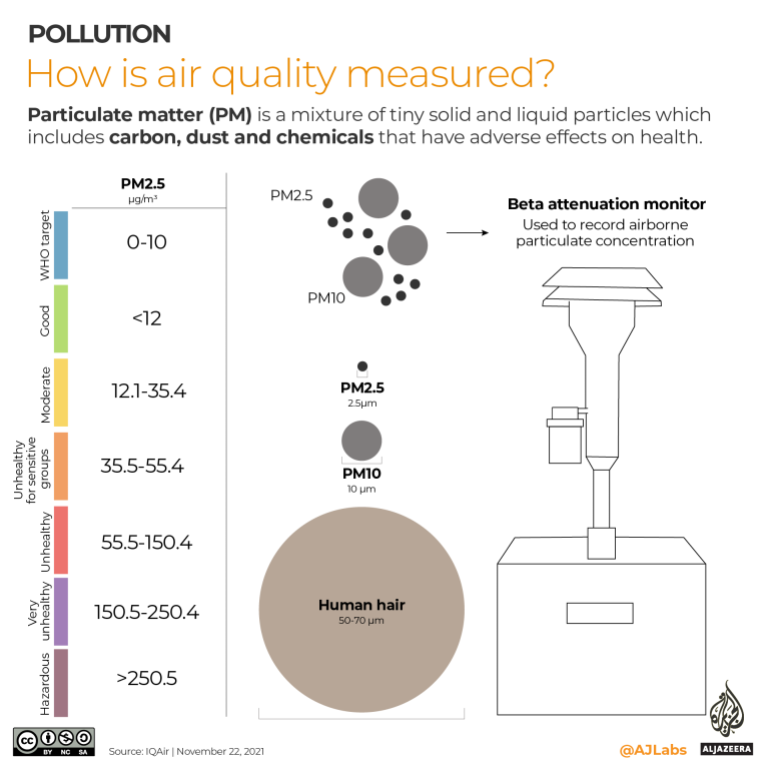
New York was enduring the worst air quality index (AQI) of any major city in the world, according to IQAir.com, which tracks air quality around the world.
BREAKING: The Air Quality Index in New York City has skyrocketed to 342, which is the “Dangerous” category. This means that everyone is at high risk of adverse health effects. There is currently no other major city anywhere on Earth with worse air quality. #NYwx pic.twitter.com/kjthgQzNq2
—Collin Gross (@CollinGrossWx) June 7, 2023
What is the biggest concern?
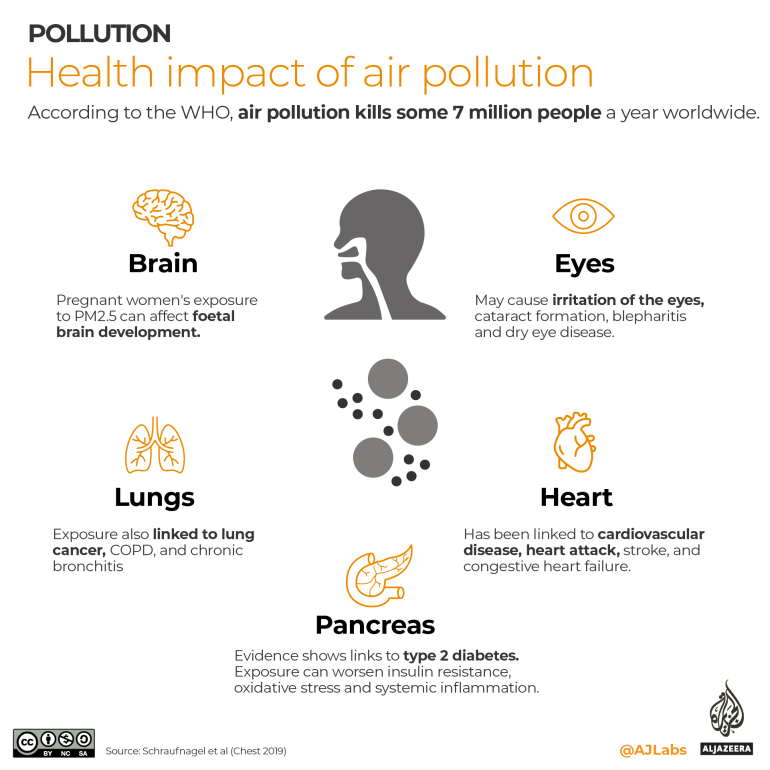
Air quality alerts are triggered by several factors, including the detection of fine particles of pollution, known as “PM 2.5,” which can irritate the lungs.
“The biggest health threat from wildfire smoke comes from these very small microscopic particles that you breathe,” says Jill Baumgartner, associate professor at McGill University’s School of Population and Global Health in Montreal, he told Al Jazeeraexplaining that they can lead to a variety of problems, from burning eyes and runny noses to chronic heart and lung disease.
“We are primarily concerned about inflammation in the lungs” due to these high levels of pollution, said Rima Habre, an air quality expert at the University of Southern California. She added that with climate change affecting fires, there is growing concern that more people will be exposed to less extreme smoke for weeks or months.
Canadian researchers reported that people living outside major cities and within 50 km (31 miles) of a wildfire in the past decade had a 4.9% increased risk of lung cancer and a 10% increased risk of brain tumors compared to people not exposed to wildfire.
Who should be careful?
The air quality alerts warn “sensitive groups,” a broad category that includes children, adults, and people with lung diseases, such as asthma and chronic obstructive pulmonary disease.
Children “are more susceptible to smoke for a number of reasons,” said Laura Kate Bender of the American Lung Association. “His lungs are still developing; They breathe more air per unit of body weight.
How to stay safe?
It’s a good time to put off yard work and outdoor exercise. If you go out, consider wearing an N95 mask.
Stay inside if you can, keep doors, windows, and fireplaces closed. It is recommended that if you have air conditioning, you run it on a recirculating setting.
Experts also recommend investing in air purifiers, especially for those with underlying lung or heart conditions.
Discover more from PressNewsAgency
Subscribe to get the latest posts sent to your email.