Former Republican Secretary of State Colin Powell said Sunday that President Donald Trump has “drifted away” from the Constitution, adding to a growing list of former top military officials who have strongly criticised the President’s response to the nationwide protests surrounding the police killing of George Floyd.
“We have a Constitution. And we have to follow that Constitution. And the President has drifted away from it,” Powell, a retired general who served under President George W. Bush, told CNN’s Jake Tapper on CNN’s State of the Union.
Colin Powell. (AP)
The comments from Powell, the first African American secretary of state and chairman of the Joint Chiefs of Staff, add to a growing list of rebukes made in recent days by former top officials who have expressed discontent with Trump’s strongman approach to the protests sparked by the death of Floyd, a black man who was killed in late May by a white police officer in Minneapolis.
Powell said he’s “proud” of what a number of former generals, admirals and diplomats have said about Trump’s response last week to the widespread protests, adding that he hadn’t released a public statement denouncing Trump’s response because he felt he had demonstrated his displeasure with Trump in 2016 when he voted against him.
He also said that he’ll vote for Democrat Joe Biden in the 2020 presidential election, choosing again not to vote for Trump for president.
“I certainly cannot in any way support President Trump this year,” Powell, a Republican, told Tapper.
The retired general voted for Trump’s Democratic opponent, Hillary Clinton, in 2016, and hacked emails released in September of that year showed Powell strongly condemning Trump, labelling him a “national disgrace and an international pariah.”
Powell said Sunday that he is “very close to Joe Biden on a social matter and on a political matter.”
“I worked with him for 35, 40 years, and he is now the candidate and I will be voting for him,” he continued.
Asked by Tapper if he would be campaigning for Biden, Powell said he hadn’t been asked to do so and that he doesn’t think he will be.
“Campaigning is not my strong suit, and I will be speaking for him, but I don’t plan to make campaign trips,” he said.
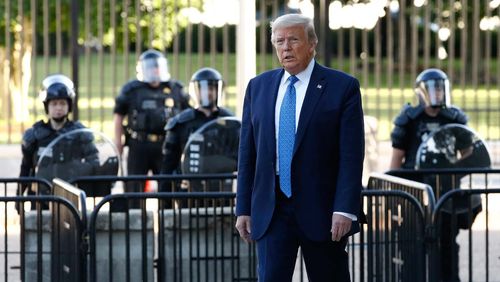
Tensions between the White House and Pentagon have stretched to near a breaking point over President Donald Trump’s threat to use military force against street protests triggered by George Floyd’s death. (AP)
The former diplomat said Sunday that the recent widespread protests over the police killing of a black man in Minneapolis and Trump’s strongman approach to the unrest is evidence of a growing opposition to his presidency.
“I think what we’re seeing now, this massive protest movement I have ever seen in my life, I think it suggests the country is getting wise to this and we’re not going to put up with it anymore,” Powell told Tapper.
Last week, Trump’s former Defence Secretary, James Mattis, said in a blistering statement that Trump “does not even pretend to try” to unite the country and is instead engaged in a “deliberate effort” to divide the country, while lacking “mature leadership.”
Former White House chief of staff John Kelly similarly blasted the President’s response to the protests, saying Friday that he agreed with Mattis’ assessment and that he thinks there’s an “awful big concern that the partisanship has gotten out of hand, the tribal thing has gotten out of hand.”
Good morning. It is the birthday of the poet Gwendolyn Brooks, who died 20 years ago at the age of 83. You should celebrate it by reading “The Bean Eaters,†from 1963, a poem that ends in a stanza of stark beauty:
And remembering…
Remembering, with twinklings and twinges,
As they lean over the beans in their rented back room that is full of beads and receipts and dolls and cloths, tobacco crumbs, vases and fringes.
These weeks run long, so don’t just plan for what to cook tonight. Think about what’s ahead, and how you might plan for it — planning is both trickier during the pandemic (groceries are hard) and a little easier, too (a lot of us are still hunkered down at home all day, at work or out of it, with plenty of time to cook).
Wednesday, if you plan it right and make the dough today, allow it to cold-proof in the fridge and develop a little tang: the green and white pizza, from Roberta’s in Brooklyn.
On Thursday, what do you make of the idea of this Southwestern-style oven-braised chicken from the chef Edna Lewis, who shared it with The Times in 1989? It’s bonkers with a mess of thighs in place of a whole bird, bone-in or boneless.
Thousands and thousands of recipes are waiting for you on NYT Cooking. A lot more of them than usual are free to use even if you aren’t yet a subscriber to our site and apps. But I’ll ask you anyway: Would you think about subscribing? Your subscription allows our work to continue.
And should anything go wrong along the way? We are standing by to help. Just write: cookingcare@nytimes.com. We will get back to you.
Bowser said on ABC’s “This Week†that she was proud of the mural: “It is an affirmative piece of art, a centering piece of art where people from around the globe have called us and thanked us for acknowledging black humanity and black lives in the most important city in the world.â€
Co-anchor Martha Raddatz asked, “But will you take out the part that says defund police?â€
“Well, it’s not a part of the mural, and we certainly encourage expression, but we are using the city streets for city art,†Bowser said.
“In other words, that will go away. You will paint over that?†Raddatz pressed.
Bowser replied, “I actually haven’t even had an opportunity to review it, Martha, but we — the response that we’ve gotten from people about the black lives matter … mural has just been incredible.â€
Sen. Cory Booker (D-N.J.) said on NBC’s “Meet the Press” that he understood the sentiment and substance behind the “Defund the Police” slogan.
“While it’s not a slogan I’ll use, if people just dismiss it and don’t get deeper into the substance — as I said earlier, it is not a mark of a beloved community to prey upon the most vulnerable in your society,” said Booker, a former mayor of Newark, N.J.
Bowser on Friday had “Black Lives Matter†painted to invoke the national movement combating the violence inflicted on black communities. An intersection near the White House, where federal law enforcement used tear gas and flash-bang grenades to clear a peaceful demonstration for a presidential photo-op, was also renamed “Black Lives Matter Plaza.â€
But the Black Lives Matter D.C. chapter called the gestures “performative,†accusing Bowser of trying to distract from “her active counter-organizing to our demands,†which include reducing the city’s police budget and reinvesting the funds elsewhere. On Saturday, negative comments were spray-painted on or near it, such as “This ‘Mural’ Ain’t Doing Shit.â€
“Bowser has consistently been on the wrong side of BLMDC history. This is to appease white liberals while ignoring our demands,†the chapter tweeted Friday.
June is here. It’s the start of the European summer and the high season for travel. In normal times perhaps; but these are not normal times.
However, as more and more European countries begin to open their borders again, the continent’s hard-hit airlines are hopeful of at least a partial recovery of inter-European holiday travel. Will it materialise? Nobody knows for sure.
Budget short-haul travel is the big hope
Budget carriers seem to be betting there will be some demand for short-haul, good value travel by lockdown-weary Europeans. EasyJet, the British low-cost airline, is restarting in mid-June. Ryanair, the Irish-based carrier, takes to the air again a few weeks later. Wizz Air, the Hungarian operator, is already flying.
“Two-thirds of people are saying they want to go somewhere, they want to fly somewhere in the next six months and 25% are saying they want to go in the next one to two months,†Jozsef Varadi, the company’s CEO, told the news website CGTN in a May interview.
“We think there’s substantially more demand out there than we’ll be able to serve,†Varadi said. “It’s not a reluctance to get on board a plane that will hold us back, but continuing restrictions on travel.â€
Trips to visit family and friends on the cards
Alexandre De Juniac, CEO of the International Air Transport Association (IATA), seems to agree with Varadi. He believes low-cost carriers are best-placed to benefit in Europe since demand for leisure flights and trips to visit friends and family will rebound much earlier than corporate sales.
But of course there are risks aplenty. Among them is that the budget carriers will find themselves all dressed up with nowhere to go as cash-strapped and still-fearful consumers decide in numbers that they would rather stay close to home.
Ryanair CEO Michael O’Leary, for example, has predicted a price war as carriers chase too few passengers.
Full-service airlines face a gloomy time
But for the full-service airlines that have more business passengers and tend to fly the long-haul international routes, it’s a different ballgame.
Bloomberg reports that, for full-service carriers focused on sectors in which customers are slow to return, it makes sense to keep jets idle even as lockdowns ease, according to SAS CEO Gustafson. The Stockholm-based airline will deploy only 20 of its 163 aircraft by mid-June as it ramps up “very, very carefullyâ€.
“Air France-KLM likewise expects to keep 80% of capacity mothballed during the June-August period that marks the traditional summer season. Trans-Atlantic specialist Virgin Atlantic will serve only five routes before August,†said Bloomberg.
Lufthansa, that most stable of airlines but now in the midst of a major restructure after a bailout, will be servicing 90% of its short- and medium-haul routes by September and 70% of long-haul destinations. But, like so many full-service carriers, it has yet to specify the frequency.
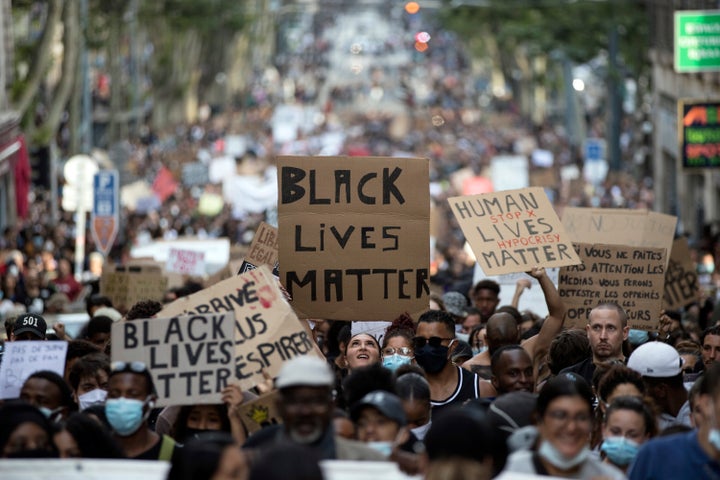
BERLIN (AP) — Thousands of people took to the streets of Barcelona, Madrid and Rome on Sunday in support of the Black Lives Matter movement, which has drawn large protests against racism and police brutality around the world.
The rally in Rome’s sprawling People’s Square was noisy but peaceful, with the majority of protesters wearing masks to protect against coronavirus. Participants listened to speeches and held up handmade placards saying “Black Lives Matter†and “It’s a White Problem.â€
The rally came a day after largely peaceful anti-racism protests took place in cities from Australia to Europe to the U.S. in response to the May 25 death of American George Floyd.
Floyd, a black man, died after a white Minneapolis police officer pressed a knee on his neck even after he pleaded for air while lying handcuffed on the ground.
More demonstrations were being held Sunday across the U.K., including one outside the U.S. Embassy in London just south of the River Thames.
In Berlin, police said 93 people were detained in connection with a demonstration in the German capital on Saturday — most of them after the main rally of 15,000 had ended.
Police said several officers and one press photographer were injured in Berlin when bottles and rocks were thrown from a crowd that had gathered despite police orders to clear the city’s Alexander Square.
ASSOCIATED PRESS
A protester wears a face mask in front of the U.S. embassy, during the Black Lives Matter protest rally in London, Sunday, June 7, 2020. (AP Photo/Frank Augstein)
In Britain, the country’s most senior police chief said 14 officers were injured Saturday during clashes with protesters in central London that followed a largely peaceful Black Lives Matter demonstration attended by tens of thousands.
Cressida Dick, the Metropolitan Police Commissioner, said the assaults on officers were “shocking and completely unacceptable.†She said a number of arrests have been made and “justice will follow.â€
The clashes broke out in the early evening near the Downing Street office of British Prime Minister Boris Johnson.
Video footage online showed one police officer colliding with a traffic light when her horse appeared to have bolted. The Met Police said the officer was taken to the hospital and her injuries are not life-threatening.
In Frances’ southern port city of Marseille, police fired tear gas and pepper spray in skirmishes with protesters who hurled bottles and rocks after what had been an emotional yet peaceful demonstration.
The Marseille protest was one of several Saturday that attracted 23,000 people across France, where Floyd’s death has shone a spotlight on similar French police abuses and given voice to complaints from minorities that they are frequent targets of harassment and worse from French police.
ASSOCIATED PRESS
A protester looks up at a sign that reads “Black Lives Matter” in Marseille, southern France, Saturday, June 6, 2020, during a protest against the recent death of George Floyd. (AP Photo/Daniel Cole)
In Hong Kong, about 20 people staged a rally in solidarity with the Black Lives Matter movement on Sunday outside the U.S. consulate in the semi-autonomous Chinese city.
“It’s a global issue,†said Quinland Anderson, a 28-year-old British citizen living in Hong Kong. “We have to remind ourselves despite all we see going on in the U.S. and in the other parts of the world, black lives do indeed matter.â€
Organizers called off the Hong Kong rally late Saturday because of the city’s coronavirus restrictions. Those that still showed up gathered in groups of eight to follow size limits on public gatherings.
Among those at Sunday’s rally in Rome was 26-year-old Ghanaian Abdul Nassir, who is studying for a masters in business management at one of the Italian capital’s public universities.
“It’s quite unfortunate, you know, in this current 21st century that people of color are being treated as if they are lepers,’’ Nassir told The Associated Press. He said he occasionally has felt racist attitudes, most notably when riding the subway.
“Maybe you’re finding a place to stand, and people just keep moving (away) and you’ll be, like, ‘What?’†Nassir said: “We’re strong people but sometimes everyone has a limit.â€
Rome’s first major rally against racism had many organizers, including a 25-year-old Roman student, Denise Berhane, a group called Black Italians, a women’s group, the environmental group Fridays for Future Rome, a U.S. expatriates’ organization and the Sardines, a grassroots Italian protest group that encourages civic involvement.
Asked by broadcaster SKYTG24 whether Italy has a racism problem, Berhane replied: “There are some problems in the country if all these people turned out.â€
The gathering was useful, she said, to help people develop awareness of the problem.
At one point, the protesters, most of them young and some with children or siblings, took the knee and raised a fist in solidarity with those fighting racism and police brutality.
Pylas reported from London and D’Emilio from Rome. Joseph Wilson in Barcelona, Spain, Katie Tam in Hong Kong, John Leicester in Paris and Daniel Cole in Marseille, France, contributed to this report.
Don Fehr didn’t attend to his college graduation.
The shootings at Kent State — where Ohio National Guard troops opened fire on students peacefully protesting the Vietnam War — happened about a week before he was scheduled to receive his degree from Indiana University in the spring of 1970.
“I’m a child of the ’60s,†said Fehr, the executive director of the NHL Players’ Association. “I am a child of the civil rights movement. I am a child of the Vietnam War protests.â€
The current demonstrations across the United States and around the world against police brutality following the death of George Floyd, a black man who died after a white Minneapolis officer put a knee on his throat for nearly nine minutes, echo those turbulent times.
“These are issues which have always been important and fundamental and around which you need to make progress,†Fehr continued in a recent interview with The Canadian Press. “The hope is that in one fashion or another, the current state of events will result in that kind of progress, and meaningful progress being made.â€
Historically not ones to speak up on any issue — let alone racism or social justice — a number of NHL players have added their voices to the call for change.
More than 100 have posted to social media about the protests, including Evander Kane and P.K. Subban, who are black, and some of the game’s other big names, like Connor McDavid, Sidney Crosby and Alex Ovechkin, who are white. Some, like Blake Wheeler and Braden Holtby, have conducted heart-felt interviews, while Zdeno Chara and Tyler Seguin joined peaceful marches.
Fehr, who turns 72 next month, said it’s up to individuals to decide what to post, share or contribute. But he’s encouraged by what he’s seen.
“I’m really proud of the guys,†he said. “They understand it’s an important moment. They understand what the issues are, at least in the grand scope. And they’re making their voice heard. Not everybody, but quite a lot.
“And that’s to their credit.â€
With the crucial caveat that the NHL resuming its season ranks far down the list of issues in a world first brought to a halt by the devastating COVID-19 pandemic and now gripped by mass protests demanding change, Fehr remains cautiously optimistic the league will be able to complete the 2019-20 campaign.
The NHL is set to begin Phase 2 of its overarching return-to-play protocol Monday when team facilities will be allowed to open and players can skate and work out in small, voluntary groups — while observing a laundry list of strict health and safety guidelines.
The league and NHLPA, who also need to agree on a new collective bargaining agreement or an extension to the current deal before September 2022, hope to then open training camps sometime after July 10, which would be Phase 3, before resuming the season with Phase 4 later that month or in early August.
The NHL has unveiled a 24-team format that would likely see the Stanley Cup awarded in the fall, but everything from testing to safety to where the games will be played still has to be negotiated.
“There’s a lot of work to do,†Fehr said. “The Phase 3 and 4 protocols, like Phase 2, are detail-intensive, but they also involve more people in the same area more frequently, so you have to pay a lot more attention.
“We both have public health doctors and in our own doctors on staff, and they’re gonna tell us when we go astray.â€
Fehr said his members, who remain mostly scattered across North America and Europe since the season was paused March 12, have plenty of questions.
“They want to make sure they understand what the plan is and why it is that way,†he said. “They want assurance that not only have the maximum efforts been made to keep them safe, but they don’t want to inadvertently take something back to their families.
“And they want to make sure they have enough time to get back, to train, to get ready so that when the game starts, leading to the eventual awarding of the Cup, that there’ll be real games that will be as intense as you would like.â€
NHL commissioner Gary Bettman has described the relationship between the league and players during the pandemic as “collaborative†on more than one occasion, but Fehr prefers not to use that adjective.
“What I can say is this: we’re faced with a common problem, which arose entirely outside the ordinary labour-management relationship, and we can’t resolve this by ourselves,†he said. “There are things we don’t know, and there are things we can’t know about the future.â€
The main unknown being whether or not government and health officials will even allow hockey to resume this summer under the NHL’s plan to host teams in two as-yet-unnamed hub cities without fans.
“There is … a common recognition we’re dealing with something entirely out of the ordinary, and we’ve got to figure out a way to deal with it,†Fehr said. “It’s not something we caused. It’s not something that the NHL caused. It’s not something which began as a fight over economics or likely will end there, although the adverse economic consequences of the pandemic are clearly going to have to be addressed.â€
And those could be massive.
“If we can’t complete this season, there’s going to be a big revenue hit,†Fehr said. “It would not be good at all, but the health and safety of everybody concerned … is priority one, two, and three, and everything else follows that.
“Whatever it turns out to be — a potential loss this year, a potential loss next year, if for some reason we can’t play before full arenas — we just have to deal with it.
WASHINGTON — The Trump administration has lauded itself as leading the world in confronting the coronavirus. But it has so far failed to spend more than 75 percent of the American humanitarian aid that Congress provided three months ago to help overseas victims of the virus.
In twospending bills in March, lawmakers approved $1.59 billion in pandemic assistance to be sent abroad through the State Department and the United States Agency for International Development.
As of last week, $386 million had been released to nations in need, according to a government official familiar with the spending totals that the State Department has reported to Congress for both agencies. That money was delivered through private relief groups and large multinational organizations, including United Nations agencies, that provide health and economic stability funding and humanitarian assistance around the globe.
Of that, only a meager $11.5 million in international disaster aid had been delivered to private relief groups, even though those funds are specifically meant to be rushed to distress zones.
The totals reflected spending on the global coronavirus response as of June 3 by the State Department and the American aid agency and were shared with The New York Times on the condition of anonymity because the figures were intended to be private.
Relief workers said they were alarmed and bewildered as to why the vast majority of the money was sitting unspent.
“Little to no humanitarian assistance has reached those on the front lines of this crisis in the world’s most fragile context,†executives at 27 relief organizations wrote to the aid agency’s acting administrator, John Barsa, in a letter dated Thursday.
“In spite of months of promising conversations with U.S.A.I.D. field staff, few organizations have received an executed award for Covid-19 humanitarian assistance,†the letter stated.
Most of the money is provided through the U.S. aid agency. A spokeswoman, Pooja Jhunjhunwala, said on Friday that the total amount made available so far to relief groups was $595 million, including $175 million in international disaster aid. But that included projected reimbursements for money that would be provided later — not funding that had already been delivered. The aid agency declined to disclose how much money had been delivered as opposed to promised.
Ms. Jhunjhunwala also described a rigorous review before releasing the funding to make sure it would be properly spent.
“We want to ensure that we are accountable for the effective use of Covid funds and are good stewards of U.S. taxpayers’ dollars,†she said in a statement.
Secretary of State Mike Pompeo has for months praised American generosity in helping the rest of the world respond to the coronavirus.
“America remains the world’s leading light of humanitarian goodness as well amidst this global pandemic,†he said in April. In May, Mr. Pompeo said, “The State Department is very focused on saving lives†in curbing the coronavirus. And on Thursday night, he said, “We have truly mobilized as a nation to combat the virus, both at home and abroad.â€
Collectively, the aid agency and the State Department have committed more than $1 billion in pandemic assistance to more than 100 countries since April. But the vast majority of that has yet to go out the door, tied up in what people with knowledge of the funding described as a complex grant process that had been slowed by micromanagement and delayed decisions.
More than $500 million in additional funding — the balance of what Congress approved — has yet to even be committed to a humanitarian need, meaning it is likely to be months more before it is released.
“The funding pipeline is there — it’s ready to go,†said Bill O’Keefe, an executive vice president for Catholic Relief Services, one of the nongovernmental organizations that is delivering the humanitarian aid to needy nations. “But it is taking too long to turn on the tap.â€
His organization has received about $10 million so far to help front-line coronavirus responders in the West Bank, Italy and Haiti. But he said the aid was being released “demonstrably slower†than in past global health crises, such as the Ebola outbreak in 2014 and 2015.
“We’re trying to get ahead of this situation; our goal is to get the prevention going early,†Mr. O’Keefe said. “Because the fewer cases there are, before things develop, the fewer people are going to suffer and die.â€
The money provided by the State Department and the U.S. aid agency largely is to pay for messaging campaigns to educate people on how to protect themselves from the virus, to provide water and sanitation services like hand-washing stations, and to offer health services to refugees, migrants and other homeless people. Some of the funds have been spent on infection prevention and control.
Updated June 5, 2020
How many people have lost their jobs due to coronavirus in the U.S.?
The unemployment rate fell to 13.3 percent in May, the Labor Department said on June 5, an unexpected improvement in the nation’s job market as hiring rebounded faster than economists expected. Economists had forecast the unemployment rate to increase to as much as 20 percent, after it hit 14.7 percent in April, which was the highest since the government began keeping official statistics after World War II. But the unemployment rate dipped instead, with employers adding 2.5 million jobs, after more than 20 million jobs were lost in April.
Will protests set off a second viral wave of coronavirus?
Mass protests against police brutality that have brought thousands of people onto the streets in cities across America are raising the specter of new coronavirus outbreaks, prompting political leaders, physicians and public health experts to warn that the crowds could cause a surge in cases. While many political leaders affirmed the right of protesters to express themselves, they urged the demonstrators to wear face masks and maintain social distancing, both to protect themselves and to prevent further community spread of the virus. Some infectious disease experts were reassured by the fact that the protests were held outdoors, saying the open air settings could mitigate the risk of transmission.
How do we start exercising again without hurting ourselves after months of lockdown?
Exercise researchers and physicians have some blunt advice for those of us aiming to return to regular exercise now: Start slowly and then rev up your workouts, also slowly. American adults tended to be about 12 percent less active after the stay-at-home mandates began in March than they were in January. But there are steps you can take to ease your way back into regular exercise safely. First, “start at no more than 50 percent of the exercise you were doing before Covid,†says Dr. Monica Rho, the chief of musculoskeletal medicine at the Shirley Ryan AbilityLab in Chicago. Thread in some preparatory squats, too, she advises. “When you haven’t been exercising, you lose muscle mass.†Expect some muscle twinges after these preliminary, post-lockdown sessions, especially a day or two later. But sudden or increasing pain during exercise is a clarion call to stop and return home.
My state is reopening. Is it safe to go out?
States are reopening bit by bit. This means that more public spaces are available for use and more and more businesses are being allowed to open again. The federal government is largely leaving the decision up to states, and some state leaders are leaving the decision up to local authorities. Even if you aren’t being told to stay at home, it’s still a good idea to limit trips outside and your interaction with other people.
What’s the risk of catching coronavirus from a surface?
Touching contaminated objects and then infecting ourselves with the germs is not typically how the virus spreads. But it can happen. A number of studies of flu, rhinovirus, coronavirus and other microbes have shown that respiratory illnesses, including the new coronavirus, can spread by touching contaminated surfaces, particularly in places like day care centers, offices and hospitals. But a long chain of events has to happen for the disease to spread that way. The best way to protect yourself from coronavirus — whether it’s surface transmission or close human contact — is still social distancing, washing your hands, not touching your face and wearing masks.
What are the symptoms of coronavirus?
Common symptoms include fever, a dry cough, fatigue and difficulty breathing or shortness of breath. Some of these symptoms overlap with those of the flu, making detection difficult, but runny noses and stuffy sinuses are less common. The C.D.C. has also added chills, muscle pain, sore throat, headache and a new loss of the sense of taste or smell as symptoms to look out for. Most people fall ill five to seven days after exposure, but symptoms may appear in as few as two days or as many as 14 days.
How can I protect myself while flying?
If air travel is unavoidable, there are some steps you can take to protect yourself. Most important: Wash your hands often, and stop touching your face. If possible, choose a window seat. A study from Emory University found that during flu season, the safest place to sit on a plane is by a window, as people sitting in window seats had less contact with potentially sick people. Disinfect hard surfaces. When you get to your seat and your hands are clean, use disinfecting wipes to clean the hard surfaces at your seat like the head and arm rest, the seatbelt buckle, the remote, screen, seat back pocket and the tray table. If the seat is hard and nonporous or leather or pleather, you can wipe that down, too. (Using wipes on upholstered seats could lead to a wet seat and spreading of germs rather than killing them.)
Should I wear a mask?
The C.D.C. has recommended that all Americans wear cloth masks if they go out in public. This is a shift in federal guidance reflecting new concerns that the coronavirus is being spread by infected people who have no symptoms. Until now, the C.D.C., like the W.H.O., has advised that ordinary people don’t need to wear masks unless they are sick and coughing. Part of the reason was to preserve medical-grade masks for health care workers who desperately need them at a time when they are in continuously short supply. Masks don’t replace hand washing and social distancing.
What should I do if I feel sick?
If you’ve been exposed to the coronavirus or think you have, and have a fever or symptoms like a cough or difficulty breathing, call a doctor. They should give you advice on whether you should be tested, how to get tested, and how to seek medical treatment without potentially infecting or exposing others.
Part of the delay in delivering the funds has been blamed on what officials in the Trump administration and in Congress described as an unresolved debate over whether the money can also be used to buy masks, gowns and other personal protective equipment for health workers who are treating coronavirus patients abroad.
Since April, the White House has been weighing whether to ban funding for protective medical gear overseas while the equipment is needed by health providers in the United States. Last month, the U.S. aid agency told some relief groups it could not use the money for personal protective equipment until the White House issued its policy.
Mr. Barsa has for weeks told relief groups that a decision is expected imminently, but until then, the ban applies to new aid contracts on a limited basis.
Nazanin Ash, a former senior official at both the U.S. aid agency and the State Department, said it had generally taken 30 to 45 days for humanitarian assistance funding to be delivered to relief organizations during the Ebola outbreak across West Africa and parts of Europe.
“Now it’s stretching to three to four months for funds to reach front-line responders, for a pandemic orders of magnitude greater that Ebola and for which prevention is the essential approach,†said Ms. Ash, who is currently a vice president at the International Rescue Committee.
The delay also comes as government officials and relief groups are trying to predict how much more money will be needed to confront the virus in the months and years to come, especially in poor and unstable nations that depend on American support.
Officials are considering projections of $5 billion to $12 billion for future global coronavirus response efforts that the United States funds. Congressional officials and relief workers voiced concern that vast amounts of additional resources would not be approved if the money that had already been appropriated continued to sit unspent.
Ms. Ash worked as a top staff member for foreign assistance at the U.S. aid agency under President George W. Bush, and later as a deputy assistant secretary of state under President Barack Obama. She said the agency had long been recognized as among the world’s most effective disaster aid responders, no matter its political leadership.
“Their absence on Covid response is a gaping hole,†she said.
Last month, the Guardian published an interview with Paul Garner, a professor of infectious diseases, about his experience of Covid-19. The piece was shared widely and viewed nearly 1m times. Readers got in touch to say they too were suffering from lingering and often strange Covid-19 symptoms.
There is evidence that the official NHS description of the virus’s symptoms – cough, fever, loss of taste/smell – is too narrow. Those who do not need acute hospital treatment and who are isolating at home report a far broader range of problems. Often these go on for longer than 14 days. An online survey of 151 medical professionals who fell ill in March found 68 are still unable to work. A further 26 went back, only to stop again when symptoms returned.
It appears coronavirus may be a chronic condition. How long it persists for is unknown. The symptoms can be serious and wide-ranging, affecting the lungs, heart, brain, kidneys, stomach and nervous system. Headaches, shortness of breath, sore throat and feeling exhausted are common. So is recovery followed by frequent relapses. Here are the stories of four women who are struggling to return to normal life.
Iulia Hammond, 39, junior doctor in Manchester “I went down with Covid on 19 March. I had a fever, chills and a very mild dry cough. I took to bed, feeling like I couldn’t do much of anything. After three or four days I had really severe respiratory symptoms. It felt as if there were shards of glass in my lungs. It was the most horrendous thing I have ever experienced. I was absolutely terrified.
“For the past 10 weeks I have been sleeping sitting upright in bed. It’s the only way I’m able to breathe. I developed pharyngitis and at one point I thought they were going to have to intubate me. I made two trips to A&E and had tests. I chatted to my GP who says patients look OK and yet feel the worse they have ever felt. It’s such a horrible virus. It seems quite different in each person. There’s not a standard progression.
“I’ve had a slew of symptoms. I got the worst headache I have ever had, like an electric cord over my temples and the back of my head. I get an odd crawling sensation on the left side of the face, including when I brush my hair. I’ve had abdominal issues and stomach pain and sensory things like pins and needles in my arms and legs. The illness comes around in two-week cycles. This has happened four times.
“Every day I am still short of breath.In week six I got a left-sided stabbing chest pain. I now have an abnormal heart rate. This is something you can get with viruses and I’m hoping it will go. You wonder why is this happening? As a physician I have been reading articles. We are learning about coronavirus in real time. The virus is completely novel, akin to HIV/Aids in the 1980s.
“I’m now on day 74 and not at work. Essentially I go bed, kitchen, sofa. There are weeks when I feel I have ridden the wave, and others where I’m back in the wave. I would like to get back to normal life sooner rather than later. It feels very endless.â€
Dr Tracy Briggs, 42, clinical academic and geneticist at the University of Manchester “I got symptoms on 13 March. We had been in London on holiday for half-term and rode the tube and went to museums. I felt short of breath. My chest was tight and my heart was racing. I have very mild asthma and I thought maybe it was an attack. It was strange. The inhaler didn’t work and after a few hours I went to A&E. I was told to go home and isolate.
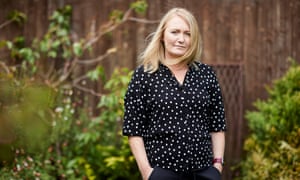
Tracy Briggs, at home in Chorlton, south Manchester, still struggles with symptoms 84 days after first contracting Covid-19. Photograph: Christopher Thomond/The Guardian
“I wasn’t able to get out of bed or eat. I felt absolutely rough, sweaty, with a horrible sore throat and struggling to breathe. After 10 days I started to do a little bit more. I went for a walk with the family and pottered around the house. Then I seemed to step back and struggle again. Climbing one flight of stairs would send my heart racing. I would cough and be short of breath.
“It has been such a rollercoaster. You start to question yourself and your own sanity. You wonder what tomorrow is going to be. It’s quite tough. My 12-year-old son had no appetite for three weeks, a sore throat and vomiting. My husband had a sore throat for a week and a mild chicken pox-like rash. My stepson had covid symptoms and was coughing, but not as badly as me.â€
“My tongue and the back of the throat are red, white and inflamed. I’ve lost quite a lot of weight. I find myself choking on food and short of breath when I eat. I’ve been taking Gaviscon and today started on a course of proton pump inhibitors. I’ve had a feeling of burning in my sternum and my throat.â€
“I felt hot and sweaty but didn’t have a documented high temperature. I think there is a need to recognise that the clinical symptoms are much wider than cough and fever. This isn’t necessarily something which lasts seven or 14 days. Absolutely acute patients are the priority. But we need to be aware that for a number of people, even those who don’t need to go to hospital, it’s going on for a long period. We need support.â€
Jo Platt, 46, former Labour MP for Leith “I lost my seat in the December election. I wasn’t going to work or down to London. The only thing I can think of is I picked up the virus while shopping. The first symptoms began on 24 March. It was like flicking a light switch. I was at my computer and felt I was going to faint. I had nausea, dizziness and a burning temperature. Then the fatigue set in. I couldn’t move and went to bed for two days.
“I recovered and thought I had something really mild. For two more days I was shaky. The next day I really went down with it. I had shortness of breath, an unproductive cough. It felt like something was in my chest. I had a horrific headache. I could not get out of bed for a full week. By the Easter weekend I thought I was out of it. But that Monday the symptoms returned. I called my GP. They were very nice, but said you haven’t got the usual symptoms and should rest.
“The gastro thing is really worrying me. I lost a stone in weight and could not eat. My blood tests were normal apart from a vitamin D deficiency. I couldn’t get a test. It’s been a bit of a rollercoaster. The government says if you haven’t got a cough or temperature or loss of taste it’s not Covid. That’s not true. My GP now says they’ve had numerous cases similar to mine.
Former Labour MP Jo Platt, who lost her seat at the 2019 general election, is slowly recovering from Covid-19 but still experiencing various symptoms. Photograph: Christopher Thomond/The Guardian
“This is week 10. I get back pain, like an inflammation. It’s not as severe as it’s been. I have a really strange sensation in my legs, as if I’ve been hill walking. I wake up with sore joints in my fingers. I’ve had gastrointestinal issues and acid reflux. Seeing food on TV makes me feel nauseous. This is manageable. For me the scary thing is the shortness of breath. We still don’t know how long this goes on for and that’s the frightening bit.
“We need a bottom-up approach. There are a lot of voices out there and we are not being listened to. More and more people are joining [‘long haul’ covid] Facebook support groups. We have got a lot to say and want to get the message out to GPs and public health directors.â€
Ginevra Read, 42, psychiatrist, Bristol
“It started on 16 March. I had a slight cough and a terrible headache. The next morning my temperature was 38.3C. A week later, I was feeling worse and developed shortness of breath but it passed after a day or so. After another week I felt completely well. I went out for a short jog and felt fine. Normally I run 25km a week, swim and do yoga. But then later that week, after another short run, I was hit by extreme fatigue lasting four days. This happened another three to four times, after much less exertion.
“Around week seven there was a big deterioration. It was my son’s birthday and I was busy, making him a cake, and we went on a short family bike ride too. A few days later, it all came back but much worse. I had lots of symptoms, including tingling on the right side of my body, and a sensation of heat on my left foot, as well as shortness of breath, chest pain and fevers. People talk about internal shaking. I had that and a feeling like my stomach was vibrating, deeply unpleasant and as if I was being poisoned.
“It was very frightening to feel so unwell. Going into week nine I was exhausted. Staying in bed really helped with fatigue but in week 11, I still have low grade fevers, chills, malaise and odd neurological symptoms. I am resting a lot but my improvements have plateaued.
“We don’t know what is causing prolonged Covid. Is it the ongoing initial illness, or is it an inflammatory reaction or is it a post-viral syndrome? We don’t know what the prognosis is or what the long-term consequences are. I wonder how many people are having prolonged illness and what the impact is on the workforce, for example. It’s scary to have an illness for which there isn’t any treatment and that doesn’t seem to be going away.â€
RICHMOND, Va. (AP) — A small group of demonstrators toppled a statue of a Confederate general in the former capital of the Confederacy late Saturday, following a day of largely peaceful protests in the Virginia city.
The statue of Gen. Williams Carter Wickham was pulled from its pedestal in Monroe Park, a Richmond police spokeswoman said. She said she did not know if there were any arrests or damage done to the statue.
A rope had been tied around the Confederate statue, which has stood since 1891, The Richmond Times-Dispatch reported, adding that someone urinated on the statue after it was pulled down. Photos and video from the newspaper showed what appeared to be red paint splashed or sprayed on the statue.
In 2017, some of Wickham’s descendants urged the city to remove the statue.
ASSOCIATED PRESS
The statue of Confederate Gen. Williams Carter Wickham lies on the ground after protesters pulled it down Saturday in Richmond, Va. The statue had stood in the park since 1891.
Confederate monuments are a major flashpoint in Virginia and elsewhere in the South. Confederate memorials began coming down after a white supremacist killed nine black people at a Bible study in a church in South Carolina in 2015 and then again after the deadly white nationalist rally in Charlottesville, Virginia, in 2017.
Last week, Gov. Ralph Northam announced that a state-owned statue of former Confederate Gen. Robert E. Lee would be removed from its perch on the famed Monument Avenue “as soon as possible.â€
The Lee statue is one of five Confederate monuments along Monument Avenue, a prestigious residential street and National Historic Landmark district. Monuments along the avenue have been rallying points during protests in recent days over Floyd’s death, and they have been tagged with graffiti, including messages that say “End police brutality†and “Stop white supremacy.â€
Richmond Mayor Levar Stoney last week announced plans to seek the removal of the other Confederate monuments along Monument Avenue, which include statues of Confederate President Jefferson Davis and Confederate Gens. Stonewall Jackson and J.E.B. Stuart. Those statues sit on city land, unlike the Lee statue, which is on state property.
Stoney said he would introduce an ordinance July 1 to have the statues removed. That’s when a new law goes into effect, which was signed earlier this year by Northam, that undoes an existing state law protecting Confederate monuments and instead lets local governments decide their fate.
Wickham’s statue stood in Monroe Park, about a mile away from the Lee statue and surrounded by the Virginia Commonwealth University campus.
Calling all HuffPost superfans!
Sign up for membership to become a founding member and help shape HuffPost’s next chapter
“Parliament should be having a say in the way in which stimulus is rolled out,” Mr Marles said on the ABC’s Insiders program. “This provides help, and so that’s good.”
Loading
Asked if Labor would oppose it, Mr Marles said: “It’s not a matter of opposing and supporting it. It’s a matter of improving.”
Government sources said there was no need to take the package to Parliament because it could be put in place through other means including the Council of Australian Governments Reform Fund Act 2008.
Assistant Treasurer and Housing Minister Michael Sukkar is talking to state counterparts about the wording of national partnership agreements to oversee the HomeBuilder scheme.
“The Commonwealth is working with state and territory governments on the implementation of HomeBuilder grants through national partnership agreements to make the delivery of the program as seamless as possible,” said a spokesman for the minister.
Loading
“The agreements will be designed to complement existing state and territory First Home Owner Grant programs, stamp duty concessions and other grant schemes, with similar integrity measures.”
Master Builders Australia chief Denita Wawn called over the weekend for faster work by banks and governments to make sure people could raise money and gain approval for renovations and new homes.
The scheme offers a $25,000 grant to projects on the condition the renovation costs more than $150,000 or the new home costs less than $750,000 including land.
Critics say the conditions are too strict for widespread adoption, given the shortage of house and land packages worth less than $750,000 in the major cities.
The St Vincent de Paul Society called for more spending on social housing, while the Urban Taskforce said the scheme appeared to be aimed at winning votes in Queanbeyan before the Eden-Monaro byelection on July 4.
The Urban Development Institute of Australia called for the $750,000 cap to be lifted because average lot prices were $469,000 in metropolitan Sydney and the typical cost of building a home ranged from $350,000 to $400,000.
The scheme also has a means test that excludes individuals with incomes above $125,000 and couples with combined incomes over $200,000 last financial year.
Finance Minister Mathias Cormann urged people to apply for the scheme as soon as possible and defended the rules that restricted its use.
“If the means test was not there, more people would be able to access the scheme and the scheme would be significantly more expensive,” he said on Sky News.
“We have made a judgment about what is appropriate in the circumstances. We believe that about 27,000 projects will be supported through this, over the next six months or so.
“We are not proposing to extend it beyond the initial six-month and a couple of weeks’ period. This is a program that is in place until the end of December.”
David Crowe is chief political correspondent for The Sydney Morning Herald and The Age.
We use cookies on our website to give you the most relevant experience by remembering your preferences and repeat visits. By clicking “Accept”, you consent to the use of ALL the cookies.
This website uses cookies to improve your experience while you navigate through the website. Out of these, the cookies that are categorized as necessary are stored on your browser as they are essential for the working of basic functionalities of the website. We also use third-party cookies that help us analyze and understand how you use this website. These cookies will be stored in your browser only with your consent. You also have the option to opt-out of these cookies. But opting out of some of these cookies may affect your browsing experience.
Necessary cookies are absolutely essential for the website to function properly. These cookies ensure basic functionalities and security features of the website, anonymously.
Cookie
Duration
Description
cookielawinfo-checbox-analytics
11 months
This cookie is set by GDPR Cookie Consent plugin. The cookie is used to store the user consent for the cookies in the category "Analytics".
cookielawinfo-checbox-functional
11 months
The cookie is set by GDPR cookie consent to record the user consent for the cookies in the category "Functional".
cookielawinfo-checbox-others
11 months
This cookie is set by GDPR Cookie Consent plugin. The cookie is used to store the user consent for the cookies in the category "Other.
cookielawinfo-checkbox-necessary
11 months
This cookie is set by GDPR Cookie Consent plugin. The cookies is used to store the user consent for the cookies in the category "Necessary".
cookielawinfo-checkbox-performance
11 months
This cookie is set by GDPR Cookie Consent plugin. The cookie is used to store the user consent for the cookies in the category "Performance".
viewed_cookie_policy
11 months
The cookie is set by the GDPR Cookie Consent plugin and is used to store whether or not user has consented to the use of cookies. It does not store any personal data.
Functional cookies help to perform certain functionalities like sharing the content of the website on social media platforms, collect feedbacks, and other third-party features.
Performance cookies are used to understand and analyze the key performance indexes of the website which helps in delivering a better user experience for the visitors.
Analytical cookies are used to understand how visitors interact with the website. These cookies help provide information on metrics the number of visitors, bounce rate, traffic source, etc.
Advertisement cookies are used to provide visitors with relevant ads and marketing campaigns. These cookies track visitors across websites and collect information to provide customized ads.