Friday, April 17, 2026

COVID-19 Pandemic ‘Greatest Threat to Cambodia’s Development’: World Bank

0

Concerns over the spread of coronavirus have severely damaged Cambodia’s economy, with the country’s important tourism, export, and construction sectors especially hard hit, the World Bank said in a new report on Friday.

These three sectors together account for more than 70 percent of Cambodia’s economic growth and about 40 percent of its paid employment, the World Bank said in its latest economic update for the Southeast Asian nation, Cambodia in the Time of COVID-19.

“As a result, [Cambodia’s] economy is expected to register its slowest growth since 1994, contracting by between -1 percent and -2.9 percent,” the World Bank said, adding that poverty among affected households could increase between 3 to 11 percentage points higher than in the years before the virus spread.

At least 1.76 million jobs in Cambodia are now at risk, according to the report.

“The global shock triggered by the COVID-19 pandemic has significantly impacted Cambodia’s economy,” Inguna Dobraja, Cambodia Country Manager for the World Bank said, urging that policies be quickly put in place in Cambodia to provide economic relief and protect public health.

“The World Bank is committed to helping Cambodia deal effectively with the COVID-19 crisis and strengthen the economy for recovery and future resilience,” Dobraja said.

Cambodian Ministry of Economy spokesman Meas Soksensan said that the easing of the COVID-19 pandemic will restore normalcy to the economy, but that the government is also taking measures of its own.

“It is up to the government measures that we are implementing now through 2021 and 2022,” he said.

“We will then find any possibility to see if we can inject more cash [into the economy], and if we don’t have enough resources we will look into debt,” Soksensan said, adding that he thinks Cambodia’s debt levels are manageable.

To date, 124 cases of coronavirus infection have been confirmed in Cambodia.

Reported by RFA’s Khmer Service. Written in English by Richard Finney.


Source link

Professor Karim explains why it’s difficult to stop the spread of COVID-19

Professor Salim Abdool Karim explained that without natural immunity or a vaccine, most of the population may be at risk of contracting COVID-19, which would lead to increasing the number of patients who may need hospital care.

Vital to flatten the curve as soon as possible

Several factors are in play, including the rapid infection rate of the novel coronavirus, super spreading and repeated infections waves. The infection rate only slowed down once lockdown measures were implemented.

Flattening the curve as early as possible is vital as we’ve seen from the United Kingdom’s caseload that it’s difficult to curb the spread of the disease in advanced epidemics.

In addition, curbing the spread of the disease also leads to slower community transmission and provides time for health care facilities to prepare, increase capacity and equip facilities and personnel.

Why not just eradicate the virus?

“Why talk about flattening the curve, why not talk about eradicating or eliminating the virus? Why don’t we aim for a situation to just get rid of the virus?”

Professor Karim explained that it’s extremely difficult to eliminate a virus altogether. Here’s why:

Pre-symptomatic infectiousness

Karim explains that even before a person becomes ill with COVID-19, they are already infectious – for several days – before they begin to display symptoms themselves.

They could be spreading the virus to the people they interact with, in a range of different situations, without being aware of it.

Asymptomatic infectiousness

In addition, some people may be carriers of the virus without falling ill themselves. In fact, they may never even beware that they’ve contracted COVID-19, but could still infect others.

A recent study in China showed that transmissibility of the asymptomatic cases among close contacts is comparable to that of symptomatic cases.

Rapid spread

COVID-19 also spreads much more rapidly than other infections, such as the common flu.

“Before we can even catch up or try to find the cases, the virus has already spread. We know that each infected person can infect up to two others”.

Superspreaders

In addition to the above, COVID-19 is also associated “with superspreading events”. Professor Karim explains that a patient in South Korea infected a large portion of her community.

A 61-year-old woman from Daegu tested positive for COVID-19 in February. It seemed like a standard case; however, it was revealed through contact tracing that Patient 31 attended two worship services.

She exposed more than 1 000 people. The rate of infection in the area doubled within 24 hours. By the end of the week, it had increased 30-fold. Kim Chang-yup, a professor for health policy at Seoul Nation said at the time:

“What made this case so much worse was that this person spent a considerable amount of time in a very crowded area. There’s growing fear and resentment among the people right now.”

Repeated waves

Lastly, we are in the first wave of the virus. Even when the initial spread is controlled, the risk of repeated waves and outbreaks of new epidemic waves remain. Singapore is one such example.

“It is very difficult for us to simply eliminate the virus. We have chosen the alternative, which is to flatten the curve”.

Professor Karim


Source link

Can Saudi Arabia fix Yemen’s anti-Houthi coalition?

May 29, 2020

President of Yemen’s Southern Transitional Council (STC) Aidarous al-Zubaidi arrived in Riyadh May 19 to address the latest apparent impasse with the government of exiled President Abed Rabbo Mansour Hadi.

The STC initially said the trip was scheduled to last three days. On May 26, an STC official told Al-Monitor the talks had reached day eight.

The visit is the STC’s first since last year’s Riyadh agreement broke down, with each side blaming the other. Earlier this month, government forces launched attacks against STC positions outside Zinjibar in Abyan province, just 60 kilometers (37 miles) from the de facto capital Aden.

The fighting came after the STC declared administrative autonomy in Yemen’s south in April, likely a grasp at domestic legitimacy rather than a stroke at genuine secession. But the move has only served to renew the conflict between the ostensible allies, further distracting from their shared fight against Yemen’s Houthi rebels in the north.

With war-weary Saudi Arabia eyeing a delicate exit to the war and the United Arab Emirates likely to remain deferential to Riyadh’s coalition leadership, observers are left wondering how the Saudis will be able to patch up the broken coalition yet again.

The supposed partners have fought numerous times during the current civil war, which has now entered its sixth year and has been dubbed by the United Nations the world’s worst humanitarian crisis.

The recent fighting underscores that the STC’s deeper grievances will not soon be remedied by another quick fix in Riyadh. “From the moment the Riyadh agreement was signed, it was clear that implementation of the deal was going to be problematic,” said Hannah Porter, a Yemen analyst at DT Global, an international development firm based in Washington.

“The details were vague. This allowed each side to come away from the agreement with two very different ideas of what implementation would look like,” Porter told Al-Monitor.

The deal also stipulated security arrangements be carried out on an impossibly short timeline, and did not specify in what sequence certain obligations were to be implemented.

Both sides nominally agreed in November that the STC should give up its heavy weapons and integrate into the Yemeni government’s forces. But the STC has refused to hand over its weapons until it reaches a political settlement for inclusion in the government. The government insists the STC give up its weapons first.

Though the November agreement affirmed the STC’s place at the table in future UN-led peace talks, the Houthi’s apparent rejection of a coronavirus cease-fire in April has brought the wider war no closer to the finish line.

Experts say the situation has left the STC with two options if it wants to secure its future in Yemen: It can seize control of the country’s south — which it has so far failed to do — or continue to vie for a seat at UN-led peace talks through a political agreement with Hadi.

“The STC is not just going to dissolve the Riyadh agreement, because they would lose their chance at participating in peace talks,” said Elana DeLozier, a research fellow at the Washington Institute for Near East Policy.

“That’s why they likely will not give up their weapons unless a deal to include them in the government is faithfully implemented with Hadi,” DeLozier told Al-Monitor by phone. Although the Saudis can bring the Yemeni president to the table, there is no indication they can force him to compromise, she has argued.

At least publicly, Hadi remains defiant. The recent offensive in Abyan was aimed directly at the STC’s already limited leverage in the south. And with an unclear role in Yemen’s future, observers say Hadi’s intentions are not always easy to discern.

For all the challenges, Crown Prince Mohammed bin Salman appears to have few other options. Saudi Arabia cannot simply exit the war unilaterally without risking further Houthi consolidation, potentially leaving the Iran-linked Zaidi Shiite rebels in control of a state armed with ballistic missiles on Saudi’s southern border. Meanwhile, the Houthis stand to benefit from each subsequent day of coalition infighting.

Furthermore, if the STC is left out of future UN-led talks between the Hadi government and the Houthis, it could potentially act as a spoiler to a peace settlement, DeLozier said.

No matter how the current meetings in Riyadh turn out, some of the STC’s grievances against Hadi’s government will almost certainly endure.

What is often described as Yemen’s “war within a war” has deep roots in South Yemen’s civil war in 1986. The bad blood between Hadi and the STC is personal, congealed when the southerner president — then North Yemen’s defense minister — led the war effort against the independent south in 1994. The STC accuses the government of neglect, corruption and mismanagement to this day.

“On the one hand, you have a set of completely legitimate grievances on the part of southerners who want to reinstate their own independent country,” Porter said. “On the other hand, there is no realistic plan in place for South Yemen or South Arabia to be its own country. Regional and international players would need to buy into this idea of secession, and I don’t see that happening.”

Gerald Feierstein, former US ambassador to Yemen and fellow at the Middle East Institute in Washington, said he believes southern Yemen’s deeper grievances cannot be adequately addressed until the broader war with the Houthis ends.

“The first order of business is to stabilize the economy and get everyone back to the negotiating table,” Feierstein told Al-Monitor by phone. “That’s going to take some time. You need to settle the big war first.”

“Until that happens,” he said, “there won’t be any kind of economic stabilization or post-conflict reconstruction.”

“Yemeni history is replete with negotiations and agreements, none of which have ever actually been implemented because the parties never had the intention of following through on commitments,” Feierstein concluded. “Therefore, you are constantly reinventing the wheel.”


Source link

Bioethicist: ‘Immunity Passports’ Could Do More Harm Than Good

A woman’s blood is collected for testing of coronavirus antibodies at a drive-through testing site in Hempstead, N.Y., to determine whether she may have some immunity to the virus.

Seth Wenig/AP


hide caption

toggle caption

Seth Wenig/AP

A woman’s blood is collected for testing of coronavirus antibodies at a drive-through testing site in Hempstead, N.Y., to determine whether she may have some immunity to the virus.

Seth Wenig/AP

“Immunity passports” have been proposed as one way to reboot economies in the wake of the coronavirus pandemic.

The theory is this: The approval of the so-called passports would rely on the positive results from an antibody test of your collected blood sample. If you have antibodies to the coronavirus after recovering from an infection, you might be immune from future infection and therefore could be authorized to work and circulate in society without posing a risk to yourself or others.

At least, that’s the idea.

But it “could create a lot more harm than it does good,” says Natalie Kofler, who teaches bioethics at Harvard Medical School.

As she argues in a recent essay for the journal Nature, Kofler says a system that hinges on a blood test could cut off already marginalized populations from access to critical public resources, wherein “an immunoprivileged sort of status or an immunodeprived status” would dictate “where and what they can go do.”

In any case, she says, scientists aren’t certain that it’s even possible to achieve immunity from the coronavirus and how long that immunity would last.

“I am really concerned that too much attention time and funding is being given to a policy that’s likely to firstly, not work, and also create more risks than it does benefits,” Kofler says in an interview with NPR’s All Things Considered.

Here are excerpts from the interview:

Who is interested in using “immunity passports”?

Governments including the U.K., the United States — as well as Chile has actually already begun to roll out a version of an immunity passport.

Private companies are also interested, particularly in partnering with certain app developers to create applications that would allow for people on their phones to validate and show their immunity status, in which case could allow private companies, like certain hotels and even sporting events, to control who can enter their premises.

Another issue that you raise is equity — that the poor will simply not have as much access to these immunity passports. Explain what you mean.

Those that are already marginalized by society — the poor, minority groups — they end up being often last in line for access to these precious resources. So we have a lot of concern about who would actually be able to have their immunity status validated. You could have people that just aren’t able to access society because they can’t even be able to certify their immune status.

If immunity passports aren’t the answer, what is then?

I really think that attention needs to be given right now to really developing a vaccine is effective but also that is going to be universally available. And I also do support maybe thinking about ways that we can protect particularly vulnerable locations and spaces.

It may be that, for example, to enter certain nursing homes or [long-term care] facilities to enter certain penitentiaries where there’s high density — people who are [at] higher risk of COVID-19 — that we might have health check status there. We may want to check for presence of virus in people who entering and exiting.

But not on the individual level where everybody is gonna either have an immunoprivileged sort of status or an immunodeprived status to be able to depend on where and what they can go do. I think that that could create a lot more harm than it does good.

Listen to the full interview at the audio link above.

Source link

Little fear, lots of love as Madrid medics do home rounds amid pandemic – Firstpost

0

By Susana Vera

MADRID (Reuters) – With air kisses and palms clasped, elderly patients in Madrid greet medics who come to check them at home during the coronavirus pandemic despite the risks involved.

“I don’t know if it’s right to say it but I’ve had little fear,” primary care nurse Ana Arenal told Reuters after she and a doctor did the rounds in a taxi with plentiful gear to protect both themselves and their patients.

The people they attend are usually virus-free and require regular injections, blood pressure or other checks. The medics wear masks, visors and gloves in most cases, but have full protective equipment for some patients with symptoms.

“In order to avoid the risk to patients (from going out), we’ve done a lot of daily home visits. We saw a lot of gratitude in them,” added Arenal alongside doctor Carlos Balsalobre Sanchez as they visited middle-class apartments often adorned with figures of Catholic saints.

“If we don’t take care of ourselves, we won’t be able to take care of them. That’s one of the things they say a lot,” said Balsalobre Sanchez, with an old-school leather doctor’s bag.

But it is not all kisses and gratitude for the home care crews. Many have painful memories from the epidemic that has killed more than 27,000 Spaniards.

“Seeing in our diaries the little red dot next to a name … that during the pandemic meant the death of our patients, has been quite hard,” recalled Arenal.

Balsalobre Sanchez’s most poignant moment was seeing an elderly couple embrace for the last time before the wife was taken to a hospital, where she later died.

Another nurse, Maria Jesus Santamaria, who has been doing phone check-ups and visits, recalled an elderly woman saying “goodbye” by phone and asking her to take care of her husband.

“Many people have overcome the illness, thank God, but you take that with you,” Santamaria said.

But her 75-year-old patient Manuel Sanz Calderon said, after taking his injections, the nurse never shows anything but cheeriness: “She is loving, kind and I can’t say more about her.”

Santamaria blushes when medics like her are lauded.

“Heroes have been all of us, those who have stayed at home, us doing our job,” she said.

(Aditional reporting by Guillermo Martinez and Paola Luelmo, Writing by Andrei Khalip; Editing by Andrew Cawthorne)

This story has not been edited by Firstpost staff and is generated by auto-feed.


Source link

Restaurant Owner Shows Solidarity With Protesters: ‘Let My Building Burn’

A restaurant owner in Minneapolis whose building was damaged during protests has added his voice to the chorus of activists seeking justice after police killed a Black man in their custody by kneeling on his neck until he became unresponsive. 

Gandhi Mahal, an Indian and Bangladeshi restaurant located about a block from the Minneapolis Third Police Precinct, was one of several businesses damaged by fire during protests over the killing of George Floyd, who died Monday.

Gandhi Mahal’s owner, Ruhel Islam, declared his solidarity with the protesters, his daughter Hafsa wrote in a Facebook post about the damage to the restaurant. 

“Let my building burn,” Hafsa wrote, quoting her dad. “Justice needs to be served, put those officers in jail.”

“Gandhi Mahal May have felt the flames last night, but our [fiery] drive to help protect and stand with our community will never die!” Hafsa wrote in the post.

Islam told BuzzFeed that he was heartbroken by the damage, but that he understood the protesters’ anger.

“Life is more valuable than anything else,” Islam told the publication. “We can rebuild a building. But we cannot give this man back to his family.”

Demonstrations over Floyd’s death erupted nationwide after a video was released showing a white police officer kneeling on Floyd’s neck as Floyd pleaded with him and said he couldn’t breathe.

The officer, Derek Chauvin, was charged with third-degree murder and manslaughter on Friday. He and the three other police officers who were present during the incident have been fired from the police department.

Protesters torched the abandoned Minneapolis Third Precinct station on Thursday. Nearly every building in the shopping district around the station had been vandalized, burned or looted by Friday morning, according to The Associated Press.


A crowd watches a pawnshop burn to the ground on Thursday night. It was the third day of protests over the death of George Floyd in Minneapolis.

Islam, a Muslim and a Bangladeshi immigrant, opened Gandhi Mahal restaurant with his brother in 2008. The restaurant has been featured on the Food Network show “Diners, Drive-Ins, and Dives.” It is known locally for sustainable practices, which include growing its own produce in community gardens and creating an aquaponics system in its basement. 

Islam is active in Minnesota’s interfaith community. He’s on the board of Minnesota Interfaith Power & Light, a faith-based climate change advocacy group. He has also spoken up against the Line 3 project, a proposed pipeline that would travel across northern Minnesota to Superior, Wisconsin.

Last year, Gandhi Mahal hosted a “Unity Iftar” during Ramadan for people of diverse faiths.

Hafsa said Friday that she’s grateful for those who tried to protect the restaurant during the demonstrations on Thursday. 

“Don’t worry about us, we will rebuild and we will recover,” she wrote.


Source by [author_name]

Hire a D.J. and Turn the Music Up

A party for kids might require some advance planning on your part, as few D.J.s cater specifically to children. If you are making your own playlist, pick songs that you know children will like, including oldies they might know from their parents, or a Disney favorite. When in doubt, just play “Let It Go.”

The music quality will be the most important factor. It’s what makes a party tick. A D.J. can get a streaming device that pumps sound from the mixer directly into their phone. As a listener, if you have external speakers, connect your device and crank the sound up loud.

Any Bluetooth speaker, Mr. Mandelbaum said, “will do the trick. You don’t need anything special.”

Or wear your headphones. That’s what Genevieve Robles, a 34-year-old talent director who lives in Downtown Brooklyn, sometimes does. (If you have nosy neighbors or thin walls, that might be something you want to do, too.)

“It’s even funnier, probably as an onlooker, because I am dancing through my apartment,” she said. “Or I’ll sing at full volume, karaoke style, which is probably hilarious.”

If you’ve got wireless headphones, they might be better: you don’t want to get tangled.

In a bind, you can put your phone in a glass cup. The sound will still be kind of tinny, but at least it will be loud.

The more you can do to make the party feel like an occasion, the happier you will be.

Ms. Sabharwal, who is based in West New York, N.J., asks her fans to connect the stream to their televisions and turn off their life (you’ll need a Bluetooth-enabled TV or a HDMI cord). She has lights in her setup that flicker, which can help create a club environment.

Or, she said, “if you can invest in a $15 rinky-dink strobe light thingie from Amazon, go for it.”

Clothes: You don’t have to get dressed up, but you could. It might actually make it feel more real.

Source link

Trump says US ‘terminating relationship’ with WHO amid pandemic

US President Donald Trump has announced the United States will be terminating its relationship with the World Health Organization, saying it had failed to adequately respond to the coronavirus because China has “total control” over it.

He said the Chinese officials “ignored” their reporting obligations to the WHO and pressured the health organisation to mislead the world when the virus was first discovered.

More:

“Because they have failed to make the requested and greatly needed reforms, we will be today terminating our relationship with the World Health Organization,” Trump told reporters on Friday.

He said the US contributes about $450m to the WHO while China provides about $40m, adding that the US will be “redirecting those funds to other worldwide and deserving urgent global public health needs”.

“China’s cover-up of the Wuhan virus allowed the disease to spread all over the world,” Trump said.

Reform demands

On May 18, the US president sent WHO chief Tedros Adhanom Ghebreyesus a letter, listing what he said were examples of the WHO’s shortcomings in managing the pandemic, including ignoring early reports of the emergence of the virus.

He accused the United Nations body of caving in to Chinese pressure by declining to declare coronavirus a global health emergency in the initial days of the outbreak.

Trump went on to criticise the WHO for praising China’s “transparency”, despite reports that Beijing had punished several doctors in Wuhan, the epicentre of the outbreak, for speaking out about the viral infection in late December.

The US leader also threatened to halt funding from the body’s top donor altogether if it does not commit to reforms within 30 days.

The WHO bowed to calls from most of its member states to launch an independent probe into how it managed the international response to the pandemic.

The probe is expected to shed light on the origins of the virus and China’s early handling of the outbreak.

Global initiative

Earlier on Friday, the WHO and nearly three dozen countries led by Costa Rica launched a global initiative allowing for the sharing of data and scientific knowledge in the fight against COVID-19.

Costa Rica President Carlos Alvarado outlined a worldwide “technology repository” for vaccines, medicines and diagnostics, seeking to boost solidarity and urging more countries to join the COVID-19 Technology Access Pool.

The collective effort offers a platform to “share openly on a voluntary basis and in a collaborative way the data and the intellectual property that will be generated throughout the world in order to make this a public global good,” he said.

While the push by mostly developing nations won praise from groups including Doctors Without Borders (Medecins Sans Frontieres, or MSF), a drug industry alliance questioned whether the effort to pool intellectual property would really broaden access to medicines.

WHO Foundation

On Wednesday, Tedros announced the creation of the WHO Foundation, which will enable WHO to tap new sources of funding, including the general public.

The foundation is being created as an independent grant-making entity that will support the organisation’s efforts to address the most pressing global health challenges by raising new funds from “non-traditional sources”.

Tedros said the UN body’s annual budget of about $2.3bn was “very, very small” for a global agency, close to that of a medium-sized hospital in the developed world.

The WHO chief said the creation of the WHO Foundation had nothing to do with the “recent funding issues”.


SOURCE:
Al Jazeera and news agencies

Source link

QLD town sewage tested for coronavirus source

The testing could also reveal how many people in Blackwater may have been exposed or unknowingly have coronavirus if the traces are detected in the waste. 
CNN Reporter Omar Jimenez is led away in handcuffs. (CNN)
Authorities are continuing to investigate the mysterious case of Australia’s youngest coronavirus victim, who died aged 30 in the small mining town of Blackwater. (AAP)

The unnamed nurse has been suspended from her job after she continued to show up for work at a Rockhampton nursing home when she had coronavirus symptoms and while waiting on test results.

Questions are also being asked about a sightseeing road trip she took to Blackwater during the coronavirus lockdown after local man Nathan Turner died with the virus.

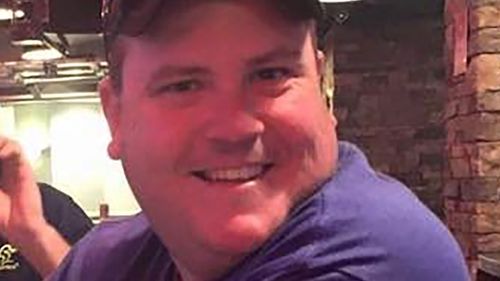
Mr Turner became Australia’s youngest coronavirus fatality on Tuesday with authorities no closer to pinpointing how he contracted the virus. 

Mr Turner suffered from chronic illnesses and was later found to have the virus. A coroner will determine what killed him.

Deputy Premier and Health Minister Steven Miles says a formal investigation would get to the bottom of critical questions, including the fact that the nurse had not revealed she had travelled to Kuala Lumpur in late March.

Investigators are working to “untangle” the changing story of a nurse at the centre of two coronavirus scares in Queensland to determine if she could be the source. (AAP)

“It appears to be incredibly unlikely that somebody wasn’t asked if they had travelled overseas when that is such a focus of our investigation efforts for all coronavirus cases,” he said yesterday.

He urged all Queenslanders to be honest, truthful and fulsome if they are contacted by health officials.

“Lives are literally at risk, our public health officials are doing their best to keep Queenslanders safe,” he said.

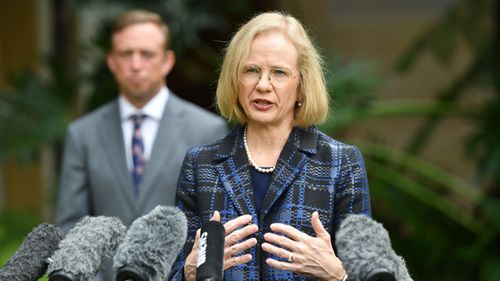
Chief Health Officer Jeannette Young said it was fortunate no one at the North Rockhampton Nursing Centre, where the nurse worked, had contracted coronavirus.

Residents who were moved out of the centre will slowly be returned.

Source by [author_name]