Friday, April 24, 2026

Scientists Develop Cellulose-Based Plastic Substitute

0

AsianScientist (Jun. 4, 2020) – Researchers at the University of Science and Technology of China have used cellulose, the most abundant organic molecule on Earth, to develop a strong and light plastic substitute. Their findings have been published in Science Advances.

While plastics are strong, lightweight and inexpensive, plastic waste poses an environmental risk. Broken down by waves, sunlight and marine animals, a single plastic bag can become 1.75 million microscopic fragments that end up in our bodies through the food chain and water supply.

To develop an alternative to plastics, a team led by Professor Yu Shu-Hong has turned to cellulose, the main material in the cell walls of plants. Cellulose nanofibers, which can be derived from plants or bacteria, are stronger than steel and more heat resistant than silica glass, making them in ideal nanoscale building block for constructing high-performance materials, Yu said.

Using the bacteria Gluconacetobacter xylinus, the team first produced cellulose hydrogels that they cut into sheets. After treatment, the sheets were stacked, pressed together and heated until they were completely dry, resulting in cellulose nanofiber plates. These cellulose nanofiber plates were four times stronger than steel and tougher than aluminum alloy, despite being only half its density.

Unlike plastics or other polymer-based materials, the cellulose nanofiber plates were extremely heat resistant, with a thermal expansion coefficient similar to that of ceramic materials. Furthermore, the plates retained their strength despite undergoing ten rapid thermal shocks where they were baked at 120°C and then immersed in -196°C liquid nitrogen.

The researchers reported that the plates could be produced for as little as US$0.50/kg, making them cheaper than—and thus likely to displace—most plastics. In particular, they suggested that the low density, toughness and thermal stability of the cellulose nanofiber plates makes it an attractive and environmentally-friendly engineering material particularly useful for aerospace applications.
The article can be found at: Guan et al. (2020) Lightweight, Tough, and Sustainable Cellulose Nanofiber-derived Bulk Structural Materials With Low Thermal Expansion Coefficient.

———

Source: University of Science and Technology of China; Photo: Shutterstock.
Disclaimer: This article does not necessarily reflect the views of AsianScientist or its staff.


Source link

3 Men With Right-Wing Extremist Ties Plotted To Terrorize Vegas Protests, Prosecutors Say

LAS VEGAS (AP) — Three Nevada men with ties to a loose movement of right-wing extremists advocating the overthrow of the U.S. government have been arrested on terrorism-related charges in what authorities say was a conspiracy to spark violence during recent protests in Las Vegas.

Federal prosecutors say the three white men with U.S. military experience are accused of conspiring to carry out a plan that began in April in conjunction with protests to reopen businesses closed because of the coronavirus.

More recently, they sought to capitalize on protests over the death of George Floyd, a black man who died in Minneapolis after a white officer pressed his knee into his neck for several minutes even after he stopped moving and pleading for air, prosecutors said.

The three men were arrested Saturday on the way to a protest in downtown Las Vegas after filling gas cans at a parking lot and making Molotov cocktails in glass bottles, according to a copy of the criminal complaint obtained by The Associated Press.

“People have a right to peacefully protest. These men are agitators and instigators. Their point was to hijack the protests into violence,” Nicholas Trutanich, U.S. attorney in Nevada, told AP. He referred to what he called “real and legitimate outrage” over Floyd’s death.

The complaint filed in U.S. District Court in Las Vegas on Wednesday said they self-identified as part of the “boogaloo” movement, which U.S. prosecutors said in the document is “a term used by extremists to signify coming civil war and/or fall of civilization.”

Stephen T. Parshall, 35, Andrew T. Lynam Jr., 23, and William L. Loomis, 40, were being held on $1 million bond each in the Clark County jail Wednesday, according to court records. Lynam is from suburban Henderson and the others are from Las Vegas.

The complaint said Lynam is an Army reservist, with Parshall formerly enlisted in the Navy and Loomis formerly enlisted in the Air Force.

Each currently faces two federal charges — conspiracy to damage and destroy by fire and explosive, and possession of unregistered firearms. In state court, they’ve been accused of felony conspiracy, terrorism and explosives possession. Trutanich said they’ll be prosecuted in both jurisdictions.

“This type of planning and intent on causing mayhem is terroristic and will not be tolerated,” said Steve Wolfson, the district attorney in Las Vegas.

Attorney Monti Levy, representing Loomis, declined to comment about the state case and did not immediately respond to a question about whether she’ll represent Loomis in federal court.

A deputy public defender representing Parshall declined to comment and an attorney appointed to represent Lynam did not immediately respond to messages.

A confidential informant met Lynam and Parshall at an early April rally in Las Vegas calling for the reopening of the state’s economy, the federal complaint said. The men were carrying firearms and Lynam said the group “was not for joking around and that it was for people who wanted to violently overthrow the United States government,” according to the complaint.

The informant said that during a May 27 meeting, Parshall and Loomis “discussed causing an incident to incite chaos and possibly a riot, in response to the death of a suspect,” a reference to Floyd.

Loomis stated he wanted to firebomb a power substation, according to the informant in the criminal complaint.

But on May 28, Lynam instructed the group to observe the riots occurring nationwide and use that momentum as a driving force to possibly take action against a fee station at Lake Mead on federal land north of the Hoover Dam, on May 30. Other targets discussed included a U.S. Forest Service ranger station, the complaint said.

The informant stated that Parshall and Loomis’ “idea behind the explosion was to hopefully create civil unrest and rioting throughout Las Vegas.”

They wanted to use the momentum from riots occurring nationwide because of Floyd’s death “to hopefully stir enough confusion and excitement, that others see the explosions and police presence and begin to riot in the streets out of anger,” the complaint said.

On May 28-29, FBI agents observed Parshall buy fireworks at a tribal travel plaza, and he indicated to the informant that he had glass bottles, rags and gasoline Molotov cocktails, the complaint said.

On May 30, all three and the informant agreed to take part in the Black Lives Matter protest in downtown Las Vegas, the complaint said.

The charges come as intelligence officials are warning that “violent opportunists” have been emboldened nationwide by attacks on law enforcement officials amid protests.

In a Tuesday internal intelligence assessment, U.S. Department of Homeland Security officials warned “this could lead to an increase in potentially lethal engagements with law enforcement officials as violent opportunists increasingly infiltrate ongoing protest activity.”

AP obtained a copy of the document, which cites the shooting of a Las Vegas police officer during protests, and two other officers shooting a heavily armed man at a nearby federal courthouse.

“Law enforcement officers continue to be the primary targets of firearm attacks, though several incidents last night involved violent opportunists shooting into crowds of protesters,” the assessment states.

The anti-government “boogaloo” movement is a loose network of gun enthusiasts who often express support for overthrowing the U.S. government. Its name, a reference to a 1984 movie sequel called “Breakin’ 2: Electric Boogaloo,” is a code word for a second civil war.

The movement is rooted in online meme culture, but the coronavirus pandemic has become a catalyst for real-world activity. Many “boogaloo” followers have shown up at COVID-19 lockdown protests armed with rifles and wearing tactical vests over Hawaiian shirts and leis, a nod to the “big luau” derivation of the movement’s name.

While some “boogaloo” promoters insist they aren’t genuinely advocating for violence, law-enforcement officials say they have foiled bombing and shooting plots by people who have connections to the movement or at least used its terminology.

This story has been corrected to accurately spell the name of Monti Levy.

Associated Press writers Ken Ritter in Las Vegas, Jake Bleiberg in Dallas and Michael Kunzelman in Silver Spring, Maryland, contributed to this report. Sonner reported from Reno.


Source by [author_name]

Has the UK just canceled summer by imposing a 14-day quarantine?

0

(CNN) — Across Europe, beaches are getting ready for their first socially distanced foreign visitors, hotels are airing out rooms and restaurants are laying alfresco tables. With borders now open, the travel industry is trying to salvage as much of the peak tourist season as possible.

Right now, almost everyone’s invited, but despite the alluring prospect of blue Mediterranean seas and bluer skies, one country isn’t coming — and people are getting very angry about it.

For the UK, it seems, summer vacations could still be canceled.

Even as it appears to be emerging from one of the continent’s worst coronavirus outbreaks, the country has decided to suddenly slam its borders shut by imposing a 14-day quarantine that critics say will torpedo the last shreds of hope for its travel industry.

Unless the rules change soon, millions of Britons who’d hoped to ease their post-lockdown blues with an escape to warmer climes will likely have to scrap their plans unless they want to endure enforced isolation on their return or risk a £1,000 fine — about $1,250.

And for the UK’s tourism industry, any prospect of soaking up some much needed foreign tourist dollars is vanishing fast. Britain has many charms, but two weeks’ incarceration inside the same room is not why people visit this sceptered isle.

If that wasn’t enough to stoke frustrations, it seems that far from being stringently enforced, the new regulations will only be lightly policed after they come into effect on June 8, with spot checks that may actually miss the virus carriers they’re designed to keep sequestered.

That stands in contrast to much more stringent measures in Australia, New Zealand and Hong Kong, imposed much earlier in the pandemic.

There are claims that visitors or returnees may be able to make use of a “Dublin dodge,” since arrivals from the Republic of Ireland will be exempt from the quarantine. In theory they could travel from anywhere and transit via the UK’s near neighbor.

‘Blunt economic tool’

Greece is opening its beaches and is welcoming foreign visitors.

Byron Smith/Getty Images

And the rules have come far too late for some, with questions asked about why Britain’s borders remained wide open during the height of its virus outbreak and are only now being restricted as the country eases up on social restrictions.

“There’s no doubt that quarantine should have been imposed at the start of the pandemic, in early March, because that’s when it would have been most effective,” says Paul Charles, founder and CEO of The PC Agency, which represents tourism boards including Ireland, New Zealand and Finland in the UK, as well as major brands and operators.

“If you look at countries that have successfully overcome coronavirus, like New Zealand and Vietnam, they have something in common. They put quarantine in place right at the start. That was WHO advice. But our government never did that. So we can’t understand why they’re doing it now when the cases of Covid-19 are falling and also when there is now a test and trace system in place… they are using a blunt economic tool to try and keep cases low.”

There are some exceptions to the quarantine rules. Truck drivers, Covid-19 frontline healthcare workers and elite athletes coming for bio-secure soccer or cricket matches or F1’s British Grand Prix in late July will all be exempt.

Everyone else will be required to fill out a form prior to arrival, on pain of a £100 fine, providing the government with an address for where they plan to isolate for two weeks.

While the £1,000 fines will be imposed on those who breach the conditions in the UK, only a fifth of travelers are expected to get spot checks. The Metropolitan Police force, which covers London, has said it doesn’t have the time to enforce it.

Some conditions of the quarantine have further fueled questions over its likely effectiveness. Arriving travelers will be able to go to their destination on public transport and leave their accommodation to shop for essentials. In Hong Kong, arrivals are given a prison-style wristband and told not to leave their government-mandated hotel room for two weeks.

‘Right move, wrong time’

Restaurants are opening again in France, where border restrictions to other EU countries have been lifted.

Restaurants are opening again in France, where border restrictions to other EU countries have been lifted.

BERTRAND GUAY/AFP via Getty Images

So why now? The UK government says quarantine is being introduced in June precisely because other countries are opening up and it says that means a higher risk of new cases of coronavirus arriving from abroad.

“Travelers from overseas could become a high proportion of the overall number of infections in the UK, and therefore increase the spread of the disease,” the UK’s Home Secretary, Priti Patel, told parliament on Wednesday.

Her announcement drew condemnation both from members of her ruling Conservative Party and the main opposition Labour Party. Lawmaker Liam Fox, a former Conservative trade minister, described it as “unnecessary economic isolation” that would stifle post-virus recovery.

“If such a barrier was required, why was it not introduced earlier in the outbreak?” he added. Fellow Conservative member of parliament Steve Brine called it “the right move at the wrong time.”

It’s a view echoed by George Morgan-Grenville, CEO of tour operator Red Savannah. “By pursuing its quarantine plans without due regard for the economic consequences, the government is choosing to ignore the devastation it will cause to companies, to employment and to the lives of all those whose jobs will be lost,” he says.

“I think it’s too late,” agrees Brian Young, managing director of G Adventures, which offers small group tours around the globe. “The impact on this whole sector knocks customer confidence. It takes time to get things going. If the quarantine goes on beyond the end of June, the summer season will be lost completely. Places like Greece are very dependent on tourism and can’t afford to lose their whole summer.”

Patel defended her government’s measures against questions about why the quarantine wasn’t brought in earlier to prevent the tens of thousands of people who continued to enter the country when Covid-19 infections were soaring.

“Some have suggested that public health measures should have been introduced when the virus was at its peak. However, at that time the scientific advice was clear that such measures would have made little difference when domestic transmission was widespread,” she told parliament.

The government’s argument for implementing quarantine now has been met with disbelief from the wider travel industry.

Some 300 companies, including luxury brands Black Tomato and Kuoni, as well as major players such as Travelbag and Netflights, have endorsed a letter sent to Patel demanding quarantine be scrapped before it’s implemented, saying it will devastate a sector already reeling from the outbreak.

A new survey of 124 UK travel and hospitality business owners and CEOs found that 60% expect to make staff redundant when the measures come into force. A total of 94% believe summer bookings will disappear if the quarantine is enforced. Meanwhile, 99% believe the policy will damage the economy. Tourism accounts for around four million jobs in the UK, 11% of the total workforce.

Germany’s foreign minister, Heiko Maas, has said that his country will advise against nonessential travel to the UK for as long as quarantine measures are in place.

‘Madness’

People arriving in the UK will be allowed to travel to their place of quarantine by public transport.

People arriving in the UK will be allowed to travel to their place of quarantine by public transport.

TOLGA AKMEN/AFP via Getty Images

Mirjam Peternek-McCartney, CEO of travel communications firm Lemongrass Marketing, puts things in stark terms. “Tour operators are suffering, carriers are suffering, hoteliers are suffering and UK cities that welcome international tourists, such as London and Oxford, will see many businesses which rely wholly on tourism go bust,” she warns.

Robin Sheppard, founder and chairman of Bespoke Hotels Group, the UK’s largest independent hotel group, says he’s baffled by the timing.

“Had it come in around March 23 I would have understood it, but to introduce it now, so imprecisely, seems very foolish,” he said. “I don’t disagree with the original sentiment, it’s just the wrong time. To have not listened to the public reaction to this and adjusted the plan is just madness.”

In another letter addressed to Patel and the UK’s foreign secretary Dominic Raab sent on June 1, Julia Lo Bue-Said, chief executive of The Advantage Travel Partnership, expressed concern that the government was viewing opposition to quarantine as simply being a concern of luxury operators.

Refuting this, and citing smaller companies’ fear of going out of business, she demanded an end to the quarantine plans. She also asked for changes to the current UK Foreign Office travel advice, which warns against all but essential travel, and the establishment of so-called air bridges.

A bridge too far?

The latter have become a hot topic, pushing the idea that routes to countries with low infection rates could be established, bypassing the need for quarantine. Some 94% of UK travel companies are said to favor the plan.

Portugal’s foreign minister has already said it will be happy to welcome UK tourists from late June under such plans, with Spain and Italy also said to be keen to extend a welcome to Brits desperate to get abroad this year, boosting their vital tourism sectors in the process.

“The government needs to talk down the word ‘quarantine’ and talk up air bridges and test and trace, which are the right things to do from a health point of view but also the right thing to help the economy recover,” says Paul Charles. “The very talk of quarantine measures is damaging bookings. Over the last three weeks they’ve collapsed. The industry is suffering from no sales in April, no sales in May and now the prospect of none in June. People are worried about being stuck on their return.”

In her statement to parliament, Patel said the option for air bridges was being actively explored and the quarantine measures would be reviewed after three weeks.

Sean Moriarty, CEO of the Quinta do Lago resort in Portugal’s Algarve region said that establishing such corridors of free movement would help, but may not be enough.

“Even with air bridges in place, we are aware that travelers are understandably going to be more cautious about going on holiday,” he said. “However, we are already witnessing a huge increase in bookings and inquiries for extended villa holidays at Quinta do Lago from July through to October, where guests will be working from home and using spare rooms for offices or studies.”

Will UK travelers be welcome?

CNN’s Atika Shubert reports on plans underway in Spain to ease foreign travel restrictions in an effort to welcome back tourists, despite concerns over Covid-19.

A question also remains as to whether destinations with unfettered travel links to the UK would be happy to welcome its citizens as visitors. The country’s death rate from Covid-19 is the second highest in the world after the United States, with a death toll of close to 40,000. Infection rates remain at around 1,500 new cases a day. Why would countries in Europe that have succeeded in suppressing the disease want to risk accepting UK visitors?

“There’s no doubt that some of our clients are cautious about welcoming British visitors too quickly,” says Paul Charles. “A measured approach is important. As the technology improves, case numbers decline and more confidence returns, many will realize that British visitors will be traveling from July. The key is to put the confidence back.”

That confidence does seem to be there, but the quarantine means businesses can’t see a way to appeal to UK visitors.

“We’ve been in touch with our local hosts all over the world frequently throughout this pandemic to get their thoughts and insights on the situation in their local communities,” says Sam Bruce, co-founder of Much Better Adventures, which teams up with guides and hotels to offer outdoor adventures in countries including Morocco, Costa Rica and Romania. “They understand the principle behind [quarantine], but are naturally very concerned about the damage to business and their local economies. Most remain keen to get back up to speed as quickly as possible and welcome adventurers back from the UK.

“Many of our destinations with much lower infection rates are preparing to open their borders, with well defined plans to manage the risk including strong testing capacity on arrival, yet will still be unable to attract UK customers back due to the quarantine they face on their return to the UK.”

Robin Sheppard reflects Bruce’s view, saying he doesn’t believe companies overseas are concerned about Brits traveling. “I don’t think they see us as a pariah or some kind of blight on the world,” he says. However, he adds that he doesn’t believe many from the UK will jet off this summer. “An awful lots of Brits have already resigned themselves to not having an international holiday this year,” he says.

Despite that, tourism boards are already offering inducements to try and entice Brits to book now for later in the summer, in a bid to drum up business.

“Even if we can’t immediately go everywhere, plenty of places are explicitly keen to welcome us back and some places — for example Sicily — are offering discounts and freebies to draw tourists back,” says Ant Clarke-Cowell, associate brand director at Holiday Extras. “Others, like Cyprus, are offering to cover the healthcare costs of any visitors who fall ill there.”

For Brian Young from G Adventures, the measures being put in place at UK airports, including temperature checks, and safeguarding by airlines who demand passengers wear face coverings, should assuage concerns from the suppliers he works with around the world.

“The necessary measures are being put in place to ensure customer welfare,” he says. “It’s time to start opening up and getting things moving.”

Whether Young gets his wish and whether UK travelers will be taking to the skies later this summer, however, remains to be seen.

Source link

Protesting? Here’s how to turn off location services on iOS and Android

0

Welcome to TNW Basics, a collection of tips, guides, and advice on how to easily get the most out of your gadgets, apps, and other stuff.

Following the murder of George Floyd by the US police, protests have erupted across America. While this is a legally protected right, Trump’s attempt to label Antifa as “domestic terrorists” and the police’s brutal responses suggests this isn’t a given. Which is why you need to protect yourself when protesting.

And, specifically, why you must turn off location services on your phone if you go out.

If you’re protesting against racial injustice and police brutality, you don’t want timestamped records of everywhere you’ve been. Or apps accessing your location — something the authorities have the potential to obtain later.

We’ve already put together this list of seven things to do to keep your personal information safe while protesting, so make sure you give that a read too.

Anyway, here’s a quick guide on how to turn off location services on iOS and Android.

How to turn off location services on iOS

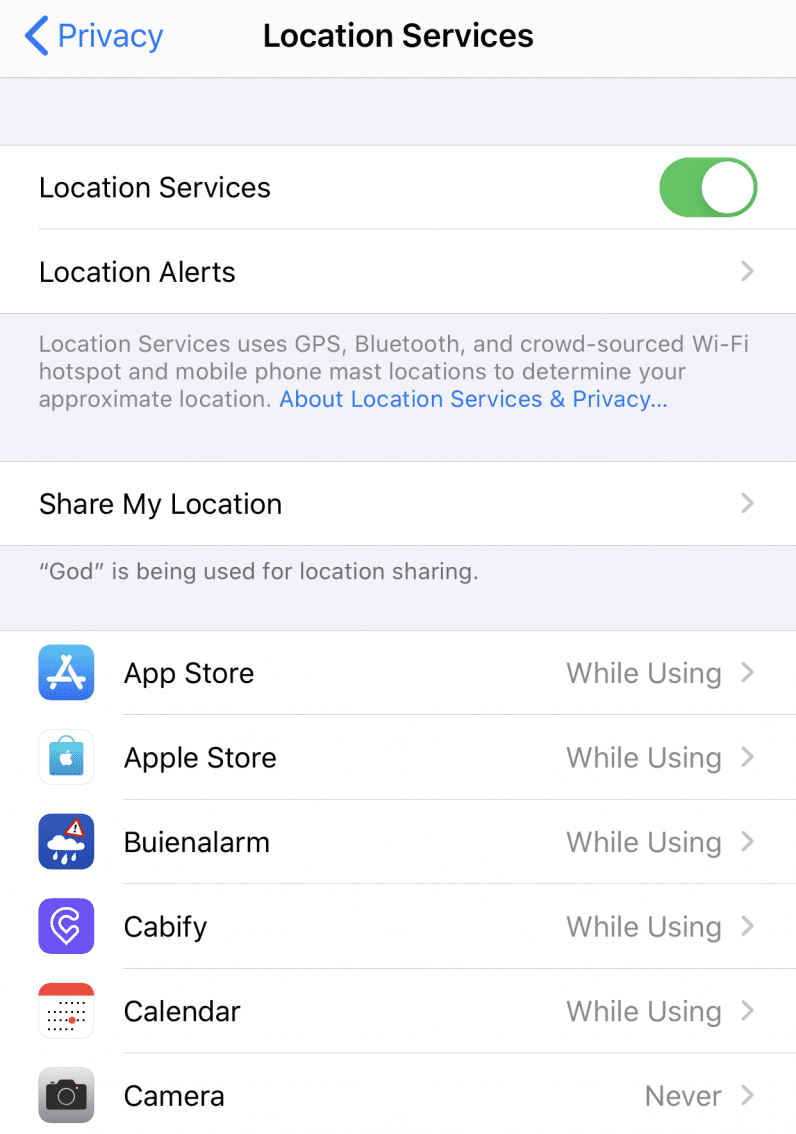
You want to go into ‘Settings.’ Then scroll down until you reach the ‘Privacy’ section.

Once you’re there, click on ‘Location Services’ at the top of the menu.

You’ll be taken to a screen that allows you to control and turn off location services on iOS. You can either change permissions for individual apps, or turn everything off with the slider at the top.

turn off location services ios

We’d recommend turning everything off before you leave the house for any protests.

How to turn off location services on Android

Before we begin, we need to say that turning off location services on Android is a bit trickier than iOS, mainly because there are a few more settings to go through. Also, we did this on a Google Pixel, and it’s very possible that your specific phone has some other tracking on it.

This guide will still work overall, but make sure you search how to turn off location services on your specific brand and model to ensure you’re as safe as possible.

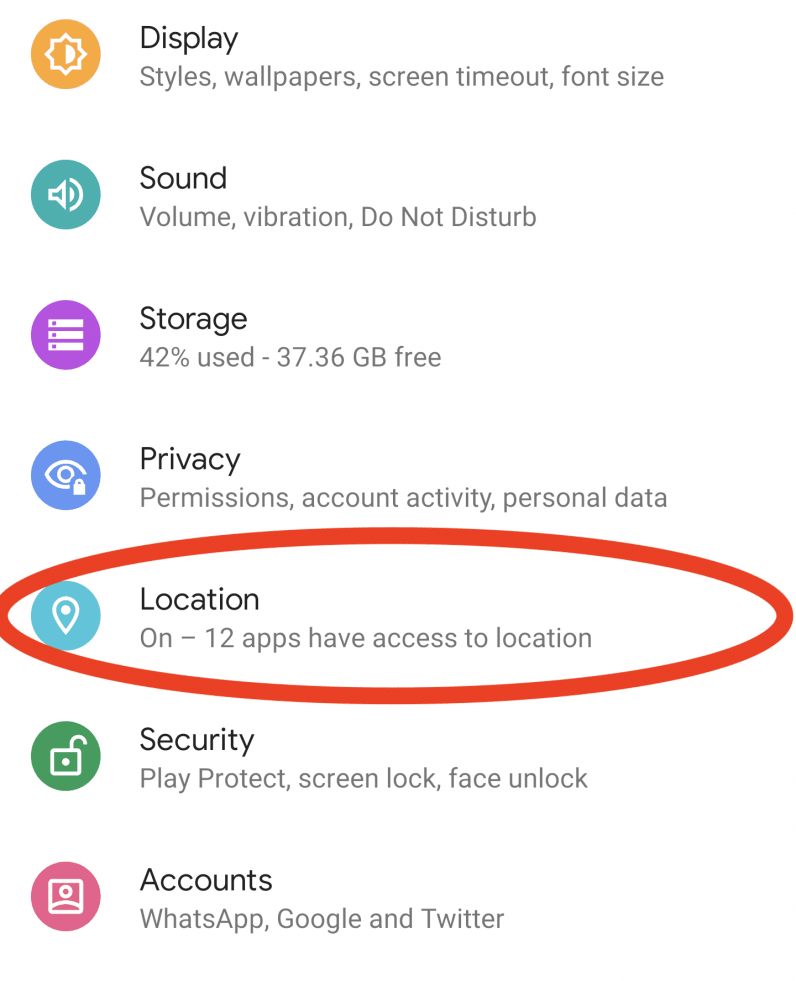
First things first, head into ‘Settings.’ Once you’re there, look for the ‘Location’ section.

location services android

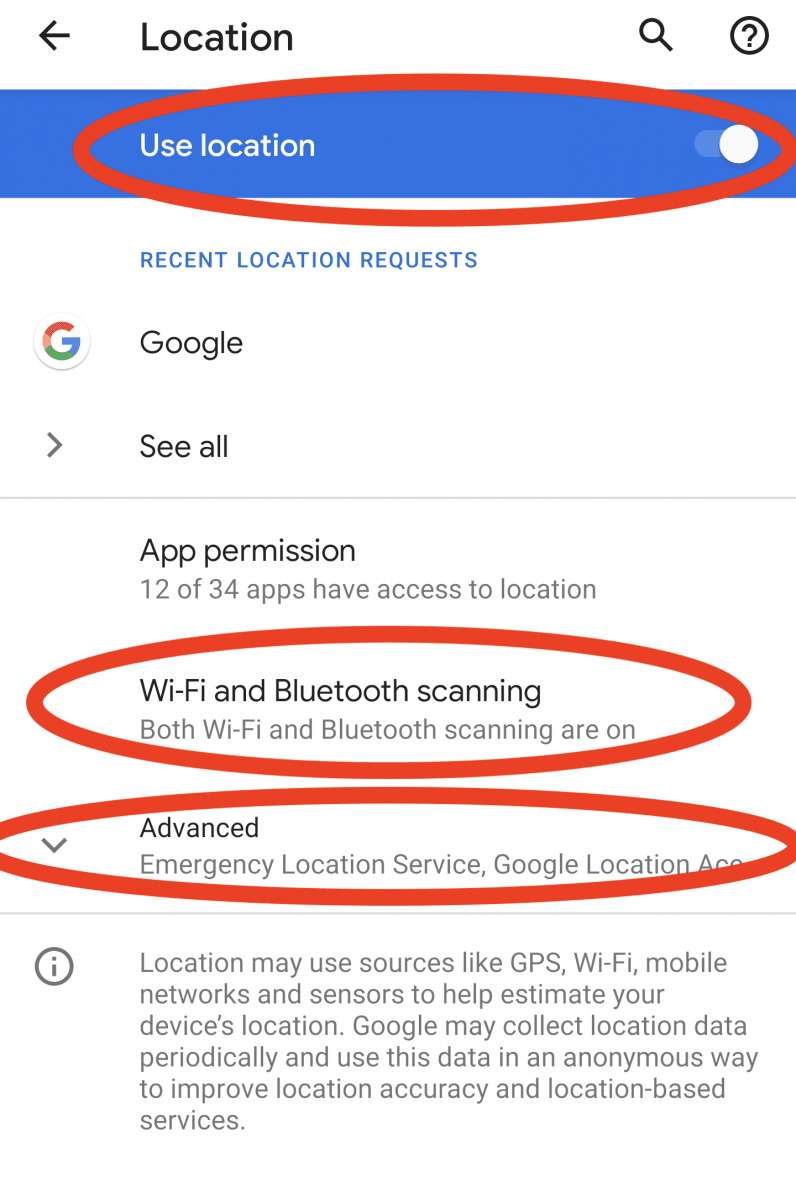
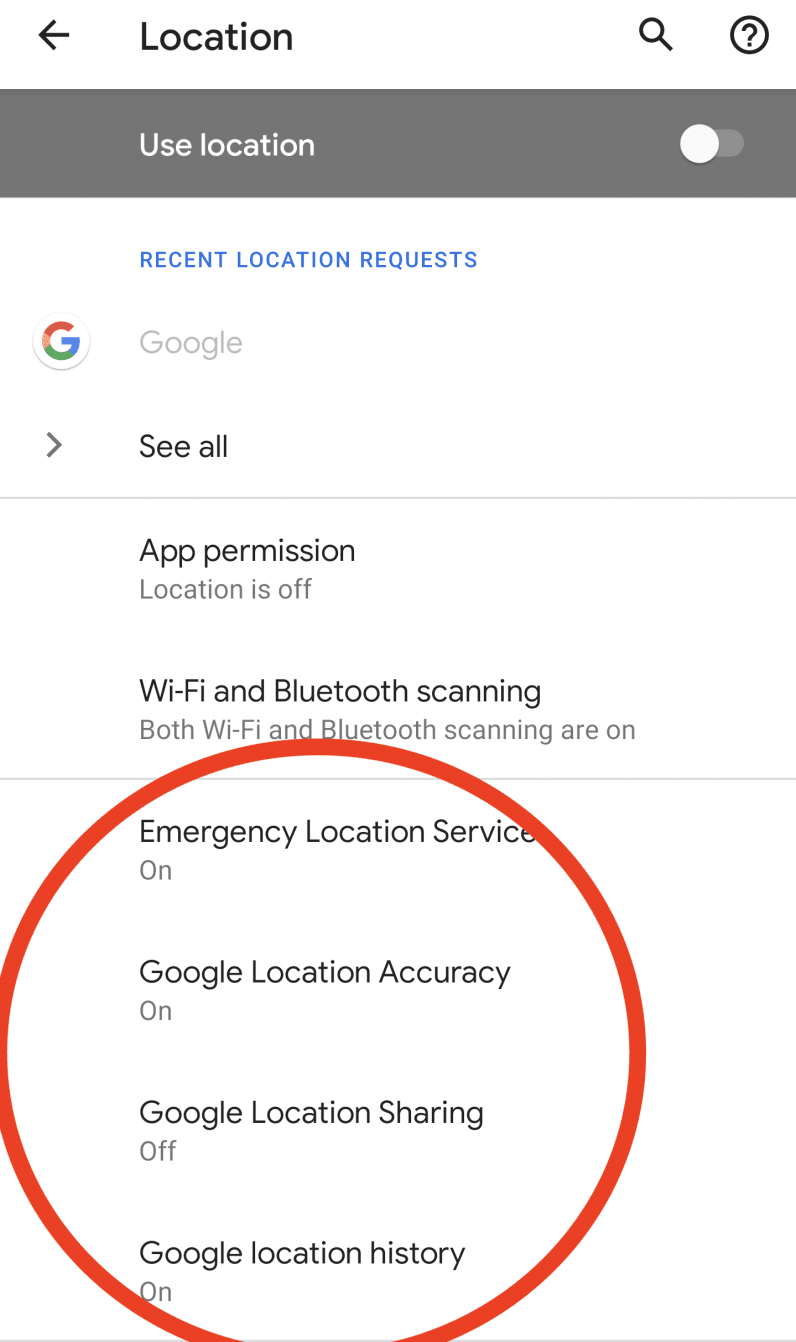
Once you’re in the ‘Location’ setting, there are three separate things you need to do. I’ve circled the sections here:

turn off location services android

The part at the top is easy: just turn the slider off.

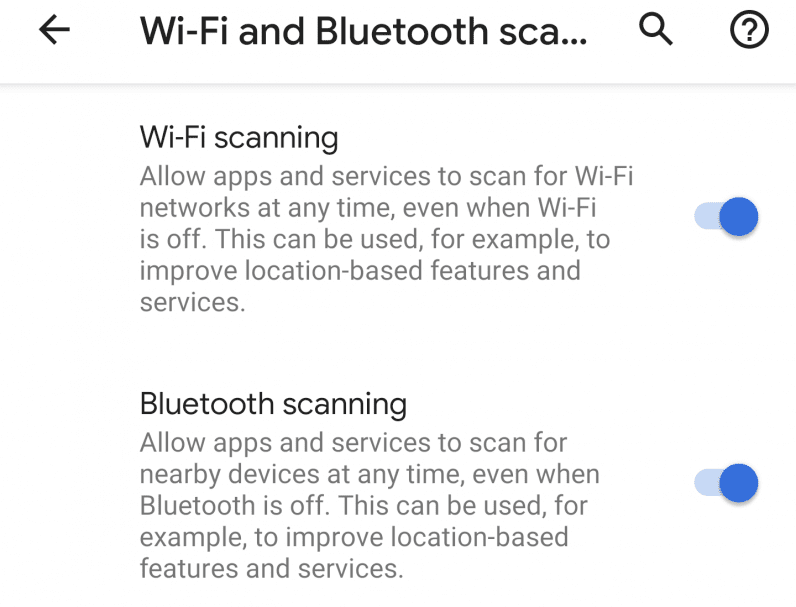
But, because Google is Google (and is addicted to spying on you) there are two other sections you need to look at. The first is ‘Wi-Fi and Bluetooth scanning.’ Effectively, this allows apps to scan for Bluetooth and Wi-Fi connections — even when these functions are turned off.

Ridiculous, I know. Click on that menu, and turn them the hell off.

Wi-Fi and Bluetooth scanning

Finally, you want to do to the bottom of the ‘Location‘ menu and click on the ‘Advanced’ option. Here there are four categories. If you’re going out protesting, you should turn them all off.

turn off location services advanced android

Of course, the safest thing you can do if you go out protesting is to leave your device at home, or take a burner phone. Also, remember that the authorities can track you in different ways (such as pinpointing your location using mobile masts) — but these steps should make it safer.

Aside from showing you how to turn off location services, we’ve also put together some other privacy-focused guides that could be helpful:

Remember, stay safe out there and don’t forget to turn off location services.

If you want to help out and support the Black Lives Matter protests, you can find information on how to do that here. Look after yourselves and each other.

For more gear, gadget, and hardware news and reviews, follow Plugged on
Twitter and
Flipboard.

Published June 4, 2020 — 09:36 UTC


Source link

More Than 10,000 People Reportedly Arrested At U.S. Protests

PHOENIX (AP) — More than 10,000 people have been arrested in protests decrying racism and police brutality in the wake of George Floyd’s death, according to an Associated Press tally of known arrests across the U.S.

The count has grown by the hundreds each day as protesters spilled into the streets and encountered a heavy police presence and curfews that give law enforcement stepped-up arrest powers.

Los Angeles has had more than a quarter of the national arrests, followed by New York, Dallas and Philadelphia. Many of the arrests have been for low-level offenses such as curfew violations and failure to disperse. Hundreds were arrested on burglary and looting charges.

As cities were engulfed in unrest last week, politicians claimed that the majority of the protesters were outside agitators, including a contention by Minnesota’s governor that 80 percent of the participants in the demonstrations were from out of state.

The arrests in Minneapolis during a frenzied weekend tell a different story. In a nearly 24-hour period from Saturday night to Sunday afternoon, 41 of the 52 people cited with protest-related arrests had Minnesota driver’s licenses, according to the Hennepin County sheriff.

In the nation’s capital, 86 percent of the more than 400 people arrested as of Wednesday afternoon were from Washington, D.C., Maryland and Virginia.

It is not known how many of the people arrested were locked up — an issue at a time when many of the nation’s jails are dealing with coronavirus outbreaks. The protesters are often placed in zip-ties and hauled away from the scene in buses.

In Los Angeles, an online fundraising campaign has gathered $2 million so far to help more than 3,000 people arrested in demonstrations since Floyd died on May 25 in Minneapolis.

Kath Rogers, executive director of the Los Angeles office of the National Lawyers Guild, said she was surprised by the huge number of arrests in that city. The office is calling on those arrested to be in contact so they can be part of the group’s mass defense. So far, they have heard from about 400 people, she said.

She said some people had been swept up in the arrests because they were in the wrong place at the wrong time, like a woman who was simply going for an evening walk and wasn’t part of the protest. Or a young man who was taking pictures of the looting with his phone and then was arrested for looting.

“I’ve been here for two years and we go to hundreds of demonstrations, but I’ve never seen rubber bullets flying like this, tear gas used this way,” she said.

Los Angeles Chief Michel Moore told the city’s Police Commission Tuesday the bulk of the arrests, about 2,500, were for failure to disperse or curfew violations.

The rest were for crimes including burglary, looting, assaults on police officers and other violence, Moore told the panel, which functions as the police department’s civilian oversight board.

The only other U.S. city with an arrest toll that comes close to Los Angeles’ is New York, with about 2,000, according to AP’s tally.

A Los Angeles group called the Peoples City Council Fund as of Wednesday night had gathered more than $2 million for arrested protesters there through the online fundraising platform gofundme. More than 46,000 people donated mostly small amounts, some just $10 or $20.

Fundraiser organizers said hundreds of thousands of the dollars raised will go to Black Lives Matter LA as well as the National Lawyers Guild, a progressive group that has been defending civil rights activists since the 1930s.

The AP tally didn’t take into account any additional arrests still unreported from Wednesday evening.


Source by [author_name]

39 injured in knife attack at Chinese school

At least 37 students and two teachers were injured in a knife attack at an elementary school in southern China on Thursday, local officials said.

The attack, at Wangfu Central Primary School in Cangwu County, came at 8:30 a.m. (8:30 p.m. ET Wednesday) and was described by officials as a “knife stabbing incident.” The injuries were not described as life-threatening and all 39 victims are being treated in a local hospital.

“After a preliminary inspection, 39 people were injured, including 37 students who were slightly injured and two adults who were more heavily injured. They have all been sent to hospital for treatment,” said a Cangwu County official on WeChat, the Chinese messaging platform.

Cangwu County, in southern China, where 39 people were injured in a knife attack Thursday.Google Map

The suspect had been “controlled,” the statement said, and a working group has been set up to further investigate the incident.

China is no stranger to school attacks. In 2018 a woman brandishing a knife injured 14 at a school in the western city of Chongqing. Nearly 20 children were killed in attacks on schools in 2010, which led to increased security measures across the country.


Source link

Colbert Taunts ‘Full Of Crap’ Trump With A Scathing Comparison