Sunday, April 26, 2026

Amnesia Nation: Why China Has Forgotten Its Coronavirus Outbreak

0

“It’s like nothing had happened,” Mr. Chan said in an interview. “I’m dumbfounded. How could they make a U-turn so fast?”

Mr. Chan wrote “The Fat Years” as a cautionary tale. Today, it seems all too real. A disaster brings suffering and death. Collective amnesia sets in. The Communist Party emerges stronger than ever.

Outside China, readers are turning to books capturing the mood of the moment, like Albert Camus’s “The Plague.” “The Fat Years” hasn’t enjoyed the same kind of resurgence. For starters, it is banned in China. Its pirated version was a sensation, but that was a decade ago. Few young readers know it.

Those who read it now, however, can come away unsettled. A young professional told me that she felt like she was reading about the past few months. One character, a nationalistic youth, reminded her so much of a relative that it made her shiver.

I was curious to find out how Mr. Chan feels to see his vision come true. I also wanted to know why his blissful dystopia — more “Brave New World” than “1984” — didn’t predict the harsher reality of today’s China.

Mr. Chan, 67, was born in Shanghai, raised in Hong Kong and made his name in journalism, film and literature in the Chinese-speaking world. For decades, he has kept his hair shoulder-length, parted in the middle and now gray.

He has lived in Beijing since 2000 — he is too fascinated by its people to leave, he said — but he has been hunkering down in Hong Kong since late March, when his newest novel, “Zero Point, Beijing,” was published in Hong Kong by Oxford University Press. The Chinese government may not be happy with it: Its main character is the spirit of a boy killed during the 1989 crackdown on protesters in Beijing’s Tiananmen Square. Though quite a few of his books have been banned in China, Mr. Chen had never before taken the precaution of leaving.

The boy spends days and nights searching for historical truth in a city that has seen so much brutality, even though he can’t find a reader for his writing. Mr. Chan based the protagonist on his Beijing friends who can no longer get anything published but continue their research and writing anyway.

“It’s a dark novel written in a dark time,” Mr. Chan said. “The Fat Years” was dark too, he added, but he was able to lighten it with satire.

“There’s nothing funny about the present,” he said, calling it “Xi Jinping’s Golden Age,” referring to the Chinese leader, adding, “there’s no more room for jokes.”

In “The Fat Years,” China plunges into anarchy for a month in 2011, during a second global financial crisis. Looting and arson break out. The Communist Party imposes martial law and jails and executes many, including the innocent.

The book begins two years later. While the world still wallows in crisis, China’s people are happy and prosperous. The country is ascendant. Starbucks is a Chinese name. The violence has been mysteriously forgotten. The main characters want to find out what happened.

Mr. Chan said he wrote “The Fat Years” after witnessing Beijing’s exuberance in 2008. It was a year of tragedies: a deadly winter, a Tibetan uprising, a devastating earthquake, the global financial crisis and the arrest of the prominent dissident Liu Xiaobo. But many people in China seemed to remember only the Beijing Olympics and how China came out of the financial crisis stronger than Western countries. Even the elite intellectuals enjoyed what they saw as a new openness in business and online.

Mr. Chan wanted to throw cold water on that wishful thinking. He believed that the party intends to govern forever and will do anything to survive.

“I felt that the Communist Party would never change,” he said. “But I’ve never expected that Xi Jinping could be so severe.”

Since then, as the party under Mr. Xi has tightened its grip on power, Mr. Chan has seen his friends detained, jailed and silenced.

But nothing prepared him for how quickly many people decided to forget about the suffering during the pandemic.

The Chinese internet was filled with grief and outrage when the epidemic first broke out. By the time the virus spread to Europe and the United States, Beijing boasted that it had “turned the tide” and urged other countries to learn from its playbook.

Public outrage was directed away from the local officials who covered up the outbreak. Instead, it was directed at critics like Fang Fang, the author who kept an online diary about Wuhan under lockdown and demanded accountability.

A Wuhan woman banging a homemade gong from her balcony while begging for a hospital bed for her mother in early February attacked Fang Fang online this month for using her as a tool. Fang Fang had simply retweeted one of her Weibo posts with a comment saying the public should remember Wuhan people’s experiences.

How could people forget so easily? Of course, the Communist Party controls the media and history. As George Orwell wrote, “Who controls the past controls the future. Who controls the present controls the past.”

According to Mr. Chan, there’s another dynamic at work.

Spoiler alert: The protagonists of “The Fat Years” kidnap a high-level Communist Party official. He confesses that the government spiked the drinking water with Ecstasy, making the public docile and happy.

But how did the people forget the violence of 2011? Did the government use some kind of amnesia drug? No, the official tells them.

“It would be wonderful if we did have one,” he says. “Then our Communist Party could rewrite its history any way it wanted to.”

“If you ask me for the real reason,” he continues, “I can only tell you that I don’t know! You shouldn’t think that we can control everything.”

China is a country of bad memories. In the last century it endured civil war, invasion, famine, the Cultural Revolution and the Tiananmen Square crackdown. Its people have been urged to look to the future.

Yes, the government controlled the official outbreak narrative, Mr. Chan said, “but it couldn’t possibly be so powerful. The public collectively decided to forget, then the government simply gave it a push.”

Just like in the novel, he believes, the Chinese people get the rulers they deserve.

But aren’t the Chinese victims of information control themselves? I asked. With more information, they might wake up one day.

“Yes, they are victims. But they sometimes play the roles of perpetrator and victim at the same time,” said Mr. Chan. He cited the Red Guards of the Cultural Revolution, who brutalized imagined enemies. Few later apologized to their victims, Mr. Chan said.

“If the Chinese don’t try to hold the power accountable after waking up,” he said, “the rulers can always change the narratives based on their needs.”

Too much of China, we concluded, defies explanation. Mr. Chan said he doesn’t understand why some people put patriotism above truth or care more about Fang Fang’s diary than holding officials accountable. He doesn’t know why the young generation tolerates growing restrictions on movies, TV, games and the internet. And he doesn’t know why they forget so quickly.

“If you hear good explanations,” he said, “I’m all ears.”

As for my question about why “The Fat Years” didn’t predict China’s darker turn, Mr. Chan said he hadn’t imagined it. But I saw a hint of it in the novel, when the party official sneers at the naïveté of his captors.

“I can see that you lack the imagination to comprehend genuine evil,” he tells them, the images of a few party leaders who harbor true fascist ambitions coming to his mind.

“If any of these men came to power,” he thinks to himself, “not only China but the whole world would be in for terrible trouble.”

Source link

SA Tobacco Alliance blasts ‘political power play’ upholding cigarette ban

The South Africa Tobacco Transformation Alliance (SATTA) has issued a scathing response to government, following President Cyril Ramaphosa’s declaration concerning the continued prohibition of cigarettes under Level 3 lockdown.

The organisation, which represents farmers and supports transformation within the tobacco industry, has argued that government’s decision to uphold the cigarette ban was not related to health concerns amid the COVID-19 outbreak but was, instead, a result of political subversion and possible collusion with illicit traders.

Government fails submissions process

Ntando Shadrack Sibisi, SATTA chairman and founding member of the Black Tobacco Farmers’ Association (BTFA), confirmed that the Tobacco Alliance had submitted input calling for the prohibition of tobacco to be overturned. Sibisi noted, with deep concern, that government had chosen to overlook the arguments made by SATTA, industry stakeholders and hundreds of thousands of consumers. Sibisi added:

“But it’s clear the whole consultation process around the lockdown regulations was a sham, and the anti-legal tobacco lobby — which is actually the pro-illegal tobacco lobby — had won the day a long time ago.”

Cigarette ban has played no role in flattening the curve

Echoing similar arguments made by the Fair Trade Tobacco Association (Fita) — which is currently locked in a convoluted legal battle with the National Coronavirus Command Council (NCCC) – Sibisi said that government’s motives were not based on scientific evidence and the cigarette ban had no role in flattening the virus’ curve.

Sibisi argued that the prohibition has had the opposite effect to what was initially espoused by both President Cyril Ramaphosa and Health Minister Zweli Mkhize. Recent surveys show that the tobacco ban increased unnecessary movement as millions of smokers searched for high and low for cigarettes.

A more sinister political agenda?

The illicit tobacco trade, as a result of the ban, has boomed in recent weeks, robbing government coffers of much-needed excise taxes and putting ordinary South African smokers in contact with criminal elements. Sibisi noted:

“Government chooses to ignore the illicit trade problem — and the loss of billions in excise revenue – because of its double-sided campaign to turn the national lockdown into an anti-smoking drive while at the same time providing free range for cigarette bootleggers to do their fund-raising.

The irrationality behind both the health and economic reasons for the continued ban of the legal tobacco industry does not make any sense and begs the question, is there a more sinister agenda behind this decision?”

Sibisi called on government to be transparent and reveal any links between politicians and illicit cigarette traders. This comes after Cooperative Governance Minister and NCCC head, Nkosazana Dlamini-Zuma, denied ‘being friends’ with self-confessed cigarette smuggler Adriano Mazzotti.

The alleged links between Dlamini-Zuma and Mazzotti were detailed by journalist Jacques Pauw. It’s alleged that Mazzotti funded Dlamini-Zuma’s presidential campaign against Ramaphosa. Both Mazzotti and Dlamini-Zuma have been pictured together on more than one occasion.


Source link

Jeffrey Toobin Drops The Hammer On Twitter Ignoring Its Own Rules For Trump

CNN’s chief legal analyst Jeffrey Toobin on Tuesday slammed Twitter for once again failing to enforce its own rules against President Donald Trump.

Toobin, appearing on the “Newsroom” show, ripped as “corporate gibberish” the social media platform’s explanation for not deleting Trump’s recent tweets baselessly accusing MSNBC’s Joe Scarborough of being involved in the 2001 death of an intern, Lori Klausutis, when he was a GOP congressman.

Authorities ruled Klausutis’ death an accident and no foul play was suspected.

But Trump has continued to push the outrageous conspiracy theory about the death in recent days amid soaring criticism from Scarborough and others over his fumbled handling of the coronavirus pandemic.

A spokesperson for Twitter earlier in the day told HuffPost it was “deeply sorry about the pain” caused by Trump’s tweets and claimed it was “working to expand existing product features and policies so we can more effectively address things like this going forward.”

The statement came after Klausutis’ widowed husband, Timothy Klausutis, penned a powerful letter to Twitter CEO Jack Dorsey asking for Trump’s tweets to be removed.

Toobin wasn’t having Twitter’s excuse.

“Twitter is a private company. They have rules. Like Greyhound buses have rules,” he said on Tuesday. “You can’t stay on a Greyhound bus if you break the rules. President Trump has broken the rules of Twitter over and over again, and Twitter has done nothing but put out statements of corporate gibberish like the one it did today.”

Toobin suggested Trump’s tweets were in clear violation of Twitter’s rule against targeted harassment. “All Twitter should do is follow its own rules and take these tweets down,” he said.

“Twitter is just afraid of both the president and right-wing trolls who follow him and that’s why they’re not doing what they should be doing, which is taking this tweet down,” Toobin continued, later adding: “If Twitter had any decency, if Twitter had any corporate conscience, they would just take it down automatically.”

Twitter did, however, on Tuesday label two of Trump’s unfounded tweeted claims about mail-in ballot fraud with a fact-check warning. Trump immediately fired back, accusing the platform of “stifling free speech.”


Source by [author_name]

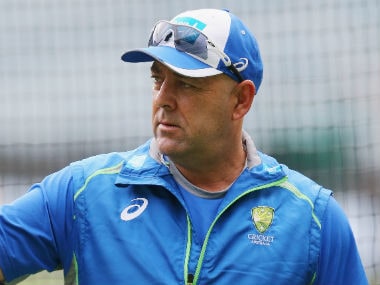
Former Australia coach Darren Lehmann says it’s time for cricket to embrace split-coaching- Firstcricket News, Firstpost

0

London: Split-coaching is the way forward for Indian cricket and rest of the world since it is becoming increasingly difficult to balance work and family, reckons former Australia coach Darren Lehmann.

Lehmann said dividing responsibilities format-wise should increase the longevity of the coaches.

File image of former Australia coach Darren Lehmann. Getty Images

Talking alongside former England World Cup-winning coach Trevor Bayliss on BBC’s ‘Tuffers and Vaughan Show’, Lehmann said being away from the family for more than half a year is too much pressure on a coach.

“I think split coaches is the way to go in India as well as here. You just can’t be away for 200 days a year. It’s too much for the family and it’s too much pressure on a single coach,” Lehmann said.

“I think to get longevity out of your coaches you have to have split roles,” he added.

Earlier this month, former England skipper Nasser Hussain had expressed similar views saying that “maybe two different coaches would be the right way to go” for India.

The 50-year-old Lehmann suggested dividing responsibilities on the basis of formats.

“It might be white ball or red ball cricket. You have to see how that works. I see that evolving and maybe the stage they start talking to the players on the ground but that’s probably way off,” Lehmann said.

Asked who amongst the current lot of players could become a good coach, Bayliss picked England’s white ball skipper Eoin Morgan while Lehmann selected compatriot and Sunrisers Hyderbad assistant coach Brad Haddin.

“Morgs is a deep thinker. He has certainly got the player’s respect and as a coach you definitely need that to get on,” Bayliss said.

“What he did for the white-ball team over the last five years has been outstanding . I’m sure if he wanted to go into that he’d make a pretty good,” he added.

“I’d go with Brad Haddin who has been gold. Trevor’s got him in the IPL. He loves the game and I think he”ll do very well,” Lehmann said.

Updated Date: May 27, 2020 12:49:46 IST

Find latest and upcoming tech gadgets online on Tech2 Gadgets. Get technology news, gadgets reviews & ratings. Popular gadgets including laptop, tablet and mobile specifications, features, prices, comparison.


Source link

#Coronavirus – EU Industry steps in to protect European citizens

0

European companies have responded quickly to this crisis. They have shown extraordinary solidarity to face the pandemic together in order to protect the health of the European citizens. Many companies across Europe retooled and revamped their production to meet the demand for Personal Protective Equipment (PPE), disinfectants and medical devices.

On 26 May, the Commission published a factsheet and an interactive tool collecting stories of companies manufacturing vital products to combat the virus across Europe. Internal Market Commissioner Thierry Breton said: “I want to wholeheartedly thank companies for converting their production facilities to promptly help Europeans to access the protective equipment to keep them safe. The Commission is facilitating this either through what is in our power, or through co-ordination work with our member states. We will overcome this crisis only if we work together. In this effort our industry plays a crucial role.”

From distilleries to textile companies, the industry has put its knowhow at the service of the citizens to produce, for instance, masks, protective gowns, hand sanitizers and ventilators. Over recent months, the Commission has taken actions in order to create the right conditions for industry to ramp up or retool production, including asking the European Standards Organizations to make standards for facemasks and other protective equipment freely available to all interested parties.

In addition, in order to accelerate the approvals of essential products, and to help companies adapt their production lines, the Commission published guidance with practical Q&As in the following areas: PPE, leave-on hand cleaners and hand disinfectants as well as 3D printing.

Source by [author_name]

Coronavirus India Update | Cases Cross 1.5 Lakh-mark With 6,387 Infections in 1 Day; 170 More Deaths

0

The death toll due to Covid-19 rose to 4,337 and the total number of cases climbed to 1,51,767 in the country, registering an increase of 170 deaths and 6,387 cases in the last 24 hours, the Union health ministry said on Wednesday.

The number of active coronavirus cases stands at 83,004, while 64,425 people have recovered and one patient has migrated, it said.

“Thus, around 42.45 per cent patients have recovered so far,” a senior health ministry official said. The total confirmed cases also includes foreigners.

Of the 170 deaths reported since Tuesday morning, 97 were in Maharashtra, 27 in Gujarat, 12 in Delhi, nine in Tamil Nadu, five each in Madhya Pradesh, Uttar Pradesh and West Bengal, three in Rajasthan and one each in Andhra Pradesh, Chandigarh, Haryana, Jammu and Kashmir, Kerala, Telangana and Uttarakhand.

Of the total 4,337 fatalities, Maharashtra tops the tally with 1,792 deaths followed by Gujarat with 915 deaths, Madhya Pradesh with 305, Delhi with 288, West Bengal with 283, Rajasthan and Uttar Pradesh with 170 each, Tamil Nadu with 127 and Andhra Pradesh and Telangana with 57 deaths each.

The death toll reached 44 in Karnataka and 40 in Punjab. Jammu and Kashmir has reported 24 fatalities due to the disease, Haryana 17 deaths while Bihar has registered 13 and Odisha has seven deaths.

Kerala has reported six deaths, Himachal Pradesh five while Jharkhand, Uttarakhand, Chandigarh and Assam have recorded four deaths each so far. Meghalaya has reported one COVID-19 fatality so far, the ministry data said.

According to the ministry’s website, more than 70 per cent of the deaths are due to comorbidities. According to the health ministry data updated in the morning, the highest number of confirmed cases in the country are from Maharashtra at 54,758 followed by Tamil Nadu at 17,728, Gujarat at 14,821, Delhi at 14,465, Rajasthan at 7,536, Madhya Pradesh at 7,024 and Uttar Pradesh at 6,548.

The number of COVID-19 cases has gone up to 4,009 in West Bengal, 3,171 in Andhra Pradesh and 2,983 in Bihar. It has risen to 2,283 in Karnataka, 2,106 in Punjab, 1,991 in Telangana, 1,759 in Jammu and Kashmir and 1,517 in Odisha.

Haryana has reported 1,305 coronavirus infection cases so far, while Kerala has 963 cases. A total of 616 people have been infected with the virus in Assam and 426 in Jharkhand. Uttarakhand has 401 cases, Chhattisgarh 361, Chandigarh 266, Himachal Pradesh 247, Tripura 207 and Goa has registered 67 cases so far.

Ladakh has reported 53 COVID-19 cases. Puducherry has 46 instances of infection, Manipur 39, while Andaman and Nicobar Islands has registered 33 coronavirus cases.

Meghalaya has registered 15 cases. Nagaland has reported four instances of infection, Dadar and Nagar Haveli and Arunachal Pradesh have reported two cases each, while Mizoram and Sikkim have reported a case each till now.

“A total of 4,013 cases are being reassigned to states,” the ministry said on its website, adding its “figures are being reconciled with the ICMR”. State-wise distribution is subject to further verification and reconciliation, it said.


https://pubstack.nw18.com/pubsync/fallback/api/videos/recommended?source=n18english&channels=5d95e6c378c2f2492e2148a2&categories=5d95e6d7340a9e4981b2e10a&query=Coronavirus,India,Update,|,Cases,Cross,1.5,Lakh-mark,With,6,387,Infections,in,1,Day;,170,More,Deaths,coronavirus,Lockdown,&publish_min=2020-05-25T15:10:59.000Z&publish_max=2020-05-27T15:10:59.000Z&sort_by=date-relevance&order_by=0&limit=2

Source link

India-China Flare-up Latest Addition to History of Disputes Guided by Diplomacy, Strategic Timing

0

‘Hindi-Chini Bhai Bhai’ — the famous slogan which was the catchphrase of India’s diplomacy with China in the mid 1950s now seems to be a distant dream as the two Asian powerhouses are entangled in a serious border dispute along Eastern Ladakh and Naku La in Sikkim.

The current border crisis between India and China is not new. There are various stretches of dispute between the 3,488 kms long Line of Actual Control (LAC).

The India-China border is divided into three sectors — Western (Ladakh), Middle (Himachal Pradesh and Uttarakhand) and Eastern (Sikkim and Arunachal Pradesh). The Middle sector remains largely peaceful. India accuses China of illegally occupying Aksai Chin in Ladakh, while China does not accept the McMahon Line as the official border because it was signed by the Tibetan representatives in the 1914 Simla Convention, and claims the entire Indian state of Arunachal Pradesh as its territory.

We look back at some of the more recent INDO-SINO border skirmishes post 2014 and try and connect them with India’s post independence history. We also look at the strategic timing and the diplomacy behind these altercations.

May 2020: Eastern Ladakh and Sikkim

The recent scuffle started near the northern banks of the Pangong Tso Lake, two-thirds of which is under Chinese control. Sources state that on May 5, the Chinese objected to the presence of Indian troops in the disputed area which led to fist-fights and stone pelting, leaving a few injured on both sides.

On May 9, there was a standoff with blows exchanged at the Naku La pass in Sikkim along the LAC, located at 19,000 feet above sea level when a patrol party of the People’s Liberation Army (PLA) was stopped by Indian soldiers.

The more serious confrontation could happen in the Galwan Valley region of Aksai Region — the flashpoint of the 1962 War — where the Chinese have accused India of undertaking infrastructure construction activities. China was annoyed after India’s Border Roads Organisation had built the Shyok-Daulat Beg Oldi road last year. It does not want India to gain a military advantage by gaining access to Daulat Beg Oldi where the Indian Air Force reactivated an Advanced Landing Ground (ALG) in 2008.

According to sources, the trigger was the construction of the Col Chewang Rinchen Setu — India’s highest altitude all-weather bridge. The developments at Pangong Tso Lake and Naku La seemed to have triggered the PLA who made incursions 1 to 3 km inside what India claims is their territory. The PLA has moved 5,000 soldiers of its border defence regiments close to the LAC.

This latest aggression by China comes at a time when the country is facing criticism from all over the world for the spread and lack of transparency of information related to Covid-19. China was forced to agree to an impartial probe into the virus source and the role of the WHO’s response to the pandemic after a resolution seeking the same was backed by 120 countries, including India. India’s new leadership role as the Chair of the Executive Board of the WHO may have also peeved China and forced it to show assertiveness back home amid huge economic losses due to Covid-19.

China was also unhappy after India revoked Article 370 in 2019, specifically over the formation of Ladakh as a Union Territory — as it claims Aksai Chin to be a part of their territory.

September 2019: Eastern Ladakh

A face-off between the Indian and Chinese soldiers took place on the northern bank of the Pangong Tso Lake just days before the Indian Army planned to conduct a massive war-game exercise involving all its arms and services to test its new integrated battle groups (IBGs) in Arunachal Pradesh in September 2019. It also happened a month ahead of the visit of the Chinese President, Xi Jinping to India in October.

August 2018: Demchok

PLA troops intruded 400 metres into the Indian side of the LAC in eastern Ladakh and set up five tents in the Cherdong-Nerlong Nallan area in protest against building of a road in the Nerlong area of Ladakh.

June 2017: Doklam

The Indian Armed Forces and the PLA were involved in a 73-day standoff over the construction of a road by the Chinese in the Doklam Plateau claimed both by China as well as Bhutan. India, which supports Bhutan’s claim over the disputed area, sent in 270 troops to stop their Chinese counterparts. The construction of the road was stopped and the troops were mutually withdrawn. India’s strategic restraint enhanced Delhi’s profile in South East Asia.

Doklam is strategically located close to the Siliguri Corridor (also called Chicken’s Neck), connecting mainland India with its north-eastern states and is a vulnerable point for India. China, which has been consolidating its military presence in the Chumbi Valley, realise that Doklam would give them easy access to the Siliguri Corridor.

September 2015: Burtse

The Indo Tibetan Border Police (ITBP) and the Indian Army demolished a temporary hut built by the Chinese troops in Burtse, North Ladakh. The area gave India advantage to overlook the Karakoram highway linking the territory illegally occupied by China with Pakistan-Occupied-Kashmir.

September 2014: Demchok and Chumar

India and China had a three-week face-off along the LAC when Indian workers began constructing a 100-foot long water channel in Demchok for local villagers. There was also a 16-day altercation at Chumar, the last village in Ladakh bordering Himachal Pradesh, when some Chinese workers claimed that they had orders to build a road up to Tible, five kilometers deep into the Indian territory. These incidents coincided with Xi Jinping’s visit to India, which was particularly important to the newly elected Prime Minister Narendra Modi.

April 2013: Daulat Beg Oldi

A PLA contingent set up a camp in Raki Nula, 30 km south of Daulat Beg Oldi near the Aksai Chin-Ladakh LAC. In retaliation, Indian forces built their own camps 300 metres away. Tensions grew as China brought in reinforcements through trucks and helicopters. The dispute was finally settled after three weeks.

The region, although mostly a wasteland, is strategically important to China due to the presence of a highway that connects Pakistan to Tibet and Xinjiang.

May 1987: Tawang

The Indian military movements in Arunachal Pradesh’s Tawang were seen as a provocation by the Chinese who threatened India with war. China claimed that the entire state of Arunachal Pradesh was their territory. But India, determined to defend its border with China, had already begun fortifying its defences in the early 1980s under Indira Gandhi. It reacted sharply to the threat of war by granting statehood to Arunachal under Rajiv Gandhi in 1987. Indian and Chinese troops came face to face in places like Sulu La and Bum La by April. A war was predicted and was only averted when the then External Affairs Minister, N.D. Tiwari visited Beijing enroute to Pyongyang clearly stating New Delhi’s position of not aggravating the situation.

Septemer and October 1967: Nathu La & Cho La

The PLA launched an attack on the Indian posts in Nathu La in September 1967, while in October another clash took place at Cho La and ended on the same day. Independent sources suggest that India gained the tactical advantage in these clashes in Sikkim defeating the Chinese forces. According to the Defence Ministry, 88 Indian Army and 340 Chinese soldiers were killed during the two incidents. The competition to control the strategic disputed border land in Chumbi Valley was the major cause leading to these incidents.

The 1962 India-China War

The main reason for the 1962 war was the dispute over the sovereignty of the Aksai Chin region of eastern Ladakh and Arunachal Pradesh. There had been growing tension and a series of border skirmishes between the two nations following the 1959 Tibetan uprising, when India granted political asylum to the Dalai Lama. Around 3,250 Indian soldiers were killed in the war and the Chinese occupied the region of Aksai Chin and Arunachal Pradesh. It later withdrew from the north-east and declared a ceasefire.


https://pubstack.nw18.com/pubsync/fallback/api/videos/recommended?source=n18english&channels=5d95e6c378c2f2492e2148a2&categories=5d95e6d7340a9e4981b2e10a&query=India-China,Flare-up,Latest,Addition,to,History,of,Disputes,Guided,by,Diplomacy,,Strategic,Timing,China,India,&publish_min=2020-05-25T20:22:23.000Z&publish_max=2020-05-27T20:22:23.000Z&sort_by=date-relevance&order_by=0&limit=2

Source link

Can India Ignore its Caste Realities While Relaxing Labour Laws?

0

It was the “freedom of contract” which had ruined the concept of parliamentary democracy, Dr BR Ambedkar said in 1943. “Parliamentary democracy took no notice of economic inequalities and did not care to examine the result of freedom of contract on the parties to the contract should they happen to be unequal. It did not mind if the freedom of contract gave the strong the opportunity to defraud the weak,” he said.

The Dalit icon’s words hold increased relevance today, as various Indian states dilute the very labour laws he fought so hard for, during a worldwide pandemic.

Uttar Pradesh had previously suspended all but four labour laws. It revoked the order later, after a notice by the Allahabad High Court.

But other states were quick to step in with labour law relaxations of their own: mandating longer working hours, lax or no government inspections, and dilution of unions, among other things. One of the reasons being put forth for these moves is attracting more investment by increasing labour flexibility.

This comes at a time when India is witnessing a spiralling migrant crisis. Visuals of hungry, poor, and disabled workers walking thousands of kilometres to get to their homes amid the Covid-19 lockdown are now commonplace, and a large section of them belong to marginalised communities.

According to Suraj Yengde, a Dalit scholar with the Harvard University and author of ‘Caste Matters’, of the 395 million intrastate migrants in India, approximately 62 million are Dalits and 31 million are Adivasis. “Can you imagine that?” he says.

“People ask why they (migrants) are walking? That’s because they are forced to this exhaustion,” he says, explaining that migrants often walk kms daily to their work site, subject to difficult circumstances.

“On their return, they face diluted or suspended labour laws,” says Aruna Roy, co-founder of the Mazdoor Kisan Shakti Sangathan (MKSS) and president of the National Federation of Indian Women.

“Oppressed already both by class and caste, discrimination against the migrant labour, daily wage workers, factory and informal sector workers, will be further entrenched by downgrading their rights.”

Professor Khalid Khan from the Indian Institute of Dalit Studies says the share of casual labour who don’t enjoy any social and job security is the highest among scheduled tribes (STs) and scheduled castes (SCs).

“Casual labour makes up 21% of total workers overall but among these, 29% are STs, 39% SCs and 26% Muslims. A similar pattern is observed in states like UP, Haryana, Himachal Pradesh, and Madhya Pradesh: states where these changes have been announced,” he says.

He also points out that the share of regular salaried workers with long-term contracts and social security is already lower among underprivileged groups.

The proposed changes may further worsen their condition in terms of increased working hours, and provision of basic amenities, Prof Khan says.

‘No Better than Bonded Labour’: Deadlier Workplaces?

Among the states that have come up with labour law changes is Madhya Pradesh. The state’s ordinance has heavily relaxed inspections. According to a report by ET, there will be no factory inspections for three months, no inspections for companies with less than 50 workers. Third-party inspections will also be allowed.

Will relaxations of this nature result in deadlier workplaces for marginalised communities?

According to the All India Central Council of Trade Unions (AICCTU), the watering down of the inspection system has been going on for some time now, especially by the central government.

“They brought about a new ‘inspection scheme’ which curtailed surprise inspections,” AICCTU says. Without the security of tenure, workers become afraid to complain and inspections are important to ensure some level of compliance with the law, the labour body says.

The National Front of Indian Trade Unions (DHN) echoes this perspective. According to Dr Deepak Jaiswal, vice-chairman of the labour body, the relaxations will yield more authority to the employer.

“Weaker sections were already hit. But there was a forum, and with its death, everything will become one-sided,” Jaiswal says. “Jungle raaj ho jayega (it will be like the law of the jungle),” he warns.

And with occupational segregation that accompanies the labour of downtrodden communities, these hazards are ever-present.

According to a report by The Print, the union ministry of social justice and empowerment (MSJE) revealed in an answer to a question by Nationalist Congress Party (NCP) Rajya Sabha member Vandana Chavan, that 282 sanitation workers had died while cleaning sewers and septic tanks in India from 2016 to November 2019.

“Even with stringent conditions for inspection, they sidestepped their obligations; without legal obligation, the worker will be no better than a bonded labourer,” Roy says.

She points out that the worker is further disadvantaged by entrenched social discrimination, including caste discrimination, and socio-economic realities.

“There is no doubt that the treatment of the SC worker, who already feels the brunt of job and wage insecurity, will worsen when her or his rights and protections are taken away,” says Roy.

MLA Jignesh Mevani from the Vadgam constituency of Gujarat affirms that “oppressed castes” will be the biggest sufferers of these changes. Workers are already facing hunger, discrimination, as they walk with blisters on their feet, the legislator says.

“Now they have legalised 12 hours of work. The workers may even be made to work for 14 hours. If there is violence in a private factory or establishment, how will we get to know? These things hardly come out,” he says.

Yengde says when industrial accidents happen due to oversights and relaxed inspections, ex-gratia payments become a way for the state to assuage those affected and tone down legal reproach. “Their (authorities’) family members have not died,” he says.

‘It Will Strengthen the Caste System’

“The caste system is not merely a division of labour but also a division of labourer, as convincingly argued by Dr Ambedkar,” Prof Khan says.

He points out that while the caste system is justified on the ground of division of labour, the fundamental feature of institutions of caste is the restriction of choice of occupation. This is imposed based on circumstances at birth.

He sheds light on the concept of meritocracy and upward mobility in India: “In its ideal form meritocracy might ensure everyone gets an equal chance of getting into privileged occupations. But in a caste-ridden society like India, meritocracy cannot work.”

There are two reasons for it, he says. First, that caste-based networks play an important role in getting jobs which favour a candidate from a privileged background more. Second, access to education in general and the quality of education is highly unequal.

In the context of such labour law changes, AICCTU points out that by hitting at the wages earned by workers and restricting the same, any possibility of upward mobility is curtailed.

Upward mobility is defined as the capacity or facility for rising to a higher social or economic position. However, in India, the shackles of caste often prevent marginalised communities from rising up the ladder.

“By keeping workers in conditions where they are unable to earn adequately, and through a steady process of privatisation of all basic services such as education, it becomes more difficult for even future generations to come out of the hereditary occupation,” the labour body says.

Yendge points out that, within the workforce, marginalised communities are often not taught other skills, as that would result in their empowerment.

According to Roy, a shocking 98% of safai karamcharis or manual scavengers are Dalits and/or women. The varna is often used as an argument to force lower castes into performing the most venal and menial jobs, she says.

“Other work that is typically done by SCs or STs such as sweeping, garbage collection, cleaning, factory work, etc, is also devalued,” Roy says.

Mevani is of the opinion that if a pro-people, pro-worker socialist economy is favoured, then Dalits would not be the only ones to carry out sanitation jobs. There would be professionalisation of different works.

But if more exploitative, capitalist tendencies are unleashed by the state, he says, then the jobs which certain sections have been historically subjected to would continue, thus strengthening caste stratification.

“Most Dalits, tribals, and OBCs are landless labourers. So when both the big farmers, and the small and marginal farmers suffer due to a failing economy, it is the Dalits and tribals to more brutalities and economic exploitation,” he explains.

“It will strengthen the caste system,” he warns.

Professor Rajendra Prasad Mamgain, from the Giri Institute of Development Studies, who specialises in labour economics, says that his work on recruitment processes shows that even while entering into the formal labour market, one has to have a social network.

“Even when you are coming to the city, you need a social network. And not everyone can migrate to the cities. With informalisation, the insecurity of labour is increased,” he says.

According to him, these labour relaxations will dampen the morale of workers. “If the employer is heavy on you, you cannot raise your voice.”

This, Prof Mamgain says, will result in workers switching more jobs until they find a humane employer, who will provide proper compensation/social security. And it will limit the mobility of occupations for SCs and STs.

Roy underscores the current situation, and feels that it should teach us a lesson: “The economic distress caused by the Covid-19 lockdown should show us that all work has value, and all workers should be treated with dignity, given decent wages as well as livelihood and social security.”

But Will this Even Yield the Desired Results?

Disaster capitalism. This is what Prof Mamgain says Indian states are carrying out, by relaxing labour laws.

The term was popularised by a 2007 book, ‘The Shock Doctrine: The Rise of Disaster Capitalism’, written by Canadian author and social activist Naomi Klein. The theory states that disasters (such as pandemics) provide perfect conditions for governments to carry out questionable policies, while citizens are too distracted to have a proper response to them.

Meanwhile, criticism grows. The International Labour Organisation, after previously condemning India’s labour law changes, has now urged Prime Minister Narendra Modi to send a clear message to the central and state governments to uphold India’s international commitments (conventions based on labour laws) and engage in social dialogue.

The debate deepens, while one question becomes pertinent: is all this even worth it?

Prof Mamgain is of the opinion that a healthy and virtuous cycle of economic development cannot be created until conditions for effective demand, and better purchasing power are, too.

“Whatever they (states) are doing, it will have a great retrogressive effect on labour. They cannot demand raise in wages. The moment they do so, they will be made to sit down,” he says.

What will that finally do? As their right to demand better wages decreases, and competition culls their daily due, with inflationary pressure, their net income will go down, and so will their living standards, he explains.

Prof Mamgain mentions that there are two types of capital—good, and bad. “There are Japanese enterprises that are delegating work in areas of Gurugram and Manesar. They respect labour laws. India should demonstrate that model, where the worker is not a mere servant but the owner also.”

Coercive measures can be employed to increase the profit, but it will not be good for the long run. “They (employers/industries) will learn from this crisis,” he says.

The professor also underscores the complexity of Indian labour laws. But the industry had learned to live with them, he says.

According to a study conducted by him, “law and order problem” was one of the biggest issues industries faced amid capital generation. Labour laws, Prof Mamgain says, were much farther up the list.

This takes one back to NFITU’s warning about a “law of the jungle” situation that could prevail due to these changes, as aggression rises over unmet demands and decreased social security.

It is also not certain these labour law relaxations, which many experts deem a blight on human rights, would help achieve the purpose.

According to a report published by the Firstpost, there are studies that document the lack of a link between protective labour law regimes and stunted economic growth.

The report cites a 2017 study, which observed the performance in certain states like Rajasthan, Uttar Pradesh, and Andhra Pradesh, after employer-friendly relaxations were adopted, from 2014-2015.

There were relaxations in Chapter VB of the Industrial Disputes Act, 1950, the Contract Labour Act, 1970, and the Factories Act, 1948, the article states. However, no impact from these changes was seen on growth, employment, or investment of capital.

Mevani says that India should feed its labour force more; make it healthy and strong. “It will benefit the industries more than this,” he argues.

He also links an increased purchasing power to more production and manufacturing. “There should be a demand from the bottom. Once purchasing power increases, people will go out and buy more industrial output,” the Vadgam MLA says.​

Roy says that an exploited, exhausted, sickly and impoverished workforce, receiving a pittance for a 12-hour work day, cannot continue to be productive.

“Workers are human beings with an equal claim to constitutional and fundamental rights. This turnaround brings back the dark ages where the people who were powerless were mere fodder for the rich,” she argues.

She points out that Wipro founder Azim Premji elaborated in an article in ET on how the interests of employers and workers should be more aligned in this time of crisis.

He explained how the dilution and outright suspension of labour laws, without providing social security for the worker, will not increase economic productivity, she says.

“Rather, it is unethical, pits business and workers against one another, and will further create distress for the poor.”


https://pubstack.nw18.com/pubsync/fallback/api/videos/recommended?source=n18english&channels=5d95e6c378c2f2492e2148a2&categories=5d95e6d7340a9e4981b2e10a&query=Can,India,Ignore,its,Caste,Realities,While,Relaxing,Labour,Laws?,coronavirus,labour,laws,&publish_min=2020-05-25T05:30:36.000Z&publish_max=2020-05-27T05:30:36.000Z&sort_by=date-relevance&order_by=0&limit=2

Source link

Taxation Commissioner Hangs Himself at Delhi Residence, Police Recover Suicide Note

0

Representative image.

The officer was admitted in an unconscious state by his wife Ratan Saxena at around 7am at a nearby private hospital. The doctors declared him dead at the hospital and informed police for the medico legal case.

  • News18.com New Delhi
  • Last Updated: May 27, 2020, 12:37 PM IST

A 57-year-old Indian Revenue Officer (IRS) allegedly committed suicide by hanging himself at his residence in Delhi’s Chanakyapuri on Wednesday morning.

The 1988 batch IRS officer identified as Keshav Saxena, was posted as Principal Commissioner, Income Tax Office, at ITO.

He was admitted in an unconscious state by his wife Ratan Saxena at around 7am at a nearby private hospital. The doctors declared him dead at the hospital and informed police for the medico legal case.

The officer allegedly committed suicide by hanging himself to the ceiling fan with the help of a bedsheet.

According to police, there is a ligature mark seen on the body, indicating it to be a clear case of suicide.

During investigation, the family of the deceased told the police that Saxena was under depression for long time now.

The police have also recovered a hand written suicide note. “The suicide note is handwritten. The handwriting analysis would be done,” said Deepak Yadav, Additional DCP New Delhi.

Meanwhile, the crime team has inspected the crime scene and forensic team was called in to collect evidence from the scene of crime.


https://pubstack.nw18.com/pubsync/fallback/api/videos/recommended?source=n18english&channels=5d95e6c378c2f2492e2148a2&categories=5d95e6d7340a9e4981b2e10a&query=Taxation,Commissioner,Hangs,Himself,at,Delhi,Residence,,Police,Recover,Suicide,Note,Chanakyapuri,Deepak,Yadav,&publish_min=2020-05-26T01:18:25.000Z&publish_max=2020-05-28T01:18:25.000Z&sort_by=date-relevance&order_by=0&limit=2

Next Story

Source link

Humpback whale numbers tipped to increase in Queensland waters

Australian Eastern Humpback whales are migrating up to the warmer waters of the Great Barrier Reef and locals may have a greater chance of spotting them.

With fewer boats on the water due to the coronavirus pandemic, a large pod is swimming past Byron Bay and into Queensland waters.

Wally Franklin, a whale researcher at Southern Cross University, said the whales could swim up as far as Cairns and Port Douglas.

The majority of humpbacks in Australian waters migrate north from June. (Nine)

“It’s possible the whales might stick a little closer to the coast if there’s fewer boats,” Dr Franklin said.

“Because the population has been steadily growing over the last couple of decades … there’s actually a lot of whales coming up.”

Sightings are tipped to increase in the coming months, with August being peak birthing and breeding month for whales.

The humpback whale population is expected to be around 40,000 this year.

Dr Franklin said the population size had not been this high since whaling increased after World War Two.

Researcher Wally Franklin said with fewer boats on the water there was a chance of the whales coming closer to shore. (Nine)

“In the 1960s there were only about 150 whales left, so we are very privileged to have this group,” Dr Franklin said.

When COVID-19 restrictions are eased to allow whale watching tours to resume, Dr Franklin explained it was important for operators and private vessels to maintain legal distancing requirements.

“If the boats restart during this season…numbers are probably going to be restricted,” he said.

It’s really a question of just taking extra care this year, keeping the regulated distance from the whales.”

Source by [author_name]