US expected to hit three million coronavirus cases – live updates

Texas is now one of the worst affected states for new coronavirus cases in the US.

Nearly 80% of the state’s hospital beds are in use, and intensive care units are filling up in some of the nation’s biggest cities, including San Antonio and Houston, where leaders are warning their health facilities could become overwhelmed in the coming days. In all, Texas has recorded more than 2,670 deaths and more than 200,000 confirmed cases of the virus.

Nomaan Merchant has been reporting from Houston for Associated Press on what the situation is like on the ground there – and how relaxing restrictions on gatherings appears to have contributed to the new cases.

He cites the example of one family. A few weeks after more than 100 people attended one man’s funeral, his wife herself was on the brink of death.

Her oxygen levels had fallen deadly low due to complications from Covid-19, and her heart stopped. Ten people, each in two layers of protective equipment, reports Merchant, surrounded her hospital bed. Two climbed on opposite sides of the bed one pressing on her chest, the other on her abdomen. At the foot of the bed, Dr. Joseph Varon called out a rhythm: one-two, one-two, one-two.

“Keep on pumping!” he yelled. But they couldn’t save her.

At least 10 people who were at the funeral later developed coronavirus symptoms, according to the woman’s daughter, who fell sick herself. Most people weren’t wearing masks. Her daughter says her mother told her she wished they had been more careful.

“We didn’t take precautions like we should have,” the daughter told Merchant. “We just got totally caught up in the moment.”

Now, says Merchant, the 66-year-old Latina woman’s death is a grim warning for Texas, which has seen a surge in the number of people testing positive for the coronavirus since it began aggressively loosening restrictions in May.

Hospitalizations due to Covid-19 in the state have more than doubled in the last two weeks, and Texas is reporting, on average, more than four times as many cases each day as it was a month ago. It surpassed 10,000 new confirmed cases in a single day Tuesday.

While rising case numbers partly reflect more testing, Texas has a positive test rate of 13.5%, more than double the rate from a month ago.

“We’re going to get into situations like Italy did, like Spain did, like New York did just a couple of months ago,” said Varon, board chair at United Memorial Medical Center, a small north Houston hospital.


Dr. Joseph Varon, center, reaches for an IV bag inside the Coronavirus Unit at United Memorial Medical Center, Houston, on Monday Photograph: David J Phillip/AP

United Memorial has been rapidly dedicating more and more space to virus care. Now, 88 of 117 beds are devoted to such patients and Varon says the hospital may soon turn over the entire facility to treating those with the virus.

Outside, the Associated Press reports, long lines of cars wait hours for tests.

The hospital has taped off three separate wings with a sequence of large tarps and gates.


Dr. Joseph Varon walks through one of sealed entrances at the Coronavirus Unit at United Memorial Medical Center, Houston

Dr. Joseph Varon walks through one of sealed entrances at the Coronavirus Unit at United Memorial Medical Center, Houston Photograph: David J Phillip/AP

Assisting Varon is a team of nurses and volunteer medical students. Anyone seeing a patient with Covid-19 is required to wear two sets of masks, gowns, gloves, shoe and head coverings, and a face shield.

Varon has worked more than 100 days with barely a rest and normally sleeps just a few hours a night. When he isn’t seeing patients or trying to obtain more hospital supplies, he does media interviews to encourage people to wear masks and take the virus seriously.

“People need to see this so they can understand and won’t do stupid things,” he said.

Source link

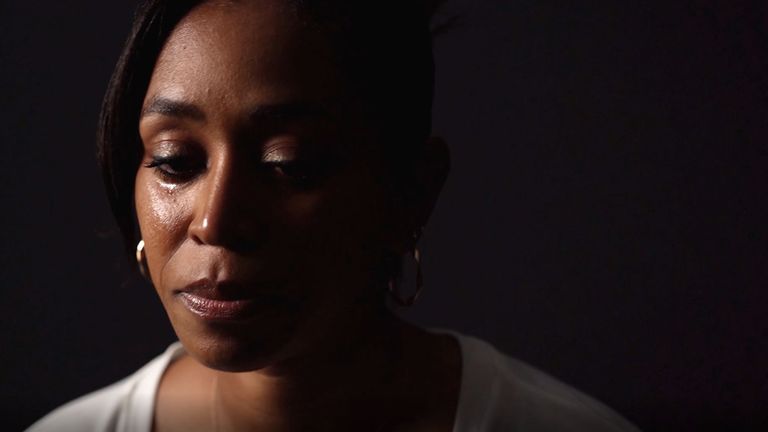
Ebony Rainford-Brent questioned why she remained in cricket after being subjected to racial comments

0

“I have been in team environments dealing with people constantly referring to ‘your lot’. When things would happen, like Barack Obama becoming president of the USA, having a paper thrown down in front of my face and saying, ‘your lot must be happy’. The constant drip-drip was tough.”

Last Updated: 08/07/20 12:23pm

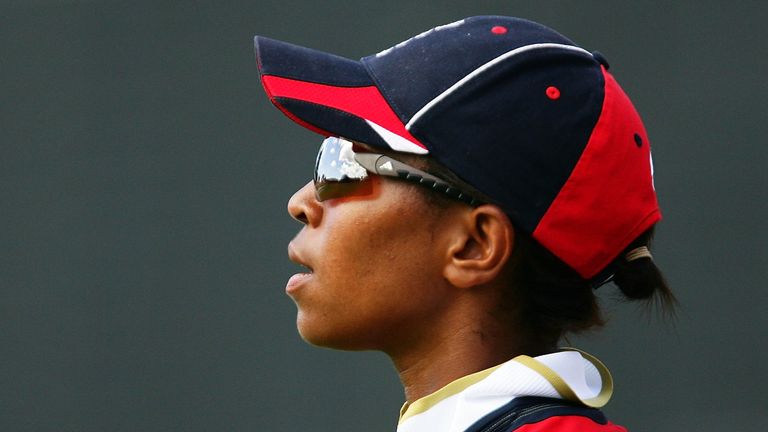
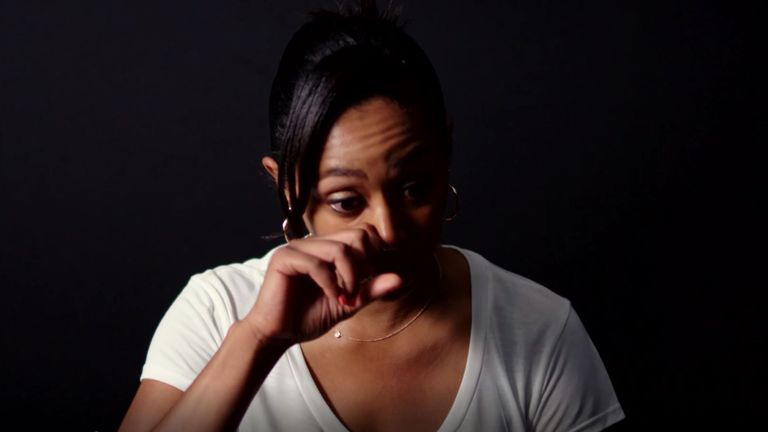
Ebony Rainford-Brent says she sometimes questioned why she remained in cricket after being subjected to racial comments during her career in the sport.

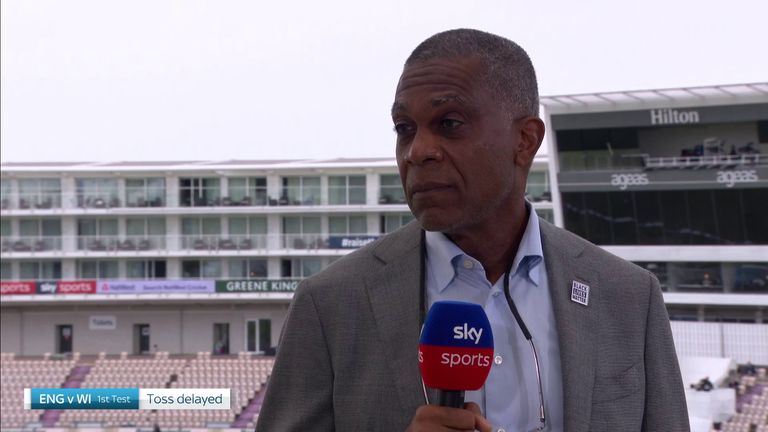
The former England Women international, now director of women’s cricket at Surrey and a successful commentator, was speaking alongside Michael Holding as part of Sky Sports’ Black Cricketers Matter programme.

5:24
Ebony Rainford-Brent says she sometimes questioned why she remained in cricket after being subjected to racial comments during her career in the sport

Ebony Rainford-Brent says she sometimes questioned why she remained in cricket after being subjected to racial comments during her career in the sport

Rainford-Brent, the first black woman to play for England and part of the squads that won the 50-over and T20 World Cups in 2009, says she was “drip-fed” derogatory remarks about her ethnicity that caused her to suffer a lack of confidence.

“I grew up in a very multicultural, diverse London with all sorts of colours – a melting pot. [But] I noticed as soon as I walked into the world of cricket that comments started,” she said.

“I had comments about where I grew up and how the fact I had a long name meant maybe my mum didn’t know who my dad was. About my hair, body parts, especially the derriere, shall we say.

For it to hit me that I was the first [black woman to play for England], I felt a mixture of emotions. Proud on one hand but also a bit embarrassed and uncomfortable. It took me a long time to really feel comfortable owning that because I wanted there to be more, I didn’t want to be the only one. It’s something I still feel a little bit plagued by.

Ebony Rainford-Brent

“About the food I ate and that it stank. Did I wash my skin? [People saying] everybody in your area gets stabbed. All these sort of things were drip-fed constantly. It was really difficult for me as a kid.

“I put on this bravado and I think my personality has developed to an extent to be jovial and bat it off. I never had the confidence to turn around and tell people to get lost and deal with it.

“I took it on internally and I think it wore away at my confidence for a lot of my early years.

Ebony Rainford-Brent spoke to Sky Sports Cricket for 'Black Cricketers Matter'

Ebony Rainford-Brent spoke to Sky Sports Cricket for ‘Black Cricketers Matter’

“I have been in team environments dealing with people constantly referring to ‘your lot’. When things would happen, like Barack Obama becoming president of the USA, having a paper thrown down in front of my face and saying, ‘your lot must be happy’. The constant drip-drip was tough.

“I am not surprised people [of colour] who come into the environment don’t want to deal with that – I questioned myself sometimes why I stayed so long.

“I love the game and think it has so much more to offer but it can be really difficult dealing with that day in, day out.”

Rainford-Brent, who played 22 ODIs and seven T20Is between 2001 and 2010, says it was bittersweet to be the first black woman to play for England – proud at her achievement but tough accepting that she was alone as a player of colour.

4:37
Michael Holding was close to tears talking about some of his experiences with racism and says society must change

Michael Holding was close to tears talking about some of his experiences with racism and says society must change

“Making your debut for your country is an incredible experience. I remember getting my cap from Charlotte Edwards and it was pretty special,” she said.

“For it to hit me that I was the first [black woman to play for England], I felt a mixture of emotions. Proud on one hand but also a bit embarrassed and uncomfortable.

“It took me a long time to really feel comfortable owning that because I wanted there to be more, I didn’t want to be the only one. It’s something I still feel a little bit plagued by now.”

Rainford-Brent is one of few people from a BAME background in decision-making positions in cricket and says “structural problems” in sport as a whole must be addressed.

Ebony says there must be greater diversity in positions of power across sport

Ebony says there must be greater diversity in positions of power across sport

She said: “In our world of sport, people say there aren’t any inequalities but you start to look around at people in positions of power.

“Statistics have come out that there are almost zero black people in any boards in our governing bodies. What does that say?

“Then you look at the grassroots level and cricket, rugby, golf, tennis, you name it. There are no opportunities for people coming through. There are structural problems.”

Earlier this year, Rainford-Brent founded Surrey’s African-Caribbean Engagement Programme (ACE), with the aim to encourage more 11-18-year-old boys and girls from the local African Caribbean community into the club’s performance pathway. For more information, click here.


Source link

Babil Khan talks about the important life lesson taught by Irrfan Khan, says the new youth is searching for a new meaning : Bollywood News – Bollywood Hungama

Irrfan Khan was one of the most sought after actors in the industry who had made his name from scratch and became a favourite across the globe. His work will forever be remembered for delivering fine cinema. Making a mark in the industry over the years, Irrfan Khan’s demise came as a shock to everyone and we’re still dealing with it after two months. Irrfan Khan’s son, Babil Khan, is also a student of cinema and has strong opinions about the norms of the industry backed by his father’s lessons. He took to his Instagram to share a picture from his childhood with Irrfan Khan and wrote a moving note. The caption questions every notion that has been built over the years and is definitely worth a read. He associated his words with examples of Kalki Koechlin being trolled for looking like a boy and Sushant Singh Rajput’s untimely demise.

It reads, “You know one of the most important things my father taught me as a student of cinema? Before I went to film school, he warned me that I’ll have to prove my self as Bollywood is seldom respected in world cinema and at these moments I must inform about the indian cinema that’s beyond our controlled Bollywood. Unfortunately, it did happen. Bollywood was not respected, no awareness of 60’s – 90’s Indian cinema or credibility of opinion. There was literally one single lecture in the world cinema segment about indian cinema called ‘Bollywood and Beyond’, that too gone through in a class full of chuckles. it was tough to even get a sensible conversation about the real Indian cinema of Satyajit Ray and K.Asif going. You know why that is? Because we, as the Indian audience, refused to evolve. My father gave his life trying to elevate the art of acting in the adverse conditions of noughties Bollywood and alas, for almost all of his journey, was defeated in the box office by hunks with six pack abs delivering theatrical one-liners and defying the laws of physics and reality, photoshopped item songs, just blatant sexism and same-old conventional representations of patriarchy (and you must understand, to be defeated at the box office means that majority of the investment in Bollywood would be going to the winners, engulfing us in a vicious circle). Because we as an audience wanted that, we enjoyed it, all we sought was entertainment and safety of thought, so afraid to have our delicate illusion of reality shattered, so unaccepting of any shift in perception. All effort to explore the potential of cinema and its implications on humanity and existentialism was at best kept by the sidelines. Now there is a change, a new fragrance in the wind. A new youth, searching for a new meaning. We must stand our ground, not let this thirst for a deeper meaning be repressed again. A strange feeling beset when Kalki was trolled for looking like a boy when she cut her hair short, that is pure abolishment of potential. (Although I resent that Sushant’s demise has now become a fluster of political debates, but if a positive change is manifesting, in the way of the Taoist, we embrace it.)”

Take a look at the pictures that he shared.

Also Read: Irrfan Khan’s Instagram profile gets memorialized after Sushant Singh Rajput

BOLLYWOOD NEWS

Catch us for latest Bollywood News, New Bollywood Movies update, Box office collection, New Movies Release , Bollywood News Hindi, Entertainment News, Bollywood News Today & upcoming movies 2020 and stay updated with latest hindi movies only on Bollywood Hungama.


Source link

A place called home: Jazz and the new normal at the National Arts Festival – The Mail & Guardian

The more I think about it, the more the National Arts Festival description of Standard Bank Young Artist for Jazz, saxophonist and composer Sisonke Xonti, as the “new face of South African jazz — urban, erudite, skilled but rooted in his culture”, disturbs me. He is all those things, for sure, as his second festival performance ably demonstrated.

Sisonke Xonti, the Standard Bank Young Artist for jazz, brought a fresh perspective to sounds from around the country. (Supplied)

But so are Tete Mbambisa and Louis Moholo-Moholo, at least a generation earlier. So were the late Dudu Pukwana, Johnny Mekoa and many more. Perhaps “erudite” is code for “he went to university” (so did Mekoa, but plenty of other brilliant players didn’t). I’m not sure what “urban” might be code for, and “skilled but …” carries a most unfortunate implication that we might expect others rooted in their culture to be unskilled. It’s a tough life, writing PR blurbs. There are, after all, only so many words in the dictionary. These need a rethink.

Happily, Xonti is in truth the next generation of our long-established, distinctive jazz tradition: born in the cities, intensely schooled — whether the university was the University of Cape Town or Monde’s Place — and always with a keen ear for intriguing sounds, from grandmother’s knee or the outer constellations.

Xonti’s four-movement Migration Suite served as a beautiful sonic riposte. In it, he’s “trying to make sense”, he says, “of the different sounds I hear around the country.” What the music spoke of was made all the more poignant by our current situation, which hits migrants hardest of all, and that was underlined by Xonti’s fluid, characterful playing —from roots abstraction to compelling swing — as well as by Tebo Moleko’s words: “Should I go home or continue? … [facing] permanent impermanent residencies in the cities of their birth …” 

All four movements sing journeys and identity, from the galloping rhythms of the Eastern Cape to the rolling bluesiness of the final movement: the kind of classic melody that might have found a welcome at The Pelican or on the As-Shams label in the 1970s. But all fresh, all original.

Xonti was in good company, from the august presence of percussion master Tlale Makhene, trumpeter Sakhile Simani and pianist Yonela Mnana to bassist Benjamin Jephta and drummer S’phelelo Mazibuko. As he showed in his own set, Simani can be sharp-edged and adventurous, or bate the blades of his notes into gentleness. Mnana’s performance throughout was quite remarkable, whether in the twisty arpeggios of the suite, or when his voice dropped us into territory just south of the Jazz Ministers in the closer, a beautifully extended Nomalungelo. Everything we heard should form the core of a next, must-have album.

‘The Texture of Silence’

Although the Cara Stacey/Keenan Ahrends/Mzwandile Buthelezi project The Texture of Silence was very different, it was also seeking home: a place where image and sound could both live. Stacey describes its goal as “to create fixed compositions, structured improvisations and free improvisations that help us to explore together”, investigating “the potential and limitations around the terms ‘improvisation’ and ‘composition’ and the grey area sometimes between these.” 

Mzwandile Buthelezi paints to the music of Cara Stacey and Keenan Ahrends during a performance at the National Arts Festival (Supplied)

I’d love to see this project a few months down the line, because there was a sense the three are still learning one another and there’s much more yet to unfold. A wonderful sense of shared and shifting leadership characterised the sounds, as Stacey moved from the metal keys of the nyungwe-nyungwe (thumb piano) to the ivories of the piano, to umtshingo pipe, to umhrube bow, and Ahrends from weaving textures to crafting interlocked pulses and drawing out melodies. Close your eyes and it was still lovely to hear. 

On the other side of the stage, a small shower of raindrop-notes on Buthelezi’s paper resolved into the journeys of sound and the face of a creator. At the 40-minute conclusion, I wanted to see more of where it would all go and how the more explicit images emerging on the paper might further provoke the sounds. As they say, watch this space …  

Strength and imagination

Tshepang Ramoba (whom you may know as the BLK JKS drummer) explicitly called his project Mošate: home in Sepedi. Inspired by that tradition, but employing contemporary vocal effects and the synthesiser of “Dejot” (Daniel Jakob) in Bern, the music again challenged the “roots” box some festival publicity seems to assume. 

Tshepang Ramoba performs with the Blk Jks at the SA Rolling Stone launch party on December 1, 2011 in Johannesburg, South Africa. (Photo by Gallo Images /City Press/Leon Sadiki)

The guitar of Sibusile Xaba as usual played the Sun Ra role (although communities, years and miles distant from the American). It was often he who provoked the rest of the team (sensitive bassist Xola Kulati, trumpeter Tebogo Seitei and percussionist Machume Zango, playing from his Mozambique base, but melding seamlessly into the collective) into space travel. 

There’s a wonderful moment of collective abstraction about 15 minutes in that, alone, is worth the ticket. Ramoba has an impressive vocal range, up into an eerie falsetto. Although it was Xaba’s name that had drawn me to the show in the first place, I ended up appreciating the whole ensemble and concept for its strength and imagination. (But the trumpet was under-miked.)

For musicians improvising together on stage, there’s always another home too: the home found in familiar and empathetic colleagues. In 2019, Dutch reedman Mete Erker and pianist Jeroen van Vliet marked 20 years of working together, and their live set, almost the last of the Makhanda jazz events, enacted that almost without the need for words (although, never fear, the Dutch announcements are helpfully subtitled).

Much of the material was from the album, Pluis, which the duo released to mark their anniversary. The title track conveyed the quality of that kind of musical home: each player can take risks because the other has his back. Still, the tune that really caught my ears was Erker’s bright, inventive Dandelion. The Dutch audience was warm, but far too polite — if van Vliet and Erker had actually been in Makhanda, we’d have been stamping.

This article was first published on sisgwenjazz.wordpress.com. It forms part of a series of National Arts Festival music reviews


Source link

Fernando Alonso return to Formula 1 with Renault DP World Tour team confirmed – Sport360 News

0

Fernando Alonso will return to Formula One in 2021 after Renault DP World team confirmed the double world champion’s signature.

Alonso, who turns 39 later this month, has been out of the sport since he appeared to bring down the curtain on his career with McLaren 18 months ago.

But the Spaniard, who won successive championships with Renault in 2005 and 2006, has now completed a sensational comeback with the French manufacturer.

Alonso replaces Daniel Ricciardo, who is moving to McLaren at the end of the year.

Australian Ricciardo is taking over from Carlos Sainz ahead of his switch to Ferrari.

Sultan Ahmed Bin Sulayem, DP World’s group chairman and CEO, said: “In March we announced that we would become the team’s first ever title sponsor and global logistics partner, which was a major milestone for both Renault and DP World.

“The partnership has been a vital step towards the exploration of ways to make Renault’s global automotive supply chain more efficient by lowering costs, increasing speed and transparency and mitigating their environmental impact.”

Alonso said: “Renault is my family, my fondest memories in Formula One with my two World Championship titles, but I’m now looking ahead. It’s a great source of pride and with an immense emotion I’m returning to the team that gave me my chance at the start of my career and which now gives me the opportunity to return to the highest level.”

Know more about Sport360 Application


Source link

China’s Leash on Hong Kong Tightens, Choking a Broadcaster

0

HONG KONG — Hong Kong’s public broadcaster has long been a rare example of a government-funded news organization operating on Chinese soil that fearlessly attempts to hold officials accountable.

The broadcaster, Radio Television Hong Kong, dug into security footage last year to show how the police failed to respond when a mob attacked protesters in a train station, leading to widespread criticism of the authorities. The broadcaster also produced a three-part documentary on China’s crackdown on Muslims in Xinjiang. One RTHK journalist, Nabela Qoser, became famous in Hong Kong for her persistent questioning of top officials.

Now, RTHK’s journalists and hard-hitting investigations appear vulnerable to China’s new national security law, which takes aim at dissent and could rein in the city’s largely freewheeling news organizations. The broadcaster, modeled on the British Broadcasting Corporation, has already been feeling pressure.

RTHK has drawn fire in recent months from the police, establishment lawmakers and pro-Beijing activists. Its critics have filed thousands of complaints accusing the broadcaster of bias against the government and regularly protest outside its studios.

“If you want to enjoy freedom, you have obligations to follow,” said Innes Tang, the chairman of Politihk Social Strategic, a nonprofit pro-Beijing group that has organized protests and petitions against RTHK. “You cannot use fake news to attack people. That is not part of freedom of expression.”

As the objections mounted, RTHK was forced to suspend a satirical program that made fun of the police. It was criticized by the Hong Kong government for asking the World Health Organization if Taiwan could join the global health body from which Beijing has shut it out. The broadcaster faces a formal government review into its operations starting next week.

The sweeping national security law China imposed last week on Hong Kong is directed at quelling the pro-democracy protest movement that roiled the territory last year, but it also calls for tougher regulation of the media. The worry is that the law would be used to muzzle outlets by requiring publishers and broadcasters to avoid content and discussions that could be seen by the authorities as subversive. The worst-case fear is that RTHK, as a government department, could be forced to become an organ of state propaganda.

The city’s news outlets have faced an onslaught. Reporters covering protests have been pepper-sprayed and detained by the police. Jimmy Lai, the publisher of the Apple Daily, a pro-democracy newspaper, was one of several opposition figures arrested early this year, and state media have accused him of fomenting unrest.

Pro-Beijing lawmakers have urged the government to register journalists. The new security law also calls for a group of government bodies, including the national security office, to oversee foreign journalists, raising concerns about the erosion of press freedoms.

A reporter asked Carrie Lam, the city’s leader, at a briefing on Tuesday if she would guarantee that journalists in the city would be free to report with the new law in place. Mrs. Lam responded that if “all reporters in Hong Kong can give me a 100 percent guarantee that they will not commit any offenses under this piece of national legislation, then I can do the same.”

Yuen Chan, a senior lecturer of journalism at City, University of London who worked for RTHK in the late 1990s and early 2000s, said the broadcaster was in an “extremely perilous situation” because its status as a government department made it easier for Beijing to exert control.

The news organization appears to be taking pre-emptive steps to avoid falling afoul of the security law. In recent weeks, several RTHK journalists say, editors have told reporters not to emphasize pro-independence slogans in their news reports.

An RTHK spokeswoman, Amen Ng, said that RTHK journalists “have been doing their job professionally” but added that the broadcaster was not a “platform to promote Hong Kong independence.”

But there were already signs in RTHK’s newsroom that a chill was setting in.

Kirindi Chan, a top RTHK executive, announced unexpectedly in June that she would resign, citing health reasons. Days later, she met with RTHK reporters who pressed her if she was being forced out over their coverage of the antigovernment demonstrations. Ms. Chan denied being ousted, but she sought to deliver some solemn advice.

Ms. Chan reminded the reporters and producers of their role as civil servants, and urged them to comply with the government’s code of conduct, according to two people who attended the meeting and spoke on condition of anonymity to discuss an internal matter.

She did not go into details, but the civil service code calls for impartiality and loyalty to the government, values the authorities have stressed to discourage government employees from joining the protests.

Over an RTHK career of nearly three decades, Ms. Chan earned the respect of her staff for being a staunch defender of the organization’s editorial independence. At the end of the somber half-hour meeting, the reporters gave Ms. Chan a bouquet of red and yellow tulips, but an employees’ union said her departure was an ominous sign.

“We worry that Ms. Chan’s resignation would set the scene for further attacks on RTHK,” the union said in a statement.

RTHK has also found itself caught in geopolitical wrangling between China and Taiwan, the self-governing island that Beijing claims as part of its territory.

In April, the government criticized RTHK over an interview the broadcaster ran with a World Health Organization official, Dr. Bruce Aylward, who was asked whether Taiwan should be allowed to participate in the health body. Taiwan had been shut out by Beijing in recent years.

In an awkward exchange that highlighted the sensitivity of the topic, Dr. Aylward first said he did not hear the question, then asked to move on. When the reporter repeated it, the line went dead; minutes later, asked again, Dr. Aylward replied, “We’ve already talked about China.” The interaction gave further ammunition to critics who say the health body is unduly beholden to Beijing.

Edward Yau, the Hong Kong secretary for commerce and economic development, which supervises RTHK, accused the broadcaster of having breached China’s official stance toward Taiwan. Such a rebuke now carries more significance against the backdrop of the security law, which focuses heavily on perceived threats to China’s sovereignty.

If RTHK were forced to adopt a new role as a broadcaster that serves as the voice of the government, it would be the culmination of a decades-long campaign by its pro-Beijing critics.

RTHK was founded as a government radio station in 1928, when Hong Kong was a British colony, and broadcast official bulletins for half a century before it set up its own newsroom in 1973. Not long after the territory returned to Chinese rule in 1997, pro-Beijing politicians started urging RTHK to fall in line with the central government.

Editorial independence is enshrined in RTHK’s charter. But unlike the United States or Britain, where public broadcasting is given greater autonomy from the government through nonprofit corporations, RTHK is a government department, which makes it far more vulnerable to official intervention.

The government flexed its grip over RTHK most overtly in May when it complained about “Headliner,” a satirical program that had taken pointed jabs at the police. That prompted the broadcaster to apologize and suspend the show, a decision that caused some alarm within the organization.

“If those who are in power cannot tolerate ‘Headliner,’ then their intolerance will extend to other current affairs programs,” said Gladys Chiu, the chairwoman of RTHK’s labor union.

On a recent Wednesday, the staff of “Headliner” gathered in RTHK’s aging studio for a final shoot. Ng Chi-sum, a longtime host of the show, portrayed Carrie Lam, Hong Kong’s leader, as Cixi, the out-of-touch empress dowager during the final decline of the Qing dynasty, donning a gaudy headdress, a fake pearl necklace and a gown.

The hosts kept up a light banter between takes, but off camera, Mr. Ng, 61, spoke gloomily of the show’s prospects, and those of the city itself.

“The worst is yet to come,” Mr. Ng said. “The overall trend nowadays is an exhaustive takeover of Hong Kong.”


Source link

Trump Signals a Brewing Battle Over School Reopenings


Trump officially files for divorce from the W.H.O., as his niece prepares to publish a cutting memoir. It’s Wednesday, and this is your politics tip sheet. Sign up here to get On Politics in your inbox every weekday.

President Trump during an event about school reopenings at the White House yesterday.


The Trump administration this week published details on all the businesses that have received $150,000 or more from the business loan program set up under coronavirus relief legislation passed in March.

Our investigative reporter Kenneth P. Vogel has been digging through the newly public data, trying to make sense of how this money has been spent — and who has benefited. What he’s found: a lot of small businesses, a good number of bigger ones, and a few conspicuously well-connected Washington insiders. Ken agreed to answer a few questions about it.

The Paycheck Protection Program was purportedly built as a benefit to small businesses. Has it lived up to that?

We have certainly heard frustration from small businesses that have had trouble accessing the loans, or have raised concerns that the program’s rules make it difficult to use the money in a manner that will help the businesses survive long term. And we’ve heard from banks that have had trouble processing applications.

Then, on the flip side, we have seen examples of big, troubled or politically connected companies that have been able to access the loans seemingly with much more ease.

Most of these examples were anecdotal, however, and we haven’t had much data to allow us to comprehensively assess the degree to which the program is living up to its mission of helping small businesses.

The Small Business Administration says 4.9 million loans have been issued through the program, with an average size of $107,000.

The Trump administration wasn’t exactly volunteering to release information on where these loan funds were going. Take us through the ways that the administration — along with allies in Congress — has sought to suppress transparency here. And how did the public overcome this, ultimately gaining access to the list of loan recipients?

The administration has been all over the place on this. It initially signaled it would release individual loan data, then seemed to reverse itself, calling the data proprietary and confidential. But under pressure from congressional Democrats, and in response to a Freedom of Information Act lawsuit filed by The Times and other news outlets, the administration released details of all loans issued that were larger than $150,000. That’s a small fraction of the total loans issued, 86.5 percent of which were for less than that amount.

A lot of lobbyists and political consulting firms received forgivable loans under the Paycheck Protection Program. To what degree does that simply reflect the fact that lobbyists know the details of laws that are passed (it’s their job, after all) and were therefore better about applying for these loans? And to what degree might it reflect lobbyists and their allies in government truly gaming the system?

There is no hard evidence of political favoritism in the loan processing, though certainly there have been a number of stories about well-connected businesses getting loans. That seems at least partly because of the ability of those businesses to get to the front of the line with their banks, rather than because they got preferential treatment from the Trump administration.

More than a few loan recipients had conspicuous ties to the president or members of Congress. Do any stand out in particular?

One example that shows the power of transparency and public perception is that of the Trump megadonor Monty Bennett, who hired two lobbyists with ties to the president, Jeff Miller and Roy Bailey, to help pursue loans for hotels and subsidiaries overseen by his firm, Ashford Inc. They received at least $70 million, making him among the biggest beneficiaries of the program, but when the loans were revealed in corporate filings, it prompted a backlash that led the companies to pledge to return the funds.

On Politics is also available as a newsletter. Sign up here to get it delivered to your inbox.

Is there anything you think we’re missing? Anything you want to see more of? We’d love to hear from you. Email us at onpolitics@nytimes.com.

Source link

How New Zealand’s media endangered public health

New Zealand’s health minister, David Clark, has been forced to resign and the nation’s hyperactive media have claimed their latest scalp. In the middle of a pandemic, no less.

Unseemly as the media’s months-long hit on Clark was – a classic example of trial by media – it was consistent with the borderline misconduct that has defined much of the reporting throughout the COVID-19 crisis.

While the response to the pandemic threat from the national capital, Wellington, can be held aloft, for now, as a rare success story in a world of disarray, the machinations of much of the nation’s media leaves much to be desired.

Taken over time, New Zealand’s reporters have appeared focused on managing perceptions, berating and cajoling a fearful public on numerous fronts. In doing so, and from the earliest stages of a four-level alert system, public health concerns have been eclipsed by a clamouring commentariat, all seeking to score political points and undermine the government’s health-first priorities.

A case can be made that the nation’s media, laundering many of the opposition’s attack lines and big business talking points, have repeatedly endangered public health. 

This was driven not only by the country’s clutch of prominent Fox News-style commentators – Mike Hosking, Heather du Plessis-Allan and Duncan Garner – each of whom hawks anger and division to drive ratings, but by senior reporters and editors.

Omission and the economy

New Zealand entered alert level four at midnight on March 25. Public fear had built throughout February, sharpening to a peak in the latter part of March.

Prime Minister Jacinda Ardern and her government had to rapidly scale up a response when it became clear in January that China had not contained the virus.

With multiple clusters across the country – a high school in Auckland, a wedding in the deep south, a bar in the tourist hub of Matamata – the government heeded the advice of leading epidemiologists.

They opted for an elimination strategy. That would mean a strict and prolonged lockdown, easing over time. New Zealanders overwhelmingly endorsed this approach, putting public health above all other considerations – specifically the economy.

Daily life ground to a halt.

The opposition, business elements and an instinctively conformist media moved quickly to set the agenda, artificially narrowing the parameters of public discourse.

There were, for example, no deep-dive stories into the state of the health system, eviscerated by aggressive neo-liberalism since the late 1980s, yielding the country acutely vulnerable to COVID-19.

Little was said about our hyper-globalised societies’ increasingly fraught relationship with nature, of which COVID-19 is a symptom.

Such discussions were omitted from the news agenda. Instead, economic considerations dominated media messaging.

Then-leader of the National Party, Simon Bridges, began imitating Donald Trump, claiming that “the medicine should not be worse than the cure.” Disinformation about a spike in suicides as a result of lockdown proliferated. 

Trans-Tasman rivalry was cynically leveraged into the public domain, with claims that Australia was outperforming New Zealand on health and economic outcomes due to its less stringent lockdown. 

An organisation called Plan B, a “cross-disciplinary group of academics”, became ubiquitous in the media. Its website read, “International health data and experience is showing that New Zealand’s lockdown may now be unnecessary, and even more harmful than the problem we’re trying to solve.”

The messaging was clear: the government had “overreacted” and it was time to get back to work.

With Ardern set to announce whether cabinet would move down alert levels on April 20, journalists and commentators brazenly agitated for a move to alert level three, which would allow for cafes and restaurants to offer contactless delivery and take away services, namedropping their favourite fast-food chains in a media-wide in-joke.

They showed little concern for the minimum-wage workers who would have to stand at open windows, handing food to thousands of people in the middle of a pandemic.

The health minister, Clark, became a target. With an election approaching – and the Labour Party’s popularity skyrocketing – the opposition needed to drive a wedge between the government and its popular health response. 

The media obliged.

A flood of reports castigated Clark for breaking lockdown rules by driving 20km to a beach with his family. 

Then, he carried some belongings from a former residence, used as an office, to his new home a few hundred metres away. This set off the reporters at Newshub, who argued that it constituted “moving homes” – forbidden under lockdown provisions.

“It speaks of one set of rules for the Health Minister and another set of rules for all other New Zealanders,” wrote Newshub’s Tova O’Brien.

Put simply, much of the media appeared to be conditioning the public. This approach continued as the country rushed through alert levels three and two.

Alert level one

The country moved to alert level one on June 8, having reported 1,504 COVID-19 cases and 22 deaths. It was the 17th-straight day that no new cases had been discovered. 

The country was virus-free.

The New Zealand Herald’s front page that day, before Ardern announced her cabinet’s decision, smacked of Diktat – a propaganda technique – reading: “Only 1 Option.”

All domestic restrictions were lifted. New Zealanders were free to do as they wished. Meantime, the outside world was entering a period of pandemic acceleration. 

Ardern and her reassuring director-general of health, Ashley Bloomfield, had delivered a world-leading health response. The government had additionally protected the economy, through massive government spending. 

Yet political and media pressure had forced a number of concessions over several months. These included: allowing compassionate leave for relatives of the terminally ill; increasing the numbers of mourners at funerals during level two; and, most importantly, moving early into alert level one, which Bloomfield felt should not happen before June 22.

‘A national disgrace’

On June 16, National Party spokesman for health, Michael Woodhouse, told parliament that two returning New Zealanders, released early from managed isolation to visit a dying relative, had met with friends in Auckland and shared a “kiss and a cuddle” – after becoming lost on the city’s motorways.

The pair had driven some 650km to Wellington, where they tested positive for COVID-19. The implication was clear: they may have unwittingly reseeded the virus.

At around the same time, the media ran a number of stories about the nation’s managed isolation facilities, suggesting systemic failings. Woodhouse claimed that a homeless man had entered an isolation facility, spending two weeks living it up on taxpayer money.

Even worse, apparently, 1,359 people who were released after two weeks in managed isolation were not swabbed for COVID-19 under a new testing regime. That regime required tests on days three and 12 of isolation.

Media variously described the situation as a “shambles” and a “fiasco”, “chaos” and a “national disgrace”. The National Party’s new leader, Todd Muller, suggested that the country had undetected cases of community transmission.

The public’s fury was unbridled.

To his credit, Bloomfield, venerated by the public, took responsibility for any failures by local health officials to implement ministry protocols.

The media, unsatisfied, went scalp-hunting.

‘Thrown under the bus’

On June 25, press gallery reporters approached Clark and Bloomfield following a select committee meeting, pressing the health minister to accept blame for “border failures”.

“The director-general has accepted that protocols weren’t being followed, he has accepted responsibility for that and has set about putting it right,” said Clark.

A Newshub cameraman panned to focus on Bloomfield’s face.

Newshub’s story, written by O’Brien, was headlined: “Health Minister David Clark brutally throws Dr Ashley Bloomfield under the bus while standing right next to him”.

The media piled on, running probably hundreds of pieces riffing off the phrase “thrown under the bus”. 

Clark, the country’s most effective health minister in decades, tendered his resignation. 

Clickbait

The problem with all of this is, however, that the two women who drove to Wellington did not “kiss and cuddle” their friends; that was an incendiary exaggeration by the political opposition.

After reviewing CCTV footage and interviewing widely, authorities found no evidence that Woodhouse’s homeless man existed. 

The media’s claims of systemic failings at managed isolation facilities began to look more like isolated instances, blown out of proportion. Numerous returning Kiwis said that the facilities were well run.

A month on, and with tens of thousands of tests conducted, there is no evidence that the virus has reseeded in, let alone spread throughout, the community.

The inescapable conclusion is that the media willingly colluded with the opposition’s attack lines, relying on the fear and scandal that generated to attract eyeballs – clickbait.

Dirty politics

On the first weekend of July, the personal details of COVID-19 patients at the country’s border facilities were leaked to multiple media organisations. The opposition leader, Muller, framed this serious breach of privacy as another example of government incompetence. 

“It talks to a government that’s slipping off the side of a cliff, in terms of managing this issue, the border, the information pertaining to it,” said Muller.

“These guys need to step aside and let a competent government take over,” he added.

However, Muller’s party on Tuesday admitted that it was behind the leak.

National MP Hamish Walker had engineered it, using information allegedly obtained by a former party head, Michelle Boag. Walker had recently attempted to stir-up racist sentiment towards New Zealanders returning from India and Pakistan.

Will the media hold the National Party to account?

The views expressed in this article are the author’s own and do not necessarily reflect Al Jazeera’s editorial stance.

Source link

Anti Salman Khan Bhojpuri song goes viral after Sushant Singh Rajput’s death : Bollywood News – Bollywood Hungama

0

Actor Sushant Singh Rajput, known for his work in Kai Po Che, MS Dhoni: The Untold Story, Detective Byomkesh Bakshy! among others, passed away tragically on June 14. He was 34 years only and died of suicide. As the nation mourns the death of Sushant Singh Rajput, netizens have blamed the Bollywood biggies for neglecting the outsiders in the industry and give star kids bigger opportunities when they don’t deserve it. With Mumbai Police continuing investigation in the untimely death of the actor, abetment to suicide case was filed in Bihar against Salman Khan, Karan Johar and Ekta Kapoor. Since his death, a lot of backlash is being received by industry members including Salman Khan.

A song from North India has gone viral amid the controversy. It has been credited to someone named Ajay Khesari Yadav who has crooned obscene song ‘Salman Khan Madarc…d Hai’.  It has abusive language against the actor including ‘Murdabad’ slogans as they blame Salman for the death of Patna’s beloved Sushant Singh Rajput.

In the song, he also states that no film of Salman Khan should get a release in Patna. The song has propagated a lot of hate towards the superstar.

Salman Khan fans are completely irked by the song that tarnishes his image. They have also sent complaints to Youtube urging them to take down the video.

No comments have been made either by Salman Khan or his team in regards to this obscene song and on the case that was registered against him.

ALSO READ: Salman Khan reportedly blocks a studio in Mumbai to wrap up Radhe – Your Most Wanted Bhai shooting

BOLLYWOOD NEWS

Catch us for latest Bollywood News, New Bollywood Movies update, Box office collection, New Movies Release , Bollywood News Hindi, Entertainment News, Bollywood News Today & upcoming movies 2020 and stay updated with latest hindi movies only on Bollywood Hungama.

Loading…

Source link

Europe’s recession will be even deeper than expected

0

The European Commission said Tuesday that it expects the EU economy to shrink 8.3% in 2020, considerably worse than the 7.4% slump predicted two months ago. Growth next year is expected to be “slightly less robust” than previously thought, with GDP seen expanding by 5.8%.

“The economic impact of the lockdown is more severe than we initially expected,” commissioner Valdis Dombrovskis said in a statement. “We continue to navigate in stormy waters and face many risks, including another major wave of infections,” he added.

The outlook for the 19 countries that use the euro was also downgraded. A contraction of 8.7% is now expected in 2020, a full percentage point more than the previous forecast.

The Commission’s outlook assumes that lockdown measures will continue to ease and that there will not be a second wave of infections, factors that are highly uncertain. Already, a fresh lockdown was imposed in the area around a meat packing plant in Germany, while Portugal reintroduced restrictions in several areas of Lisbon after a spike in new cases

“The scale and duration of the pandemic, and of possibly necessary future lockdown measures, remain essentially unknown,” the Commission said, adding that the downside risks to its forecast are “exceptionally high.” The huge uncertainty also means that the economy could bounce back more strongly than expected.

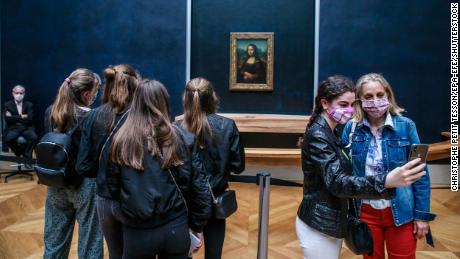
There are some early signs of recovery as European countries further ease lockdowns, welcoming tourists and allowing some businesses to reopen. The Louvre museum in Paris, which reopened Monday with social distancing in place, sold out of the 7,400 tickets available, a spokesperson told CNN Business.

The museum has lost €40 million ($45 million) in revenue since closing in March and expects its maximum daily capacity during the summer will be 10,000, or as little as a quarter of the typical number, the spokesperson said.

France’s economy returned to growth in June, with analysts saying that economic activity across the region was better than expected although still at very weak levels.

EU recovery fund

EU countries are still trying to agree the details of a €750 billion ($825 billion) coronavirus relief package. The European Commission’s proposal that two-thirds of the money be distributed via grants has met opposition from a group of nations known as the “Frugal Four” — Austria, the Netherlands, Sweden and Denmark — which favor loans.

The relief package would come on top of €540 billion ($592 billion) in existing EU stimulus efforts, as well as countries’ own aid packages, and would be welcome relief to countries including Spain, Italy, Portugal and Greece, which rely more heavily on tourism and have been particularly hard hit by the fallout from coronavirus.

The recovery fund could help improve the outlook for the region, according to the Commission, which said its forecast does not take into account the proposed package because it has not yet been approved by member states. EU leaders could hammer out an agreement when they meet on July 17 and July 18.

The new forecast provides a “powerful illustration” of the need for a deal on relief measures, Dombrovskis said.

EU plans to raise $825 billion for coronavirus relief. Hard-hit countries need help soon

The decline in output and the strength of the rebound are “set to differ markedly” between countries, according to the Commission. It said that there are “considerable risks” that cashflow difficulties “turn into solvency problems” for many companies and that the labor market suffers longer term damage.

Italy, which has suffered the highest coronavirus death toll in Europe, is expected to contract 11.2% this year, the worst decline in the region. The country’s GDP is not expected to return to last year’s level before 2022, the Commission said. The economies of France and Spain will also shrink by over 10%.

Spanish Prime Minister Pedro Sánchez and his Portuguese counterpart, Antonio Costa, said Monday that it’s “essential” for EU countries to quickly reach agreement.

“It is fundamental that the internal market starts working again, which is important not just for the countries most affected by the crisis, but also for those which benefit the most from the internal market, such as Germany … and the Netherlands,” said Costa.

— Julia Horowitz, Vasco Cotovio, Laura Pérez Maestro, Pierre Bairin and Ivana Saric contributed reporting.

Source link