Thursday, April 16, 2026

China’s Young Struggle for Jobs in the Post-Outbreak Era

0

Ms. Huang, who graduated last year from one of China’s most prestigious drama schools, got an offer in December for her first job in show business, working for a company that books bands for bars in Beijing and Shanghai.

The coronavirus, which virtually froze China for weeks, brought that gig to an end before it began. Ms. Huang has picked up freelance film production and publicity work, but she has slashed her spending and is counting her money.

“When it was April and I still couldn’t start my job, I started to feel worried,” said Ms. Huang, 24. “I began worrying that I may not be able to work this year at all. I can’t just keep waiting.”

Relations with the United States are at their lowest point in decades and Hong Kong is seething with fear and anger, but China’s biggest problem by far is getting its people back to work. Millions of workers were laid off or furloughed while China battled the coronavirus outbreak. Many of those who kept their jobs have seen their pay cut and future prospects narrow.

China’s youngest workers in particular have entered perhaps the country’s toughest job market in the modern era. Many are reducing their expectations to take any job they can get. The pressure is about to intensify: Another nearly 8.7 million young college graduates are waiting in the wings this year.

China is not the only country where younger workers are facing a jobs crisis — young adults in the United States are particularly vulnerable in the downturn. But for the world, global growth will be hard to rekindle until China gets fully back to work. And the damage to the Communist Party could be long lasting. It derives its political power from the promise of delivering a better life for the Chinese people, a promise that has become increasingly difficult to fulfill.

Demonstrating the depths of the uncertainty, Chinese leaders meeting in Beijing since last week parted with precedent and declined to set an annual economic growth target. But they have unveiled other goals that detail their biggest worries, including cutting unemployment in the cities and taming food inflation, which has jumped because of outbreak-related supply disruptions and an unrelated swine disease.

Chinese leaders have acknowledged broader problems in the work force. China’s factory workers have been hit by the trade war with the United States. Service sector companies like online delivery firms are hiring, but these jobs offer low pay and high stress.

Last week, at the opening of China’s annual parliamentary session, Li Keqiang, China’s premier, cited both unemployment and the hundreds of millions of underemployed workers doing odd jobs with flexible hours and low pay. “We will make every effort to stabilize and expand employment,” he said.

To help, China’s top leaders pledged this weekend to “use all possible means” to create jobs, including a goal to create nine million new jobs this year. But many of its plans borrow from Beijing’s old playbook, which include spending on public works, funding wasteful state-run companies and keeping the financial sector supplied with new money.

Those tactics have proven to be less effective in recent years. Even when banks are pushed to lend to smaller businesses, China’s biggest group of employers, the borrowing burden is still too high for many companies. Spending on public works gets less bang for the buck than it once did, as China’s economy matures and as its work force becomes increasingly college-educated and office bound.

China’s current official unemployment statistics, while considered imprecise by many economists, nevertheless suggest the depth of the problem for young workers. The jobless rate for people between the ages of 16 and 24 totaled nearly 14 percent, more than twice the official figure for the nation as a whole.

In forums online, young job seekers share their frustrations. “I’m about to cry,” one person recently wrote on Weibo, the popular Chinese social media service. “Finding a job is as difficult as finding a boyfriend.”

Many use words like “lost” to describe their state of mind. “I’ve exhausted all kinds of software for job hunting,” another person wrote. “Did not find a job! What more can you do!! I’m going to lose faith.”

Many of these job seekers have lowered their salary expectations and are choosing to focus their energy on finding job security at a state-owned company. While private firms are typically more popular, competition for jobs among them has become fierce, according to a recent survey of 3,000 university graduates by Liepin, a recruitment platform. Three-quarters of graduates said they expected to earn less than $1,100 a month, one of the lowest salary ranges in the survey.

Guo Minghao, a computer science major, won an internship in December. In January, as the outbreak erupted, it was rescinded. He has since interviewed at two dozen other companies that he considered sure bets for job offers. None came.

“For the first time, I felt for sure the impact of the epidemic environment had finally started to affect me,” said Mr. Guo, who added that his darkest moment was in March, typically the best time to look for a job.

Then, with the help of one of his teachers, he finally won an internship at a smaller company in the southern city of Shenzhen. But his friends worried that life in that modern, glittering city will be more expensive than the northern rust belt province of Heilongjiang where he went to school.

Mr. Guo considers himself lucky — his starting salary will be around $980 a month — which he said would be enough to cover basic expenses. He is confident that he can then turn the internship into a job and get a raise.

Mr. Guo’s friend, 22-year-old Lin Yuxin, is taking a different route. He decided against pursuing a job in a big city at a company like Tencent, the Chinese internet giant and ultimate symbol of success for computer science graduates. In today’s market, he figured, safety is more important than prestige, higher pay or career advancement.

“The larger private enterprises like Tencent, their probability of closing down might be something like 0.00001, but it’s nothing compared to state-owned enterprises,” Mr. Lin said.

Chinese companies that are hiring can afford to be choosy. Recruiters can choose from a larger pool of candidates, said Martin Ma, a human resources officer for iSoftStone, a software development company that has more than 60,000 employees and counts big foreign and domestic companies as clients. Starting salaries are lower.

“The posts available for graduates are all basic, and the salary isn’t too high,” Mr. Ma said. “The graduates do not fully understand the market. Their expectations are quite high.”

Ms. Huang, the drama-school graduate, was inspired by her parents to go into entertainment. Her mother had been an opera singer, of a style popular in southern China, and her father had been a musician in her troupe.

She attended the Central Academy of Drama, which boasts Chinese film stars like Zhang Ziyi and Gong Li among its alumni, and graduated with a dream of someday producing plays and performances of her own.

The coronavirus upended those plans. She now lives on $500 a month, with half going to rent for her apartment in the commuter town of Yanjiao near Beijing, that she gets from savings, her family and from the cash gift she received during the Lunar New Year holiday in January.

“Many of my plans have been disturbed,” Ms. Huang said. “I also hesitate to place orders for many things I wanted to buy.”

Ms. Huang is considering whether she can pursue a master’s degree abroad. That route would require the world to shrug off its outbreak-era limits on travel, which seems far from certain anytime soon.

“Because of the pandemic, the whole world is in a disarray,” Ms. Huang said. “So I feel stuck in limbo.”

Coral Yang contributed research. Cao Li contributed reporting.

Source link

The horror games: Chillingly good entertainment and sleepless nights

Looking for a new horror game to get your heart pumping and the adrenaline rushing? Then have a look at these three horror games which are guaranteed to have the desired effect.

Outlast 

If you are looking for gore, horror, and a very strong adrenaline rush, then this horror survival game is perfect for you. It’s played in first-person mode as investigative journalist Miles Upshur. You must investigate Mount Massive Asylum, a very remote psychiatric hospital located in the deep mountains of Lake County, Colorado.

The game is filled with enough gore and bothersome scenes to keep you up at night and jump scares that will keep you on your toes. You do not get a moment of peace and this game will keep you hooked.

And more good news? This is only the first game in the series. Check out Outlast: Whistleblower, followed by Outlast 2, which continues the original story.

Little Nightmares

This is a really good horror game that will definitely keep you hooked. It tells the story of Six, a nine-year-old girl who must escape from a huge ship called The Maw out in the middle of the ocean. She must start from the bottom of The Maw and find a way out.

The game has beautiful graphics and a very eerie atmosphere. There are moments that will leave your heart pumping and have you panicking. And do not be fooled by the cute cover — you will see some very disturbing things…

Amnesia: The Dark Descent

This game, much like Outlast, is a first-person survival horror game in which you play as Daniel who is navigating Brennenburg Castle. You must avoid multiple dangers as you make your way through the castle, as well as solve various puzzles.

This game is very atmospheric and will have you on your toes the entire time. It does not hold back on the scares and will have chills running down your spine even when nothing is happening on screen. This game is a definite must-play for any horror game fans and be sure to check out the rest of the games in the Amnesia series. 

Check out these games and enjoy them. You probably will not be getting any sleep again any time soon. Goodluck!


Source link

At Least A Dozen Local TV Stations Are Running ‘News’ Segments Produced By Amazon

Last week, Amazon, the online shopping behemoth, emailed local TV newsrooms across the country to pitch a pre-scripted video package touting its new fulfillment center safety protocols. The trillion-dollar company is in damage control mode amid mounting reports alleging that it has endangered its warehouse employees during the pandemic.

“Amazon is giving your viewers for the first time an inside look at it’s [sic] buildings to see how the company has transformed it’s [sic] operations in response to COVID-19,” the company said in its email to various newsrooms, which HuffPost obtained and reviewed.

Its scripted segment — which flaunts how Amazon has reportedly “transformed its operations” to protect its workers — provides no context about the expansive COVID-19 outbreaks inside some facilities, or the company’s recent firing of a dissenting employee, or the eight Amazon warehouse workers who are known to have died from the virus. 

At least a dozen news stations — including affiliates of ABC, NBC and CBS — have aired near-verbatim or modified versions of the segment in recent days, HuffPost found. Only one station that did so, ABC’s WTVG in Toledo, Ohio, disclosed the report was “from Amazon.”

Other journalists refused to run the segment outright.

“More than 30 of [Amazon’s] workers have gotten COVID-19 in Kenosha and it refuses to cooperate with the local health department. Yet @amazon still has the gall to send newsrooms this pre-packaged trash and hopes a self-respecting news operation would run it,” tweeted A.J. Bayatpour, a reporter for WKOW 27 in Madison, Wisconsin.

Bayatpour told HuffPost that of all the PR tactics he’d seen in his more than a decade of news experience, he’d never received “a full-on prepackaged news story” before.

“It’s our policy that we would not run something like that,” he said in a phone interview on Tuesday. “We need to be able to ask questions ourselves; we can’t just simply take what someone’s giving us and not be able to question it at all. If something’s prepackaged, of course we can’t do that, and for us that’s where the line is.”

Amazon told HuffPost that its video package was not promotional, and claimed that many companies have produced similar videos for news outlets.

“We welcome reporters into our buildings and it’s misleading to suggest otherwise,” said a spokesperson. “This type of video was created to share an inside look into the health and safety measures we’ve rolled out in our buildings and was intended for reporters who for a variety of reasons weren’t able to come tour one of our sites themselves.”  

The company sent the segment to newsrooms just days ahead of its annual shareholder meeting, in which investors plan to address concerns about warehouse workers’ wellbeing, as Courier Newsroom reported.

In its scripted video, Amazon notes that it has implemented more than 150 new health and safety measures including thermal screenings, sanitizer and masks for workers, as well as newly installed hand-washing stations, social distancing set-ups and regular facility deep-cleanings. It features glowing soundbites from three Amazon employees, including Stanaleen Greenman, who works in one of the company’s more than 175 warehouses.

“I feel safe coming to work every day,” she says. “The littlest job I do in here could mean the world to everybody else outside.”

The coronavirus outbreak has triggered a surge in Amazon orders, causing its stock to hit an all-time high. This unprecedented demand has also placed extraordinary pressure on its warehouse employees, whose functions are considered to be essential, though the company said it has hired an additional 175,000 associates.

Workers across the U.S. have protested against Amazon’s coronavirus response, accusing their employer of prioritizing its revenue above their safety. The company has repeatedly refused to disclose how many workers have contracted the virus.


Source by [author_name]

Most Medicare Enrollees May Soon Only Pay $35 A Month For Insulin

WASHINGTON (AP) — Medicare recipients will be able to get prescription plans that limit copays for insulin, a potential savings of hundreds of dollars, the White House announced Tuesday in a pivot to pocketbook issues that could influence November’s election.

The new benefit — to be formally unveiled at a Rose Garden event Tuesday afternoon — is being touted as a major accomplishment by Trump administration officials eager to change the subject from the grim drumbeat of coronavirus pandemic news.

Older adults who pick a drug plan offering the new insulin benefit would pay a maximum of $35 a month starting next year, a savings estimated at $446 annually. Fluctuating cost-sharing amounts that are common now would be replaced by a manageable amount.

The new insulin benefit will be voluntary, so during open enrollment this fall Medicare recipients who are interested must make sure to pick an insurance plan that provides it. Most people with Medicare will have access to them.

Stable copays for insulin are the result of a deal shepherded by the administration between insulin manufacturers and major insurers, Medicare chief Seema Verma told The Associated Press. The three major suppliers, Eli Lilly, Novo Nordisk and Sanofi, were all involved.

“It was a delicate negotiation,” Verma said. Drugmakers and insurers have been at odds in recent years, blaming one another for high prices. “I do think this is a big step.”

The deal comes as President Donald Trump returns to the issue of drug prices, trying to woo older people whose votes are critical to his reelection prospects.

The cost of insulin is one the biggest worries for consumers generally concerned about high prices for brand name drugs. Millions of people with diabetes use insulin to keep their blood sugars within normal ranges and stave off complications that can include heart disease, blindness, kidney failure and amputations. People with diabetes also suffer worse outcomes from COVID-19.

Trump last week told Republican senators at a Capitol Hill meeting he still wants to pass a bill this year to lower drug costs, saying “I think you have to do it,” according to a summary from an attendee. Bipartisan legislation to limit price increases and reduce costs for older people with high drug bills is pending in the Senate.

An AP-NORC poll in May found that 54% of adults 60 and older said they disapproved of how Trump is handling his job as president, while 45% approved.

The fate of drug pricing legislation ultimately seems to rest with House Speaker Nancy Pelosi, who has a much more ambitious plan for Medicare to negotiate prices for the costliest drugs, not just insulin. Pelosi would use expected savings to provide vision, dental and hearing coverage for older adults. Most Republicans oppose that approach as an expansion of government price-setting.

Although the White House and Pelosi’s office were in conversations last year about prescription drug legislation, the relationship between the two leaders has been tense and angry for months.

White House Counselor Kellyanne Conway told AP the administration can’t wait for the Democratic-controlled House on drug prices. “Waiting for them to act is very perilous,” Conway said.

Verma, head of the Centers for Medicare and Medicaid Services, said 1,750 insurance plans that offer drug coverage to Medicare recipients have agreed to provide insulin for a maximum copay of $35 a month next year. It will be available through “enhanced” plans that may cost more per month but offer additional benefits such as reduced cost-sharing on certain drugs. The cap on copays is expected to lead to a small increase in premiums.

Importantly for patients, the new benefit would cover a range of insulin products, including pen and vial forms for rapid-acting, short-acting, intermediate-acting and long-acting versions.

One out of three people with Medicare have diabetes, and more than 3 million use insulin. At list prices, the drug can cost more than $5,000 a year. Although insured patients don’t pay that, they do notice rising copays that are based on the full cost. People who can’t afford their insulin may try to cope by reducing their doses, a dangerous calculation that can put their lives in jeopardy.

Medicare’s prescription drug benefit is offered by private insurers, either as a stand-alone “Part D” drug plan added to traditional Medicare, or as part of a managed care plan under Medicare Advantage. The taxpayer-subsidized private plans are closely regulated by the government, but by law Medicare is barred from negotiating drug prices — something Democrats including presidential candidate Joe Biden want to change.

Insurers and drugmakers welcomed the announcement. The industry group America’s Health Insurance Plans called it an “excellent example of public-private partnerships where everyone wins.” The Pharmaceutical Research and Manufacturers of America said it’s pleased to see the administration focused on lowering out-of-pocket costs for patients.

Medicare estimates that about 6 in 10 beneficiaries are already in prescription drug plans that will offer the new insulin benefit. Those whose plans don’t offer the new option can switch during open enrollment season, which starts Oct. 15. Medicare’s online plan finder will help beneficiaries find plans that cap insulin copays.

The insulin benefit will be available in all 50 states, Washington, D.C., and Puerto Rico. Participation is voluntary for insurers and Medicare recipients alike.

In a twist, the new Trump insulin option stems in part from experimentation authority that Medicare gained under the Obama-era Affordable Care Act, which the White House is seeking to overturn as unconstitutional.

Associated Press writer Hannah Fingerhut contributed to this report.


Source by [author_name]

WA port workers may have been exposed to infected Al Kuwait ship crew

The political blame game is intensifying after a live export ship allowed to dock in Western Australia brought six new virus cases to the state.

Fremantle port workers may have been exposed to COVID-19 when they boarded the infected Al Kuwait that had apparently been cleared by a federal department to dock, despite knowing some of the crew were ill.

Now questions are being asked why it was allowed to berth at an Australian port during a pandemic.

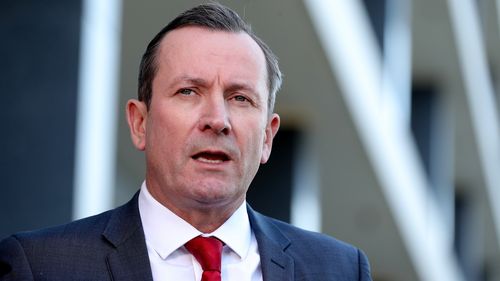
WA Premier Mark McGowan says he never knew about the ship and Federal Agriculture Minister David Littleproud insisted there was no concern for the crew.

WA Police Commissioner Chris Dawson says a report from the vessel was submitted to the federal Department of Agriculture advising some of the crew had fevers on Wednesday.

Fremantle port workers may have been exposed to COVID-19 when they boarded the infected live export ship, Al Kuwait. (AAP)

It was en route from the United Arab Emirates and the ship arrived in WA two days later.

Six of the 48 multinational crew have since tested positive to the virus.

The federal Agriculture department says it had been told three of the crew were ill, but none of them had elevated temperatures or COVID-19 symptoms before their arrival.

It only learnt crew members had fevers when they landed and immediately notified the WA health department, it said.

“The WA State Department of Health is responsible for the management of this incident, including all decisions relating to human health,” the federal department said in a statement.

“The Department of Agriculture, Water and the Environment is confident that government protocols were met.”

A general view of the Al Kuwait, a live export ship docked in Fremantle harbour on Tuesday, May 26, 2020. The ship arrived in Fremantle from the United Arab Emirates last Friday and six crew members have tested positive for coronavirus. They have been moved off the ship to a Perth hotel for quarantine. (AAP Image/Richard Wainwright) NO ARCHIVING (AAP)

No crew members were permitted to disembark and all federal department staff who attended the vessel wore full personal protective equipment.

The state government said its public health emergency operations centre received an email on Friday morning informing it three ill crew members had a temperature.

But it explicitly stated no concern for COVID-19 on the vessel and no respiratory illness present, along with making no request for assistance.

“The Human Biosecurity Officer was also not notified there was any issue of concern,” the state government said in a statement.

Mr Dawson said the Fremantle Port Authority did not know crew were ill until after the local workers went on board the ship.

Mr McGowan said he was concerned for the local workers and their families.

“We would have hoped that more red flags were raised that there were people who were sick on board so we could have been prepared,” he said on Tuesday.

Mr McGowan said he didn’t think information was deliberately withheld “but we certainly need to review the protocols”.

The Al Kuwait arrived on Friday after sailing from the United Arab Emirates and six of the 48 multinational crew have since tested positive. (AAP)

The port workers are being isolated and contact tracing is under way while the six crew who tested positive are being quarantined at a Perth hotel.

The remaining 42 are well and remain on board the vessel.

The Fremantle Port Authority only found out after up to half a dozen local workers boarded the ship, Mr Dawson said.

Mr McGowan says they are being isolated and contact tracing is under way.

Mr McGowan said he doesn’t want to “point fingers at this point in time” but state authorities are working to find out what went wrong.

“We’re very concerned and to a degree, disappointed,” he said on Tuesday.

“Clearly, if there’s cases of people reporting high temperatures on board… red flags should be raised.

“So I just say to everyone involved, in particular the Commonwealth agencies that knew about this, they need to be on guard and be alert.”

No Al Kuwait crew members had been permitted to disembark and all federal department staff attended the vessel wearing full personal protective equipment.

“The Department of Agriculture, Water and the Environment is confident that government protocols were met,” the statement said.

Western Australia Premier Mark McGowan says they are being isolated and contact tracing is under way. (AAP)

Mr McGowan said the men who tested positive were being quarantined at a Perth hotel while the remaining 42 appeared well and were being kept on board.

They would be monitored and given health assessments as required.

“This is a fast evolving situation. But I suspect it is probably more than likely that more crew members may become infected with the virus,” he said.

Commissioner Dawson says he has been assured none of the crew disembarked.

Mr McGowan said the state government wanted the ship to set sail as soon as possible, but it needed to be cleaned first.

Mr Dawson suggested the federal agriculture department should do the fumigation, saying: “The Commonwealth have responsibilities here.”

Border Force said it completed all customs and immigration related clearances, but received no reports of illness on board the vessel on the day of or prior to its arrival in port.

Police Commissioner of Western Australia Chris Dawson said a report highlighting the health statuses of some of the crew was lodged days ago. (AAP)

The six new cases bring the number of active cases in WA to 12 after a Victorian family returned from Qatar with the disease on May 17.

Those four cases were confirmed on Monday, ending a streak of zero case days.

The family has been quarantining in a hotel since arriving.

“This situation again highlights that we are not free from this virus,” WA Health Minister Roger Cook said.

“There are still people getting sick and we are still at risk.

“We cannot be careful enough.”

The state government remains adamant the interstate border will remained closed for months.

For breaking news alerts and livestreams straight to your smartphone sign up to the 9News app and set notifications to on at the App Store or Google Play.

Source by [author_name]

Trump Wants Troops in Afghanistan Home by Election Day. The Pentagon Is Drawing Up Plans.

0

WASHINGTON — Senior military officials are set to brief President Trump in the coming days on options for pulling all American troops out of Afghanistan, with one possible timeline for withdrawing forces before the presidential election, according to officials with knowledge of the plans.

The proposal for a complete withdrawal by November reflects an understanding among military commanders that such a timeline may be Mr. Trump’s preferred option because it may help bolster his campaign.

But they plan to propose, and to advocate, a slower withdrawal schedule, officials said.

The move is part of the Pentagon’s attempt to avoid another situation like the one in December 2018 and again in October 2019, when Mr. Trump surprised military officials by ordering the complete withdrawal of U.S. troops from Syria. Diplomatic chaos and violence followed, and the president subsequently modified each announcement. American troops remain in Syria, although in smaller numbers.

Senior military officials believe a quick withdrawal from Afghanistan would effectively doom the peace deal reached this year with the Taliban.

In recent months, Mr. Trump has repeatedly voiced a desire to leave Afghanistan sooner than the timeline laid out in the Feb. 29 peace agreement with the Taliban, which stipulated U.S. troops would leave in 12 to 14 months if the insurgent group met certain conditions.

The Pentagon is expected to try to persuade a commander in chief who has made clear his desire to end America’s involvement in what he has criticized as “endless wars” — and who has regularly surprised the military with his decisions.

The debate also highlights the mounting difficulty facing the February agreement. Political strife, the novel coronavirus and bloody Taliban attacks have almost derailed what little progress has been made since the deal’s signing.

This article is based on conversations with five officials familiar with the debate over the troop withdrawal. The officials spoke on the condition of anonymity because the deliberations were intended to be private.

The Pentagon is set to lay out multiple options in the meeting with Mr. Trump.

One would give Mr. Trump the option of pulling all forces from the country before Election Day. But the Pentagon has other options that would withdraw forces more slowly, with one plan sticking close to the current timeline that would keep American forces in the country until May 2021.

Senior officials believe the president may be able to be persuaded that protecting the peace agreement, which his administration sponsored and supports, will require a slower drawdown of forces, to give the Taliban an incentive to reduce attacks.

Defense Department officials are also arguing to the White House that they cannot yet guarantee that Afghanistan will not again become a haven for attacks against the United States. Arguably the only clear-cut condition of the February deal, outlined in one of the secret annexes, is that the Taliban must publicly renounce the Islamic State and Al Qaeda before the full troop withdrawal begins.

There are currently fewer than 12,000 troops in Afghanistan. The U.S.-led mission in the country is in the process of drawing down to 8,600 troops as part of the February agreement. This smaller American contingent will rely heavily on Special Operations forces and joint United States-Afghan cells, known as “regional targeting teams,” that are focused on counterterrorism missions across the country.

“Any reduction under 8,600 U.S. troops will be conditions-based after the U.S. government assesses the security environment and the Taliban’s compliance with the agreement, and in coordination with our NATO allies and partners,” Lt. Col. Thomas Campbell, a Pentagon spokesman, said in a statement.

The Pentagon believes that at least 50 percent of Afghan security forces most likely have the virus, meaning that any training and joint operations between United States and Afghan forces have been paused, halting a key pillar of the American war effort, especially against Islamic State enclaves in the country’s east. But airstrikes against the group still continue.

As part of the peace agreement, the U.S. military is shutting several bases. But the spread of the coronavirus has also accelerated the closing of smaller Special Operations outposts used by the elite units while operating alongside their Afghan counterparts.

In a statement on Saturday, the Taliban declared a temporary cease-fire for the three days of the Islamic festival Eid al-Fitr, which started on Sunday and marks the end of Ramadan, the holy month of daytime fasting.

The Afghan government followed, declaring a cessation of fighting even though officials had recently declared that they were restarting offensive operations after waves of Taliban attacks had killed hundreds of security forces after the February agreement. Sunday’s cease-fire is the second of the entire war. The first, widely praised on all sides and in the international community, was in 2018, also during Eid.

“This development offers the opportunity to accelerate the peace process,” Zalmay Khalilzad, the United States envoy for Afghan peace, said in a statement. “Other positive steps should immediately follow: the release of remaining prisoners as specified in the U.S.-Taliban agreement by both sides, no returning to high levels of violence, and an agreement on a new date for the start of intra-Afghan negotiations.”

The exchange of 6,000 prisoners was one of the first sticking points after the United States-Taliban deal, as it all but forced the Kabul government to release Taliban prisoners even though it was not a signatory of the agreement.

Top American officials, including Secretary of State Mike Pompeo, have pressured President Ashraf Ghani of Afghanistan to release the prisoners in the hopes that it would pave the way for the Afghan government to negotiate with the Taliban. Mr. Ghani has ordered their release in a series of groups, as has the Taliban, but after the announced cease-fire, Mr. Ghani pledged to release up to 2,000 more in an attempt to use the three-day cease-fire as a reset for a peace deal that was on the verge of falling apart.

On Tuesday, the Afghan government released 900 Taliban prisoners, the largest in one day since the slow process of prisoner release started and in what Afghan officials described a “good will” move in the hopes the cease-fire could be extended before direct negotiations.

President Barack Obama had been intent on ending the long war in Afghanistan, but the military thought it precipitous. Commanders argued that removing troops would threaten what little progress had been made after years of prolonged fighting, but officials also acknowledged the pause would give the a new president time to reassess options. In October 2015, Mr. Obama halted his drawdown. Mr. Trump and America’s NATO allies ultimately added forces after the Taliban had retaken broad parts of the country.

The current plan of keeping forces in Afghanistan until May 2021 would allow Mr. Trump, if he is re-elected, to re-evaluate his decision to remove troops based on the level of Taliban violence and how well the peace agreement is working. Some American officials also say the political pressure to remove the troops could be different in a second term.

And if Mr. Trump is defeated, a new president may want to reassess whether a continued American troop presence is necessary.

Lisa Maddox, a former C.I.A. analyst, said that cutting short the deployment by only a few months might not seem like a lot, but the current situation in Afghanistan was fragile.

“It sends a message to our Afghan partners that we are running away,” she said. “Extra time allows for better turnover, which is a complicated process given the U.S. government’s involvement in supporting the country’s security and governance.”

Mujib Mashal contributed reporting from Kabul.

Source link

Myanmar’s Rakhine State Revokes Order Evicting Squatters From Rohingya Land

0

Authorities in western Myanmar’s Rakhine state have revoked an order requiring Rakhine Buddhist families to vacate land in a former Rohingya Muslim area of Sittwe township that was razed eight years ago during a flare-up of sectarian violence.

The May 14 order was revoked on May 19, frustrating members of the Rohingya community originally displaced from their homes in Sittwe’s Seyton Su Muslim quarter, who called the rescinding of the order evicting thousands of squatters from their former land evidence of a lack of the rule of law in the conflict-torn region.

“This is a clear sign of the lack of law and order in Myanmar,” said Rohingya community leader Kyaw Hla Aung, who has been sheltering in Sittwe’s That Kahi Pyin village ever since a wave of brutal slayings and attacks across Rakhine in June 2012 that left more than 200 people dead and around 120,000 displaced.

Local government authorities should uphold the laws they themselves have issued, he said, adding, “If the government would only comply with existing laws, this would solve many problems.”

A Rakhine resident of Seyton Su meanwhile welcomed authorities’ decision to withdraw the order evicting Rakhine people from the disputed ward, now filled with structures illegally built by squatters moving from rural areas to Sittwe in search of work.

“We were all upset at the order issued by the government that all 1,255 shelters built here would have to be vacated, which we learned about from an RFA news broadcast on May 18,” RFA’s source said, speaking on condition of anonymity.

“But the next day, we came across a notice posted at the administration office saying that the order had been revoked,” he said. “We are all very happy now.”

Ward official murdered

Meanwhile, a Seyton Su administrator was killed May 24 by unidentified assailants wearing masks who approached the ward official at around 8:00 a.m. while he was buying betel leaves and stabbed him to death before fleeing by motorcycle, sources said.

Thein Hlaing had posted the original eviction order on a ward notice board on May 14, and had received several threats by phone before he was killed, a family member told RFA, speaking on condition of anonymity.

“He only told us he had received threats. He didn’t say what they were about,” the family member said.

“His murder could be related to the issue of the eviction of the squatters. I don’t know this for sure, but I have concluded this is why he was killed,” he said.

Calls seeking comment from Rakhine state government spokespersons and Sittwe township administrators rang unanswered over the weekend and on Monday.

Reported by RFA’s Myanmar Service. Translated by Ye Kaung Myint Maung. Written in English by Richard Finney.


Source link

Jimmy Fallon Apologizes For Wearing Blackface In ‘Saturday Night Live’ Clip From 2000

Jimmy Fallon apologized after a resurfaced video of him wearing blackface sparked outrage on social media — although it wasn’t the first time the video had circulated online.

On Tuesday, a short video of the “Tonight Show” host impersonating Chris Rock in a “Saturday Night Live” sketch from 2000 went viral along with the hashtag #JimmyFallonIsOverParty on Twitter.

Fallon responded to the criticism in a tweet Tuesday evening. He said that wearing blackface was a “terrible decision” and “unquestionably offensive,” and he thanked those who condemned him “for holding me accountable.”

HuffPost reached out to “SNL” for comment, but did not receive an immediate response.

Before Fallon apologized, some people called for the comedian to be “canceled” due to the 20-year-old clip. Others said they’d prefer an explanation, an apology or even an acknowledgment of wrongdoing from Fallon.

Others pointed out that “SNL” was at fault as well.

Fallon is certainly not the only white person who used blackface in the past — a fact that many, many, many Twitter users pointed out.

Even seemingly progressive performers who ally themselves with people of color have darkened their skin and thought they were being funny. In years past, Fred Armisen and Billy Crystal both wore blackface on “SNL” just like Fallon. Robert Downey Jr. darkened his skin in the 2008 movie “Tropic Thunder” while Julianne Hough put on blackface makeup as part of a Halloween costume in 2013.

Ted Danson famously donned blackface and repeatedly used the N-word while roasting then-girlfriend Whoopi Goldberg in 1993.

Last year, comedian Nick Cannon also called out Jimmy Kimmel and Sarah Silverman for wearing blackface while sharing the same exact clip of Fallon during Black History Month.

Silverman, for her part, has apologized for the 2007 sketch in which she wore blackface on the “Sarah Silverman Program.”

“I don’t stand by the blackface sketch,” she told The Hollywood Reporter in May 2018. “I’m horrified by it, and I can’t erase it. I can only be changed by it and move on.”

According to the Independent, the clip of Fallon surfaced this time after Doja Cat was accused of joining a white supremacist chatroom last week. Fans who criticized the singer used the hashtag #DojaCatIsOverParty on Twitter, which is similar to the one trending for Fallon.

Singer Lana Del Rey also pops up in many of the latest tweets involving Fallon, likely due to controversial comments she made about Beyoncé and Cardi B. last week that many found racist.

The Fallon clip also comes in the wake of several news stories involving racism. Last week, Volkswagen apologized for an ad in which a giant white hand pushes around a tiny Black man. On Monday, a white woman named Amy Cooper was put on administrative leave from her job and surrendered her dog after she called the cops on a Black man in New York City’s Central Park who asked her to put a leash on her cocker spaniel. On Tuesday, a disturbing video went viral showing a white police officer in Minneapolis kneeling on the neck of a Black man, who died soon after.


Source by [author_name]

Some COVID-19 Victims Developing Dangerous And Perplexing Blood Clots

First came a high fever, drenching sweats and muscle aches. Then, almost a month later, a weird numbness that spread down the right side of her body.

Darlene Gildersleeve thought she had recovered from COVID-19. Doctors said she just needed rest. And for several days, no one suspected her worsening symptoms were related — until a May 4 video call, when her physician heard her slurred speech and consulted a specialist.

“You’ve had two strokes,’’ a neurologist told her at the hospital. The Hopkinton, New Hampshire, mother of three is only 43.

Blood clots that can cause strokes, heart attacks and dangerous blockages in the legs and lungs are increasingly being found in COVID-19 patients, including some children. Even tiny clots that can damage tissue throughout the body have been seen in hospitalized patients and in autopsies, confounding doctors’ understanding of what was once considered mainly a respiratory infection.

“I have to be humble and say I don’t know what’s going on there, but boy we need to find that out because unless you know what the pathogenic (disease-causing) mechanism is, it’s going to be tough to do intervention,” Dr. Anthony Fauci, the nation’s top infectious disease expert, remarked during a medical journal interview last month.

Doctors and scientists at dozens of hospitals and universities around the globe are seeking answers while trying to measure virus patients’ risks for clots and testing drugs to treat or prevent them.

Gildersleeve said health authorities “need to put out an urgent warning about strokes” and coronavirus. Not knowing the possible link “made me doubt myself” when symptoms appeared, she said.

Some conditions that make some COVID-19 patients vulnerable to severe complications, including obesity and diabetes, can increase clot risks. But many authorities believe how the virus attacks and the way the body responds both play a role.

“COVID-19 is the most thrombotic (clot-producing) disease we’ve ever seen in our lifetime,” said Dr. Alex Spyropoulos, a clot specialist and professor at Feinstein Institutes for Medical Research in Manhasset, New York.

Clotting has been seen in other coronavirus infections, including SARS, but on a much smaller scale, he said.

Scientists believe the coronavirus enters the body through enzyme-receptors found throughout the body, including in cells lining the inside of blood vessels. Some theorize that it may promote clotting by somehow injuring those vessels as it spreads. That injury may cause a severe immune response as the body tries to fight the infection, resulting in inflammation that may also damage vessels and promote clotting, said Dr. Valentin Fuster, director of Mount Sinai Heart hospital in New York.

It’s unclear how many COVID-19 patients develop clots. Studies from China, Europe and the United States suggest rates ranging from 3% to 70% of hospitalized COVID-19 patients; more rigorous research is needed to determine the true prevalence, the National Institutes of Health says.

Prevalence in patients with mild disease is unknown and the agency says there isn’t enough evidence to recommend routine clot screening for all virus patients without clotting symptoms, which may include swelling, pain or reddish discoloring in an arm or leg.

Some hospitals have found 40% of deaths in COVID-19 patients are from blood clots. Spyropoulos said that’s been true at his 23-hospital system in the New York City area, Northwell Health, which has treated over 11,000 COVID-19 patients.

Cases there have dropped by almost half in the past month, allowing more time for research before an expected second and maybe third wave of infections, he said, adding: “We’re racing against time to answer the key clinical questions.”

Patients hospitalized with any severe illness face increased risks for clots, partly from being bedridden and inactive. They commonly receive blood-thinning drugs for prevention. Some doctors are trying higher-than-usual doses for prevention in hospitalized coronavirus patients.

A few have used powerful clot-busting medicines typically used to treat strokes, with mixed results. In guidance issued May 12, the NIH said more research is needed to show whether that approach has any benefits.

Fuster was involved in preliminary research on nearly 2,800 COVID-19 patients at five hospitals in the Mount Sinai system. A look at their outcomes suggests slightly better survival chances for virus patients on ventilators who received blood thinners than among those who didn’t. Although the results are not conclusive, all COVID-19 patients at Mount Sinai receive blood thinners for clot prevention unless they are at risk for bleeding, a potential side effect, Fuster said.

Some COVID-19 patients, like Gildersleeve, develop dangerous clots when their infections seem to have subsided, Spyropoulos said. Patients treated at Northwell for severe disease are sent home with a once-a-day blood thinner and a soon to be published study will detail their experiences. Spyropoulos has been a paid consultant to Janssen Pharmaceuticals, makers of Xarelto, the drug’s brand name.

In addition, Northwell is taking part in a multi-center study that will test using blood thinners for clot prevention in COVID-19 patients not sick enough to require hospitalization.

In a small study published May 15, University of Colorado doctors found that combined scores on two tests measuring clotting markers in the blood can help determine which patients will develop large dangerous clots. One test measures a protein fragment called D-dimer, a remnant of dissolved clots. High levels sometimes indicate dangerous clots that form deep in leg veins and travel to the lungs or other organs.

Dr. Behnood Bikdeli of Columbia University’s Irving Medical Center, said D-dimer levels in many of his COVID-19 patients have been alarmingly high, as much as 50 times higher than normal.

Concerns about blood clots in COVID-19 patients prompted a recent 30-page consensus statement from an international group of physicians and researchers. Bikdeli is the lead author.

It says that testing to find clots that require treatment includes X-rays or ultrasound exams, but poses a risk for health care workers because the virus is so contagious. Bikdeli said he fears when protective gear was more scarce, some dangerous clots were undiagnosed and untreated.

Social distancing may make people more sedentary and more vulnerable to clots, particularly older adults, so doctors should encourage activity or exercises that can be done in the home as a preventive measure, the statement says.

Warnell Vega got that advice after collapsing at home April 19 from a large clot blocking a lung artery. Doctors at Mount Sinai Morningside think it was coronavirus-related. Vega, 33, a lunch maker for New York City school children, spent a week in intensive care on oxygen and blood thinners, which he’s been told to continue taking for three months.

“I just have to watch out for any bleeding, and have to be careful not to cut myself,” Vega said.

Gildersleeve, the New Hampshire stroke patient, was also sent home with a blood thinner. She gets physical therapy to improve strength and balance. She still has some numbness and vision problems that mean driving is out, for now.

Doctors are unable to predict when or whether she’ll regain all her abilities.

’’I’m trying to remain positive about recovering,” she said. ’’I just have to be patient and listen to my body and not push too hard.”

Follow AP Medical Writer Lindsey Tanner at @LindseyTanner.

The Associated Press Health and Science Department receives support from the Howard Hughes Medical Institute’s Department of Science Education. The AP is solely responsible for all content.


Source by [author_name]

Cambodians Forced to Sell Assets to Repay Loans as Coronavirus Hammers Economy

0

As the coronavirus pandemic continues to hammer the economy, many Cambodians are being forced to sell their livestock and farms to pay off debts to banks and microfinance institutions, prompting calls for the government to prevent lenders from collecting during the outbreak.

Some Cambodians told RFA’s Khmer Service that creditor’s agents have even been visiting their homes and demanding loan repayment even though the National Bank of Cambodia has urged them not to do so amid the health crisis, which has seen 124 people in Cambodia become infected with COVID-19, the disease caused by the coronavirus.

A villager from Svay Rieng province, who spoke to RFA on condition of anonymity out of concerns for his security, said an agent from microfinancer Amret MFI visited him recently and threatened to confiscate his property if he refused to pay the U.S. $10,000 he owes, including interest and principle.

He said he was forced to sell off half of a hectare (1.25 acres) of farmland to settle the debt.

“They told me to pay the debt within four to five months, otherwise they would foreclose on my house and auction it,” he said.

RFA spoke to a representative of Amret who said that the lender “needs time to investigate the case in detail” before it could comment on the case.

A resident of the capital Phnom Penh named Heng Sopheak said he owes money to lenders AMA and LOLC Microfinance but cannot afford to pay the debt.

“I don’t have money to pay them on time, but they asked me to sell whatever I can to erase my debt,” he said.

“I owe a lot of money and I can barely find enough food to eat. They have demanded that I pay, even after I begged them [to give me more time].”

A villager from Angkor Thom district in Siem Reap province named Teng Kroeung told RFA that her creditor would not provide her any relief from her U.S. $10,000 loan, despite the extenuating circumstances of the outbreak.

She said her two children had planned to take jobs in Thailand to help repay the debt, but the border has been closed to prevent the spread of the virus.

“They refused to delay my payment,” she said, adding that she was forced to sell three cows to honor her debt.

“I am very sad because my children wanted to go to Thailand, but the border has already closed.”

RFA was unable to reach National Bank of Cambodia general director Chea Chanto for comment on Tuesday.

Requesting relief

Cambodia Microfinance Association (CMA) spokesman Kaing Tongngy told RFA his group has urged those impacted by the outbreak to request a refinancing of their debts, saying the process is straightforward.

“I urge them to talk directly to the microfinance institution and ask them to consider refinancing the loans because of the coronavirus—the staff will provide them with documentation,” he said. “It isn’t complicated.”

To date, CMA has accepted 175,364 customers’ requests to refinance or change the terms of their loans and 90 percent of them have been approved, amounting to around U.S. $656 million, he said.

Kaing Tongngy’s comments came a week after In Channy, the chief executive officer and president of Acleda Bank Plc, told RFA that the banking sector is handling debtors impacted by the outbreak “very gently,” based on guidance by the government.

He noted that the central bank had decreased some capital requirements, allowing banks and microfinance institutions greater leeway to assist borrowers.

“Banks and microfinance lenders made the request and it was approved, so we can access more capital to support our operations and customers,” he said, adding that government measures have been “sufficient,” and no further action is needed.

‘Facing a debt crisis’

But in a statement issued Sunday, the banned opposition Cambodia National Rescue Party (CNRP) told RFA that the outbreak has cost millions of Cambodians their jobs and incomes, specifically highlighting the plight faced by those indebted to lenders.

“The most serious issue is that people are facing a debt crisis,” the statement read, adding that based on research by nongovernmental organizations, some 2.5 million people owe money that they cannot repay.

“This issue is a danger to people’s livelihoods and health, because they will continue to lose property, land, and homes if the government doesn’t take any appropriate measures to resolve the debt crisis.”

According to the CNRP, simply encouraging lenders to reconsider the terms of loans based on individual situations is “ineffective,” and has produced few results.

“People who are in debt have not been given any relief, leading some to sell their properties or seek other loans with higher interest rates [to repay the original ones], while others risk [health and legal issues] migrating to work in Thailand to earn money to pay their debts,” the statement said.

“The CNRP has reiterated its appeal to the Phnom Penh government to put in place strict measures to delay or suspend the payment of debts to microfinance institutions or banks for at least three months and to protect properties from confiscation.”

The party also called for the introduction of a stimulus package to help those lenders impacted by such government measures.

‘Stop asking’

Speaking to RFA from self-imposed exile in France, where he has lived since 2015 to avoid a string of charges and convictions he says are politically motivated, acting CNRP chief Sam Rainsy said the measures his party has proposed would not be permanent, and only in effect during the pandemic.

“We need a collective solution for two to three million people who are in debt and currently are unable to pay,” he said, adding that if the economy had not improved during a three-month moratorium on interest and principle payments, “we would need to continue the suspension.”

Those affected by the outbreak “should not need to request relief,” he said.

“Banks and microfinance institutions simply need to stop asking people to repay their debts until the outbreak is over.”

Reported by RFA’s Khmer Service. Translated by Samean Yun. Written in English by Joshua Lipes.


Source link