Saturday, April 18, 2026

Vaccine Politics Take Center Stage In Competitive Democratic Primaries

Two Democrats facing long odds in competitive primaries are hoping that their opponents’ past skepticism of vaccines will prompt voters to give them a shot during a pandemic that has heightened awareness of scientific protocols.

The issue is most prominent in Vermont, where former state Education Secretary Rebecca Holcombe is battling Lt. Gov. David Zuckerman for the Democratic gubernatorial nomination in the Aug. 11 primary. Holcombe has blasted Zuckerman for questioning the need for vaccines to be mandatory in 2018 and supporting a “philosophical” exemption to vaccination in 2015. 

Suraj Patel, an attorney challenging New York Rep. Carolyn Maloney in the June 23 primary, has crafted a video documenting Maloney’s past interest in a link between vaccines and the instance of autism. The idea that vaccines can account for an increase in the documented cases of child autism always lacked credible evidence and the work of a British scientist promoting the theory has been debunked and discredited.

Both Zuckerman and Maloney claim they are staunch supporters of vaccination and say their opponents are distorting their records on the matter. 


President Donald Trump’s dismissive attitude toward science, including toward childhood vaccines, has made vaccine skepticism of any kind radioactive in Democratic circles.

But Holcombe and Patel maintain that their rivals’ histories are enough to disqualify them. And in contemporary Democratic politics, anything resembling the science-illiterate approach of President Donald Trump is quite often radioactive.

“Why it is more potent now is because you’re seeing the real-life consequences of ‘Do you believe science or do you not believe science? Do you believe in following medical advice to avoid all these things or are you going to be a skeptic?’” said Lis Smith, a Democratic communications consultant, who advised Patel during his first unsuccessful bid to unseat Maloney in 2018.

As a presidential candidate, Trump pandered to anti-vaxxers in Sept. 2015 by expressing concern that the higher “doses” and frequency of vaccines were creating more autism cases. (During a resurgence of measles cases in April 2019, however, Trump urged parents to vaccinate their children.)

And under his presidency, a slew of right-wing politicians have embraced the anti-vaxxer movement, particularly in state governments. For example, in 2018, West Virginia Gov. Jim Justice (R), a Trump ally, appointed a supporter of broad vaccine exemptions to an open state Senate seat, and named the head of an anti-vaxxer group to an open state House seat.

Trump’s fact-free statements about the COVID-19 pandemic, endorsement of untested for the virus, and rocky relationship with Dr. Anthony Fauci, the director of the National Institute of Allergy and Infectious Diseases, makes the matter that much more relevant.

“We’re seeing the consequences every day of a president who ignores scientific and medical advice with all the COVID stuff,” Smith said.

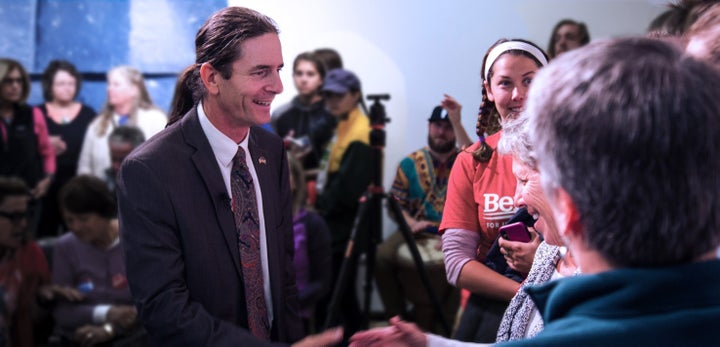
Vermont Lt. Gov. David Zuckerman, a front-runner for the Democratic gubernatorial nomination, fought to preserve exemptions f


Vermont Lt. Gov. David Zuckerman, a front-runner for the Democratic gubernatorial nomination, fought to preserve exemptions from vaccine mandates in 2015.

A Vermont Candidate Who Called Vaccines ‘Disputed’ Science

As a Vermont state senator in 2015, Zuckerman tried to preserve a “philosophical” exemption to vaccines by introducing an amendment that would have made the exemption’s elimination contingent on the development of a DNA test to determine whether someone had a genetic predisposition to an allergic reaction to a vaccine. He was unsuccessful.

At the time, he also said that vaccine science was “disputed.” 

During his 2018 reelection run for lieutenant governor, Zuckerman, who is an organic farmer, also used arguments typically wielded by anti-vaxxers to explain his skepticism. He questioned the integrity of the CDC’s infectious disease board, claiming it had a “number of conflicts of interest.” And he maintained that while he supported vaccination personally, he was unsure that the “government should be forcing that on to individuals.”

Efforts to turn vaccination mandates into a question of personal freedom fail to account for the need to establish “herd immunity,” a term for when vaccination rates are so high that even individuals who cannot be vaccinated for medical reasons are safe from contracting a disease. Parts of the United States where anti-vaxxer sentiment is high have seen resurgences of dangerous childhood illnesses, such as measles, mumps and whooping cough.

And despite the insinuations of anti-vaxxers, the CDC does not profit from the production or dissemination of vaccines and its officials are prohibited from accepting gifts from outside groups worth more than $20.

Dr. Walter Orenstein, a former head of the CDC’s immunization program who now runs vaccine policy and development at Emory University, noted that the CDC has a record of withdrawing its endorsement of vaccines if they spark a medical problem that was not detected during the approval process. For example, in 1999, the agency recommended suspension of the rotavirus vaccine after it emerged that 15 people who took it suffered intestinal blockages.

I don’t think Vermont will elect somebody who disputes the basic public health research behind childhood immunization.
Rebecca Holcombe, former Vermont Secretary of Education

Holcombe, who left Republican Gov. Phil Scott’s cabinet in 2018 over what she saw as an effort to impose austerity on local school districts, put Zuckerman on the defensive about the comments in her opening statement during a May 11 debate.

“In the midst of a pandemic, when it is so important that we replace Gov. Scott, disputing the science behind immunization is both misguided and dangerous,” she said.

In a Wednesday interview with HuffPost, she was more blunt, arguing that nominating Zuckerman after his comments would effectively preclude Democrats from retaking the governorship. “I don’t think Vermont will elect somebody who disputes the basic public health research behind childhood immunization,” she said.

During the May debate, Zuckerman accused Holcombe of taking his legislative record and comments out of context. He noted that he has vaccinated his daughter and introduced a bill making the HPV vaccine mandatory. And he promised he would “trust the scientists” when a COVID-19 vaccine comes out. 

Reached for comment, Zuckerman’s campaign referred HuffPost to a statement he issued after the debate with Holcombe. “I think everyone should get vaccines unless it is medically contraindicated,” he said. 

Garrison Nelson, a retired political scientist at the University of Vermont, said Zuckerman’s superior name recognition virtually assured him the nomination, notwithstanding any damage Holcombe manages to inflict. But he was equally certain that Zuckerman would lose to Scott in the general election, who has presided over one of the country’s more moderate outbreaks of the pandemic. 

“The Vermont COVID-19 death toll is minuscule and Governor Scott will get credit for it,” Nelson said. “David Zuckerman’s anti-vaxxer stance is a non-winner in a state as enlightened as Vermont.” 

In the meantime, Zuckerman’s proximity to leading national progressives has raised questions for them. Zuckerman, who ardently supported Vermont Sen. Bernie Sanders’ presidential run, has the endorsements of all four of Sanders’ 2020 campaign co-chairs: Rep. Ro Khanna (D-Calif.), former Ohio state Sen. Nina Turner (D), San Juan, Puerto Rico, Mayor Carmen Yulín Cruz, and Ben & Jerry’s founder Ben Cohen. (Sanders himself has not endorsed.)

“Lt. Governor David Zuckerman has assured me he believes 110% in vaccines and supports the science behind them,” Khanna said in a statement. “Attacks like this against him during the primary undermines not only the Democratic party in Vermont but across the country.” 

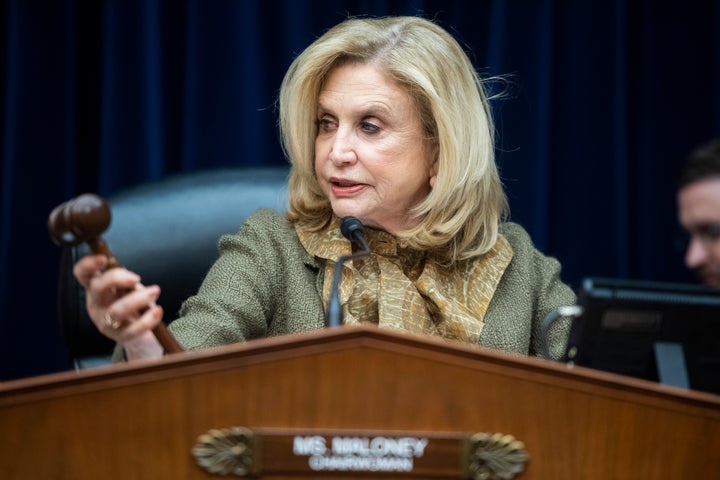
For years, Rep. Carolyn Maloney (D-N.Y.) used her platform to raise questions about the link between vaccines and autism. She


For years, Rep. Carolyn Maloney (D-N.Y.) used her platform to raise questions about the link between vaccines and autism. She has not disavowed her past statements.

A New York Congresswoman’s Concerns About Vaccines And Autism

Maloney, who has represented parts of New York City in Congress since 1993, for years pursued an interest in the unsubstantiated link between vaccines and autism. In 2007, and again in 2009, Maloney introduced a bill that would have required the federal government to study whether “vaccines or vaccine components play a role in the development of autism spectrum or other neurological conditions.” She even teamed up with Rep. Chris Smith (R-N.J.) in 2009 to ask Health and Human Services to take some of the $300 million allotted by the stimulus bill for vaccine purchase and distribution, and put it toward  conducting the vaccine safety studies. 

Maloney also co-sponsored a 2007 bill that would have prohibited the use of mercury-based chemicals in vaccines. Due to opposition from anti-vaxxers, vaccines with mercury-based chemicals were already almost entirely no longer in circulation at the time, despite the absence of scientific evidence of their harm.

At the time of the bills’ introduction, there were already multiple academic studies that had concluded there was no link between vaccines and autism, including vaccines with thimerosal, a compound that contains mercury.

“No reputable science supports a role for vaccines in autism,” Orenstein said. “One of the problems is that if 90% of the people are vaccinated, then 90% of the bad things that were going to happen anyway will happen to vaccinated people, purely by coincidence.” 

During the late 2000s, as she was introducing bills about baseless vaccine health threats, Maloney kept the company of the anti-vaxxer movement’s more notorious figures. Maloney spoke at a 2008 “Green Our Vaccines” rally in Washington headlined by anti-vaxxer actors Jenny McCarthy and Jim Carrey, where she praised them for “all they have done to protect our nation’s children.”

McCarthy, who has an autistic son, was one of the anti-vaxxer movement’s leading spokespeople. She promoted the research of quack British doctor Andrew Wakefield, whose 1998 study fueling the anti-vaxxer movement was retracted in 2010. That same year, Wakefield’s shady practices led the United Kingdom to strip him of his medical license.

Maloney also had kind words for then-Rep. Dan Burton (R-Ind.) in a 2012 hearing about the health risks of vaccines. Burton, who had an autistic grandchild, was Congress’s leading anti-vaxxer in the 2000s, holding an infamous hearing on the alleged ties of autism to vaccines in 2000 that featured Wakefield. (After retiring from Congress at the end of 2012, Burton took up work as a lobbyist for an alternative medicine group affiliated with Scientology.)

In a Nov. 2012 hearing convened by the House Committee on Oversight and Government Reform on rising autism rates, Maloney praised Burton for “his leadership” on the issue of vaccines and autism, crediting him for making “some progress.”

Maloney repeatedly pressed Dr. Coleen Boyle, director of the CDC’s National Center on Birth Defects and Developmental Disabilities, on whether the agency had adequately studied the possible link between vaccines and autism. Boyle began to explain that the CDC had already studied the issue, but Maloney cut her off to deliver a speech on her suspicions of the current regimen of vaccines. 

“I’m for vaccinations. They prevent disease. I’m totally for it,” she said. “But why do you have to cram nine, six at one time when the verbal evidence seems so strong from so many people that they had a healthy child until they got vaccinated?”

Patel challenged Maloney from the left in 2018. Her past vaccine skepticism came up, but it wasn’t central. 

But as Patel mounts another bid to unseat Maloney in the national epicenter of the pandemic, he has made vaccine policy a far more dominant theme. It’s part of a larger effort to paint himself as a science-minded progressive in better touch with residents of New York’s 12th Congressional District, which includes Manhattan’s East Side, Queens’ Long Island City neighborhood and northwest Brooklyn.

In mid-May, his campaign released a 90-second video on social media documenting all of Maloney’s dabbling with the anti-vaxxer movement. The video notes that some prominent anti-vaxxers have touted quotes by Maloney. 

It’s a live issue because the damage around this has been done and they refuse to acknowledge that.
Suraj Patel, hotel executive and House candidate

It’s evidence, Patel maintains, that Maloney’s legitimization of vaccine skepticism has had a lasting, negative impact.

“We’re looking at emboldening an anti-vaccine movement that has created the false narrative that vaccine safety is in question,” Patel said. “It’s a live issue because the damage around this has been done and they refuse to acknowledge that.”

Patel, who also teaches business ethics at New York University, worries that the same anti-vaxxer movement that Maloney once legitimized could erode public confidence in a vaccine for COVID-19 when it arrives. 

“It’s going to be terrifying when we finally do get a vaccine and these folks make it harder to build up herd immunity,” he said. 

Without commenting on individual elected officials, Orenstein said it would be “great” if politicians who have reconsidered their past skepticism of vaccines could “tell people they have and why they have and encourage people to be vaccinated.” 

Maloney’s campaign did not address any of her past flirtations with the anti-vaxxer movement. Campaign spokesman Bob Liff instead noted that Maloney and her children are vaccinated, and that she has routinely voted for legislation mandating and funding vaccination. In the wake of a measles outbreak in New York last May, Maloney hosted a community forum in Manhattan with Florida congresswoman and former Health and Human Services Secretary Donna Shalala (D) about the importance of vaccines.

She has also “fought” for COVID-19 vaccine research funding and called for the vaccine, once approved, to “be provided freely to every single person regardless of their ability to pay,” according to Liff.

“The Congresswoman’s record as a fierce advocate for science-based policy, for universal health care and vaccinations, and for oversight of the Trump administration’s many abuses, more than speaks for itself,” Liff said.

Referring to Patel, Liff scoffed at “one of her opponents’ attempts to gain relevancy” and pointed to the “anti-union practices by his family’s hotel empire.” 

Some of the hotels founded by Patel’s parents have been the subject of federal complaints for labor abuses such as wage theft.

“Rep. Maloney has spent 3 years mischaracterizing and attacking an immigrant-family-owned small business because she doesn’t understand the difference between a franchise and a big corporation,” Patel campaign spokesperson Cassie Moreno said in a statement. “Suraj is proud of his family, their come-from-nothing American Dream story, and is happy to compare it with that of one of the wealthiest Members of Congress who has never had to make payroll a day in her life.”

Kevin Robillard contributed reporting.


Source link

Inside an Extraordinary G.O.P. Event: ‘Pressing Flesh and Kissing Babies’ Again

CONWAY, S.C. — The first mention of the coronavirus pandemic was a joke.

A master of ceremonies was explaining to a crowd of more than 100 people why the keynote speakers — home-state Senators Lindsey Graham and Tim Scott — were running a bit late.

“You have to understand, they haven’t got to do any politicking for a while,” said the M.C., Robert Rabon of the Horry County Republican Party. “They’re like a kid in a candy store — they’re going wild!”

And with that passing mention, South Carolina Republicans returned to the normal rhythm of the campaign trail, coronavirus all the same.

The outdoor gathering here on Thursday was a send-off event for Cleo Steele, a longtime Republican Party operative in Horry County, who is retiring to Ohio. Speakers shared the same microphone. Local and state political candidates greeted voters with handshakes and squeezed tight for pictures. Of all the people gathered outside the county Republican office — many of them senior citizens — fewer than a dozen wore masks.

“Social distancing guidelines are recommended,” the invitation had said. “Hand sanitizer and face masks will be available.” In reality, according to interviews with more than a dozen attendees, the event was an active rejection of behavior that the hyper-conservative crowd has come to associate with liberal enemies in recent months — wearing masks and gloves, staying six feet away from other people, avoiding physical touch.

To treat the coronavirus as something to be feared, they said, was a political act incongruous with their values.

Dwayne “Duke” Buckner, who is challenging Mr. Graham in the Republican Senate primary next month and came to the event to meet voters, said he had recently stopped adhering to public health guidelines, which he described as overly burdensome.

“You can quote me on this,” Mr. Buckner said. “When the good Lord calls you home, a mask ain’t going to stop it.”

August Savello, 49, said he followed Dr. Steven Hotze, a Republican activist who has published videos such as “Coronavirus Mass Hysteria,” and preferred to do his own research rather than listening to state and federal public health officials like Dr. Anthony S. Fauci.

“A virus is a virus is a virus, and there’s viruses around us all the time,” he said. “My father had it and he’s 79 years old. He said it was like a bad flu.”

That the event was held the same week that the pandemic’s death toll in the United States crossed 100,000 reflected the different realities of the virus along political, racial and geographic lines. In densely populated urban centers, more likely to be inhabited by Democrats and racial minorities, high infection rates have completely upended daily life and made social distancing largely nonnegotiable. Here in coastal Horry County, which includes Myrtle Beach and is overwhelmingly Republican, news of relaxed restrictions on social gatherings was treated with relief.

State data shows that Horry County has nearly 400 confirmed cases of coronavirus, below the state’s per capita average. Black South Carolinians, meanwhile, have contracted more than half of the state’s total cases, though they make up less than 30 percent of the state’s population. The crowd at the event was almost all white.

Michael LaPierre, a right-wing Senate candidate who came to the event with dozens of supporters who pestered Mr. Graham, said he had no reservations about extending handshakes and taking pictures, or as he put it, “pressing flesh and kissing babies.”

“We wipe our hands and take precautions,” said Mr. LaPierre, who is 70 and lives with his 99-year-old mother-in-law. “But I spent 28 months in Vietnam and crashed six times in a helicopter. I’m going to die when I’m going to die.”

During the program, Ms. Steele, seated in a wheelchair, was presented with commendations from Mr. Graham and Mr. Scott, as well as awards from local and state Republicans. Speakers posed for pictures with the honoree, hugging her close as they applauded her years of service. Aides to Mr. Graham and Mr. Scott wore masks. The senators did not.

Behind the outdoor podium, a full-fledged marketplace of pro-Trump merchandise attracted a gaggle of customers. In the center sat a bronze bust of the president, which some rubbed for luck and posed with for pictures.

At the program’s conclusion, Mr. Rabon called up more than a dozen state and local candidates, who introduced themselves to the audience, shared a portion of their political platform, and returned to the crowd for meet-and-greets.

“Candidates — State House, State Senate, and the House — line up,” Mr. Rabon said. “Don’t take a long time.”

He coughed into the microphone, and passed it to the first speaker.

Source link

Watch: Uzalo latest Episode 84 S6 Friday, 29 May 2020

Please note: Uzalo went off-air Friday 8 May as the production catches-up on filming new episodes because of the production shutdown caused by the lockdown. These teasers for the upcoming action are still relevant.

Uzalo returns to SABC1 on Monday, 15 June after its break to catch-up on new episodes. The action picks up directly from where things left off.

In today’s episode of Uzalo: Nkunzi pushes to make sure he gets what he wants, Nomcebo threatens an angry Qhabanga, and Sbu tries to follow Fikile’s advice, in vain.

If you missed Thursday’s episode, watch it here.

Uzalo: Latest episode S6 Episode 84 on 29 May 2020

Monday on Uzalo

Fikile celebrates Sbu’s newfound “power” a tad prematurely.

About Uzalo

The happenings around the Xulu family from KwaMashu have kept South Africans glued to their TV screens every weekday at 20:30 for the past three years since the show’s premiere in February 2015.

The story follows the family whose wealth was built in the murky criminal underworld, as well as the more wholesome Mdletshe family who’s day to day life, is pretty much centred around the KwaMashu Kingdom Church.

How to watch the latest episode of Uzalo

The soapie airs every weeknight on SABC 1 and you can watch on your TV or online. After the episode airs, the episodes are also made available on YouTube for seven days. Episodes are also posted right here on thesouthafrican.com as soon as they become available.

Uzalo production team

Executive Producer and creator: Duma Ndlovu
Executive Producer: Gugulethu Zuma-Ncube
Executive Producer: Pepsi Pokane
Series Producer: Mmamitse Thibedi
Head Writer: Phathutshedzo Aldrean Makwarela
Storyliners: Yolanda Mogatusi, Lehasa Moloi, Zolisa Singwanda
Head Director: Alex Yazbek
Directors: King Shaft Morapama, Bruce Molema


Source link

South Africa excludes refugees and asylum seekers from Covid-19 aid – The Mail & Guardian

COMMENT

Covid-19 has had a severe effect on the socioeconomic life of all of South Africa’s inhabitants. It is vital that they all receive protection in the form of healthcare, humanitarian aid and social welfare. Refugees and asylum seekers, too, look to the government for protection 

These individuals are protected in South Africa by the Refugees Act of 1998. They are entitled to work in South Africa to sustain themselves and improve their quality of life during their stay. 

But they have been excluded from a number of Covid-19 aid packages. Before President Cyril Ramaphosa announced that South Africa would be moving to level 3 of the lockdown, all inhabitants had to close down their non-essential businesses and stay home. 

Medical services were offered to all people without discrimination based on nationality. The equal treatment was inevitable because Covid-19 does not differentiate between nations, nationalities or classes. The government’s health responses had to include migrants to prevent a nationwide calamity. 

The government recognised that many people who could not generate an income because of the lockdown regulations would not be able to feed themselves and their families. Food parcels were distributed. But there were reports that these parcels were distributed based on nationality and political affiliation. 

Since politics played an important role in the provision of humanitarian relief, vulnerable migrants fell through the cracks. This had an even greater effect on the lives of refugees and asylum seekers as they could not access food security. 

The most vulnerable, however, are asylum seekers who are excluded from the social grant scheme and social relief of distress grants (unemployment grants). These schemes are designed to assist the vulnerable and unemployed to feed themselves. The exclusion of asylum seekers from these Covid-19 humanitarian relief schemes is a concern because their humanitarian needs must be protected in line with the twin rights to life and human dignity as envisaged by the Refugees Act.

In this regard, economic relief measures designed to pay salaries for employees, to save jobs or to insulate businesses should have considered the plight of asylum seekers and refugees. 

They should benefit from the temporary employer-employee relief scheme (Ters), administered by the department of employment and labour through the Unemployment Insurance Fund (UIF). But refugees and asylum seekers have struggled to get their salaries through Ters because some employers told them that the no-work-no-pay principle applied. 

Difficulties further arose in situations where companies have used the lockdown to retrench employees. Like other retrenched employees, refugees and asylum seekers should benefit from the UIF because they have contributed to the fund. It is problematic, therefore, that their exclusion has been justified by the employment and labour department, which claims that its computer system is not designed to capture the numbers appearing on their status permits. 

This problem persists regardless of the fact that the Equality Court in the 2017 case of Saddiq vs Department of Labour and Other ordered the department to fix its computer system to capture the numbers appearing on these permits. 

Refugees and asylum seekers in informal and formal sectors are more vulnerable, especially since relief schemes designed to respond to stressed small and medium-sized businesses were limited to citizens. As a result, they have no access to the debt relief finance scheme, the business growth/resilience facility, the tourism relief fund for small, medium and micro enterprises, the relief funding for distressed businesses, the employer relief fund or the national empowerment fund support, which could have helped their businesses survive this period of economic distress.  

On top of this, there has been a political campaign to bar migrants from participating in small business sectors and from employment in certain sectors of the economy. It appears that the minister of small business development, Khumbudzo Ntshavheni, the minister of finance, Tito Mboweni, and the director general of employment and labour, Thobile Lamati, are spearheading this campaign, which could encroach on the rights and freedoms of refugees and asylum seekers to participate in economic activities in the future. 

Although permitted to work, the right to work for refugees and asylum seekers is restricted by section 22 of the Constitution, which takes away the right to choose their trade, occupation or profession freely. The right is further restricted in terms of the Employment Equity Act (EEA) of 1998 and the Immigration Act of 2002. Although the equity Act requires employers to prioritise employment of designated groups (Africans, women and people with disabilities) through the implementation of affirmative action, the immigration laws require employers to employ migrants on conditions that (i) the person is highly skilled or possesses a critical skill and (ii) that there is no available suitable citizen to be employed in that position. 

Refugees and asylum seekers do not fall within the designated groups because they were not affected by past practices. It is unfortunate that nothing in the Refugees Act exempts them from these restrictive employment measures. Alternatively, they have had to create their own small businesses to survive. 

The state’s attempt to bar refugees and asylum seekers from operating small businesses was successfully challenged in the 2015 case of Somali Association of South Africa vs Limpopo, Department of Economic Development, Environment and Tourism in which the Supreme Court of Appeal (SCA) interpreted the right to work to mean the undertaking of business or employment. Although asylum seekers’ right to participate in economic activities is still debated rather controversially in the political arena, the SCA in the 2004 case of Minister of Home Affairs vs Watchenuka has affirmed that they should work to protect their dignity.

In this difficult time, the government should desist from viewing refugees and asylum seekers as “economic migrants” and show its commitment to protect them as it has promised to do in terms of the Refugees Act and align its Covid-19 responses accordingly.


Source link

South Africa excludes refugees and asylum seekers from Covid-19 aid – The Mail & Guardian

COMMENT

Covid-19 has had a severe effect on the socioeconomic life of all of South Africa’s inhabitants. It is vital that they all receive protection in the form of healthcare, humanitarian aid and social welfare. Refugees and asylum seekers, too, look to the government for protection 

These individuals are protected in South Africa by the Refugees Act of 1998. They are entitled to work in South Africa to sustain themselves and improve their quality of life during their stay. 

But they have been excluded from a number of Covid-19 aid packages. Before President Cyril Ramaphosa announced that South Africa would be moving to level 3 of the lockdown, all inhabitants had to close down their non-essential businesses and stay home. 

Medical services were offered to all people without discrimination based on nationality. The equal treatment was inevitable because Covid-19 does not differentiate between nations, nationalities or classes. The government’s health responses had to include migrants to prevent a nationwide calamity. 

The government recognised that many people who could not generate an income because of the lockdown regulations would not be able to feed themselves and their families. Food parcels were distributed. But there were reports that these parcels were distributed based on nationality and political affiliation. 

Since politics played an important role in the provision of humanitarian relief, vulnerable migrants fell through the cracks. This had an even greater effect on the lives of refugees and asylum seekers as they could not access food security. 

The most vulnerable, however, are asylum seekers who are excluded from the social grant scheme and social relief of distress grants (unemployment grants). These schemes are designed to assist the vulnerable and unemployed to feed themselves. The exclusion of asylum seekers from these Covid-19 humanitarian relief schemes is a concern because their humanitarian needs must be protected in line with the twin rights to life and human dignity as envisaged by the Refugees Act.

In this regard, economic relief measures designed to pay salaries for employees, to save jobs or to insulate businesses should have considered the plight of asylum seekers and refugees. 

They should benefit from the temporary employer-employee relief scheme (Ters), administered by the department of employment and labour through the Unemployment Insurance Fund (UIF). But refugees and asylum seekers have struggled to get their salaries through Ters because some employers told them that the no-work-no-pay principle applied. 

Difficulties further arose in situations where companies have used the lockdown to retrench employees. Like other retrenched employees, refugees and asylum seekers should benefit from the UIF because they have contributed to the fund. It is problematic, therefore, that their exclusion has been justified by the employment and labour department, which claims that its computer system is not designed to capture the numbers appearing on their status permits. 

This problem persists regardless of the fact that the Equality Court in the 2017 case of Saddiq vs Department of Labour and Other ordered the department to fix its computer system to capture the numbers appearing on these permits. 

Refugees and asylum seekers in informal and formal sectors are more vulnerable, especially since relief schemes designed to respond to stressed small and medium-sized businesses were limited to citizens. As a result, they have no access to the debt relief finance scheme, the business growth/resilience facility, the tourism relief fund for small, medium and micro enterprises, the relief funding for distressed businesses, the employer relief fund or the national empowerment fund support, which could have helped their businesses survive this period of economic distress.  

On top of this, there has been a political campaign to bar migrants from participating in small business sectors and from employment in certain sectors of the economy. It appears that the minister of small business development, Khumbudzo Ntshavheni, the minister of finance, Tito Mboweni, and the director general of employment and labour, Thobile Lamati, are spearheading this campaign, which could encroach on the rights and freedoms of refugees and asylum seekers to participate in economic activities in the future. 

Although permitted to work, the right to work for refugees and asylum seekers is restricted by section 22 of the Constitution, which takes away the right to choose their trade, occupation or profession freely. The right is further restricted in terms of the Employment Equity Act (EEA) of 1998 and the Immigration Act of 2002. Although the equity Act requires employers to prioritise employment of designated groups (Africans, women and people with disabilities) through the implementation of affirmative action, the immigration laws require employers to employ migrants on conditions that (i) the person is highly skilled or possesses a critical skill and (ii) that there is no available suitable citizen to be employed in that position. 

Refugees and asylum seekers do not fall within the designated groups because they were not affected by past practices. It is unfortunate that nothing in the Refugees Act exempts them from these restrictive employment measures. Alternatively, they have had to create their own small businesses to survive. 

The state’s attempt to bar refugees and asylum seekers from operating small businesses was successfully challenged in the 2015 case of Somali Association of South Africa vs Limpopo, Department of Economic Development, Environment and Tourism in which the Supreme Court of Appeal (SCA) interpreted the right to work to mean the undertaking of business or employment. Although asylum seekers’ right to participate in economic activities is still debated rather controversially in the political arena, the SCA in the 2004 case of Minister of Home Affairs vs Watchenuka has affirmed that they should work to protect their dignity.

In this difficult time, the government should desist from viewing refugees and asylum seekers as “economic migrants” and show its commitment to protect them as it has promised to do in terms of the Refugees Act and align its Covid-19 responses accordingly.


Source link

For whom the Bell tolls – The Mail & Guardian

Manipulating information was a feature of human history long before modern journalism. An early example dates back to Ancient Rome, when Antony met Cleopatra and his political rival Octavian set out to discredit him with fake news slogans written on coins (imagine an antique form of Twitter if you must). 

The smear campaign was a success and Octavian became the first Roman emperor. They say when in Rome, do as the Romans do, unless of course the Romans are spending their time spreading disinformation for political gain. 

Fast forward to the 20th century, and we have George Orwell describing his vision of a disheartening dystopian society in his novel Nineteen Eighty-Four, where bureaucrats from the Ministry of Truth and the Thought Police distort reality by spreading misinformation and rewriting history. 

At present, largely thanks to the spread of social media and wearable technology, Orwell’s prediction of omnipresent surveillance seems to be frighteningly accurate. But whereas his fears were well founded, assaults on the integrity of truth have occurred in a manner which he could not possibly have foreseen. 

Simply put, it’s not so much a problem of concerned citizens being lied to as it is a problem of being regularly misled by the truth. As Samuel Johnson put it: “It is more from carelessness about truth than from intentional lying, that there is so much falsehood in the world.”

Today, the weaponisation of information has developed into an arms race of national and international disinformation spread through partisan news agencies and social media platforms on an unprecedented scale. The proliferation of new technological tools makes the manipulation of content relatively straightforward, and social media channels drive ‘alternative facts’ pushed by populist politicians and untrustworthy corporate agencies. 

In addition, the nature of social media has limited quality control standards for determining what constitutes legitimate news and these platforms have become fertile ground for sock-puppet networks and troll armies. 

There are many instances when social media content has been produced by public relations (PR) companies working on behalf of political actors or entire governments themselves and this article deals with one of the most notorious examples: The case of Bell Pottinger in South Africa.

In 2017, investigative journalists acquired a trove of emails and files, subsequently named the Gupta leaks, which appeared to confirm the allegations of the state being captured by the Gupta family. In the emails, the London-based public relations firm Bell Pottinger stood accused of promoting a racially divisive campaign using a variety of media channels to advance a harmful narrative, which could be neatly summarised into two slogans: white monopoly capital and economic apartheid. Bell Pottinger’s blatant abuse of race as a sensitive issue may have had untold consequences, as renewed racial tensions had the potential to destabilise South Africa. 

The campaign appears to have started when pressure on the Gupta family increased halfway through 2016, after  claims of state capture in the final report of the outgoing Public Protector Thuli Madonsela. Bell Pottinger’s brief was to design a targeted campaign to deflect attention away from the revelations of state capture. 

To achieve this end, the firm used both the domestic and international media by packaging the story into content which could then be widely spread in order to legitimise the narrative for the South African audience. The campaign spread misinformation via websites, social media messages and a paid Twitter army which attacked journalists, business people and politicians with offensive messages and photoshopped images, designed to intimidate and counter their investigations. 

The goal of the PR campaign was to use creative political communication techniques in a consistent manner in order to promote white monopoly capital and economic apartheid as scapegoats for South Africa’s troubles, and in so doing, divert attention away from the “Zuptas”, (a moniker referring to the relationship between former president Jacob Zuma and the Gupta family) and the failings of the ANC. The most destructive part of the campaign was not spread by word of mouth, but through an unprecedented online onslaught. Bell Pottinger created an intricate web of fake social media accounts, which attacked those individuals who had played a leading role in exposing state capture or dared to challenge the Guptas’ shadowy dealings and the prevailing narrative. 

For example, the campaign acted to shape the political discourse by driving the narrative of white monopoly capital and economic apartheid on multiple media platforms, ranging from fake Twitter accounts and hate-filled website articles, to newspapers and television news channels partisan to the Zupta network. 

The Bell Pottinger campaign was said to have been just one part in the construction of the Gupta family’s propaganda empire that included The New Age and ANN7, a multifaceted online strategy using social media and the allegiance of several outspoken public commentators such as Black First, Land First (BLF) leader Andile Mngxitama. 

Astroturfing was another method employed by Bell Pottinger during its social media campaign which involved the use of bots to disseminate well-directed false information and pointed propaganda with the aim of mimicking organic public reaction. 

Usually, sophisticated social media automation techniques are used to rapidly conjure up armies of fake accounts, which are almost indistinguishable from real people, pretending to represent waves of genuine public opinion. 

Technology was also used to create ‘deepfake’ videos and other forms of content to discredit journalists, and particularly female reporters. For instance, prominent editor Ferial Haffajee was targeted in a campaign of online harassment during this time, which saw her image manipulated to produce false impressions of her moral character, along with the hashtag of #pressitute. Former finance minister Pravin Gordhan was also the target of a Twitter crusade by the former government spokesperson and Gupta ally Mzwanele Jimmy Manyi.  

Although Bell Pottinger stood accused of creating and disseminating fake news, much of the inflammatory content the firm promoted was factually accurate. More than two decades after 1994, the majority of the country’s wealth remains in the hands of the white minority. According to French economist Thomas Piketty, who analysed South Africa’s income distribution in 2015, many of the same structures of racial inequality which were prevalent during apartheid are still present today. 

Building on this reality, Bell Pottinger utilised convincing research, case studies and statistics to demonstrate that economic apartheid still existed. Indeed, parts of the speeches, social media posts and slogans that Bell Pottinger created contained some important partial truths. 

For example, few South Africans would disagree that the need for economic emancipation should be a priority on the government’s agenda. The deceitful motive of the campaign, however, was to use these partial truths to deliberately deflect attention away from state capture, rather than answer critical questions regarding economic inequality. 

Essentially, Bell Pottinger was hired by the Guptas to pervert an essential debate about the transfer of economic power to a broader section of society as a means of alleviating poverty and inequality. At the centre of this political project was a rhetorical commitment to radical economic transformation. The term ‘radical economic transformation’ had been used repeatedly to give ideological legitimacy to what can only be described as a political project carried out by a powerful elite to capture state-owned enterprises. 

The case of Bell Pottinger also demonstrated how state capture was in large part assisted by the involvement of international parties who acted as professional enablers to help facilitate the transfer of stolen funds through complex corporate structures out of South Africa to the Gupta’s financial safe havens across the globe. 

In a country already plagued with serious socioeconomic issues, this manufactured narrative of economic apartheid directly undermined the work of years of reconciliation. The campaign has been described as the first large-scale fake news propaganda war in South Africa, and caused visible national discontent, eventually leading to the collapse of the infamous London firm which was put into administration. 

The great irony is that a public relations agency renowned for its ability to reshape reality was ultimately unable to save its own reputation. This is why we should not forget the role played by journalists who uncovered state capture and demonstrated the crucial corrective function of journalism in a democratic society. 

We owe it to ourselves and our young democracy to become more responsible in consuming media by challenging the multifaceted information disorder which threatens to reduce public discourse to a means of misinformation.

Every individual or organisation has interests, and it is to be reasonably expected for communicators to select those truths that further their cause. But this can be done in an ethical or a deceptive manner. Ultimately, information is like a box of matches, a morally neutral but fundamentally powerful tool whose manner of use determines its impact for good or ill.

It would be wise to end by taking some final words of advice from Orwell’s Nineteen Eighty-Four protagonist, Winston Smith, who desperately tries to resist the government’s lies by telling himself: “There was truth and untruth, and if you clung to the truth even against the whole world, you were not mad.” 


Source link

Trump: U.S. Is Terminating Relationship With World Health Organization

0