Thursday, April 30, 2026

Iran to execute alleged ‘CIA spy’ involved in Soleimani’s killing

Iran has announced it will execute a man it says helped the US assassinate its top general, Qassem Soleimani.

A judiciary spokesman said an Iranian citizen provided information about Soleimani’s whereabouts to the US’s CIA and Israeli intelligence agency Mossad.

Soleimani was killed in a US drone strike in Iraq in January.

Al Jazeera’s Zein Basravi joins us live from Tehran.

Source link

Mysterious pattern of cosmic radio signals repeats every 157 days

0

Something in space is blasting radio signals at Earth (Credits: PA)

Scientists have picked up on a series of radio bursts coming from distant space that form a repeating pattern.

Fast radio bursts, known as FRBs, are millisecond-long busts of radio waves that travel through space. They’ve been periodically picked up by radio telescopes here on Earth since they were discovered in 2007.

Now a new study has determined that there’s a pattern in one particular burst that repeats itself every 157 days.

Although scientists have been using artificial intelligence to comb through the huge amounts of cosmic data, they still aren’t sure where the FRBs are coming from and what’s causing them.

But the team from the University of Manchester used the Lovell Telescope at the Jodrell Bank Observatory to observe the FRB called 121102 for four years and spotted 32 bursts.

These bursts repeated in a cyclical pattern that repeated every 157 days — with bursts coming in the first 90 period, followed by 67 days of silence, before the bursts begin once again.

An artist’s impression of an orbital modulation model showing an FRB coming through from the cosmos (Kristi Mickaliger)

Dr Kaustubh Rajwade of The University of Manchester, who led the new research, said: ‘This is an exciting result as it is only the second system where we believe we see this modulation in burst activity. Detecting a periodicity provides an important constraint on the origin of the bursts and the activity cycles could argue against a precessing neutron star.’

The team confirm that FRB 121102 is only the second repeating source of FRBs to display such periodic activity.

To their surprise, the timescale for this cycle is almost 10 times longer than the 16-day periodicity exhibited by the first repeating source, FRB 180916.J10158+56, which was recently discovered by the CHIME telescope in Canada.

‘This exciting discovery highlights how little we know about the origin of FRBs,’ said Duncan Lorimer who serves as Associate Dean for Research at West Virginia University and, along with PhD student Devansh Agarwal, helped develop the data analysis technique that led to the discovery.

‘Further observations of a larger number of FRBs will be needed in order to obtain a clearer picture about these periodic sources and elucidate their origin,’ he added.


Source link

Janhvi Kapoor starrer ‘Gunjan Saxena-The Kargil Girl’ to directly release on Netflix

Image Source : INSTAGRAM/KARANJOHAR


Janhvi Kapoor starrer ‘Gunjan Saxena-The Kargil Girl’ to directly release on Netflix


Filmmaker Karan Johar on Tuesday announced that his upcoming production, “Gunjan Saxena- The Kargil Girl”, starring actor Janhvi Kapoor, is all set to bypass a theatrical release and stream directly on Netflix. The film is based on the life of Gunjan Saxena, then a flying officer, who became the first woman combat aviator to fly into a war zone during the 1999 Kargil War.

Johar took to Twitter to post a one-minute-long clip, chronicling the life of Saxena. “Her inspirational journey made history. This is her story. Gunjan Saxena – #TheKargilGirl, coming soon on Netflix. #GunjanSaxenaOnNetflix,” he captioned the video.

The release date of the film is yet to be announced. Presented by Zee Studios and Dharma Productions, the film, also featuring Pankaj Tripathi and Viineet Kumar, was earlier slated to be released on April 24.

There were rumours about the film going for a digital release and now the movie officially joins a list of other Bollywood titles, including Amitabh Bachchan-Ayushmann Khurrana starrer “Gulabo Sitabo” and Vidya Balan’s “Shakuntala Devi” biopic which are slated to debut on Amazon Prime Video, to directly head to a streamer during the coronavirus pandemic.

Streaming platform Netflix also took to Twitter to make the announcement quoting a dialogue from the film.  “Plane ladka udaye ya ladki, usse pilot hi kehte hain”- Gunjan Saxena – The Kargil Girl, arriving soon. #GunjanSaxenaOnNetflix,” the tweet read.

Kapoor, who plays the titular role in the movie, said “Gunjan Saxena” was much more than a film for her. “This isn’t just a film for me – it’s a journey that’s taught me to believe in myself. A journey I can’t wait to share with you all. About a girl who set out to do something simple, follow her dreams,” she wrote on Instagram.

The actor made her Bollywood debut in 2018 with Johar’s production “Dhadak”, the Hindi remake of Marathi blockbuster “Sairat”.

“Gunjan Saxena” is directed by Sharan Sharma, who shares writing credits with Nikhil Mehrotra. Hussain Dalal has been credited with additional dialogue writing. 

For all latest news and updates, stay tuned to our Facebook page

More Bollywood stories and picture galleries

Fight against Coronavirus: Full coverage


Source link

US prosecutors seek interview with Prince Andrew over Epstein link

0

The request, initiated by federal prosecutors in the Manhattan US Attorney’s office, is part of a mutual legal assistance treaty request — a form of cooperation between countries for assistance in the investigation or prosecution of criminal offenses — submitted to the UK’s Home Office, according to the source.

A spokesman for the US Attorney’s office for the Southern District of New York, Nick Biase, said: “I cannot publicly comment on communications with foreign governments on investigative matters, including confirming or denying the very existence of such communications.”

In a statement Monday, Prince Andrew’s legal team said that “any pursuit of an application for mutual legal assistance would be disappointing.”

They said the Justice Department had told them “that the Duke is not and has never been a ‘target’ of their criminal investigations into Epstein” and that Prince Andrew “has on at least three occasions this year offered his assistance as a witness to the DOJ” adding that he “recently repeated his willingness to provide a witness statement.”

Criticizing what they described as a breach of confidentiality on the part of the Justice Department, they said that in claiming Prince Andrew hasn’t been cooperative, “they are perhaps seeking publicity rather than accepting the assistance proffered.”

Hours later, Geoffrey Berman, the US Attorney for the Southern District of New York, refuted those claims, saying the prince “has repeatedly declined our request to schedule such an interview, and nearly four months ago informed us unequivocally — through the very same counsel who issued today’s release — that he would not come in for such an interview.”

Berman added: “If Prince Andrew is, in fact, serious about cooperating with the ongoing federal investigation, our doors remain open, and we await word of when we should expect him.”

Buckingham Palace and the UK Home Office did not immediately respond to requests for comment.

Though Epstein died in August 2019 while awaiting trial on federal charges that he sexually abused underage girls and ran a sex-trafficking ring, prosecutors have continued to pursue investigations of people who they believe helped Epstein carry out an alleged multi-year sex trafficking operation.

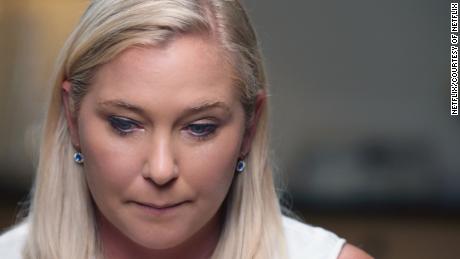
Prince Andrew has come under public pressure to explain his relationship with Epstein and allegations by one of his accusers, Virginia Roberts Giuffre. She has alleged that she was forced into sexual encounters with the prince while she was underage.

In a 2015 federal court filing, Giuffre alleged Epstein forced her to perform sex acts with several prominent men, including Prince Andrew in 2001. All of them have denied the allegations.

In a November BBC interview, Prince Andrew said he had never met Giuffre and suggested that a photo of the two of them may have been doctored.

“I can tell you categorically I don’t remember meeting her at all. I do not remember a photograph being taken and I’ve said consistently and frequently that we never had any sort of sexual contact whatever,” he said.

He also said after he appeared on BBC that he was “willing to help any appropriate law enforcement agency with their investigations, if required.”

The prince said he would be willing to testify or give a statement under oath about the case, but he would “have to take all the legal advice that there was… But if push came to shove and the legal advice was to do so, then I would be duty bound to do so.”

The FBI and federal prosecutors subsequently contacted Prince Andrew’s lawyer to interview the prince about Epstein, but Prince Andrew’s team provided “zero” cooperation, according to Berman, the US Attorney in Manhattan, who took the rare step of publicly announcing his frustrations with the situation.

“It’s fair for people to know whether Prince Andrew has followed through with that public commitment,” Berman said at a news conference in January outside Epstein’s Manhattan mansion.

“To date Prince Andrew has provided zero cooperation.”

Almost two months later, Berman said Prince Andrew had “completely shut the door” on voluntarily cooperating with his investigation and said his office was “considering its options.” But Prince Andrew’s legal team responded Monday that “these statements were inaccurate, and they should not have been made.”

Asked about the matter in an interview on Fox News on Monday night, US Attorney General Bill Barr said prosecutors’ interest in the prince stems from “evidence” he could provide in the ongoing Epstein investigation, and does not amount to a request for his extradition.

“I don’t think it’s a question of handing him over, I think it’s just a question of having him provide some evidence,” Barr said.

CNN’s Amy Woodyatt and Sebastian Shukla contributed to this report.

Source link

Explore the Costa Brava

0

This article will look to show you all you need to know about the Costa Brava, so that you could explore it whenever you are next in Barcelona. 

All the places are a short drive away from Barcelona and are accessible by buses and trains. Of course, it goes without saying that there will be changes to public transport schedules and regulations in adherence to the current health situation. 

Therefore we suggest checking in advance before making concrete plans to explore the Costa Brava, but this article should get the ball rolling!


Lloret de Mar

First up is Lloret de Mar, which is found some 50 miles away from Barcelona, and 25 miles from Girona. With plenty of cultural sites, gardens and beaches, it is easily one of the most popular locations on the Costa Brava. With history dating back to Roman times, this spot is a great destination for history lovers, who wish to be by the beach when on holiday in Catalonia. Some of the must-see sites are the Gothic Church of Sant Romà and the Medieval Caste of Sant Joan, both of which are well preserved, with the latter offering some amazing views of the Costa Brava. As for beaches, the Lloret Beach is the main one, running 1,630 metres and is made of sand, making it the most popular in this town. However, there are also the Fenals, Sa Boadella and Santa Cristina beaches that are all accredited with the blue flag seal of quality, offering slightly quieter places to relax.


Tossa de Mar

Next on the list, found some 60 miles from Barcelona, is Tossa de Mar. This is one of the most historic places on the Costa Brava, with clear links back to the Neolithic period (some 12,000 years ago!). The main economic industry found here, other than tourism, is fishing- we suggest trying any locally caught fish at one of the many restaurants found here. As for other things to do in Tossa de Mar, you should check out the Roman Villa of Ametllers, a Roman villa that you can visit the ruins of! Also, there is a ‘Walled-in Old Town’ here, which dates back to the 14th century. You can visit here and see the medieval hospital, the Municipal museum and some churches. After doing all this, you can relax on the Tossa Beach or the Mar Menuda, which offers some fantastic sports facilities for you!


Begur

A slightly smaller place for you to explore on the Costa Brava is Begur. Home to some 4,000 locals, this village has a very traditional Catalan feel to it, with low-rise buildings that lead towards the sea. There are more historical sites here, with the main one being the Castle of Begur, which was constructed in the Medieval period, some 400 years ago! As for beaches, the Sa Riera, Aiguafreda and Sa Tuna are the standouts here for you to go and relax after spending time wandering around the wonderful streets.


L’Escala

Another small fishing town found on the Costa Brava, is L’Escala. Situated between the Gulf of Roses and Cala Montgó, this spot is a more secluded choice but no less beautiful! This place is known for its anchovies and must be tried in one of the restaurants or bars of L’Escala. In keeping with its fishing heritage, there is the Alfolí de la Sal, a 17th Century warehouse that stored all the salt needed to preserve the fish caught here! In addition to this, you should check out the ruins of Empúries, which date back to 580BC.


Cadaqués 

The last on the list, is one of the most well-known spots along the Costa Brava, Cadaqués. Once frequented by the likes of Pablo Picasso and Salvador Dalí, visiting here will help you understand just why this place is so popular- you’ll even be able to visit Dalís house here! One of the most interesting parts of this town’s history is that in the early 20th Century, many of its inhabitants went to Cuba in search for economic gain; something they would be able to achieve. Upon returning to Cadaqués, these people would build Cuban style houses and bars in homage to Habana life, you can still visit these spots nowadays. Discover Cadaqués, just a 2hr 30min drive from Barcelona, fall in love with the Costa Brava whilst you’re here or at any of the aforementioned spots!


Source link

Can He Do It? Rocky The Backyard Squirrel Attempts High-Wire Act For A Peanut

Footage from Canada earlier this month shows Rocky, a backyard squirrel, spotting a peanut tied to a fishing line that’s strung across a deck. The clever critter examines the problem from both above and below, tries a few different ways to get the nut, determines the right course of action ― then gets it done.  

Watch Rocky’s efforts in the video above.


Source by [author_name]

France to ban chokehold arrests in drive to tackle police violence and racism

0

Christophe Castaner’s decision follows outrage in France over alleged police brutality and racial discrimination in law enforcement | Isa Harsin/AFP via Getty Images

Move follows outrage over death of black man in police custody that has been likened to George Floyd case.

France will ban police from using chokeholds to carry out arrests and take a harder line on racism in police ranks, Interior Minister Christophe Castaner said.

Castaner’s decision follows outrage in France over alleged police brutality and racial discrimination in law enforcement. Thousands gathered last week in Paris to protest the 2016 death of a black man in police custody and the handling of the case by the judicial system. The case has been likened to the death of George Floyd, an unarmed American black man, who died of asphyxiation in Minneapolis after a police officer pressed his knee on his neck for almost nine minutes.

“The method of chokehold or strangulation will be abandoned, and will no longer be taught in police schools,” Castaner told journalists on Monday. “Nobody’s life should be at risk during an arrest.”

“The method was dangerous,” Castaner added.

On Tuesday, Castaner told French TV channel BFM TV that 30 investigations had been launched into allegations of police officers using racist slurs in 2019. He said eight cases had been closed with no action taken while the rest had been passed on to judicial authorities.

The police officers involved in those outstanding cases are still working because current rules mean no action can be taken until the judicial process is complete, Castaner said. But the minister said he wanted to change that.

“I now want a systematic suspension,” he said. When there is enough evidence to hand the case to a judge, Castaner said, “I think there has to be an administrative sanction.”

Last week, the Paris prosecutor opened a preliminary investigation for racial slurs and incitement to racial hatred after an online media outlet StreetPress reported that members of an 8,000-strong private Facebook group for police officers exchanged racists messages.


Source by [author_name]

The killing of George Floyd sparks controversy over African-Iraqi rights

Jun 9, 2020

BAGHDAD — The police killing of George Floyd and the ensuing protests in the United States are being used by Iraqi activists to raise awareness about the rights of African-Iraqis. At the same time, many Iraqi protesters have drawn parallels to the US movement, criticizing the way the Iraqi authorities have been dealing with Iraqi protests since they began in October 2019.

Online debate has recently focused on the fate of the African-Iraqi minority, which has been deprived of official recognition and political representation in government. The debate has evoked the 2013 assassination in Basra of the most prominent African-Iraqi figure, Jalal Diab. Diab was an African-Iraqi leader who founded the Movement of Free Iraqis (Ansar al-Huriya) in 2007 to protect Iraq’s black community, which is estimated at about 400,000.

Iraqi activist Ammar Jassem, who served as vice president of the Movement of Free Iraqis, said he was determined to organize a demonstration to give voice to African-Iraqi rights on the occasion of Floyd’s death. But the event was canceled due to the fear of the African-Iraqi community. Since the assassination of Diab, he told Al-Monitor, things are no longer the same. “The bullet that penetrated [Diab’s] body assassinated all our dreams as a minority seeking equality,” said Jassem.

African-Iraqis are of several ethnicities. Some are Nubians from Egypt; others are from Zanzibar, Ethiopia and Ghana. They are mostly located in Basra province, particularly in Az Zubayr and Abu al-Khaseeb. African-Iraqi heritage expert Sawra Yusuf told Al-Monitor, “Each group has different rites. The Nubians from south Egypt in Africa, al-Habash from Ethiopia and the Kenyans from the coast share Bambassa tribal roots. They all were transferred during slavery time in the Abbasid caliphate between 750 and 785.”

Blogger Mouayed Sari took to his Facebook page to bring to the forefront African-Iraqis’ struggle to gain their rights. He told Al-Monitor that it would only be fair for every Iraqi to put themselves in the shoes of this tormented minority and read about them and their plight throughout the past centuries. He believes this is all part of the collective awareness awakened by the October Revolution that broke out across Iraq in 2019.

“I hear many complaints along the lines of ‘the majority itself is deprived of rights in this country, so how do you expect minorities to attain their rights,’ and I believe that such logic is no longer acceptable after the October Revolution in Iraq, as justice should be inclusive of all individuals. But it should first start with the courage of recognition. In this context, the recognition of the injustice that occurred to the Iraqi people is a valid approach to achieving comprehensive social justice,” Sari noted.

On Nov. 5, 2009, Basra’s African-Iraqis celebrated the victory of former US President Barack Obama, who thus became a role model for Diab and his comrades.

A noticeable change in Iraqi awareness in terms of the rights of this forgotten minority can be seen between Obama’s victory in 2009 and Floyd’s death in 2020, as activists have begun comparing African-Iraqi Diab to African American Floyd, both of whom were victims of racial discrimination and persecution of black people in their societies.

In this context, journalist Ali Abdul Ameer Ejam posted a short video on YouTube about the struggle of Diab, who declared the Movement of Free Iraqis to defend the rights of African-Iraqis.

The video, which was published as part of a series of videos that Ejam called Iraqi Paradoxes, is titled “Angry at the killing of an African American, but silent about the assassination of African-Iraqi citizens from Basra.”

Ejam used this video to highlight how Iraqis are disturbed by Floyd’s killing, which is a positive reflection of human solidarity, but they do not lift a finger when a fellow Iraqi citizen such as Diab is killed. He believes this shows the hypocrisy and double standards because cross-border human and cultural solidarity is indivisible.

The comparison is no longer about simply being a victim of discriminatory policies; rather, it is being used by Iraqi activists to criticize the misinformation used by a wide segment of commentators who justified the involvement of Adel Abdul-Mahdi’s government in killing hundreds of Iraqi citizens in the protests months ago but now criticize US President Donald Trump and his government on dealing with the protests over Floyd’s killing.

This controversy sheds light once again on the reasons behind Diab’s assassination in 2013 after his demands for the rights of all 400,000 African-Iraqis constituted a threat to the parties of political Islam, especially since such demands were associated with an awakening of identity that invoked American figures that these parties consider hostile for ideological reasons.

Diab had posters of Martin Luther King Jr. and Obama on the walls of his school that was dedicated to teaching underprivileged African-Iraqis in the slums of Az Zubayr. It was a message of defiance and the sign of a culture that those parties feared, especially amid the Iranian-American rivalry for influence in a region rich in energy and ethnic diversity.

African-Iraqi activists are breathing life into Diab’s demands for their political rights and underlining how political recognition is the best way to end discrimination at the social level. Other activists focus on the cultural aspects, document the rituals and heritage of African-Iraqis, and stress the need to preserve their distinct cultural identity.

Thawra Yousif, an expert on African-Iraqi folklore, told Al-Monitor, “Ending discrimination is a cultural issue, and by developing awareness over the importance of the African-Iraqi culture, justice can be achieved — even if this does not result in political representation.”

Today, both Floyd and Diab have become icons of a struggle that has awoken demands for social justice, equality, and an end to discrimination in both Iraqi and American societies. However, the image of Diab is more powerful and iconic in regards to black people’s rights in Iraq, since he was a civilian activist influenced by Martin Luther King Jr., demanded an end to racial discrimination, and called for political equality and granting African-Iraqis a quota in power that was equal to other minorities.


Source link

India and China’s border spat is turning into an all-out media war

0

Tensions have been growing in the Himalayas along one of the world’s longest land borders, with New Delhi and Beijing both accusing the other of overstepping the Line of Actual Control (LAC) that separates the two. The territory has long been disputed, erupting into numerous minor conflicts and diplomatic spats since a bloody war between the countries in 1962.

On Saturday, military leaders met at the border to “peacefully resolve the situation in the border areas,” according to a statement from India’s foreign ministry. Even today, just what occurred on the ground in the highly militarized region remains unclear — in part because the main body of this distinctly 21st-century conflict has so far mostly played out through propaganda, strategic leaks and aggressive posturing in the media.

Ahead of Saturday’s meeting, Chinese broadcasters aired footage of People’s Liberation Army (PLA) maneuvers in the region — complete with planes and trucks full of troops — in what state media described as “demonstrating China’s capability of quickly reinforcing border defenses when necessary.” Unconfirmed — and in some cases, debunked — videos have also circulated on both Chinese and Indian social media purporting to show troop incursions and scuffles between soldiers.
Writing in India’s Hindustan Times, strategic affairs analyst Shishir Gupta said Sunday that Chinese reports on PLA maneuvers were part of a “disinformation campaign” designed to sap Indian resolve, and “overwhelm the enemy into panic so that his capacity to negotiate is weakened.”

Jingoistic rhetoric

Both Chinese President Xi Jinping and Indian Prime Minister Narendra Modi have built public support in large part on nationalism and a promise of future greatness. This often translates into jingoism and aggressive rhetoric, particularly when playing to a domestic audience.
Such an approach was evidenced in Chinese coverage of the PLA maneuvers in the Himalayas. Equally, despite Delhi’s announcement Saturday of easing tensions, leading Indian government figures struck an aggressive tone Monday, with Home Affairs Minister Amit Shah telling a rally of the ruling Bharatiya Janata Party (BJP) that “any intrusion into the the borders of India will be punished.”

“Some used to say that US and Israel were the only countries which were willing and capable of avenging every drop of the blood of their soldiers,” Shah said. “(Modi) has added India to that list.”

Defense Minister Rajnath Singh also weighed in Monday, saying: “I would remind everyone, India’s leadership will not let our self respect suffer. India’s policy is clear, we won’t hurt any country’s integrity and dignity. At the same time we will not let any country to hurt our integrity.”

Their statements came amid growing pressure from opposition parties to take a stronger line, with the Congress party’s Rahul Gandhi repeating claims that Delhi was downplaying the scale of the Chinese incursion, saying in a tweet “the media is muzzled and terrified. The truth seems dormant.”

Long-running dispute

In a piece Tuesday published by the Global Times — a nationalist, Chinese state-backed tabloid — and republished by the official website of the PLA, military analysts predicted that “the ongoing standoff is not likely to end immediately, as concrete issues must still be resolved.”

How resolvable those issues actually are is unclear, given they date back decades and are largely fueled by both sides’ refusal to accept the other’s territorial claims. Tensions grew late last month amid accusations both countries had overstepped the LAC and were reinforcing their military position on the de facto border.

“A ‘status quo ante’ will require that Chinese soldiers vacate areas where they have dug in for weeks now. Nothing short of their full withdrawal should satisfy India, which means that more than talks on the ground and by diplomats, there is a need for strong political direction from Beijing to the PLA to do that,” The Hindu, a leading Indian newspaper, noted in an editorial this week. “Otherwise, India must prepare for a long-drawn stand-off, and manoeuvres aimed at ensuring China’s pull back.”

If China’s propaganda and very public PLA deployments are designed to persuade India to back off, Delhi may be looking for similar influence in emphasizing and building its international ties, linking the border issue to other disputes China has in the wider Asia-Pacific region.

Last week, India and Australia signed two bilateral military agreements in the “first step in deepening of the defense relationship” between the two Indo-Pacific powers. India has also been increasing its defense cooperation with the US, including with the annual Malabar naval exercises, also involving Japan.
This strategy has not gone unnoticed in Beijing. China Daily, another state-run newspaper, said in an editorial that “contrary to the sober-minded stance adopted by China and India, some excitable politicians in the United States seem eager to whip up hostilities between the two giant neighbors.”

“(Washington’s) offer to help may have emboldened some in India to take a tougher stand against China in order to ‘defend its pride’,” the paper added.

Writing late last month, Chinese analyst Long Xingchun warned Delhi to “keep a sober head to not be used as cannon ash by the US.”

“Although China’s relationship with the US is tense, the international environment for China is much better than it was in 1962 when India started and (was) crushingly defeated in a border war with China,” Long wrote. “In 1962, the national strength of China and India were comparable. Today by stark contrast, China’s GDP is about five times that of India.”

For now, outright aggression is confined to the media. But with tensions running hot despite the efforts of military figures Saturday, the likelihood of this problem going away soon seems highly unlikely.


Source link

Young Chinese Doctors Face COVID-19 Mental Health Toll

0

AsianScientist (Jun. 9, 2020) – A survey of hundreds of Chinese doctors has shown evidence of the mental toll faced by frontline healthcare workers during the COVID-19 pandemic.

Like study participants the year before, 385 first-year medical residents in Shanghai entering 12 hospitals in August 2019 agreed to track their mood daily on a smartphone app, and every few months answer standardized questionnaires about their mental health and whether they had experienced, observed or feared physical or verbal violence in their workplace.

Little did they know that their data would give some of the clearest indications yet of the potential mental toll of being a frontline healthcare worker in the time of COVID-19.

The research team, led by Prof. Srijan Sen of the University of Michigan, tracked changes in scores between the surveys that the residents took in October and November 2019, and the ones they took in January and February 2020, as the pandemic reached its peak in China. It also measured changes in daily mood between those two quarters.

Findings from the study, which were published in JAMA Network Open, showed that the doctors experienced a sharp drop in mood, a rise in depression and anxiety symptoms, and a doubling of their fear of workplace violence, in just the first month of the pandemic.

The rise in symptoms among first-year medical residents in Shanghai contrasts with data from members of the previous year’s crop of residents, who took part in the same study from 2018 to 2019. Where this year’s class saw sharp change across most measures of mental health and workplace violence during the first half of the training year, last year’s class had stable scores at the same point in their training.

“Our findings indicate that the negative mental health effects of COVID-19 are not limited to physicians working at the center of the initial outbreak in Wuhan, but extend to other places like Shanghai, which is 500 miles away,” says Prof. Li Weidong of Shanghai Jiao Tong University, who was the co-first and co-corresponding author on the study.

The article can be found at: Li et al. (2020) Mental Health of Young Physicians in China During the Novel Coronavirus Disease 2019 Outbreak.

———

Source: Michigan Medicine – University of Michigan; Photo: H Shaw/Unsplash.
Disclaimer: This article does not necessarily reflect the views of AsianScientist or its staff.


Source link