Meet the sturddlefish, the hybrid of two ‘living fossils’ Hungarian scientists accidentally bred

CLOSE

Hungarian researchers accidentally created a hybrid of two “living fossils,” the Russian sturgeon and the American paddlefish, according to a new study.

Researchers were trying to produce sturgeon offspring through gynogenesis, a system of asexual production that requires the presence of sperm but not the actual contribution of paternal DNA, according to the study published in the journal Genes. Paddlefish sperm was used on the negative control group when it “unexpectedly” fertilized the sturgeon eggs.

“We didn’t really want to make any hybrid of these two species,” said Miklós Bercsényi, an aquaculture geneticist at the University of Pannonia who worked on the study. “It was unintentional.”

Bercsényi said when another aquaculture geneticist on the project called and told him the eggs had been fertilized, he replied “it is impossible.”

The two fish began evolving separately more than 184 million years ago and have developed very different physical characteristics, feeding behaviors and preferred habitats. Previous attempts at hybridization failed, all of which led scientists to believe this was impossible.

“This hybrid should die,” Bercsényi said, noting that this kind of hybridization could not happen in the wild. “The embryonic development should not happen.”

So, researchers repeated the experiment and got the same results. As the fish grew, it became clear from their appearance they were not purely sturgeons or paddlefish.

Some had more scutes, or bony scales, like their sturgeon mothers and others had longer snouts, like their paddlefish fathers. A DNA analysis revealed they were true hybrids. Some fish had equal amounts of maternal and paternal DNA while others had twice as much maternal DNA, causing their wide range of physical appearances.

A year later, more than 100 hybrids, dubbed sturddlefish by some, have survived and although they vary in size many of them now weigh more than six pounds, according to Attila Mozsár, a senior research fellow at the Research Institute for Fisheries and Aquaculture in Hungary and a co-author of the study.

“They grow well, they eat well,” said Mozsár. “We keep them in a very safe place.” 

Balázs Kovács, an aquaculture geneticist at Szent István University who worked on the study, added that researchers hope to conduct more genetic analysis on the fish to provide insight into their evolution and useful data for conservation genetics. They also hope to determine if the fish are sterile like other manmade hybrids.

So, how did this happen? Kovács said hybridization may be possible thanks to the sturgeons’ slow evolution. The two fish are considered “living fossils” or species that have remained essentially unchanged over millions of years and have very few surviving close relatives.

“It’s really hard to answer this question because these two species are evolutionarily far from each other,” said Kovács.”This is very special hybrid.”

Follow N’dea Yancey-Bragg on Twitter: @NdeaYanceyBragg

Autoplay

Show Thumbnails

Show Captions

Read or Share this story: https://www.usatoday.com/story/news/nation/2020/07/17/hungarian-scientists-accidentally-bred-sturgeon-paddlefish-hybrid/5449784002/


Source link

Jamaal Bowman Unseats Rep. Eliot Engel In New York Primary

0

Bronx middle school principal Jamaal Bowman ousted New York Rep. Eliot Engel in a June primary, landing a major win for the activist left and a stunning defeat for the Democratic establishment.

Due to the unprecedented volume of absentee ballots, local election authorities didn’t certify the result until some weeks after Election Day. Bowman had declared victory after the polls closed on June 23, having amassed a 25-percentage-point lead over Engel in in-person votes.

Engel, the House Foreign Affairs Committee chairman, has represented parts of the Bronx and lower Westchester County since 1989. His defeat at the hands of a first-time candidate likely marks the end of a congressional career that began 32 years ago with his own successful primary challenge against a longtime incumbent.

“Engel’s lack of presence in his district was noticed by voters,” said Christina Greer, a Fordham University political science professor. “Even though he’s been an incumbent, his district wanted a change.”

Engel’s loss, which came despite the support of Democratic Party leaders, shows that the traditional incumbent advantages ― cash, name recognition and high-profile endorsements ― don’t inoculate party veterans against the challenge of a left insurgency.

That’s particularly true in New York City, which was also the site of Rep. Alexandria Ocasio-Cortez’s landmark primary win in 2018. That Bowman, an unabashedly left-wing Black candidate, was able to prevail in a district that includes predominantly white, affluent suburbs is, in some ways, even more remarkable.

“It’s no longer enough to rest on being a Democrat,” Greer said. “You have to understand the ideological diversity of the party and obviously the racial and ethnic diversity of the party.”

Rachel Pinotti, a librarian and resident of New Rochelle, framed her vote for Bowman, who is 44, in part as a rebuke of Engel’s lengthy tenure.

“Bowman has a good platform. He’s progressive,” she said. “And I just think people shouldn’t be allowed to be in Congress for more than 15 years.”

Greater awareness of racism following George Floyd’s death at the hands of Minneapolis police appears to have increased the appeal of Bowman’s candidacy as well. Bowman spoke personally about the impact of racist policing practices on his life, including a violent arrest he endured at age 11.

Daria Harris, a Black school administrator from Co-op City in the Bronx who voted for Bowman, mentioned that her son is just a year younger than Bowman was at the time of his traumatic run-in with cops.

“He can identify with police brutality as a Black man,” Harris said. “I know that he’s experienced it.” 

Bowman’s win is also the result of critical mistakes by Engel, 73, and a uniquely robust, cohesive left-wing effort to support Bowman. In particular, two groups ― the Working Families Party and Justice Democrats, the latter of which recruited Bowman ― invested heavily in his bid, jointly spending more than $1.3 million on an independent advertising, mail and phone-banking campaign.

Sochie Nnaemeka, the state director of the New York Working Families Party, said in a statement that the strength of Bowman’s bid, coming amid the Black Lives Matter protests that gripped New York City, showed that Ocasio-Cortez’s win was not the fluke that naysayers argued. 

“Jamaal Bowman’s victory is proof that New York’s multiracial progressive movement is ascending — and here to stay,” she said.

The narrative is definitely that the left is growing. Many left-leaning Democrats want Democrats to be real Democrats.
Christina Greer, a Fordham University political science professor

Progressives across the country had seized on Bowman’s race as a potential silver lining in an otherwise disappointing election cycle. Sens. Bernie Sanders (I-Vt.) and Elizabeth Warren (D-Mass.), the left’s preferred presidential candidates, both lost that primary race. And before Bowman’s win, progressives had succeeded in unseating just one incumbent congressional Democrat this cycle, Illinois Rep. Dan Lipinski. (Lipinski’s opposition to abortion rights and other conservative social views earned him the opposition of mainstream liberal groups as well.)

Engel had elicited particular disdain from the left for his hawkish foreign policy record. He voted for the Iraq War, opposed then-President Barack Obama’s nuclear nonproliferation deal with Iran and applauded President Donald Trump’s decision to move the U.S. Embassy in Israel from Tel Aviv to Jerusalem.

But Bowman sought to make the race about the veteran congressman’s lack of connection to the economically polarized 16th Congressional District, which is now home to more Black and Latino residents than white residents. As a Black educator living in Yonkers and working in the heart of the Bronx, Bowman was exactly the kind of candidate who activists hoped could gain traction among working-class voters of color, who are often reluctant to abandon establishment politicians with whom they have existing relationships.

In his announcement video, which captured Bowman walking through the subway, he described his vision for a brighter future ― one with “Medicare for All,” tuition-free public college, a Green New Deal and racial equity ― from the vantage point of someone who grew up in poverty and remains on the front lines of the fight against it. “As educators, we work with children and families who suffer from poverty, asthma from pollution, homelessness, lack of health care,” he said. 

In recent years, Engel had amassed a relatively progressive domestic policy record, co-sponsoring Medicare for All legislation and the Green New Deal resolution. But he staked his career on steering foreign, rather than domestic, policy. His membership in the business-friendly New Democrat Coalition, which is opposed to Medicare for All, and his reliance on corporate PAC donations also raised skepticism about the urgency with which he was fighting for the left’s goals.

Referring to the kitchen-table issues on the minds of the 16th District’s many impoverished families, Bowman told HuffPost in April, “I don’t see Eliot Engel saying anything about these issues or leading from the front in any way.”

For months, Bowman toiled in relative national obscurity, knocking on doors and doing local media hits while Sanders, Warren and Texas House primary challenger Jessica Cisneros absorbed the lion’s share of progressive attention and resources. Even as the coronavirus pandemic deprived his campaign of the left’s bread and butter ― a grassroots door-knocking operation ― volunteers from allied groups like the Jewish Vote and the left-leaning Sunrise Movement helped Bowman’s team make what they estimate were 1.5 million phone calls to prospective voters.

Engel gave Bowman an opening when it emerged in mid-May that he had spent the height of New York’s COVID-19 outbreak at his home in a Maryland suburb of Washington. A mask-clad Bowman, by contrast, had stayed in the district, distributing food at pantries and joining a protest against the lack of personal protective equipment at a public hospital. His activism in the latter effort helped secure him the endorsement of New York’s largest nurses union. 

Around the same time, Nnaemeka of the New York Working Families Party was engaged in the kind of behind-the-scenes politicking that is normally the bailiwick of the Democratic establishment. She helped negotiate the withdrawal of Andom Gebreghiorgis, a fellow educator competing with Bowman for progressive votes in the primary. Gebreghiorgis endorsed Bowman on June 1.


Rep. Eliot Engel’s insistence that he “brings home the bacon” for an economically polarized district was not enough to secure a primary win.

Bowman’s campaign really took off days later when Engel made one of the gravest errors committed by an incumbent member of Congress in recent history. While attending a press conference in the Bronx focused on addressing theft and property damage around the peaceful Black Lives Matter demonstrations, a live TV broadcast captured Engel asking the emcee for a speaking slot. “If I didn’t have a primary, I wouldn’t care,” Engel said by way of explanation. 

Overnight, Bowman’s bid picked up momentum. Justice Democrats and the Working Families Party began their independent spending efforts the day after with TV ads tying Engel’s remarks to his absence from the district. “Engel only came back to win reelection, to help himself ― to save his job, not our lives,” the narrator of one of the spots said. For more than a week, the groups hammered Engel on the airwaves with no analogous ad blitz from him and his outside backers.

Bowman would go on to pick up the support of Ocasio-Cortez and Sanders. The blessing of the New York Times editorial board provided critical mainstream validation.

Soon he could point to evidence that his effort was picking up steam. A public poll that Bowman’s campaign commissioned showed him leading Engel by 10 percentage points in mid-June.

Engel put up a fight with his own series of big endorsements from Democratic Party leaders, including the Congressional Black Caucus PAC. The party’s 2016 presidential nominee, Hillary Clinton, made him her first endorsement of the cycle. New York Gov. Andrew Cuomo and New York Sen. Chuck Schumer also threw their weight behind Engel.

He argued that his seniority has helped him secure resources for the district, like money in the COVID-19 relief package for local safety-net hospitals. “I bring home the bacon, I bring home the money,” he said in a June debate.

Engel also benefited from the largesse of hawkish pro-Israel groups eager to protect an influential foreign-policy maker. The Democratic Majority for Israel PAC, which despite its name relied on cash from at least a few Republican mega-donors, spent over $1.5 million propping up Engel and tearing down Bowman.

In the end, the counter-offensive wasn’t enough to stop Bowman’s surge.

“The narrative is definitely that the left is growing,” Greer said. “Many left-leaning Democrats want Democrats to be real Democrats and they don’t want them to make deals with an increasingly conservative Republican Party.”


Source by [author_name]

What’s Better Than Caramelized Onions? Caramelized Peppers

0

Is there a pepper lover among us who doesn’t swoon at the thought of a darkly roasted red bell: velvety, caramelized and dripping with juice?

Whether curled over crostini or draped onto some kind of tangy cheese, roasted peppers are the most crowd-pleasing way to enjoy the sweet summer vegetable (which, like a tomato, is botanically a fruit).

This savory pasta offers all the joys of roasted peppers without having to roast and peel them, or to rely on slightly acrid jarred versions.

Instead, slivers of fresh bell peppers (preferably with a mix of colors) are sautéed with whole garlic cloves until everything turns golden brown. This initial searing brings out their sweetness and softens them — to a point. The key to a truly plush texture happens when you deglaze the hot pan with a splash of liquid.

During deglazing, the tasty browned bits stuck to the bottom of the skillet dissolve, adding layers of flavor to the piquant, complex sauce. But in this recipe, there’s a bonus: The steaming liquid will also break down any trace of spine the peppers might have maintained, leaving them perfectly floppy and gorgeously silky.

Because I like to sip wine when I cook, spilling some into the pan is my lazy person’s method of deglazing. But you don’t need to open a bottle just for this dish. Water, broth, beer, dry sherry, or even the gin and vermouth of your martini (if you can spare it) will work just as well, giving it a very slight nuance.

Really, you’ll barely taste it, because most of the sauce’s character comes from those burnished peppers and garlic cloves, zipped up with a little rosemary and red-pepper flakes, and deepened with loads of anchovies. (Yes, you can skip the anchovies, but compensate with some soy sauce.)

A dollop of fresh ricotta just before serving brings the elements together, lending creamy richness to contrast with the mound of torn fresh herbs and crisp scallions that make up the garnish. Don’t skimp on those scallions. Other than the snap of al dente pasta, the scallions will be the only textural contrast in the bowl. But they are enough — all the dish needs to bring the suppleness of sweet peppers to the fore.

Source link

How to Save a Half-Open Economy

0

Even in states where the virus is less prevalent, some businesses, like indoor bars, movie theaters and concert venues, may not be able to open safely for a long time. Others, like restaurants, will have to operate at a capacity unlikely to turn a profit.

That means that without government help, thousands of businesses are likely to fail in the months ahead. That could have devastating economic consequences, turning temporary furloughs into permanent job losses and slowing the eventual recovery.

Lost jobs “are going to come back very slowly — it’s going to be months and months of hard work,” said Betsey Stevenson, a University of Michigan economist who was on President Barack Obama’s Council of Economic Advisers. “The question is, do we have 30 million people who are going to go through that process, or do we have five million? We don’t have the answer to that yet, but every month it goes on, that number grows larger.”

Experts say Congress needs a new approach to save businesses.

The Economic Innovation Group, a Washington think tank focused on entrepreneurship, has proposed giving interest-free loans to small employers. Rather than providing a temporary injection of cash, they argued, a loan program could let companies invest in improving their long-term prospects. A retailer could buy a building it had been renting, for example, bringing down monthly costs. Or a restaurant could add outdoor space, reducing dependence on indoor dining.

Mr. Wilcox of the Peterson Institute has recommended a more expansive — and expensive — approach, essentially having the government fill in the revenue shortfall created by the pandemic through direct grants to businesses. The government has effectively forced business owners to take a hit, he said, so it should help them survive.

“Start from a social agreement that the government is going to take onto its shoulders the cost of sustaining businesses through the period of intense public health crisis,” he said.

Source link

‘Your Help Doesn’t Help Me.’ In Oregon, The Unsheltered Tire Of Shuffling Around

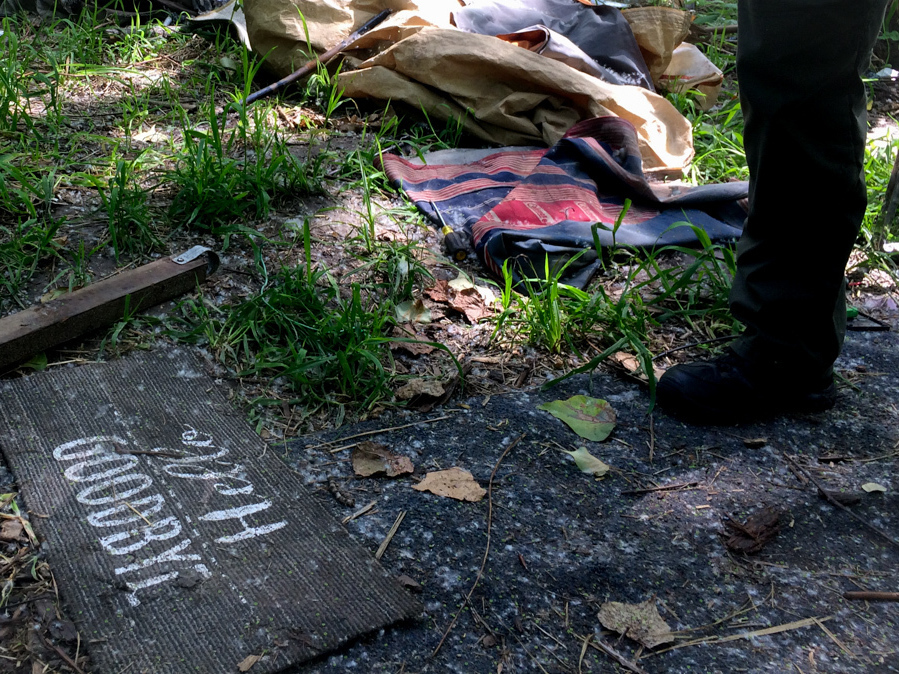
During their patrol of the Bear Creek Greenway, Jackson County Sheriff’s deputies walk through a years-old encampment that deputies call “the Hobbit House.”

April Ehrlich/JPR News


hide caption

toggle caption

April Ehrlich/JPR News

During their patrol of the Bear Creek Greenway, Jackson County Sheriff’s deputies walk through a years-old encampment that deputies call “the Hobbit House.”

April Ehrlich/JPR News

Fears over spreading the coronavirus have forced some homeless shelters around the country to close or limit their capacity. In rural Southern Oregon, civic leaders told those in need to camp in the nearby woods. Now with wildfire season around the corner, law enforcement is relocating homeless people again.

That’s what brings a grant-funded team of Jackson County sheriff’s deputies down to the Bear Creek Greenway, an 18-mile strip of forest that runs through the city of Medford, Ore. It’s illegal to camp here, but law enforcement groups have mostly stopped issuing tickets and clearing camps during the pandemic as part of the county’s effort to keep unsheltered people in one place. They’ve instead focused their patrols on connecting people with meals and other resources.

“Whether it’s mental health, whether it’s housing opportunities,” says Sheriff’s Deputy Noah Strohmeyer. “It’s getting them simple things like identification that they could use to go get housing, to get a job, things like that.”

But not everyone here welcomes their assistance. Deputies meet Whitney Stinson at a large camp he built. Stinson sits with his head lowered as they tell him about local resources and an upcoming city-sanctioned camp site for unsheltered people.

“Man, just stop, dude, stop with your help, because your help doesn’t help me,” Stinson says, his voice rising. “All it does is move me from here.”

Like Stinson, many people sleeping on the greenway have contentious relationships with law enforcement. After years of enduring camp sweeps and racking up expensive tickets for trespassing and prohibited camping, unsheltered people have become wary of any help that law enforcement has to offer.

“I’ve had them really be mean to me,” says Wanda Garcia, who camps on the greenway. “Like, cuss at me. And push ya. It’s not OK. I’m tired of it. I’m tired of being harassed.”

In recent weeks, a nationwide debate over police reform has questioned officers’ roles in doing what is largely considered to be social work. Law enforcement groups in Jackson County have organized efforts to bring resources to the greenway — including porta potties, handwashing stations and lunches. But so far, there have been problems: toilet paper isn’t stocked, there’s no water, and there’ve been reports of spoiled food being delivered.

Jackson County Sheriff’s deputies walk through an empty camp. While law enforcement agencies have promised not to clear people’s camps from the greenway during the pandemic, they’re still clearing camps that they consider to be abandoned.

April Ehrlich /JPR News


hide caption

toggle caption

April Ehrlich /JPR News

Jackson County Sheriff’s deputies walk through an empty camp. While law enforcement agencies have promised not to clear people’s camps from the greenway during the pandemic, they’re still clearing camps that they consider to be abandoned.

April Ehrlich /JPR News

“They’re fundamentally not suited to be social workers,” says Derek DeForest, a local advocate for unsheltered people.

DeForest is among a group of concerned Medford residents who banded together to help unsheltered people and monitor police activity during the pandemic. While law enforcement agencies have promised not to clear people’s camps from the greenway during the pandemic, they’re still clearing camps that they consider to be abandoned. They’re also waking people up in the middle of the night and arresting them if they have any outstanding warrants.

“If somebody comes to your house at 3 a.m. and they arrest your roommate, and then you wake up a few hours later and they’re bulldozing your neighbor’s house — you’re very frightened now,” DeForest says. “You’re actually traumatized.”

Nearly 200 people are now sleeping in camps they’ve built among the massive blackberry thickets in the greenway. With this year’s dry summer season, city officials are concerned that campers could start a catastrophic fire in the middle of the city. So they’re planning to redirect people to a different outdoor site, one managed by a nonprofit. The problem is, that one can only accommodate 25 people. Nonetheless, once the new site is up and running, police say they plan on going back to ticketing and evicting campers along the greenway and throwing away any belongings left behind.

Source link

Families get green light to visit Palestinian prisoners in Israel

Jul 17, 2020

According to a July 17 broadcast by the Kan radio station, this week the Israel Prison Service authorized family visits for Palestinian security prisoners. The IPS said that the decision was made jointly with the National Security Council and the visits will be coordinated with the Red Cross. The allowance only applies to family members residing in West Bank areas not significantly affected by the novel coronavirus pandemic. The IPS also explained that with many emergency regulations no longer in place, the family visits are a legal right that must be upheld.

The family visits are to take place according to Health Ministry instructions including “purple badge” requirements and guidelines on social distancing, masks and sanitation that also apply to government offices, hotels and other businesses.

The visits were suspended with the outbreak of the pandemic in Israel at the beginning of March, when the International Committee of the Red Cross told Palestinian families there would be no visits on that month. The situation dragged on as the pandemic swept the country. The prisoners protested the suspension of visits, but the IPS refused to resume the visits too soon.

On April 24, a group of UN human rights experts urged Israel to release vulnerable Palestinian prisoners. They wrote, “There are currently more than 4,520 Palestinian prisoners, including 183 children, 43 women and 700 detainees with pre-existing medical conditions in Israeli jails. They remain dangerously vulnerable in the context of the current pandemic and the relative increase in the number of transmission rates in Israel.” In parallel, Hamas reportedly submitted to Israel a list of 250 prisoners for immediate release. It included mainly infirm and elderly prisoners as well as women and young people. For the moment, no deal has been made between the sides for a prisoner release or exchange.

The IPS assured the National Security Council that the visits will be held under strict health and sanitary conditions. But with the spike in infections in both Israel and the West Bank, it is unclear whether the visits will continue. Israeli authorities have expressed concern in recent days about the growing number of cases in the West Bank, notably in the Hebron area.  

The situation of Palestinian workers in Israel is especially complicated. Some 46,000 laborers were authorized at the end of June to enter Israel for a period of three weeks, on the condition that they do not travel in the country, stay near the work site and don’t go home. The three weeks end this weekend, and the authorities are debating today whether to renew the permits. A decision is expected later today or early next week.


Source link

Aladdin – Naam Toh Suna Hoga star Avneet Kaur clears 12th board exams with impressive scores : Bollywood News – Bollywood Hungama

Avneet Kaur was last seen playing Yasmine in Aladdin – Naam Toh Suna Hoga opposite Siddharth Nigam. The actress and famous TikTok star had appeared for her HSC board exams and with the result coming in yesterday, she’s ecstatic with her scores. She has managed to pass with 74% marks and is very happy with it since she had a lot going on at that point. Speaking to a leading daily, Avneet shared the news and excitement post-results.

Avneet was down with Dengue during the exams. She could not take completely off from shoot and had to leave for Phuket for a music video shoot. She says that she did not expect to score marks this well since she was too stressed at that point. When she returned from Phuket, she barely had time left to study and ended up losing a lot of weight due to stress.

Congratulations on scoring well, Avneet!

Also Read: Avneet Kaur bids adieu to Aladdin – Naam Toh Suna Hoga; Ashi Singh to be the new Yasmine

BOLLYWOOD NEWS

Catch us for latest Bollywood News, New Bollywood Movies update, Box office collection, New Movies Release , Bollywood News Hindi, Entertainment News, Bollywood News Today & upcoming movies 2020 and stay updated with latest hindi movies only on Bollywood Hungama.

Loading…

Source link

Ex-BBC presenter guilty of child sex offences

0

Image caption

Ben Thomas reported for BBC Wales Today and the Welsh language news service for young people before joining the church

A former church minister and BBC Wales presenter has pleaded guilty to sexual offences against children and adults.

Ben Thomas, 44, from Flintshire, admitted 40 offences, including indecent assaults and voyeurism.

The offences happened in north Wales, Shropshire, London, and Romania.

Thomas, who worked for BBC Wales as a reporter and a presenter on Ffeil, the Welsh language news programme for young people, and on Wales Today, will be sentenced on 18 August.

He left the BBC in 2005 to preach on the streets of London, before returning to Wales in 2008 as pastor of the Criccieth Family Church in Gwynedd.

Thomas left his post last year.

Image copyright
North Wales Police

Image caption

Thomas’ actions were an “awful breach of trust”, police say

In a statement, Criccieth Family Church said Thomas’ arrest had come as a “complete shock”, and that safeguarding checks had been “satisfactorily completed”.

“We are now devastated by the revelation of such sin and grieve over the pain caused to the innocent victims, the betrayal and deception,” the statement added.

“Foremost in our prayers now are the victims and their families.”

North Wales Police thanked Thomas’ victims and families for their “strength and courage,” adding they would now be “spared the harrowing ordeal of a lengthy trial”.

Det Con Lynne Willsher said: “Ben Thomas’ offending involved the serious sexual abuse of vulnerable young children by a religious leader.

“It is an awful breach of the trust placed in him by the victims and their families, and I cannot begin to imagine what impact the revelation of his offending has had on them.”

Image caption

Ben Thomas had worked on Wales Today and Ffeil, the Welsh language news programme for young people

The NSPCC said Thomas’ crimes were “horrendous” and said it was important his victims had access to “ongoing support”.

“Thomas has admitted to committing a wave of sexual offences over a long period of time and it is right that he now faces the consequences of his actions,” a spokeswoman said.

“It is crucial that anyone who has been abused feels safe to report what has happened to them, no matter how long ago the offence took place, in the knowledge that they will be listened to.”

Source link

Portland protesters tear gassed as DHS head calls them ‘violent’

Federal officers deployed tear gas and rounds designed to be less lethal into a crowd of protesters in Oregon on Thursday evening, hours after the head of the Department of Homeland Security visited Portland and called the demonstrators “violent anarchists”.

Video footage showed many protesters leaving the area near the federal court late on Thursday as smoke filled the air. Protests have taken place for nearly two months in Portland, since the police killing of George Floyd in Minneapolis on May 25.

The protests have been largely peaceful, though violence has occurred. Journalists and demonstrators have been apprehended by police and federal agents outfitted in military gear, according to reports. 

During a visit to Portland earlier on Thursday, Homeland Security Acting Secretary Chad Wolf said state and city authorities are to blame for not putting an end to the protests, angering local officials.

Mayor Ted Wheeler and other local officials have said they did not ask for help from federal law enforcement and have asked them to leave. 

A few hundred people had gathered near the federal court on Thursday night and set up tents, news outlets reported. Police told protesters to leave after announcing they heard some chanting about burning down the building, according to The Oregonian.

A short time later, federal officers fired rounds and deployed tear gas to break up the crowd.

Some protesters remained in the area early on Friday and were detained, but it was unclear whether any arrests were made, the newspaper reported.

Homeland Security acting Deputy Secretary Ken Cuccinelli said on Fox & Friends on Friday morning the federal government has a responsibility to protect buildings such as the court.

“What we’ve seen around the country is where responsible policing is advanced, violence recedes,” Cuccinelli said. “And Portland hasn’t gotten that memo. Nor have a lot of other cities. And the president is determined to do what we can, within our jurisdiction, to help restore peace to these beleaguered cities.”

President Donald Trump recently sent the federal officers to the city. Tensions have escalated in the past two weeks, particularly after an officer with the US Marshals Service fired a round at a protester’s head on July 11, critically injuring him.

Bystander videos show Donavan LaBella, 26, collapsing to the ground unconscious and bleeding profusely from the head after a federal officer fired a less-lethal round at him.

He was standing with both arms in the air holding a large speaker across the street from the courthouse when he was hit.

LaBella’s mother, Desiree LaBella, told Oregon Public Broadcasting that her son suffered facial and skull fractures. He came out of surgery early on July 12 and was responding to doctors.

“He was awake enough to give the OK to talk to me,” Desiree said in the interview. “He’s had some facial reconstruction surgery. They’re just watching him right now.”

Protests against police violence have rocked the US since May, following Floyd’s alleged murder by Minneapolis police.

While violence has subsided in some cities, it remains present in others. Trump previously faced harsh criticism for his use of the military to quell protests in Washington, DC, and threats to deploy them elsewhere.  


SOURCE:
Al Jazeera and news agencies


Source link

China Dominates Steel Market as Pandemic Slows Competition

0

As China’s government highlights signs of an early economic recovery, it is making a strong case with record production of steel.

China’s output of crude steel hit an all-time monthly high of 92.2 million metric tons (mmt) in May. The surge topped the 90-mmt mark for the first time with a 4.2-percent gain, putting the country on course to produce 1 billion tons this year.

In June, the steel industry set a second record with average daily output of 3.05 mmt in the shorter 30-day period as monthly production of 91.5 mmt rose 4.5 percent from a year earlier.

In the first half of the year, China pumped out 499 mmt of crude steel, increasing 1.4 percent while industrial output fell 1.3 percent, according to the National Bureau of Statistics (NBS).

The break-out volumes of steel in May and June made up for a moderate slackening during the COVID-19 lockdown period. But judging from NBS data, there has been hardly any slackening this year at all.

Production rose 3.1 percent from a year earlier in the combined January-February period and fell only 1.7 percent in March, closing the quarter with a 1.2-percent gain when China’s gross domestic product plunged 6.8 percent.

Steel has been a bright spot for China as first-half GDP growth remained down 1.6 percent after rising 3.2 percent in the second quarter, according to the NBS.

Even before the pandemic, steel output outperformed the economy, climbing 8.3 percent to 996 mmt in 2019 while GDP growth fell to 6.1 percent, the slowest pace in 29 years.

Now with May and June production posting new highs, the question is whether steel should be seen as a cause or an effect of economic growth.

One measure of the strength in the steel industry is that it has relied almost entirely on the domestic market with little help from exports as foreign producers remained stuck in the pandemic slump.

In the first six months, China’s steel exports of 34.4 mmt dropped 16.5 percent as June shipments sank to an eight-year low, Mysteel Global said.

Government guidance

Despite high inventories and uncertain consumption, China’s steelmakers have kept their eyes on prospects for government-driven infrastructure investment.

In April, the official Xinhua news agency said the government would speed up renovation of 39,000 communities in older residential areas this year. Local governments have also spurred new infrastructure with bond-backed investments planned to reach 6.7 trillion yuan (U.S. $956 billion).

Although the central government has promoted the local government bond program as a source for funding “new infrastructure” like 5G telecom networks and artificial intelligence (AI) applications, much of the financing is expected to flow into traditional infrastructure like highways and railroads with demand for more steel.

The steel industry is banking on existing megaprojects like the Xiongan New Area to absorb high production of materials like reinforcing bars for construction. The Xiongan development was announced in 2017 to ease congestion and shift non-governmental functions away from Beijing,

“Rebar demand in north China will remain strong in the summer season, especially in Hebei (province). Demand for construction steel from the Xiongan New Area will support rebar consumption in north China this year,” said a steel trader quoted by Argus Media.

Steel producers may also be buoyed by a reported rebound in the auto industry after 21 months of declining sales and plans for at least 4,400 kilometers (2,734 miles) of new rail lines this year.

The multiple factors may be enough for China’s steel industry to build a bridge over the economic uncertainties that have overtaken competitors.

“While steel mills fell quieter in Europe, the U.S. and India, Chinese producers kept running through its COVID crisis and are producing at an even faster rate than they did last year,” the Financial Times reported last month.

In the first five months of the year, profits of China’s major steelmakers fell 50.9 percent to 41.9 billion yuan (U.S. $6 billion), but earnings in May jumped 81.8 percent from a month before to 14.8 billion yuan (U.S. $2.1 billion), Xinhua reported.

The relative success of the steel industry in continuing production growth during the historic economic downturn follows a pattern of maintaining high output during good times and bad.

Government policies have served to support high levels of output despite a three-year campaign to cut overcapacity launched by Premier Li Keqiang in January 2016.

Replacement of older mills with newer-technology production has left the industry with a total capacity of
some 1.2 billion tons, the same as in 2016, according to estimates by Platts and the NBS.

Last month, the government’s top planning agency, the National Development and Reform Commission (NDRC), said it would “accelerate the cuts in overcapacity” this year, but it provided no figures.

The government has helped to boost profitability in the energy-intensive industry during the slower-growth period by reducing electricity rates for the third consecutive year along with lowering taxes and fees.

Filling demand

The industry’s record production underscores its importance to economic recovery.

“Production of the metal is an important indicator for an otherwise opaque set of government policies, which draw on an array of state-controlled or state-influenced sectors to lift output,” the Financial Times said.

The paper also pointed to another potential motive for maintaining high production at a low point for China’s competitors. During the pandemic crisis, Chinese steelmakers have dramatically increased their world market share.

In April, China raised its share of world production to 62 percent from 54 percent a year earlier, based on World Steel Association data. In 2017, China’s share stood at 49.2 percent.

The crisis “is putting China on course to dominate global steel production to an even greater extent than before, accelerating a trend that has gathered pace for more than half a century,” the Financial Times said.

If some western producers are forced to close, China’s share could rise even further, it warned.

Other reports on China’s production spurt during the pandemic raise the question of whether its rising market share is a consequence of government stimulus policy or a deliberate attempt to take advantage of world economic conditions that have stalled manufacturing abroad.

As in the steel industry, China appears to be pursuing a strategy for market dominance of COVID-19 medical supplies, The New York Times reported earlier this month.

“China has laid the groundwork to dominate the market for protective and medical supplies for years to come,” The Times said.

“Factory owners get cheap land courtesy of the Chinese government. Loans and subsidies are plentiful. Chinese hospitals are often told to buy locally, giving suppliers a vast and captive market,” it said.

Dangerous dependence

If domination is the goal, the dangers are clear.

Countries weakened by the coronavirus will become dependent on China for the medical supplies to fight it, if they are not dependent already.

Some may become more cautious about objecting to China’s political policies, territorial claims and rights abuses, like the suppression of Uyghurs in Xinjiang and democratic freedoms in Hong Kong.

In a recent paper for the American Enterprise Institute urging a partial decoupling from China, resident scholar Derek Scissors cited “claims the U.S. cannot act against China for COVID-19 deceptions while dependent on Chinese supply of COVID-19-related material.”

A lengthy commentary by the website of the official English-language China Daily on July 2 connected some of the consequences in arguing against the United Kingdom’s pending decision to bar 5G leader Huawei from its high-speed telecom network due to security concerns.

“Many in the business community are worried that any such U-turn would deny the UK the opportunity to be a European leader in the technology at a time when the country’s economy needs a significant boost.

“The UK has seen the third-highest number of deaths globally from the coronavirus pandemic, its GDP contracted by 20.4 percent in April and the country may fail to reach a trade deal with the European Union by its self-imposed deadline of the end of this year,” the paper said.

Despite the warnings, the UK announced its decision on July 14 to remove Huawei equipment from its network by 2027, drawing angry threats of consequences from Beijing.

Linkages between China’s industrial policies, its drive for market dominance and President Xi Jinping’s political goals are becoming more apparent as the pandemic strains foreign economies, suggested Gary Hufbauer, nonresident senior fellow at the Peterson Institute for International Economics in Washington.

“My guess is that Xi decided … ‘Might as well take advantage of the Cold War to suppress domestic opposition and ramp up a few industries, including steel, face masks and protective gear, where there’s a willing market of world buyers,'” said Hufbauer.

“That’s one way to help China reach positive growth in 2020,” he said.


Source link