Tuesday, April 28, 2026

New Zealand readers tell us how they want the country to change after Covid-19

Last week the Guardian asked New Zealanders how they thought the country should change as workers return to their offices and life slowly returns to “normal”. Many urged systemic and far-reaching changes in society following the pandemic, which saw just under 1,500 infections in the country and 22 deaths.

Overall, the majority of respondents were keen on exploring a four-day week – floated by the prime minister, Jacinda Ardern – saying it would allow for more work-life balance, and the continuation of habits picked up during lockdown, including home-cooked meals, walking, cycling and more time spent with the family. Other common suggestions included the introduction of a universal basic income, greater emphasis on climate change adaption – and fewer cars on the road.

‘There are more noble goals’

“I have been enjoying working from home. Working from home has meant I’ve seen my family more, have not had to spend an hour a day in the car commuting, and have been able to go on daily walks around the neighbourhood. Local walks have been wonderful, with next to no motorised traffic. Families have been out cycling on Auckland’s normally insanely dangerous roads. The city has been quiet. Birdsong has been audible. The air has been noticeably clearer.

Discretionary spending has dropped hugely. No more convenience shopping for lunches, no more Uber Eats. I’ve been cooking lunches and dinners, and enjoying it.

I wish the family time, the inner-city peacefulness, safety and cleanliness, and sense of community built by the crisis could continue.

While we were in lockdown, it seemed as if the world would never be the same again. Now the economy is starting up again, it seems like we’re heading back towards a similar version of what we had before – except without international travel or tourism. I would like to see a fundamental change. I think neoliberal values have had their day, and that this crisis has proved, as has our government and the people’s response, that there are better priorities and more noble goals than the pursuit of growth above all else.”

Simon Bennett, 55, Auckland

‘Four-day day week is a way forward’

“I have preferred working from home because my team live throughout the country and I communicate with them via video-call most of the time anyway. While I do miss small things like casual conversations with colleagues over a mug of tea in the office kitchen and getting dressed up to go out for the day, I have enjoyed other adjustments – such as our daily quiz now via Teams and being cozy in my dressing gown in the lounge at home as we head into winter here in the Southern hemisphere. The whole ‘work-life balance’ idea is so individual.

After Covid-19, I hope to continue spending greater time on activities that are so much more meaningful to me now, given our gradually less-limited freedom. While I was already a nature-lover and foodie, my passion for these areas of life has grown exponentially; my breath-work meditation practice, plant-based meals. The quality of my relationships is a constant work-in-progress but upon reflection, I wish to be more mindful of how I can engage in these more presently and attentively.


The city has been quiet, with people ‘out cycling on Auckland’s normally insanely dangerous roads. Birdsong has been audible. The air has been noticeably clearer.’ Photograph: Phil Walter/Getty Images

I think, where practically possible, [the four-day week] is definitely the way forward when it comes to the future of work. The global pandemic has forced several overdue ideas into action, like virtual healthcare consultations and more flexible working arrangements. This opportunity has a lot of potential, from stronger family connections and social cohesion to business productivity and employee health outcomes. We need to be open to new ways of doing things, especially when it revolves around one of the world’s precious non-renewable resources – time!”

Sarsha Sivanantham, 22, Wellington

‘Why would I want to go back into the office?,

“Working from home can bring so many bonuses – flexibility, pleasant working environment, no early morning alarms, no stressful commuting, enjoying daily lunchtime walks, better home-prepared meals, better quality sleeping and less anxiety. Why would I want to go back into the office?”

Rachael, 57, librarian, Wellington

‘We need to refocus on the environment’

“I’ve worked from home for years, as a copywriter and now as a researcher. I prefer it and think most people should be allowed to do it. I hope when I finish my program this year I’ll land a job that will allow me to continue to work from home. The fact that most people still go into a brick-and-mortar office in this day and age is bizarre. The environmental impact alone should be a reason to change this. Why so many are forced to get in their car, drive 30+ minutes to an office, and sit at a desk to answer emails is beyond me.

It would be awesome if New Zealand could find a way to move forward with less dependence on tourism. Tourism was wreaking havoc on the environment and only really helping the ‘bottom line’ on economists’ spreadsheets. There’s gotta be a better way to transfer those jobs and businesses to something less dependent on people getting on a plane for 12 hours to come here. I suggest re-focusing all that manpower towards environmental projects, business innovation, and sustainability.”

April, 41, Wellington

‘The world cannot carry on in the exhausting way we have been’

“Less Facetime and more face-to-face time with the people that matter is what it’s all about, right? Many New Zealanders it seems are increasing our veggie patches and our ability to take care of ourselves in the event of another emergency like this one. The world cannot carry on in the exhausting way we have been and that includes exhausting our finite resources and upsetting the earth’s ability to deliver on the renewable ones like clean air and water. Humans don’t need to take it all.”

Evie Ashton, 48, Auckland

‘Halt global heating’

“I’d like to see a universal basic income, a return to more progressive taxation and more emphasis on halting global heating.”

Malcolm, 70, Lower-Hutt

‘I can actually breathe’

“I have absolutely loved the working from home it’s been an incredible opportunity and privilege that I never thought I would have. I’ve really enjoyed not having to commute every day … having the ability to hang out the washing and walk the dog in the morning is an added benefit. I feel like I can actually breathe and my heart isn’t always racing.”

Jade, 43, Wellington

‘I will miss the birdsong’

“I loved working from home, but I would like to see colleagues in person occasionally, as I found Zoom meetings tiring after a while. My perfect arrangement would be days when we have the option to work from home, and agreed mornings or afternoons when we are at work and can see people in person.

I am going to miss the quiet streets, empty skies and more audible bird song – that was the silver lining during our lockdown.”

Nicki Frances, Lower Hutt, early 50s

‘Rely on the outside world less’

“I believe New Zealand needs to look at how it can look after itself more when this happens again. I don’t think New Zealand should give up on globalism but I do think we should rely on the outside world less.”

Nicola, Auckland


two dogs being walked next to a physical distancing sign


‘I’ve loved being able to enjoy the sunshine all day long … When I think of going back to the office, all I see in my mind is the unrelenting greyness of shadowy office space.’ Photograph: Phil Walter/Getty Images

‘Unrelenting greyness of the office’

“I would love to be able to retain the silence and the birdsong. The impact of traffic noise has been shown to be all-pervasive harm to our peace and connection to nature. Electric cars and bikes are far quieter – I would like to see a definite and fixed timetable for the phase-out of all combustion engines.

I’ve loved being able to enjoy the sunshine all day long, while working from home.
When I stop for a coffee, I can go sit in the sun, or go potter outside amongst the plants. When I think of going back to the office, all I see in my mind is the unrelenting greyness of shadowy office space. I no longer want to spend the best part of every day sitting in the gloom.

But most of all, working from home has made me realise how stressful my work is, and how much I dread the everyday office conflict, hierarchy, surveillance and ‘constructive criticism’. Work has given me my best friends, meaningful work, and an educated understanding of the world. But it’s also utterly reductive, demoralising, and humiliating. I am one of the lucky ones, with a salaried, permanent job, and yet it feels actually like an abusive relationship. Lockdown has made me realise more than ever I need to get out, and find some other way to earn a living – independent, creative, and with my self-respect in one piece.”

Anonymous, Wellington, 48

‘I love people’

“I love people so I want to be able to carry on just like before.”

Leif, Auckland, 82

‘This pandemic is a portal’

“As the wonderful Arundhati Roy wrote shortly after the Covid-19 pandemic had been declared, this pandemic is a portal. We can step through to work towards a world focused on human and planetary health, happiness and wellbeing, or we can try to ‘get back to normal’ – which means continuing the unsustainable economic rat race that has been driving us into a spiralling vortex of problems. I’m for going through the portal.

The first thing we need to do is change our mindsets – we’ve become an urbanised consumer society – and we’d do well to listen to the voices of our first people who work so hard to teach us kaitiakitanga (guardianship and protection), a way of managing the environment, based on the Māori world view.”

Anne, South Island

‘Not the same dynamic’

“In terms of work-life I’m quite pleased to go back to the office, I really enjoy the team I work with and working from home doesn’t give the same team dynamic that I’m used to. I also really enjoy the separation between home and work life which just isn’t possible where I currently live.”

Anonymous, 28, Wellington

‘Community values’

“It seems the silver lining in NZ has been a reinforcement of some core community values which may have been lost over the last few decades. That may be a bit of a generalisation but I’ve noticed more care and consideration in my own neighbourhood over this time.”

Tim, 49, Lower Hutt

‘No return to business as usual’

“Ultimately Covid is another expression of climate change. As is the severe drought we are still experiencing. I am not an advocate for going back to business as usual. Shelter, food and interesting culture are more important.”

Anonymous, Hokianga

‘Chronic problems exposed’

“The biggest changes I hope to see are not in my home but in society at large, where Covid-19 has thrown some chronic problems into stark relief. We could try to get back to how things were, but why, when we know how dysfunctional it was?”

Ben Whitmore, Raglan, 43

‘Greater appreciation of time’

“I would hope to see a new ‘normal’, one where people appreciate their time more and working from home is a real possibility. It seems as if many people gained a greater appreciation for their time, health, and nature during the lockdown, and it would be a shame if this was lost so quickly and without serious consideration for what life could be like.”

Edward, 29, Auckland

Source link

Transparency around government decision-making is another casualty of Covid-19 | Katharine Murphy

I

n one of those strange circle of life things, about three years ago, I had a conversation with Greg Combet about how Australian politics could pull itself out of the death spiral of rolling leadership coups.

Combet – one of Labor’s brightest stars – had burned out during the leadership feud between Kevin Rudd and Julia Gillard, and with the grinding effort of legislating a carbon price in a minority parliament. Given he was a substantial loss to public life, I was interested in his thoughts about how things might become less toxic.

Part of the problem, Combet thought, was Canberra’s parliamentary culture was too insular, and the pace of governing was too punishing. One way to combat that would be adopting the American model, where people were recruited from outside the political system to serve in the cabinet or the executive. Recruiting high-powered outsiders from diverse backgrounds to mingle with the political lifers for a term of government would refresh the gene pool in the 2600 postcode, and allow some members of a government to focus exclusively on policy-making rather than having to juggle portfolio and representative responsibilities.

In a strange bit of happenstance, years later, Combet finds himself on Scott Morrison’s National Covid-19 Coordination Commission. The NCCC is not the model Combet floated, because the commissioners are advisers, not decision-makers. But the group is not that distant from his outsiders-inside concept.

The commission was a prime ministerial improvisation. Morrison pulled together a high-powered group of suits at the height of the Covid-19 crisis because he needed people with the skills to manage logistics in the economy. He needed people who knew how to find or conjure up essentials, like personal protective equipment, when global supply chains were profoundly disrupted.

Nev Power, a former Fortescue executive, and a person with many corporate and philanthropic interests, including being deputy chairman of a gas company, Strike Energy, was drafted to run the show.

The group began as troubleshooters and river guides, but it has evolved beyond the initial brief to become something of a kitchen cabinet for Morrison, providing advice on how the economy can recover after the pandemic. Covid has been a crisis where ad-hoc cabinets have proliferated. I’ll come back to this point shortly, but first, we need to finish ventilating Combet’s idea.

When he championed the idea of recruiting expert civilians to the heart of Australian governments in our conversation in 2017, Combet was clear doing this would require significant adjustments to governance. Given these external appointments would be funded by taxpayers, new forms of public accountability would need to be considered, perhaps a committee process that would deal solely with the draftees.

But in this particular instance, we’ve had the coordination commission constituted in haste, with accountability retrofitted in what looks to be chaotic and patchy fashion. A couple of quick examples. In the middle of May, officials reported NCCC commissioners were required to disclose any conflicts of interest ahead of any internal deliberations, but a special adviser to the commission on manufacturing, Andrew Liveris, the former chairman and chief executive of the Dow Chemical Company, was not required to make a disclosure. It wasn’t clear why not, because Liveris was obviously hands on, preparing advice recommending a taxpayer-backed expansion of the gas industry. A draft of that advice later leaked.

A couple of weeks later, it was reported that Liveris was now required to make a declaration, but none of these declarations would be made public. We’ve learned this week that commissioners are required to declare any potential conflicts of interest to one another, but Morrison’s department is refusing to make these declarations public.

So we have the truly bizarre situation of an in-house conflict of interest register that can’t be scrutinised by the people paying for the whole enterprise – taxpayers.

As well as accountability procedures obviously lagging the advice giving, the NCCC enterprise is expanding. It started with a budget of $3m, and that’s now up to $5.4m. There’s evidence of mission creep.

A Senate committee examining the government’s response to coronavirus heard this week a whole-of-government communications group had been located within the orbit of the commission rather than in the prime minister’s department, which is a head-scratcher, given the NCCC started as a nuts and bolts group, evolved to a policy advisory group, and now is apparently contributing to government messaging. Through the commission’s budget, taxpayers have funded a $500,000 market research program undertaken by Jim Reed, a long-term researcher for the Liberal party’s pollster, Crosby Textor, who now has his own agency, Resolve Strategic. That contract was awarded by limited tender.

As well as the extemporising, expanding, NCCC – the other ad-hoc revolution in governance we’ve seen during Covid has been the creation of the national cabinet. I reported in early April that Morrison and the premiers invented the national cabinet on the fly on 13 March after an arm wrestle in a Parramatta football stadium about how fast to impose restrictions enforcing social distancing. These characters are still making it up as they go.

The first thing to say is the national cabinet has worked during this terrible crisis. Australians have discovered that their federation functions. But leaders now want to preserve the crisis structure in perpetuity, and it’s really not clear how that will work, or whether that idea is actually in the public interest.

Morrison and the premiers presumably want to persist with the national cabinet, replacing the moribund bureaucratic creature of Coag, which in recent years had become a place where ideas go to die or be buried, because it represents a massive centralisation of government decision-making and an aggregation of power by leaders and treasurers. Cue clapping of hands.

But tucking the national cabinet in as a committee of the federal cabinet (which I gather is the proposal) is a development that will reduce the transparency of government decision-making. It means deliberations by leaders will be conducted in secret, largely outside the realm of freedom of information requests, and scrutiny by parliamentary committees.

Then there’s the practicalities. A few obvious questions present themselves. Do the states grasp that Morrison will likely set the agenda if the group works as a committee of the federal cabinet as opposed to Coag, where the agenda historically has been shared? Also: what happens if the federal cabinet overturns decisions of the national cabinet? What would that do to cooperative federalism?

A few more questions. If the national cabinet is supposed to be bound by secrecy and solidarity (and I gather that’s the intention), what happens during the first battle over health or education funding? Does everyone stay secret and solid, or does the predictable wailing and finger pointing resume? Also: does this new government of nine leaders, which could easily become a forum for captain’s picks, marginalise ministers in state and federal governments, and if the answer to that question is yes, does that dynamic become a force for instability?

There’s been a lot of naysaying in this column, so let me make a couple of things clear. The first is governments cannot be expected to get everything right in a crisis. It’s called a crisis for a reason, and we are lucky our governments have managed this pandemic competently.

But the problem with constant crisis management is it can set you up for problems down the track.

One more thing just for clarity. The point of me recounting a historic conversation with Combet is not to set him up in mortal conflict with the organisation he is now part of, the NCCC, because I have no evidence that’s the case. The point of the stroll down memory lane is to highlight the intrinsic problems associated with putting the advice cart before the governance horse.

For what it’s worth, I think Combet, in-principle, was right: it is good for governments to open the windows and get a range of voices in (the emphasis here being range of voices, and the problem with the NCCC is the membership isn’t diverse enough).

But it’s best that happens not as an improvisation, but as part of a carefully thought out strategy – otherwise the clean-up, rather than the contribution, becomes the story.

Source link

Retracted studies may have damaged public trust in science, top researchers fear

Public trust in science may have been shaken by the publication of academic papers based on false data in leading medical journals, according to world-renowned infectious disease doctors and former advisers to the World Health Organization.

The director of Australia’s Peter Doherty Institute for Infection and Immunity, Professor Sharon Lewin, said she and her colleagues were “gobsmacked” by the saga and said it should be “a wake-up call” in a global rush to publish studies about Covid-19.

Lewin said when the paper about the impact of anti-malaria drug hydroxychloroquine was published in the Lancet in May, she thought “on the face of it, it looked very impressive”. The study involved 96,000 patients across six continents, using a database called Surgisphere owned by a co-author of the paper, Dr Sapan Desai, which purported to collect anonymised patient information. It found that the drug was associated with heart problems and a higher risk of death in Covid-19 patients.

The Peter Doherty Institute is leading a trial of hydroxychloroquine’s effect on Covid-19, known as the Australasian COVID-19 trial (Ascot). “What we did of course is take the Lancet study seriously,” Lewin said. “The lead investigator of Ascot assembled his leadership group and a number of governance committees which oversee the study, and given the possibility of harm the usual response is to pause and review the trial, which is what we did.”

But higher numbers of Australian patients were reported in the paper than Lewin knew had been in hospital at the time, something that made Lewin highly suspicious of the findings. It was an error also identified by the Guardian, and prompted The Lancet to issue a correction.

The World Health Organization, which halted its hydroxychloroquine trial due to the Lancet paper, reversed that decision on Wednesday. Ascot followed suit on Thursday. Surgisphere itself has come under greater scrutiny, culminating in the Lancet and the New England Journal of Medicine retracting two studies between them based on Surgisphere data by Friday.

“Once you get a paper like that in the Lancet or New England Journal of Medicine, because those journals command so much respect, what they print becomes gospel,” Lewin said.

“For this to happen in the midst of a pandemic it’s a wake-up call. Once a paper gets through peer-review there are standards we expect. I don’t think it was intentional by the journals, but the speed by which these journals are publishing Covid-19 research and the pressure they’re under means it’s a good, very clear wake-up call that standards should not be compromised.

“Not being able to answer an important scientific question about where this data came from raises doubt amongst community members about the value of studies, or they may make up their minds based on misinformation. If a finding is in a journal like the Lancet it can also affect clinicians and their biases. These journals change clinical practice. Science is powerful. [R]esearch is really important to advance the field and to us finding treatments that work and save lives. We need to bring the community along with us and that requires trust.”

In 2011, Desai led a paper that was published in the Journal of Vascular Surgery titled: Conflicts of Interest for Medical Publishers and Editors: Protecting the Integrity of Scientific Scholarship. In the piece, Desai wrote: “It is incumbent upon the publisher, editors, authors, and readers to ensure that the highest standards of scientific scholarship are upheld. Doing so will help reduce fraud and misrepresentation in medical research and increase the trustworthiness of landmark findings in science.”

Guardian Australia has contacted journals that have published Desai’s work to ask if they will be reviewing the dozens of papers involving Desai published since then, but is yet to receive a reply.

A professor of infectious diseases and former advisor to the World Health Organization, Prof Peter Collignon, said he believed the publication of Desai’s papers would have lasting implications. He said there was an assumption that the leading journals had rigorous standards, and that in his own experience, it was extremely difficult to get papers through the peer-review process of the journals.

A leading researcher in antibiotic resistance, Collignon regularly reviews academic papers before publication and said he always looks at the raw data. If he doesn’t understand statistical models used, the paper will usually get passed on to a statistician for review.

“It is unclear how something that at least looks suspect and at worst was fraudulent got through that process, and that does undermine trust,” he said.

“That’s a real problem when you already have people who don’t believe in science, and now they will say ‘how do we know everything isn’t made up?’”

On Friday Australia’s health minister, Greg Hunt, said concerns about the Lancet paper had been raised with him by a professor at the prestigious Walter and Eliza Hall Institute.

“He was right,” Hunt said. “What we’ve seen is that Australia is taking cautious, careful steps, following the highest medical standards to look at a range of different therapies and treatments, as well as the developments of vaccines. We’ll continue with our programs.” The chief medical officer, Prof Brendan Murphy, said “that paper has no status”.

“The situation with hydroxychloroquine is it is still an investigational drug, it is still a drug being studied in trials in Australia and in other countries, and we still await evidence about what its place may be, if any.”


Source link

Wollongong University staff vote to accept pay cuts in bid to prevent job losses

Academic staff at Wollongong University have voted overwhelmingly to support a pay cut of between 5-10% in a bid to stave off hundreds of job losses being proposed by university management to deal with the dramatic slide in revenue from international students.

More than 550 staff participated in an online meeting on Friday and supported changing their enterprise agreement, but rejected the idea of job losses.

On Thursday management outlined three options to help bridge the $90m shortfall the university says it is facing to its nearly $700m budget.

Two of the three options vary enterprise agreements by reducing pay on a sliding scale according to salary levels of between 5% and 10% for 18 months, or between 7.5% and 15% for 12 months.

Both options would also involve losing between 150 to 200 full-time equivalent positions from the university’s 2351 staff. If there are no pay cuts, the university has warned it will need to shed more than 300 jobs.

The staff support for pay cuts on Friday was on the basis that no jobs would be shed. The university is now planning to survey staff as it grapples with the massive budget hole.

The University of NSW, meanwhile, faces a $600m shortfall this year in its $2bn budget and a $450m shortfall in 2021.

It has established Taskforce 2021 to explore options, including significant restructuring of faculties, more short course offerings and tighter connections with industry as it grapples with how to address the budget crisis. Options will be presented to staff at the end of June or early July but will almost certainly require job losses.

The immediate problem facing universities is the high proportion of their budgets that are devoted to employee costs.

A study by Melbourne University academics Ian Marshman and Frank Larkins, from the Centre for the Study of Higher Education, found that across the sector, employee costs accounted for 57% of university spending.

The issue for universities is that while they have significant assets, they are mainly in buildings and they do not have liquid assets that can be realised in a downturn.

The Department of Education requires reporting on the number of weeks’ cash the universities carry to cover expenses. The 2018 report, the most recent, shows some have less than three months’ cover.

Some media outlets have highlighted the increased debt that universities have taken on in recent years as they upgraded campuses and built new facilities using the surge in income from international students.

Most universities have immediately moved to put construction plans on hold and some are looking at closing campuses.

The 2018 analysis by the department found the university sector had $6bn in borrowings, on assets of $82bn. Universities have other substantial liabilities, notably superannuation and staff entitlements.

But while debt levels have increased at many universities, they remain relatively lowly geared and some, such as Sydney University and Melbourne University, have significant future funds to support expansion.

Those universities that are rated by Standard & Poor’s – mainly Group of Eight universities – have AA or AA+ ratings.

“If one of the universities were to end up in financial stress, we ­assume the government would step in to bail them out,” said Antho­ny Walker, an analyst at S&P, told the Australian.

“The Australian universities have increased their debt at a faster­ rate than their UK and Canadian­ peers but they are still relatively lowly geared.”

In May S&P left its risk rating for Canadian and Australian universities as “stable”, but said it would keep them under review.

La Trobe University, which is not part of the Group of Eight, denied on Thursday that it was facing a crisis after it approached the major banks for a new debt facility.

“The university is in productive and ongoing discussions with its three banks for increased facilities that we believe will meet our funding requirements in the short term,” La Trobe vice-chancellor John Dewar said.

Source link

Australia’s record-breaking three decades of economic growth grinds into reverse

Paul Tung has never seen anything like it before.

At 30 – he turns 31 this month – the former airline sales manager is too young to remember the last time Australia’s economy went backwards in the early 1990s.

He’s been laid off by airline Virgin Australia, which is teetering on the brink of collapse after it was grounded by government travel bans, and because the entire travel sector has been devastated by the coronavirus crisis he has so far had no luck finding a new job.

So far, some of the damage has been cushioned by increased unemployment benefits, and the support of his partner, Kevin, who still has a job.

But with an estimated 1.2 million people thrown out of work due to the coronavirus economic shutdown, Tung worries what will happen to him and others in the same boat if benefits revert to their usual levels in September, as Australia’s conservative government plans.

“I’ve still got a mortgage,” Tung says.

“If we can’t actually have a secure job by that time, we are quite screwed up.”

‘They might be out of work for a while’

Last time Australia’s economy went backwards Tung was, as he says, “being born”. Mobile phones weighed as much as two kilos, hair metal was still big and George Bush – the older one – was president of the United States.

Since then, the country has enjoyed a run of 29 years of uninterrupted economic growth, fuelled by China’s apparently insatiable demand for coal and iron ore, that put the memory of recession, unemployment queues and boarded-up shopping strips beyond the reach of an entire generation.

Through drought, flood, the dot.com crash and even the global financial crisis, during which it was the only developed economy not to shrink, Australia continued to bloom – although for the past few years its citizens have suffered from stagnant wages growth, with the spoils of success instead flowing to company shareholders.

Now, young people are being hit the hardest by the downturn, with the bulk of an estimated 1.2 million jobs lost, ripped from industries including hospitality, the arts and retail that tended to employ large numbers people in their 20s or early 30s.

Gross domestic product shrank by 0.3% in the first three months of the year, and the economic forecasts are gloomy at best, with economists expecting the next set of numbers will be much worse.

And it is by no means clear that the federal government will repeat the rescue of a decade ago, when it pumped money into the pockets of householders and the broader economy, after emergency spending ends in September.

The early 90s recession, which got under way in late 1990 and lasted about a year, was the result of the end of the long, flashy economic boom of the 1980s coming crashing to a halt.


Bob Hawke and Paul Keating in Sydney in 1988. The boom times of the 1980s would give way to a crash in the early 90s. Photograph: Patrick Riviere/Getty Images

As dole queues and flannel shirts replaced corner offices and power shoulders, the then treasurer, Paul Keating, famously said it was “a recession that Australia had to have” – a claim the veteran economist Saul Eslake dismisses as an attempt to rewrite history.

Eslake, a former economist at several big banks including ANZ, says that while the growth of the economy since then makes the 1990s slump look small, it devastated people’s lives.

“It took a long time to get unemployment down, and that’s why people now use the term ‘scarring’,” he says.

“The longer people remain out of work, the harder it is to find work, and if they do find work it’s usually at lower wages.”

Because today’s recession was caused by a deliberate choice to shut down parts of the economy, rather than a financial collapse, Eslake is confident that more of those laid off this time – as many as three-quarters – will get to go back to their old jobs, even if at reduced hours.

“But there’s another cohort that won’t get their jobs back,” he says.

“If they’re in tourism or something like that, that’s going to be the last sector to recover so they might be out of work for a while.”

Eslake says the Australian economy’s golden streak of nearly 30 years was propelled by four factors – high migration, a strong relationship with major trading partner China, a housing boom and good macroeconomic policy.

But he fears all but good macroeconomic policy are now out of reach.

“We’ve had 30 years with those four things helping us along, with wind in our direction,” and three of them aren’t going to be there.

‘They’re reluctant players’

Adding to the grim picture, the Australian economy was already weak before the coronavirus crisis hit.

Growth was weak – last year, the country fell into in a “per capita recession” because economic growth was less than the increase in population – and since the end of the mining boom wages have been moribund, rising just 2.1% in the year to the end of March.

Inequality has increased since the early 90s, according to Australian Bureau of Statistics data compiled by the government’s in-house thinktank, the Productivity Commission.

So far, a conservative Coalition government has given no hint it wants to address these problems. Instead, much of the talk coming from the national capital, Canberra, has involved painting ideas such as cutting corporate regulation and reducing the power of Australia’s already-struggling union movement as solutions to the economic crisis.

Despite a historic aversion to deficit spending, the ruling Liberal-National Coalition has so far pledged a total of more than $130bn – more than 10% of the Australian economy – to keep things going through the shutdown.

The prime minister, Scott Morrison, and the treasurer, Josh Frydenberg, are now under pressure from a restive backbench to stop spending.

So far, the only economic stimulus program that goes out beyond September that the government has committed to is a relatively small $688m committed to funding home renovations.


Former treasurer Wayne Swan, who guided Australia through the global financial crisis, says the government won’t stay the distance on economic stimulus.


Former treasurer Wayne Swan, who guided Australia through the global financial crisis, says the government won’t stay the distance on economic stimulus. Photograph: Tracey Nearmy/AAP

Wayne Swan, who was treasurer of the Rudd government during the 2008 global financial crisis, dismisses the program as “boutique” and “fucking ridiculous”.

He says the government should learn both from his success during the GFC and the failures of his Labor party to deal properly with the 90s recession.

“The mistakes that have always been made, going back to the great depression, is that particularly conservatives, flick the switch to austerity too early,” he says.

He says his stimulus program restored confidence because of its “long tail” of construction projects, which gave business confidence to invest.

“They’ve got none of that, none of that,” he says.

“They’re reluctant players in a game they don’t believe in.”

‘I feel bad every day’

Eslake thinks that in the end Swan’s government poured too much money into the economy, but he reckons that at the beginning of an economic crisis there is no way governments can know how bad it will get.

“You’re either going to do too much – or at least announce too much – or do too little,” he says.

“Knowing that you’re going to make one of those mistakes, in these circumstances the right mistake to make is to promise to do more than it turns out you need to do.

“If you do that you can always stop or wind it back once it’s clear that you’ve done too much. Whereas if you don’t do enough, not only will what you do not have worked, but you will have undermined confidence in your capacity to come up with the right amount when you try a second or third time.”

Meanwhile, the economic disaster is playing havoc with Tung’s life.

He was planning to get married to Kevin, “but we’ve had to postpone that, not only for the social distancing but also because of the finances”.

He feels bad that Kevin is now the sole breadwinner for the family and their dog, a 12-year-old Alaskan Malamute named Tyrese.

“The emotional effect is something we have to look into as well,” he says.

“I feel bad every day.”

Source link

Ithaca Could Be The First U.S. City To Move Forward On Canceling Rent

Ithaca, New York, might become the first U.S. city to cancel rental debt for tenants caught in the coronavirus pandemic’s economic destruction.

On Wednesday, the Ithaca Common Council, the city’s governing body, approved a resolution that would give the mayor the authority to forgive all outstanding rental debt accrued by tenants and small businesses over the last three months. The resolution would not affect tenants who have already paid their rent and it would not apply to future rental payments. But it would allow tenants who have fallen behind to start over from scratch.

“This is a statement to the state that if they’re not going to do something to address this problem, give us the power,” said Stephen Smith, an alderperson on the Ithaca Common Council who voted for the resolution. The proposal, which Smith described as a “last resort,” must still be approved by the New York State Department of Health. The measure would also ban evictions in the city, freeze rents at their current levels and oblige landlords to offer lease extensions to tenants. 

The resolution, which appears to be the first of its kind in the United States, comes amid a nationwide debate about how to address the impacts of the pandemic. With unemployment hitting nearly unprecedented levels, housing experts and political officials fear a wave of evictions once states begin to lift their temporary eviction bans. For months, activists have called for cities to cancel rental and mortgage payments and forgive outstanding debts.

“We’re already seeing tenants in Ithaca getting threatened by landlords,” said Liel Sterling, a Cornell student and co-founder of the Ithaca Tenants Union, the organization leading the effort to pass the local resolution. “We know that mass evictions lead to mass homelessness. The state has showed time and time again that they’re willing to go to bat for landlords and homeowners. This is a way of saying that we need to protect the most vulnerable people first.”

It’s become clear that Congress is going to bail out the people at the top and let the people at the bottom drown.
Svante Myrick, mayor of Ithaca

The Democratic mayor of Ithaca, Svante Myrick, said that if New York state grants him the authority to cancel rental debts, he would not forgive all outstanding payments immediately. Debt forgiveness would likely be means-tested for renters. City officials have also called on the state to allocate funds to keep landlords whole. The resolution, Myrick said, is a tool to force a conversation between landlords, tenants, and state and local officials about how best to distribute the impacts of the coming coronavirus-caused recession.

“It’s become clear that Congress is going to bail out the people at the top and let the people at the bottom drown,” Myrick said. “The idea [of canceling rent] still has problems but it’s better than the reality that we’re living in.”

Organizing During A Pandemic

The urgency in passing the resolution came from the looming expiration of New York State’s blanket eviction ban on June 20. While the current state moratorium prevents all evictions, the next phase of the ban requires tenants to prove that their failure to pay rent was due to the COVID-19 fallout. Genevieve Rand, an organizer for the Ithaca Tenants Union, said the narrower moratorium will burden poor tenants and disadvantage renters who don’t speak English. 

“If you don’t show up to court, you get evicted,” Rand said. “If you’re an undocumented worker, you get no protection at all. The new eviction moratorium leaves our most vulnerable people even more vulnerable.”

The Ithaca Tenants Union, which was founded late last year, has been advocating for a rental debt cancellation since March. The organization set up online petitions and organized phone banks for renters to call city officials every 15 minutes. In late May, it held a protest of more than 100 cars parading through downtown Ithaca.


Experts fear that a wave of evictions driven by the coronavirus pandemic could cause a significant increase in homelessness.

Even before the pandemic, the issue of affordable housing in the city was becoming more acute. Average home prices have more than doubled since 1999. Nearly three-quarters of Ithacans are renters, nearly 60% of whom are rent-burdened (meaning they spend more than 30% of their income on housing). Ithaca’s economy is heavily dependent on college students and tourists and the related service sectors. All these factors make the city especially vulnerable to the economic impacts of the coronavirus.

“If you accept that we’re experiencing a financial collapse, then the conversation should be about who should experience the effects,” Rand said. “We think that if anyone should be impacted, it should be in the higher socioeconomic strata. They have power to lobby for themselves. Renters don’t.”

Rand herself is a barista who was laid off early in the pandemic. Her lease is up next month and she expects the state’s narrower moratorium will give her no protection against eviction.

“I still haven’t been able to get an unemployment or stimulus check,” she said. “It’s the worst possible time to figure out how to make a deposit and pay first month’s rent on a new apartment.”

If the city’s resolution is approved by the state, Smith, the Common Council member, said he hopes that it can become a nationwide model.

“If other cities are located in states that are failing to act, they should be looking at every tool they can get their hands on to bring people together and avoid mass homelessness,” he said.

“We could give money to banks and hope that they’re giving loans to small businesses, or we could give money directly to people. Renters are going to spend that money on food and the things they need to get by. They’re going to pay it forward,” said Smith.

As for the future of the resolution, it is likely to be an uphill battle. One local landlord has already denounced the initiative as socialism. Another Ithaca alderperson, Ducson Nguyen, told The Ithaca Times that approval at the state level is a “longshot.”

Myrick, for his part, remains optimistic.

“I’m not confident,” he said, “but I’m hopeful.”

A HuffPost Guide To Coronavirus


Source by [author_name]

Summer Camp Kids Are America’s Coronavirus Test Subjects

Even before Howard Salzberg announced his intention to open the gates of Camp Modin in Belgrade, Maine, for the summer — defying a drumbeat for cancellation during the coronavirus pandemic — he was getting pitched. And pitched and pitched and pitched.

By the companies selling masks, face shields, gloves and massive tents like you’d see at an outdoor wedding. By the companies pushing plans for chartered planes and buses to transport campers from Miami, Boston and New York. By the state-of-the-art-thermometer guys. By the hand-sanitizer station people.

But mostly there are entrepreneurs selling services to test for the virus. “This has been the Wild West of testing,” Mr. Salzberg said. “Everyone wants to do testing.”

Summer camp is one of the first industries with an urgent deadline to figure out a way to bring back a large number of people to one place. It’s something of a laboratory for companies, some hastily formed, trying out the consumer testing market. Schools, universities, corporate offices and entertainment venues are being pitched now as well. They’ll be watching to see how opening works out for summer camps.

“Camp is the guinea pig,” Mr. Salzberg said. More precisely, the guinea pigs are children, who are statistically less vulnerable to suffer from acute symptoms of Covid-19.

Lori and Joey Waldman have operated Camp Blue Ridge in Clayton, Ga., since 1992, after taking over from Mr. Waldman’s parents, who opened the camp in 1969.

The Waldmans considered pitches from two companies and fielded other offers too, including one bragging of a connection to a friend working for President Trump’s administration who could help them get tests, and another who claimed to know Vice President Mike Pence’s brother (which, this person claimed, could help them secure tests that require just 30 seconds to process).

“They are crawling out of the woodwork,” Ms. Waldman said.

It all seemed too good to be true, and the Waldmans decided not to open camps this summer as normal. “We just decided that this is so beyond testing,” she said, “and nobody has the answers.”

In states where government health officials are permitting sleepaway camps to operate, the camps are striving to create quarantine-like conditions, under which children and most staff members remain on the grounds throughout the summer.

There are still plenty of uncertainties. This is where testing services come in. They are being marketed by companies like Rapid Reliable Testing, which was created in April.

“This is a hot, hot topic,” said Ari Matityahu, 30, one of two men handling the company’s camp outreach, during a webinar last month that more than 25 camp directors Zoomed into.

The other man, Joe Hoenig, 56, who told the webinar attendees that he is a former camp director and current camp owner, was hired as a consultant by Rapid Reliable Testing to help make connections to camp directors.

Mr. Hoenig emailed many in the field. “I know these are tough times for camps and tough decisions that will need to be made. TIME IS OF THE ESSENCE! We all need to be prepared if and when we have the green light to open Camp this summer. We are a large Health Care company that is doing Covid-19 testing for large corporations and organizations,” he wrote. (A spokesman for Rapid Reliable Testing said he could not provide names of those “large corporations and organizations.”)

Rapid Reliable Testing is a subsidiary of the company that owns Ambulnz, a private fleet of vehicles driven and operated by health care providers for nonemergency transport, often taking patients back to nursing home and rehabs after medical procedures.

“Think of us like the Uber for ambulance,” said Mr. Matityahu, the vice president for strategy and special projects for both companies.

During the peak of the coronavirus crisis in New York in March and April, Ambulnz was subcontracted through the Federal Emergency Management Agency’s response efforts for nonemergency transport of patients, some of whom had Covid-19. The company created a protocol for testing its employees.

But the rest of Ambulnz’s business was hurt by stay-home orders that diminished procedures that weren’t urgently needed.

Faced with the prospect of laying off part of its work force, and after being asked by a nursing home to help test its employees, Ambulnz executives decided to start another company that would meet anticipated demand for consumer testing and also give opportunity to idling E.M.T.s and other health care workers, said Anthony Capone, the chief technology officer for Ambulnz and Rapid Reliable Testing.

To conduct the tests, Mr. Capone, 32, collaborated with Mako Medical, a six-year-old laboratory company in North Carolina that processes medical tests including routine blood work and genomics testing.Since March, Mako Medical has processed more than 100,000 coronavirus tests, said the company’s chief operating officer, Josh Arant, 31.

Mr. Matityahu (hired by Ambulnz in January by Stan Vashovsky, 47, the company founder) had the idea to aim first for the summer-camp market. “I have a passion for camp,” said Mr. Matityahu in an interview.

He also exuded excitement for camp to the participants of the webinar, telling them, “I’ve been a camp director for the last 9 years.”

(A representative of Camp Moshava in Honesdale, Pa., said that Mr. Matityahu had been a camper, counselor and an aquatics director. Mr. Matityahu also led large groups of teenagers on summer travel tours to Israel for several summers,. Most recently, he worked for WeWork, overseeing special projects in the office of its now disgraced former C.E.O., Adam Neumann.)

During the webinar, Mr. Matityahu reminded the camp directors of their problem — “Never, ever do any of us on this call want to be known as ‘the Covid Camp,’” he said — and offered a solution.

Investing in test services sold by Rapid Reliable, which he said would cost $137.50 per test, will help achieve the goal of “mitigating the risk of Covid-19, the spread of it,” he said. The test results, he said, would take no longer than 48 hours.

He said that optimally camps would retest each camper upon arrival and several times more through the summer: six times for a seven-week session and four times for a five-week session.

“We’re here to provide services with our lab partners like Mako Labs that will offer a turnkey solution to help you test not just your campers but your entire staff, front end and back end of camp,” Mr. Matityahu said.

Last week, Rapid Reliable sent an email to prospective camp clients saying it would drop its price to about $90 per test.

Through Mako Medical, Rapid Reliable is offering a test that involves a health care professional inserting a swab midway up a child’s nose — “like the Hamptons for the virus,” as one doctor put it — and twirling it to collect a sample.

Most of what we know about coronavirus comes from adults with symptoms. “It’s very difficult to make a statement that the data between children and adults is 100 percent comparable or 100 percent not,” Mr. Arant said. “But we haven’t seen a vast difference so far.”

  • Updated June 5, 2020

    • How many people have lost their jobs due to coronavirus in the U.S.?

      The unemployment rate fell to 13.3 percent in May, the Labor Department said on June 5, an unexpected improvement in the nation’s job market as hiring rebounded faster than economists expected. Economists had forecast the unemployment rate to increase to as much as 20 percent, after it hit 14.7 percent in April, which was the highest since the government began keeping official statistics after World War II. But the unemployment rate dipped instead, with employers adding 2.5 million jobs, after more than 20 million jobs were lost in April.

    • Will protests set off a second viral wave of coronavirus?

      Mass protests against police brutality that have brought thousands of people onto the streets in cities across America are raising the specter of new coronavirus outbreaks, prompting political leaders, physicians and public health experts to warn that the crowds could cause a surge in cases. While many political leaders affirmed the right of protesters to express themselves, they urged the demonstrators to wear face masks and maintain social distancing, both to protect themselves and to prevent further community spread of the virus. Some infectious disease experts were reassured by the fact that the protests were held outdoors, saying the open air settings could mitigate the risk of transmission.

    • How do we start exercising again without hurting ourselves after months of lockdown?

      Exercise researchers and physicians have some blunt advice for those of us aiming to return to regular exercise now: Start slowly and then rev up your workouts, also slowly. American adults tended to be about 12 percent less active after the stay-at-home mandates began in March than they were in January. But there are steps you can take to ease your way back into regular exercise safely. First, “start at no more than 50 percent of the exercise you were doing before Covid,” says Dr. Monica Rho, the chief of musculoskeletal medicine at the Shirley Ryan AbilityLab in Chicago. Thread in some preparatory squats, too, she advises. “When you haven’t been exercising, you lose muscle mass.” Expect some muscle twinges after these preliminary, post-lockdown sessions, especially a day or two later. But sudden or increasing pain during exercise is a clarion call to stop and return home.

    • My state is reopening. Is it safe to go out?

      States are reopening bit by bit. This means that more public spaces are available for use and more and more businesses are being allowed to open again. The federal government is largely leaving the decision up to states, and some state leaders are leaving the decision up to local authorities. Even if you aren’t being told to stay at home, it’s still a good idea to limit trips outside and your interaction with other people.

    • What’s the risk of catching coronavirus from a surface?

      Touching contaminated objects and then infecting ourselves with the germs is not typically how the virus spreads. But it can happen. A number of studies of flu, rhinovirus, coronavirus and other microbes have shown that respiratory illnesses, including the new coronavirus, can spread by touching contaminated surfaces, particularly in places like day care centers, offices and hospitals. But a long chain of events has to happen for the disease to spread that way. The best way to protect yourself from coronavirus — whether it’s surface transmission or close human contact — is still social distancing, washing your hands, not touching your face and wearing masks.

    • What are the symptoms of coronavirus?

      Common symptoms include fever, a dry cough, fatigue and difficulty breathing or shortness of breath. Some of these symptoms overlap with those of the flu, making detection difficult, but runny noses and stuffy sinuses are less common. The C.D.C. has also added chills, muscle pain, sore throat, headache and a new loss of the sense of taste or smell as symptoms to look out for. Most people fall ill five to seven days after exposure, but symptoms may appear in as few as two days or as many as 14 days.

    • How can I protect myself while flying?

      If air travel is unavoidable, there are some steps you can take to protect yourself. Most important: Wash your hands often, and stop touching your face. If possible, choose a window seat. A study from Emory University found that during flu season, the safest place to sit on a plane is by a window, as people sitting in window seats had less contact with potentially sick people. Disinfect hard surfaces. When you get to your seat and your hands are clean, use disinfecting wipes to clean the hard surfaces at your seat like the head and arm rest, the seatbelt buckle, the remote, screen, seat back pocket and the tray table. If the seat is hard and nonporous or leather or pleather, you can wipe that down, too. (Using wipes on upholstered seats could lead to a wet seat and spreading of germs rather than killing them.)

    • Should I wear a mask?

      The C.D.C. has recommended that all Americans wear cloth masks if they go out in public. This is a shift in federal guidance reflecting new concerns that the coronavirus is being spread by infected people who have no symptoms. Until now, the C.D.C., like the W.H.O., has advised that ordinary people don’t need to wear masks unless they are sick and coughing. Part of the reason was to preserve medical-grade masks for health care workers who desperately need them at a time when they are in continuously short supply. Masks don’t replace hand washing and social distancing.

    • What should I do if I feel sick?

      If you’ve been exposed to the coronavirus or think you have, and have a fever or symptoms like a cough or difficulty breathing, call a doctor. They should give you advice on whether you should be tested, how to get tested, and how to seek medical treatment without potentially infecting or exposing others.


Many of these tests can have high rates of false negatives. Some camps will use a variety of tests: before the session begins, upon arrival and multiple times through the summer.

Vault Health is another company marketing test services to camp directors. Before concentrating on coronavirus testing for summer campers, Vault Health provided men who were reluctant to see a doctor care for sexual and cardiovascular health through a telemedicine app.

“We’re the guy-necologist,” said Jason Feldman, 48, one of the company’s founders. “Women have good access to health care that men don’t have.”

He said research showed that 70 percent of men don’t get routine annual physicals and that, on average, men are dying five years younger than women. The idea was: “If we could help them with their physical performance, sexual performance and mental performance,” he said, “maybe we could also help them prevent heart disease. We’re not the online pharmacy selling sex drugs.”

In his work for Vault, Mr. Feldman has developed a relationship with RUCDR Infinite Biologics, a lab services business run out of Rutgers University that has developed an at-home collection kit.

Mr. Feldman realized that the Rutgers lab might help him help camps to open, so he shifted his focus from men’s health. “It was serendipity,” said Mr. Feldman, who previously worked for The Body Shop and until last year was head of the Prime Video Direct division at Amazon.

Here is his pitch to camps: They provide their campers’ parents with a link to the Vault platform and parents sign up and request a coronavirus test. A kit will then arrive by UPS overnight. It’s a plastic tube you spit into, much like the consumer DNA test kits familiar from popular genealogy websites.

Parents enter into a Vault Zoom room and connect with a health care provider who will watch the child spit into the tube, verifying that the child is providing the sample. The online health professional also makes sure the child provides enough spit and properly reseals the tube. The sample gets dropped into a UPS overnight box and lands at the Rutgers lab in New Jersey. Results come back within 48 hours.

“Right now we don’t have any data that should suggest that the test should perform any worse in children,” said Dr. Alex Pastuszak, 41, a urologist who is Vault’s chief clinical officer.

Each test costs about $150.

In New York, Gov. Andrew M. Cuomo announced earlier this week that the state will allow day camps to open on June 29 and will decide “in the coming weeks” if sleep-away camps will be permitted to operate.

Jay Jacobs, 64, owns six camps, three sleep-away and three day camps, in New York and Pennsylvania. He plans to open the day camps and one sleep-away camp, relying on services from Vault and Rapid Reliable Testing for campers and staff members. He will pay for the testing of his staff. Parents will pay for the testing of campers before they leave for camp, and the Mr. Jacobs will pay for subsequent tests conducted on the campers.

Amid the uncertainty, Mr. Jacobs has been trying to calm the nerves of parents by sharing the details of his testing approach in several long emails to parents. “While we are choosing to make a different decision than some of our colleagues, we more than respect their decisions. We just believe that with resources, knowledge and a lot of hard work, we can open and run camp safely,” wrote Mr. Jacobs, who is also the chairman of the New York State Democratic Committee.

But camps will only be the guinea pigs for a short time. The rest of us are up next.

One camp in Wisconsin had hoped to test incoming campers with a saliva test that offers results in 30 minutes — but this month told parents it was moving to a testing Plan B.

“The test we had planned to use at the bus site appears to no longer be an option for us,” the camp alerted parents this month, “as the demand for this test has dramatically increased due to our now competing with large organizations such as the N.H.L., Hollywood studios, and Amazon.”


Source link

Ahmedabad: Notice to hospital ‘for admitting pvt patients on AMC quota beds’

0

By: Express News Service | Ahmedabad |

Published: June 6, 2020 1:23:22 am


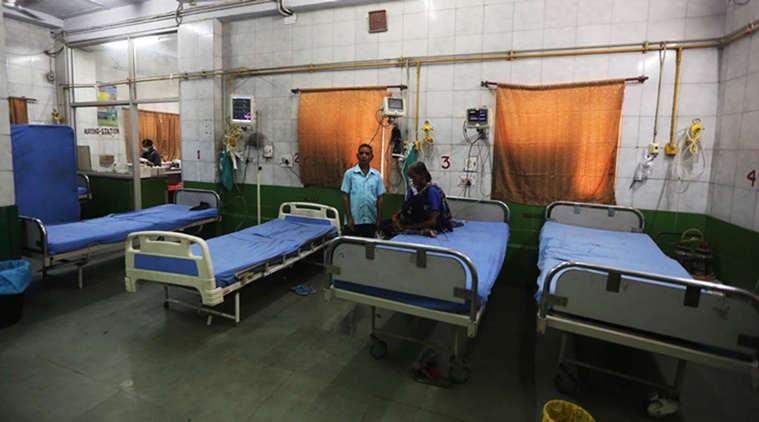
According to the notice, during his visit to the hospital on June 4, an assistant professor noted that out of 50 per cent beds reserved for AMC patients, six were given to private patients. (Representational)

The Ahmedabad Municipal Corporation (AMC) issued notice to a private hospital for flouting norms Friday. Artham Hospital in Ambawadi was issued notice for irregularities, including financial, and for refusing to admit Covid-19 patients under the AMC quota.

Despite having vacant beds under the AMC quota, the management said that there was no vacancy and admitted private pati- ents on those beds, the notice said.

According to the notice, during his visit to the hospital on June 4, an assistant professor noted that out of 50 per cent beds reserved for AMC patients, six were given to private patients. “On one side you are taking reimbursement for unoccupied bed reserved for AMC patients, on the other hand, admitting private patients on these reserved beds and also charging from (private) patients for these beds. Preliminary inquiry states it to be a case of financial irregularity,” the notice stated.

The hospital has a total 90 beds of which 50% are reserved for patients referred by AMC. Against these 45 beds, 51 patients were admitted as private patients.

The notice said that when the medical superintendent of SVP Hospital referred a patient on June 4 under HDU, the hospital management claimed to have no vacancy. The assistant professor’s report noted it to be incorrect. “Submit a reply within a day as to why your registration should not be cancelled and action taken under Epidemic Diseases Act 1897 and police action under section 3 of IPC. Also why not 10 times the charges you took from AMC beds be charged from you,” the notice said.

📣 The Indian Express is now on Telegram. Click here to join our channel (@indianexpress) and stay updated with the latest headlines

For all the latest Ahmedabad News, download Indian Express App.

Source link

With Haftar in retreat, France hedges its bets in Libya

0

PARIS — The collapse of Libyan strongman Khalifa Haftar’s offensive against the capital Tripoli thanks to Turkish military intervention has exposed Europe’s inability to shape the conflict at its borders and left France trying to hedge its bets.

On Friday, Haftar suffered his most significant defeat since the beginning of his military campaign in April 2019. It took the U.N.-recognized Government of National Accord (GNA), backed by Turkey, only a few hours to oust Haftar’s troops from the town of Tarhuna, southeast of Tripoli, the last town in the west of the country that he controlled.

“It’s very symbolic that Tarhuna fell,” said Tarek Megerisi, a policy fellow specializing in Libya at the European Council on Foreign Relations. “It wasn’t much of a fight and that’s significant because it’s the end of this chapter, there is no more offensive in western Libya.”

France had backed Haftar, putting Paris at odds with its EU partners.

But as the tide starting turning in recent weeks, France tried to coax the mercurial and overreaching Haftar to engage in the cease-fire talks set out at a Berlin peace conference in January, before he lost all his military gains.

“There is a Libyan crisis that is getting increasingly complex because of foreign interventions” — Official in French President Emmanuel Macron’s office

“There is a Libyan crisis that is getting increasingly complex because of foreign interventions,” an official in French President Emmanuel Macron’s office said. “If the Russians intervene on the side of Haftar and the Turks on the side of the GNA, there’s a worse-case scenario which is that they agree on a political framework on their conditions.”

But some remain dubious about France’s newfound enthusiasm for the Berlin peace process.

“The question on everybody’s lips is: are the French panicking because it seems like Turkey and Russia will divide up the country between them and it will be cut out or is France trying to salvage its image and lock in a cease-fire before Haftar completely collapses?” Megerisi said.

The Libyan conflict poses vital security and geopolitical risks for Europe. But with nothing more than an understaffed and slow naval mission to police the arms embargo in place and the Berlin-launched political process in limbo, the EU has barely been able to weigh in on the conflict.

Instead it is Turkey, and to a lesser extent Russia, that seized the moment by deploying personnel and weapons.

France has adopted an ambiguous position, as it worried about a spillover effect from Libya into the Sahel, where French forces lead a long-running counterterrorism mission.

“Counterterrorism has been the general framework of French foreign policy in the region since 2015,” said Virginie Collombier, who specializes in Libya at the European University Institute, in reference to the 2015 terrorist attacks in Paris and France’s counterterrorism mission in the Sahel region.

In addition, France is keen to preserve its strategic partnership with the United Arab Emirates, host of a French military base and the second-largest purchaser of French arms, and to block increasingly assertive Turkish moves in Libya and the Eastern Mediterranean.

“So for the past few years, France has both been supporting the U.N.-led process [to broker a political solution between the warring sides] while also providing Haftar with support,” Collombier said, since Haftar is perceived as a strongman who is able to keep jihadists at bay.

But Haftar’s claim to be a vanguard against jihadism fell apart on Friday evening.

“This is no longer a fight against terrorism or extremism, this is now a fight for holy jihad,” Haftar’s spokesman said.

A street in Tarhuna, Libya, on June 5, 2020 | Mahmud Turkia/AFP via Getty Images

U.S. Ambassador to Libya Richard Norland told reporters on Thursday that Macron had been in touch with Haftar. An Élysée official said Macron had “worked a lot” on the resumption of cease-fire talks but refused to answer whether there had been a recent call between the two, only referring to a conversation they had in March.

The official did acknowledge that France is in touch, at various levels, with Haftar and his entourage, as they are with Libyan Prime Minister Fayez al-Sarraj, who Foreign Minister Jean-Yves Le Drian spoke to on May 31.

On Friday, a U.N. Security Council resolution renewing the legal framework for the EU’s Operation IRINI — which is meant to enforce the arms embargo — was expected to be adopted unanimously.

Over the past two weeks, diplomats have been trying to assuage Russian objections and worries about the mission. On Tuesday, the European External Action Service provided details of the scope of the mission in a closed briefing to the U.N. Security Council at the request of Russia, in addition to diplomatic contacts between Paris, Berlin and Moscow, according to a European UNSC diplomat.

“It tickles [Russia] a bit to authorize a European military operation … and there’s the complicated relationship they have with the EU since they are under EU sanctions since their annexation of Crimea, so for them to say yes to the EU it’s not natural,” the diplomat said.

France has refrained from condemning the latest Russian escalation, though Macron publicly condemned Turkey for doing the same back in January.

Meanwhile, Russia has ramped up its military presence in Libya by reportedly sending Syrian mercenaries and up to 14 of its fighter jets to back Haftar, giving its air force a foothold in Libya that can directly threaten Europe’s southern borders.

France has refrained from condemning the latest Russian escalation, though Macron publicly condemned Turkey for doing the same back in January.

“Everything is not comparable in Libya,” the official in Macron’s office said.

He went on to say that “Turkey’s overall behavior,” including in Libya and on maritime borders in the Eastern Mediterranean, creates “facts on the ground at the borders of Europe that expose our security.”

Jacopo Barigazzi contributed reporting. 


Source by [author_name]

Virginia lawmaker who said white history is being erased is slammed by state GOP leaders

A Republican state senator in Virginia known for courting controversy and who is running for governor in 2021 is facing backlash from members of her own party after she said that the removal of Confederate statues is an “overt effort to erase all white history.”

Sen. Amanda Chase, whose majority-white district is just west of the capital, Richmond, made related comments in a fundraising email and a video shared Wednesday on Facebook live — a day before Gov. Ralph Northam, a Democrat, announced that statues of Gen. Robert E. Lee and four other Confederate leaders along Richmond’s Monument Avenue will be dismantled.

His decision came amid a longstanding debate about whether Confederate symbols should be taken down because they represent a racist legacy and a divided nation or if they have historical and cultural significance worth preserving. Following national unrest related to the death of George Floyd, a black man in Minneapolis, cities like Birmingham and Mobile in Alabama moved swiftly to remove such statues.

During a five-minute video on Facebook, Chase said Virginia’s “Socialist Democrats” were making a mistake if they did something similar.

“There is an overt effort here to erase white history. That’s what they’re looking on doing,” Chase said. “Listen, our grandfathers were guilty of slavery, and that is wrong. And I denounce that. I feel like slavery is wrong, it is evil. We should never own another human being. But that’s not the only thing that Lee and others are known for. They did other things.”

Full coverage of George Floyd’s death and protests around the country

She went on to say that the removal of monuments is a First Amendment issue and represent artistic expression, and that she is forced to stand by while Democrats allow art that she believes is pornographic to be taught in public schools. She was accused last summer of going on a “censorship crusade.”

“I think it’s racially insensitive and racist in itself not to respect the history of all Americans,” Chase said, adding :”It’s all about shoving this down people’s throats and erasing the history of the white people. And I think it’s wrong. I would never do that to another person, another culture.”

She also shared a petition on Facebook to save the monument, writing that “removing the Robert E. Lee statue is a cowardly capitulation to the looters and domestic terrorists.”

Protesters sit near the statue of Robert E. Lee on Monument Avenue in Richmond, Va., Wednesday, June 3, 2020.Bob Brown / AP

Virginia Senate GOP leaders, including Minority Leader Thomas Norment Jr., denounced Chase’s comments in a statement Thursday while also supporting her larger message that the monuments must remain.

“Attempts to eradicate instead of contextualizing history invariably fail,” Senate GOP leaders wrote. “And because of this Governor’s personal history, the motivations of this decision will always be suspect. Like Senator Chase’s idiotic, inappropriate and inflammatory response, his decision is more likely further to divide, not unite, Virginians.”

Requests for comment to Chase’s office and campaign were not immediately returned Friday.

Chase, who took office in 2016, is a vocal proponent of gun rights, proudly wearing a holstered pistol on her hip during this year’s General Assembly session, and says she unabashedly supports President Donald Trump. Her Facebook page includes screengrabs about antifa, the leftwing anti-fascist movement, during recent protests, which have been discredited as misinformation and tagged by Facebook as “false information.”

Chase has also clashed with her own party. In March 2019, she was accused of chastising and hurling profanities at a Capitol Police officer who told her she couldn’t park in an area outside of Capitol Square, leading the GOP to write a letter of support to police. Chase also later apologized. She was also expelled from the Chesterfield GOP last fall and declined to be a member of the Senate GOP caucus, saying her party needed new leadership after the state Senate and House flipped in favor of the Democrats for the first time in a generation.

The Virginia House GOP caucus has not commented specifically on the removal of the statues, but criticized Northam’s handling of the recent protests, as well as the looting and violence, in parts of Virginia, including Richmond.

Governors of Virginia cannot serve consecutive terms, and Northam’s time in office has been gripped by scandal over racist photos on his medical school yearbook page from decades earlier.

Chase, so far, is the only Republican to announce a gubernatorial campaign. Potential Democratic rivals include former Gov. Terry McAuliffe, Lt. Gov. Justin Fairfax and Attorney General Mark Herring, both of whom were swept into their own scandals amid the fallout from the Northam controversy.

Northam’s office did not return a request for comment about Chase’s remarks.

The Virginia Legislative Black Caucus, which has about two dozen lawmaker members, released a statement in support of the governor’s decision, saying its “long overdue removal … is an important step towards honestly and clearly addressing our Commonwealth’s and our country’s past.”

“These structural and monumental symbols have been extremely offensive to Black America and others,” Delegate Delores McQuinn, a longtime Democratic leader from Richmond, said, adding that the statue represents an “inhumane cause” that remains “so offensive and so hurtful.”

Download the NBC News app for full coverage and alerts on this story

At a news conference Thursday, he said that Virginia will “no longer preach a false version of history” and “in 2020, we can no longer tolerate a system that was based on buying and selling of people.”

The Rev. Robert W. Lee IV, a distant nephew of the Confederate general, told reporters that he supports the removal of the statue, which went up in 1890 and is part of a historic landmark in Richmond.

“We have created an idol of white supremacy,” the Rev. Lee said, adding that “I don’t see it as an erasure at all. I see it as the time to do what’s right.”

It is unclear when the Lee statue and others would be removed, although the Democratic-controlled House and Senate approved a bill this year allowing communities, beginning in July, to decide for themselves if they want to remove Confederate monuments. Northam said the community will help determine what should be done with the monument to Lee.

Source link