Saturday, May 2, 2026

#IOGP and Commission discuss oil and gas industry’s role in light of #EuropeanRecovery and #GreenDeal

0


Image

(Brussels, 5 June 2020) European Oil & Gas Industry representatives met with Executive Vice-President Frans Timmermans and Commissioner Kadri Simson to discuss the oil & gas industry’s transformation and its role in helping the EU reach climate neutrality by 2050.

Participants covered a broad range of topics including low-emission domestic oil & gas production, the enabling role of gas in the transition, investments in charging points and the electricity system overall, large-scale clean hydrogen production, and European Carbon Capture & Storage projects.

The vice president and commissioner laid down the EU’s strategic priorities, acknowledged the European oil & gas industry’s emission reduction efforts and increasing involvement in clean energy solutions, while at the same time calling upon the sector to accelerate and continue in this direction, especially in key areas such as hydrogen, CCS and charging points for EVs, as it plans for the long term.

“This was a very frank and constructive exchange, it brought clarity on the way forward to both parties” said François-Régis Mouton, IOGP Regional Director Europe. “The EU is put to the test on both the climate and economic fronts, that’s why we came with a list of solutions ready to be deployed, not a shopping list. The Commission can count on our industry to deliver on both objectives. The only thing we asked for is an open-minded policy framework that gives us a fair chance to do so, without compromising the end-goal that is climate neutrality by 2050,” Mouton concluded.

The Commission indicated its readiness to discuss ways to scale up technologies essential on the way to carbon neutrality, in particular clean hydrogen and Carbon Capture & Storage. EVP Timmermans also insisted on the need to start a dialogue with industrial sectors undergoing transformations, including oil & gas but also steel and car manufacturing among others.

Click here to access this document online.

Source by [author_name]

Sonu Sood to help daily wage workers and domestic abuse victims : Bollywood News – Bollywood Hungama

0

Actor Sonu Sood has been getting praised for his relentless work towards sending migrants back home. The actor, who has been working day in and out has sent thousands of migrants home by arranging transportation. Social media is full of praises for the actor, who has been called ‘God’ by those who were in need of help, and Sonu’s team made their dream of going home possible amid lockdown.

Now, Kulsum Shadab Wahab has joined has with the actor to help daily wagers and domestic violence victims. Kulsum, who is the Executive Director of the well known Hothur Foundation, has been instrumental in bringing in different industries together to work for the cause of acid attack survivors, underprivileged people and children. She has in the past also collaborated with superstar Shah Rukh Khan’s Meer Foundation to support acid attack survivors.

Now, Sonu Sood has collaborated with Kulsum Shadab Wahab to support daily wagers and their families. He is also helping Hothur foundation in raising awareness for domestic abuse victims who have suffered during the lockdown.

Talking about this, Sonu says, “I have known Kulsum does a wonderful job with Hothur foundation in the last 10 years. They are dedicated to uplifting people. They are doing a great job in the tough times of COVID 19 and the lockdown and I want to help and support them as much as I can. We are providing support to daily wagers who are worst hit because of the lockdown. Even domestic abuse has increased with many spending time at home. We want to help those in need.”

To help the domestic violence victims, Hothur foundation has started campaign Victory Over Violence, which showcases brave women narrating their stories. Kulsum Shadab Wahab says, “Domestic abuse cases have increased substantially ever since the lockdown has started. Victory over Violence will help women who are stuck in their household feel encouraged when they hear other women tell their stories. Sonu has been a great support and his work for migrants is commendable. He is someone we all look up to and his hard work is paying off with every migrant’s blessing. When he talks about domestic abuse and helps daily wagers, it will reach many people. It is great to have Sonu on board and I am sure that a lot of people who are in need of help with benefit from this collaboration.”

ALSO READ: Sonu Sood meets Maharashtra CM Uddhav Thackeray and Aaditya Thackeray to discuss relief efforts for migrants

BOLLYWOOD NEWS

Catch us for latest Bollywood News, Bollywood Movies update, Box office collection, New Movies Release & upcoming movies info only on Bollywood Hungama.

Source link

New Zealand Appears To Have Eradicated Virus As Last Known Infected Person Recovers

0

WELLINGTON, New Zealand (AP) — New Zealand appears to have completely eradicated the coronavirus — at least for now — after health officials said Monday the last known infected person had recovered.

The announcement was greeted with joy around the country and means the nation of 5 million people will be among the first to welcome throngs of fans back into sports stadiums, embrace crowded concerts and remove seating restrictions from flights.

It has been 17 days since the last new case was reported, during which time an additional 40,000 people have been tested, bringing the total number tested to about 300,000. Monday marked the first time since late February there have been no active cases.

Prime Minister Jacinda Ardern said she was confident New Zealand had halted the spread of the virus but it still must be prepared for more.

“We are confident we have eliminated transmission of the virus in New Zealand for now, but elimination is not a point in time, it is a sustained effort,” she said at a news conference. “We almost certainly will see cases here again, and I do want to say that again, we will almost certainly see cases here again, and that is not a sign that we have failed, it is a reality of this virus. But if and when that occurs we have to make sure — and we are — that we are prepared.”


Prime Minister Jacinda Ardern announced that New Zealand will move to COVID-19 Alert Level 1 at midnight on June 8. 

More cases are likely to be imported as people enter the country. For now, the border remains shut to all but citizens and residents, with some limited exceptions. Everybody who does enter has to go into quarantine.

Ardern announced that the Cabinet had agreed to remove almost all remaining virus restrictions from midnight, with the exception of the border strictures.

“We can hold public events without limitations. Private events such as weddings, functions and funerals without limitations,” Ardern said. “Retail is back without limitations. Hospitality is back without limitations. Public transport and travel across the country is fully opened.”

Experts say a number of factors have helped New Zealand wipe out the disease. Its isolated location in the South Pacific gave it vital time to see the devastating spread of the virus in other countries. Ardern also acted decisively by imposing a strict lockdown early in the outbreak.

She said her government’s focus will be on the country’s borders, where isolation and quarantine will continue.

Just over 1,500 people contracted the virus in New Zealand, including 22 who died.

Eliminating the virus won’t end the economic pain for the country. Thousands of people have lost their jobs. The tourism industry, which accounts for about 10% of the economy, has been particularly hard hit.

But Monday was a time of celebration for many. Ardern said that when she heard there were no more active cases, she did a little dance in her living room in front of her daughter Neve, who turns 2 this month. Ardern said the toddler had no idea what was going on but was happy to join her.

A HuffPost Guide To Coronavirus


Source link

Mergers: Commission clears acquisition of joint control over #Heideasphalt by #DeutscheAsphalt and #KEMNABAU

0

Mergers: Commission clears acquisition of joint control over #Heideasphalt by #DeutscheAsphalt and #KEMNABAU

Mergers: Commission clears acquisition of joint control over #Heideasphalt by #DeutscheAsphalt and #KEMNABAUThe European Commission has approved, under the EU Merger Regulation, the acquisition of joint control over Heideasphalt GmbH & Co. KG (“Heideasphalt”) by Deutsche Asphalt GmbH  and KEMNA BAU Andrae GmbH & Co. KG (“KEMNA BAU”), all three of Germany.

Heideasphalt is a newly created joint venture that will operate an asphalt mixing plant in Wittingen, Germany, currently operated by Deutsche Asphalt. Deutsche Asphalt is active in the production of various types of asphalt for asphalt base courses, asphalt binder courses and asphalt surface courses. KEMNA BAU is active in various market stages of traffic route construction.

The Commission concluded that the proposed acquisition would raise no competition concerns given that Heideasphalt has negligible actual or foreseen activities within the territory of the European Economic Area, and it would have a moderate market position in Northern Germany resulting from the transaction. The transaction was examined under the simplified merger review procedure.

More information is available on the Commission’s competition website, in the public case register under the case number M.9666.

Source by [author_name]

UK coronavirus: Johnson says anti-racist protests were ‘subverted by thuggery’ – live news

Follow the latest on the coronavirus crisis in the UK and the aftermath of Black Lives Matter protests

7.28am BST

Welcome to our UK coronavirus live blog with all the latest on the pandemic and the aftermath of the Black Lives Matter protests.

Boris Johnson, has claimed anti racist protests over the weekend were “subverted by thuggery”. Speaking after some protesters clashed with police in London, the prime minister said people had the right to protest but he suggested that engaging in violence was a “betrayal” of the Black Lives Matter movement.

Continue reading…

Source link

Rugby union is becoming a dying sport in Australia but what can be done to reverse the trend? – Sport360 News

0

It is nearly five years since the Wallabies reached the 2015 World Cup final when a team full of star names stamped their authority on the game and finished the season second in the rankings.

Much has changed since then, though. Their status as a leading rugby nation is now under serious examination. A disappointing 46 percent win ratio since that World Cup decider at Twickenham has them lying seventh in the world and devoid of confidence.

A World Cup quarter-final defeat to England last October has added to Rugby Australia’s mounting misfortunes, which included the exit of CEO Raelene Castle, an out-of-court settlement with Israel Folau, a declining audience, and allegations of mismanagement.

Just last week, there were more signs of uncertainty as the governing body announced that one third (47) of their 142 staff have been cut, with further cuts set to affect Super Rugby franchises.

It is a difficult time across all of sport amid the Covid-19 pandemic and Rugby Australia must support national programmes to give the country the best chance of returning to their former international glory.

However, in Australia’s highly-competitive sporting landscape, is the declining interest in union circumstantial or is it cultural?

Australia has one of the highest overall participation rates for rugby union in the world with 230,000 registered players, below just France, South Africa and England. Yet it is only considered the ninth most popular sport in the local market, behind the likes of AFL (Australian Football League), NRL (National Rugby League), A-League, cricket, golf, tennis and basketball.

Granted, it’s not all gloomy with the junior side runners-up at the 2019 U20 Rugby World Cup. They lost against France in the final, but displayed a glittering brand of rugby along the way. Plus, at schoolboy level, they showed further glimpses of promise, beating New Zealand for the first time in seven years.

Participation is also growing strongly in the women’s game. After the success of the inaugural Super W campaign in 2018, there was a 20 percent rise in the numbers of girls playing the sport. And for sevens rugby, the women’s team made history at Rio 2016, winning the Olympic gold medal. Their popularity continues to soar, recognised by the fact that Rugby Australia made them full-time athletes, setting their minimum wage equal to their male counterparts.

But even if there are some signs of promise, there is deep concern surrounding the Wallabies’ lack of recent success. They last won the Rugby Championship in 2015 and, on the local front, have not lifted a Super Rugby title since 2014.

And the senior side’s diminishing competitive powers is seeing sports-mad fans with plenty of options for entertainment, turn their attention elsewhere.

A devastating set of statistics underlay this slump, highlighted by a 43 per cent drop in the average Super Rugby audience in Australia since 2013. Within that figure, there is a key demographic slump with the 16-39 age bracket recording a 73 percent decline in Australia.

What’s interesting is that when Super Rugby was 12 teams in 1996-2005 the win rate was 68 percent. In the 2016 to 2019 period it dropped to 45 percent. The fact that rugby league, AFL and Test cricket is on terrestrial television, while rugby union is on paid television is one of the reasons for this slump.

These numbers churned out by Gemba Group, a leading Australian sports consultancy, whose conclusion was that Super Rugby wasn’t working and that Australia should instead prioritise on a domestic competition of their own.

To their detriment, Australia, with a population of about 25 million people, boasts a wealth of promising athletes across many different sports.

For any young player, it will be difficult to make a decision on what sport to focus on, given the large number of playing options available. It is the land of opportunity if you are a young athlete.

Australia has the most competitive sporting landscape out of any of the top rugby nations, in the sense that their homegrown leagues, the AFL and NRL, are vastly more successful than Super Rugby.
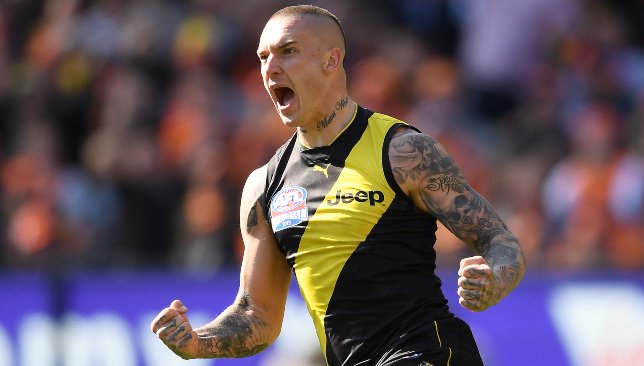
As a highly-talented young athlete, there are simply more options in the NRL and AFL with 16 and 18 professional teams respectively, compared to just four clubs in Union.

Salaries are higher as well in rugby league and AFL and there is increased job security with more teams available, which means players’ attentions are easily swayed.

However, it’s not just competition from other more appealing leagues which is damaging Union.

Another significant blow to its popularity was when Perth-based team Western Force was axed from Super Rugby in 2017 during a cost-cutting overhaul in Australia.

The Western Force created a pathway for players to join the Wallabies and popularised the sport in a state without a team in the NRL.

The absence of a side from Western Australia – with a population of nearly three million people – involved in Super Rugby has made it more difficult for rising stars from the area to have a crack at the professional game.

A clear pathway into the senior set-up is definitely something Rugby Australia needs to address. If the game is to grow outside of the private schools, which it has traditionally been associated with over the years, then it will need to be done within the club environment and at grassroots level. Money needs to be spent to build a support base in traditional league communities and unearth talented young players outside of New South Wales and Queensland.
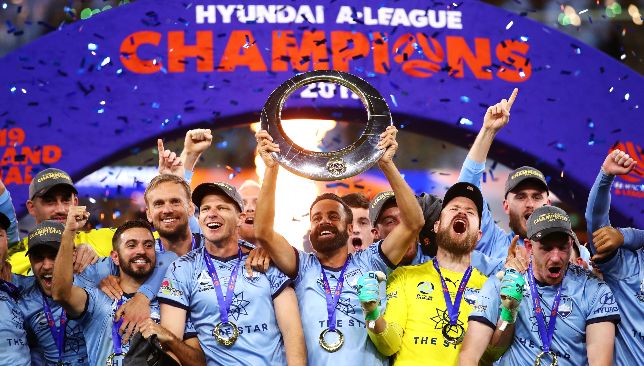
In terms of participation numbers, soccer is the highest participation team sport in Australia for young kids under the age of 15 with 14.8 per cent playing football, compared to 8.5 per cent for Aussie Rules. Kids love attending AFL games, however, soccer is viewed as being more popular to play and it is growing every year.

A wave of emigration to Australia in recent years has seen many people come from mostly non-traditional rugby nations that favour non-contact sport. As a result, the thirst for rugby has decreased in some cities.

In Sydney, for example, historic private schools which have produced Wallabies like King’s School, Barker College and Newington School have gone from five teams per age group to just two or three. This would have been unheard of 10 years ago.

On the north shore, there were 650 kids registered at the famous Lindfield Rugby Club, home to Wallabies legend Stirling Mortlock, in 2015. Now, the numbers are as low as 400. That’s one of the many examples across the country.

It is rare to see a young kid in parts of Sydney, Brisbane or Melbourne wear a Wallabies jersey. Some of these children wouldn’t even know who the stars players are. In Melbourne, if you were to open a 10-page sports section, seven could be dedicated to AFL, two for horse racing, and then half a page each for soccer and union.

And, as Union is culturally considered to be associated with wealthy and privileged people, some of the registration fees for local clubs are too expensive and need to be reduced to encourage new or existing members.
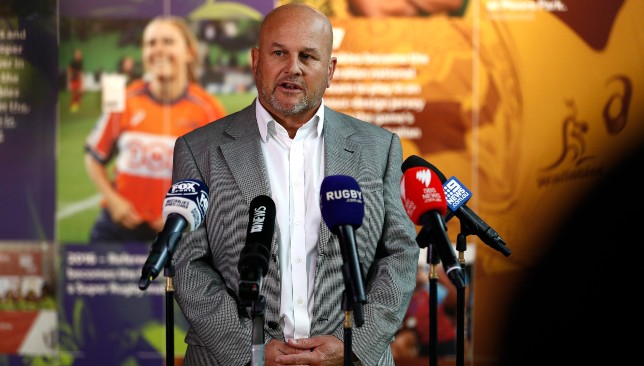
In some clubs across the country, membership fees are $250 per year, in comparison to just $30 and $25 per annum for AFL and rugby league clubs respectively.

While there are some factors it can influence like making the sport accessible for all Australians, and making a presence in public schools to combat AFL, football, league and cricket, there are others it can’t, especially in its lack of popularity in a highly-competitive domestic sports market.

Super Rugby matches attracted an average television audience of 71,000 per match last year. This was less than the AFL’s 167,000, the NRL’s 164,000 and the A-League’s 51,000.

What makes AFL more appetising for fans than union is its free-flowing nature, with fewer stoppages, more turnovers and players’ freedom of position. Fans love watching the ball move. And with a nationwide appeal, where one in every 25 Aussies are members of an AFL club, it has more of a foothold than any other sport across the country.

For the NRL, it is huge in New South Wales and Queensland, but apart from the State of Origin – annual best-of-three matches between two state representative sides, it doesn’t generate anywhere near the same passion as AFL.

What makes rugby league appealing for supporters is that it attracts people from all walks of life. The professional competition is an exciting, open league where different teams can contend for the championship on a regular basis.

Of the 16 clubs in the NRL, 12 different teams have won the championship since 1995, and two of the other four teams have reached the final. Having a close competition makes it gripping for any admirer of the sport.

Both AFL and NRL are on free-to-air television and its nationwide footprint appeals to people from all classes, while union still has the private schools stigma attached to it.

Wallabies matches are on free-to-air television, however, due to broadcasting rights, Super Rugby games can only be watched on pay-per-view television. And because of difference in time zones with New Zealand, South Africa, Japan and Argentina, they are often screened at unsuitable hours.
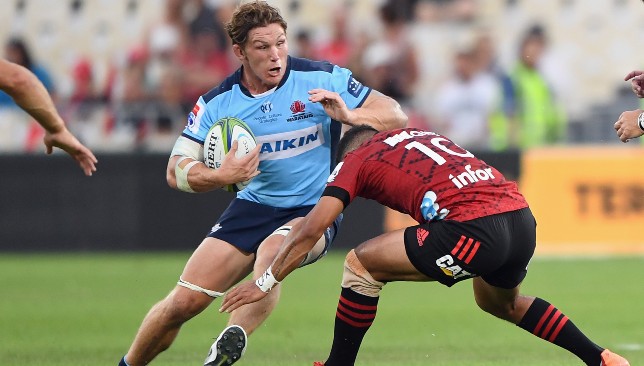
When the new broadcasting contract is signed over the coming months for 2021-2026 Super Rugby rights, Fox Sports Australia is reportedly only in a position to offer $10-18m a year, compared to their current figure of $57 million per season. A staggering drop.

The lack of recent success for the Wallabies hasn’t helped the decreasing TV audience, dwindling numbers of match-going fans and sponsorship opportunities. Coupled with this is the fact that they have not wrestled the Bledisloe Cup from New Zealand’s grasp since 2003. Beating their Trans-Tasman rivals more often would win back disillusioned fans, as tough of a task as it may prove to be.

The governing body need to act in a bid to help them return to their former higher standards. Otherwise, the game runs the risk of remaining in a state of constant crisis.

They must find ways to grow further interest in the sport, inject more money into grassroots level and increase community engagement in working class communities.

A new domestic competition could stem the waning numbers and allow Rugby Australia to concentrate on the Wallabies and its elite pathways, and generate much-needed income to prevent a mass exodus of players overseas.

This model will engage fans most, especially the traditional rivalries, and go back to the core of where Australia’s strength is. At the end of the season then, the Super Rugby competition can act as a Champions League style tournament.

The athletes are definitely there for union to be a driving force again. It’s just caught between many popular sports in a sports-obsessed nation.

While getting back to winning ways is the most important thing for the Wallabies, Rugby Australia need to show the leadership and put a clear sustainable plan in place to help build the sport.

Know more about Sport360 Application


Source link

Eerie Golden Gate Bridge ‘Music’ Fills San Francisco After Railing Replacement

0

San Francisco’s iconic Golden Gate Bridge has found its voice… and it’s already driving some locals nuts.  

The city’s helpline says the noise ― described as a whistle, hum, howl or even scream ― is caused by “high winds blowing through the newly installed railing slats along the bike path on the bridge.” 

It’s not constant, only when the winds are just right, as was the case on Friday:

It can be heard for miles throughout the City by the Bay and beyond:

Local public radio station KQED referred to the bridge as a “a giant orange wheezing kazoo.”

“The Golden Gate Bridge has started to sing,” Paolo Cosulich-Schwartz of the Bridge District told the station. “The new musical tones coming from the bridge are a known and inevitable phenomenon that stem from our wind retrofit during very high winds.”

He added that the retrofit is “necessary to ensure the safety and structural integrity of the bridge for generations to come.”

In other words, unless there’s another retrofit, the haunting sounds are here to stay.


Source link

Jennifer Aniston Donates Nearly $1 Million to Racial Justice Charities


Jennifer Aniston Donates Nearly $1 Million to Racial Justice Charities Following George Floyd’s Death | Entertainment Tonight


Source link

‘Hypocrites’: Bollywood actors slammed over George Floyd stand

Several Bollywood stars have been labelled “hypocrites” after speaking out against racism to lend support to global protests while promoting products in India designed to make people’s skin lighter.

The actors were also trolled and accused of “cowardice” for their refusal to call out the attacks on India’s minorities, mainly Muslims, while protesting against the killing of George Floyd in the United States.

More:

A series of A-list Bollywood actresses, including Priyanka Chopra, shared posts on social media to protest against the death of Floyd who died in police custody after a white officer knelt on his neck for nearly nine minutes.

“End this race war here in the US, and around the world. Wherever you live, whatever your circumstances, NO ONE deserves to die, especially at the hands of another because of their skin colour,” Chopra, 37, posted on Instagram.

⁣⁣People were quick to call her out on social media for previously promoting an “intense fairness moisturiser”.

They also pointed at her role in a 2008 Hindi film, Fashion, in which she is ashamed of having sex with a Black man.

“Thanks for speaking out for black lives. But, maybe also stop supporting a skin bleaching cream which promotes anti-blackness,” one user replied to Chopra’s Instagram post.

Chopra, a former Miss World who became a star in both Bollywood and Hollywood, has said in past interviews that she regretted endorsing such a product as a young actress and that she is proud of her dark skin.

She was not immediately available to comment.

Promoting ‘fairness’ creams

Actresses Sonam Kapoor Ahuja, Deepika Padukone and Disha Patani also faced criticism for their anti-racism social media posts while having featured in ads for skin fairness products.

India’s multi-billion-dollar skin lightening industry has a host of products appearing to offer dark-skinned Indians a lighter, fairer and better version of themselves, often endorsed by the Bollywood’s top actors.

After years of criticism and campaigns against such products, many brands moved to calling them “skin brightening”, “whitening” or “lightening” creams and face washes.

“Most brands no longer want to be associated directly with being termed as ‘fairness creams’,” said actor Abhay Deol, a vocal critic of fairness products and Bollywood’s support of them.

Critics say the film industry helps feed India’s obsession with fair skin and bias against darker faces, with many pointing out it fails to represent the diversity of Indians.

For example, actors from southern states where most people are darker-skinned are rarely in mainstream Bollywood films.

Last year, the film Bala featured the story of a woman who suffered discrimination because of her complexion and actress Bhumi Pednekar had her skin darkened to play the role.

Social media users also questioned why Bollywood continued to write lyrics and dialogues that equated fairness with beauty.

Kangana Ranaut, a noted actress, spoke out against her Bollywood colleagues for promoting fairness products.

“These people, especially Indian celebrities, the successful ones … have been endorsing all kinds of fairness products and today shamelessly they stand and say black lives matter – I mean how dare they?” she told the BBC in an interview.

Indian-American comedian Hasan Minhaj took on Bollywood for the endorsements as well on his news-comedy programme Patriot Act on Netflix.

‘Cowardice to the fore’

Meanwhile, many in India also criticised the Bollywood actors for their silence when Indians face police atrocities and other forms of violence.

“So much respect for all the celebrities tweeting #BLACK_LIVES_MATTER. It takes courage to bring your cowardice to the fore when you tweet for American lives but can’t tweet for Indian lives,” tweeted Omar Abdullah, former chief minister of the erstwhile Jammu and Kashmir state, now divided into two federal territories.

Others asked why the Bollywood actors do not take a stand on contentious issues such as the “anti-Muslim” Citizenship Amendment Act (CAA) passed by the government late last year, or the protests and violence that followed after the passage of the law.

The CAA allows Indian citizenship for non-Muslim minorities from the neighbouring Pakistan, Bangladesh and Afghanistan. Critics say the law violates India’s secular constitution.

“So our starlets who did not even whisper about the anti-Muslim carnage in Delhi, the spate of lynchings, the citizenship bill, the arrests of academics and intellectuals are outraging with the hashtag #BLACK_LIVES_MATTER. PUKE,” journalist Rana Ayyub posted on Twitter.

Many social media users also called out the “hypocrisy” behind Bollywood actors expressing outrage over the death of a pregnant elephant in Kerala state, while maintaining silence on the imprisonment of activist Safoora Zargar, who was arrested in April despite her pregnancy for protesting against the CAA.

The animal died last month after it reportedly ate a fruit filled with explosives. Its death triggered a political controversy after right-wing forces attempted to communalise the issue by suggesting the culprit could be a Muslim, forcing Kerala Chief Minister Pinarayi Vijayan to flag a “hate campaign” over the issue.

Zargar, 27, is accused of being a “conspirator” behind the February violence in the Indian capital, in which 53 people were killed.

She has been charged under the Unlawful Activities Prevention Act, 2019 (UAPA), a stringent “anti-terror” law and has been denied bail thrice so far despite her health conditions amid the coronavirus pandemic.

“Where has the outrage and empathy we rightly felt at the death of the elephant in Kerala gone in the case of Safoora Zargar, the Jamia student held in an overcrowded jail at COVID time?” asked filmmaker Bedabrata Pain in a column titled Human Cruelty and a Tale of Two Pregnancies for The Wire news website.


Source link

Small Queensland distillery makes hand sanitiser and the world’s best spiced rum

Amid the “chaos” of producing hand sanitiser during the COVID-19 pandemic, a central Queensland distillery was recognised internationally for its usual tipple.

Saleyards Distillery co-owner Catie Brewer said they had been making hand sanitiser for the past couple of months for rural firefighters, police, doctors, local hospitals, schools and aged care homes.

Saleyards Distillery owners Warren and Catie Brewer have gone from creating rum to hand sanitisers. During the pandemic, they have also awarded the title of the best spiced rum in the World Rum Awards.

“Now that the hand sanitiser has slowed down, we are now in high demand for our rum, as during the chaos of hand sanitiser production we received a lovely surprise from the World Rum Awards in London,” she said.

“We took out the title [for World’s Best Spiced Rum] … The award has been a huge game-changer for us and we are overwhelmed with demand.

Source by [author_name]