Saturday, April 18, 2026

Here comes the US crackdown on China stocks

0

In recent days, US lawmakers, government agencies and stock exchanges have taken steps aimed at limiting Beijing’s access to America’s vast capital markets.
Earlier this week, Nasdaq (NDAQ) proposed a trio of rules that would make it tougher for Chinese companies to go public on that exchange. Nasdaq also moved to delist Luckin Coffee (LK) in the wake of the Chinese firm’s accounting fraud.
The moves, coupled with President Donald Trump’s threats to impose additional tariffs, underscore surging tensions between the world’s two largest economies. The risk is a return of a full-scale trade war, except this time the battle would be waged during a pandemic that is already crushing the world economy.

“The list of anti-China actions is quickly growing in DC,” Ed Mills, Washington policy analyst at Raymond James, wrote in a note to clients Thursday.

‘Warp speed’

Although the pressure on China is being led by Trump, there is bipartisan support in Washington for confronting Beijing, especially because of criticism of China’s initial handling of the coronavirus outbreak.

It’s telling that the Senate bill passed by unanimous consent, meaning a single US senator could have blocked it. None did.

“In the current political environment, few, if any, members of Congress want to be seen as supporting China,” said Mills. “This legislation is moving at warp speed,” he said.

Shares of US-listed Chinese companies, including e-commerce giants Alibaba (BABA) and JD.com (JD), retreated more than 3% on Thursday. Social media company Weibo (WB), which is listed in Nasdaq, fell 2%.

“This bill is to protect investors and it’s long overdue,” Senator Chris Van Hollen, a Democrat from Maryland who introduced the legislation, told CNN Business. He predicted the legislation will ultimately get passed by his colleagues in the House of Representatives.

“It’s not that we’re picking on China. We want them to play by the same rules as everyone else,” Van Hollen said.

Lack of transparency

The Luckin Coffee accounting scandal has brought renewed attention to the transparency problems linked to US-listed companies from China.

Last month, Luckin shares crashed more than 75% after it disclosed that an internal investigation discovered fabricated transactions. The nosedive wiped out more than $5 billion of the company’s market value, hurting US mom-and-pop investors in the process. Luckin, which went public a year ago, fired its CEO and chief operating officer on May 12.

Investors often face a lack of transparency when it comes to Chinese stocks. China does not allow US audit watchdogs at the Public Company Accounting Oversight Board (PCAOB) to inspect audits of companies registered in China and Hong Kong.

“It’s asinine that we’re giving Chinese companies the opportunity to exploit hardworking Americans — people who put their retirement and college savings in our exchanges — because we don’t insist on examining their books,” Senator John Neely Kennedy, a Republican from Louisiana who introduced the legislation, said in a statement. “There are plenty of markets all over the world open to cheaters, but America can’t afford to be one of them.”

The bill would bar foreign companies from listing on US exchanges if they fail to adhere with US auditors for three straight years.

“It’s important for investors to know that, because companies that are ultimately controlled by a foreign government are subject to the political whims of that government,” Van Hollen said.

All US-listed public companies would also be required to disclose whether they are owned or controlled by a foreign government, including China’s Communist party.

Chinese IPOs face new roadblocks

Meanwhile, Nasdaq proposed three new rules that would limit the ability of Chinese companies to go public on the exchange. Among other things, the rules would prevent the listing of smaller stocks, which can be vulnerable to market manipulation, and require that at least one senior executive or director has past work experience at a US-listed public company or other relevant background.

Although the proposed rules do not specifically target China, it’s clear that’s their focus. Nasdaq said the rules would apply to all companies from “restrictive market” countries that have “secrecy laws, blocking statutes, national security laws…or regulations restricting access to information by regulators.”

SEC Chairman Jay Clayton praised Nasdaq’s efforts to crack down on IPOs from emerging markets such as China. “Investors should be cheering,” Clayton told CNBC this week.

Tech cold war

Although the latest battleground is over Chinese securities, it is part of a broader battle over technology, national security and global supremacy.

“The Chinese government is playing to win. They believe technology leadership is why the United States became the only superpower in the world,” said David Weild, a capital markets expert and former vice chairman of Nasdaq.

Last week, the US Commerce Department moved to restrict the ability of Huawei, China’s tech crown jewel, to make and obtain semiconductor chips that use American-made software and technology.

“China is on a glidepath to dominance and is cheating at every turn,” said Kennedy, the Louisiana senator, in his statement.

This battle is unlikely to be settled by simply delisting Chinese stocks or through more transparent accounting standards. It’s part of a deeper cold war that will span years, if not decades.

Source link

Tips from the ER on Childproofing Your House

0

Any new parent quickly learns that a toddler is into everything. It only takes a quick second for that child to get out of your sight and around something potentially dangerous. Emergency physicians treat children every day who are injured by something in their own home or someone else’s home.
Many childhood injuries that emergency physicians see daily are easily avoidable. The first step to prevention is to be aware of the items in your home, and knowing how to identify and eliminate potential childhood hazards

Unintentional injuries are the leading cause of emergency room visits among children under age 10 in the United States, according to the Centers for Disease Control and Prevention (CDC). More than 3 million children under age 10 were treated in the ER, while more than 3,300 children under age 10 died as a result of unintentional injuries.

Key Statistics:

  • Falls are the leading cause of non-fatal unintentional injuries for children under the age of 10.
  • 512,33 children under the age of five were injured by home furnishings and fixtures in 2018
  • Drowning was the leading cause of injury death for children ages 1 – 4.
  • Nearly 50,000 children under the age of five were treated in ERs for fire and burn related injuries in 2017. Fire/burn is the fourth leading cause of unintentional death in children between ages 1 – 4, and the third leading cause of unintentional death in children ages 5-9 (National Safety Council)

What You Can do in Your Home Right Now to Protect Young Children:

  • Use safety latches for drawers and cabinets in kitchens, bathrooms, and other rooms that may contain dangerous products. Items like cleaning supplies, sharp objects, and medicines should all be securely stored out of reach of children.
  • Use safety gates to help prevent falls down stairs and to help prevent children from going in areas that may have potential dangers. Make sure these gates meet current safety standards. Be mindful gates that only press against walls, called pressure-mounted gates, are not secure enough.
  • Place protective childproof covers on all electrical outlets that are in reach of children.
  • Make sure all electrical cords are out of a child’s reach and properly secure.
  • Fasten all heavy bookshelves, televisions, cabinets or anything that could pose a potential tipping hazard to a secure wall, making sure it cannot fall on a child.
  • Use toilet seat lid-locking devices on all toilet seats to decrease drowning hazards.
  • Use cordless window coverings to help prevent strangulation.
  • Use corner or edge bumpers on anything with sharp edges, like furniture and fireplaces.
  • Create a protective barrier around pools and spas that include at least a four-foot tall fence with self-closing and self-latching gates. It’s also a good idea to look into getting pool alarms as an additional layer of protection.

Magnetic Objects

Special attention should be given to objects in the home which contain magnets as they pose an additional hazard to young children.  Powerful magnet sets – often sold as desktop trinkets or parts of toys – can damage organs when two or more magnets are swallowed and their magnetic force pulls them together across different sections of the digestive system, often resulting in the need for surgery.  

Source link

Heat Stroke and Hot Cars

0

Since 2017, the total number of children in the US that died from heatstroke after being left in a car is 72. Most of these children are under three years of age.   

As an emergency physician practicing in Florida, I’ve seen the devastating impact of heatstroke countless times. The loss of these children’s lives is tragic but avoidable. 

Florida ranked second to Texas with 72 deaths recorded from 1998-2015. When adjusted for per capita (population per one million), Florida is the fifth-worst state in the nation.

This mind staggering research comes directly from Mr. Jan Null, CCM, of the Department of Meteorology and Climate Science at San Jose University. “This danger exists despite public education, efforts, and lobbying for laws against leaving children unattended in vehicles,” Null said.

Consider the human science: What is heatstroke? Heatstroke is defined as a condition by which the body develops hyperthermia (fever), during which the body experiences a failure of the thermoregulatory system.   

We manage heat exposure by way of the brain, circulatory system, and skin – in a way similar to a cooling system of a car.  Humans cool by ways of convection and evaporation of sweat.  Severe hyperthermia is defined as prolonged exposure to a body temperature of 104° F (40° C) or higher.  

During this syndrome, the body first develops thirst, dehydration, and perspires. As the temperature of the infant raises above 104° F, it can lead to the inability to perspire, confusion, mental agitation, and eventual coma. The body’s maximum temperature before protein starts to break down and organ failure ensues is approximately 106° F.  

Children and infants are more susceptible to heat illness due to their innate inability to regulate heat when compared to adults. The important point is that the danger is a function of not only the temperature, but time of exposure. 

The human body can only tolerate superheated environments for approximately 6-8 minutes before it loses its ability to respond. 

Now, let’s look at car science: Imagine a greenhouse. No air movement. No internal cooling.  On days with temperatures as low as 70° F temperatures can reach 117° F in as little as 60 minutes with 80% of this being met with in the first 30 minutes!

At 60 minutes, the internal vehicle temperature can rise to nearly 45° F above the outside. Opening the window, even “cracking the windows” just 8 inches, had minimal effect on temperature rise and maximum temperature attained.

Translation – it’s a myth! “Cracking the windows” will not only have little to no effect, but it is a practice that can and will lead to death as well.   

On July 29, 2016, Central Florida Regional Hospital and Seminole Safe Kids proved that internal car temperatures could be documented as high as 175° F with an outside temperature of only 94° F in one hour.  

In an attempt to demonstrate this, I sat in a car outside, with the windows closed, that reached a maximum of 140° F. I was only able to tolerate it for four minutes. Imagine a defenseless child, vulnerable adult, or pet.  

What can you do? Life is a function of routines. We get up. We eat. We go to school or work. Parents if not home, have to arrange for daycare. Transportation of the children to and from daycare (or running an errand) is part of that routine. Add a simple stressor to that parent that day and that variance could lead to a change in that routine. It is at that time, the biggest threat of forgetting a child can occur. 

It is important to recognize that vulnerable adults – senior citizens or developmentally delayed persons are also at risk. This applies to animals left unattended as well.  Cars manufacturers are developing mechanisms within the car – i.e. weight sensors in the back seat that cause a dashboard indicator to ask, “did you bring your belongings,” for example.

Something as simple as putting your purse or shoe in the back seat could also trigger your memory to make sure you look back into the car, so this never happens again!

If you spot a person or a pet in a hot car, the laws detailing what you can do may vary by state. In Florida, laws have been recently changed to allow for good Samaritans to gain access to cars so long as the person immediately calls 911; uses force only necessary to gain access; and remains with the vehicle.  

With more public education and lobbying efforts, the needless loss of life can be prevented.

Gary Goodman MD, FACEP – Diplomate, American Board of Emergency Medicine; Attending Physician, Dept. of Emergency Medicine, Central Florida Regional Hospital; Assistant Professor of Clinical Medicine, UCF College of Medicine

Source link

Trump Says Mailing In Your Ballot Is Corrupt, Unless You’re Trump

President Donald Trump has repeatedly claimed that mailing in election ballots is corrupt, but he carved out two exceptions on Thursday: you’re sick or you’re him.

“We don’t want them to do mail-in ballots because it’s going to lead to total election fraud,” Trump said, though there is no evidence of that. 

“Now if somebody has to mail it in because they’re sick,” Trump told reporters, “or, by the way, because they live in the White House and they have to vote in Florida and they won’t be in Florida, if there’s a reason for it, that’s okay.”

Trump changed his primary residence from New York to Florida in October, likely to seek a lower income tax or avoid an inheritance tax. He voted by absentee ballot in the state’s March primary, using an intermediary in a process known as ballot-harvesting that he and other Republicans have described as election fraud.

A major reason states are increasingly offering mail-in ballots is the coronavirus pandemic. It may be the most effective way to ensure people can safely vote without fear of spreading or catching COVID-19, which is likely to remain a major threat in the November election when Trump faces presumptive Democratic nominee Joe Biden. 

Democratic leaders in the House and Senate have been pushing to include funding for states to expand vote-by-mail in coronavirus relief packages, but Trump and his GOP backers appear to have calculated that suppressing election turnout by limiting vote-by-mail would work in the president’s favor. Trump himself said on “Fox & Friends” last month that agreeing to Democratic proposals to make voting easier would mean “you’d never have a Republican elected in this country again.”

On Wednesday, Trump threatened to revoke federal funding to Michigan and Nevada, two major swing states, because they sent applications for voting by mail to registered voters.

“I will ask to hold up funding to Michigan if they want to go down this Voter Fraud path!” Trump tweeted. 

But voting by mail is already very common. According to the Brennan Center for Justice, 23% of ballots were cast by mail in 2016. Two years later, the figure had risen to 26%. 


Source by [author_name]

BlackRock is the new king of Wall Street as banks get pummeled

0

BlackRock (BLK) shares are up 1% this year. That may not sound fantastic, but eking out a gain of any kind in this environment is notable. The Financial Select Sector SPDR Fund (XLF), an exchange-traded fund that owns most of the big bank stocks, has plunged nearly 30% so far in 2020.

The US Federal Reserve recently tapped BlackRock to run the central bank’s plan to invest in so-called junk bond ETFs, a move that has raised eyebrows since BlackRock runs several large fixed-income funds that own high-yield corporate bonds.

The slowdown in merger and initial public offering activity is also bad news for the likes of Goldman Sachs (GS), JPMorgan Chase (JPM), Bank of America (BAC), Morgan Stanley (MS) and Citigroup (C). Those five stocks are all down between 20% and 45% this year.

But BlackRock is still seeing huge demand for its iShares family of ETFs, despite the market turmoil.

iShares ETFs are more popular than ever

The company announced in April that it posted $13.8 billion in net inflows to iShares ETFs during the first quarter. iShares now has $1.85 trillion in assets under management, nearly 30% of the firm’s $6.47 trillion in total assets.

“The ETF business continues to strengthen and is powering the whole company,” said Mac Sykes, an analyst with Gabelli Funds, which owns a small stake in BlackRock.

And even though top regional bank PNC (PNC)recently announced plans to sell its more than 20% stake in BlackRock, a move that may be a sign PNC is on the prowl for an acquisition, BlackRock is set to offset the blow by repurchasing more than $1 billion of its own stock.

So BlackRock could emerge from this market pullback as a company that will be able to report even higher earnings per share since it will have fewer shares outstanding.

The recent market crisis could also help BlackRock, as well as other big asset managers, now that the Fed is planning to buy junk bond ETFs as part of its many stimulus efforts.
Bloomberg pointed out in recent story that BlackRock will advise the New York Fed as it looks to invest in ETFs but that it will not charge any fees for doing so.

Socially conscious investing isn’t a fad

Still, BlackRock could also (somewhat controversially) wind up generating more fees from ETFs it caters to individual investors — particularly socially responsible ETFs that BlackRock CEO Larry Fink has championed over the years.

The Institute for Pension Fund Integrity, a firm that tracks state and local pension funds, said in a report this week that the iShares Global Clean Energy ETF (ICLN) has an expense ratio that is significantly higher than its iShares Core S&P 500 ETF (IVV).

The shift to so-called ESG (environmental, social and corporate governance) funds might be about more than just doing the right thing.

“BlackRock’s ESG shift is really about generating more money for the firm. Pensions need to be focused on generating returns and BlackRock going this route undermines the low cost benefit of indexing,” said the Institute for Pension Fund Integrity in a report.

“Over time, BlackRock will look less like a low-fee, efficient index provider and more like a higher-fee forecaster of economic and social trends, with a bias toward stocks and bonds that meet its new ESG bias,” the firm added.

Still, BlackRock is latching on to a trend that has captured the minds of many socially conscious investors.

“Asset flows into ESG mutual funds and ETFs had been steady for much of the past five years before skyrocketing in 2019,” said Brian Price, head of investments for Commonwealth Financial Network, in a report.

“There was no watershed moment that caused this surge, but it did put the industry on notice. ESG investing had evolved into anything but a fad and appeared, in fact, to have become a permanent fixture in the investment management landscape,” Price added.

So even if investing in ESG is not just for altruistic purposes, it’s an undeniably savvy move that should benefit BlackRock.

Source link

EU Confidential #153: Merkel and Macron’s Recovery Fund — Economist Lucas Guttenberg

0

Listen to the podcast on Spotify | Apple | Google | Soundcloud | Stitcher

It was big and bold and came out of the blue — Angela Merkel and Emmanuel Macron took Europe by surprise with a plan for a €500 billion EU recovery fund. Was it a historic moment for Europe? How would the scheme work? And can the skeptics be won over? POLITICO’s Rym Momtaz, Matthew Karnitschnig and Andrew Gray break down the politics behind the plan and preview the battles ahead.

To add an expert economist’s view into the mix, Matt catches up with Lucas Guttenberg, deputy director of the Jacques Delors Centre at the Hertie School of Governance in Berlin.


Source by [author_name]

What eating in a restaurant may look like during the pandemic

0

While the country’s restaurant industry has proved nimble in finding new ways to stay afloat with dining rooms closed to customers, the announcement in late April from the state of Georgia permitting reopenings sent a slim beam of light through these dark times. Now as more states begin reopening, there’s an increased concern over protocols for keeping everyone safe and healthy.

And given the safety precautions that will need to be put in place, post-pandemic dining is going to look very different than a couple of months ago.

Although obviously eager to get back to work, the operators CNN spoke with don’t plan on resuming service anytime in the near future.

“The safety and health of our guests, employees, and community are our highest priority, and until we have more information that we are not putting anyone in an unsafe or uncomfortable environment, we will keep our doors closed,” wrote Justin Anthony of True Story Brands restaurant group in Georgia in an email.

“Although obviously eager to get back to work, the operators CNN spoke with don’t plan on resuming service anytime in the near future.”

However, they are considering what dining looks like once it feels like the pandemic is under control. Hong Kong offers a few glimpses.

At Yardbird, a host takes a guest’s temperature before the diner is allowed to enter the dining room, which is operating at half capacity. The ubiquitous masks worn by the staff remind patrons that even if drinks are flowing and dishes are flying out of the kitchen, the true nature of the restaurant is in hiding until the pandemic is no longer a threat.

But while the international restaurant scene may offer a peek at what’s the come, the US’s navigation probably won’t follow the exact same route.

“This is an industry that for decades has been highly regulated,” says Larry Lynch, senior vice president of science and industry for the National Restaurant Association, which released detailed reopening guidelines on April 22.

“We’ve been very steadfast and sticking with guidance coming from the Center for Disease Control, US Food and Drug Administration and Environmental Protection Agency, and working with all agencies to create guidelines for restaurants. [However, restaurants] have to operationalize it. Guidance is just that. It’s pointing you in the direction.”

State-by-state safety mandates will likely will provide further clarification. The ones released by the state of Georgia on April 23 noted capacity restrictions and banned salad bar and buffet stations, for example.

While awaiting more information from the top, internal communications throughout the industry also help restaurateurs prep for the big day.

The James Beard Foundation hosts regular webinars, such as one titled “Updated Food Safety and Sanitation Guidelines,” and The American Culinary Foundation offers an Covid-19 sanitation course free for ACF members and nonmembers.

Rethinking the space

Allison Cooke, principal and director of hospitality design at Core, a hospitality design firm based in Washington, DC, works with clients to get their spaces ready for reopening.

“We always look at what are the operational characteristics they need to achieve and functionalities,” she says. She’s aiding restaurants across the country with “simple strategies that they could implement that are low cost and will make their spaces safer.”

The first major change to restaurants will be capacity. To maintain distance, restaurateurs plan to start at 50% maximum, a concept many first flirted with weeks ago before regulations shut down dining rooms completely.

Communal tables may only hold parties of two at either end, or one party of four in the middle.

When it comes to banquette seating for two, both people may end up the cushy seat. Cooke says it will be safer for servers if both parties sit facing outward, so the server doesn’t need to slide in between tables in order to reach the far-seated guest.

Identifying points of congestion and finding flow will positively affect how people safely move around the space.

Cooke notes certain pathways, such as hallways to the bathroom, tend to intersect with heavily trafficked spaces, such as kitchen entrances, and need to be looked at.

“Operationally, do you assign a hall monitor or someone to keep an eye out for guests?” she half-jokes. “I think a lot of it goes to the communication and messaging that customers get before they even enter a restaurant and what the new kind of expectation for respecting space feels like and should be.”

And communication will be key. Signage is the new artwork, reminding guests to be respectful of others, to maintain space and reinforce safety protocol. Markers indicating six feet may dot the floors.

While open kitchens — built-in theater, essentially — used to be a draw, Plexiglas barriers might be installed. The intimate exchanges at a chef’s counter experience could also be corralled by Plexiglas.

Stephanie Castellucci, owner of the six-restaurant strong Castellucci Group in Georgia, is working with Cooke on making her restaurants safe spaces. She’s considering installing Plexiglas barriers by tables that sit in higher-traffic spots, such as at a server’s POS (point of sale) station.

Every minor detail and every touch point needs to be considered. Along with constantly sanitizing all surfaces, Castellucci plans on installing automatic soap dispensers, trash cans and door openers, in an effort to get rid of “all the things you would put your hands on,” she says.

Caring for employees

Like Jennifer Aniston’s character in the movie “Office Space,” uniforms are going to require a lot more flair. Restaurateurs will mandate personal protective equipment (PPE) such as gloves and masks for all employees.

Frequent hand-washing — part of standard protocol — remains vital. Sarah Gavigan, chef and owner of The Otaku Group in Nashville, plans to check staff members’ temperatures upon their arrival to work.

Given the size of many restaurant kitchens, cooking is often part food prep and part dance.

“People are working very tight quarters in the kitchens,” notes Carey Ferrara, director of sales and marketing for The Gaslight Group in Savannah, Georgia. “How will you maintain that six-foot distance between people?”

She thinks it “will probably lead to a little bit longer times for food to come out,” and admits that six feet may not be completely possible at all times.

“Luckily, red-faced, foul-mouthed, screaming chefs are no longer tolerated, but their brief glamourization revealed how important verbal communication is in a kitchen setting. ”

Luckily, red-faced, foul-mouthed, screaming chefs are no longer tolerated, but their brief heyday revealed how important verbal communication is in a kitchen setting.

Clear and concise messages among the chefs and between the kitchen team and servers keep service flowing smoothly; however, according it Castellucci, “it’s difficult in a normal environment, and then you add those additional precautions [of masks and a six-foot distance] on top of that, and it does provide the opportunity for things to get missed. So we’re thinking about how we can work more off of [order] tickets and less off of calls.”

Altered ambiance

Get ready for culture shock: Ambiance at a favorite restaurant may be unrecognizable, at least in the beginning.

“There’s going to be some things that have to happen that make restaurants probably a little less pretty and a little less lively and take away some of the ambiance that we all crave when we go out,” says Scott Shor, operating partner at Edmund’s Oast, a vibrant restaurant and brewery in Charleston, South Carolina. “But the new reality — at least in the short term — might just be that it has to look a little bit more industrial and a little bit more carefully plotted out.”

To ensure guests eat with the cleanest utensils and drink out of pristine glasses, tables may not get set until diners take a seat.

Many restaurateurs grapple with the idea of utilizing disposable dishware as they think about reopening. The sustainability aspect leaves them cold, but it could provide temporary peace of mind. Salt, pepper, ketchup and other accoutrements will be served only upon request. In their place, look for hand sanitizer.

Fewer diners could mean a quieter restaurant chatter-wise, but communication between server and diners — especially at six feet away and through masks — may result in higher volumes.

“Tableside, how do we distance while still taking orders while still delivering great service,” ponders Shor. “It’s not going to be perfect because someone has to pick up and put stuff down on the table. You can’t stay six feet back and run food to the table and pick up and clear the dishes.”

While sharing plates and family-style dishes ruled menus pre-pandemic, chefs now consider diners’ comfort levels with this preparation.

David Schuttenberg and Tina Heath-Schuttenberg, co-owners of the popular Kwei Fei in Charleston, South Carolina, “could see a scenario where we add a modifier [a special instruction in our order system] and portion things out in the kitchen.” However, both hate to lose the communal dining experience. “It’s a core part of who we are,” says Schuttenberg.

No matter how much planning goes into the redesign, all owners acknowledge they won’t know what works and what feels right until they’re operational(ish).

Castellucci plans on offering gloves and masks to guests upon arrival, but Shor notes logistically it doesn’t work if you’re a diner as “you have to have access to your nose and mouth.”

The rise of technology

Throughout all the facets of the dining experience, technology is poised to have the biggest effect.

Several restaurants plan to only take reservations in the beginning — no walk-ins allowed — meaning platforms such as Resy and OpenTable could see a spike.

Many operators also foresee a greater use of personal smartphones to access the information online. In addition to printing disposable menus, Ferrara at The Gaslight Group will have “a QR code that will allow you to scan with your phone and see the menu on your own personal device,” she says. Menu specials will also be posted on social media.

Bentobox, a digital platform for the restaurant industry that works with over 5,000 restaurants in all 50 states on designing their websites, introduced an online ordering tool for restaurants to manage their own takeout and delivery service during the initial shutdown. It is now working with clients on how the product can integrate into the new dining reality.

In addition to the regular menu, Krystle Mobayeni, CEO and co-founder, says they are looking to go “even a step deeper to be able to get ingredients, preparation methods and all of those things that you would ask your server to describe,” and incorporate into an online menu.

The platform is also considering how “before someone gets to the restaurant, they are able to communicate what their preferences are around things like single-use cutlery and contactless interactions and payments, so when they arrive, the restaurant knows how to treat them,” says Mobayeni, and ideally integrate the information with the reservation.

Dueling over the check may become about who can draw their phone the fastest.

“It’s funny because I think there was a time, maybe five years ago, where a lot of different companies were trying to make mobile payments work … but they never quite caught on,” says Mobayeni. “But I do think that now [contactless payment] is really going make a comeback — to be able to pay without having to exchange cards or receipts or [use] pen to sign.”

For restaurateurs looking to the future, a new element is now required for a successful reopening.

“Comfort used to be about how much padding is in your seat back, how luxurious-tasting is your sauce and how well-crafted is your cocktail,” says Shor. “Now comfort adds into, how safe do I feel in that environment? How much does it seem like this staff cares about my safety? If we get this right now, we’re going to be better off for it in the long-term.”

Kalli Bonham, a regular guest at Gaslight Group’s The 5 Spot restaurant in Savannah, doesn’t feel comfortable dining out yet.

Despite reopenings in Georgia, “our state has not reached its peak yet with the virus,” she believes, “and it’s just so important to my family to protect others and be conscientious of how we’re contributing to the well-being of everyone.”

Despite closing tracking data, Bonham thinks the confidence to re-enter a dining room may rely more on gut instinct than numbers.

“I think we’ll know when it’s time. And right now we have no idea, which tells me that we’re not close,” she says.

Source link

Australian scientists ‘drastically improve’ new solar cell technology

Australian researchers have found ways to improve the durability of new solar technology that could rival or complement traditional silicon cells, bringing its mass production a step closer to reality.

Conventional solar cells used on roofs and elsewhere took four decades to pass efficiency rates of 25 per cent, a milestone new so-called perovskite cells have reached in about a quarter of the time while using low-cost materials. The stability of the new technology is yet to be assured.

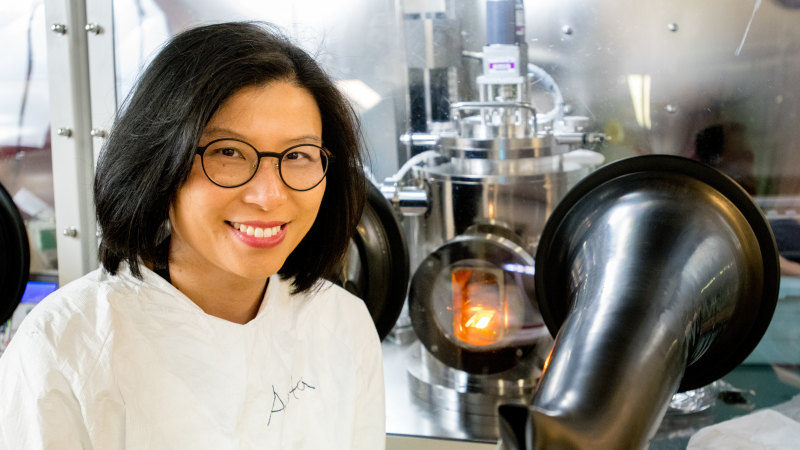
Anita Ho-Baillie, the inaugural John Hooke chair of Nanoscience at the University of Sydney, helped lead research at UNSW that could open the way for the mass production of a new type of solar cell closer to commercial production.Credit:UNSW

Perovskite cells can be 500 times thinner than silicon ones and potentially much more flexible, meaning they could be used to coat everything from buildings to cars and drones. So far its commercial application has been limited because they are less durable to weather.

Research by a team led by Anita Ho-Baillie, now at the University of Sydney, and Lei Shi from the University of NSW, has shown how cheap but high-performance polymer coatings used in double glazing can improve the durability of the cells so they can pass three key international standards for heat and humidity.

Source by [author_name]

Sheltering With My Boyfriend and No Booze

Just before shelter in place went into effect in New York on March 20, I unofficially moved in with my boyfriend Will Gorfein, 32. I grabbed some essentials from my Manhattan apartment — including half-empty bottles of hand sanitizer, nonperishable food and comfortable clothes — to prepare for the uncertain weeks ahead. I purposely left behind alcohol.

Will and I first met at a costume party on Manhattan’s Lower East Side in the fall of 2015. I was holding a Solo cup containing a mixed concoction of soda and liquor (probably tequila). He was, too.

Will is 6 foot 2, with blue eyes and thick dirty-blonde hair (although the pandemic recently inspired us to shave his head.) During our initial chat, I learned his slight southern accent was a byproduct of growing up in Fort Worth, Texas, despite being born on Long Island. Our flirty conversation ranged from silly topics like our Halloween costumes to standard queries about work and who we knew at the party. (Me: panda/writer. Him: American gladiator/entrepreneur. Both: guests of guests.)

I was 27 at the time, single and intrigued. “Save this number,” he confidently messaged at 1:25 a.m., after we had parted ways. “Your email is showing up,” I responded, indicating the text accidentally sent from his iCloud address.

Will and I went on five dates over the course of a month: dinners, bars, bowling and an exercise boot camp class. All but the latter involved some form of alcohol, whether it was a glass of pinot or a late night with cocktails.

Per my girlfriends and guy friends who were also single then, alcohol was a staple (read: a bonding mechanism) in their love lives, too. For late 20-somethings on a date in New York, “grabbing a drink” was (and is) the norm. (No judgment here.)

Perhaps our timing was off, but I distinctly remember telling a friend that I couldn’t gauge if there was a spark between Will and me — and drinking wasn’t helping my research. So we went our separate ways.

Over the next two years, I was in a long-term relationship and then back on the dating scene. For months, every first date (and second date) had an imbibing element to it. At bars there were drinks. At dinners, there were drinks. Concerts, cooking classes and even sitting outside involved drinking.

Limiting myself to two drinks on two dates per week would amount to 208 drinks each year (excluding hangouts with friends, work events and celebrations like birthdays and weddings).

By December 2016, I felt tired and bored. Dating was becoming an activity I approached with less and less enthusiasm.

As the end of 2016 neared, I caught up with my friend Alejandro Piekarewicz, 34, over sushi. We talked about work, life and dates, and very briefly about Dry January, the act of giving up all forms of alcohol — wine, beer, spirits and cocktails — for 31 days. He knew someone who completed a Dry January and raved about its mental, physical and emotional benefits. I didn’t think much of it. In fact, I forgot about it within minutes.

A week later on New Year’s Eve, while holding a glass of champagne, I texted Alejandro and initiated a Dry January bet. If either of us had as little as one sip of alcohol within 31 days: that person lost. At the end, the winner would be treated to a fancy dinner paid for by the loser. (If we both lost: no prize dinner. If we both won: we’d split the bill.)

When the ball dropped, 2017 and my first dry challenge promptly began. I was excited, nervous and still single. I didn’t know how giving up alcohol for a month would change me (if at all), but wondered how it could affect my love life.

During the first week, I felt awkward telling dates and friends that I wasn’t drinking. Everyone wanted to know why now — Couldn’t I just have one? What was the big deal? — especially because this wasn’t going to be forever.

[Sign up for Love Letter and always get the latest in Modern Love, weddings, and relationships in the news by email.]

As a single woman participating in Dry January (I repeated the dry challenge solo in 2018), I learned some very important takeaways about dating without a beverage in hand.

Dates became more creative. They took place at ice cream shops and dessert cafes, fitness studios and painting classes, instead of repetitively “grabbing a drink” again and again.

Without alcohol, I could spot red flags early on, rather than guessing if I misinterpreted someone’s words under the influence. Drinking wasn’t providing false sparks or interfering with real ones either.

I observed who respected my dry challenge and who rolled their eyes. People who genuinely cared about me supported my endeavor because it was (and is) something meaningful to me.

These periods granted me the insight to make better dating and life decisions. I had epiphanies about how I was spending my time (and with whom). I felt more confident and energetic. I experienced other benefits as well, including clearer skin and decreased anxiety. I took a pause from dating, too, and went on trips with friends. There were no hangovers, no bits of insomnia and no regrets.

Also, Alejandro lost our bet during year No. 1 and I won an unforgettable dinner at Momofuku Ko in Manhattan’s East Village.

In 2018, Will and I reconnected as friends. He was still handsome and charming, and he had figured out how to use text messaging. For weeks, I mentioned the dry challenge and how much it changed my perspective on dating, social activities and my overall well-being. (I also ended up drinking less for the remainder of the year, which is a common side effect for many dry month participants.)

When Will and I started dating, it was during my third Dry January last year. The month before, he volunteered to participate as well. Together, we gave up alcohol for 31 days. We did it again in January 2020.

Instead of sharing bottles of wine over dinner, and spending weekend mornings dehydrated, we’d wake up early and work out. On vacation, rather than hourslong boozy brunches followed by lazy days, we’d hike or explore different parts of a city.

As social distancing became the new normal in March and cocktail hour made its comeback, Will and I chose to take a break from alcohol for 31 days again — even through my April 2 birthday. I missed my friends, and I missed the celebratory plans that were canceled when the coronavirus pandemic changed our lives. But I didn’t miss alcohol. He didn’t either.

During these times, we’re cooking a lot and have dinner together every night. We’ve watched an excessive amount of documentaries, cut his hair and had a few impromptu dance parties. We started a puzzle, moved some furniture and discovered how to happily cohabitate.

Although Will and I haven’t completely eliminated drinking from our lives, a temporary hiatus from the liquor cabinet has gone a long way since our introduction four and a half years ago. Unlike our initial dates, I haven’t questioned our compatibility once. There aren’t alcohol-inspired mixed messages, beer goggles (he’s cute anyway!) or decisions clouded by cocktails. We’re more understanding, well-rested, less stressed individuals — and, dare I say, a happier couple — when we aren’t drinking for consecutive weeks.

When I was single, giving up wine, beer and spirits for a mere 31 days at a time granted me the perspective I needed to find my person.

Together, a dry month is something we bond over, enjoy and even look forward to.

With any beverage in hand, I’m happy to extend my glass and say, “Cheers!”

Hilary Sheinbaum is a writer and speaker based in New York. Her book, “The Dry Challenge: How to Lose the Booze for Dry January, Sober October, and Any Other Alcohol-Free Month” (Harper Design), is to be released Dec. 29.

Continue following our fashion and lifestyle coverage on Facebook (Styles and Modern Love), Twitter (Styles, Fashion and Weddings) and Instagram.


Source link

A 6-year-old is exchanging skateboards with his idol Tony Hawk thanks to a FedEx driver’s TikTok

0

Cooper Morgan, who lives in the town of Suwanee, flagged Mikail Farrar on his route on Monday, chasing his truck. Farrar shared the story in a TikTok video posted Tuesday.

“Can you mail something for me?” Cooper asked Farrar, then went back into his house and brought out a heavily used skateboard.

On the left side of the board, on the exposed wood, Cooper had written his name. On the other side he had written “Tony Hawk.”

“Get this to Tony Hawk from me. Tell him it’s from Cooper,” he told Farrar, as Cooper’s mom winked and nodded.

But Farrar knew he couldn’t deliver the skateboard without an address.

“The least I can do is put it out there in the universe,” he said in his TikTok video.

The universe delivered.

Farrar told CNN he posted the video in the afternoon, but didn’t check TikTok again until the evening, when suddenly his phone started blowing up.

A well placed tag in the video’s caption and hundreds of thousands of likes and additional tags from TikTok users helped Cooper’s gift reach the right recipient.

Hawk, who hadn’t used TikTok since 2018, filmed a video response.

“I just want to say thank you so much for the skateboard. It’s on my way to my house already, and as a thank you gift I’m gonna send you my skateboard, this one right here that I’m riding,” Hawk said, adding that he hopes to meet Cooper sometime.

Skateboarding pro Tony Hawk posted a video to TikTok in response to Farrar's.

Farrar coordinated with Hawk to personally ship Cooper’s old skateboard. The package is expected to get to Hawk’s house on May 27, he told CNN.

Farrar said he was “totally shocked” when Hawk reached out.

“I had low expectations. I was hopeful, but I just thought that celebrities went swimming in their money and looked in the mirror all day. I don’t know what they do, but not Tony Hawk, he’s a special guy.”

Mikail Farrar
On Wednesday, Farrar posted a video update showing Cooper and his brother Tucker, who is 9, with their long blond hair and oversized T-shirts.

“I just wanna say thank you for the skateboard and you’re a really great skater,” Cooper said.

“I’m a huge fan and I really, really, really like you, and there’s a board coming your way, so be prepared,” Tucker added.

Hawk later left a comment to the video: “Thanks boys! I’ll send something for Tucker too. And thank YOU Mikail for connecting all of us.”

Hawk’s package with three brand new skateboards arrived at the boys’ house Thursday morning.

Cooper Morgan (left) and Tucker Morgan (right) with the package sent to them by pro skater Tony Hawk.

Cooper and Tucker have been skating together for some time and practice every day in their backyard, said their dad, Robby Morgan.

“They would be out there all day if they could,” Morgan said.

The boys learned from their dad, who started skating with his younger brother when he was the same age as Tucker.

“We both idolized Tony Hawk. A lot of kids got into skateboarding because of him. So this is a childhood dream of mine,” Morgan told CNN.

“Seeing the look of joy on their faces when they saw the video, and then when they got the package this morning, it’s been surreal.”

Farrar told CNN he would be back in the Morgans’ neighborhood later Thursday, and the kids will be able to show him and his TikTok followers their new boards.

We’ll stay tuned for that.

Source link