Sunday, April 19, 2026

Fitness: All Guides

0

girl holding track shoesFitness is fun! It’s a great way to improve your overall health and wellness. Through exercise, you may even find you feel less stressed and more relaxed. You’ll have more energy during the day too! However, the number one way to make exercise a part of your life is by participating in activities you find fun and enjoyable. It may help to exercise with a friend or family member.

Exercise Safety

It’s important to consult your health care provider before starting any exercise program. The exercises featured in the strength training fitness guide here are for teens that are in good health and have no physical restrictions. Be sure to listen to your body. Exercise should feel like you are working out (your breathing should be heavier than normal and you might break a sweat), but not like you are injuring your body. If a particular exercise or stretch hurts, STOP immediately. You may be performing the exercise incorrectly, working beyond your limits or injuring your body. If you feel dizzy, have trouble breathing, or experience any pain while you are exercising, STOP, and talk to your health care provider about next steps.

Your body needs energy (food and fluids) to perform at its best. Our sports nutrition guide will help you understand what you should eat and drink before, during and after exercising so that you will feel energized, build and repair muscles, and have a safe workout.

My Muscles

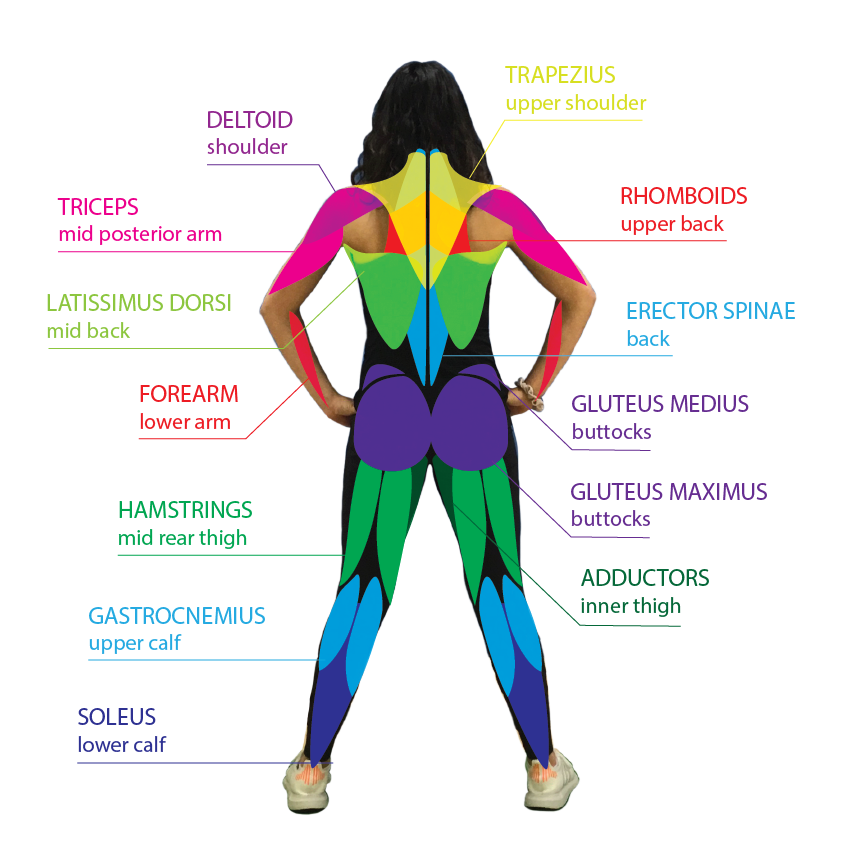
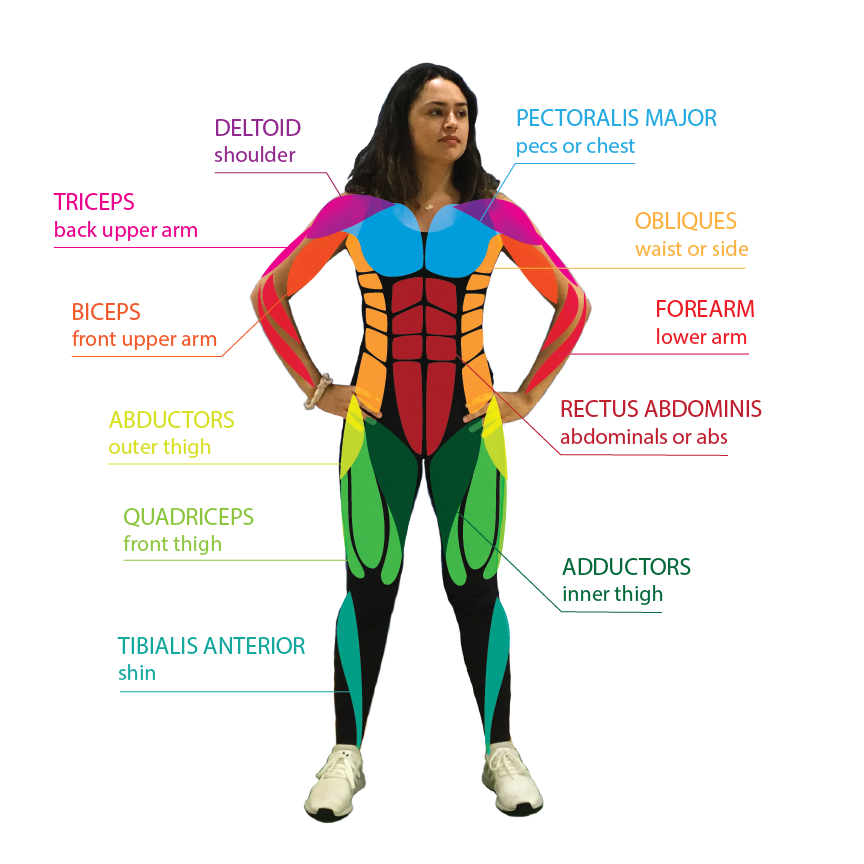
Understanding the names and locations of your muscles is important when you’re exercising. If you know the specific muscles you’re using, it is easier to focus on each aspect of your workout. This helps you to be more efficient and to prevent injuries.

How to use My Muscles:

  • Learn the names of your muscles and where they are located on the body by looking at the pictures below.

Look at both views: front (anterior) and back (posterior)
yoga-pose

Stretching is a way to get your body ready for exercise, improve flexibility, and increase your range of motion. Proper stretching will help your muscles feel relaxed and prevent muscle related injuries. Try the following static stretches (meaning that you will not be moving around for the stretch) demonstrated by our Peer Leaders. For each stretch, hold for 30 seconds at a time. Make sure you go into the stretch slowly and hold the position when you start to feel some tension in the muscle. If you feel pain, stop immediately- this means you may be stretching the muscle too far. Check out the My Muscles guide to see which muscles you will be stretching using these exercises.
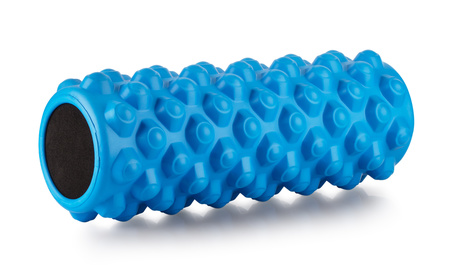
Other great ways to stretch include dynamic stretching (a movement-based type of stretching) and foam rolling using a foam roller!

Upper Body Stretches

Cross Shoulder Stretch Tricep Stretch Chest Stretch

Lower Body Stretches

Quadricep Stretch Standing Hamstring Stretch Sitting Hamstring Stretch Lunging Hip Flexor Stretch Calf Wall Stretch

girl lifting weights

Strength training is a great way to get your muscles conditioned and strong. This form of exercise can help raise your metabolism (the way your body uses energy from food) and will keep your bones strong, which may help prevent future osteoporosis. Strengthening your muscles can even help to release stress from your body. Try the following workouts for your upper, middle (core), and lower body!

Helpful Tips:

  • While doing these exercises, focus on your breathing (deep inhales and exhales)
  • Check out the My Muscles guide as a reference for what muscles you are working.


Workout 1: Lower Body

How to: Start with the first exercise on this list. Perform the exercise 8-12 times (if you are a beginner, aim to complete 5 repetitions of the exercise). Once you finish, move on to the next exercise, until you finish all 6 exercises.  Repeat this entire set 1-3 times.

Floor Bridges Clam Shells Squats Reverse Lunges Side Lunges Standing Calf Raises


Workout 2: Upper Body

How to: Start with the first exercise on this list. Perform the exercise 8-12 times (if you are a beginner, aim to complete 5 repetitions of the exercise). Once you finish, move on to the next exercise, until you finish all 6 exercises.  Repeat this set 1-3 times.

Push-ups Up and Down Plank Bicep Curls Triceps extensions Chest Press Overhead Press


Workout 3: Core (Middle body)

How to: Start with the first exercise on this list. Perform the exercise 10-15 times OR hold the position for 20-30 seconds. Once you finish, move on to the next exercise, until you finish all 6 exercises.  Repeat this set 1-3 times.

Plank SupermansRight/Left Plank Bicycle CrunchesV-Sit Leg raises

Source link

Top 10 Cycle Routes of Great Britain

0

Green, cheap and great exercise, not to mention enormous fun, cycling is becoming ever more popular. London has just launched its own cycle hire scheme and more of us than ever are exploring Britain by bike.


We’ve got hundreds of cycle routes to choose from but here are 10 of our favourites.

Millennium Coastal Path, Llanelli, Wales

The Millennium Coastal Park is a 12-mile stretch of coastline on the Burry Estuary which features a purpose-built traffic-free path following the coastline along the park’s entire length. Previously an area of industrial wasteland, the park has been transformed into a tranquil green corridor offering superb views of the Gower Peninsula and a variety of attractions both natural and man-made.


Lough Neagh, Northern Ireland

For a unique cycling experience complete a circuit of Lough Neagh, the largest inland water in Britain and Ireland. The 113-mile, bi-directional Loughshore Trail (Route 94 of the National Cycle Network) is ideal for enthusiasts, novices and families alike. The route mainly follows quiet, country roads close to the lough’s shoreline and consists of mostly flat terrain – apart from a couple of short hilly sections which provide fantastic views over this huge expanse of water.


Limehouse to Little Venice, London, England

London’s network of canals make for great traffic-free cycling and a scoot from riverside Limehouse in the east to Little Venice along the Regent’s Canal is a great way to see London from a new perspective. Explore Limehouse, once the centre of London’s working docks and now home to upmarket flats and yachts, cruise through cool Camden and check out some of London Zoo’s

inhabitants en route. At 8 miles it’s easily achievable in a few hours.


Richmond to Hampton Court, London, England

Wind your way along this photogenic section of the Thames from villagey Richmond to the glorious Tudor palace, Hampton Court. There are some great pubs along the way and even a sandy beach or two. For more information and other routes along the River Thames check out the Waterscape website.


Bristol and Bath Railway Path, West Country, England

Linking the twin West Country jewels of Bath and Bristol, this 13-mile stretch of disused railway track begins in the historic port of Bristol and passes via Mangotsfield, Warmley and Saltford before arriving in the heart of Bath.


Chocolate Tour, Birmingham, England

The crucible of the Industrial Revolution is famous for many things – canals, engineering, curries but most mouth-wateringly, chocolate. Cycle along the Rea Valley out from Birmingham city centre along the towpath of the Worcester and Birmingham Canal. If you’re hungry take a detour to Cadbury World, the factory and interactive experience dedicated to the world’s best-loved chocolate.


Marin Trail, Conwy, Wales

This mountain bike trail near Llanrwst has big climbs, steep descents and truly awesome scenery. Long challenging climbs lead to miles of technical singletrack weaving through trees and boulders, across streams and down tricky gullies. Have a break for a moment to take in the views across Snowdonia National Park.


Wastwater, Lake District, England

The 12-mile cycle from Wastwater to Santon Bridge via Gosforth is said to have the best view in the Lake District. Wastwater is the deepest lake in England and it’s surrounded by some glorious scenery including Scafell Pike, England’s highest mountain.


Crab and Winkle Way, Kent, England

The Crab and Winkle Way links the cathedral city of Canterbury with the harbour in Whitstable. On the way you travel through Blean Woods, one of the largest areas of ancient broadleaved woodland in southern Britain, where you can find the rare heath fritillary butterfly. Don’t forget to pop into Canterbury’s magnificent cathedral, part of a UNESCO World Heritage Site.


Cairngorms, Scotland

The uplands of Scotland are famed for their rugged beauty and these days, their excellent mountain biking terrain. Trails in the Cairngorms National Park are rarely waymarked – instead, bring a map (there are good mountain biking route maps available locally) and go and explore.

Source link

Top 10 Attractions of Great Britain You Didn’t Know Existed

0

Dig a little deeper and you’ll uncover some of Britain’s lesser known attractions ranging from eccentric fruit-shaped houses to murky underground caverns and exquisite small art galleries.


Here are top 10 attractions you didn’t know were there…

Tower of Threave Castle, Dumfries and Galloway, Scotland

Standing isolated on its very own island on the River Dee is the foreboding 14th-century Threave Castle. Only accessible by rowing boat you must ring a bell to summon the boatman to take you across the water. The stronghold of the Black Douglases, it incorporates a rare artillery fortification built before 1455 when James II besieged the castle.


Westminster Cathedral, London, England

Did you know there are two magnificent cathedrals in this part of London? Westminster Abbey couldn’t get much more famous but just around the corner is the lesser known Westminster Cathedral. The extraordinary Byzantine façade of domes, towers and balconies is matched by a unique and sumptuous interior, clothed in vivid mosaics and with marbles that echo those of ancient Greece and Rome. In fact the interior is so darkly exotic it stood in for the 16th-century Spanish Court in the film Elizabeth: the Golden Age.


Sir John Soane’s Museum, London, England

The architect of the Bank of England’s London home is one of London’s most delightful small museums. As well as a visionary architect, Soane was a compulsive collector. Every inch of his handsome townhouse is crammed with art, artefacts and architectural treasures collected from around the world. Don’t miss the full cycle of Hogarth’s A Rakes Progress or the Egyptian sarcophagus in the basement. The whole building was designed to show off his collection with cleverly top lit rooms, hidden panels holding more art and mirrored walls. Go on the first Tuesday of each month to see the collection by candlelight.


78 Derngate, Charles Rennie Mackintosh House, Northampton, England

The master of British art nouveau did almost all his best work in Scotland but his last commission was to remodel this unassuming Georgian house in the English Midlands. And his only surviving domestic project outside Scotland is a gem. Despite being nearly 100 years old, the interior is boldly modern with Mackintosh’s trademark flourishes including striking geometric patterns and daring modernist designs. 78 Derngate also incorporates a gallery with regularly changing exhibitions and events.


Kettle’s Yard Gallery, Cambridge, England

If you’re ever in Cambridge and have had your fill of graceful quads, ancient colleges and grandiose libraries, walk north to Castle Street and restful Kettle’s Yard. This charming gallery has a superb collection of modern art including pieces by Ben Nicholson, Joan Miró, Henry Moore and Barbara Hepworth. The former house of Tate Gallery curator Jim Ede is a beautifully lit space that still feels like a home – sit in the chairs, read the books and enjoy the artworks at your leisure.


Corris Mine Explorers, Machynlleth, Wales

Delve deep into Wales’ industrial past and explore the mines of Braich Goch which were closed in the 1960s. Kitted out with a miner’s cap lamp, helmet, lamp belt and safety clips you’ll discover miles of tunnel on your journey down into the darkness. See what the miners left behind from tools to cigarette packets and discover this important part of Wales’ social and economic history.


Royston Cave, Royston, Hertfordshire, England

Royston Cave in Hertfordshire is unique in Europe. Believed to date from the 14th century, it’s a man-made cavern in the shape of a beehive, with a small aperture at the top for ventilation. Its most remarkable feature is an extensive range of crude wall carvings representing the Crucifixion, the Holy Family and several saints, among them St Katherine, St Laurence and St Christopher. It lay undiscovered for centuries until a workman in the 18th century unearthed a shaft that led to the cave. Nobody really knows the cave’s origins or purpose but its eerie atmosphere and deep sense of history are well worth experiencing.


Dunmore Pineapple, Falkirk, Scotland

This stone pineapple built in 1761 as a garden summerhouse is a strong candidate for one of Scotland’s most bizarre buildings. You’ll find it in the grounds of Dunmore House, the ancestral home of the Earls of Dunmore. It’s part of walled gardens that were once used for the growing, of among other things, pineapples. Standing at around 14m high the pineapple is intricately carved and is an eccentric delight. And if you can’t get enough of this fruity fancy why not stay? The Landmark Trust rent it as accommodation.


Marble Arch Caves Geopark, Fermanagh and Cavan, Northern Ireland

Discover the rugged uplands of Fermanagh and Cavan then find out what’s underneath. The fantastic show caves deep below this Geopark with their fascinating, natural underworld of rivers, waterfalls, winding passages and lofty chambers are a must see. Take a boat along subterranean rivers to explore spectacular caverns lit to reveal their scarred walls bristling with stalagmites, stalactites and weirdly shaped deposits formed over 600 million years ago.


The Egyptian House, Penzance, Cornwall, England

You wouldn’t expect to find a slice of ancient Egypt in Cornwall but this is exactly what you’ll get if you explore the backstreets of Penzance. Sprouting with flamboyant detail this 19th-century fantasy takes the Egyptian brief and expands it to something so exuberant that historical accuracy is joyously sacrificed for something altogether more fun. You can stay in this gorgeously garish confection through the Landmark Trust.


Written and contributed by Visit Britain


Photo credit:
Biepmiep Dunmore-Pineapple
Jim & Claire Threave-Castle
James Stringer Westminster-Cathedral

Source link

The hidden epidemic of prediabetes | NIH MedlinePlus Magazine

0

You could have prediabetes and not even know it. More than one in three adult Americans—approximately 88 million—have the condition, but 90% don’t realize it.

Recent research by the Centers for Disease Control and Prevention also reports that nearly one in four young adults (ages 19 to 34) and half of people over the age of 65 are living with prediabetes.

What is prediabetes? And if so many people don’t realize they have it, what can you do—especially if diabetes runs in your family?

Prediabetes means your blood sugar levels are higher than normal. The levels are not high enough to be diagnosed as type 2 diabetes, but it’s a warning sign that, over time, you could develop the disease. That’s why learning about risk factors is so important.

Eating healthier food and becoming more physically active can help you lose weight, feel better, and lower your risk of developing type 2 diabetes.

Prediabetes indicates a problem with the cells in your body. It means that those cells are not responding in a normal way to insulin, an important hormone that helps sugar in the blood get into cells and be used for energy. If a person’s body can’t make or respond to insulin, blood sugar levels rise.

Certain factors can make you more likely to develop prediabetes. You are more at risk if you have a parent or sibling with diabetes and are age 45 or older. Race and ethnicity are also factors: African Americans, Hispanic/Latino Americans, Native Americans, and some Asian Americans are at higher risk for type 2 diabetes. Additionally, you’re more at risk if you are overweight or obese and are physically inactive. This is just a short list of risk factors. To see more and to take a test to learn about your own risk factors, visit the National Institute of Diabetes and Digestive and Kidney Diseases website.

Getting more exercise and losing a small amount of weight can help prevent diabetes if you are at risk. Eating healthier food and becoming more physically active—taking a brisk walk for 30 minutes a day, five times a week, for example—can help you lose weight, feel better, and lower your risk of developing type 2 diabetes. Even small steps—losing just 5% to 7% of your body weight (10 to 14 pounds for a 200-pound person)—can make a big difference in preventing type 2 diabetes.

Source link

Embracing autism diagnosis helps family take charge | NIH MedlinePlus Magazine

0

Luca is in fifth grade. He loves playing video games, building things, and learning about space. He can tell you the name of all of the planets and every space shuttle. Luca also has autism spectrum disorder (ASD), or autism for short.

Luca’s mom, Tracy Sekhon, says autism is something that makes Luca shine—not something that holds him back. His diagnosis journey started back in 2010, when he was just 18 months old. Tracy and her husband noticed that Luca was having some developmental issues.

“Not only did he stop progressing, but he started going backwards. He had started making sounds that weren’t appropriate to what he was seeing,” Tracy says.

For instance, he called his dad “bye-bye” instead of “da-da.”

At first, Luca’s parents thought it was a problem with his hearing. It turned out he did, in fact, have a hearing issue. But after he had surgery to resolve it and then received speech therapy, some things were still not right. For instance, he wasn’t responding to noises like he had previously. He also started banging his head and wouldn’t respond unless someone was in front of him, Tracy recalls.

Listening to your gut

After visiting Luca’s pediatrician, who told Tracy that this behavior was probably related to Luca’s hearing impairment, she still wasn’t convinced. Tracy and her husband did lots of research, and Tracy went back to her pediatrician. She asked for a referral to a specialist who could tell her for sure if something else was affecting her baby.

“My mommy gut was telling me there’s something more going on with my son,” Tracy says.

Their pediatrician recommended the University of California San Diego’s (UCSD) Autism Center of Excellence in La Jolla, California, which turned out to be close to Tracy’s home in San Diego. The center also focused on early autism intervention. At the center, they met with Karen Pierce, Ph.D., and other doctors.

After two days and several hours of testing, Luca was diagnosed with autism. He was 22 months old.

“We not only got a diagnosis of autism, but he was moderate to severe on the spectrum,” Tracy says. “My baby had lost his speech. He had gone backwards in his development. We had lost him. It was terrifying.”

After the diagnosis

Tracy quickly enrolled Luca in behavioral, speech, and occupational therapy through UCSD. She also enrolled Luca in therapy research studies, which Tracy says was a way to not only help Luca, but also to help others learn from Luca’s experience.

“Educate to empower yourselves first and foremost, focus on what’s possible, and make sure that you get real with the diagnosis in the very beginning.”

– Tracy Sekhon

Some key steps of Luca’s therapy happened outside of the UCSD center. For instance, over the course of a month, Tracy took Luca to a nearby mall for short amounts of time so he could get more comfortable in that type of social situation. She also spent a lot of time researching and asking questions.

“I just got as educated as I could, because the more I learned, the more empowered I felt and knew that I could effect change for him,” Tracy says.

When Luca turned 3, he was enrolled in the California public school system and has been there ever since.

Today, he is 10 years old and learns right along with the rest of his fifth grade class. He gets some additional support in the classroom through an individual education program, but the majority of his learning takes place just as it does with his peers.

As a result of her experience, Tracy has become heavily involved in the autism community and even started her own nonprofit, Autism Resource & Treatment Center (ARTC), based in San Diego. ARTC focuses on early autism intervention and awareness, as well as teen and adult support, which Tracy says needs more attention and resources.

Empowerment through education

Looking ahead, Tracy says that Luca’s early diagnosis and support have led her family to feel that while things will change, they know they have the tools to help him succeed.

“I know that through his lifetime, there will be additional challenges, but we now understand what that means,” Tracy says. “It’s just a matter of providing those tools. Where he is today, that is a result of all of the hard work that we did in the very beginning.”

Though not all stories are like Luca’s, Tracy wants people to know that early diagnosis is key to making a difference in a child’s development throughout their life, not just at the time of diagnosis.

“It’s easy for us as parents to look at our children and explain the challenges away because we want so badly for them to be perfect,” Tracy says. “Educate to empower yourselves first and foremost, focus on what’s possible, and make sure that you get real with the diagnosis in the very beginning.”

Source link

On the front lines against Lyme disease | NIH MedlinePlus Magazine

0

Blacklegged ticks, or deer ticks, are tiny. But the problems they cause, like Lyme disease, can be big.

Most humans are infected through the bites of immature deer ticks called nymphs. Nymphs are difficult to see; they’re no bigger than a poppy seed. Adult ticks are no bigger than a sesame seed. 

Lyme disease, a bacterial infection you can get through a bite from an infected blacklegged tick, affects an estimated 300,000 Americans a year. The number of counties in areas at high risk for Lyme disease has increased more than 300% in the past 20 years.

“The best advice is don’t count on becoming immune. You can get Lyme disease multiple times.”

– Adriana Marques, M.D.

The infection, in its early stages, can cause flu-like symptoms and an expanding circular rash that can be solid red or appear like a bull’s-eye. In later stages, people can have additional rashes, paralysis of the muscles of the face, and arthritis with joint swelling.

The National Institute of Allergy and Infectious Diseases (NIAID) supports research aimed at both preventing Lyme disease and finding faster, more accurate tests for detecting it in its early stages, when it’s easier to treat.

“It’s a complicated, thought-provoking task,” says infectious disease expert Adriana Marques, M.D. Dr. Marques, who is chief of NIAID’s Lyme Disease Studies Unit, discusses the most recent research on Lyme disease and how people can protect themselves.

What progress has been made toward a better, quicker test for Lyme disease?

Among some of the new technologies being studied is a test of skin taken from the characteristic red rash that many people get with Lyme disease. There’s also research into a more sensitive blood test that can detect the germs not only from Lyme disease, but also several other tick-related illnesses.

There was a Lyme disease vaccine that was pulled from the market in 2002. Are there any efforts toward a new vaccine?

We do have Lyme disease vaccines for dogs, but unfortunately no vaccine for human use is currently available. There is one vaccine that is being studied in clinical trials. Other new products are still several years away.

Can people become immune to Lyme disease, especially if they live in an area with a large tick population, such as the Northeast or Upper Midwest in the U.S.?

The best advice is don’t count on becoming immune. You can get Lyme disease multiple times. There is some evidence that people might become immune if they get exactly the same bacteria they got before, but the chances are very low. Some Lyme disease-carrying ticks can be infected with other diseases as well. 

What’s the most important thing people can do to protect themselves?

Read about the disease. If you are in an area where Lyme disease is frequently diagnosed, learn how to protect yourself and how to recognize symptoms. Get antibiotic treatment started quickly if you or your doctor suspects you might have early Lyme disease—do not wait for lab test results. In most cases, people with Lyme disease will recover with no problem.

Source link

HPV and cervical cancer: What you need to know | NIH MedlinePlus Magazine

0

Human papillomavirus (HPV) is the most common sexually transmitted infection in the U.S., and there are more than 200 strains of it.

Forty of those are known as high-risk HPV, which can lead to cervical cancer in women. Low-risk HPV usually causes symptoms that are not life threatening, such as genital warts.

It’s important to know that high-risk HPV by itself is not cancer. Eight out of 10 women will have high-risk HPV at some point in their lives, but few of them will get cervical cancer.

Luckily, there is a vaccine that protects people against some high-risk strains of HPV.

How do you get HPV?

You can get HPV by having vaginal, anal, or oral sex with someone who has the virus. Anyone who is sexually active can get HPV, even if you have had sex with only one person. HPV can be passed on even if the infected person has no symptoms.

Who can get HPV?

Both men and women can get HPV. It’s important to know that women can be tested for HPV, but men can’t. However, men can get the HPV vaccine, which helps prevent them from getting genital warts and some types of cancer, including penile, anal, and throat cancer. The vaccine also helps protect their partners.

The Centers for Disease Control and Prevention does not recommend routine testing for men for these cancers because they’re much less common. However, if you think you may have HPV or cancer, contact your health care provider.

What are the symptoms of HPV and cervical cancer?

Genital warts can be a sign of HPV in men and women. However, many strains of HPV, especially those that cause cancer, have no noticeable symptoms. These strains can be detected only by a Pap smear, which tests a woman’s cervix, the lower part of her uterus, for any cell changes.

Symptoms of cervical cancer in women can appear years after an HPV infection. They include:

  • Bleeding and spotting between menstrual periods
  • Bleeding after vaginal sex
  • Bleeding after menopause
  • Heavier than usual menstrual periods
  • Bleeding after a pelvic exam
  • Unusual discharge from the vagina
  • Pain during sex

How are HPV and cervical cancer treated?

Both men and women can get HPV, but men can’t be tested for it.

There is no cure or treatment for HPV, but there are treatments for the complications it can cause, such as genital warts, cancer-causing cells, and cervical cancer.

Treatment for cervical cancer is based on how advanced the cancer is, but it can include chemotherapy, radiation, and surgery.

Getting regular Pap smears and HPV testing helps your doctor know whether you have HPV and, if you do, monitor it. Early detection often prevents cervical cancer. Make sure to ask your health care provider about the best screening schedule for you.

Who should get the HPV vaccine?

The HPV vaccine is an important tool for preventing HPV and its complications, and it is especially effective when received at a young age.

The Food and Drug Administration recommends that most children get vaccinated for HPV at age 11 or 12. The dosage schedule depends on how old the child is when he or she is first vaccinated, but children usually get two doses.

Vaccination is not generally recommended for people older than 26. However, some adults ages 27 through 45 who are not already vaccinated may decide to get the HPV vaccine after talking with their health care provider. 

Source link

Viola Davis on confronting prediabetes and becoming her own health advocate | NIH MedlinePlus Magazine

0

Acclaimed actress and producer Viola Davis is a true triple threat as a performer. 

Her work has won her the rare triple crown of acting—an Academy Award, an Emmy Award, and a Tony Award—and she’s even won a Tony twice. 

Recently diagnosed with prediabetes, Davis has taken on a new role as an advocate for diabetes education and awareness. 

Davis spoke with NIH MedlinePlus magazine about her new outlook on health and her passion for educating others.

How did you react to your prediabetes diagnosis? 

I was frozen and in shock when I got the diagnosis. I considered myself to be a very healthy woman. I thought I watched what I ate. I exercised. I was not overweight. 

Looking back now, I see I probably had a lot of preconceived notions about diabetes. There is a history of diabetes in my family. My sisters, my great aunt, and other members of my family have type 2 diabetes. 

Did you discuss diabetes in your family?

My sisters would talk amongst themselves about getting diabetes and taking medication. But no one ever talked about what could be done to prevent it. There were a lot of fallacies and old wives’ tales about it. They would refer to diabetes as “You got the sugar.” And people would say things like “Stop eating too much sugar before you get the sugar.” 

We never had that proactive conversation about steps to prevent getting the diagnosis.

Actress and producer Viola Davis, with her sisters Dolores Grant (left) and Dianne Davis-Wright (right), at the premiere of the documentary “A Touch of Sugar.” *

What have you done since your diagnosis?

Knowing that I have prediabetes has empowered me. I didn’t want to get full-blown type 2 diabetes. Thankfully, I had the resources and the presence of mind to do the research to learn what to do to lower my blood sugar levels.

“Knowing that I have prediabetes has empowered me.”

– Viola Davis 

I started to look at everything I was eating. Because I’m such an extraordinarily busy person, I wasn’t always thinking about what I was putting in my mouth. I’m a mother of a young daughter, and sometimes I would eat what she ate because I’m on the run. Then there was snacking. And even though I don’t consume much alcohol, I needed to factor that in, too. 

I didn’t know that I should be tracking my blood sugar levels and checking my A1C levels every three months. I didn’t even know what that was. It is hard to keep track of it all and stay on top of it all. But I’ve managed to do it.

What is your message to those who are facing type 2 diabetes?

Education is freedom. It is. Go to your health care provider and get your blood glucose levels tested. And if you have diabetes, press them to help you manage it. If you have prediabetes, ask them to arm you with what you need to do to prevent getting diabetes. You may be genetically predisposed to it, but there are things within your power that you can do to prevent or manage the disease. That’s why I worked with Merck on the documentary “A Touch of Sugar” to help raise awareness and empower others.*

It’s also important that we stop stigmatizing people who have a prediabetes or diabetes diagnosis. There is a stigma that it only afflicts those who bring it upon themselves. And there is a stigma that people with diabetes are just eating what they want, are out of control, and don’t care about their bodies. That is just not the case.  

Look at me. I worked out four, five, six times a week, watched what I ate, and I got it. It’s a chronic disease that should not be dismissed because of myths and stigma.

Can you talk about the importance of diabetes research, like that supported by the National Institutes of Health?

More research to discover improved treatments and new tools for prevention is so important because of the sheer number of people who have the condition and the problems that it causes. That is proof positive of the desperate need for more research.

What other professional projects are you working on?

I’m working on my final season of the TV series “How to Get Away with Murder.” I’m also working on the movie “Suicide Squad 2.”

And I’m really excited about a new movie I just completed for Netflix. Like the film “Fences,” this one, “Ma Rainey’s Black Bottom,” is also an adaptation of a play by August Wilson.

I’m also working on being the best wife and mother I can be!

 
* The National Institutes of Health was not involved in the creation of the project, and reference to it does not constitute or imply endorsement by any federal agency.

Source link

New options for treating type 2 diabetes in kids and teens | NIH MedlinePlus Magazine

0

Helping kids with diabetes is a passion for National Institutes of Health (NIH) clinical researcher Stephanie Chung, M.B.B.S. You can hear it in her voice when she talks about “my kiddos” at the clinic she runs at Children’s National Hospital in Washington, D.C.

There, she and a team of specialists help children who either have type 2 diabetes or are at high risk for getting the disease.

She says, “We focus on partnering with patients and their families, empowering them from the beginning” to improve their health.

From her many years of treating minority children, Dr. Chung understands the challenges her patients can face.

“We focus on partnering with patients and their families, empowering them from the beginning.”

– Stephanie Chung, M.B.B.S.

“Minority youth can have so many additional factors that affect their health, such as the family food budget, neighborhood safety, and access to transportation,” Dr. Chung says.

For example, being physically active is important for managing diabetes. “But what if they don’t feel safe going outside? That just adds to their burden and stress,” she says.

Dr. Chung also helps lead diabetes research at NIH’s National Institute of Diabetes and Digestive and Kidney Diseases (NIDDK). Her recent research has focused on African American youths with the disease.

These days, there’s a new urgency to her research and her clinical work. Recent studies have shown an alarming increase in type 2 diabetes in children and adolescents. Specifically, there are more than 5,000 new cases every year among those under 20, particularly among blacks and Hispanics.

Recent NIH-funded research adds to the growing evidence that diabetes is more aggressive in youths. It has shown that metformin, the standard drug used to control the disease in adults, is much less effective in those under 20.

The Treatment Options for Type 2 Diabetes in Adolescents and Youth (TODAY) study, funded by NIDDK, recently found that metformin fails 50% of the time in those ages 10 to 17.

“Metformin is not preventing the disease from progressing in kids,” Dr. Chung says. “It’s like a Band-Aid over the problem.”

All this makes it more urgent to treat children who have prediabetes. Dr. Chung notes that there is an opportunity to control the disease early, before it worsens and medication is needed.

“I explain prediabetes to them by drawing a line that represents the A1C test cutoff for type 2 diabetes. The A1C test measures the average blood sugar levels over the last two to three months, and a reading of 6.5% or higher is used to diagnose diabetes,” Dr. Chung says. “Then I draw a line below that that represents a normal blood sugar reading of 5.7%. I then shade in the area between the two lines and tell them that’s where they are and explain what they can do to keep from getting the full-fledged disease.”

The good news is that in 2019 the U.S. Food and Drug Administration (FDA) approved the drug liraglutide in children age 10 or older. It’s the first non-insulin drug approved by the FDA to treat type 2 diabetes in pediatric patients in nearly 20 years.

“It gives us a second drug to try,” says Dr. Chung. “It’s very exciting.”

Source link

3 key research highlights from NIH’s diabetes branch | NIH MedlinePlus Magazine

0

Can taking a daily vitamin D supplement prevent diabetes? Which is better for lowering your risk of diabetes: lifestyle changes or just medication? Is diabetes harder to treat if you’re under age 20?

Recent national studies funded by the National Institute of Diabetes and Digestive and Kidney Diseases (NIDDK) have shed some light on these questions. Christine Lee, M.D., M.S., who helps oversee diabetes research at NIDDK, explains what you should know.

Taking vitamin D fails to prevent type 2 diabetes in adults

Vitamin D helps your body absorb calcium, one of the main building blocks of bone. It may also play a role in your nerve, muscle, and immune systems. Some studies had reported that low levels of vitamin D were associated with a higher risk for diabetes. But a new national study of more than 2,400 adults at high risk for diabetes, funded by NIDDK, found no added protection from taking the vitamin in preventing type 2 diabetes.

Lifestyle changes are best for preventing type 2 diabetes

A landmark national NIDDK-sponsored trial, the Diabetes Prevention Program, found that making lifestyle changes to lose some weight and become more active does a better job of reducing the risk of type 2 diabetes for adults at high risk for the disease than just taking the medication metformin.

Type 2 diabetes is increasing, especially among young adults of minority racial and ethnic groups. 

Compared with study participants who took a placebo (a pill without medicine), the lifestyle group reduced their risk by nearly 60%, while those taking metformin reduced their risk by only 30%. Adults age 60 and older saw even greater benefit, a 71% drop in risk. More recently, the study found that the adults who made lifestyle changes lost more weight in the short term, although taking metformin seemed to help patients who had lost at least 5% of their weight to maintain that loss over the long term.

Researchers are now looking at whether continuing metformin might help prevent cancer or heart disease in those at risk for diabetes.

Type 2 diabetes is more aggressive in youths than in adults

NIDDK has focused many efforts on understanding type 2 diabetes among youth. The result: several major studies of young people that found that the disease is very different in young people than in adults.

Among the findings were that type 2 diabetes is increasing, especially among young adults of minority racial and ethnic groups. Type 2 diabetes progresses faster in young people than in adults and also results in a high rate of diabetes complications. Additionally, metformin, the most common diabetes medication for adults, fails to keep type 2 diabetes from progressing in young people and fails to help achieve good blood sugar control in approximately 50% of youngsters, especially among African American youths.

But there is some good news.

A 2019 NIDDK study showed that gastric bypass surgery, although riskier, is more effective at reversing type 2 diabetes in teens with severe obesity compared with adults. And the U.S. Food and Drug Administration recently approved a new diabetes drug called liraglutide for young people over the age of 10. More research is needed to find good ways to prevent and treat type 2 diabetes in youths.

Source link