At least six people have been killed when a minibus struck a roadside bomb near the Somali capital Mogadishu, police and witnesses say.
The vehicle was carrying passengers, mostly from the same extended family, from the city to a funeral in a nearby town, when it hit the explosive at Hawa Abdi village, 19km northwest of Mogadishu.
“So far we know the blast killed six people and injured others… The death toll may rise,” Farah Hassan, a police officer told Reuters.
The road is used frequently by government and security vehicles.
“I carried four dead people including my father in law,” Nur Haji Ahmed told Reuters from Madina hospital in Mogadishu, where the injured were taken. He had rushed to the scene after a phone call from a relative.
There was no immediate claim of responsibility for the attack from any group.
Somalia has been mired in conflict since 1991, when clan warlords overthrew dictator Siad Barre and then turned on each other.
Since 2008, the Islamist militant group al Shabaab has been fighting to overthrow Somalia’s central government and establish its own rule based on its own harsh interpretation of Islam’s sharia law.
ABOARD AIR FORCE ONE (AP) — President Donald Trump said Saturday that he will postpone until the fall a meeting of Group of 7 nations he had planned to hold next month at the White House despite the ongoing coronavirus pandemic. And he said he plans to invite Russia, Australia, South Korea and India as he again advocated for the group’s expansion.
Trump told reporters on Air Force One as he returned to Washington from Florida that he feels the current makeup of the group is “very outdated†and doesn’t properly represent “what’s going on in the world.â€
He said he had not yet set a new date for the meeting, but thought the gathering could take place in September, around the time of the annual meeting of the United Nations in New York, or perhaps after the U.S. election in November.
Alyssa Farah, White House director of strategic communications, said that Trump wanted to bring in some of the country’s traditional allies and those impacted by the coronavirus to discuss the future of China.
The surprise announcement came after German Chancellor Angela Merkel’s office said Saturday that she would not attend the meeting unless the course of the coronavirus spread had changed by then.
The leaders of the world’s major economies were slated to meet in June in the U.S. at Camp David, the presidential retreat in Maryland, but the coronavirus outbreak hobbled those plans. Trump announced in March he was canceling the summit because of the pandemic and that the leaders would confer by video conference instead. But Trump then switched course, saying a week ago that he was again planning to host an in-person meeting.
“Now that our Country is ‘Transitioning back to Greatness’, I am considering rescheduling the G-7, on the same or similar date, in Washington, D.C., at the legendary Camp David,†Trump tweeted. “The other members are also beginning their COMEBACK. It would be a great sign to all – normalization!â€
The G7 members are Canada, France, Germany, Italy, Japan, the United Kingdom and the United States. The group’s presidency rotates annually among member countries.
Trump has repeatedly advocated for expanding the group to include Russia, prompting opposition from some members, including Canada’s Justin Trudeau, who told reporters he had privately aired his objection to Russian readmittance.
“Russia has yet to change the behavior that led to its expulsion in 2014, and therefore should not be allowed back into the G7,†he said at a news conference.
The House also passed a bipartisan resolution in December 2019 that supports Russia’s previous expulsion from the annual gathering.
Russia had been invited to attend the gathering of the world’s most advanced economies since 1997, but was suspended in 2014 following its invasion of Ukraine and annexation of Crimea.
Calling all HuffPost superfans!
Sign up for membership to become a founding member and help shape HuffPost’s next chapter
Law enforcement in Minneapolis Saturday used tear gas, rubber bullets and other tactics to clear the streets of protesters over the police-involved killing of George Floyd.
Two NBC correspondents covering the Minneapolis protests got caught up in the unfolding drama when police descended on the demonstrators they were marching with.
Ali Velshi was heading north from the city’s Fifth Police Precinct with one group when their path was suddenly cut off by officers and national guardsmen who opened fire with tear gas followed by rubber bullets.
“I got hit,†Ali Velshi said as he reached down to rub his left knee while the camera suddenly cut away.
Velshi later said that he wasn’t seriously hurt.
Minneapolis has played host to several days of rage as protesters furious about the death of Floyd at the hands of police have paralyzed the city with huge demonstrations that have, at times, exploded into violence.
Let our news meet your inbox. The news and stories that matters, delivered weekday mornings.
Moments earlier, Velshi had told viewers that they had not had any confrontations with police officers and that the protests that day had been peaceful.
But when they reached the intersection of East Franklin and Nicolette Avenues things turned ugly.
“There was no warning whatsoever,†Velshi said as the tear gas canisters began flying and smoke filled the air. “They came in and started shooting.â€
Then Velshi could be heard coughing and the camera cut away the first time.
When the camera returned, Velshi began explaining that they’d be caught not wearing their gas mask and then suddenly grabbed his left knee.
Meanwhile, NBC News’ Morgan Chesky was with another group of demonstrators near the precinct when a large group of police officers suddenly began chasing them and a flashbang went off near the correspondent and sent him and everybody else around him moving.
“Keep going back!†Chesky, wearing a gas mask with a visor, told his crew.
With police closing in on the fleeing demonstrators, one woman could be heard yelling “Don’t shoot†as more flash bangs went off.
Chesky continued trying to describe what was happening and noted that they were being pursued by a large group of police and that they were gaining on them.
“Press! Press!†Chesky yelled moments later as whoever is manning the camera appeared to be jostled. “Are we still live?â€
Corky Siemaszko
Corky Siemaszko is a senior writer for NBC News Digital.
European Commission’s Chief Brexit Negotiator Michel Barnier | Paul McErlane/EPA
‘We remember very clearly the text which we negotiated with Boris Johnson,’ the EU’s chief negotiator said.
Boris Johnson needs to “remember” the promises he made in the Political Declaration that was part of last year’s Brexit deal, if he wants to avoid a failure of trade talks, the EU’s chief negotiator Michel Barnier said Sunday.
Speaking ahead of a final round of negotiations before a “stock take” in June, Barnier told the Sunday Times that London needed to “show more realism†if it wanted a deal.
That meant Johnson should honor the “commitments” on maintaining a level playing field with the EU and fisheries access that he entered into when he signed the Political Declaration. The document set out goals for the future relationship between the U.K. and EU but unlike the Withdrawal Agreement it is not legally binding.
“We remember very clearly the text which we negotiated with Boris Johnson. And we just want to see that complied with. To the letter… And if that doesn’t happen, there will be no agreement,†said Barnier.
Barnier said the contours of a trade deal had been clear to both sides.
“The U.K. has been taking a step back — two steps back, three steps back — from the original commitments. The U.K. negotiators need to be fully in line with what the prime minister signed up to with us. Because 27 heads of state and government and the European parliament do not have a short memory,” he said.
“So this is a question of translating political commitments, which were taken together with Boris Johnson, translating them into a legal text — no more, no less.”
This came as the Social Market Foundation think tank released a report commissioned by the Best for Britain group, warning of a profound economic impact of ending the transition period on December 31 without a trade deal in place combined with the effects of the coronavirus crisis.
“If a deal is not secured, and trade becomes subject to WTO terms, the economic impact is likely to be more severe,” the report reads. It says that the North West, West Midlands and East of England will suffer a “disproportionately severe double impact.”
Want more analysis from POLITICO? POLITICO Pro is our premium intelligence service for professionals. From financial services to trade, technology, cybersecurity and more, Pro delivers real time intelligence, deep insight and breaking scoops you need to keep one step ahead. Email pro@politico.eu to request a complimentary trial.
Written by Manish Sahu
| Lucknow |
Published: May 31, 2020 1:10:09 pm
A history-sheeter has been arrested and 20 unidentified people booked for allegedly organising a dance programme at his house in Aligarh in violation of the coronavirus-induced lockdown. (Representational Image)
A history-sheeter has been arrested and 20 unidentified people booked for allegedly organising a dance programme at his house in Aligarh in violation of the coronavirus-induced lockdown. A video of the incident has been widely shared on social media. A policeman has been suspended for negligence of duty.
The event was organized in Sarai Sultani locality under the Sasani Gate police station area, which was a coronavirus hot spot until a few days ago after a person was found to be infected, on May 25.
Aligarh’s Senior Superintendent of Police Muniraj G suspended Sarai Sultani police outpost in-charge sub-inspector Ashish Kumar for negligence and ordered an inquiry by Assistant Superintendent of Police (City) Abhishek.
On the basis of preliminary inquiry, a FIR has been lodged against Zahir and 20 unidentified people at Sasani Gate police station.Sasani Gate Station House Officer Javed Khan said Zahir was produced before a local court in Aligarh which sent him to judicial custody. He added that police were trying to identity of other accused.
According to Khan, a video went viral on Wednesday in which people were seen violating the lock down order by watching a dance programme.
A preliminary inquiry was conducted and police came to know that dance programme was organised by Zahir at his residence. He admitted to have organised the dance programme on May 25 in which his relatives were present. He also told police that his son Shanu’s marriage is scheduled for May 31, said Khan.
In his statement to police, Zahir claimed that he was not aware of the lockdown rules.
A case was lodged against Zahir and others under IPC sections 188 (disobedience to order duly promulgated by public servant), 269 (negligent act likely to spread infection of disease dangerous to life) and 271 (disobedience to quarantine rule). Police also invoked the Epidemic Diseases Act and Disaster Management Act. Police also booked Zahir under IPC section 294 (obscene acts and songs).
Sasani Gate Circle Officer Vishal Pandey said Zahir was a history-sheeter with at least eight cases registered against him.
On May 23, the Taliban announced a three-day ceasefire to coincide with the Eid al-Fitr holiday. The Afghan government immediately announced its intention to reciprocate. The truce brought a brief but desperately needed respite from the country’s relentless violence.
It also delivered a big boost to a US-Afghanistan relationship that had been in a precarious state because of diverging positions on a floundering peace process. With the relationship now on a more level footing, Washington is in a better position to work with Kabul to help launch peace talks between the Afghan government and the Taliban – a core but elusive US goal.
A horrific May 12 attack on a maternity ward in a Kabul hospital had exposed a growing disconnect in US-Afghanistan relations.
For Afghans, the attack was the last straw following a surge in militant violence in previous weeks, with much of their anger directed at the Taliban. National Security Adviser Hamdullah Mohib tweeted that if the Taliban “cannot control the violence … there seems little point in continuing to engage Taliban in ‘peace talks’.” President Ashraf Ghani announced Afghan forces were shifting from a defensive to an offensive position against the Taliban. And Kabul suggested the Taliban was complicit in the attack.
Washington reacted very differently. US Secretary of State Mike Pompeo declared that “the ongoing peace process continues to present a critical opportunity for Afghans to come together” to combat terror. Zalmay Khalilzad, Washington’s special representative for Afghan reconciliation, tweeted that there could be “no more excuses” for not pursuing talks. Washington blamed ISIL (ISIS) for the attack, and called on the Taliban and the Afghan government to work together to track down the perpetrators.
In effect, Washington was urging Kabul to redouble efforts to pursue a peace process that the Afghan government had temporarily put on hold. By May 19, fighting was reported in 20 of Afghanistan’s 34 provinces.
It is easy to understand what drove this disconnect. The US government badly wants Afghanistan to start a peace process that a US-Taliban agreement – signed nearly three months ago – was meant to set in motion. Two factors account for Washington’s urgency. One is a desire to ensure Afghanistan does not squander its best opportunity yet to end a nearly 19-year war. The other is US politics.
It is an election year, and the Trump administration is committed to bringing troops home. It is easier for President Donald Trump to depict the withdrawal as an honourable exit – and harder for his rivals to denounce it as an abject surrender – if peace talks are happening as American soldiers head for the exits.
National Security Adviser Robert O’Brien, speaking on the day of the hospital attack, bluntly expressed Washington’s thinking: “It’s now time for the Afghan people to get together to enter into a meaningful peace process and it’s time for America to come home.”
Washington’s you-need-to-make-peace-and-we-need-to-leave message came across as tone-deaf in a nation in no mood to sit down with violent actors so long as militants continued to perpetrate violence – including attacks on two mosques on May 19 – that had surged since the signing of the US-Taliban deal.
The accord – concluded after months of negotiations that excluded Kabul – does not require the Taliban to reduce violence.
The risk of a diplomatic crisis is real, thereby jeopardising the sensitive diplomacy that Washington must undertake with Kabul to help guide it towards peace talks.
The Eid ceasefire, however, restored some stability to the US-Afghanistan relationship. Kabul’s reciprocation of the Taliban’s unilateral truce proves it is prepared to step off the battlefield – Washington’s fervent preference – under the right circumstances.
The truce also underscores Kabul’s underlying position: We are ready for peace if the other side shows it is ready for peace. Indeed, a Taliban commitment to reduce violence – similar to the one it made with US negotiators prior to signing the deal with Washington – would likely bring Kabul to the negotiating table. In fact, Ghani’s decision to resume offensives against the Taliban earlier this month may have been meant in part to pressure the insurgents into making such a commitment.
To this end, it is time for Washington and Kabul to undertake a full-court press to compel the insurgents to agree to a longer ceasefire or reduction in violence.
It is an admittedly ambitious task, given the leverage the insurgents derive from deploying violence, but it is essential to do it.
The Afghan government has already done its part. On May 17, Ghani and his main rival, Abdullah Abdullah, signed a power-sharing deal. It ended a spat that had precluded the launch of peace talks. Kabul has also agreed to release Taliban prisoners – including 2,000 following the Taliban’s Eid ceasefire announcement – which was part of the US-Taliban deal.
It is now time for the Taliban to make a major concession.
Washington and Kabul should pull out all the stops to compel the Taliban to commit to lessen or pause its violence. They should partner on a broad global outreach effort that leverages each of their diplomatic comparative advantages. Washington should draw on its cordial ties with Riyadh and Islamabad to get these two key Taliban influencers to apply pressure on the insurgents.
Kabul should press Beijing, Moscow, and Tehran – bitter rivals of Washington that have nonetheless partnered with both Kabul and the Taliban to help advance peace and reconciliation – to do the same.
Meanwhile, Washington should threaten to halt any further troop withdrawals, beyond the initial roughly 4,000 called for in its agreement with the Taliban, until the insurgents agree to curb violence.
Getting the Taliban to agree to the violence-reduction demand is arguably the only thing now preventing the start of talks. It is time for Washington and Kabul, now on the same page after the Eid truce, to make it happen.
The views expressed in this article are the author’s own and do not necessarily reflect Al Jazeera’s editorial stance.
The 26-year-old migrant worker was in the heart of India and only halfway home.
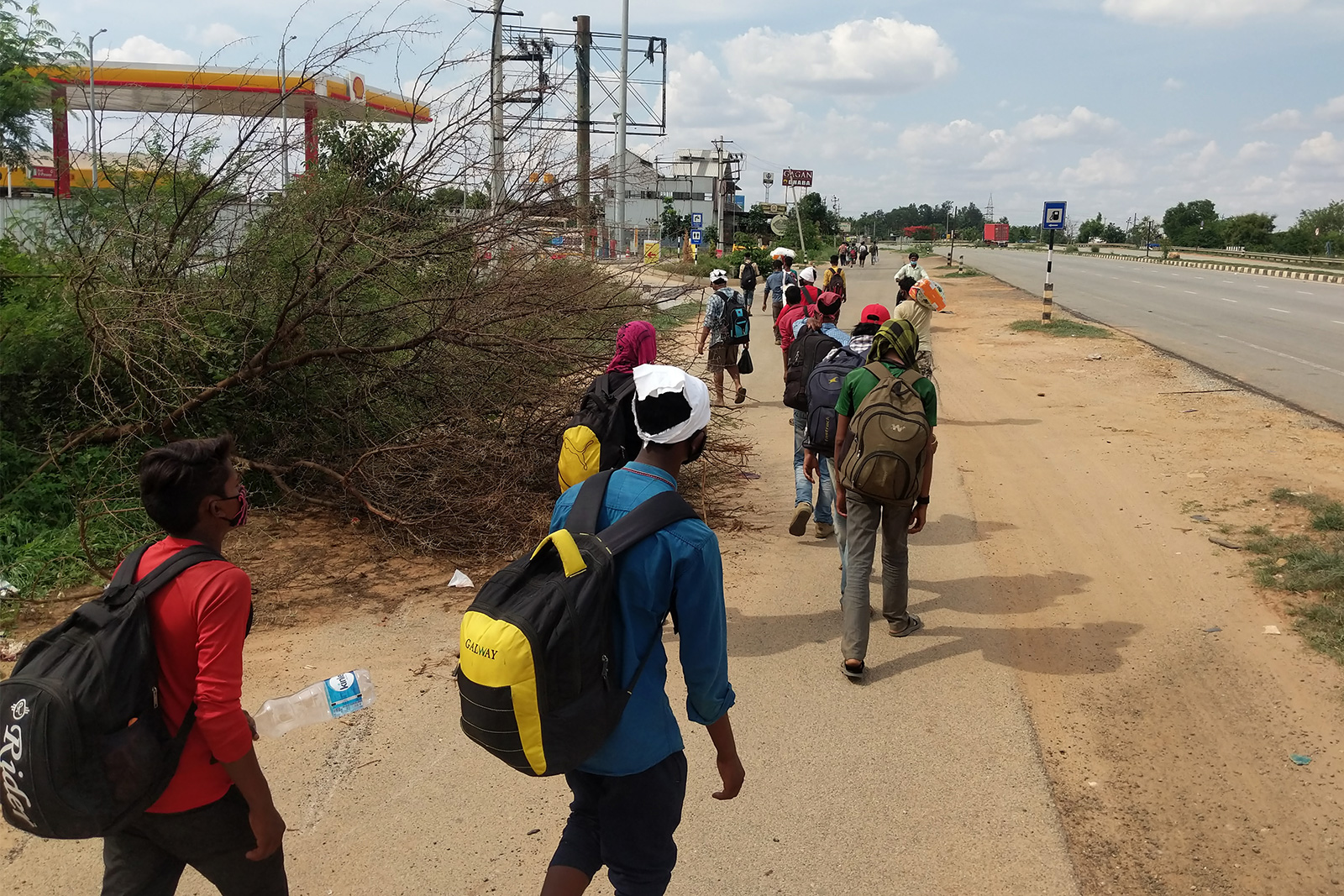
With no way to survive in the cities, and India’s vast railway network mostly shut down, many made the extraordinary decision to walk thousands of miles back to their families.
Many didn’t make it. In one incident, 16 laborers were run over by a freight train as they slept on rail tracks. Roadside accidents took the lives of others. Some died from exhaustion, dehydration or hunger. Those picked up by police were often sent back to the cities they had tried to leave.
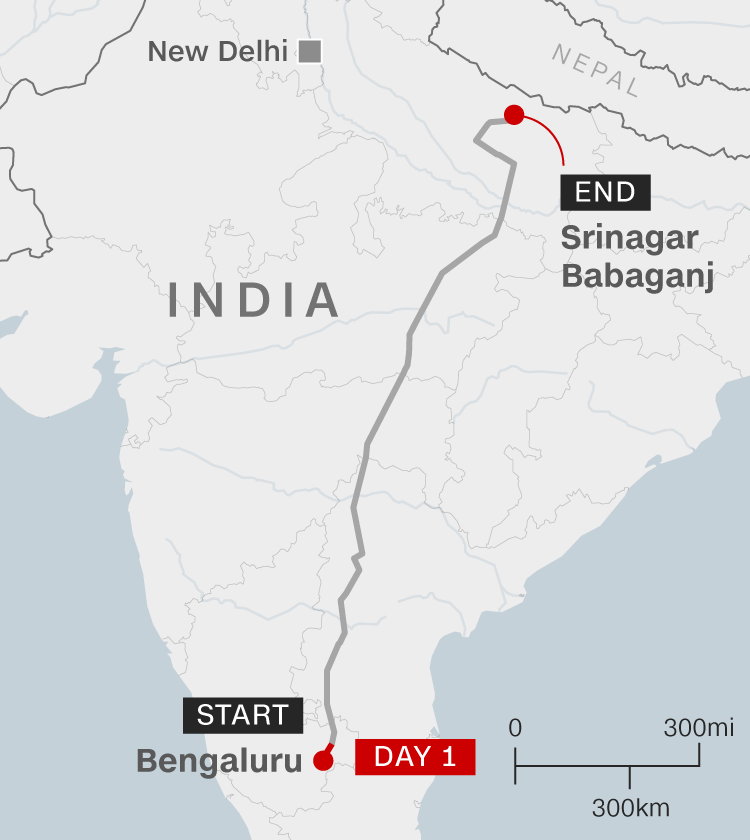
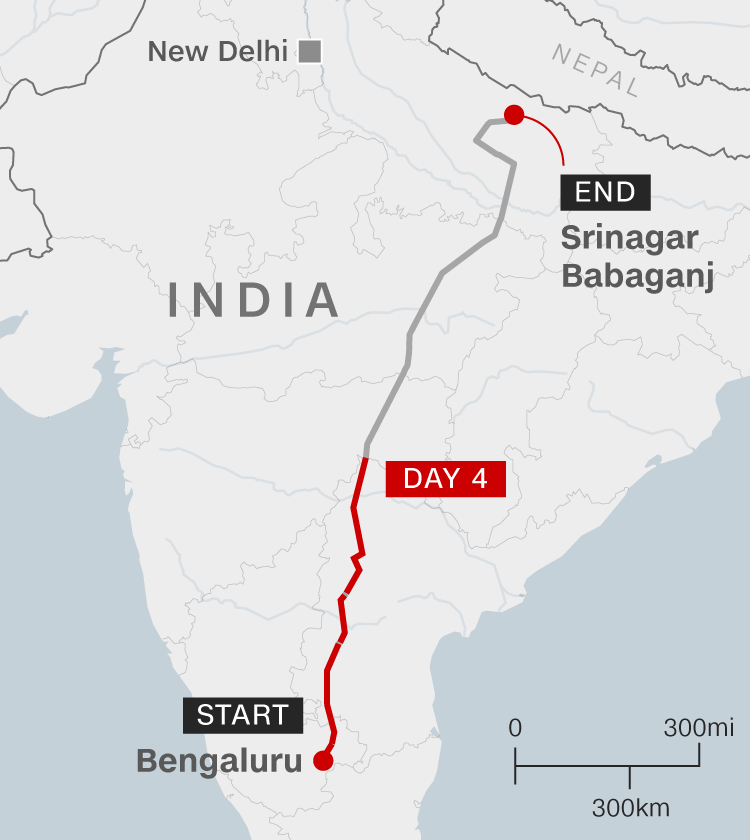
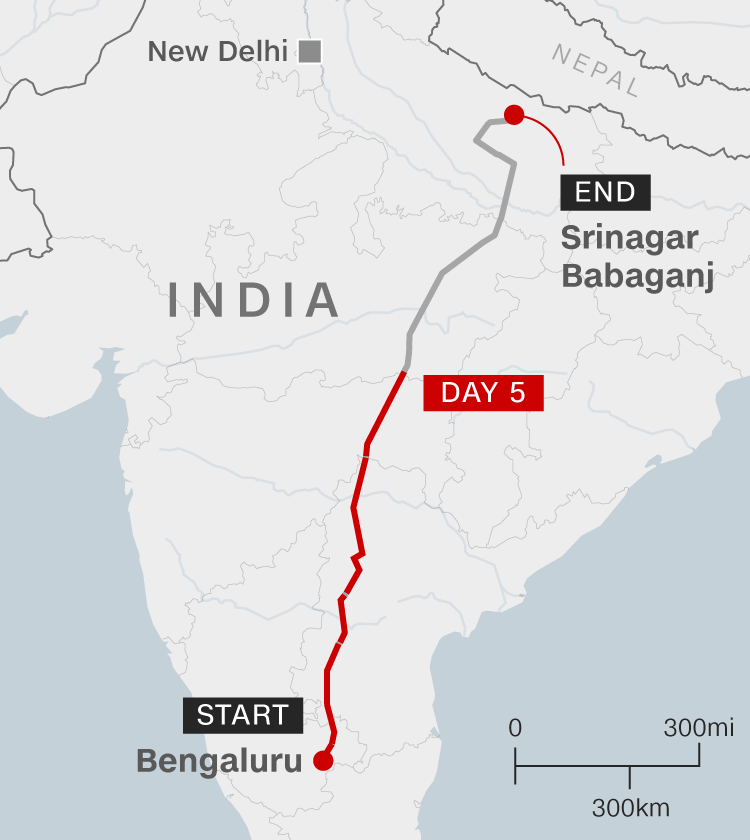
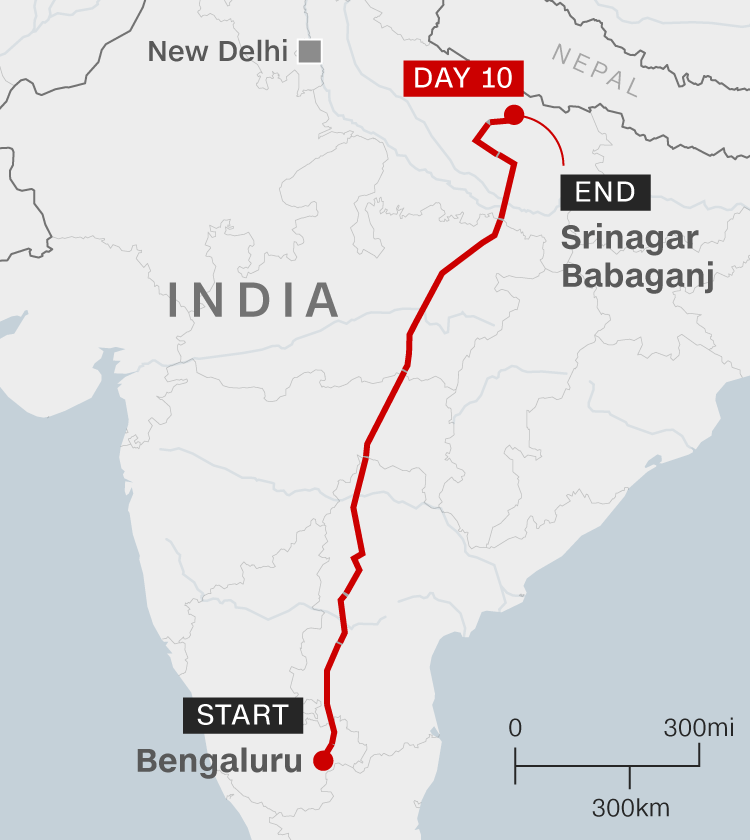
Chouhan knew the risks. But on May 12, he decided to defy India’s strict lockdown laws and begin the 1,250-mile (2,000-kilometer) walk from the tech hub of Bengaluru, formerly known as Bangalore, to his village in the northern state of Uttar Pradesh.
He’d hoped to hitchhike much of the way, but with police checking trucks for stowaways, drivers were demanding fees beyond Chouhan’s budget. For 10 days, he’d have to dodge police check points, survive on tea and biscuits, and walk on aching feet.
“I don’t think I can forget this journey through my life,” he says. “It’ll always carry memories of sadness and anxiety.”
A 3 a.m. getaway
Chouhan moved to Bengaluru last December to work as a mason on a construction site.
In his home village of Tribhuvan Nagar, on India’s border with Nepal, he earned 250 rupees ($3.30) a day. In Bengaluru, he could double that.
He and his brother, who worked in another state, sent home about 14,000 rupees ($185) a month — enough to sustain their family of 11, including Chouhan’s two young children and his elderly parents, living in a thatched roof house set amid sugarcane and wheat fields. His nephew Arvind Thakur joined Chouhan in the city as soon as he turned 14, the legal age to work in India.
A video of Rajesh Chouhan’s house. 11 people share this space. “When it rains, we get wet even inside the house”
By the time Chouhan, his nephew and nine other migrants from their hometown had decided to leave Bengaluru, the country had been shut down for weeks. Some rail services resumed on May 3, allowing interstate travel — but only subject to a laborious approval process.
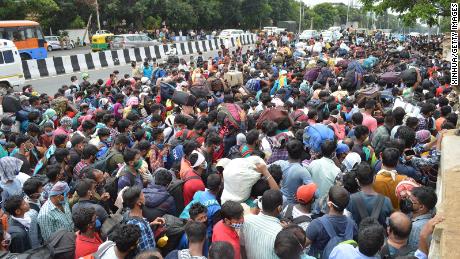
Migrants were told to register their travel plans at police stations. By May 5, more than 214,000 people had registered to leave Karnataka state, of which Bengaluru is the capital. However, barely 10,000 people got tickets as there was limited train service.
Normally Chouhan pays 300 rupees ($4) for the 48-hour trip home in the lowest carriage class, but during the pandemic that price soared to 1,200 rupees ($15.90). State police were assigned to sell tickets and keep order at police stations packed with travelers desperate to get home.
Police in Bengalore toldCNN they resorted to using batons to clear the crowds when sales for the day ended.“We were beaten many times. Just because we are poor, doesn’t mean we can’t feel pain,” says Chouhan.
After spending five days outside a police station trying to get a ticket, Chouhan and his fellow villagers decided to walk. They didn’t dare tell their families.
“We were beaten many times. Just because we are poor, doesn’t mean we can’t feel pain.”Rajesh Chouhan
“My father is severely diabetic and it would take a toll on him and my mother if they found out that we were walking home with no money,” Chouhan says. “They’d cry until our return. All of us decided to tell our families that we were waiting for a train.”
He packed four shirts, a towel and a bed sheet in his backpack, along with a couple of water bottles. In his wallet was 170 rupees ($2.25).
At 3 a.m. on May 12, Chouhan slipped out of the single-room tin shed he shared with 10 other people and took his first step towards home.
Getting out
By the time Chouhan left, police checkpoints had been erected across the city. Authorities had not anticipated the rush of migrants wanting to leave and clarified that registration applied only to those “stranded” — not migrant workers. Unauthorized interstate travel was banned.
As Chouhan’s group walked across the city, they were picked up by police and taken to the station where their boss — who never wanted them to leave — would pick them up. While migrant workers have rights under Indian law, often they are unaware of them and exploited by employers.
At noon, police officers changed shifts and the group was left unattended. “We ran out of there,” Chouhan says. “We ran for two kilometers or so until we felt we were safe.”
Following railway tracks to avoid police on the roads, the group walked through the night, with other migrants, until they entered Andhra Pradesh at 1 a.m.
After 46 hours, they had crossed the first of the five state borders they would encounter. They had traveled just 74 miles (120 kilometers).
Hope, solidarity and hunger
Chouhan’s group of 11 migrants had nine smartphones between them, and they used Google Maps to navigate their route. They used the flashing blue dot to see if they were roughly walking in the right direction.
To conserve battery power,only one person would have their phone switched on at a time, and they took turns sharing GPS. There were few places along the way where they could charge their phones.
The first part of their journey traced National Highway 44 — a long, open road that slices India neatly in two, running the length of the country from Tamil Nadu in the south to Srinagar in the north.
This road would take them to Hyderabad, the city of 10 million people that was to be the first big landmark of their journey — and where they’d heard it would be possible to hitchhike the rest of the way home.
As temperatures topped 40 degree Celsius (104 degrees Fahrenheit), Chouhan walked about 5 miles (8 kilometers) an hour, taking a brief rest every two hours. He aimed to complete about 68 miles (110 kilometers) a day. “There was temptation to rest or to nap,” he says. “But we were aware that it became more difficult to walk each time we sat down.”
Along the way, they’d see other groups of migrants heading for the impoverished western states of Odisha, Chhattisgarh, West Bengal, Bihar and Uttar Pradesh, which supply India’s cities with much of their migrant labor force.
On the road, Chouhan says traditional divisions of caste and religion — deeply entrenched fault lines in India’s rural hinterlands — disappeared. His group of 11 spanned various castes from the same village. There were Brahmins and Thakurs, who are considered upper castes, and Chamars, who are among the lowest. On the long walk home, it didn’t make a difference.
When Chouhan’s slipper broke on the second day, the group pooled their funds to buy him a new shoe.
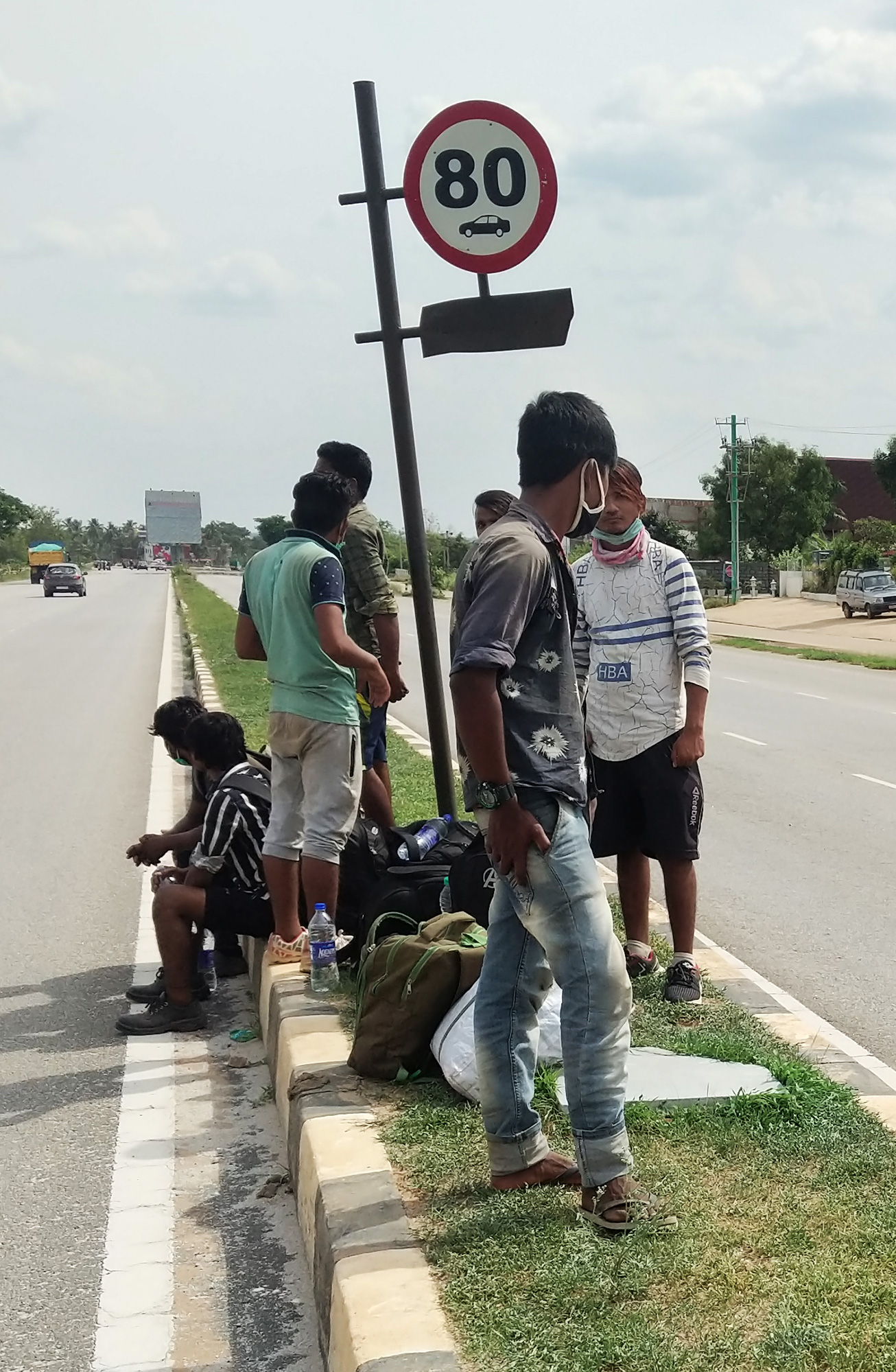
Rajesh Chouhan and his friends wait on the divider hoping for a truck to drop them across the border.
After asking locals about ways to bypass the upcoming police checkpost, Rajesh’s 11-member group heading to Gonda join a 17-member group heading to Chattisgarh state. The group peeled off the highway and walked through fields and forests to avoid the police.
But by day three, they had not had a full meal since they leftBengaluru. Each person had started out with between 150 rupees ($2) and 300 rupees ($4). Instead, they’d buy 20 biscuits for 100 rupees ($1.32) and ration them through the day. “We had to save every rupee in case we needed it later during the journey,” says Chouhan.
“Our stomachs would rumble. We’d eat a biscuit to keep it quiet. We were hungry, but we had no choice. We had to save every rupee in case of an emergency.”
Around 8 a.m. that day, they stopped on the side of National Highway 44, thinking they’d rest for an hour. They slept for eight, oblivious to the din of highway noises and blaring trucks.
When they woke up at 4 p.m. Hyderabad was 250 miles (400 kilometers) and one state border away.
Crossing borders
With Hyderabad in his sights, Chouhan walked through the night. But when his group reached the town of Kurnool at about 10 a.m. on day four, a police checkpoint blocked the bridge they had to cross to reach the city.
Chouhan saw a stream of migrants following a winding path along the river and followed them. About 2 miles (3.2 kilometers) away, hundreds were crossing the river on foot.
Chouhan and the others hesitated — they didn’t know how to swim. “Men, women, children, the elderly were crossing the river,” he says. “(We thought) if they can do it, why can’t we.”
After a long, hot summer, the river was only 3 feet (1 meter) deep. Chouhan held his bag over his head, and one of the tallest men in their group carried his 14-year-old nephew.
“We were so scared we’d be washed away. But we kept telling ourselves this was the only way home. This 100-meter stretch was perhaps the most scared we’ve been on this journey,” says Chouhan.
Back on the highway, truckers were asking as much as 2,500 rupees ($33) per person to take them towards Uttar Pradesh. “They told us that if the police caught them, they would have to pay big penalties. They didn’t want to take the risk without getting paid in return. We had no option but to walk,” says Chouhan.
But others were more charitable. One old man offered them their first full meal in four days. A truck driver took pity on their blistered feet and offered them a lift. He was transporting rice across the border and they slept between the gunny sacks, as he drove them around the outskirts of Hyderabad.
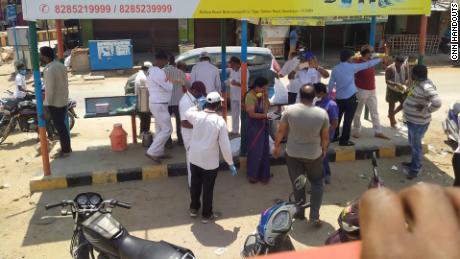
After they passed the Telangana-Maharashtra border, they had another stroke of luck — a villager took them to a school where NGOs were giving food and water to migrant workers.
More than 300 migrants were eating when the police arrived.
“They started to abuse us,” Chouhan says. “They said we were not following social distancing and we should sit 10 feet from each other. They attempted to disperse the crowd and told the organizers to stop giving out food.”
But the migrants outnumbered the police. “We started to shout back. Some migrant workers even started to push the police, and the police retreated towards their jeep,” he says. “We were angry. They (police) don’t help us at all — they don’t help people help us.”
Pandemic and death on roads
When Chouhan was in Bengaluru, he had heard about the pandemic that had brought India to a halt. But he says his understanding of it was poor. When he left on May 12, Bengaluru had just 186 confirmed cases. As he walked home, Chouhan chatted to other migrants, huddled in trucks and tractors, and ate meals in close quarters, breaking social distancing regulations.
There is little data on how the migration of urban workers has impacted the spread of coronavirus in India. Returning migrants have tested positive for the disease in large numbers in many states, but it is not known if they contracted Covid-19 in the city or picked it up along the way.
In Uttar Pradesh, India’s most populous state, more than 807,000 interstate migrants were being quarantined by May 24. Of the more than 50,000 tested, 1,569 were diagnosed with Covid-19.
On day five of their journey, the group had a health scare as they approached the central Indian city of Nagpur.
Rajesh’s nephew Arvind Thakur had a fever. “I did get scared,” Thakur says. “I do not understand anything about coronavirus. But the adults told me it cannot be coronavirus as it comes first as a cold and cough. I only had fever. They gave me tablets and I felt better.”
On the highway, the pandemic was a low priority — there were more pressing health concerns: hunger, thirst, exhaustion and pain.
There is no official data on deaths due toIndia’s lockdown, but a volunteer-driven database set up by a group of Indian academics has been tracking local media reports of fatalities as a consequence of the policy.
By May 24, it had recorded 667 deaths, of which 244 were migrant workers who died while walking home: either through starvation, exhaustion or in rail and road accidents.
“In Bengaluru, I was scared of this illness,” says Chouhan. “Now, all we wanted to do was go home. It was not in our hands if we fell sick during this journey.
“The moment we left Bengaluru, we’d left our fate to the gods.”
The home run
Under the black night sky and thick canopies of the forested areas of Central India that once inspired Rudyard Kipling to write “The Jungle Book,” Chouhan crossed the Maharasthra-Madhya Pradesh border. It was day six.
In Madhya Pradesh, tractors, buses and trucks helped the group along during the day, and hillside villagers provided them with food and even a tanker to bathe in.
Two days later, they reached the border of their home state, Uttar Pradesh. Home was just 217 miles (350 kilometers) away. “We forgot our pain. It felt like we were already home,” says Chouhan.
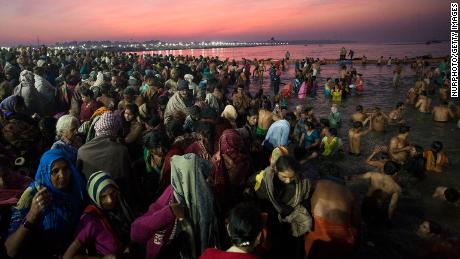
As they passed Prayagraj, a site central to Hindu spiritualism where the rivers Ganges, Yamuna and Sarasvati converge, Chouhan allowed himself a rare moment of joy.
Joining thousands of Hindus, he took a dip in the cool waters, and said a prayer for the group to reach home early.
One day later, their ninth of walking, they reached the state capital, Lucknow.
Home was just 80 miles (128 kilometers) away. Chouhan bought a meal for the first time since their journey began and called his family. “We told them we had come by train to Uttar Pradesh. We would be home in a day,” he says.
The closer they came home, the more tired Chouhan says they felt.
On day 10, at Gonda, 18 miles (30 kilometers) from their village, Thakur’s body gave up. He fell face first into the asphalt. The group revived him by pouring water on his face.
Then, just 2 miles (3.2 kilometers) from home, they ran into the police. Too weak to run, they allowed officers to place them quarantine.
Finally, they were home.
Home and scarred
The scars of walking up the spine of India took its toll on their bodies.
Chouhan says he has lost 10 kilograms (22 pounds) throughout the journey. He says his feet have swollen so much it’s a struggle to walk to the bathroom in the school where he is meant to be quarantined for 14 days.
However, in Uttar Pradesh the quarantine is badly enforced.
On May 24, Chouhan says his family was allowed to visit him in quarantine.
His children lunged towards him. And when they hugged tightly, Chouhan says he forgot his pain. He has been allowed to visit his family at their home, and go to the pharmacy to buy medicine, which he took out loans to pay for.
Seeing his thatched-roof house, where his big family sleeps, he says, reminds him how his work in Bengaluru has sustained his family.
Yet on May 25, tragedy struck. Thirty-year-old Salman, one of the 11 who walked from Bengaluru, was bitten by a snake just days after arriving home and leaving quarantine.
He died on the way to the hospital.
More than 45,000 people die of snake bites in India annually. More than 200 people attended Salman’s funeral, including some of the group Chouhan walked with, who were meant to be in quarantine.
Chouhan is mourning the tragedy. Yet he realizes that the poverty in his village, the hunger of his family, and the mounting debt from their medical treatment mean he must eventually return to the city to work.
“When I left Bengaluru, I resolved never to return,” he says. “The best I can do is wait for a few weeks to see if the lockdown is relaxed before heading out again for work.”
Design and graphics by Jason Kwok. Edited by Jenni Marsh and Hilary Whiteman.
Moderate but tough maiden for the boys. Keen on home track 3YO gelding 13. Harwok’n’zoff from the Clint Lundholm yard rising in trip second-up after charging home late resuming here a fortnight back. Can settle closer from a low draw and raced up to 2000m last prep.
Dangers: Stablemate 3YO 2. Arrivederci can progress at third start up in distance after a tidy effort here; while rival local 3YO 7. Talented Escape should improve fourth-up down in weight. Mudgee 3YO 3. Harley Fat Boy is clear best of the rest dropping sharply in weight after the claim, but will need luck from a wide draw.
How to play it: Harwok’n’zoff to win.
Odds and Evens: Split.
Eight races are on the card in the NSW Central West on Monday.Credit:Jenny Evans
Race 3: F & M MAIDEN (1300m)
Now the girls’ turn, and there are a stack of chances. Tough 3YO filly 6. Lady Of Carmel from the Brett Thompson stable at Gulgong has kept improving this prep, only missing by a whisker in her last two. Draws well again, with 3kg claim, and looms as the one to beat.
Dangers: Loved the way Scone filly 8. Stellar Blaze finished off resuming at Mudgee, although likely to drift a long way back from a wide barrier. Improving local filly 9. Raposa looks well over the odds up in trip from two solid closing efforts this prep; while Wellington mare 12. Alison Princess, who has hit the line late in her last two, and Muswellbrook mare 16. Our Eppy, who needs a couple of scratchings to get a run, should both be included in wider exotics.
How to play it: Lady Of Carmel to win.
Odds and Evens: Evens.
Race 4: CLASS 1 & MAIDEN PLATE (1600m)
Very open battle again, with any number of hopes. Wyong 4YO gelding 10. Sethlans from the Allan Denham yard made up good late ground in a handy maiden at Tamworth over this trip. Should be right at peak now staying at the mile and down in weight, and well over the odds getting to a bigger and more suitable track.
Dangers: Gulgong 4YO 1. Clever Missile will be hard to hold out fourth-up and dropping in grade if he can slot in and find cover from a wide gate. Will drift back, and be saved for the last shot. Wellington 3YO 6. Athena’s Lad has held his form OK in deeper races after rattling home for an impressive debut win at Narromine. Tough ask drawn the extreme outside. After knocking on the door for a while, Scone 3YO 8. Shame Warned fought hard to win his maiden at Tamworth over this distance, and down in weight from an even better draw he can figure again. Mudgee 4YO 5. Sedgemoor will find this more to his liking after dropping out first-up in a stronger race at Scone, and only career win so far came second-up.
How to play it: Sethlans each way and trifecta 1,6,8,10/1,5,6,8,10/1,5,6,8,10.
Odds and Evens: Split.
Race 5: CLASS 1 HCP (1000m)
Fairly open but thin sprint. Progressive 4YO gelding 1. Cotton On George from the Alison Smith yard at Orange showed good speed to career away and win his maiden at Wellington second-up, and draws to dictate again. Tougher challenge down much longer straight, but this isn’t strong.
Dangers: Nyngan 4YO 7. Supreme Times was a strong winner in a much weaker race under a big weight last start, and while this is significantly tougher, he will carry 10kg less. Local 3YO 2. Forgiato has returned in good shape narrowly winning his maiden here first-up before again strong to the line in a CL1 at Wellington.
How to play it: Cotton On George to win.
Odds and Evens: Split.
Race 6: BM 66 HCP (1000m)
Now it’s the older and more seasoned sprinters’ turn. Improving 5YO gelding 2. Kookabaa from the Brett Thompson stable looks well placed coming off a smart CL3 win fourth-up at Mudgee. Had previously held his own in tougher company, and 3kg weight claim is crucial.
Dangers: Lightly raced Scone mare 3. Miss Powerbelle resumes off an eight-month break for new stable, and only has to jump well from the wider draw to be in the finish. Has been fitted with two quiet trials and has a sound fresh record. Nyngan 5YO 1. Festival Of Light has a 50 per cent winning strike rate at this track, and won two of his last three, both times charging home from midfield here. Not sure the inside draw suits his pattern and does climb to 61kg; while include local 6YO sprinter 5. Sons Of Bourke, who can be ridden closer, from a low draw.
How to play it: Kookabaa to win and trifecta 1,2,3/1,2,3,5/1,2,3,5.
Odds and Evens: Split.
Race 7: C, G & E BM 58 HCP (1300m)
Yet another one from the Thompson yard at Gulgong, improving 6YO gelding 3. Costas is ready to win again third-up on the quick back-up. Flew home late resuming in a handy CL2 at Parkes before luckless this trip at Bathurst. Drawn well, and bigger track a huge plus.
Dangers: Lightly raced Gilgandra 3YO 8. Patrick May has made good progress in only his second prep winning this grade at Parkes, although tougher here from a wide draw under 60kg. Home track 5YO 2. California Fox hasn’t been far away in his last three across deeper opposition, and can roll forward again from the inside draw, but weighted to his absolute best. Wellington 6YO 6. Universal Thief hasn’t finished further back than second in his last four, including a strong win at home last start. Wellington 6YO 7. Harry New Shoes burst through late to win this grade last start, but strike rate only ordinary, and he rises in weight.
Loading
How to play it: Costas each way and trifecta 2,3,8/2,3,6,7,8/2,3,6,7,8.
Odds and Evens: Split.
Race 8: F & M BM 58 HCP (1300m)
Now the girls’ edition to close the meeting, and again there are plenty of chances. Under-rated 4YO mare 2. Holy Empress from the Scone stable of Scott Singleton did well resuming in a stronger BM 64 at Wyong when specked at long odds. Bigger track suits, and draws to coil up midfield and be produced late.
Dangers: Gulgong filly 3. All Hollywood has hit the line hard this grade in her last couple, and draws to get lovely cover just off the speed. Be surprised if one of those two doesn’t win, but include last start 4YO home track winner 4. Dusky Damsel.
How to play it: Holy Empress to win and quinella 2 and 3.
Odds and Evens: Split.
Fancy a flutter?
Best bets – Race 2 (13) Harwok’n’zoffer. Race 5 (1) Cotton On George
Best value – Race 3 (6) Lady of Carmel
Tips supplied by Racing NSW. Full form and race replays available at racingnsw.com.au
Prime Minister Narendra Modi on Sunday assured that those affected by the locust attacks in certain parts of the country will be helped by the government.
“Help will be given to all those affected by the locust attacks that have been taking place in the recent days,” Modi said in his monthly radio programme ‘Mann Ki Baat’.
The government said on May 28 that a total of 377 spots covering 53,997 hectares have been covered under locust control operations since April 11.
Locust control operations have been conducted in 11 districts of Rajasthan, 24 of Madhya Pradesh, three in Maharashtra, two each in Gujarat and Uttar Pradesh, and one in Punjab.
As per the Locust Status Bulletin of May 27, several successive waves of locust invasions can be expected until July in Rajasthan with eastward surges across northern India as far as Bihar and Odisha, followed by westward movements and a return to Rajasthan with changing winds associated with the monsoon.
These movements will cease as swarms begin to breed and become less mobile. Swarms are less likely to reach south India, Nepal, and Bangladesh.
The prime minister is expected to address the issue of the COVID-19 pandemic and elaborate on the government’s latest guidelines on the nationwide lockdown to contain the spread of the virus.
Prime Minister Narendra Modi will on Sunday address the nation through his monthly radio programme ‘Mann Ki Baat’ at 11 am. The prime minister is expected to address the issue of the COVID-19 pandemic and elaborate on the government’s latest guidelines on the nationwide lockdown to contain the spread of the virus.
The central government on Saturday extended the nationwide lockdown for containment zones with high number of coronavirus cases till June 30 and announced the graded lifting of restrictions for the rest of the country.
The prime minister’s radio programme ‘Mann ki Baat’ is aired on the last Sunday of every month and the prime minister speaks on the latest issues.
The 65th edition of his radio programme will be broadcast on AIR and Doordarshan. It will also be streamed live on the YouTube channels of AIR, DD News, PMO and Information and Broadcasting Ministry.
In his previous address, the prime minister had exhorted the people to shun complacency on the assumption that the COVID-19 pandemic will not affect them as it has so far not spread to areas they work or live in, saying “we have to continue being careful and taking the right precautions”.
He had also said that India’s fight against the novel coronavirus has become people-driven as he congratulated Indians for joining forces with the administration to battle the pandemic.
We use cookies on our website to give you the most relevant experience by remembering your preferences and repeat visits. By clicking “Accept”, you consent to the use of ALL the cookies.
This website uses cookies to improve your experience while you navigate through the website. Out of these, the cookies that are categorized as necessary are stored on your browser as they are essential for the working of basic functionalities of the website. We also use third-party cookies that help us analyze and understand how you use this website. These cookies will be stored in your browser only with your consent. You also have the option to opt-out of these cookies. But opting out of some of these cookies may affect your browsing experience.
Necessary cookies are absolutely essential for the website to function properly. These cookies ensure basic functionalities and security features of the website, anonymously.
Cookie
Duration
Description
cookielawinfo-checbox-analytics
11 months
This cookie is set by GDPR Cookie Consent plugin. The cookie is used to store the user consent for the cookies in the category "Analytics".
cookielawinfo-checbox-functional
11 months
The cookie is set by GDPR cookie consent to record the user consent for the cookies in the category "Functional".
cookielawinfo-checbox-others
11 months
This cookie is set by GDPR Cookie Consent plugin. The cookie is used to store the user consent for the cookies in the category "Other.
cookielawinfo-checkbox-necessary
11 months
This cookie is set by GDPR Cookie Consent plugin. The cookies is used to store the user consent for the cookies in the category "Necessary".
cookielawinfo-checkbox-performance
11 months
This cookie is set by GDPR Cookie Consent plugin. The cookie is used to store the user consent for the cookies in the category "Performance".
viewed_cookie_policy
11 months
The cookie is set by the GDPR Cookie Consent plugin and is used to store whether or not user has consented to the use of cookies. It does not store any personal data.
Functional cookies help to perform certain functionalities like sharing the content of the website on social media platforms, collect feedbacks, and other third-party features.
Performance cookies are used to understand and analyze the key performance indexes of the website which helps in delivering a better user experience for the visitors.
Analytical cookies are used to understand how visitors interact with the website. These cookies help provide information on metrics the number of visitors, bounce rate, traffic source, etc.
Advertisement cookies are used to provide visitors with relevant ads and marketing campaigns. These cookies track visitors across websites and collect information to provide customized ads.




 A history-sheeter has been arrested and 20 unidentified people booked for allegedly organising a dance programme at his house in Aligarh in violation of the coronavirus-induced lockdown. (Representational Image)