Thursday, April 23, 2026

Approval rating for Modi govt 2.0 falls to 62% from 75% last year: Survey

0


In spite of a pandemic and the countrywide lockdown, the Narendra Modi government’s popularity remains high as it completes one year of its second term in office. A recent survey shows that the government enjoys the support of 62 per cent of respondents, which is lower than year.


According to the survey, conducted by LocalCircles in first half of May among 65,000 citizens in 280 districts, 62 per cent of respondents felt the government either exceeded or met their expectations in the past year. While 26 per cent said it exceeded expectations, 36 per cent felt it managed to meet expectations.


The government’s handling of the Covid-19 pandemic, however, got the highest approval rating, with 90 per cent of respondents saying they were satisfied with its efforts. While 59 per cent said the handling of the situation was very effective, 31 per cent felt it was somewhat effective, and 10 per cent felt it was ‘not effective’ or of ‘quite poor’.


ALSO READ: With attractive deals, real estate becomes buyers’ market amid Covid-19


The survey suggests that four factors have worked in the government’s favour. Its tough stance on terrorism, efforts to improve relations with other countries, smooth passage of legislative Bills in Parliament, and promptness in taking tough steps to control Covid-19. However, even though the government enjoyed popularity six years after it first came to power in 2014, data showed the approval rate had fallen compared to last year (at 75 per cent). In 2019, only 25 per cent felt unsatisfied by its overall performance, against 38 per cent now. Of the 15 parameters in the survey, the government’s rating improved in only one —its handling of Parliament and passage of key Bills — from 65 per cent in 2019 to 79 per cent in May 2020. The ratings fell significantly on key economic parameters, like addressing unemployment, ease of doing business, reduction in cost of living and start-up environment.


ALSO READ: Coronavirus LIVE: Two passengers on board SpiceJet flight test positive


In the latest survey only 29 per cent said India had been able to address the unemployment situation, the number was 48 per cent a year ago. In 2020, only 43 per cent felt doing business was easier, compared to 63 per cent in 2019.


Last year 57 per cent of respondents felt cost of living had come down and prices of essential commodities had fallen, the figure was 36 per cent in the latest survey. Only 37 per cent now believe establishing, operating and growing a start-up has become easier, compared to 66 per cent in 2019.


ALSO READ: Govt extends Bharat Petroleum privatisation bid deadline to July 31


Approval fell on other parameters, too, even though ratings remained well above 50 per cent. Nearly 73 per cent Indians believe the government has been efficient in handling terrorism and reduced in-land terrorist activities in the past year, compared to 85 per cent earlier.


In 2020, 69 per cent Indians are optimistic about their future and that of their families’, down from 82 per cent. And 56 per cent felt the government’s handling of issues related to communalism were satisfactory, compared to 69 per cent in 2019. Only on the parameter of reducing corruption (49 per cent), it failed to achieve the support of the majority.


India’s foreign affairs strategy and its status on the global arena played a crucial role in the citizens’ positive feedback. A whopping 79 per cent of respondents said India’s image and influence in the world had improved in the last year — nine percentage points lower than 2019.

Source link

Coronavirus Has Renewed Our Addiction To Plastic

As the global death toll from the coronavirus pandemic has risen above 350,000, it has been tempting to look for a silver lining in the environmental changes that the crisis has caused.

Global carbon emissions have plummeted to record lows as a result of strict lockdown measures imposed around the world, with industries halted and cars and planes brought to a near-standstill.

Major cities are reimagining their transportation networks and exploring ways to limit car use while encouraging alternate forms of transportation, like walking and cycling.

And with humans largely out of the way, wildlife is thriving in some areas. Wild goats roamed free in a Welsh town, while packs of boar have been spotted in Barcelona.

In the United States, the Centers for Disease Control and Prevention warned this month of “aggressive” rats on the loose in some communities, searching for new sources of food because restaurants have largely shut down.

Nature is healing indeed.

Even as the pandemic sparks hope of a green revolution, however, there are signs that the crisis could cause lasting harm to the environment.

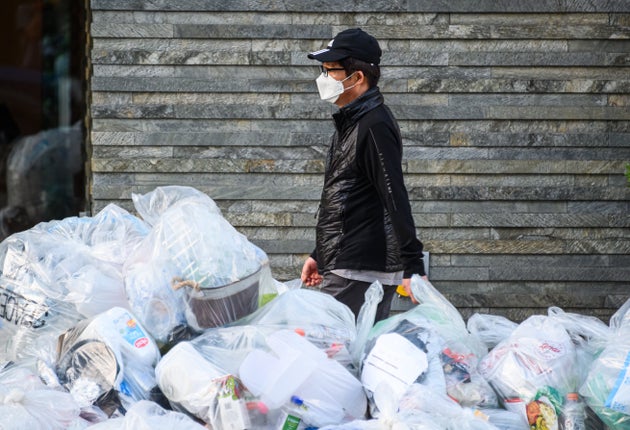
Plastic is making a major comeback, thanks to increased demand for packaged food and disposable shopping bags, the installation of plexiglass dividers in shops and offices, and the widespread use of gloves and protective masks.

In France, 40% of the use of plastic is devoted to packaging, HuffPost France reports. At the end of March, as the coronavirus crisis ramped up, Elipso, the professional federation of the plastic packaging sector, recorded a 30% increase in production, mainly in the food, hygiene and detergents sectors.

Part of the reason for the increase, according to Emmanuel Guichard, Elipso’s general manager, is that suppliers have largely had to shift away from selling to restaurants and toward serving home consumers.

Items that, prior to lockdown, were sold in bulk to restaurants and cafeterias are now sold in smaller containers in supermarkets, Guichard told HuffPost France. “That means more packaging.”

The explosion of online ordering and in-store collection also explains why consumers, including those who were sensitive to the issue of packaging before the crisis, are less attentive. 

According to a study carried out at the end of April by the Kantar Institute and PricewaterhouseCoopers, 24% of French people did their food shopping via “click and collect” during confinement, in order to limit human contact.

In these cases, “your strawberries will necessarily be in plastic, in case they end up under your laundry,” Guichard said.

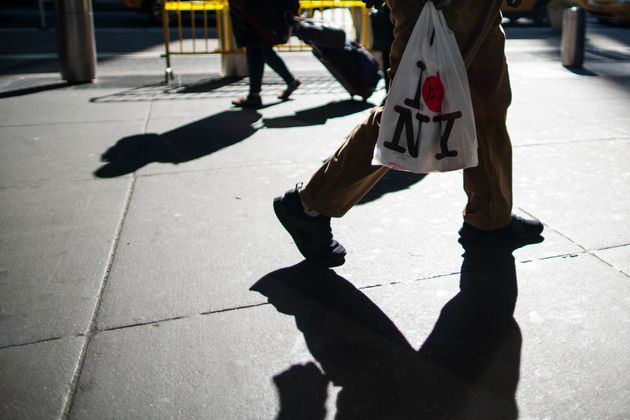
The pandemic has also caused cities and states in Europe and the U.S. to pause or roll back bans on single-use plastic bags, due to fears that reusable shopping bags could more easily spread the coronavirus. 

The UK the government suspended the charge on single-use plastic bags at shops and grocery stores at the end of March. In April, California lifted its ban on single-use plastic bags for 60 days.

“It is critical to protect the public health and safety and minimize the risk of COVID-19 exposure for workers engaged in essential activities, such as those handling reusable grocery bags,” said an order announcing California’s move.

Environmentalists have argued, however, that there is little evidence that reusable shopping bags carry a greater risk of spreading the coronavirus.

They say that the plastics industry is taking advantage of the crisis to promote their products and demonize reusables — despite studies that suggest that the coronavirus can live for days on plastic surfaces.

Indeed, right-wing think tanks have published articles arguing in favor of plastic bags, and the plastics industry has lobbied the Trump administration to help overturn plastic bag bans across the United States.

“We ask that the department speak out against bans on these products as a public safety risk and help stop the rush to ban these products by environmentalists and elected officials that puts consumers and workers at risk,” Plastics Industry Association CEO Tony Radoszewski wrote to Health and Human Services Secretary Alex Azar in March.

This month, the CDC issued guidance for restaurants and bars that encouraged the use of disposable utensils and single-use condiment packets.

“The plastic industry has really treated the COVID-19 emergency as an opportunity and is preying on people’s fear to scare them into believing that single-use plastic is the best way to stay safe,” John Hocevar, director of Greenpeace’s oceans campaign, recently told Vox. “And so far, there isn’t any independent scientific research that supports that.”

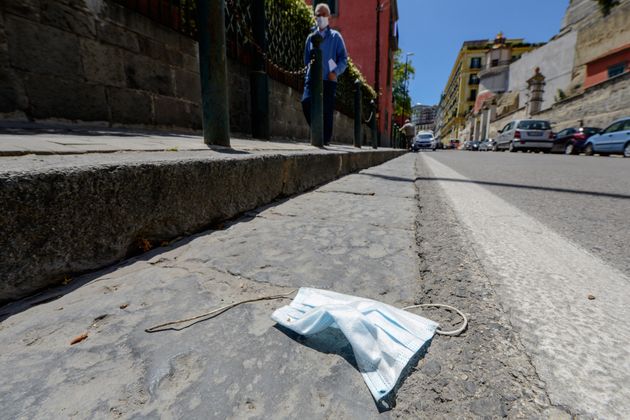
Another symbol of the pandemic has been the number of gloves and masks littering city streets. 

In hospitals, used masks are considered hazardous waste and are sent for incineration. But there is no such system for the general public.

Used masks and gloves should be disposed of in the trash, but many cities have experienced a rise in personal protective equipment litter since the pandemic began.

This litter represents not just a threat to the health of the people who encounter it and clean it up, but also to the environment as a whole.

Medical-grade masks are commonly made from polypropylene, a very dense thermoplastic, which is non-biodegradable and non-recyclable.

“It is not the worst polymer, but it is generally estimated that solid polypropylene takes around 500 years to degrade,” Etienne Grau, a teacher-researcher at the University of Bordeaux, told HuffPost France.

In France, divers say that they have seen an uptick in “COVID pollution” in the sea and other waterways.

“First it was the gloves,” one diver said in a video that has gone viral online this month. “Then we started to find masks three or four days ago. … This is just the beginning of the COVID waste.”

This week, Virginia Raggi, the mayor of Rome, announced a 500-euro fine for anyone who fails to properly dispose of masks and gloves. 

“The use of masks and gloves is essential in this critical moment: However, they must not be thrown on the ground under any circumstances,” Raggi said, according to HuffPost Italy.

“Let me be clear: There must be zero tolerance against those who throw this kind of waste on the street.”


Source by [author_name]

Historic SpaceX Launch Postponed Because Of Stormy Weather

CAPE CANAVERAL, Fla. (AP) — The launch of a SpaceX rocket ship with two NASA astronauts on a history-making flight into orbit has been called off with 16 minutes to go in the countdown because of the danger of lightning.

Liftoff is rescheduled for Saturday.

The spacecraft was set to blast off Wednesday afternoon for the International Space Station, ushering in a new era in commercial spaceflight and putting NASA back in the business of launching astronauts from U.S. soil for the first time in nearly a decade.

Ever since the space shuttle was retired in 2011, NASA has relied on Russian rockets to carry astronauts to and from the space station.


Source by [author_name]

COVID-19 Latest: Confirmed cases up by 803 with 27 more deaths

The Health Ministry announced that South Africa’s COVID-19 caseload increased by 1 673 over the last 24 hours, bringing the total to 25 937. SA’s caseload was 24 264 on Tuesday 26 May 2020.

Health Minister Dr Zweli Mkhize also confirmed that the latest death toll now stands at 552; which is an increase of 28. The total number of recoveries to date is 13 451.

COVID-19 update: South Africa, Wednesday 27 May 2020

As of yesterday, 128 cases in South Africa are treated as critical.

We wish to express our condolences to the loved ones of the deceased and thank the health care workers who treated these patients.

Health Minister Zweli Mkhize

Breakdown of new confirmed COVID-19 cases

COVID-19 cases by province

The following confirmed COVID-19 cases per province is as follows:

Province Total Cases New Cases Total Deaths Total Recoveries
Gauteng 3 167 31 1 955
Western Cape 16 893 391 8 504
KwaZulu Natal 2 186 49 1 180
Free State 221 6 123
Eastern Cape 3 047 70 1 491
Limpopo 141 3 67
Mpumalanga 106 0 62
North West 128 1 39
Northern Cape 48 1 30

Tests and screening

As of today:

  • A total of 634 996 tests have been conducted, of which 29 005 were done in the last 24 hours.
  • The total number of tests conducted in the private sector stands at 309 990, of which 10 940 were done in the last 24 hours.
  • In addition, 325 006 tests were conducted in the public sector, with 18 065 being done within the last 24 hours.

Global COVID-19 statistics

As of today, confirmed global cases stand at 5 722 643 and 353 580 deaths. More than 2 457 960 people have recovered from the virus, which was declared as a worldwide pandemic in January 2020.

The USA currently has the most cases – 1 730 479 confirmed cases and 100 825 confirmed deaths; a total of 480 321 citizens have recovered. Out of the 1 149 333 active cases, 17 158 are critical.

Brazil is now the second most-affected country after overtaking Rusisa, with 394 507 confirmed cases and 24 953 deaths. While 158 593 patients have recovered, about 2 300 of the 211 321 active cases are critical.


Source link

Erdogan dashes hopes of Turkey-Israel reconciliation

May 27, 2020

There has been a surge of optimism lately about a possible thaw in relations between Turkey and Israel. Signs of a possible breakthrough came when Israel’s national carrier, El Al, resumed its cargo flights to Turkey, with the first plane landing in Istanbul on May 24 after a decade-long pause. The flights had stopped after Israeli commandos killed nine Turkish activists on board the Mavi Marmara flotilla carrying aid to Gaza in May 2010, sending relations between the former allies into a tailspin.

Yet even as El Al was loading medical supplies to combat COVID-19 for onward delivery to US doctors, Turkish President Recep Tayyip Erdogan was blasting Israel’s plans to annex nearly half of the West Bank in an Eid al-Fitr address to American Muslims the same day.

Noting that “a new occupation and annexation project, which disregards Palestine’s sovereignty and international law,” had been set in motion by Israel, Erdogan vowed to “not allow the Palestinian lands to be offered to anyone else.”

Moreover, Jerusalem is a “red line for all Muslims, worldwide,” he said, making it clear that Ankara’s overall stance toward the Jewish state remained unchanged.

Few will have likely been more dismayed than Israel’s charge d’affaires in Ankara, Roey Gilad. In a May 21 essay for the Turkish online publication Halimiz, Gilad had called for mutually reinstating ambassadors. There has been no ambassador in either capital since May 2018, when Turkey asked Israel’s ambassador, Eitan Na’eh, to “go on leave” because of carnage in Gaza and Washington’s decision to move its embassy from Tel Aviv to Jerusalem.

Gilad said the sides did not have to “agree on everything” and do have mutal concerns. Most critically, Turkey is at odds in Syria with Israel’s biggest bugbear, Iran, and its Hezbollah proxies. So why not just push differences aside to focus on common interests and enemies, Gilad suggested. 

The reality remains that neither side has any compelling reason to do so, particularly since the hawkish Benjamin Netanyahu remains at Israel’s helm.

As matters currently stand, Erdogan doesn’t believe that relations can normalize so long as Netanyahu is in charge and Netanyahu thinks the same of Erdogan. “It’s business as usual,” said a well-informed Israeli source speaking not for attribution. “Unlike [the period between] 1949 and 2010, Israel is not running after Turkey. Its interests are diversified and all the more so because Erdogan’s Turkey hardly followed those interests. Relations with Israel were thrown under the bus,” the source said. The source was alluding to the halcyon days of Turco-Israeli friendship in the 1990s when Turkey’s anti-Islamist generals had the final say and Israeli jets trained in Turkish skies.

Under Erdogan, Turkey hosts top-level Hamas operatives on its soil and continues to engage in “blatant” anti-Israeli and anti-Semitic rhetoric. Under Netanyahu, Israel has all but abandoned a two-state solution to the Palestinian problem.

“Is there a political will in Israel to gamble [on better relations with Turkey ] again? What for? What will Israel and Turkey get that they already don’t have?” the source asked.

The idea that Erdogan would jettison his status as the champion of the Palestinian cause — a valued domestic propaganda tool — just as Israel mulls further annexation of Palestinian territory was fanciful to start with. The only obvious downside for Ankara not having an ambassador in Israel is that “this will require it to come up with a more creative or harsher than needed reaction to the annexation as it doesn’t have the more soft diplomatic option of withdrawing its ambassador,” wrote Gallia Lindenstrauss, a senior research fellow at the Israeli Institute for National Security Studies, in emailed comments to Al-Monitor.

Meanwhile, business between the two countries, mainly in Turkey’s favor, keeps growing anyway. The resumption of the El Al cargo service is a reflection of that trend. And despite friction over Hamas, intelligence cooperation between the sides is continuing, Israeli sources confirm.

Turkish spy chief Hakan Fidan and his Israeli counterpart Yossi Cohen have met at least twice within the last 10 months, most recently in January, according to two well-placed sources speaking on condition of strict anonymity. If true, that would not be unusual. Even Gulf nations that have no diplomatic ties with the Jewish state share intelligence with it against common foes.

One of the sources said the January meeting took place in Washington and an earlier meeting in Berlin. The same source said Syria, Libya and the eastern Mediterranean were the focus of the talks. 

Turkey’s troubles in the eastern Mediterranean — where it is locking horns with Greece, Cyprus and Egypt over drilling rights — inspired some of the talk about detente with Israel. Israel’s absence from a statement signed two weeks ago by Greece, Cyprus and Egypt that condemned Turkey for its “illegal activities” of gas drilling and “expansionism” in the eastern Mediterranean was seen as a sign that relations are on the mend (Israel has signed a gas pipeline agreement with Greece and Cyprus). This in turn prompted claims that Turkey and Israel were in secret talks for a maritime delimitation deal. These were promptly debunked by the Israeli Embassy in Ankara.

Either way, “The decline in energy prices makes the future development and export of the natural gas from the area highly questionable,” said Lindenstrauss. “If this has not already changed the calculus of all the actors, then it will in the near future,” she said. The dramatic fall in global energy prices make it less likely that Turkey and Israel will revive negotiations for a gas pipeline to export Israeli gas to Europe.

As for Libya, “Israel already has enough problems — being sucked into other conflicts the actors have with Turkey is not that attractive,” Lindenstrauss added.

In Syria, however, Turkey and Israel’s interests align somewhat more. Israel has, since Iranian intervention in the Syrian conflict, been striking Iranian military assets across the country. Gilad said the confluence of interests was evident when Turkey struck Iran-backed forces in Idlib after losing around 50 of its own men in a Syrian regime attack. “The fact that Turkey is clashing with Iranian and Hezbollah-backed groups in and around Idlib and that it has influence over Hamas makes it a useful partner for Israel. Therefore, the idea that Israel may be seeking a new opening with Turkey as the Shia axis grows stronger cannot be entirely dismissed,” said Ceng Sagnic, a Washington-based analyst.

Hamidreza Azizi, a visiting fellow at the Berlin-based SWP think tank, agrees that tensions between Ankara and Tehran in Syria are rising but that the potential for Turkish-Israeli cooperation there is exaggerated.

“It was clear since the beginning that Turkey’s desire to establish a zone of influence northern parts of Syria is in contradiction with Iran’s desire to bring all of Syrian territory under [Syrian President Bashar al-] Assad’s control. It was this exact contradiction that resulted in a direct faceoff between Turkey and Iran-backed groups in Idlib,” Azizi told Al-Monitor in emailed comments.

Azizi continued, “However, I don’t think this is something that could help Israel and the United States achieve their goal of rooting out Iran’s influence in Syria. Iran has already established its positions in the south, and especially in the southeast in Deir ez-Zor and Turkey appears to have neither the potential nor the willingness to go that far against Iranian-backed groups.”


Source link

100 Houses Burned in Abandoned Chin State Village Amid Myanmar-Arakan Army Conflict

0

About 100 houses in an abandoned village in war-ravaged western Myanmar’s Paletwa township, one of the epicenters of armed conflict between the government military and the rebel Arakan Army, have been burned to the ground in an apparent act of arson, ethnic Chin sources told RFA on Wednesday.

The houses in lower Meelatwa village were torched intentionally on Tuesday amid fighting that began nearly 17 months ago and has raged in Chin state’s Paletwa township and in adjacent northern Rakhine state, locals said.

Roughly 30 other houses are still standing in lower Meelatwa village, they estimated. Most of these houses have been deserted since February after artillery fire prompted fearful residents to abandon their homes and seek refuge in Paletwa town and as far away as Yangon.

The sources, however, were reluctant to assign blame for the village torching to Myanmar or Arakan soldiers, who seek greater autonomy for ethnic Rakhine people in Rakhine state, which abuts Paletwa township.

One local villager who requested anonymity of out of fear for his safety said some area residents tried to extinguish the flames, but they fled when unknown assailants fired guns at them.

“It must have been caused by arson [because] no one lives in the village,” the man told RFA, adding that his home was among those burned down.

“Yesterday, some people went there and had to flee when assailants fired guns at them,” he said. “Now, no one dares to go to the site.”

Chin state lawmaker Salai Myo Htike said the cause of the fire in the village is unknown.

“It’s hard to say how many out of about 100 houses were burned down, but I can confirm the fire” he said. “We cannot tell if it was caused by armed groups or a forest fire.”

Chin state government spokesman Soe Htet was not available for comment.

Nearly 700 people lived in Meelatwa village, located on the east bank of Kaladan River across from Paletwa town.

Salai Tay Ya, director of the Chin Human Rights Organization, said that burning the abandoned village was violation of human rights.

“This is a very horrible human rights violation, no matter who the arsonists are,” he told RFA. “The villagers had plans to resettle in their former homes. Now they have lost them all.”

AA spokesman Khine Thukha blamed the arson on Myanmar troops who came down from nearby mountains, entered Meelatwa village, and burned the houses in the lower part of the community.

“Some villagers went there to put out the fires, but the government troops fired warning shots to scare them away,” he said. “The houses had been burned to the ground.”

RFA could not reach Myanmar military spokesman Brigadier General Zaw Min Tun for comment.

Letka village torching

The village burning follows the mid-may torching of at least 200 houses in abandoned Letka village in Rakhine’s Mrauk-U township.

Letka residents fled their community in April 2019following clashes between Myanmar and Arakan forces and sought shelter in displacement camps

Zaw Min Tun recently told the media that the AA was responsible for the arson during a battle, though no evidence has surfaced to back up the allegation.

New York-based Human Rights Watch has called for an investigation to determine who was responsible for the May 16 fire.

The Myanmar military widely used arson as an attack tactic during the 2017 crackdown on Rohingya communities in northern Rakhine state, burning down entire communities.

The violence left thousands of Rohingya dead and forced a mass exodus of about 740,000 others across the border and into Bangladesh.

Reported by RFA’s Myanmar Service. Translated by Ye Kaung Myint Maung. Written in English by Roseanne Gerin.


Source link

Federal Government Approves Methadone Deliveries During Pandemic

The highly regulated medication for opioid addiction has to be taken every day, otherwise patients risk a painful withdrawal. Normally, doses have to be picked up from a treatment center.

(Image credit: Olivia Reingold/NPR)


Source link

Coronavirus: Which countries have confirmed cases?

New cases of the novel coronavirus that emerged in the central Chinese city of Wuhan in late December are being reported daily around the world.

More than 350,000 people have died from COVID-19, the disease caused by the new coronavirus, while some 5.6 million infections have been confirmed in at least 188 countries and territories. More than 2.3 million people have recovered to date.

More:

Here are the countries that have so far confirmed coronavirus cases:

United States – 1,691,342 cases, 99,742 deaths

Brazil – 391,222 cases, 24,512 deaths

Russia – 370,680 cases, 3,968 deaths

United Kingdom – 268,616 cases, 37,542 deaths

Spain – 236,259 cases, 27,117 deaths

Italy – 231,139 cases, 32,955 deaths

France – 182,847 cases, 28,533 deaths

Germany – 181,524 cases, 8,428 deaths

Turkey – 159,797 cases, 4,431 deaths

India – 158,077 cases, 4,534 deaths 

Iran – 141,591 cases, 7,564 deaths

Peru – 129,751 cases, 3,788 deaths

Canada – 88,201 cases, 6,759 deaths

China – 84,104 cases, 4,638 deaths

Chile – 82,289 cases, 841 deaths 

Saudi Arabia – 78,541 cases, 425 deaths

Mexico – 74,560 cases, 8,134 deaths

Pakistan – 59,151 cases, 1,225 deaths

Belgium – 57,592 cases, 9,364 deaths

Qatar – 48,947 cases, 30 deaths

Netherlands – 45,970 cases, 5,890 deaths

Belarus – 38,956 cases, 214 deaths

Bangladesh – 38,292 cases, 544 deaths 

Ecuador – 37,355 cases, 3,275 deaths

Sweden – 35,088 cases, 4,220 deaths

Singapore – 32,876 cases, 23 deaths

United Arab Emirates – 31,969 cases, 255 deaths

Portugal – 31,292 cases, 1,356 deaths 

Switzerland – 30,776 cases, 1,917 deaths

Ireland – 24,803 cases, 1,631 deaths

South Africa – 24,264 cases, 524 deaths 

Indonesia – 23,851 cases, 1,473 deaths

Kuwait – 23,267 cases, 175 deaths 

Colombia – 23,003 cases, 776 deaths

Poland – 22,473 cases, 1,028 deaths

Ukraine – 21,905 cases, 658 deaths

Egypt – 18,756 cases, 816 deaths

Romania – 18,594 cases, 1,227 deaths

Israel – 16,793 cases, 281 deaths

Japan – 16,623 cases, 846 deaths

Austria – 16,591 cases, 645 deaths 

Dominican Republic – 15,723 cases, 474 deaths

Philippines – 15,049 cases, 904 deaths

Argentina – 13,228 cases, 492 deaths

Afghanistan – 12,456 cases, 227 deaths

Denmark – 11,680 cases, 565 deaths

Panama – 11,447 cases, 313 deaths

Serbia – 11,275 cases, 240 deaths 

South Korea – 11,265 cases, 269 deaths

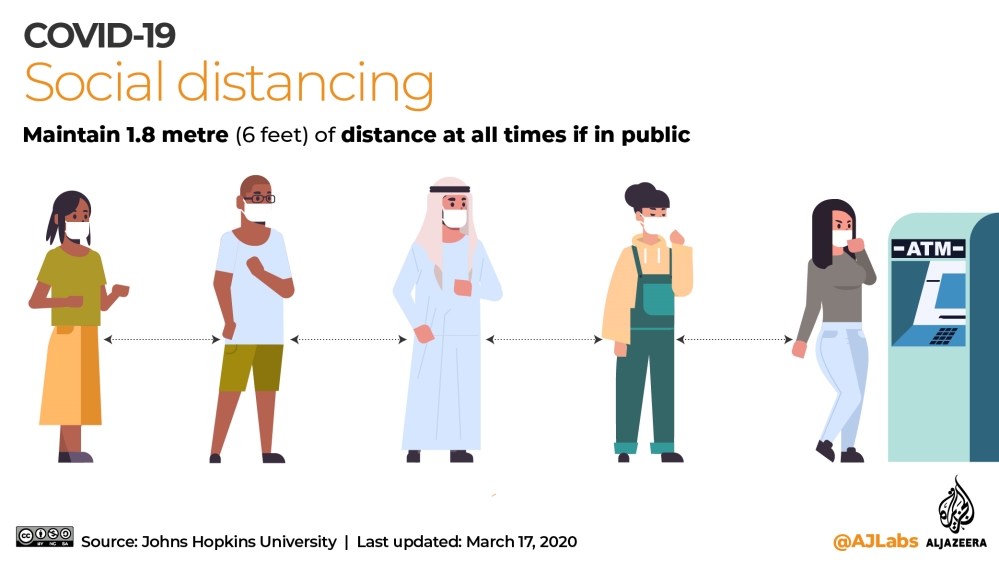
INTERACTIVE: Covid-19 Social distancing

Bahrain – 9,366 cases, 15 deaths

Kazakhstan – 9,304 cases, 37 deaths

Czech Republic – 9,069 cases, 317 deaths

Algeria – 8,857 cases, 623 deaths

Norway – 8,391 cases, 235 deaths

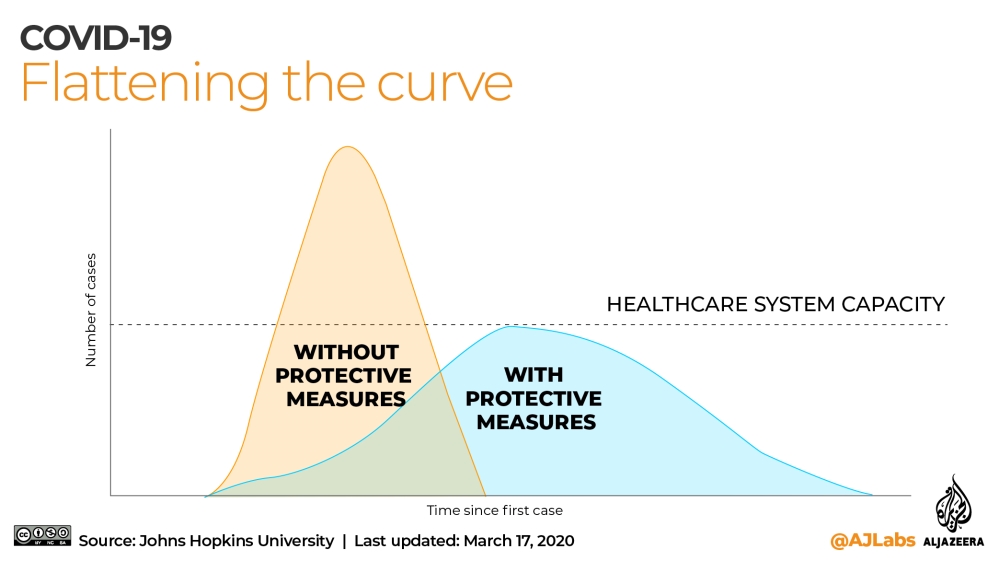
INTERACTIVE: Covid-19 Flattening the curve

Oman – 8,373 cases, 39 deaths

Nigeria – 8,344 cases, 249 deaths

Armenia – 7,774 cases, 98 deaths

Malaysia – 7,619 cases, 115 deaths 

Morocco – 7,601 cases, 202 deaths

Moldova – 7,537 cases, 274 deaths 

Australia – 7,139 cases, 103 deaths

Bolivia – 7,136 cases, 274 deaths

Ghana – 7,117 cases, 34 deaths

Finland – 6,692 cases, 312 deaths 

Cameroon – 5,436 cases, 175 deaths

Iraq – 5,135 cases, 175 deaths

Azerbaijan – 4,568 cases, 54 deaths

Honduras – 4,401 cases, 188 deaths

Sudan – 4,146 cases, 184 deaths 

Luxembourg – 4,401 cases, 110 deaths

Guatemala – 3,954 cases, 63 deaths

Hungary – 3,793 cases, 505 deaths

Tajikistan – 3,424 cases, 47 deaths

Uzbekistan – 3,353 cases, 14 deaths

Guinea – 3,275 cases, 20 deaths

Senegal – 3,253 cases, 38 deaths 

Thailand – 3,054 cases, 57 deaths

Greece – 2,892 cases, 173 deaths

Democratic Republic of the Congo – 2,546 cases, 68 deaths

Ivory Coast – 2,477 cases, 30 deaths 

Djibouti – 2,468 cases, 14 deaths 

Bulgaria – 2,460 cases, 133 deaths

Bosnia and Herzegovina – 2,416 cases, 149 deaths

Croatia – 2,244 cases, 101 deaths

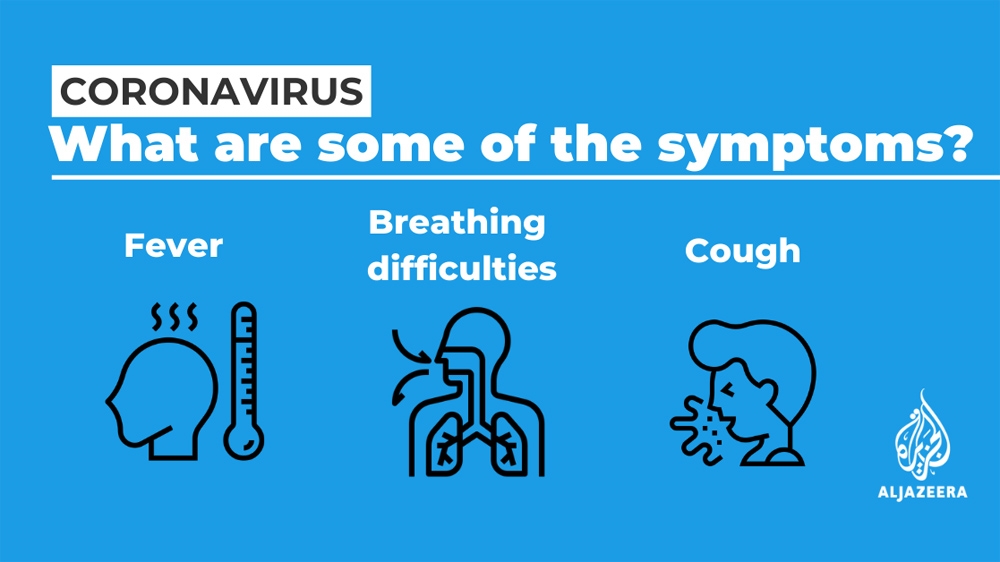
Coronavirus symptoms

Gabon – 2,238 cases, 14 deaths

El Salvador – 2,109 cases, 37 deaths

North Macedonia – 2,014 cases, 119 deaths

Cuba – 1,963 cases, 82 deaths

Estonia – 1,840 cases, 66 deaths 

Iceland – 1,804 cases, 10 deaths

Somalia – 1,711 cases, 67 deaths

Lithuania – 1,647 cases, 66 deaths

Kyrgyzstan – 1,520 cases, 16 deaths

Slovakia – 1,515 cases, 28 deaths

New Zealand – 1,504 cases, 21 deaths

Slovenia – 1,469 cases, 108 deaths

Maldives – 1,438 cases, 5 deaths

Kenya – 1,348 cases, 52 deaths 

Sri Lanka – 1,319 cases, 10 deaths

Venezuela – 1,211 cases, 11 deaths

Guinea-Bissau – 1,178 cases, 7 deaths

Haiti – 1,174 cases, 33 deaths 

Lebanon – 1,140 cases, 26 deaths

Mali – 1,077 cases, 70 deaths

Latvia – 1,057 cases, 23 deaths

Tunisia – 1,051 cases, 48 deaths

Albania – 1,050 cases, 33 deaths

Equatorial Guinea – 1,043 cases, 12 deaths 

Kosovo – 1,038 cases, 30 deaths 

Costa Rica – 956 cases, 10 deaths

Niger – 952 cases, 63 deaths

Cyprus – 939 cases, 17 deaths 

Zambia – 920 cases, 7 deaths 

Paraguay – 877 cases, 11 deaths

Burkina Faso – 845 cases, 53 deaths

South Sudan – 806 cases, 8 deaths

Uruguay – 789 cases, 22 deaths

Nepal – 772 cases, 4 deaths

Andorra – 763 cases, 51 deaths

Nicaragua – 759 cases, 35 deaths 

Sierra Leone – 754 cases, 44 deaths 

Georgia – 735 cases, 12 deaths

Jordan – 718 cases, 9 deaths

Ethiopia – 701 cases, 6 deaths 

Chad – 700 cases, 62 deaths

Central African Republic – 671 cases, 1 death 

San Marino – 666 cases, 42 deaths

Malta – 612 cases, 7 deaths

Madagascar – 586 cases, 2 deaths  

Jamaica – 564 cases, 9 deaths

Tanzania – 509 cases, 21 deaths

Republic of the Congo – 487 cases, 16 deaths

Sao Tome and Principe – 441 cases, 12 deaths

Taiwan – 441 cases, 7 deaths 

Occupied Palestinian territories – 434 cases, 3 deaths

Togo – 391 cases, 13 deaths

Cape Verde – 390 cases, 4 deaths 

Rwanda – 339 cases

Mauritius – 334 cases, 10 deaths

Vietnam – 327 cases

Montenegro – 324 cases, 9 deaths

Mauritania – 268 cases, 13 deaths 

Liberia – 266 cases, 26 deaths

Eswatini – 261 cases, 2 deaths

Uganda – 253 cases

Yemen – 249 cases, 49 deaths

Mozambique – 213 cases

Benin – 208 cases, 3 deaths

Myanmar – 206 cases, 6 deaths

Mongolia – 148 cases

Brunei – 141 cases, 2 deaths

Guyana – 139 cases, 11 deaths

Cambodia – 124 cases

Syria – 121 cases, 4 deaths 

Trinidad and Tobago – 116 cases, 8 deaths

Malawi – 101 cases, 4 deaths

Bahamas – 100 cases, 11 deaths

Monaco – 98 cases, 4 deaths

Barbados – 92 cases, 7 deaths

Comoros – 87 cases, 1 death

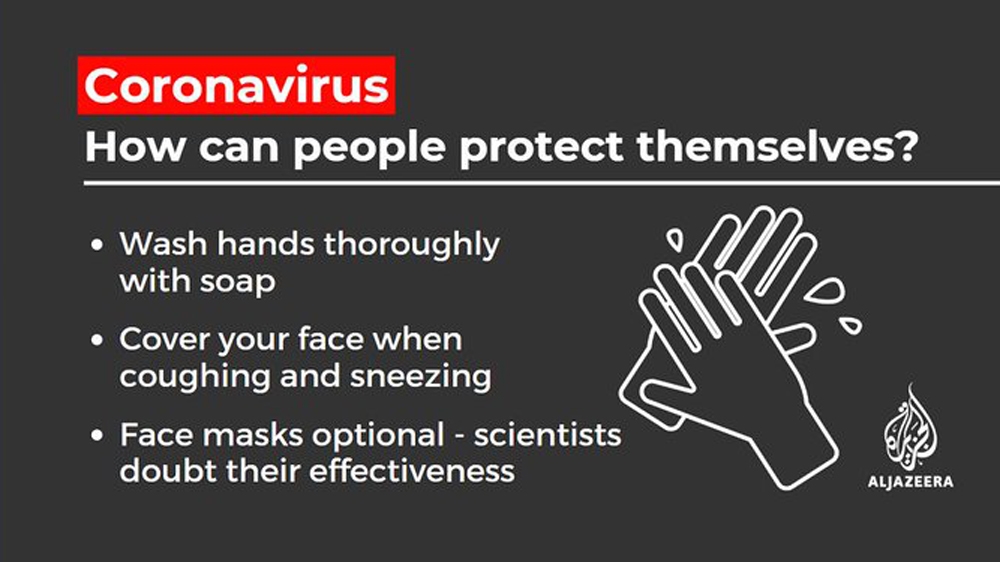
Coronavirus: How can people protect themselves?

Liechtenstein – 82 cases, 1 death

Libya – 77 cases, 3 deaths

Angola – 71 cases, 4 deaths

Zimbabwe – 56 cases, 4 deaths

Burundi – 42 cases, 1 death

Eritrea – 39 cases

Botswana – 35 cases, 1 death

Bhutan – 27 cases

Antigua and Barbuda – 25 cases, 3 deaths

Gambia – 25 cases, 1 death

East Timor – 24 cases

Grenada – 23 cases

Namibia – 22 cases 

Laos – 19 cases

Belize – 18 cases, 2 deaths

Fiji – 18 cases

Saint Lucia – 18 cases

Saint Vincent and the Grenadines – 18 cases

Dominica – 16 cases

Saint Kitts and Nevis – 15 cases

Vatican – 12 cases

Seychelles – 11 cases

Suriname – 11 cases, 1 death

Western Sahara – 9 cases, 1 death

Papua New Guinea – 8 cases

Lesotho – 2 cases


SOURCE:
Al Jazeera and news agencies

Source link

Merkel: No budget deal in June, but must come by fall

0

Chancellor cautions she expects ‘difficult’ negotiations ahead.

EU leaders won’t reach a compromise on the next seven-year budget and the economic recovery fund at their next summit in June but should get a deal before the fall, Angela Merkel said today.

The German chancellor told reporters that last week’s Franco-German proposal “provided a good building block” for the €750 billion recovery fund that European Commission President Ursula von der Leyen proposed Wednesday, alongside a new proposal for the EU’s Multiannual Financial Framework.

Yet Merkel cautioned that she expects “difficult” negotiations ahead, which “will not be concluded at the next European Council” on June 19.

A similar message came from Paris, where a French official today told reporters that the Elysée palace does not think that June “will be the meeting where we reach an agreement.”

“We’ll need a dedicated meeting in person at the beginning of July to have a budgetary agreement, postponing till September would be too late and would not send the right political signal,” the French official said.

Merkel echoed that remark, telling reporters that EU leaders must find a compromise before fall to give national parliaments and the European Parliament “enough time” to discuss and ratify the proposed mechanisms so that they can enter into force on January 1, 2021.

The chancellor added that it was important for her that money paid via the fund “serves the recovery and future [of EU countries]” and that there are checks on spending.


Source by [author_name]

George Floyd was ‘very loving’ and a ‘gentle giant,’ friends and family say

Those who knew George Floyd, the man who died after a Minneapolis police officer pinned Floyd’s neck under his knee for more than 8 minutes, say he was a “gentle giant” who was quick to help and easy to adore.

“If you got a chance to know him, you would have loved him,” said Floyd’s brother Rodney on MSNBC Wednesday. “You can’t name someone that never had a great experience around him.”

Rodney Floyd added that his brother was “very loving” and “trusting.”

Floyd, 46, a former high school football and basketball star, would coach kids in his spare time, Rodney Floyd said.

Floyd also loved to rap, his brother said. Christian hip hop artists who knew Floyd took to Twitter after his death to share stories about him ministering to his community.

“He’d help us when we had church at the basketball court in the middle of the hood,” wrote musician Corey Paul on Twitter. “When we did community outreach in the hood he was a ‘person of peace.’ He wanted to see us come together as a people.”

An artist who goes by Reconcile on Twitter said Floyd had once helped him drag a pool to a basketball court in the projects “so we could baptize dudes in the hood.”

“The man that helped put down & clean up chairs at outreaches in the hood. A man of peace! A good man,” the musician wrote.

“I mean, he had a great understanding of life and [he was a] great people person — walk in a room and absorb the whole room,” Floyd said. “He was an all-around man, and good to his family, kids, mother, brothers, friends. He would help anyone who needed help.”

Jessi Zendejas can attest. She wrote on Facebook Tuesday that Floyd, who was a security guard at Conga Latin Bistro, would watch after her when she went to the Minneapolis restaurant and dance club. He would make sure no one got too close without her say so and would keep her jacket in his closet when she forget cash for the bar’s coat check.

George Floyd.Courtesy photo

“Everyone who knows him knew he loved his hugs from his regulars when working as a security guard and would be mad if you didn’t stop to greet him because he honestly loved seeing everyone and watching everyone have fun,” Zendejas wrote, adding that Floyd was a “gentle giant.”

Floyd’s other brother, Phil, also called him a “gentle giant” on CNN Tuesday night.

“I love my brother. Everybody loves my brother. Knowing my brother is to love my brother,” Phil Floyd said. “He was a very loving person. And he didn’t deserve what happened to him.”

Video of the Monday night incident showed a white police officer with his knee on Floyd’s neck as Floyd pleaded, “Please, please, please, I can’t breathe.”

Bystanders begged the officer to remove his knee, before and after Floyd became silent. The officer did not move for at least eight minutes, at which point paramedics carried Floyd away. He was later pronounced dead.

Minneapolis police said in a statement early Tuesday that the officers were responding to a report of a forgery when Floyd “physically resisted” and that he died after “suffering medical distress.”

Civil rights attorney Benjamin Crump, who is representing Floyd’s family, said he has received further footage from security cameras and bystanders, “and it doesn’t seem like he was posing a threat to police officers.”

The Minnesota Bureau of Criminal Apprehension and the FBI are both independently investigating Floyd’s death.

The four officers involved in the incident were fired Tuesday night, but Floyd’s family is calling for them to be arrested and charged with murder. Minneapolis Mayor Jacob Frey on Wednesday called for swift charges to be brought against the officer who pinned Floyd to the ground, and kept him there with his knee.

Rodney Floyd said he saw the video of his brother being pinned to the ground early on Tuesday morning. He said he both immediately knew it was his brother and couldn’t believe what he was seeing. “That’s not him,” he thought “I know he’s not no violent person like that, you know. And, I mean, it just, it just took me.”

Jovanni Thunstrom, the owner of Conga Latin Bistro, said when he realized the man in the harrowing video he woke up to was his employee and his friend, he sobbed.

“My body is full of emotions, of questions without answer,” Thunstrom wrote on Facebook. “My employee George Floyd was murdered by a police officer that had no compassion, used his position to commit a murder of someone that was begging for his life.”

Floyd’s sister, Bridgett Floyd, says that the faith she shared with her brother leads her to believe justice will be done.

“Faith is something that me and my brother always talked about because he was a God-fearing man, regardless of what he does,” she said Wednesday in an interview with “TODAY.” “We all have our faults. We all make mistakes. Nobody’s perfect. But I believe that justice will be served. I have enough faith to stand on it.”


Source link