Friday, April 24, 2026

Man’s body found in Victorian bushland during search for missing person

The remains of a man have been found in bushland in southeastern Victoria during a search for a missing person.

Police on Sunday confirmed the human remains found in the Moondarra area on Saturday afternoon were those of a man, who is yet to be identified.

The cause of death is under investigation.

“The remains were found during a search by Missing Persons Squad detectives as part of a current active investigation,” police said in a statement.

“As the investigation is ongoing, it would be inappropriate to provide further comment at this stage.”

Source by [author_name]

Johnson resisting calls to sack top aide

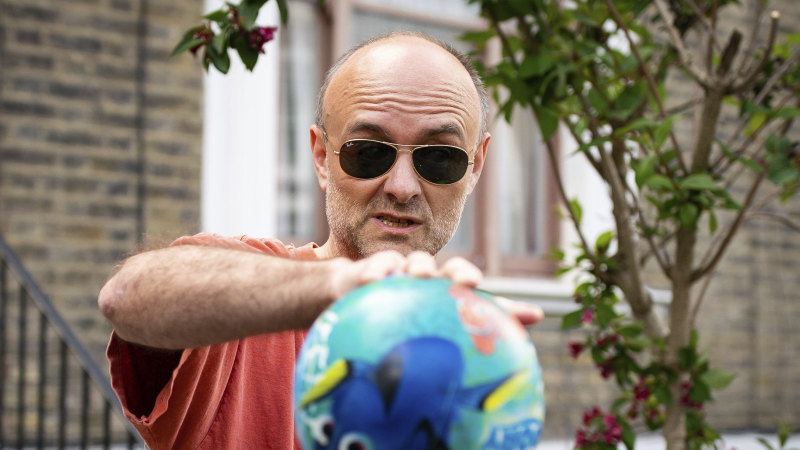
A fierce row over the actions of Boris Johnson’s top aide continues as Dominic Cummings faces more allegations that he broke the UK’s strict lockdown rules.

The British prime minister is under renewed pressure to sack Cummings after reports surfaced that the 48-year-old made a second 400km trip from London to County Durham, where his family lives, despite social restrictions.

The PM pledged his “full support” on Saturday to his under-fire chief adviser, who it emerged had travelled the 400km in March to self-isolate with his family while official guidelines warned against long-distance journeys.

According to the Sunday Times, Johnson told allies he would not throw Cummings “to the dogs” following reports he made the journey to ensure his four-year-old child could be looked after as he and his wife were ill.

But according to reports in the Observer and Sunday Mirror, Cummings, who masterminded the 2016 Brexit referendum, made a second trip to Durham and was seen there on April 19 – five days after being photographed on his return to Westminster.

A second eyewitness told the two papers they saw him a week earlier in Barnard Castle on Easter Sunday, a popular tourist location 50km away from Durham, during the period he was believed to be self-isolating.

Downing Street has said it would “not waste time” replying to the fresh allegations from “campaigning newspapers”.

In a statement on Saturday morning, the PM’s office said Cummings had travelled to be close to family to seek help looking after his four-year-old child after his wife became ill with coronavirus symptoms – a virus which has killed more than 45,000 people in the UK.

Speaking at a press conference, Transport Secretary Grant Shapps said Cummings had “stayed put for 14 days” while residing at a family property, having pre-empted his own illness once his wife showed Covid-19 symptoms.

But the trip to Barnard Castle on April 12, if correct, would call that testimony into question after a local man said he saw Cummings and his family walking by the River Tees near the town.

The claims prompted fury among MPs, and Ian Blackford, SNP Westminster leader, renewed his calls for the PM to axe Cummings from his team.

He wrote on Twitter: “It is clear that Boris Johnson must sack Dominic Cummings.

“When the PM’s top adviser ignores the Government’s instruction to the public not to engage in non-essential travel he has to leave office. Immediately.”

Source by [author_name]

Nurse Who Survived COVID-19 Shares Jaw-Dropping Photo Of What It Did To His Body

A nurse from San Francisco is shining a light on the severity of COVID-19 with a shocking photo of the effects it had on his body.

Last week, Mike Schultz shared side-by-side images of himself with his over 40,000 Instagram followers of the dramatic 50-pound weight loss he experienced during an eight-week hospital stay as he was treated for the disease caused by the new coronavirus.

The 43-year-old told Health that in the photo on the left, he’s about 190 pounds. He added that he exercised every day and had no underlying health conditions.

“I weighed myself the other day and I’m down to 140 pounds, and I probably weighed less than that when I first got into rehabilitation,” he told the magazine. “I’ve never been this skinny before in my life.”

Schultz explained to Buzzfeed News the reason he decided to post his now-viral photos. “I wanted to show it can happen to anyone. It doesn’t matter if you’re young or old, have pre-existing conditions or not. It can affect you,” he said.

Schultz told CNN that he contracted the coronavirus in early March, “before any of the restrictions were out” and likely got it while attending Miami’s Winter Music Festival. His DJ boyfriend, Josh Hebblethwaite,was working at the event.

“We knew it was out there,” Schultz told Buzzfeed, noting that no “lockdowns” had been ordered at this point. “We just thought, ‘Well, we gotta wash our hands more and be wary of touching our face.’”

The Miami Herald reported that 38 people who attended the LGBTQ-friendly music festival later got sick, and three men died, 

On March 14, about a week after the festival, Schultz flew to Boston, where Hebblethwaite lives.

He told CNN that when he first arrived in Boston, he had a cough but “it wasn’t really a big deal.” But on March 17, he found himself with a fever of 103 degrees and was having difficulty breathing.

When Schultz arrived at the hospital, he was given a swab test and chest X-rays. He tested positive for the coronavirus and was also diagnosed with pneumonia and severe repertory distress syndrome, per CNN.

Soon after, he was intubated and placed on a ventilator to aid his breathing.

“That was the last time I saw my boyfriend,” Schultz told Health. “I texted him, ‘I’m scared.’ Soon after, I was sedated, and I don’t remember much after that.”

He was on the ventilator for four-and-a-half weeks, according to CNN. He told Buzzfeed that during this time it was like he was “in a coma.”

Schultz said that when he woke up from his ordeal, he believed only a week had passed. “I still had a tracheostomy [tube], I couldn’t talk, and my hands were so weak that my phone felt like it was 100 pounds,” he told Health.

He also noticed he had lost weight, but nothing could prepare him for what happened when he finally saw himself in the mirror. “I didn’t even recognize myself,” he told CNN. “I pretty much cried when I looked in the mirror, I was like ‘Oh my God.’”

Schultz is now slowly recovering.

“I’m doing breathing exercises to get my lung capacity up, and plenty of exercises to stabilize my legs so I can finally walk without doing a penguin shuffle,” he joked to Health.

A HuffPost Guide To Coronavirus


Source by [author_name]

White House Press Secretary Goofs Up, Broadcasts Trump’s Banking Details

Oops. White House Press Secretary Kayleigh McEnany on Friday inadvertently revealed President Donald Trump’s banking details to a massive audience as she showed off a check he had written.

Trump’s bank account and routing number were visible on the paperwork McEnany displayed to the media at a press briefing, The New York Times noticed.

The information could typically be exploited to hack into an account. But the president’s account would likely have high-level protections to ward off theft.

The $100,000 check signed by Trump and written on a Capital One account, which looked like the real thing, had bank details attached. It was made out to the Department of Health and Human Services to help “support the efforts being undertaken to confront, contain and combat the coronavirus,” McEnany explained at the press conference.

It was part of Trump’s vow to contribute his $400,000 annual salary as president. He makes out a check quarterly. His last quarterly check was also to HHS. A copy of that check alone — without the accompanying paperwork McEnany revealed Friday — was tweeted back in March.

Trump has written other checks donating his salary to the Small Business Administration, the Department of Transportation, Homeland Security, Veterans Affairs, the Office of the Surgeon General and to the National Institute on Alcohol Abuse and Alcoholism, among other recipients.

A source told the Times that Trump’s contribution checks shown off at press briefings are never fake.

White House spokesperson Judd Deere slammed the media’s twisted attention to the check. “Leave it to the media to find a shameful reason not to simply report the facts, focusing instead on whether the check is real or not,” Deere said in a statement to the Times.

Trump vowed during his campaign that he would donate his salary each year. Critics have accused him of collecting far more from customers of his private businesses who spend large amounts to curry favor with Trump and to win favorable federal treatment or contracts. U.S. taxpayers have also been stuck with the price tag for Trump’s frequent trips to his private golf resorts that serve to publicize those operations. As of February, Trump’s golf trips cost the public $133.8 million, the equivalent of 334 years of his salary, according to an analysis by HuffPost.


Source by [author_name]

I’m An Adult Who Is Constantly Mistaken For A 12-Year-Old. This Is What My Life Is Like.

I was at the airport, waiting for a TSA full-body scan, when the woman managing the line asked me, “Are you old enough to go in the scanner?”

I stared at her face and wished I had the luxury to be surprised by her question. I was 30 years old. Full-body scans are a requirement for everyone once they’ve turned 12.

I have always been small compared to my peers. As a child, I was consistently one of the shortest in my class, lagging behind the others when we ran laps in gym. I would get asked if I was one or two years younger than my age, which irritated me but only to a point. On good days, I’d imagine myself as Cinderella due to my uncommonly small shoe size.

Once I became older, the perceived gap increased dramatically. My friends filled out while I remained spindly. I was given the freshman nickname “Itty-Bitty,” and people began calling me “tiny” as a matter of course.

As far as I know, I have no growth hormone deficiency or underlying condition other than being petite. But, I do have a confluence of genetic markers that signal youth: a round face, slight bone structure, minimal chest definition, and wide eyes. These are all features I can’t change. I also have relatives on both sides who hover around the 5-foot mark. My mother, too, is narrow in frame, and early in her marriage she was often mistaken for my father’s daughter.

Getting IDed is a matter of course for me: “That’s really your age? Are you sure? Hahaha, you must get IDed all the time!” I’ve taken the advice of loved ones ― and nosy strangers ― and tried responding to comments like these with humor, but the people asking the questions have merely looked confused. I have attempted to improve my confidence and posture with little effect; it’s hard to stand tall when I have to look up to speak to everyone, no matter how straight my spine.

“You’re so lucky,” people tell me as they roll their eyes jealously whenever I mention getting IDed or mistaken for a preteen. I want to tell them that they’d change their minds if they were the ones who had heard infantilizing remarks for over three decades. Would they enjoy repeatedly being mistaken for a date’s child or asked if they were old enough to sit in an airplane’s exit row? (At least the minimum age for that is 15.)

“’You’re so lucky,’ people tell me as they roll their eyes jealously whenever I mention getting IDed or mistaken for a preteen. I want to tell them that they’d change their minds if they were the ones who had heard infantilizing remarks for over three decades.”

While pursuing my master’s degree, I went to my brother’s Christmas concert. He’s over six feet tall and five years my junior; my family moved to a new town when I started university, so his teachers didn’t know me. “Are you starting junior high next year?” they asked when they were introduced to his “little” sister. Situations like that one make me want to ask people who insist that a youthful appearance is a gift: Would you appreciate having your educational efforts and experience reduced or erased with a glance? Maybe they would ― but I’m sick of it.

Every year, it feels more embarrassing to go out in public. My shoulders tense in anticipation of the next remark someone might make. I have grown to divide the world into spaces of competence ― the ones where I am known and respected, and public encounters, where people see only my body and where a comment or misperception could occur at any time.

Work falls into the former category for me now. In earlier years, as a camp counselor, teacher, or professor, the pitfalls of public life were present at my job. I would often hear, “How old are you?” or “Are you a student?” I started shoehorning in phrases marking my age whenever I could. My current editorial position affords me some peace. Professionals respond to my emails like any colleague’s, and I am grateful they can’t see my face.

I first dated in earnest via websites that prominently list a user’s age, thereby avoiding misperceptions of me from the get-go, and I have met every one of my partners online. My written eloquence has garnered me much of my professional and romantic success, but words desert me when yet another stranger assumes that I’m too young to interpret a question about my age to be rude. White hairs peek from my temples and pepper my eyebrows, but no one notices; people are too distracted by my body’s small scale to see the details.

Adulthood has brought another unwelcome factor for me: body shaming. This is something I share with other women, even though I don’t look like most of them. I’ve been accused of having an eating disorder and my clothing has snidely been referred to as “doll clothes.” Others refuse to believe that I hear the things I hear, or tell me these comments shouldn’t bother me because “of course you look 12.”

I may look young, but I’m old enough to recognize that these comments are neither helpful nor constructive. Many of us are culturally conditioned to feel insecure about our bodies. That’s no excuse to make derogatory comments about how other people look. Sometimes I look in the mirror and have trouble taking myself seriously or connecting the voice inside my head with the elfin creature looking back at me.

From a physical accessibility standpoint, it’s uncomfortable to move through a world where my clothing choices are limited to a fraction of stores and my legs dangle above the floor in most seats. Despite insecurities and challenges, however, I don’t believe my body is inherently wrong. If I could change how the public responded, I would be happier in my skin. I suspect this is true for many others as well.

I’ve shed more tears over my “first world problem” than I’d like to admit. Conversely, I understand that my size affords certain privileges. I am virtually immune to catcalls and some manifestations of sexism (comments like, “When are you going to have children? Your biological clock must be ticking!”), and I do not tend to get sexualized unless I make the first move. I am fortunate not to deal with fat shaming or worrying that I might be too big to fit anywhere or for anything. I have an easier time weaving my way through a crowd than most people.

“While many of my peers can get away with wearing a hoodie, it turns me into a juvenile hobbit. I’d love to be able to dress comfortably and remain free from judgment, but I celebrate the little things, like when a guide on an architecture tour I took last year called me a ‘lady.’”

Fortunately, I have found a few hacks to help mitigate mistaken public perceptions. Dressing in business clothes while traveling, wearing massive platform heels when an occasion permits, relying on tailored items, darker colors, bold lipstick, and keeping my hair short have all, at least on occasion, seemed to silence questions. But if I drop one of these shields, I find they resume. While many of my peers can get away with wearing a hoodie, it turns me into a juvenile hobbit. I’d love to be able to dress comfortably and remain free from judgment, but I celebrate the little things, like when a guide on an architecture tour I took last year called me a “lady.”

Since I moved from Canada to the U.S. before finally landing in the U.K., the comments have diminished. Brits seem to feel less entitled to comment on strangers’ bodies, or maybe they’re simply less preoccupied with them.

The COVID-19 pandemic has also intensified my sense of public peace. Social life has moved online, where nobody pops up and asks my age, and when I am out in the world, customer service people are more concerned with safety than small talk. It seems in a world where anyone might be capable of infecting someone else, public remarks on each other’s bodies have dwindled for a time. Ironically, while a respiratory illness floats around the globe, I breathe more easily. My physical concerns are focused on sanitation, eating well, and exercising ― keeping myself healthy in the ways that I can.

As devastating as the coronavirus has been, I hope that perhaps the changes in public etiquette that I have experienced will continue into the future — that maybe the temporary habit of staying six feet apart from one another will lessen people’s tendencies to judge each other to their face. Our bodies are going through a lot right now, and I am seeing signs that we are beginning to realize just how interconnected we are and how dependent our welfare is on each other.

Those of us who live through the pandemic will share a legacy of both embodied stress and resilience, and the image we see in the mirror seems trivial in comparison to that. Hopefully, we can learn from this unprecedented time and the challenges it has brought, and as we continue to press forward and face whatever uncertainties lie ahead, maybe we’ll recognize that how we look pales in comparison to what we do and how we treat each other.

Melanie Bell is a writer, editor, and co-author of “The Modern Enneagram.” She holds an MA in creative writing from Concordia University and has written for several publications, including Cicada, xoJane, Autostraddle, and Every Day Fiction. Connect with her at InspireEnvisioning.com or on Twitter, Facebook, or Instagram.

Do you have a compelling personal story you’d like to see published on HuffPost? Find out what we’re looking for here and send us a pitch!


Source by [author_name]

Trump Plays Golf As Coronavirus Death Toll Nears 100,000 In US

President Donald Trump played golf Saturday for the first time since he declared the coronavirus pandemic a national emergency more than two months ago, leading to the shutdown of much of American society. His return to the course was the latest sign that he wants the country back to pre-outbreak times, even as the US death toll from the virus nears 100,000, twice what he once predicted it would be.

Trump also planned Memorial Day visits to Arlington National Cemetery and the Fort McHenry national monument in Baltimore, followed by a trip to Florida’s coast on Wednesday to watch to US astronauts blast into orbit.

The golf outing came a day after Trump said houses of worship are “essential” and he demanded that governors allow them to reopen during the holiday weekend. It also followed guidance from Dr Deborah Birx, the White House coronavirus task force coordinator, that it was OK for people to be outdoors this weekend as long as they took appropriate safety precautions.

Trump pulled away from the White House on a sunny morning wearing a white polo shirt, white cap and dark slacks. Photographs that appeared later on Twitter showed him swinging a golf club and driving alone in a cart on the course at his private Trump National Golf Club in Sterling, Virginia.

The White House had no comment on the president’s activities at the club, but said he had discussed the pandemic’s effect on the global economy with Turkish President Recep Tayyip Erdogan on Saturday.

The golf trip was the president’s first visit to one of his money-making properties since March 8, when he visited his private golf club in West Palm Beach during a weekend at his Florida home. The World Health Organization declared the coronavirus a global pandemic on March 11, and Trump followed with the national emergency declaration two days later.

Trump is an avid golfer who has been overheard telling his White House guests how much he missed playing the game.

On Friday, Birx said it’s OK for Americans to play golf, tennis or other sports this weekend “if you stay 6 feet (1.8 meters) apart.” She also said the Washington metropolitan area had the highest positivity rate in the country. The capital city’s coronavirus death rate is higher than all but four states: New York, New Jersey, Massachusetts and Connecticut.

The U.S. leads the world with a reported 1.6 million coronavirus cases and more than 96,000 deaths, according to a tally by Johns Hopkins University.

Trump has ordered U.S. flags on federal buildings and national monuments to half-staff through Sunday in memory of Americans lost to COVID-19, the disease caused by the coronavirus.

Trump levied frequent criticism of Barack Obama’s regular golf outings when he was president.

“Can you believe that with all of the problems and difficulties facing the U.S., President Obama spent the day playing golf. Worse than Carter,” Trump tweeted in October 2014 during the Ebola epidemic in West Africa, comparing Obama to former President Jimmy Carter.

A HuffPost Guide To Coronavirus


Source by [author_name]

Coronavirus updates LIVE: UK government defends controversial aide to Boris Johnson over lockdown breach; Australian death toll stands at 102

Is a post-COVID-19 world going to be vastly different to the one that preceded it? As the initial pandemic panic recedes, and Australia begins to ease restrictions, a better picture is starting to emerge of life on the other side. And while it certainly is a new normal, it is not so radically different from the old.

People’s work lives are a good example. Anyone who can work from home is probably still bunkered down in a spare room or hunched over the dining table, a scenario that some are keen to continue. But the push for more-flexible working arrangements is hardly new ground. While the widespread adoption of hot desking had its share of critics, it was a radical shift towards giving office workers the technology and support to work more flexibly. The pandemic has given that transition a very big push along.

People’s consumer habits have followed a similar pattern. While the move to a cashless society and online shopping has been in train for many years, it is being turbocharged by the pandemic.

On the political front, Prime Minister Scott Morrison has made a call out for new ideas to bolster economic reform, helping lift Australia out of its pandemic-induced slump. It’s a commendable step in the right direction. But it’s also long overdue.

Read more here.

Source by [author_name]

Coronavirus live updates: Beach chaos threatens Europe

Italy has recorded 119 new deaths from the COVID-19 epidemic against 130 the day before, the Civil Protection Agency says, while the daily tally of new cases rose marginally to 669 from 652 on the prior day.

The total death toll since the outbreak came to light on February 21 now stands at 32,735, the agency said on Saturday (local time), the third highest in the world after those of the United States and Britain.

People enjoy sitting in a park in central Milan, northern Italy, during the first weekend after a two-month lockdown. (AAP)

The Civil Protection Agency said the total number of confirmed cases in Italy since the start of its outbreak now amounts to 229,327, the sixth highest global tally behind those of the United States, Russia, Spain, Britain and Brazil.

People registered as currently carrying the illness dipped to 57,752 on Saturday from 59,322 the day before.

Source by [author_name]

Fire Breaks Out On San Francisco’s Historic Fisherman’s Wharf

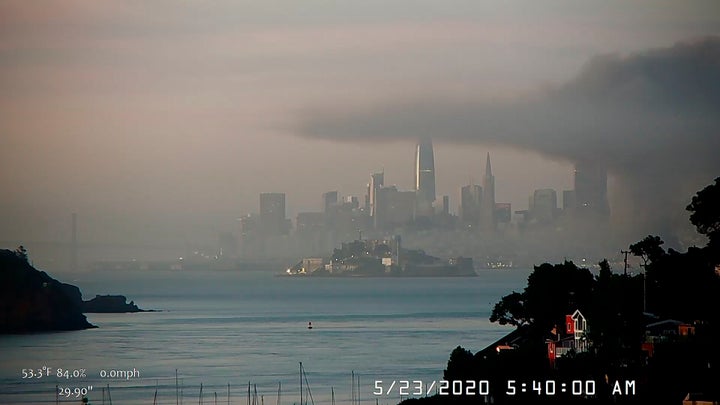
SAN FRANCISCO (AP) — A fire engulfed a warehouse on San Francisco’s Fisherman’s Wharf early Saturday, sending a thick plume of smoke over the waterfront and threatening to spread to a historic World War II-era ship before firefighters brought the flames under control.

One firefighter sustained a hand injury while battling the fire at the warehouse the size of a football field on Pier 45, San Francisco Fire Lt. Jonathan Baxter said.


First responders battle a massive fire that erupted at a warehouse early Saturday, May 23, 2020 in San Francisco.

Baxter said after the fire subsided, investigators scoured the building to determine whether homeless people were inside.

“That is something of grave concern, that is why we’re actively trying to confirm if anybody saw anybody in this building,” he told KGO-TV.

“To our knowledge … nobody is supposed to be in the building and we are hoping … that there is no victim,” he said.

However, at least two workers told the San Francisco Chronicle they were inside the fish processing and storage warehouse when the fire broke out before dawn.

Alejandro Arellano, who works for La Rocca Seafood, was cleaning out a fish storage locker when the fire began, shortly after 4 a.m..

“I saw a lot of smoke. A few minutes later, fire everywhere,” he said. “It was very, very scary. I’ve never seen anything like it.”

The fire tore through the warehouse near the end of the concrete pier, causing its walls to collapse, Baxter said. The flames singed the first fire truck to respond to the scene, forcing firefighters to turn their hoses on the vehicle to save it, he said.

This photo provided by National Weather Service San Francisco Bay Area, smoky conditions linger after a fire broke out before


This photo provided by National Weather Service San Francisco Bay Area, smoky conditions linger after a fire broke out before dawn on San Francisco’s Fisherman’s Wharf and destroyed a warehouse, Saturday, May 23, 2020 in San Francisco.

More than 130 firefighters fought the flames, with some using ladder trucks to drench the warehouse from above. A fire boat was used to protect the SS Jeremiah O’Brien, a liberty ship that stormed Normandy on D-Day in 1944.

“Our firefighters absolutely saved the SS Jeremiah O’Brien during this fire as flames were pinching on the side of this vessel,” Baxter said.

The ship docks by Pier 45 and is among numerous tourist attractions on the wharf, a maritime hub for cruises around San Francisco Bay as well as fishing boats hauling in the catch of the day. Visitors come for the Dungeness crabs, clam chowders served in sourdough bread bowls, the sea lions that hang out on the floating docks and shops and curiosities on Pier 39.

Shops and restaurants on the wharf have been shut by the city’s stay-at-home order to slow the spread of the coronavirus and were expected to reopen on May 31.

The fire was confined to the end of the pier, well away from the Musée Mécanique and its historic arcade games and the popular restaurant Alioto’s.

Fishing companies that have been operating out of Pier 45 said the fire exacerbated an already tough business climate caused by the pandemic.

Kenny Belov, owner of the seafood wholesaler TwoXSea, told the Chronicle his building near the warehouse was not damaged but he worried a power outage on the pier could ruin the fish in his freezer.

“Not that it would ever need this, but the seafood industry didn’t need this now,” Belov said. “It’s surreal. We’ve obviously had a tough go the last couple months, with restaurants (closed). … Of all the problems in the world, this is not a big one. But it’s frustrating.”

Coast Guard crew members and police assisted by keeping other vessels away from the pier.

Fire investigators were assessing any damage to the pier and were looking into the cause of the blaze, Baxter said.


Source by [author_name]

National Review Denounces QAnon-Supporting GOP Senate Nominee

Conservative publication the National Review took the rare step of denouncing a GOP Senate candidate over her belief in the QAnon conspiracy theory.

Jo Rae Perkins, Oregon’s Republican nominee in this year’s Senate race, should be “shunned and repudiated” for her belief in a dangerous, baseless conspiracy theory, the publication said in an editorial Saturday.

“Perkins is an unreconstructed exponent of a batty and corrosive conspiracy theory running a longshot campaign that carries only political downside for Republicans,” the editorial reads. “They should do what they can to distance themselves from her candidacy.”

The QAnon theory, which began in 2017, posits that President Donald Trump is involved in stopping a pedophile network of Satan-worshipping cannibals who have infiltrated every level of government and the mass media. Believers follow “Q” an anonymous person who claims to be in a high-level government position and who leaves vague clues about supposed future mass arrests that never happen.

That hasn’t stopped Q’s legion of followers from falling down countless absurd rabbit holes that have also led to dangerous real-world consequences. And when Perkins won her primary by a landslide, she came out in full support of the extremist group.

“I stand with Q and the team,” she said in a Twitter video. “Thank you, Anons, and thank you, patriots. And together, we can save our republic.”

Her campaign retracted Perkins’ endorsement of QAnon on Wednesday, and Perkins said in a new video she “would never describe herself as a follower.”

A day later, Perkins went against her own campaign, telling ABC News she was “literally physically in tears” at having to read the statement.

“My campaign is gonna kill me,” Perkins told the outlet. “How do I say this? Some people think that I follow Q like I follow Jesus. Q is the information and I stand with the information resource.”

Now, the National Review is calling for Republicans to denounce the conspiracy theorist. More from the editorial:

QAnon is a story of exploitation, in which some digitally literate person (or group of people) strings along the gullible with a fanciful story, inviting them to work together to decode clues and discuss lore. It is also a story of radicalization, in which skepticism about the Mueller investigation or distrust of political institutions mutates into a fantasy world in which the American elite is full of Jeffrey Epsteins. We don’t know whether Perkins is a cynic or a true believer, but whatever the case, she should be shunned and repudiated.

Perkins’ campaign did not respond to repeated requests for comment.


Source by [author_name]