Friday, April 24, 2026

Sanders Campaign Asks Delegates To Sign Pledge They Won’t Openly Attack Biden

Sen. Bernie Sanders suspended his bid for the White House last month, effectively ceding the Democratic nomination to former Vice President Joe Biden. But not before the Vermont progressive won hundreds of delegates around the nation.

Now, Sanders’ presidential campaign is asking those delegates to sign a social media policy and code of conduct agreement ahead of the party’s convention later this summer in an attempt to minimize party infighting or online attacks against Biden akin to the rampant mudslinging by supporters in 2016.

The Washington Post first reported that the Sanders campaign sent out the 5-page agreements that threaten delegates can be removed the delegation should they violate any provisions. The campaign also asks signatories to “refrain from making “negative statements about other candidates, party leaders, Campaigns, Campaign staffers, supporters, news organizations or journalists.”

“Before tweeting or posting from your personal social media accounts, ask yourself these questions: If this appeared on the front page of The New York Times, would it compromise Bernie Sanders’s message, credibility, or reputation?” the social media policy reads in part. 

It continues: “This Campaign is about the issues and finding solutions to America’s problems. Our job is to differentiate the senator from his opponents on the issues — not through personal attacks.”

While the Post reported the agreement angered some delegates, Sanders’ campaign said those individuals were representative of the senator and had a “serious responsibility” going into the Democratic National Convention, set to take place in some form in August (organizers are still looking at how to do so amid the ongoing coronavirus pandemic).

“When delegates attend the Democratic convention, they will be representing Sen. Sanders, the ideas he ran on and the millions of working people who supported his campaign,” Mike Casca, Sanders’ campaign spokesman, told HuffPost in a statement. “That is a serious responsibility and we’re asking them to follow a basic code of conduct while carrying out that duty.”


“This Campaign is about the issues and finding solutions to America’s problems,” the document reads. 

The pledge is largely seen as an effort to avoid a repeat of 2016. At the time, Sanders asked his supporters to throw their weight behind then-presumptive Democratic nominee Hillary Clinton shortly before the convention began, but many delegates booed her during the event and refused to support her candidacy.

Sanders has endorsed Biden’s effort to unseat President Donald Trump in November, a move the former veep said meant “a great deal to me.” Sanders is also still on the ballot in some states, including during the primary in New York, where he’s hoping to win enough delegates to have a stronger voice as the party decides on its platform and rules.

“I’m asking every Democrat, I’m asking every independent, I’m asking a lot of Republicans, to come together in this campaign to support your candidacy, which I endorse,” Sanders said last month.

The pair are reportedly closer than Sanders and Clinton were in 2016, and the Vermont lawmaker said recently he hoped his supporters would “understand and do understand that Donald Trump is the most dangerous president in the modern history of this country.”

“I think, at the end of the day,” Sanders said on ABC, “they will be voting for Joe Biden.”


Source by [author_name]

Former White House Butler Who Served 11 Presidents Dies Of Coronavirus

A former White House employee who worked with 11 presidents ― from Dwight Eisenhower to Barack Obama ― died at the weekend aged 91 after contracting the coronavirus.

Wilson Roosevelt Jerman, who appeared alongside the Obamas in a photograph published in former first lady Michelle Obama’s best-selling memoir “Becoming,” retired in 2012 following 55 years of service.

He began his White House career in 1957 as a cleaner, gaining promoting to the role of butler during the Kennedy administration, his granddaughter, Jamila Garrett, told FOX 5 DC on Wednesday.

Garrett described her grandfather as a “loving and genuine man” who was “always about service” and “really authentic.”

The father-of-five “always taught us that there will be obstacles in your life, they will not disappear,” she added, noting his advice to “keep pushing forward.”

Check out the interview here:

Former President George W. Bush and former first lady Laura Bush paid tribute to Jerman, describing him as “a lovely man.”

“He was the first person we saw in the morning when we left the Residence and the last person we saw each night when we returned,” they said in a statement released to NBC News.

A HuffPost Guide To Coronavirus


Source by [author_name]

See what iconic French tourist sites look like now – CNN Video

0

The coronavirus pandemic has crippled France’s tourism industry. In response, the government has launched an ambitious bailout to try save the industry. CNN’s Cyril Vanier reports.


Source link

Covid-19 ‘tsunami’ overwhelmed a whole generation in northern Italy. Now their families want answers

0

A simple, white plastic cross marks each grave. Taped to each cross is a piece of paper bearing a surname, sometimes with an initial, sometimes with a first name. No date of birth. No date of death. Cemetery workers have placed a single plastic flower on each grave.

Here lie those who succumbed to coronavirus in Milan, but whose bodies have yet to be claimed.

An official at the cemetery, who requested that his name not be used, told me most of them were old and had been in nursing homes. Many, he added, had no families. In a few cases, the families of the dead have been unable to claim the bodies because of the lockdown.

With morgues filled to capacity, and more dying each day at the peak of the outbreak, authorities in Italy’s coronavirus hotspots had little choice but to bury the unclaimed dead like this. If their families come forward to claim the bodies once the epidemic is over, the remains will be exhumed and reburied.

Those laid to rest here died alone. Then again, with coronavirus, almost everyone dies alone.

Carla Porfirio wanted desperately to be with her mother in her final moments.

Before the coronavirus outbreak, she visited her 85-year-old mother Michela, who suffered from Alzheimer’s disease, every day in Milan’s sprawling Palazzolo-Don Gnocchi Institute nursing home.

When the nursing home abruptly stopped relatives from visiting their loved ones as the virus spread, Porfirio said she called every day to ask about her mother. Every day the staff reassured her Michela was fine.

Porfirio is concerned that she wasn’t told when her mother first became unwell. When she called the home on Sunday April 5, she was informed that Michela had been put on oxygen and given morphine.

She died the next day.

Carla Porfirio's 85-year-old mother died in a nursing home in Italy.

“What’s so tragic for those of us who lost their loved ones,” Porfirio told CNN, her voice breaking with emotion, is that “we couldn’t be close to them in their last days as they suffered. They needed the hand of their loved ones.”

At the height of the pandemic’s rampage through northern Italy, the regional government of Lombardy asked nursing homes to make room for non-critical Covid-19 patients, to lighten the massive burden on hospitals.

Porfirio said the Palazzolo-Don Gnocchi nursing home put one of those patients in the same room as her mother and two other older women.

When Porfirio protested, she says a staff member told her the home had no choice; it had run out of space.

The Palazzolo-Don Gnocchi Institute told CNN in a statement that “starting from the detection of the first case … at the Palazzolo Institute, the Don Gnocchi Foundation started the isolation, mapping and swab testing procedures on contacts exposed to the risk of contagion … All Covid-19 positive cases were handled according to the protocols provided by the authorities, and in coordination with the authorities themselves.”

The institute did not respond to Carla Porfirio’s claims regarding the care of her mother.

Italian authorities are investigating a string of health violations at elderly care homes across the country during the Covid-19 crisis.

The Palazzolo-Don Gnocchi Institute believes the investigation will show their work was proper.

“We are confident that the brief presented by the Foundation’s lawyers at the Milan Public Prosecutor’s Office and documents subsequently acquired by the judiciary will confirm the correctness of the Foundation’s work in the context of this health emergency,” it said.

The two countries that show life beyond lockdown isn't what people think it will be

The Lombardy regional government told CNN it is not giving interviews on “the nursing home issue,” due to the ongoing investigation.

At least 15 facilities have been closed and their patients relocated after inspections by the Italian Police health force — Nuclei Antisofisticazione e Sanita (NAS) — found that many failed to follow coronavirus protocols, including providing enough protective equipment for staff and dedicated quarantine areas for suspected coronavirus patients.

Sixty-one people have been referred to judicial authorities. Another 157 people have been fined a total of more than $78,500 (72,000 euros).

Like many who lost loved ones in nursing homes to coronavirus, Carla Porfirio is indignant.

“It’s uncivilized,” she says. “We’re in 2020 and this still happens? The images are like the Spanish flu epidemic 100 years ago. And we’re in the same condition?” she asks.

Calls for answers

Not long ago, Alessandro Azzoni says his 75-year-old mother Marisa was physically strong and responsive, despite suffering from Alzheimer’s. He regularly took her for walks, for an ice cream, to dance in the park.

Now Marisa is in a critical condition, on life support, in a Milan hospital after being transferred from the city’s Pio Albergo Trivulzio nursing home.

The Pio Albergo Trivulzio nursing home also admitted Covid-19 patients, and the virus spread.

Azzoni presented a diagram on his phone of his mother’s nursing home, based on information from doctors and nurses he said worked at the home. Much of the map is colored red, showing wards which now house Covid-19 patients.

The home is being investigated over multiple manslaughter complaints filed by staff and relatives of patients who say it failed to protect residents and medical workers against infection.

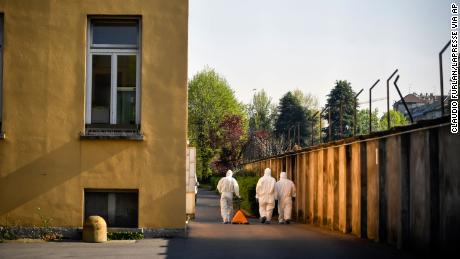
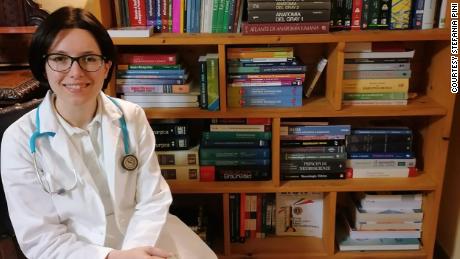
Fresh out of medical school, young Italian doctors are being fast-tracked to the coronavirus frontline

Milan’s Public Prosecutor Mauro Clerici said last month he was looking into “more than 100 deaths,” at the home during the Covid-19 epidemic.

Clerici said the inquiry would center on “what crimes may have been committed in accordance with existing legislation as applied to a pandemic.”

No arrests have been made and no one has been charged in the case.

A spokesperson for the Pio Albergo Trivulzio nursing home refused to comment out of respect for the investigators, saying they needed “to work freely and without pressures of any sort.”

Last month, a spokeswoman for the home told CNN that “the rules regarding masks were followed,” adding that the number of deaths in the first quarter of 2020 were in line with those in the same period last year.

Azzoni, who founded a group demanding a criminal investigation into what happened at Pio Albergo Trivulzio, describes it as a “massacre.”

With an investigation, he says “we have the opportunity to completely change things, to put humans back at the center.”

The region of Lombardy accounts for about half of Italy’s 32,169 dead from the virus.

Nembro's main nursing home, where in the space of just a few weeks many of its residents succumbed to the virus.

One of the hardest-hit communities in Lombardy is the town of Nembro, in the foothills of the Alps.

Of the 87 residents in Nembro’s main nursing home, the Nembro Nursing Home Foundation, 34 died from the virus.

While law enforcement authorities won’t comment on whether the home is under investigation, its director, Barbara Codalli, told CNN there are no allegations of wrongdoing against the home which, she says, never took in any Covid patients.

As soon as staff realized that the virus had spread to the home, Codalli said: “We decided to shut down the structure to families and to close the day care, even if we didn’t know at the time what was actually happening, but with the feeling that something out of the ordinary was happening.”

“We started using PPE, masks, not easily because finding them was hard, we found them at absurd prices,” she adds.

As northern Italy is ravaged by coronavirus, there's trouble brewing down south

But still, the home was overwhelmed by the virus, which Codalli said badly hit its staff, killing its president and one of its doctors.

She blames the provincial health authorities for being late in testing the nursing home’s residents.

The Lombardy regional government, which oversees the health authorities, would not comment citing the ongoing investigation.

Barbara Codalli notes that when the first cases became evident in the third week of February it took weeks for swabs to be carried out.

“The very first swabs were done the 10th of April,” she says, “regardless of what some were claiming on television.”

Nembro’s mayor, Claudio Cancelli, confirmed to CNN that the first swabs, from the home’s most severely ill patients, were taken beginning on April 10; he says that testing of all staff and the remaining patients only began on April 23.

Fresh tombs in Nembro's cemetery. This town suffered one of Italy's highest per capita death tolls as a result of coronavirus. Its undertakers and cemetery workers have been busy.

In Nembro, we searched for death notices — but found only two recent ones. We called a funeral home to ask where we might find more. The undertaker explained the Nembro municipality had removed all but the latest ones, to avoid damaging morale in the town.

Mayor Cancelli confirmed that the death notices were removed, but denied that there was an official order to do so in order to boost citizens’ spirits. He insisted the decision had been based on common sense, adding that if doing so had improved morale, he was satisfied with that.

A set of notices from early March were found next to Nembro’s cemetery which showed that in the space of just three days — March 7 to 9 — five elderly men and women had passed away.

Funerals are finally being held again in Nembro as the lockdown in Italy eases.

‘A tsunami overwhelmed us’

Giacomo Boffelli, 84, died on March 11. Friends and family were finally able say their farewells two months later, at a simple ceremony near the entrance to the town’s cemetery.

His daughter, Nicoletta, read a statement. “We never abandoned you. We never would, because you will always be in our hearts.”

'The sea is stormy and the captain is dancing on the deck.' One view of the US from Italy in the time of coronavirus

Giacomo’s widow, Margherita, sat and listened, the mask covering her nose and mouth moist from her tears.

After the ceremony, as Giacomo’s ashes were placed in the family tomb, Nicoletta told me: “The woman who works here at the cemetery says that all of this part was empty before, and now it’s filling up.”

Indeed fresh pictures mark the tombs of the recently deceased. Undertakers and grave diggers are the busiest people in Nembro now.

“It was as if a tsunami overwhelmed us, especially the oldest people,” says Nicoletta.

Spring has arrived in Lombardy. In the region’s towns and cities, people are venturing out to enjoy the weather and their first hints of freedom, as the lockdown eases.

Yet unlike other parts of Italy where coronavirus’ toll was lighter, in Lombardy a hint of sorrow hangs in the air.

Beppe Severgnini, a columnist for the daily Corriere della Sera, who lives in the hard-hit town of Crema explained: “It’s so sad. Every time I open the obituary pages of the local newspaper, I find so many people that I know have died. A whole generation is being wiped out.”

Source link

Dramatic moment knife-wielding brothers shot by police aired in court

One of two brothers shot by police at a Victorian campground threatened to behead officers and said he wanted to become a martyr.

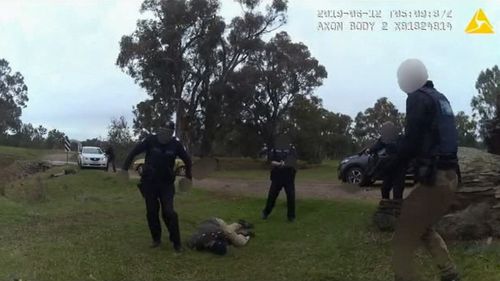
Footage played to a Melbourne court shows 19-year-old Joel Clavell being shot while charging at police with an axe on June 12 last year.

His older brother, Joshua Clavell, was also shot after ramming a police car and running at officers with a knife at the Barnawartha North campground

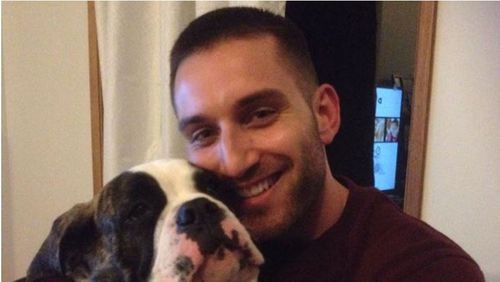
Joshua (left) and Joel Clavell were shot by police after threatening them. (Supplied) (Supplied)

Joel Clavell called police “dogs” and “mutts”, said he wanted them to drop their guns so he could chop their heads off and become a martyr.

“You’re in an outback area. This is not how you’re going to be a martyr mate,” one officer told him in body-worn camera footage released by the County Court of Victoria on Thursday.

“Your brother’s already down.

“We don’t want to shoot.”

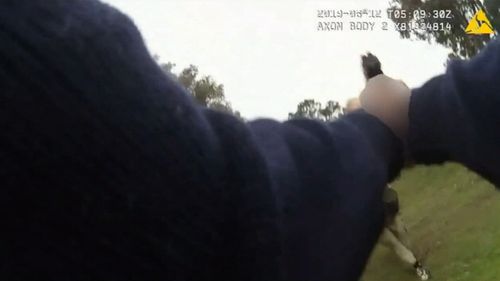
The footage appears to show Joel Clavell charging at police with a hatchet in the moments before he was shot. (Victoria Police)
Mr Clavell can be heard calling officers “dogs” and goading them to shoot him. (Victoria Police)

The men had been at the Barnawartha North camp for the holy Muslim month of Ramadan, Joel Clavell’s lawyer Mel Walker said.

Joshua Clavell, 31, was wanted on a warrant for breaching a community correction order. Police spotted the brothers in a car at a nearby Barnawartha North service station and followed it.

Counter-terror officers were involved in the stand-off, but there was no evidence it was motivated by religious ideology.

“It doesn’t need to be extremist in a terrorism sense for me to be concerned about retribution to police … animosity towards police,” Judge Martine Marich said of the younger brother.

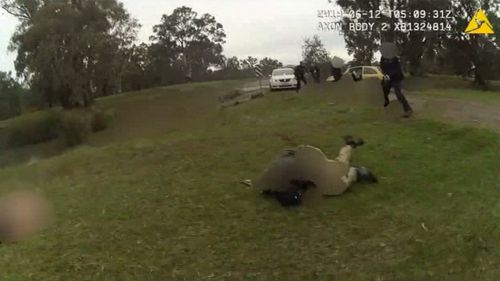
Vision showing the moment Joel Clavell was shot by police after charging at Victoria Police officers with a hatchet has been released. (Victoria Police)

Joel Clavell distrusted police after his father, Rodney Clavell, shot himself during a 12-hour siege at an Adelaide brothel in 2014.

The now-20-year-old admitted this contributed to the campground confrontation.

He has pleaded guilty to four counts of assaulting an emergency worker on duty and three of making threats to kill.

“But for him being with his brother … he wouldn’t have come across police in this context,” his lawyer Mel Walker said.

Joshua Clavell is said to have convinced his brothers to convert to an extreme form of Islam. (Supplied) (Supplied)

He hit his head hard when Joshua Clavell rammed the police car, and later said he didn’t remember saying he wanted to be a martyr or threatening to behead officers.

“But for the tourniquet being put on his leg, he was dead,” Ms Walker said.

She asked he be sentenced to time already served in custody and then placed on a community correction order.

Judge Marich said the seriousness of his crimes weighed against this.

Joshua Clavell has admitted to exposing an emergency worker to risk by driving and assaulting an emergency worker on duty.

He told police he didn’t know they had been looking for him that day.

He said he rammed the unmarked car because he didn’t know it was a police vehicle, and didn’t realise the plain clothes member pointing the gun at him was a police officer.

He will undergo a psychiatric assessment before the brothers return to court on June 15.

Source by [author_name]

MasterChef’s Instant Noodles Episode Is A Special One For Asian Australians

Contestants will be asked to “pimp up” some instant noodles, and while people from all walks of life are big fans of the two-minute treats, Asian Australians are particularly stoked.

Writer Benjamin Law said the episode is “a real Sophie’s Choice moment for every East Asian person”, asking his Twitter followers to pick their favourite type of instant noodles.

‘MasterChef’ judge Melissa Leong, who is proud of her Chinese Singaporean heritage, speaks about her fondness for noodles in a preview for the episode.

“Who doesn’t love these guys? I mean look, I’m obsessed with noodles. I think growing up in an Asian family, you know this.”

Competing in the immunity challenge is Poh Ling Yeow, Reece Hignell, Jess Liemantara and Simon Toohey.


Source by [author_name]

36,000 U.S. Lives Could’ve Been Saved If Social Distancing Was Imposed A Week Earlier: Study

In the first week of March, President Donald Trump was still downplaying the threat that COVID-19 posed on the United States. He urged Americans during a March 5 town hall to be “calm,” saying “it’s going to all work out.”

But according to research published this week by infectious disease modelers at New York’s Columbia University, tens of thousands of lives in the U.S. could have been saved had social distancing measures been imposed around the time of Trump’s town hall.

It wasn’t until March 16 that Trump told Americans to avoid non-essential travel and gathering in groups. The new study, which has yet to be peer-reviewed, says the lives of about 36,000 people could have been saved if such restrictions had been introduced just one week earlier.

And if the same restrictions had been imposed on March 1, researchers said, an estimated 54,000 fewer people would have died from the coronavirus by the first week of May.

“Our findings underscore the importance of early intervention and aggressive response in controlling the COVID-19 pandemic,” the researchers said in their paper. 

Even a week or two could make a “big, big difference,” epidemiologist Jeffrey Shaman, who led the research, told The New York Times.

“That small moment in time, catching it in that growth phase, is incredibly critical in reducing the number of deaths,” he said. 

Responding to the estimates by Shaman and his team, the White House told the Times that Trump’s restrictions on travel from China and Europe, imposed in January and mid-March respectively, mitigated the spread of COVID-19. 

During the town hall in early March, Trump touted his decision to restrict travel between the U.S. and China, where the coronavirus is believed to have originated, as a move that “saved a lot of lives.” 

“We’ve been given A-pluses for that” decision, he said.  

But Shaman’s research suggests that many more lives could’ve been saved had other interventions been taken at the time.

Such action would have had a “very drastic effect in reducing the number of cases and deaths that we would have seen thus far,” Shaman told CNN’s Don Lemon on Wednesday.

His team’s findings should also serve as a warning as states prepare to loosen virus restrictions, Shaman added.

“As we loosen these restrictions, it’s possible we could start to have the growth of the virus in a lot of communities if we’re not careful,” he told Lemon. “If social distancing practices lapse. If people aren’t wearing face masks as they start to go to businesses and restaurants and theaters. If we don’t monitor this and if we don’t recognize it really early and jump on it, it’s going to jump out of control again.”

A HuffPost Guide To Coronavirus


Source by [author_name]

Thousands left homeless in South Asia as cyclone heaps misery on coronavirus-hit communities

0

The state of West Bengal’s Chief Minister Mamata Banerjee said on Wednesday at least 12 people had died in eastern India, with one young girl in the Howrah district killed after a wall collapsed inside her home.

In neighboring Bangladesh, the death toll from Cyclone Amphan has risen 10, according to the governmental Health Emergency Operations Center. Among those killed was a 57-year-old Red Crescent volunteer in Barisal who drowned when attempting to help others to safety, the Red Crescent Society of Bangladesh said.

Large-scale evacuation efforts throughout India and Bangladesh appear to have saved many lives, but it could take days to realize the full extent of the deaths, injuries and damage from the cyclone. Fallen debris has made many of the roads impassible and heavy rains continue to fall on hard-hit areas.

Disaster teams worked throughout the night and into Thursday morning in India’s West Bengal and Odisha states, clearing trees and other debris from roads.

S.N. Pradhan, director-general of India’s National Disaster Relief Force (NDRF), said the worst of the damage is concentrated in two of West Bengal’s coastal districts and that the Sunderbans had been “pulverized” by the cyclone.

The Sunderbans are an ecologically fragile cluster of low-lying islands spread across India and Bangladesh, known for mangrove forests and rare wildlife, including the endangered Bengal tiger.

“Maximum impact, as expected has been seen there,” Pradhan said.

Four of the state’s least affected districts could be up and running in four to six days, and some coastal parts of Odisha are expected to be back up by this evening, he said.

“People have started moving out of shelters to assess the damage to their homes. Some have even started repairing their damaged homes,” Pradhan said.

In Kolkata, the biggest city in the direct path of the cyclone and home to 14 million people, Pradhan said that a lot of trees had been uprooted and “the city has never seen such high winds.”

Cyclone Amphan is a disaster bigger than the coronavirus outbreak, the state’s chief minister Banerjee said at a news conference Wednesday.

“The whole of the southern part of the state has been affected. We are shocked,” the chief minister said. “The cyclone has affected the electricity supply and destroyed many houses, bridges and embankments.”

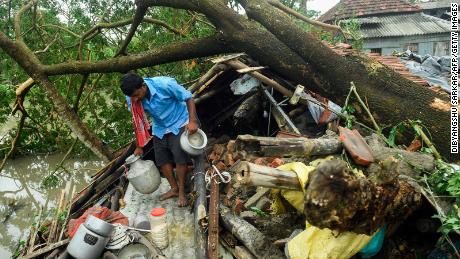
In the areas affected by the cyclone, many villagers live in temporary homes with thatched or tin roofs, which were easily swept away in the powerful winds.

In Bangladesh, nearly every coastal district has been seriously affected by Cyclone Amphan, according to Ranjit Kumar Sen, an official at the Bangladesh Ministry of Disaster Management and Relief.

Sen said that the damage along the coast was “huge.” Among the 10 killed in the country, five people were in Barisal state — including the Red Crescent volunteer — four in Khuna, and one in Chittagong.

Several poorly maintained dams broke down even before the cyclone made landfall, causing extensive flooding in parts of the country.

Snigdha Chakraborty, with charity Catholic Relief Services, said the country saw storm surges as high as 15 feet (4.5 meters), inundating houses throughout the country.

Cyclone Amphan made landfall on India’s east coast, near Sagar Island in West Bengal, at around 5 p.m. local time Wednesday (7.30 a.m. ET) and began tracking north toward Kolkata, with wind speeds of up to 160 kph (100 mph), according to data from the US Joint Typhoon Warning Center.

Amphan weakened into the equivalent of an Atlantic tropical storm as it crossed the border between West Bengal and Bangladesh Thursday morning, but is still packing strong winds of up to 110 kph (68 mph). The system is expected to continue weakening over the next 24 hours as it travels northeast.

The next danger will come from the heavy rain, which could lead to flash flooding across the region through Thursday morning.

Mass evacuations and coronavirus

An ambitious evacuation mounted by India and Bangladesh saw an estimated 3 million people moved to safety across the two countries, according to regional authorities.

The relief operation came despite India and Bangladesh remaining under strict lockdown orders due to the coronavirus. The virus, which continues to spread through both countries, has complicated the emergency response, as relief teams grapple with how to get people to safety while also protecting them against the risk of Covid-19.

India passed more than 100,000 confirmed infections earlier this week, according to Johns Hopkins University, and recorded its largest single-day spike on Wednesday with 5,611 new cases. Meanwhile, Bangladesh’s infection count is rapidly rising, with more than 1,300 new cases on Sunday, its biggest rise to date. In total, the country has recorded 26,738 confirmed infections, according to Johns Hopkins.

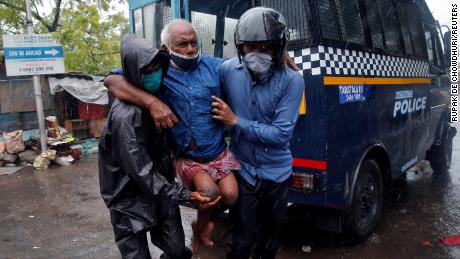
Police officers carry a disabled man to a safer place following his evacuation from a slum area in Kolkata, India.

In Odisha, where more than 150,000 people were evacuated, a total of 211 of the state’s 809 permanent cyclone shelters were being used as Covid-19 quarantine centers.

Pradeep Jena, special relief commissioner for Odisha state, said emergency services had to balance saving lives from the cyclone with saving lives from the coronavirus. In evacuation centers, Jena said they were trying to keep the elderly and pregnant women separate from the rest of the population and were working hard to obtain adequate soap.

“Social distancing is definitely a very good concept but enforcing it in the strictest possible manner in a disaster situation may not always be possible,” he said.

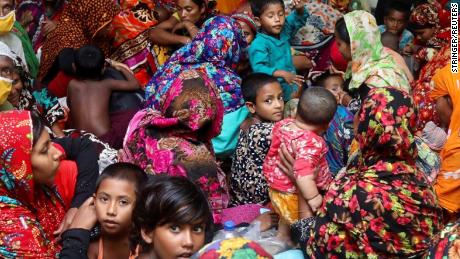
In India’s West Bengal, which bore the brunt of the cyclone’s winds, about 500,000 people were temporarily housed in storm shelters, according to authorities, while in Bangladesh the government said they had evacuated 2.4 million people as well as about 40,000 livestock animals.

People gather at a cyclone center for protection before Cyclone Amphan made  landfall in Gabura, on the outskirts of Satkhira district, Bangladesh May 20.

It’s unknown when many of those people will be able to return home. Bangladesh Oxfam director, Dipankar Datta, said Wednesday that thousands of makeshift homes in Bangladesh had been uprooted due to the cyclone.

In what is likely to be one small glimmer of hope, Catholic Relief Services’ Chakraborty there had been no major damage reported so far in sprawling refugee camps in Cox’s Bazar, which are home to nearly 1 million Rohingya refugees and had been a source of concern to aid workers after Covid-19 cases were identified there last week.

Some weak shelters were damaged in the storm and now need to be repaired, she said.

Though there is concern that the precipitation from the storm — though it made landfall on the other side of Bangladesh — could still cause landslides and flooding in the camps.

Salman Saeed and Abir Mahmud in Bangladesh, CNN’s Rebecca Wright, Brandon Miller, Michael Guy, Joshua Berlinger, Ben Westcott and Manveena Suri contributed to this article.

Source link

Juncker: EU internal border closures ‘nonsense’

0

Former European Commission President Jean-Claude Juncker | Kenzo Tribouillard/AFP via Getty Images

Former Commission president describes it as ‘an arbitrary decision.’

Former European Commission President Jean-Claude Juncker voiced his opposition to internal border closures across the EU, branding them as “nonsense” in an interview with German broadcaster Deutsche Welle.

Juncker’s home country of Luxembourg was hit hard when Berlin imposed controls at its border with the Grand Duchy in March to limit the spread of the coronavirus.

“It forced tens of thousands of German cross-border travelers to make huge detours. It was nonsense,” Juncker said. “They closed the borders without thinking about the people who’d be the victims of such an arbitrary decision.”

The Commission has prioritized restoring free movement in the Schengen zone, asking countries to lift internal EU border checks wherever possible. Germany has outlined plans to ease foreign travel restrictions from June 15.

Juncker also spoke about the EU’s economic recovery plans, calling a Franco-German proposal for a €500 billion recovery fund “the right response.”

“It allows the European Union to respond with solidarity, especially for members in southern Europe. This is absolutely necessary,” he said.

Italy’s Prime Minister Giuseppe Conte described the Franco-German proposal as insufficient in an opinion piece for POLITICO, although noting it was a significant step. “If we are to overcome this crisis together, as a union of common interests and common values, much more needs to be done,” Conte wrote.


Source by [author_name]

Dozen injured as car crashes into Syd shop

A dozen people, mostly young women, have been injured after a station wagon crashed into a Sydney hijab shop days before the end of Ramadan.

Mobile phone and security camera video shows the wagon pushing a white sedan aside at traffic lights before racing through the intersection and ploughing into the Greenacre store about 3.15pm on Thursday.

Witnesses described the scene as “surreal”.

The male driver, 51, was conscious when arrested and remains under police guard in hospital.

“He’s only been briefly spoken to, he’s yet to be interview by detectives and crash investigators,” Assistant Commissioner Peter Thurtell told reporters on Thursday evening.

“I am aware he has some traffic matters. I’m unable to comment on any medical episode. There’s no information that’s been given to me that there’s been any medical episode.”

Three men and eight women – mostly aged 18 to 30 – inside or near the shop at the time were treated for minor injuries.

Two people with broken legs were carried out of the smashed shop.

They’re all in a stable condition, NSW Ambulance Acting Inspector Caitlyn Murphy said.

“Our paramedics were met with a very chaotic scene,” she told reporters.

“There was a large crowd of bystanders who were quite distressed.”

NSW Police said there is no indication the crash was terror-related.

The reason for the crash remains under investigation.

The driver of the white sedan was Abdul Jelani, the Seven Network reported.

“All of a sudden I saw this car come out of nowhere and hit other cars and then I get hit from the back,” Mr Jelani said.

“I locked my brakes and he just kept pushing and pushing. Then all of a sudden I ended up on that side of the road … and he ends up in the shop.”

Dairee frozen yoghurt manager Malik Islam was preparing for the nightly Ramadan trade when he heard people screaming – but he didn’t think it could be “as horrific as a car ploughing into a shop”.

“It actually ploughed into the centre of the shop, there were a lot of people trying to enter the shop to provide some support,” the witness told AAP.

Footage he saw showed the wagon “pushed that car out and flung straight across the intersection”.

“It was disturbing, it’s very surreal, you don’t expect it – it’s a very chaotic intersection normally,” Mr Islam said.

NSW Police initially said incorrectly that the vehicle which crashed into Hijab House was a Subaru SUV.

Source by [author_name]