Thursday, April 30, 2026

Lockdown Trapped Women In Violent Relationships. Their Abusers Might Kill Them When It Ends

0

Get the latest on coronavirus. Sign up to the Daily Brief for news, explainers, how-tos, opinion and more.

“I feel guilty for not being stronger sooner. I’m exhausted and I just want a way out.”

Nicola had reached the end of her patience with her boyfriend before the coronavirus lockdown began and had made preparations to leave him.

But then the Covid-19 pandemic hit, and the lockdown restrictions forced her to change her plans.

“I had prepared to leave my boyfriend and organised to go and stay with my mum.” she told HuffPost UK. “But then when the restriction came in, I wasn’t able to travel and with my mum’s already poor health, I couldn’t risk going there.

“I just told my mum that everything had got better with my boyfriend so that she wouldn’t worry. But it’s not true.”

In reality, Nicola, who is in her 20s and whose name has been changed to protect her identity, is living in fear at home with her boyfriend and her young daughter, desperately trying to keep safe.

I felt like I was trapped before quarantine happened, but now everything is a hundred times more intense.
Nicola, who is trapped in an abusive relationship during lockdown

“My partner is drinking a lot and his mood swings are really difficult to deal with.” she admitted. “He can’t go to work so he is at home all the time.

“He hasn’t been physically hurtful – yet – but he threatens he will sometimes and I believe him.

“Normally, I would have some time to myself during the day to look after my mental health. But now it’s constant stress for me.

“I felt like I was trapped before quarantine happened, but now everything is a hundred times more intense.

“I want to leave and go to my mum’s but I can’t cause more hurt to my family than I feel I already have from being with this person.

“I feel guilty for not being stronger sooner, even though I never asked for any of this. I’m exhausted and I just want a way out.”


Nicola’s tale depicts the plight of thousands of women across the country feared to be trapped in domestic abuse situations during lockdown.

Latest figures from domestic abuse charity Refuge show that since lockdown started, there has been a 66% rise in demand for its National Domestic Abuse Helpline, while there has been a staggering increase of more than 950% to the Refuge website.

While the government has made it clear that those suffering domestic abuse should seek help from services, and that escaping an abusive relationship is a lawful reason to leave the home, it is feared many victims are living in fear as they don’t want to worry their families at a troubling time and feel they have nowhere to go.

Campaigners’ fears centre around what will happen when lockdown is lifted as the most dangerous time for abuse victims is when they try to escape. It is then that violence increases – and for some people, it leads to death.

However, they point out that coronavirus and the lockdown or the lifting of it aren’t to blame for domestic abuse or a rise in the killing of women – but the actions of abusive and controlling men.

And they want to ensure adequate support services are available for victims all year round to make sure they are protected from potential harm.

The Counting Dead Women project, which identifies UK women killed by a man or where a man is the principal suspect, revealed to HuffPost UK that their latest figures show there were 32 suspected domestic abuse killings of females at the hands of men between March 23 – when lockdown began in the UK – and May 17.

One of the most infuriating things for an abuser is the feeling that they have lost control … so they take back control by taking their life.
Karen Ingala Smith, Counting Dead Women

Karen Ingala Smith, founder of Counting Dead Women, told HuffPost UK it is important to stress that coronavirus doesn’t cause men’s violence and hasn’t increased the number of abusive men in the world.

However, she spoke of her fears that there might be a rise in women being killed after lockdown lifts due to a sense of losing control for the abuser when the victim makes her escape.

Karen Ingala Smith, founder of Counting Dead Women


Karen Ingala Smith, founder of Counting Dead Women

“One of the most infuriating things for an abuser is the feeling that they have lost control.” she said. “The actual leaving of the relationship by the woman is when men realise they have lost control.

“There is a potential for an increase in killings post lockdown because of a perceived loss of control by the abusers. So they take back control by taking their life.”

Smith says around a third of women killed by their partner or ex-partner are killed after separation and that as women may be finding it harder to leave abusive men in the current circumstances, there is a real risk of an increase in intimate partner homicide as lockdown eases.

Smith is troubled by the thought of the women such as Nicola and children who are currently trapped in lockdown with their controlling abuser.

“It must be soul destroying and horrible to have your life clipped by an abuser who is controlling you.” she said. “It erodes people’s confidence and their very essence.

“Domestic abuse is always a concern and worry – not just in lockdown but all the time. However, lockdown will be making it harder for some women to get help and the controlling behaviour posed on some of them will be greater than normal.

“Lockdown is another tool for abusers and abusers will pick up any tool they can to further their agenda.”

Some women have told domestic abuse services and supporters that their relationships which weren’t particularly controlling or abusive before lockdown have escalated into unhappiness.

Anita, who lives in Birmingham and has changed her name to protect her identity, told HuffPost UK that her relationship with her husband wasn’t too bad before lockdown – but things have got a lot worse.

He is blaming it on the virus, but I think that’s just an excuse for him to control me like he always wanted to.
Anita, who is trapped in a controlling relationship with her husband during lockdown

She said: “Before lockdown, he was controlling to a certain extent, but eventually, he would back down once I managed to reassure him that I wasn’t doing anything disrespectful when he wasn’t there.

“He never really liked me going to work or going out to see my sisters because he thought I might cheat on him or talk about him behind his back.

“Since social distancing has come into practice, it’s like the controlling part of him has taken over. He won’t even let me go to the supermarket or out for a walk. 

“He is blaming it on the virus, but I think that’s just an excuse for him to control me like he always wanted to.”


Anita says her husband is now saying he wants her to stay at home after lockdown ends and not return to her job even though he knows she loves what she does. “I am so frightened of what will happen when I finally tell him I don’t want to stay at home forever,” she added.

“The other day, he slammed a door on my hand when I was trying to leave to go for a walk. He apologised but it didn’t feel genuine.

“I can’t worry my family, they are already going through too much in their own lives. I feel isolated and totally alone.”

Helen Victoria, 31, who was herself in an abusive and controlling relationship between the ages of 15 and 23, is the founder of Living Liberte, a social enterprise that aims to prevent future relationship abuse by educating young people in the West Midlands about what a healthy relationship looks like and how to spot red flags of abuse.
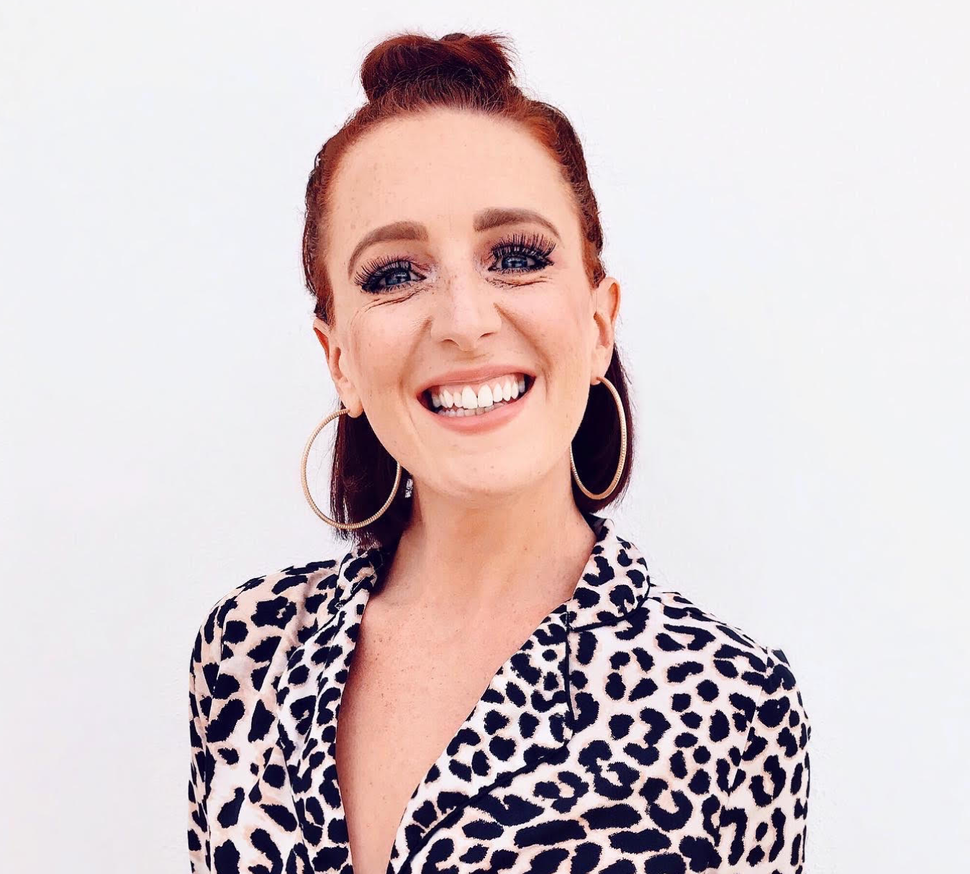
Helen Victoria, founder of Living Liberte, a social enterprise that aims to prevent future relationship abuse by educating yo


Helen Victoria, founder of Living Liberte, a social enterprise that aims to prevent future relationship abuse by educating young people

She told HuffPost UK that during the lockdown period, she has had many enquiries from young women asking for guidance and she has been offering a free, confidential mentoring service for those in abusive situations to give then a safe space to share their experiences.

She says that since lockdown began, she has seen a spike in enquiries which shows no sign of waning.

“National lockdown has actually given us all the opportunity of insight into what it’s like to live within a controlling relationship.” she said.

“We are battling financial limitation, loss of personal empowerment and distinct uncertainty about our short and long term futures. These emotional experiences are correlative with those of being in an abusive relationship.

“Now, more than ever, we should be able to identify with the need of domestic abuse victims across our country.”

She added that while she signposts everyone she speaks to to further support from organisations that might be able to help them, she has found that most women just want to be heard and for their experiences to be validated.

Dame Vera Baird, the victims’ commissioner for England and Wales, told HuffPost UK that those trapped in abusive situations during lockdown must be finding it increasingly difficult to cope.
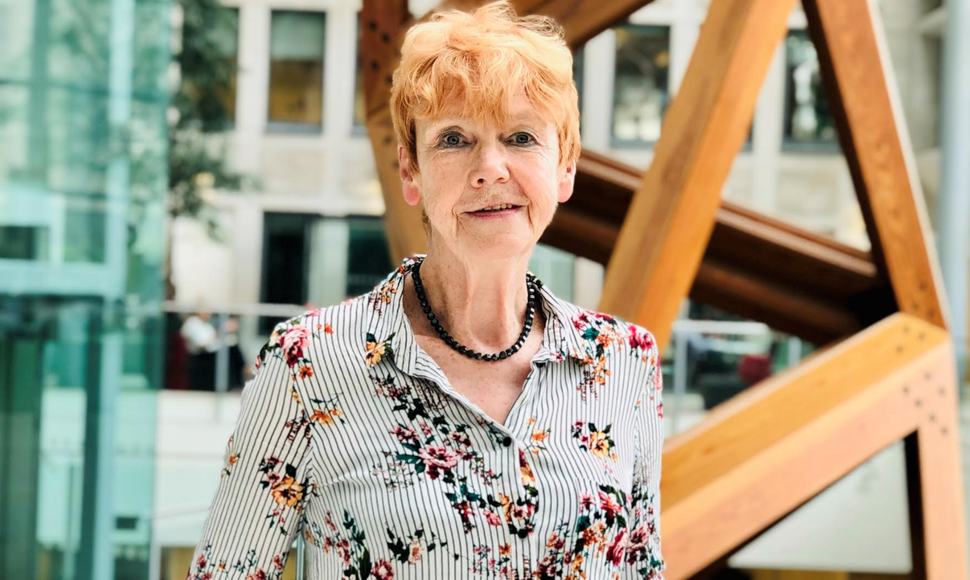
Dame Vera Baird, the victims’ commissioner for England and Wales


Dame Vera Baird, the victims’ commissioner for England and Wales

“It must be tortuous for them.” she said. “Those who have been locked down with their perpetrator must be finding it incredibly hard as it will be non-stop and inescapable and it will be generating mental health issues for the future.”

She said that domestic abuse services are working and resources are available so people should seek help. However, she acknowledges that many victims are reluctant to do so as they don’t want to worry their loved ones at an already turbulent time.

“By and large, the families of those suffering abuse do not know about it as the perpetrator does his best to isolate her from her family and keep her away from them so he can block off all the escape routes.” she said.

“Many victims might feel they can’t tell people about the abuse while they are in lockdown as they feel there is nowhere for them to go.

“If there is someone in their family who is sick or vulnerable to Covid-19, they might think why pile more worry on them when they can’t come and rescue them.”

The most dangerous time for abuse victims is when they try to leave. That’s when the abuse and violence ramps up and even killings occur.
Dame Vera Baird, victims’ commissioner for England and Wales

Dame Vera says that although domestic abuse services such as Refuge have seen a huge rise in demand for support, police reports for domestic abuse have only seen a single digit rise.

She says it seems this is because victims either feel they can’t call the police in their current situation – or don’t dare contact them because they fear the repercussions.

“At the moment, victims of abuse are getting advice and support but they don’t dare to make that dramatic escape.” she said. “Police are gearing up for a spike in reports of domestic abuse when lockdown is over.”

She says it is important for resources to be in place for victims of domestic abuse when lockdown ends.

“The most dangerous time for abuse victims is when they try to leave.” she said. “That’s when the abuse and violence ramps up and even killings occur.”

If you, or someone you know, is in immediate danger, call 999 and ask for the police. If you are not in immediate danger, you can contact:

  • The Freephone 24 hour National Domestic Violence Helpline, run by Refuge: 0808 2000 247
  • In Scotland, contact Scotland’s 24 hour Domestic Abuse and Forced Marriage Helpline: 0800 027 1234
  • In Northern Ireland, contact the 24 hour Domestic & Sexual Violence Helpline: 0808 802 1414
  • In Wales, contact the 24 hour Life Fear Free Helpline on 0808 80 10 800.
  • National LGBT+ Domestic Abuse Helpline: 0800 999 5428
  • Men’s Advice Line: 0808 801 0327
  • Respect helpline (for anyone worried about their own behaviour): 0808 8024040


Source link

Fita submit court papers in preparation for cigarette ban showdown

With government set to head to court on Tuesday 2 June with the Fair Trade Independent Tobacco Association (Fita) over the controversial cigarette ban that has grabbed headlines throughout the nationwide lockdown, Fita have accused government of inflating the extent of initial public approval in the ban.

Cooperative Government and tradition Affairs (Cogta) Minister Nkosazana Dlamini-Zuma said that 2 000 people had voiced their agreement with the proposed ban in March 2020, but according to Fita, the documents submitted by government demonstrate that only a small number of those who mentioned cigarettes agreed with the motion. 

Government also saw a late bid to postpone the hearing dismissed by the Pretoria High Court over the weekend, with claims that the matter was no longer urgent tossed out. 

Fita have filed the initial court papers relating to their case and will await the response of government from 3 June. 

‘Public cigarette debate contained very few mentions of a ban’ 

Fita received over 4 000 pages of minutes, health guidelines and other supporting documents from the National Coronavirus Command Council (NCCC) on Saturday 30 May, and have now handed in their opening arguments to the court. 

“Yesterday (Saturday 30 May) we served our Supplementary Notice of Motion and Founding Affidavit on the Respondents as per the Court Order of 12 May 2020,” Fita said in a tweet. 

“We now await the filing of the Respondents’ Answering Affidavit by no later than 3 June 2020.”

According to Fita, of the 2 000 complaints against the sale of tobacco products cited by Dlamini-Zuma, only 1 897 submissions were made, with 66.7% not concerning the ban at all. 

BAT back in the mix 

Their court bid will now be substantiated by a bid by British American Tobacco (Batsa), who have said that their efforts to “constructively engage” with government have thus far been unsuccessful.

Johnny Moloto, Batsa’s head of external affairs, said that the company would reignite their court bid after having previously pulled out of an earlier show of force. 

“The government has decided to maintain the ban on tobacco products under the guise of limiting the spread of OVID-19 while allowing all other previously banned consumer products to go back on sale.

“Given the situation, and the lack of any response from the government, despite our ongoing efforts to engage with them, we are now commencing urgent legal proceedings,” Moloto said.

Batsa said it had received support from Japan Tobacco International and groups and organisations representing the tobacco value chain, including consumers, tobacco farmers and retailers.

Mlungisi Mtshali, a national spokesperson for the department of Co-operative Governance and Traditional Affairs said that the legal action in play by Batsa is a continuation of their previous application. 

“This (Batsa legal action) is a continuation of legal action facing the department in terms of the ban on the sale of cigarettes,” said Mtshali.


Source link

The Nation Seethes, and Trump’s Response Follows a Pattern


Good morning and welcome to On Politics, a daily political analysis of the 2020 elections based on reporting by New York Times journalists.


With protesters expressing a new level of outrage, President Trump blasts back — and Democrats seek to embrace a rising movement. It’s Monday, and this is your politics tip sheet.

  • Protests spread rapidly throughout the country over the weekend, beginning with calls for justice for George Floyd, a black man who died after a white Minneapolis police officer pinned down his neck. They blossomed into a nationwide weekend of forceful demands for racial justice, as well as for a decrease in funding for police departments. In cities from New York to Los Angeles, paramilitary-attired police officers squared off with demonstrators by the thousands in some of the most bellicose mass protests of the past half-century.

  • President Trump’s response to the upheaval has followed a familiar pattern: He issued a statement that seemed to condone violence (“when the looting starts, the shooting starts,” he tweeted, suggesting that the police could be justified in shooting protesters, and invoking a segregationist police chief from the 1960s); it was immediately met by a backlash. Only after a disquieting delay did he try to walk back the statement. It’s roughly the arc of countless similar incidents throughout his presidency, in which he has invariably sought to push the boundary to the right on what is considered acceptable discourse from a commander in chief — or from any major American politician.

  • Trump claimed later on Friday that he had been misinterpreted, and he said at a round-table discussion that he understood “the pain” behind the protests. But the president has made his position clear: He stands largely against the demonstrations, and in favor (as he has tweeted repeatedly since Friday) of “law and order.” His most pointed symbolic move of the weekend came on Sunday, when he said on Twitter that he would designate antifa — a loose collection of left-wing activists whose name stands for “anti-fascist” — as a terrorist organization. It remains unclear whether the president has the legal authority to make such a designation, but the strategic value was obvious: He was pointing attention toward one of today’s most belligerent leftist movements, while seeking to divert the spotlight away from the grievances of community-led protests in Minneapolis and other cities around the country. The growing death toll and economic devastation caused by the coronavirus went virtually unmentioned on Trump’s Twitter feed over the weekend.

  • But what about Joe Biden? For any presumptive Democratic nominee seeking to walk a moderate line, the specter of radical protests from the left in an election year would be grounds for concern. Studies show that since the 1960s, white voters in particular have been irked by the most aggressive forms of black activism. Democrats tend to fare poorly in elections held soon after urban uprisings and protests led by black people that include attacks on property. Democrats do better, the research suggests, in the wake of nonviolent black protest movements. But a rising tide of white racial awareness — driven partly by the circulation of videos showing police killings of black people, and partly by the rise of the Black Lives Matter movement — has coincided with an increasingly radical turn among millennials and Generation Z, changing the calculus of the Democratic Party.

  • Rather than simply urging protesters to stop damaging property and lighting structures ablaze, Tim Walz, the governor of Minnesota, sounded acutely aware of the delicate balance he needed to strike on Friday morning. “The ashes are symbolic of decades and generations of pain, of anguish unheard,” Walz said. “Now generations of pain is manifesting itself in front of the world — and the world is watching.” Just moments after Walz addressed Minnesotans, Derek Chauvin, the Minneapolis police officer who knelt on Floyd’s neck even after he had become unresponsive, was arrested and charged with third-degree murder.

  • The protests have led many black leaders to amplify their demands for tangible commitments from Biden on pursuing racial justice. Those leaders mostly agree that at the very least, Biden should pick a black woman as his running mate. Meanwhile, the past week’s events have turned an unflattering spotlight on Senator Amy Klobuchar of Minnesota, who is seen as a top contender to be Biden’s vice-presidential choice. She has been dogged by complaints about her work as the Hennepin County attorney in the early to mid-2000s; in that position, she declined to prosecute multiple cases against police officers who had been involved in shootings. One such case involved Chauvin, though it was dismissed only after Klobuchar had left her post to join the Senate.

  • Twitter took a first-time step on Friday to rein in Trump’s onslaughts, attaching a warning to his tweet condoning violence against looters. It was the latest in an ongoing saga between the president and what is still his most-used social media platform (if perhaps no longer his favorite). Unlike the warnings Twitter pasted on two other Trump tweets last week, this one prevented the message from being seen on his feed unless users clicked to view it. Last week, angered that Twitter was putting limits on what he could say, Trump threatened to cut social media companies’ legal protections in lawsuits over defamatory speech, and he sicced his followers on an individual Twitter employee who he (falsely) said had censored him.

Demonstrators walked down an avenue in Brooklyn on Saturday. All weekend, they gathered across New York City, with peaceful protests interspersed with outbreaks of violence.


For months, national Republicans had hoped that Secretary of State Mike Pompeo would return to Kansas and run for the Senate, confident that he could unite the party and keep the seat in Republican hands, as it has been since the 1930s.

But with Pompeo resistant to a run (not to mention mired in a congressional investigation into his use of State Department funds), and the June 1 filing deadline now at hand, Republicans are bracing for a messy intraparty brawl. And they’re increasingly anxious that a race in this deep-red state could be competitive in the fall.

Their biggest source of worry: the former Kansas secretary of state Kris Kobach, a hard-line Trump supporter who lost the governor’s race to Laura Kelly, a Democrat, in 2018. Kobach is a well-known, if polarizing, figure in the state, and some Republicans worry that he could win the primary but lose the general election to State Senator Barbara Bollier, a moderate Democrat from suburban Kansas City.

Anti-Kobach Republicans appear increasingly inclined to unite around Representative Roger Marshall, a deeply conservative congressman from the rural western part of the state. Any Democrat running statewide in Kansas faces a major uphill battle — but both Republicans would test whether there are limits to the success of a message rooted in fealty to President Trump even in Republican territory.

On Politics is also available as a newsletter. Sign up here to get it delivered to your inbox.

Is there anything you think we’re missing? Anything you want to see more of? We’d love to hear from you. Email us at onpolitics@nytimes.com.


Source link

We cannot reform ourselves out of the times we are in – The Mail & Guardian

It is a sad day when Target, a corporation, releases a statement more in touch with the reality of being black in America, than the black former President Barack Obama. In fact the most hard hitting words in his statement, “’the knee on the neck’ as a metaphor for how the system so cavalierly holds black folks down, ignoring the cries for help” are arguably not his, as he is quoting a friend.

Meanwhile, Target in their own words state categorically that, “The murder of George Floyd has unleashed the pent-up pain of years, as have the killings of Ahmaud Arbery and Breonna Taylor. We say their names and hold a too-long list of others in our hearts.” And, where Obama signals that not all cops are bad, his way of saying there are good people on both sides, the Target statement does not mention the police at all. For those who might have been hoping for a more progressive post-presidency Obama, it is time to simply recognise him as the first black president who gave us hope and leave it at that.

Both statements however do not go enough in understanding that, to put it bluntly, the United States is fucked unless we call for and find radical solutions. They don’t speak to just how weak the façade of democracy and how hollow the claim of being the “richest nation on earth” is. The US national debt stands at $25-trillion with about 10% of that being owned by China and Japan. Internationally, the US is becoming more isolationist, withdrawing from international treaties and organisations the latest one being the World Health Organisation, and this at a time of a global pandemic. In effect, it is becoming a colossal, irrelevant giant with a military-industrial-complex to match. And, without diplomacy more war is the likely recourse.

Forty-three million people in the US were living in poverty before the pandemic. Jobless claims stand at $40-million decimating the much touted middle class—which was made up of millions of people living from pay cheque to pay cheque, in mortgaged homes, and driving loaned cars. To put it another way, the dream never really existed for black people, and it had long died for millions of others. Racialised incarceration rates, always a major concern, and amongst the highest in the world, are now turned deadly by the pandemic.

There are 100 000 COVID-19 deaths, and because we have a government that delayed locking down and is now opening up the country for business without doing the minimum preparation of contact tracing and testing, we can be sure that without a vaccine, more people will die.

And in all these examples, black people have been doing most of the suffering and in today’s context, most of the getting sick and dying.

It is a terrible and worsening economic system, except for the wealthy, that has been driven by racist ideology. White supremacy is the opium of white people. Even the liberals and those on the left are beneficiaries, in the same way the North was benefiting from slavery in the South — money did not respect state borders, trade continued, and money was kept in banks in the North. They need to take responsibility for slavery, the very foundation on which our present racist society rests. No more saying my great-grandparents were not slave owners and/or I am not a racist and therefore it is not my concern.

When US Vice President, Mike Pence, tweets, “We condemn violence against property or persons” and in that order, he means white property and white persons. Having previously refused to acknowledge police racism and violence, he is in effect defending his soldiers out in the frontlines of the war against black people — the predators, the thugs, welfare queens and looters. On looting, I have only two words to say, it James Baldwin who said, “you’re accusing a captive population who has been robbed of everything of looting. I think it’s obscene.”

In a sense I can understand why the police sometimes seem perplexed when people protest, after all they are just doing the job the government has tasked them to do. But as agents and enforcers of a racist state, they must be protested, at least so they can enforce their mandate without shooting and strangling black people to death. So at least we can at least breathe, and live and work to dismantle the system that makes a racist police its foot soldiers.

Given the radical times we are in, both the vacuous and vicious nature of American capitalism and the failure and racism of the Trump regime have to go. Given how deep the hole we are in is, to crawl out there is no real difference between Obama, Trump, or Joe Biden. There was a vast difference between Bernie Sanders or Elizabeth Warren and Trump. But the fear that Sanders could not win led us to picking the safer bet in Biden. And for that choice black people, especially, will continue to suffer the most.

For Karl Marx, looking back on revolutionary France and its failure to transform the lives of workers, part of the problem was the impossibility of making change as if the past did not matter. He argued that, “Men make their own history, but they do not make it as they please; they do not make it under self-selected circumstances, but under circumstances existing already, given and transmitted from the past.” To end racism, we will have to change the structures from which it draws its mandate, and get rid of liberal and right-wing politicians who give it oxygen while we are being asphyxiated.

We cannot reform ourselves out of the times we are in.

This article was first published on Africa is a Country.


Source link

How close can you get to a black hole?

0

Streams of gas fall to their dooms, plunging into black holes, locked away from the universe forever. In their final moments, these gassy shreds send out one last flare of light, some of the brightest emissions in the universe. 

These death dives are too far away to be seen directly, but astronomers have devised a new technique for detecting their panicked cries for help. They’re using the method to test our knowledge of gravity in the most extreme environments in the universe.

Source link

George Floyd protests LIVE updates: US unrest ensues as Black Lives Matter demonstrators continue to clash with police

Bystander video showed the crowd parting seconds before the semi-trailer rolled through, then the truck gradually slowed and demonstrators swarmed the truck.

Public Safety Commissioner John Harrington said on Sunday that it initially appeared from traffic camera footage that the semi-trailer was already on the freeway before barricades were set up at 5pm. State Corrections Commissioner Paul Schnell said at a later briefing, however, that the truck went around a traffic barrier to stay on the road.

In a Sunday evening news conference, Governor Tim Walz described footage of the truck driving into the crowd as a “horrifying image” and said that it underscored the “volatile” nature of the situation.

“I don’t know the motives of the driver at this point in time,” he said. “But at this point in time to not have tragedy and many deaths is an amazing thing.”

AP

Source by [author_name]

Public trust in UK government over coronavirus falls sharply

Public trust in the UK government as a source of accurate information about the coronavirus has collapsed in recent weeks, suggesting ministers may struggle to maintain lockdown restrictions in the aftermath of the Dominic Cummings affair.

According to surveys conducted on behalf of the University of Oxford’s Reuters Institute by YouGov, less than half of Britons now trust the Westminster government to provide correct information on the pandemic – down from more than two-thirds of the public in mid-April.

“I have never in 10 years of research in this area seen a drop in trust like what we have seen for the UK government in the course of six weeks,” said the institute’s director, Rasmus Kleis Nielsen.

The research was conducted in the last week of May, including the period when Cummings’ apparent flouting of lockdown rules by driving from London to Durham – with a trip to Barnard Castle to check his eyesight – dominated the headlines.

Less than half of Britons now trust the government to provide accurate information on the pandemic

This loss of trust poses a challenge for a Downing Street political operation that has often voiced the belief it can reach the public directly without having to go through established media outlets. It is particularly risky as ministers start to gradually relax lockdown rules and ask the British public to use their common sense to minimise the risk of a second wave of infection.

The institute concluded that the UK government and politicians were now “far more widely seen as a source of concern over false or misleading information” than any other source of information, noting that while the Cummings incident probably influenced this outcome, the public was already losing faith in the information provided by Boris Johnson’s government before that.

There are also signs that people are returning to their pre-pandemic political behaviour. There has been a substantial fall in public trust in the media’s coverage of the coronavirus, with the decline largely driven by voters who identify as rightwing. Levels of trust in individual politicians have fallen, providing increased space for conspiracy theories.

Epidemics of infectious diseases behave in different ways but the 1918 influenza pandemic that killed more than 50 million people is regarded as a key example of a pandemic that occurred in multiple waves, with the latter more severe than the first. It has been replicated – albeit more mildly – in subsequent flu pandemics.

How and why multiple-wave outbreaks occur, and how subsequent waves of infection can be prevented, has become a staple of epidemiological modelling studies and pandemic preparation, which have looked at everything from social behaviour and health policy to vaccination and the buildup of community immunity, also known as herd immunity.

Is there evidence of coronavirus coming back in a second wave?

This is being watched very carefully. Without a vaccine, and with no widespread immunity to the new disease, one alarm is being sounded by the experience of Singapore, which has seen a sudden resurgence in infections despite being lauded for its early handling of the outbreak.

Although Singapore instituted a strong contact tracing system for its general population, the disease re-emerged in cramped dormitory accommodation used by thousands of foreign workers with inadequate hygiene facilities and shared canteens.

Singapore’s experience, although very specific, has demonstrated the ability of the disease to come back strongly in places where people are in close proximity and its ability to exploit any weakness in public health regimes set up to counter it.

What are experts worried about?

Conventional wisdom among scientists suggests second waves of resistant infections occur after the capacity for treatment and isolation becomes exhausted. In this case the concern is that the social and political consensus supporting lockdowns is being overtaken by public frustration and the urgent need to reopen economies.

The threat declines when susceptibility of the population to the disease falls below a certain threshold or when widespread vaccination becomes available.

In general terms the ratio of susceptible and immune individuals in a population at the end of one wave determines the potential magnitude of a subsequent wave. The worry right now is that with a vaccine still months away, and the real rate of infection only being guessed at, populations worldwide remain highly vulnerable to both resurgence and subsequent waves.

Peter Beaumont

“The drops for all three sources [government, media and individual politicians] are large and significant, and much more dramatic than the much smaller changes around other institutions and around trust in ordinary people,” concluded the report’s author.

“This is particularly concerning as researchers have found that distrust leaves some people more vulnerable to conspiracy beliefs, including about coronavirus.”

The increasingly politicised approach to the lockdown – with individuals who identify as rightwing more likely to be demanding an end to restrictions on movement, despite warnings from scientists – is reflected in the data.

Leftwing voters who were previously willing to give the government the benefit of the doubt during the pandemic are increasingly distrustful of their messaging.

However, research found the British public still overwhelmingly believes information provided by health officials and scientists.

This could mean that the large television audiences watching the daily Downing Street press conferences put more weight on the implicit criticism of Cummings from government science advisers than the defence of his behaviour from individual ministers.

Source link

How to Help Demand Justice for George Floyd

0


How to Help Demand Justice for George Floyd | InStyle


this link is to an external site that may or may not meet accessibility guidelines.

Source link

CDC Report Shows Few Coronavirus Cases Until Late January in US

0

In its latest Morbidity and Mortality Weekly Report, researchers at the U.S. Centers for Diseases Control (CDC) say that there were limited instances of COVID-19 in the U.S. during most of January, and that SARS-CoV-2, the virus that causes the disease, didn’t start to spread widely until the end of the month and into February.

These findings suggest that an aggressive testing and detection program might have mitigated some of the spread of the SARS-CoV-2 and allowed public health officials to contain the infection more reliably. In a telebriefing with reporters, however, CDC director Dr. Robert Redfield said that the number of cases of COVID-19 until late January was so low, that finding them, even if testing had been more widespread, would be like “looking for a needle in a haystack.” Redfield says that existing systems for picking up respiratory diseases “really did have eyeballs on this outbreak.”

The U.S. government initially screened passengers arriving from infection hot spots in China in mid-January before stopping arrivals from the country altogether several weeks later. But COVID-19 tests developed by the CDC were also delayed because of early contamination issues, which meant that public health officials were behind in identifying those who were infected.

Dr. Jay Butler, the CDC’s deputy director for infectious diseases; head of the agency’s COVID-19 response; and a co-author of the recent paper, highlights four lines of evidence to support idea that COVID-19 was in the U.S. earlier than late January, but didn’t spread until then. First, he says, emergency room data from 14 counties across the country did not show an uptick in some of the hallmark symptoms of the disease, including fever, cough and difficulty breathing, until Feb. 28. Those data, part of the National Syndromic Surveillance Program, include 4,000 health care facilities in 47 states who report information on emergency room visits. The 14 counties the agency focused on included those that ended up having early community-based cases and likely were among the first regions to have spread of the disease.

Second, genetic sequences of the SARS-CoV-2 virus in the U.S. and elsewhere also suggest that the virus wasn’t spreading widely in the U.S. until the end of January. Based on the these sequences, which serve as a type of genetic fingerprint for tracing different strains and lineages of the virus, the researchers believe there was one virus lineage introduced from China in late January, when the first confirmed U.S. case was identified in Washington state; other cases identified in the area shared similar genetic signatures.

Related Stories

That conclusion is supported by another set of tests on specimens collected from nasal passages from people in the Seattle area, where the first U.S. case was identified. Those came from people who were participating in the Seattle Flu Study to monitor for flu prevalence, and provided samples from the nose and back of the throat which could be re-analyzed for SARS-CoV-2. More than 5,000 samples from this study collected from people with respiratory symptoms from Jan. 1 to Feb. 20 “showed no evidence of COVID-19 infection,” Butler says. “That doesn’t mean the virus wasn’t present anywhere in the community. It only means that if it was circulating, it was at such low levels that it could not be detected even when testing 5,000 specimens from people with respiratory illness.”

Third, the CDC team also looked at similar flu-surveillance data from five other site across the U.S. in that time period and found no specimens that tested positive for COVID-19.

Finally, Butler noted three early cases of COVID-19 among people who had not traveled to China or other areas where the disease was flourishing, which suggests they were exposed to the virus in their community. That, in turn, means it is likely that the virus was present in the U.S., although not widespread, in early January. Two people in Santa Clara County, Cal. died of a COVID-19 infection on Jan. 31 and between Feb. 13 and 17, respectively. Post-mortem analyses confirmed COVID-19 in both, and investigation of their infection and course of illness is ongoing. Given that the virus takes about five days to incubate and start causing symptoms, it’s likely that these people were infected several weeks before their deaths, before there were reports of clusters of cases.

Looking back at the how COVID-19 gained a foothold in the U.S. isn’t just academic, says Butler. “Understanding more about the dynamics of the spread in the community is an important part of planning how we go forward in controlling [this disease].”

Contact us at editors@time.com.

Source link

Should you fly yet? Here’s what an epidemiologist and an exposure scientist say

0

Editor’s Note — The views expressed in this commentary are solely those of the writer. CNN is showcasing the work of The Conversation, a collaboration between journalists and academics to provide news analysis and commentary. The content is produced solely by The Conversation.

(CNN) — We don’t know about you, but we’re ready to travel. And that typically means flying.

We have been thinking through this issue as moms and as an exposure scientist and infectious disease epidemiologist. While we’ve decided personally that we’re not going to fly right now, we will walk you through our thought process on what to consider and how to minimize your risks.

Why the fear of flying?

The primary concern with flying — or traveling by bus or train — is sitting within six feet of an infected person. Remember: Even asymptomatic people can transmit. Your risk of infection directly corresponds to your dose of exposure, which is determined by your duration of time exposed and the amount of virus-contaminated droplets in the air.

A secondary concern is contact with contaminated surfaces. When an infected person contaminates a shared armrest, airport restroom handle, seat tray or other item, the virus can survive for hours though it degrades over time. If you touch that surface and then touch your mouth or nose, you put yourself at risk of infection.

Before you book, think

While there is no way to make air travel 100% safe, there are ways to make it safer. It’s important to think through the particulars for each trip.

One approach to your decision-making is to use what occupational health experts call the hierarchy of controls. This approach does two things. It focuses on strategies to control exposures close to the source. Second, it minimizes how much you have to rely on individual human behavior to control exposure. It’s important to remember you may be infectious and everyone around you may also be infectious.

The best way to control exposure is to eliminate the hazard. Since we cannot eliminate the new coronavirus, ask yourself if you can eliminate the trip. Think extra hard if you are older or have preexisting conditions, or if you are going to visit someone in that position.

If you are healthy and those you visit are healthy, think about ways to substitute the hazard. Is it possible to drive? This would allow you to have more control over minimizing your exposures, particularly if the distance is less than a day of travel.

You’re going, now what?

If you choose to fly, check out airlines’ policies on seating and boarding. Some are minimizing capacity and spacing passengers by not using middle seats and having empty rows. Others are boarding from the back of the plane. Some that were criticized for filling their planes to capacity have announced plans to allow customers to cancel their flights if the flight goes over 70% passenger seating capacity.

Federal and state guidance is changing constantly, so make sure you look up the most recent guidance from government agencies and the airlines and airport you are using for additional advice, and current policies or restrictions.

While this may sound counterintuitive, consider booking multiple, shorter flights. This will decrease the likelihood of having to use the lavatory and the duration of exposure to an infectious person on the plane.

After you book, select a window seat if possible. If you consider the six-foot radius circle around you, having a wall on one side would directly reduce the number of people you are exposed to during the flight in half, not to mention all the people going up and down the aisle.

Also, check out your airline to see their engineering controls that are designed or put into practice to isolate hazards. These include ventilation systems, on-board barriers and electrostatic disinfectant sprays on flights.

When the ventilation system on planes is operating, planes have a very high ratio of outside fresh air to recirculated air — about 10 times higher than most commercial buildings. Plus, most planes’ ventilation systems have HEPA filters. These are at least 99.9% effective at removing particles that are 0.3 microns in diameter and more efficient at removing both smaller and larger particles.

A passenger at Pittsburgh International Airport travels through security on May 7, 2020.

A passenger at Pittsburgh International Airport travels through security on May 7, 2020.

Jeff Swensen/Getty Images

How to be safe from shuttle to seat

From checking in, to going through security to boarding, you will be touching many surfaces. To minimize risk:

Bring hand wipes to disinfect surfaces such as your seat belt and your personal belongings, like your passport. If you cannot find hand wipes, bring a small washcloth soaked in a bleach solution in a zip bag. This would probably freak TSA out less than your personal spray bottle, and viruses are not likely to grow on a cloth with a bleach solution. But remember: More bleach is not better and can be unsafe. You only need one tablespoon in four cups of water to be effective.

Bring plastic zip bags for personal items that others may handle, such as your ID. Bring extra bags so you can put these things in a new bag after you get the chance to disinfect them.

Wash your hands or use hand sanitizer as often as you can. While soap and water is most effective, hand sanitizer is helpful after you wash to get any parts you may have missed.

Once you get to your window seat, stay put.

Wear a mask. If you already have an N95 respirator, consider using it but others can also provide protection. We do not recommend purchasing N95 until health care workers have an adequate supply. Technically, it should also be tested to make sure you have a good fit. We do not recommend the use of gloves, as that can lead to a false sense of security and has been associated with reduced hand hygiene practices.

If you are thinking about flying with kids, there are special considerations. Getting a young child to adhere to wearing a mask and maintaining good hygiene behaviors at home is hard enough; it may be impossible to do so when flying. Children under 2 should not wear a mask.

Each day, we are all constantly faced with decisions about our own personal comfort with risk. Arming yourself with specific knowledge about your airport and airline, and maximizing your use of protective measures that you have control over, can reduce your risk. A good analogy might be that every time you get in the car to drive somewhere there is risk of an accident, but there is a big difference between driving the speed limit with your seat belt on and driving blindfolded, 60 miles an hour through the middle of town.

Source link