If you suspect you or a family member has coronavirus you should contact (not visit) your GP, local hospital or 13HEALTH.
Source by [author_name]
Coronavirus LIVE Queensland updates: students return to school as national death toll stands at 102

Federal Judge Clears Way For Hundreds Of Thousands Of Ex-Felons To Vote In Florida

A federal judge ruled Sunday that hundreds of thousands of ex-felons in Florida can’t be forced to pay back fines and fees owed to the state before they cast a ballot, saying a Republican-backed law passed last year effectively created a “pay-to-vote system.â€
Florida overwhelming passed a measure in 2018 that restored the voting rights to nearly every felon who had completed “all terms†of their sentences, a victory hailed by voting rights advocates at the time. But in 2019, the Republican-controlled legislature passed a bill that said the “all terms†provision was only met if all court-issued fees, fines and restitution had also been paid.
U.S. District Court Judge Robert Hinkle ruled Sunday that provision was unconstitutional.
“The State of Florida has adopted a system under which nearly a million otherwise-eligible citizens will be allowed to vote only if they pay an amount of money,†the judge wrote. “Most citizens lack the financial resources to make the required payment … This pay-to-vote system would be universally decried as unconstitutional but for one thing: each citizen at issue was convicted, at some point in the past, of a felony offense.â€
“The state may disenfranchise felons and impose conditions on their re-enfranchisement,†Hinkle later wrote. “But the conditions must pass constitutional scrutiny. Whatever might be said of a rationally constructed system, this one falls short in substantial respects.â€
The order requires the state to inform all felons if they are eligible to vote and how much they owe in fees. Any felon will be legally allowed to register to vote if they are not given an answer in 21 days.
Florida Gov. Ron DeSantis (R) will have the opportunity to appeal the ruling, which could have dramatic implications for the upcoming election in November (it’s unclear if any appeal would finish before ballots were cast). Reuters notes at least 775,000 felons have unpaid legal costs in the state, although some estimates say there could be up to 1.4 million.
Voting rights groups hailed the move on Sunday.
“The court recognized that conditioning a person’s right to vote on their ability to pay is unconstitutional,†Julie Ebenstein, a staff attorney with the ACLU, said in a statement. “This ruling means hundreds of thousands of Floridians will be able to rejoin the electorate and participate in upcoming elections. This is a tremendous victory for voting rights.â€
Critics said the Florida GOP’s move in 2019 amounted a poll tax meant to disenfranchise voters once more. Hinkle noted in his ruling that many ex-felons aren’t even able to find out how much they owe until the state completes a screening of citizens by 2026 or later.
“In the meantime, year after year, federal and state elections will pass,†he wrote. “This order holds that the State can condition voting on payment of fines and restitution that a person is able to pay but cannot condition voting on payment of amounts a person is unable to pay.â€
The judge did not find that the 2019 law discriminated based on race, however. A disproportionate number of felons in the state are African American.
Calling all HuffPost superfans!
Sign up for membership to become a founding member and help shape HuffPost’s next chapter
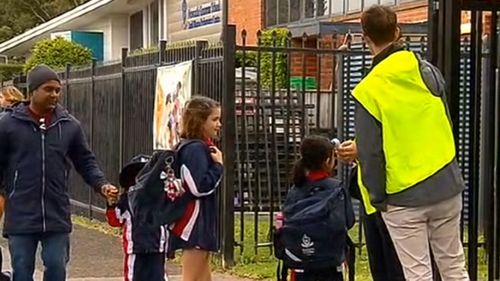
Students in NSW and Queensland are back in classes this morning.

Students in NSW and Queensland are back in classes this morning.
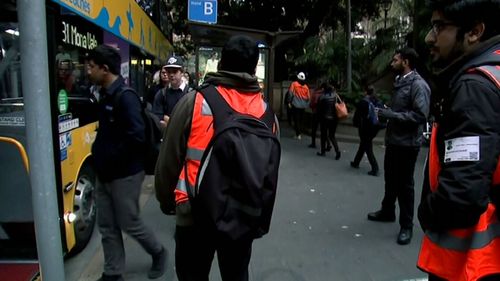
Roads were busier than they have been for months, after students were told to try and avoid public transport.
Hundreds of extra transport staff, including security and marshalling officers, were on duty in Sydney this morning as some people also returned to work.
Under the new rules, a maximum of 12 passengers are allowed on a NSW bus at any one time, while trains are limited to 32 people per carriage and up to 45 people are allowed on ferries.
NSW Transport Minister Andrew Constance said staff will be monitoring social distancing on public transport and warned stations could be closed if they become too busy.
Prior to the COVID-19 pandemic, more than 900,000 school students used the transport network to get to school and 110,000 of those caught public transport.
School students and the vulnerable were to be given priority.
However, there were no delays reported by Transport NSW.

Returning to the classroom full-time in NSW comes two months after COVID-19 restrictions forced around 800,000 children in the state to study remotely.
It is compulsory for NSW children to be back in classes.
Some schools were taking children’s temperatures at the gate and offering hand sanitiser.
Some independent and Catholic schools also went back today, while others are working towards a June 1 return date.
Mr Constance urged commuters not to become complacent when using public transport.
“I think that the risk at the moment is because everything’s going back to normal, I think there’s a lost complacency that could start to creep in here and we’re still in the middle of a global pandemic,” he told Today.
“We don’t want people sick and dying and transport networks are risky given the number of people.”

“Roads will be busy so please be patient, particularly in and around school zones.
“The 40km/h limit applies. But people will need to be extra vigilant because there’s going to be that many kids that will be driven to school.”
Meanwhile, students in grades two to 10 are also back at school in Queensland.
Parents were also urged to drive their children to school or accompany them by foot as they walk to the school gates.
Start times were staggered slightly to avoid too many parents and students lingering at the front fence.
And once the kids are inside, they will be asked to wash their hands several times throughout the day.
It is expected that some Queensland parents may choose to keep their children at home because of medical concerns, but they are warned they then need to take responsibility for their learning.
Help from the school will be provided if they need to stay home due to medical reasons.
Activities like assemblies, concerts, excursions and camps remain on hold across the nation.
OTHER STATES AND TERRITORIES
Tasmanian kindergarten to Year Six students, along with Year 11 and 12 students, also went back today, before students in Years 7 to 10 join them on June 9.
The ACT is continuing its staged return with students in Years 3, 4 and 10 getting back to school today, leaving only Years 5, 6, 8 and 9 to return on June 2.
Victorian kids are bracing for their return, with children in prep to Year 2 and Years 11 and 12 returning tomorrow, before the remaining cohort goes back from June 9.
Students are already back in school full time in South Australia, Western Australia and the Northern Territory.
For breaking news alerts and livestreams straight to your smartphone sign up to the 9News app and set notifications to on at the App Store or Google Play.
Trump’s tough choices over Hong Kong

China’s latest move to introduce national security legislation in Hong Kong — a semi-autonomous city that was guaranteed its own legal system and certain democratic freedoms until 2047 under the “one country, two systems” framework — has sent shockwaves across the world. The draft legislation would ban sedition, secession and subversion of the central government in Beijing as well as “foreign interference.” — all codewords that the Chinese Communist Party uses to quash political dissent. The legislation would also allow for mainland security forces to be deployed in Hong Kong, among other measures that would erode the territory’s autonomy.
While China feels increasingly empowered lately, its training wheels came off a long time ago when it comes to achieving its territorial ambitions. In the last few years, it has continued efforts to erode Hong Kong’s special status.
After Russia illegally annexed Crimea in 2014, Trump inaccurately claimed former President Barack Obama “allowed a very large part of Ukraine to be taken.” Now Trump is likely to have his own Crimea moment, as China plans to assert its control over Hong Kong.
When the history books detail the Trump administration’s posture on China, they will tell a tale of two policies. The State Department and the Commerce Department, for example, have taken an increasingly punitive stance against China while the intelligence community has laid out the threats that China poses to US elections, arms control, cyberspace, and more. Trump, on the other hand, clung to China as he worked to iron out a trade deal, often parroting the ruling Communist Party’s (CCP) propaganda on issues like Hong Kong and, at times, praising China on crises like the coronavirus.
During a violent crackdown on pro-democracy protesters in Hong Kong last year, President Trump called the protests “riots” and continued to praise Chinese President Xi Jinping. Trump also wavered in his support for bipartisan legislation that authorized US sanctions on those responsible for human rights abuses in Hong Kong and prohibited the sale of tear gas and other items to Hong Kong police. In a November 2019 interview with “Fox & Friends,” Trump said, “I stand with Hong Kong…but we’re also in the process of making the largest trade deal in history.”
Human rights in Hong Kong took a back seat until the trade deal wrapped up and Congress passed bipartisan legislation to support human rights in Hong Kong with veto-proof majorities.
Now, with politics in play, the President is singing a different tune.
In addition to now criticizing China’s response to Covid-19, Trump has threatened to “address that issue very strongly” if China moves ahead with the national security legislation. Secretary of State Mike Pompeo has also publicly put Hong Kong’s status — a special administrative region as enshrined in the 1992 Hong Kong Policy Act — on the line. In a statement Friday, Pompeo said that Washington “strongly urges Beijing to reconsider its disastrous proposal, abide by its international obligations, and respect Hong Kong’s high degree of autonomy, democratic institutions, and civil liberties, which are key to preserving its special status under US law.”
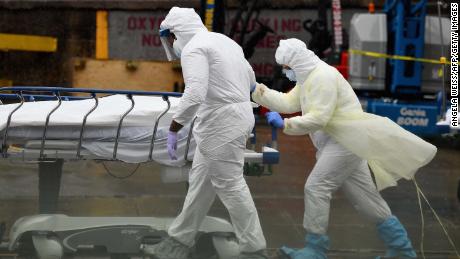
But the President’s credibility gap on China undercuts the idea that Trump will follow through on this threat. If the legislation passes, sounding what Pompeo called the “death knell” of autonomy in Hong Kong, the question is: can anyone convince Trump to try to do something about it?
In certain respects, Trump’s track record on territorial integrity is catching up with him. He has not been a cheerleader for sovereignty, including here at home. He has failed to condemn Russia’s interference in US democracy, for starters, and he’s been meeker than milquetoast when it comes to confronting Russia over its annexation of Crimea. And while the CCP has eroded the special status of Hong Kong over the last few years, he’s been mostly quiet, except for when he praises Xi. Trump’s track record gives the CCP little reason to fear that he’ll draw a line in the sand over further encroachments on Hong Kong’s autonomy, especially given the economic implications of doing so.
The administration has already floated some response options. National Security Adviser Robert O’Brien said on Sunday that the administration is likely to impose sanctions if China moves ahead with this legislation and outlined the economic costs, including to Beijing, if the national security law moves ahead. A more significant action would be revisiting the United States-Hong Kong Policy Act of 1992 and revoking special treatment that Hong Kong currently gets under that legislation on matters like trade.
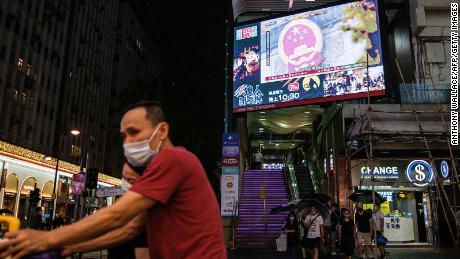
Hong Kong is not currently subject to the tariffs the US imposes on Chinese goods, for example. Aside from trade,Hong Kong’s status as a financial hub could change too if Beijing’s law causes changes to the operating environment and it’s no longer seen as as a safe transparent and stable place for business. The CCP would suffer some economic costs if there is mass capital flight and market impacts, but that’s a risk they appear prepared to take.
In addition to potential action by the administration, Congress is already stepping in.
A bipartisan bill introduced by Sens. Pat Toomey and Chris Van Hollen would impose mandatory sanctions on “entities that violate China’s obligations to Hong Kong under the Joint Declaration and the Basic Law.” The legislation would also impose mandatory secondary sanctions on banks that do business with those entities in violation of the Basic Law. While it is unlikely to deter the CCP from moving ahead, Congress is trying to step in and take immediate action.
All options come with costs. If Congress or President Trump do decide to take direct action against the CCP for its efforts to do away with the “one country, two systems” framework, it could prompt China to retaliate and push the global economy in a downward spiral at a time when Covid-19 is already threatening to send the world into a deep recession. But the costs of inaction are significant too. Not only would lack of action undermine democratic freedoms and human rights for the people of Hong Kong, it would set a precedent that China can act with impunity. In the days ahead, Trump’s team should be working overtime to try to convince global partners in Europe and around the world — and the President himself — to lay out the costs for China if it destroys Hong Kong’s autonomy. One of the team’s biggest battles may be convincing the President himself. He’s prioritized trade with China over all else to date, and human rights haven’t been top of his agenda. Right now, however, politics may persuade him to act. His campaign has tried to rewrite his own history praising Xi, inaccurately painting Trump’s likely 2020 opponent Joe Biden as “China’s puppet.”
There are no good choices here. But, absent decisive action, the people of Hong Kong will suffer for generations to come. While Trump has been reluctant to stand up to Beijing in many cases, the political ramifications of clinging to China in the midst of his re-election campaign could motivate him to take a stronger stance on Hong Kong.
The New York Times Fills Entire Cover With Names Of Coronavirus Victims In The US

When readers across the country pick up a copy of the New York Times on Sunday, they will be confronted with an extraordinarily grim sight.
They will see the names and a peek into the lives of the people who died in the US as a result of the coronavirus pandemic. The nearly one thousand obituaries, which fill the entire front page, represent only an estimated 1% of the death toll.
As of Saturday, more than 97,000 people in the US had died from complications with COVID-19.
The victims’ stories were pulled from obituaries published in newspapers across the country.Â
Simone Landon, the Times’ graphics desk assistant editor, came up with the idea to honour the victims in a way that would allow readers to see the gravity of the pandemic’s impact in the country, according to the paper.
Landon told the Times that there was “a little bit of a fatigue with the data†on deaths in the US, which is being tracked daily by Johns Hopkins University and followed closely by the media.
“We knew we were approaching this milestone,†Landon told the Times. “We knew that there should be some way to try to reckon with that number.â€
The shortened obituaries are displayed one after the other and fill six tall columns that stretch across a majority of the Times’ front page.Â
In a preview of the paper published Saturday, viewers can zoom in on each name to read about the victims’ lives:
“Lila Fenwick, 87, New York City, first black woman to graduate from Harvard Law School.â€
“Mike Field, 59, Valley Stream, NY, first responder during the 9/11 attacks.â€
“Jessica Beatriz Cortez, 32, Los Angeles, immigrated to the United States three years ago.â€
With the obituaries, the Times reminds readers who these people are.
“They were not simply names on a list. They were us.â€
The world’s most followed stock index is set for a drastic makeover
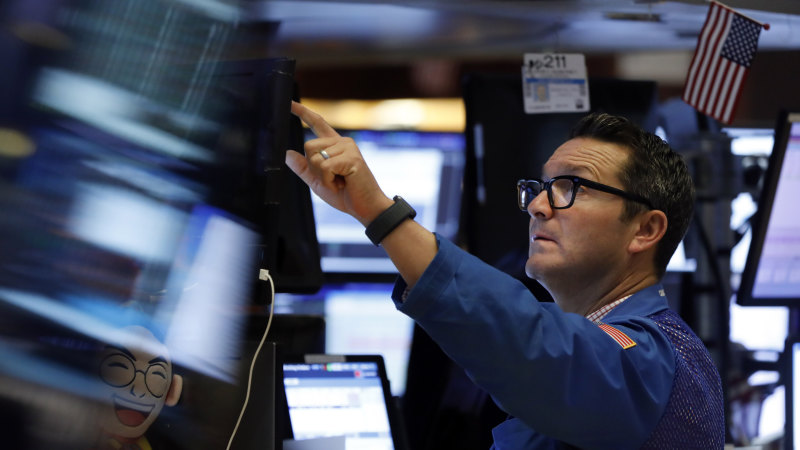
An equal-weight basket made up of companies that were booted from the S&P 500 over the past three years (for reasons other than acquisitions) is down 47 per cent this year, almost five times more than the benchmark’s 2020 decline, according to data compiled by Bloomberg. Just five of the ousted firms have posted positive returns, while half have plunged 40 per cent or more. Oil and gas companies including Chesapeake Energy and Transocean are still off by 80 per cent or more. Bed Bath & Beyond and Macy’s are down roughly 70 per cent.
That will create more distortion in a lot of these indices. As we see a lot more market concentration, it’ll be harder to read what’s going on in the market.
Megan Greene, senior fellow at the Harvard Kennedy School
Of course, these companies were already in some form of trouble before the coronavirus struck, hence their removal. But the fact that they belong to industries directly in the cross-hairs of the fallout, where demand is waning, has been lucky for anyone with passive exposure to the market in, say, an S&P 500 ETF.
“It was more happenstance than actual foresight that those companies would end up getting worse,” said Keith Gangl, portfolio manager for Gradient Investments. Still, “just by the nature of having less energy and less consumer, that certainly has benefited the index.”
Shifts in index composition are made as needed and “changes in response to corporate actions and market developments can be made at any time,” according to S&P Dow Jones Indices. Human judgment is part of the process, too: the committee aims to minimise turnover and doesn’t view crossing below thresholds governing, say, market capitalisation, as a reason unto itself to boot a stock out.
“The addition criteria are for addition to an index, not for continued membership,” says the 41-page S&P US Indices Methodology rule book. “As a result, an index constituent that appears to violate criteria for addition to that index is not deleted unless ongoing conditions warrant an index change.”
Removal of 30 companies would surpass the annual average over the last three decades and rank with some of the busiest years. It’s a reminder that even passive structures have active elements, a fact on display last month when an oil exchange-traded fund reshuffled the mix of its futures time and again. In equity indexes, companies are booted when they fall below standards tied to market-cap or profitability. But deciding which firms to add requires a bit more finesse.
Pizza giant Domino’s was added to the S&P 500 earlier this month. Credit:AP
As it stands, a company must have a market-cap of at least $US8.2 billion ($12.6 billion) for S&P 500 consideration. Liquidity measures must also be sufficient, and the sum of total earnings over the past four quarters must be positive, along with profits in the most recent quarter.
Most recently, Capri Holdings – the company behind retail brands including Versace and Jimmy Choo – was removed from the S&P 500 on May 12 after it lost roughly $US5 billion in market value this year. As Capri was transferred to the S&P Small Cap 600 Index, medical device company DexCom and Domino’s Pizza were added to the large cap gauge. Both companies have posted double digit gains in 2020.
While market-cap standards “are reviewed from time to time to assure consistency with market conditions,” according to S&P methodology, consider what’s passed for small in the S&P 500 over the last 15 months. Market-cap guidelines for the large-cap gauge were raised to $US8.2 billion on February 20, 2019. After the latest stock rout, about a fifth of companies in the index no longer meet that standard.
The types of companies that can post consecutive profits in a post-COVID world are likely different from those that might have done it before, according to DataTrek’s Colas. Travel or leisure firms “don’t have much of a chance,” he wrote to clients, highlighting Uber and Lyft as examples of companies that may remain unprofitable for longer.
Loading
Plus, the index committee is probably hesitant to add more technology firms to a benchmark that’s already concentrated, he said. The S&P 500 Information Technology sector makes up 26 per cent of the index, the highest share since the dot-com burst.
Much of the stock rebound that reached 30 per cent from the March 23 bottom can be attributed to such consolidation. Resilience in megacaps, technology and health care was the salvation of bulls, but a growing schism ruled by automation between stock market “haves” and “have-nots” has provoked some concern worker rights and wealth inequality.
The strong equity performance also left many questioning how the stock market could become so unhinged from the real economy, where measures of unemployment are the worst in nine decades. At least part of the answer lies in the strength of megacap firms, with every member of the FAANG complex (Facebook, Amazon, Apple, Netflix and Google) positive in 2020.
Going forward, it’s likely that market concentration will only increase off the back of the COVID crisis, according to Megan Greene, senior fellow at the Harvard Kennedy School.
“That will create more distortion in a lot of these indices,” Greene said by phone. “As we see a lot more market concentration, it’ll be harder to read what’s going on in the market.”
Bloomberg
Most Viewed in Business
Loading
Michigan Gov. Whitmer Says She Censors Herself On Trump To Keep Federal Aid

Michigan Gov. Gretchen Whitmer said that she feels the need to censor herself when it comes to public comments about President Donald Trump, fearing it could jeopardize her state’s receiving federal assistance.
Whitmer told Axios in an interview scheduled to air on Monday about the difficulty of juggling Trump’s emotions with ensuring that Michigan residents receive adequate help amid the coronavirus pandemic.
“The worst night’s sleep that I’ve got in the last 10 weeks is when he has attacked me on Twitter,†Whitmer, a Democrat, said in an interview clip released Sunday.
Whitmer was asked if she feels that she has to censor herself when discussing Trump “for the sake of continuing to receive federal assistance.â€
“Yes,†Whitmer readily replied.
Trump has publicly labeled Whitmer a “big problem†after she expressed concern that the federal government may be blocking her state’s requests for personal protective equipment and other needed resources for health care workers. Similar allegations have been made by hospitals across the country.
Trump blasted the first-term governor as being “way in over her†head and said she “doesn’t have a clue.†Whitmer and Trump were later able to smooth out their differences behind the scenes.
Whitmer’s full interview with Axios is scheduled to air Monday at 11 p.m. on HBO.
A HuffPost Guide To Coronavirus
Calling all HuffPost superfans!
Sign up for membership to become a founding member and help shape HuffPost’s next chapter
White House announces new travel restrictions on Brazil

The proclamation reads in part, “I have determined that it is in the interests of the United States to take action to restrict and suspend the entry into the United States, as immigrants or nonimmigrants, of all aliens who were physically present within the Federative Republic of Brazil during the 14-day period preceding their entry or attempted entry into the United States.”
The proclamation is aimed at limiting the spread of coronavirus coming into the United States from Brazil, the country with the second most cases worldwide, according to Johns Hopkins University. As of Sunday evening, Brazil had more than 347,000 confirmed cases of coronavirus.
“Today’s action will help ensure foreign nationals who have been in Brazil do not become a source of additional infections in our country,” White House press secretary Kayleigh McEnany said Sunday. “These new restrictions do not apply to the flow of commerce between the United States and Brazil.”
Earlier on Sunday, national security adviser Robert O’Brien said that the Trump administration was likely to announce new restrictions on travel to Brazil.
O’Brien, during an interview with CBS’ “Face the Nation,” said White House officials “hope that will be temporary.” He said the White House would “take a look at the other countries on a country by country basis” in that region.
Asked about reporting that the European travel restrictions from mid-March came too late to stop the virus from spreading throughout the US, O’Brien highlighted Trump’s decision to restrict some travel to China but suggested US officials were unaware that people traveling through Europe from China could bring Covid-19 to America in the weeks before the European travel restrictions were implemented.
“We didn’t know at the time but we later learned that the Chinese continued to allow people to travel from Wuhan to Europe,” he said.
Coronavirus has yet to peak in Sao Paulo, Brazil’s largest and worst-infected city, but the health care system is already beginning to break down. As the crisis deepens and the number of deaths continues to rise, President Jair Bolsonaro is urging businesses to reopen. He opposes many governors who are stressing social distancing measures to slow the spread.
Far from hospitals, Brazil’s indigenous people are dying at an alarming rate. The death toll is double that of the rest of Brazil’s population, according to the advocacy group Articulation of Indigenous Peoples of Brazil.
APIB has recorded more than 980 officially confirmed cases of coronavirus and at least 125 deaths, which suggests a mortality rate of 12.6% — compared to the national rate of 6.4%.
Magnitude 5.9 earthquake strikes near Wellington

A magnitude 5.9 earthquake has struck near New Zealand’s capital Wellington.
The earthquake was 46 kilometres deep and 25km northwest of Levin, according to government seismic monitor Geonet.
According to the Geonet app tens of thousands of people felt the strong quake, most of those reports came from Wellington.
Emergency officials said there were no immediate reports of damage.
According to the Geonet app tens of thousands of people felt the strong quake.
Emergency officials said there were no immediate reports of damage.
The earthquake also interrupted Prime Minister Jacinda Ardern mid-interview, which was caught on camera.
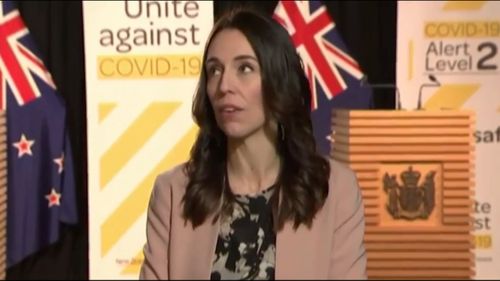
“We’re having a bit of an earthquake here,” Ms Ardern said in an early morning interview with Newshub’s AM Show from Parliament.
“Quite a decent shake here…if you see things moving behind here.”
Once the earthquake stopped, Ms Ardern calmly carried on with the interview saying she was in a “structurally sound place”.
New Zealand lies on the seismically active “Ring of Fire”, a 40,000km arc of volcanoes and ocean trenches girdling much of the Pacific Ocean.
For breaking news alerts and livestreams straight to your smartphone sign up to the 9News app and set notifications to on at the App Store or Google Play.
Video shows crowded pool party in Missouri – CNN Video

Hundreds attended a Memorial Day weekend pool party at the Lake of the Ozarks, Missouri despite the state’s social distancing policies.