Friday, April 24, 2026

What To Do About Travel You’d Booked For Later In 2020

0

The COVID-19 pandemic has disrupted the travel industry in unprecedented ways. With spring vacations canceled long ago and summer options looking grim, many travelers are wondering what they should do about trips they had booked for later in 2020.

Should they go ahead and cancel or postpone? Is it better to just wait and see what happens? Will international travel even be possible? Are refunds an option?

“Right now, the [Centers for Disease Control and Prevention] tells us that all nonessential travel ― foreign and domestic ― is on hold,” Erika Richter, senior director of communications at the American Society of Travel Advisors, told HuffPost. “This is a rapidly evolving situation. However, we know one thing for certain: The virus is not under control. Therefore, travelers need to continue to consult with expert resources to understand the impact on their 2020 travel plans.”

Essentially, travel will return in phases, but there will be restrictions and considerations that affect individual travelers differently.

“Barring a miracle, there will be no vaccine this year,” said Brian Kelly, founder and CEO of The Points Guy. “Even if you can physically go somewhere, no one can make the decision for you about whether or not to make the trip. That’s a matter of personal risk analysis based on the information you have.”

So what major factors should people consider when assessing what to do about travel they had booked for later this year? HuffPost spoke to Kelly, Richter and other travel experts to find out. Read on for their guidance.

Don’t Hold Out Hope For International Travel

There are many factors to consider when assessing what to do about travel you had planned for later in 2020. A big one is whether the trip is domestic or international.

“Local and regional travel will come back first, potentially in 2020, depending on the experts’ advice,” said Richter. “International travel likely won’t see a return until 2021.”

Kelly told HuffPost he believes that many borders will open up later this year, allowing for the possibility of international travel. Still, he noted, “some countries may not let in people from the U.S. because of our inability to handle this like an adult.”

Even if international travel is technically possible, the decision to risk that option will be a personal calculation. It’s safe to assume informed travelers will take a more cautious approach amid the pandemic.

“We always tell travelers to reference objective third-party sources of information like the CDC and the State Department before making decisions to travel,” Richter explained. “Every traveler has their own level of risk tolerance, so it’s important that they are making informed decisions in consultation with expert advice. This also means that travelers need to talk to their health care provider before their next trip ― whenever that trip happens to take place. Every traveler is going to have a different health profile and vulnerability, which will certainly need to be considered before their next trip.”

In addition to concerns about the spread of COVID-19 in various countries, mandatory self-quarantine orders for foreign travelers may also make international trips less appealing.

“Some countries may not let in people from the U.S. because of our inability to handle this like an adult.”

– Brian Kelly, founder and CEO of The Points Guy

“Before you can cancel your plans down the road, it’s important to consider the purpose of your trip and where you’re headed,” said Rob Karp, founder and CEO of the travel planning service MilesAhead. “Consumers need to weigh out their region’s current travel restrictions along with understanding the restrictions being held in the destinations they plan to travel to.”

He added that travelers should think about how they could pose a risk to the destination they hope to visit.

Domestic Travel Will Likely Come With Restrictions

Domestic travel will be a safer, easier option, but there are still many factors to consider.

Even if nonessential travel is back on the table later in the year, some states may have mandatory self-quarantine orders in place. Budget travel expert Lindsay Myers advised paying attention to any travel restrictions at the destination you plan to visit and consulting expert sources.

“Listen and read about what is happening in the area that you want to visit,” she said. “This will help you have a more informed decision on what to do with your reservations.”

If you had planned to fly somewhere else in the U.S., turning it into a road trip may feel like a safer plan. The farther away the destination, the greater the risk to you and others, so consider a shorter trip to somewhere closer to home. Even just an afternoon drive for a hike or other outdoor activity can offer a nice break.

Still, the popularity of the destination is another factor to consider. U.S. beaches and state parks are already having issues with overcrowding.

“The busier the location, the more travel restrictions you are likely to face,” said Axel Hefer, CEO of hotel price comparison site Trivago. “Ask, ‘Will I feel comfortable making the trip?’ Similar to shorter trips, any travel to remote locations might be more manageable in the short term. Also keep in mind that experiences at your destination may be impacted, so you should check whether restaurants and other activities will be open.”

Even domestic travel may entail restrictions and other factors to consider. 

Although you may feel comfortable driving somewhere, there may be concerns about hotels or Airbnbs.

“If you do not feel safe about the cleanliness of your accommodation, try switching your house with a friend or family in another city for the weekend,” Myers suggested. “It gives you a chance to get away and break out of your everyday.”

If There’s A Penalty For Canceling Now, Just Wait And See

After conducting your personal risk analysis, you may feel inclined to cancel your trip. But it could be prudent to hold off, especially if it means incurring a penalty.

“It pays to wait until the last minute to cancel your flight,” said Myers. “Travel has been brought to a standstill, and there is so much uncertainty about when it will come back. Do not cancel your flight because this turns the cancellation into a voluntary cancellation of your reservation. When this happens, the airline does not have to refund you or help you in any way.”

Voluntary changes and cancellations are often subject to fees. Many airlines have implemented more flexible cancellation policies amid the pandemic, but if you’re looking for a full refund, it may be worth waiting to see what happens. Myers noted that many airlines are still canceling flights as they approach their scheduled departure dates, which qualifies more travelers for a refund attributed to an involuntary change.

“It pays to wait until the last minute to cancel your flight.”

– Lindsay Myers, budget travel expert

“It doesn’t cost you anything to keep the option open, even if the end result is the same,” said Konrad Waliszewski, co-founder and CEO of the travel app TripScout. “Consumer protection regulations for COVID-19-related cancellations are only likely to get more consumer-friendly and transparent over the coming months as well.”

For other travel reservations, such as hotel rooms, you should similarly take the time to figure out your options. Travelers can contact the hotels where they reserved rooms or the booking platforms they used to learn about the cancellation policy and what plans they have in place for the remainder of the year.

“The hotel and Airbnb industry have been hit very hard during this pandemic,” said Myers. “If you booked directly with the hotel, contact the hotel directly to discuss your options on moving your date or completely canceling your booking. Airbnb already has cancellation processes with their hosts in place. Hotels and third-party platforms have been constantly updating their reservation policies because of the pandemic.”

If There’s No Fee, Canceling Now Could Help You Save Later

There are reasons you may want to cancel sooner rather than later. For one, travel companies’ cancellation policies are changing rapidly, and the flexibility we’re seeing now not is guaranteed in the long term. Plus, if you’re able to cancel now without incurring a fee, you could even get a better deal later.

“If you’re able to cancel your bookings with no penalty, then you should cancel now,” advised Waliszewski. “If your trip actually becomes possible and safe, then prices will certainly be much cheaper than your original booking, and it’s the one time you don’t have to worry about everything being booked.”

Airlines, hotel chains and other travel suppliers are offering different refund and voucher options for cancellations. If you’re loyal to a major airline or hotel chain, you may feel comfortable accepting a credit instead of a refund.

“Consumers need to ask themselves if that credit is something you’ll actually utilize at another time,” Karp said. “You should also factor in your confidence in the supplier. Is this a brand or company you normally book with and trust? Consumers are less likely to keep a credit with companies they don’t necessarily trust.”

Karp also noted that canceling a flight sooner rather than later may help airlines get a better sense of flight capacity and if that particular route is in demand. He and Richter both emphasized that postponing is an option as well.

“Although this may feel like a strange time to coordinate travel plans, suppliers are being flexible with bookings, vouchers and refunds now more than ever,” Karp said.

Even if you don’t know when it will be safe for you to take the trip you’d planned, you’ll likely be able to postpone again if need be.

Ultimately, travelers with trips scheduled for later in 2020 need to take stock of their current booking options, consult the most up-to-date guidelines and recommendations from public health and safety experts, follow the conditions in their destination of choice and consider personal health factors. These considerations will shape the best course of action.

Source link

Reasons Why You Need To Visit Sicily

0

Are you thinking of a beautiful island where you can take your family, next holiday?

Perhaps, you should choose Sicily that has gorgeous and Perfect Island. Sicily is one of the largest Islands in Italy and has seduced travellers with its natural and cultural treasures. It crows wonderful cool weather and varied range of culinary influences.

The Island is full of historical monuments, volcano and mountain scenery that abound it.


Here are just a few reasons why you need to select Sicily for your next holiday:

Beach

Everyone loves the calm, warm weather in the beaches, the sand and the perfect sceneries. Beaches in Sicily have the best most beautiful sceneries in the world. The favourable weather is enough to visit the beach for half a year—the glorious summers that stretch throughout the year and the mild winter that becomes a war spring.

Sicily has over 280 beaches that come in all forms and many colours from those in town to private inlets and coves. Most of the beaches have sparkling waters and surrounded with a rocky coastal landscape powdered with white sands.

Your main reason for visiting Sicily should be to spend time at the warm beaches, in Sicily, there are plenty of beaches to choose from.


Art

There is an abundance of historical sceneries that surrounds Sicily. The historic buildings that bring about a beautiful mix of cultures, churches and museums make it a perfect spot to bring your family. For instance, if you are searching for Greek architecture (though you are in Italy), you can visit the Valley of the Temples in Agrigento.


Food

Sicily is the best place where you can find culinary delights and foodies. It doesn’t matter where you visit, in Sicily whether you choose to eat at the street or fine dining hotels the food is guaranteed to be delicious. They have a fresh and seasonal menu that gives you the temptation to taste.

Think of seafood, pizza, pasta and one’s that are coated in a cheese after all you have a variety to choose on, and you may choose either caponata, “involtini di pesce spada” or “con le sarde”.


Wine

Think of the long-standing wine traditions that will quench your thirst. In Sicily, you will get Marsala the popular most wine, Nero d’Avola, Syrah and one made from Zibibbo grapes. For the ones that love wine, you will fit right in.


Accommodation

It’s affordable and cheap to live in Sicily. Choose the best holiday destinations and accommodation with the best view of the beach. Most of the best hotels in Sicily have a hot spring and surrounded by dramatic views where you can do walking, boating and flora hunting.


Conclusion.

Sicily has been developed for tourist attraction, and the locals are kind hosts who are eager to show off their Island and make travellers feel at home. So, if you are planning for a vacation, make sure you select Sicily and write it as your first choice. Wait no more, book a trip to Sicily.

It is a truly great island, and you will not regret it!

Source link

NIMH » Get Excited about the Brain!

0

A coloring and activity book for kids ages 8-12

Did you know the human brain generates enough electricity to power a small lightbulb?

This free, printable coloring and activity book for children ages 8-12 features exciting facts about the human brain and mental health.

Download and print the PDF version today!

Source link

Exercise Examples and Videos

0

Source: Department of Agriculture –
Related MedlinePlus Pages: Exercise for Older Adults

Source link

Self-Shot Magazine Covers

For its 50th anniversary issue, ESSENCE released a Naomi Campbell cover that was styled and shot by the supermodel of the 90s herself using her iPhone. For now, the days of traveling models and crowded photoshoot sets are over and publications are getting creative in other ways with at-home shoots that can be created with accessible high-quality equipment.

For the first-ever ESSENCE magazine cover shot entirely on an iPhone, Campbell did her own hair and makeup, and chose an outfit of her own before posing for a relaxed smartphone self-portrait. According to the magazine, this cover “[marks] the first time in the brand’s 50-year history that a cover star was her own photographer.”

Image Credit: ESSENCE

Source link

Fitness: All Guides

0

girl holding track shoesFitness is fun! It’s a great way to improve your overall health and wellness. Through exercise, you may even find you feel less stressed and more relaxed. You’ll have more energy during the day too! However, the number one way to make exercise a part of your life is by participating in activities you find fun and enjoyable. It may help to exercise with a friend or family member.
Exercise Safety

It’s important to consult your health care provider before starting any exercise program. The exercises featured in the strength training fitness guide here are for teens that are in good health and have no physical restrictions. Be sure to listen to your body. Exercise should feel like you are working out (your breathing should be heavier than normal and you might break a sweat), but not like you are injuring your body. If a particular exercise or stretch hurts, STOP immediately. You may be performing the exercise incorrectly, working beyond your limits or injuring your body. If you feel dizzy, have trouble breathing, or experience any pain while you are exercising, STOP, and talk to your health care provider about next steps.

Your body needs energy (food and fluids) to perform at its best. Our sports nutrition guide will help you understand what you should eat and drink before, during and after exercising so that you will feel energized, build and repair muscles, and have a safe workout.

My Muscles

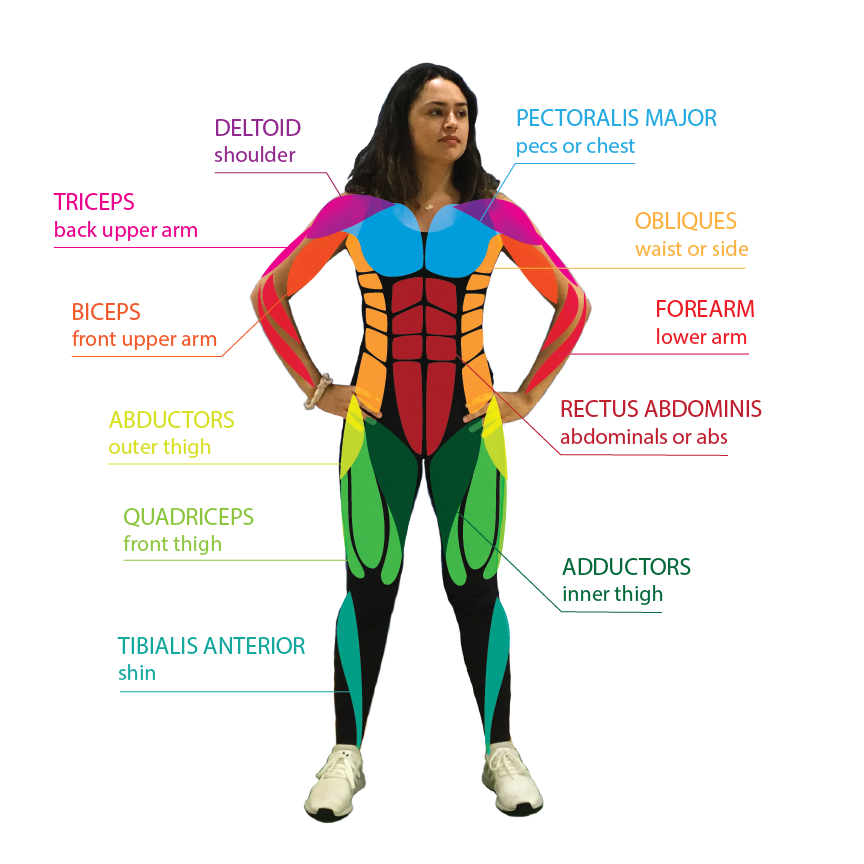
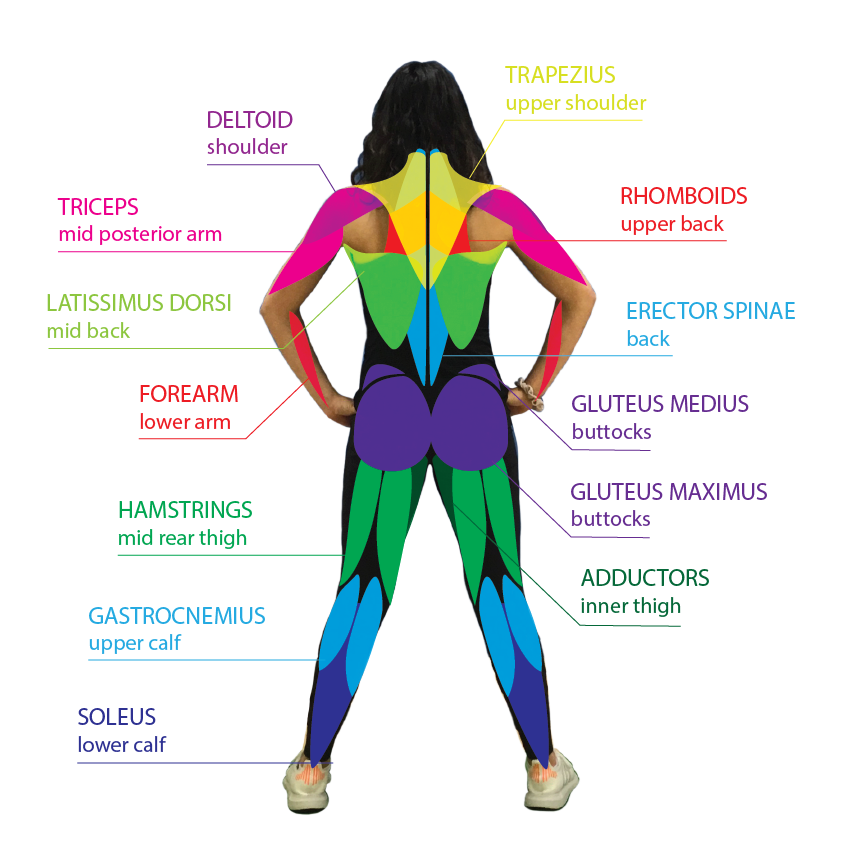
Understanding the names and locations of your muscles is important when you’re exercising. If you know the specific muscles you’re using, it is easier to focus on each aspect of your workout. This helps you to be more efficient and to prevent injuries.

How to use My Muscles:

  • Learn the names of your muscles and where they are located on the body by looking at the pictures below.

Look at both views: front (anterior) and back (posterior)

yoga-pose

Stretching is a way to get your body ready for exercise, improve flexibility, and increase your range of motion. Proper stretching will help your muscles feel relaxed and prevent muscle related injuries. Try the following static stretches (meaning that you will not be moving around for the stretch) demonstrated by our Peer Leaders. For each stretch, hold for 30 seconds at a time. Make sure you go into the stretch slowly and hold the position when you start to feel some tension in the muscle. If you feel pain, stop immediately- this means you may be stretching the muscle too far. Check out the My Muscles guide to see which muscles you will be stretching using these exercises.

Other great ways to stretch include dynamic stretching (a movement-based type of stretching) and foam rolling using a foam roller!

Upper Body Stretches

Cross Shoulder Stretch Tricep Stretch Chest Stretch

Lower Body Stretches

Quadricep Stretch Standing Hamstring Stretch Sitting Hamstring Stretch Lunging Hip Flexor Stretch Calf Wall Stretch

girl lifting weights

Strength training is a great way to get your muscles conditioned and strong. This form of exercise can help raise your metabolism (the way your body uses energy from food) and will keep your bones strong, which may help prevent future osteoporosis. Strengthening your muscles can even help to release stress from your body. Try the following workouts for your upper, middle (core), and lower body!

Helpful Tips:

  • While doing these exercises, focus on your breathing (deep inhales and exhales)
  • Check out the My Muscles guide as a reference for what muscles you are working.


Workout 1: Lower Body

How to: Start with the first exercise on this list. Perform the exercise 8-12 times (if you are a beginner, aim to complete 5 repetitions of the exercise). Once you finish, move on to the next exercise, until you finish all 6 exercises.  Repeat this entire set 1-3 times.

Floor Bridges Clam Shells Squats Reverse Lunges Side Lunges Standing Calf Raises


Workout 2: Upper Body

How to: Start with the first exercise on this list. Perform the exercise 8-12 times (if you are a beginner, aim to complete 5 repetitions of the exercise). Once you finish, move on to the next exercise, until you finish all 6 exercises.  Repeat this set 1-3 times.

Push-ups Up and Down Plank Bicep Curls Triceps extensions Chest Press Overhead Press


Workout 3: Core (Middle body)

How to: Start with the first exercise on this list. Perform the exercise 10-15 times OR hold the position for 20-30 seconds. Once you finish, move on to the next exercise, until you finish all 6 exercises.  Repeat this set 1-3 times.

Plank SupermansRight/Left Plank Bicycle CrunchesV-Sit Leg raises

Source link

Top 10 Cycle Routes of Great Britain

0

Green, cheap and great exercise, not to mention enormous fun, cycling is becoming ever more popular. London has just launched its own cycle hire scheme and more of us than ever are exploring Britain by bike.


We’ve got hundreds of cycle routes to choose from but here are 10 of our favourites.

Millennium Coastal Path, Llanelli, Wales

The Millennium Coastal Park is a 12-mile stretch of coastline on the Burry Estuary which features a purpose-built traffic-free path following the coastline along the park’s entire length. Previously an area of industrial wasteland, the park has been transformed into a tranquil green corridor offering superb views of the Gower Peninsula and a variety of attractions both natural and man-made.


Lough Neagh, Northern Ireland

For a unique cycling experience complete a circuit of Lough Neagh, the largest inland water in Britain and Ireland. The 113-mile, bi-directional Loughshore Trail (Route 94 of the National Cycle Network) is ideal for enthusiasts, novices and families alike. The route mainly follows quiet, country roads close to the lough’s shoreline and consists of mostly flat terrain – apart from a couple of short hilly sections which provide fantastic views over this huge expanse of water.


Limehouse to Little Venice, London, England

London’s network of canals make for great traffic-free cycling and a scoot from riverside Limehouse in the east to Little Venice along the Regent’s Canal is a great way to see London from a new perspective. Explore Limehouse, once the centre of London’s working docks and now home to upmarket flats and yachts, cruise through cool Camden and check out some of London Zoo’s

inhabitants en route. At 8 miles it’s easily achievable in a few hours.


Richmond to Hampton Court, London, England

Wind your way along this photogenic section of the Thames from villagey Richmond to the glorious Tudor palace, Hampton Court. There are some great pubs along the way and even a sandy beach or two. For more information and other routes along the River Thames check out the Waterscape website.


Bristol and Bath Railway Path, West Country, England

Linking the twin West Country jewels of Bath and Bristol, this 13-mile stretch of disused railway track begins in the historic port of Bristol and passes via Mangotsfield, Warmley and Saltford before arriving in the heart of Bath.


Chocolate Tour, Birmingham, England

The crucible of the Industrial Revolution is famous for many things – canals, engineering, curries but most mouth-wateringly, chocolate. Cycle along the Rea Valley out from Birmingham city centre along the towpath of the Worcester and Birmingham Canal. If you’re hungry take a detour to Cadbury World, the factory and interactive experience dedicated to the world’s best-loved chocolate.


Marin Trail, Conwy, Wales

This mountain bike trail near Llanrwst has big climbs, steep descents and truly awesome scenery. Long challenging climbs lead to miles of technical singletrack weaving through trees and boulders, across streams and down tricky gullies. Have a break for a moment to take in the views across Snowdonia National Park.


Wastwater, Lake District, England

The 12-mile cycle from Wastwater to Santon Bridge via Gosforth is said to have the best view in the Lake District. Wastwater is the deepest lake in England and it’s surrounded by some glorious scenery including Scafell Pike, England’s highest mountain.


Crab and Winkle Way, Kent, England

The Crab and Winkle Way links the cathedral city of Canterbury with the harbour in Whitstable. On the way you travel through Blean Woods, one of the largest areas of ancient broadleaved woodland in southern Britain, where you can find the rare heath fritillary butterfly. Don’t forget to pop into Canterbury’s magnificent cathedral, part of a UNESCO World Heritage Site.


Cairngorms, Scotland

The uplands of Scotland are famed for their rugged beauty and these days, their excellent mountain biking terrain. Trails in the Cairngorms National Park are rarely waymarked – instead, bring a map (there are good mountain biking route maps available locally) and go and explore.

Source link

Top 10 Attractions of Great Britain You Didn’t Know Existed

0

Dig a little deeper and you’ll uncover some of Britain’s lesser known attractions ranging from eccentric fruit-shaped houses to murky underground caverns and exquisite small art galleries.


Here are top 10 attractions you didn’t know were there…

Tower of Threave Castle, Dumfries and Galloway, Scotland

Standing isolated on its very own island on the River Dee is the foreboding 14th-century Threave Castle. Only accessible by rowing boat you must ring a bell to summon the boatman to take you across the water. The stronghold of the Black Douglases, it incorporates a rare artillery fortification built before 1455 when James II besieged the castle.


Westminster Cathedral, London, England

Did you know there are two magnificent cathedrals in this part of London? Westminster Abbey couldn’t get much more famous but just around the corner is the lesser known Westminster Cathedral. The extraordinary Byzantine façade of domes, towers and balconies is matched by a unique and sumptuous interior, clothed in vivid mosaics and with marbles that echo those of ancient Greece and Rome. In fact the interior is so darkly exotic it stood in for the 16th-century Spanish Court in the film Elizabeth: the Golden Age.


Sir John Soane’s Museum, London, England

The architect of the Bank of England’s London home is one of London’s most delightful small museums. As well as a visionary architect, Soane was a compulsive collector. Every inch of his handsome townhouse is crammed with art, artefacts and architectural treasures collected from around the world. Don’t miss the full cycle of Hogarth’s A Rakes Progress or the Egyptian sarcophagus in the basement. The whole building was designed to show off his collection with cleverly top lit rooms, hidden panels holding more art and mirrored walls. Go on the first Tuesday of each month to see the collection by candlelight.


78 Derngate, Charles Rennie Mackintosh House, Northampton, England

The master of British art nouveau did almost all his best work in Scotland but his last commission was to remodel this unassuming Georgian house in the English Midlands. And his only surviving domestic project outside Scotland is a gem. Despite being nearly 100 years old, the interior is boldly modern with Mackintosh’s trademark flourishes including striking geometric patterns and daring modernist designs. 78 Derngate also incorporates a gallery with regularly changing exhibitions and events.


Kettle’s Yard Gallery, Cambridge, England

If you’re ever in Cambridge and have had your fill of graceful quads, ancient colleges and grandiose libraries, walk north to Castle Street and restful Kettle’s Yard. This charming gallery has a superb collection of modern art including pieces by Ben Nicholson, Joan Miró, Henry Moore and Barbara Hepworth. The former house of Tate Gallery curator Jim Ede is a beautifully lit space that still feels like a home – sit in the chairs, read the books and enjoy the artworks at your leisure.


Corris Mine Explorers, Machynlleth, Wales

Delve deep into Wales’ industrial past and explore the mines of Braich Goch which were closed in the 1960s. Kitted out with a miner’s cap lamp, helmet, lamp belt and safety clips you’ll discover miles of tunnel on your journey down into the darkness. See what the miners left behind from tools to cigarette packets and discover this important part of Wales’ social and economic history.


Royston Cave, Royston, Hertfordshire, England

Royston Cave in Hertfordshire is unique in Europe. Believed to date from the 14th century, it’s a man-made cavern in the shape of a beehive, with a small aperture at the top for ventilation. Its most remarkable feature is an extensive range of crude wall carvings representing the Crucifixion, the Holy Family and several saints, among them St Katherine, St Laurence and St Christopher. It lay undiscovered for centuries until a workman in the 18th century unearthed a shaft that led to the cave. Nobody really knows the cave’s origins or purpose but its eerie atmosphere and deep sense of history are well worth experiencing.


Dunmore Pineapple, Falkirk, Scotland

This stone pineapple built in 1761 as a garden summerhouse is a strong candidate for one of Scotland’s most bizarre buildings. You’ll find it in the grounds of Dunmore House, the ancestral home of the Earls of Dunmore. It’s part of walled gardens that were once used for the growing, of among other things, pineapples. Standing at around 14m high the pineapple is intricately carved and is an eccentric delight. And if you can’t get enough of this fruity fancy why not stay? The Landmark Trust rent it as accommodation.


Marble Arch Caves Geopark, Fermanagh and Cavan, Northern Ireland

Discover the rugged uplands of Fermanagh and Cavan then find out what’s underneath. The fantastic show caves deep below this Geopark with their fascinating, natural underworld of rivers, waterfalls, winding passages and lofty chambers are a must see. Take a boat along subterranean rivers to explore spectacular caverns lit to reveal their scarred walls bristling with stalagmites, stalactites and weirdly shaped deposits formed over 600 million years ago.


The Egyptian House, Penzance, Cornwall, England

You wouldn’t expect to find a slice of ancient Egypt in Cornwall but this is exactly what you’ll get if you explore the backstreets of Penzance. Sprouting with flamboyant detail this 19th-century fantasy takes the Egyptian brief and expands it to something so exuberant that historical accuracy is joyously sacrificed for something altogether more fun. You can stay in this gorgeously garish confection through the Landmark Trust.


Written and contributed by Visit Britain


Photo credit:
Biepmiep Dunmore-Pineapple
Jim & Claire Threave-Castle
James Stringer Westminster-Cathedral

Source link

The hidden epidemic of prediabetes | NIH MedlinePlus Magazine

0

You could have prediabetes and not even know it. More than one in three adult Americans—approximately 88 million—have the condition, but 90% don’t realize it.

Recent research by the Centers for Disease Control and Prevention also reports that nearly one in four young adults (ages 19 to 34) and half of people over the age of 65 are living with prediabetes.

What is prediabetes? And if so many people don’t realize they have it, what can you do—especially if diabetes runs in your family?

Prediabetes means your blood sugar levels are higher than normal. The levels are not high enough to be diagnosed as type 2 diabetes, but it’s a warning sign that, over time, you could develop the disease. That’s why learning about risk factors is so important.

Eating healthier food and becoming more physically active can help you lose weight, feel better, and lower your risk of developing type 2 diabetes.

Prediabetes indicates a problem with the cells in your body. It means that those cells are not responding in a normal way to insulin, an important hormone that helps sugar in the blood get into cells and be used for energy. If a person’s body can’t make or respond to insulin, blood sugar levels rise.

Certain factors can make you more likely to develop prediabetes. You are more at risk if you have a parent or sibling with diabetes and are age 45 or older. Race and ethnicity are also factors: African Americans, Hispanic/Latino Americans, Native Americans, and some Asian Americans are at higher risk for type 2 diabetes. Additionally, you’re more at risk if you are overweight or obese and are physically inactive. This is just a short list of risk factors. To see more and to take a test to learn about your own risk factors, visit the National Institute of Diabetes and Digestive and Kidney Diseases website.

Getting more exercise and losing a small amount of weight can help prevent diabetes if you are at risk. Eating healthier food and becoming more physically active—taking a brisk walk for 30 minutes a day, five times a week, for example—can help you lose weight, feel better, and lower your risk of developing type 2 diabetes. Even small steps—losing just 5% to 7% of your body weight (10 to 14 pounds for a 200-pound person)—can make a big difference in preventing type 2 diabetes.

Source link

Embracing autism diagnosis helps family take charge | NIH MedlinePlus Magazine

0

Luca is in fifth grade. He loves playing video games, building things, and learning about space. He can tell you the name of all of the planets and every space shuttle. Luca also has autism spectrum disorder (ASD), or autism for short.

Luca’s mom, Tracy Sekhon, says autism is something that makes Luca shine—not something that holds him back. His diagnosis journey started back in 2010, when he was just 18 months old. Tracy and her husband noticed that Luca was having some developmental issues.

“Not only did he stop progressing, but he started going backwards. He had started making sounds that weren’t appropriate to what he was seeing,” Tracy says.

For instance, he called his dad “bye-bye” instead of “da-da.”

At first, Luca’s parents thought it was a problem with his hearing. It turned out he did, in fact, have a hearing issue. But after he had surgery to resolve it and then received speech therapy, some things were still not right. For instance, he wasn’t responding to noises like he had previously. He also started banging his head and wouldn’t respond unless someone was in front of him, Tracy recalls.

Listening to your gut

After visiting Luca’s pediatrician, who told Tracy that this behavior was probably related to Luca’s hearing impairment, she still wasn’t convinced. Tracy and her husband did lots of research, and Tracy went back to her pediatrician. She asked for a referral to a specialist who could tell her for sure if something else was affecting her baby.

“My mommy gut was telling me there’s something more going on with my son,” Tracy says.

Their pediatrician recommended the University of California San Diego’s (UCSD) Autism Center of Excellence in La Jolla, California, which turned out to be close to Tracy’s home in San Diego. The center also focused on early autism intervention. At the center, they met with Karen Pierce, Ph.D., and other doctors.

After two days and several hours of testing, Luca was diagnosed with autism. He was 22 months old.

“We not only got a diagnosis of autism, but he was moderate to severe on the spectrum,” Tracy says. “My baby had lost his speech. He had gone backwards in his development. We had lost him. It was terrifying.”

After the diagnosis

Tracy quickly enrolled Luca in behavioral, speech, and occupational therapy through UCSD. She also enrolled Luca in therapy research studies, which Tracy says was a way to not only help Luca, but also to help others learn from Luca’s experience.

“Educate to empower yourselves first and foremost, focus on what’s possible, and make sure that you get real with the diagnosis in the very beginning.”

– Tracy Sekhon

Some key steps of Luca’s therapy happened outside of the UCSD center. For instance, over the course of a month, Tracy took Luca to a nearby mall for short amounts of time so he could get more comfortable in that type of social situation. She also spent a lot of time researching and asking questions.

“I just got as educated as I could, because the more I learned, the more empowered I felt and knew that I could effect change for him,” Tracy says.

When Luca turned 3, he was enrolled in the California public school system and has been there ever since.

Today, he is 10 years old and learns right along with the rest of his fifth grade class. He gets some additional support in the classroom through an individual education program, but the majority of his learning takes place just as it does with his peers.

As a result of her experience, Tracy has become heavily involved in the autism community and even started her own nonprofit, Autism Resource & Treatment Center (ARTC), based in San Diego. ARTC focuses on early autism intervention and awareness, as well as teen and adult support, which Tracy says needs more attention and resources.

Empowerment through education

Looking ahead, Tracy says that Luca’s early diagnosis and support have led her family to feel that while things will change, they know they have the tools to help him succeed.

“I know that through his lifetime, there will be additional challenges, but we now understand what that means,” Tracy says. “It’s just a matter of providing those tools. Where he is today, that is a result of all of the hard work that we did in the very beginning.”

Though not all stories are like Luca’s, Tracy wants people to know that early diagnosis is key to making a difference in a child’s development throughout their life, not just at the time of diagnosis.

“It’s easy for us as parents to look at our children and explain the challenges away because we want so badly for them to be perfect,” Tracy says. “Educate to empower yourselves first and foremost, focus on what’s possible, and make sure that you get real with the diagnosis in the very beginning.”

Source link