Thousands attend a 2019 candlelight vigil in Hong Kong for victims of the Chinese government’s 1989 crackdown on protesters in Beijing’s Tiananmen Square. Organizers question why police are blocking the demonstration this year.
Kin Cheung/AP
hide caption
toggle caption
Kin Cheung/AP
Thousands attend a 2019 candlelight vigil in Hong Kong for victims of the Chinese government’s 1989 crackdown on protesters in Beijing’s Tiananmen Square. Organizers question why police are blocking the demonstration this year.
Kin Cheung/AP
For the first time in 30 years, police in Hong Kong have denied permission for organizers to hold an annual vigil for victims of the Tiananmen Square massacre. Police have cited concerns over the spread of the coronavirus.
The rally has been held each year since 1990 to commemorate the lives lost in the June 4, 1989, crackdown in Beijing’s Tiananmen Square. The Chinese military opened fire on citizens who were calling for economic and democratic reforms.
The Hong Kong Alliance in Support of Patriotic Democratic Movements of China, which organized the vigil, told the South China Morning Post that alliance members still planned to enter Victoria Park to observe a moment of silence that night.
The alliance also asked the public to join an online gathering and light candles across the city.
The potential law has concerned pro-democracy advocates, and as Feng noted, “Legal scholars question whether Beijing has the authority to impose this law on Hong Kong.”
In justifying an earlier extension of restrictions to June 4, police cited a lingering threat of the spread of the coronavirus, The Guardian reported.
“Police believe the event will not only increase participants’ chances of contracting the virus, but also threaten citizens’ lives and health, thus endangering public safety and affecting the rights of others,” police said, according to the newspaper.
Lee Cheuk-yan, who chairs the alliance that organized the event, told the South China Morning Post that he believes the government was using the pandemic to shut down the demonstration.
“We believe this is totally unreasonable and unscientific, because everything is normal in Hong Kong. They are just using this excuse to suppress our rally,” he said, adding that many other facilities had already reopened.
White House Press Secretary Kayleigh McEnany says violence, looting and lawlessness won’t “be tolerated” in U.S. cities and President Donald Trump wants to “dominate the streets” with the National Guard to stop violent and destructive protests. (June 1)
Airlines and airports around the world are doing everything they can to instill confidence that it is safe to fly again, despite the coronavirus pandemic.
Airlines are requiring face masks for passengers and staff, imposing new aircraft cleaning procedures, using social distancing to board flights, blocking middle seats on planes and, in one case, even prohibiting passengers from lining up to use plane bathrooms.
As to the airports, they are screening passengers’ temperatures through high- and low-tech means; using biometric screening to speed check-in, security and customs and immigration processes; and using autonomous robots to clean terminal floors.
But none of it is consistent. And it’s unclear whether the measures are enough.
Will social distancing measures work, for instance, when travelers are sitting on planes for hours with strangers? Temperature checks may identify those already ill, but how do you screen for the virus when, by some estimates, 35 percent of people with it are asymptomatic and 40 percent of transmission occurs before people feel sick?
“So much is uncertain right now,†said Henry Harteveldt, founder of Atmosphere Research Group, a San Francisco travel analysis firm. “Do airports and airlines need to invest in something long term that will be permanent, like airport security, or are these short-term, tactical responses?â€
“This uncertainty, combined with unnecessary variation from airport to airport in health screening processes, ends up with confused consumers not being confident enough to take a trip,†Mr. Harteveldt said. “They will travel only when it’s necessary, rather than when they want to, whether it’s for business or pleasure.â€
The International Air Transport Association, the trade group for the global airline industry, laid out what it called a “road map†for restarting aviation last month. It recommended “layered†measures that would be “globally implemented and mutually recognized by governments.†These included preflight passenger contact tracing; temperature screening as travelers arrived at airports; use of masks by passengers; masks and personal protective equipment for airline and airport staff; self-service, touchless options for check-in and baggage drop-off; and electronically processed customs procedures.
But it rejected some airlines’ policy of blocking off airplanes’ middle seats because, it said, “the risk of transmission of Covid-19 from one passenger to another passenger on board is very low.â€
And while the air transport association may have hoped its guidelines would reassure travelers, Timothy O’Neil-Dunne, a multimillion-mile frequent flier anda principal of 777 Partners, an investment firm, said they ignored the “critical question that has to be answered: How can I be assured only nonspreaders of Covid-19 will be allowed on the aircraft with me?â€
The only way to be certain, he said, “is to test in the nasal cavity for the virus.â€
Further, Robert Crandall, a former president and chairman of American Airlines, called the association’s suggestion that onboard infection is unlikely “nonsense, since atmospheric inhalation is the primary means of transmission.â€
One policy widely required by airlines is the use of masks or facial coverings by passengers and staff.
At some carriers — including Qatar Airways, Philippines Airlines and AirAsia — flight attendants are wearing what are essentially hazmat suits.
American, United and Southwest Airlines, among others, have enhanced their aircraft cleaning programs, while most modern aircraft use HEPA (high efficiency particulate air) filters, also used in hospital operating rooms, that extract virtually all microbes and viruses from cabin air. Still, there’s no proof the filters can fully protect travelers from the coronavirus.
In a call with investors last week, Scott Kirby, United’s former president and new chief executive, said, “You can’t be six feet apart on an airplane, middle seat or not.†He added later, “What makes an airplane safe is HEPA air filters recirculating the air every two to three minutes, wearing a mask on board the airplane, cleaning the airplane.â€
Ryanair, the low-cost, Dublin-based carrier, which plans to resume 40 percent of its regular service on July 1, opposes blocking middle seats. It has also established one of the most unusual new policies: It plans to prohibit “queuing for toilets†during flights, though “toilet access will be made available to individual passengers upon request.â€
Delta Air Lines is not only requiring face masks but also sanitizing check-in kiosks and counters, baggage stations and security station bins at airports, as well as disinfecting gate areas, jet bridges and employee areas.
In addition, it is sanitizing aircraft lavatories, overhead bin handles, tray tables and seat-back screens before every flight. It is also temporarily blocking middle seats, cutting back food and beverage offerings to “reduce service touchpoints,†and replacing HEPA filters twice as often as recommended by the manufacturer.
Frontier, Air France and Singapore Airlines, among others, are performing temperature checks of passengers. Etihad is doing a trial with volunteers at Abu Dhabi International Airport of a contactless, self-service kiosk to measure temperature, heart and respiratory rate.
Incheon International Airport in Seoul, South Korea, disinfects its halls and does fever checks in multiple locations. London Heathrow is doing a trial of thermal screening technology to detect arriving passengers’ elevated temperatures, while the Vienna airport is offering a coronavirus test, at 190 euros ($211), to both arriving and departing passengers.
Updated June 1, 2020
How do we start exercising again without hurting ourselves after months of lockdown?
Exercise researchers and physicians have some blunt advice for those of us aiming to return to regular exercise now: Start slowly and then rev up your workouts, also slowly. American adults tended to be about 12 percent less active after the stay-at-home mandates began in March than they were in January. But there are steps you can take to ease your way back into regular exercise safely. First, “start at no more than 50 percent of the exercise you were doing before Covid,†says Dr. Monica Rho, the chief of musculoskeletal medicine at the Shirley Ryan AbilityLab in Chicago. Thread in some preparatory squats, too, she advises. “When you haven’t been exercising, you lose muscle mass.†Expect some muscle twinges after these preliminary, post-lockdown sessions, especially a day or two later. But sudden or increasing pain during exercise is a clarion call to stop and return home.
My state is reopening. Is it safe to go out?
States are reopening bit by bit. This means that more public spaces are available for use and more and more businesses are being allowed to open again. The federal government is largely leaving the decision up to states, and some state leaders are leaving the decision up to local authorities. Even if you aren’t being told to stay at home, it’s still a good idea to limit trips outside and your interaction with other people.
What’s the risk of catching coronavirus from a surface?
Touching contaminated objects and then infecting ourselves with the germs is not typically how the virus spreads. But it can happen. A number of studies of flu, rhinovirus, coronavirus and other microbes have shown that respiratory illnesses, including the new coronavirus, can spread by touching contaminated surfaces, particularly in places like day care centers, offices and hospitals. But a long chain of events has to happen for the disease to spread that way. The best way to protect yourself from coronavirus — whether it’s surface transmission or close human contact — is still social distancing, washing your hands, not touching your face and wearing masks.
What are the symptoms of coronavirus?
Common symptoms include fever, a dry cough, fatigue and difficulty breathing or shortness of breath. Some of these symptoms overlap with those of the flu, making detection difficult, but runny noses and stuffy sinuses are less common. The C.D.C. has also added chills, muscle pain, sore throat, headache and a new loss of the sense of taste or smell as symptoms to look out for. Most people fall ill five to seven days after exposure, but symptoms may appear in as few as two days or as many as 14 days.
How can I protect myself while flying?
If air travel is unavoidable, there are some steps you can take to protect yourself. Most important: Wash your hands often, and stop touching your face. If possible, choose a window seat. A study from Emory University found that during flu season, the safest place to sit on a plane is by a window, as people sitting in window seats had less contact with potentially sick people. Disinfect hard surfaces. When you get to your seat and your hands are clean, use disinfecting wipes to clean the hard surfaces at your seat like the head and arm rest, the seatbelt buckle, the remote, screen, seat back pocket and the tray table. If the seat is hard and nonporous or leather or pleather, you can wipe that down, too. (Using wipes on upholstered seats could lead to a wet seat and spreading of germs rather than killing them.)
How many people have lost their jobs due to coronavirus in the U.S.?
More than 40 million people — the equivalent of 1 in 4 U.S. workers — have filed for unemployment benefits since the pandemic took hold. One in five who were working in February reported losing a job or being furloughed in March or the beginning of April, data from a Federal Reserve survey released on May 14 showed, and that pain was highly concentrated among low earners. Fully 39 percent of former workers living in a household earning $40,000 or less lost work, compared with 13 percent in those making more than $100,000, a Fed official said.
Should I wear a mask?
The C.D.C. has recommended that all Americans wear cloth masks if they go out in public. This is a shift in federal guidance reflecting new concerns that the coronavirus is being spread by infected people who have no symptoms. Until now, the C.D.C., like the W.H.O., has advised that ordinary people don’t need to wear masks unless they are sick and coughing. Part of the reason was to preserve medical-grade masks for health care workers who desperately need them at a time when they are in continuously short supply. Masks don’t replace hand washing and social distancing.
What should I do if I feel sick?
If you’ve been exposed to the coronavirus or think you have, and have a fever or symptoms like a cough or difficulty breathing, call a doctor. They should give you advice on whether you should be tested, how to get tested, and how to seek medical treatment without potentially infecting or exposing others.
How can I help?
Charity Navigator, which evaluates charities using a numbers-based system, has a running list of nonprofits working in communities affected by the outbreak. You can give blood through the American Red Cross, and World Central Kitchen has stepped in to distribute meals in major cities.
Airports are also dealing with quarantine policies, established by local and national governments, that can be inconsistent or mishandled. When Americans returned from overseas in March, they often faced hourslong waits, with no social distancing, in airport customs lines, as well as conflicting or no guidance on quarantining. Travelers going to some, though not all, states — including Alaska, Hawaii, Nevada and New Mexico — are subject to 14-day quarantines. Next Monday, Britain plans to impose a 14-day, self-quarantine requirement for most arriving travelers.
Both Cincinnati/Northern Kentucky and Dallas-Fort Worth International Airports will soon use employees to test a screener that combines an infrared camera and artificial intelligence to read their temperature.
Pittsburgh International Airport has a robot, with a brain designed by Carnegie Robotics, that uses ultraviolet light to clean floors. The airport is also considering using the light to sterilize elevator buttons and the handrails on escalators and people movers. The Cincinnati airport recently started using an Avidbots NEO robot, widely used at overseas airports, to clean its floors. Brian Cobb, the airport’s chief innovation officer, said it planned to use data provided by the robot to monitor and, if necessary, redirect travelers, to maintain social distancing.
The Dallas airport is using lights and digital displays to indicate free restroom stalls. Hartsfield-Jackson Atlanta International Airport is installing 400 new hand sanitizers that employ a smart monitoring system.
Miami International Airport is using a new service, from the software developer Iinside, that monitors and evaluates social distancing on security lines. Tampa International Airport has installed plastic shields in high-traffic areas and social distancing markers and signs. It has also reduced seating, and increased and upgraded cleaning efforts. It is advising travelers to arrive at least two hours before departure “to help prevent crowding caused by last-minute rushing.â€
Two technology companies, SITA and Collins Aerospace, are promoting touchless initiatives for airports that use biometric facial recognition and mobile technologies for check-in, baggage drop-off, security screening and boarding.
The use of biometric screening continues to be debated, at least in the United States and Europe. Although Mr. O’Neil-Dunne and Mr. Harteveldt support the screening, Mr. Harteveldt suggested that whoever used the technology must operate “at the highest level of data security†to ensure that passengers’ health information was kept secure.
Mr. O’Neil-Dunne said passengers might have to be more flexible about privacy, to protect their own and others’ health.
“Ethics are fine when ethics are all that matters,†he said. “In this case, it’s a pandemic virus. You’re not just dealing with individual rights, you’re dealing with fellow passengers’ basic human rights, and I think that has precedence.â€
There are other options. Sheldon Jacobson, a professor of computer science at the University of Illinois who helped design the Transportation Security Administration’s PreCheck program — which provides expedited security screening at U.S. airports to low-risk travelers — suggested an automated, biometric identification system for PreCheck-vetted passengers. To reduce interactions between agents and travelers, he also suggested that the T.S.A. direct certain passengers into PreCheck lines, adding new lines, if necessary, to enforce social distancing.
Dr. Joshua Schiffer, an infectious-disease physician at the Fred Hutchinson Cancer Research Center in Seattle, said, “It’s next to impossible to have complete confidence you won’t get infected†on flights. But he said he hoped that airlines would provide travelers “publicly available information on what the projected risk would be to a certain destination, so you could choose your airline based on the quality of this information.â€
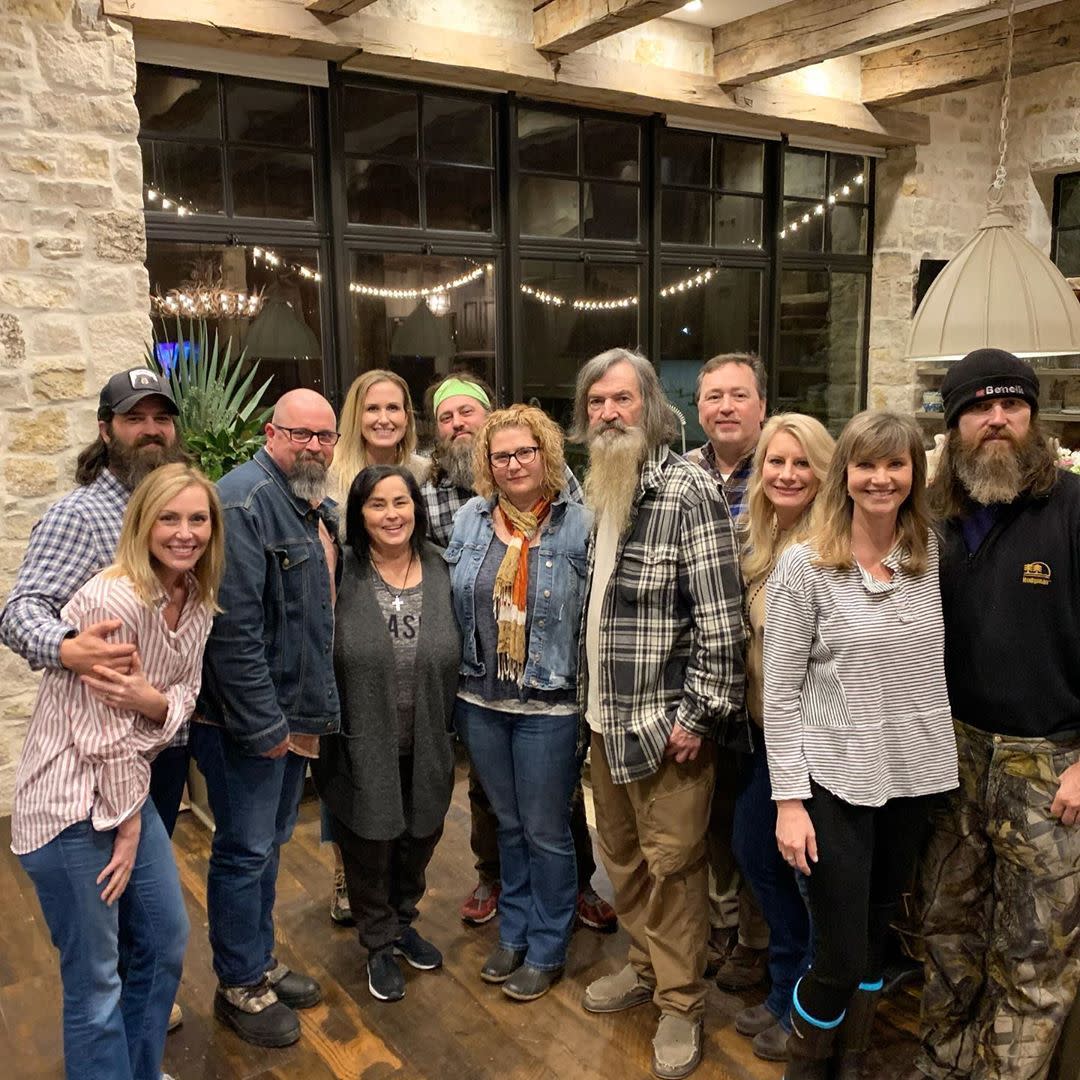
Days after revealing that a DNA test determined he fathered a child during an extramarital affair in the ‘70s, he had his offspring, Phyllis, as a guest on Unashamed. They were joined by Phil’s longtime wife, Miss Kay, whom he admitted to cheating on before converting to Christianity the year Phyllis was conceived, as well as two of the four Robertson sons, Al and Jase, who helped their dad connect with their sister.
“Phyllis, all I can tell you is: I’m glad you found me,†Phil told her during the Blaze TV podcast. “Iâ€m glad I found you… Welcome aboard.â€
Sunday’s episode was a chance for Phyllis to tell her side of the story. She said she grew up with two siblings and never questioned her paternity. Married with two sons, one of her boys was gifted a DNA test three years ago and the genealogy results weren’t “matching up†with what she was told about her heritage, she recalled. That led Phyllis’s siblings to take DNA tests — and she followed. Her results showed that her two siblings were actually “my half-siblings.â€
A deeper dive into her ancestry led her to believe Phil was her dad. She sent two letters in an attempt to reach Phil — one to the family’s church, another to the family Duck Commander business — and when she didn’t hear back, decided to hand-deliver a third to church. So, unbeknownst to the family, she watched Phil preach one Sunday. While she wanted to give him the letter directly, he wasn’t around after services, but Jase was and she gave him the letter.
Jase and Al soon put together the fact that this woman had written three letters to the family— and they sounded legitimate. After a Robertson cousin reached out to Phyllis and found her sincere, Al and Jase approached Phil and Kay — who married in 1966 — with the findings. Phil readily agreed to a DNA test and Phyllis was retested by the same company. They were a match and a meeting between them was initiated.
Phyllis said she had heard of Duck Dynasty the show, which ran from 2012 to 2017, when Phil’s anti-gay and racist comments led to the show being canceled. However, like her birth father, she’s religious and was on a mission at the height of the show’s popularity, so she never watched it. (“It was not on our radar,†she said.) She admitted she watched a few episodes after discovering Phil was her father but before meeting him, then decided against it to avoid “preconceived ideas†of her who the family was.
While she spoke with some of her brothers, also including Willie and Jep, prior to traveling to Louisiana to meet her new family, Phil said he wanted their first exchange “to be eyeball to eyeball.†As soon as they met, they took 45 minutes to speak privately.
“Everybody had warned me that he’s not very nurturing and be prepared,†Phyllis said. “I found you to be very nurturing. He grabbed me by the hands.â€
“I put my hands on her face†Phil recalled and looked “in her eyes,†taking in the moment. He also admits he keeps calling her a “little girl†despite the fact that she’s 45.
Phil also marveled at the name Phyllis’s mother gave her.
“What’s interesting is that mother named you, not telling you who your father is, but named you Phyllis,†Phil said, adding, “Very weird.â€
Jase quipped, “This is turning into a Lifetime movie here.â€
Phyllis spoke about bonding with Kay, despite the fact that she was conceived when Phil cheated on Kay. Kay described herself as “just thrilled beyond belief†to have a stepdaughter — as she always wanted a girl. Phyllis said she calls Kay her “special mom.â€
Phyllis also spoke about meeting the whole big Robertson family, admitting it was a little “overwhelming†but never “awkward.†Instead, “it was just puzzle pieces clicking into place.â€
Kay and Phil went back and forth about his infidelity — something she was aware of at the time — which was a 10 year period before he found religion.
“Who stayed with you 10 years through all of that?†Kay said to her husband of the rocky period during which Phil was also drinking and using drugs.
“I’m glad you stayed with me,†he replied.
Phyllis said of her stepmother, “What a gracious, kind, godly woman you are.â€
To his daughter, Phil said, ‘Girl, you’re the best thing that ever came out my past. Up until she showed up, I had nothing good to say about what happened before iI repented. I just walled it off — the life of sin — and left it… But I look up and here comes this girl out of the blur, out of the blue. I’m like: Whoa. If you never knew you had a daughter and 45 years’s she’s standing in front of you.â€
It was a good comeback, though you couldn’t exactly call it snappy.
“The trampoline is working!” SpaceX founder and CEO Elon Musk said on Saturday (May 30), shortly after the company launched its first crewed mission, the Demo-2 test flight to the International Space Station (ISS).
Musk was referring to an April 2014 barb by Dimitry Rogozin, who at the time was Russia’s deputy prime minister. Today, Rogozin is the chief of Russia’s space agency, Roscosmos.
Rogozin was irked back then by sanctions imposed by the United States in response to Russia’s invasion of Ukraine. Some of those sanctions targeted the Russian space industry (as well as individuals, including Rogozin), and Rogozin argued that the measures would end up hurting NASA and the global space effort in general. After all, the American space agency had relied completely on Russian Soyuz rockets and spacecraft to get their astronauts to the ISS since the space shuttles retired in 2011.
“After analyzing the sanctions against our space industry, I suggest to the USA to bring their astronauts to the International Space Station using a trampoline,” Rogozin said via Twitter at the time. (His post was in Russian; the English translation comes via Google Translate.)
NASA has been grooming private industry to fill the shuttle’s shoes since 2010. In September 2014, the agency awarded multibillion-dollar contracts to SpaceX and Boeing to finish developing their spacecraft — capsules known as Crew Dragon and the CST-100 Starliner, respectively — and fly six operational crewed missions to and from the ISS.
Demo-2 is the last big hurdle SpaceX needs to clear before beginning those contracted flights. And everything is going well with the test mission so far; Crew Dragon docked with the ISS as planned yesterday (May 31), safely delivering NASA astronauts Bob Behnken and Doug Hurley to the orbiting lab.
…to the #ISS. Please convey my sincere greetings to @elonmusk (I loved his joke) and @SpaceX team. Looking forward to further cooperation!@Rogozin @JimBridenstine @roscosmos @NASAMay 31, 2020
Rogozin took the Demo-2 success, and Musk’s trampoline riposte, in stride. The Russian official congratulated NASA chief Jim Bridenstine via Twitter Sunday and wished NASA luck in getting commercial crew missions officially up and running.
“Please convey my sincere greetings to @elonmusk (I loved his joke) and @SpaceX team. Looking forward to further cooperation!” Rogozin added in another Tweet (in English).
Musk responded to this tweet with one of his own, in Russian. The English translation, via Google Translate: “Thanks sir, haha. We look forward to mutually beneficial and prosperous long-term cooperation.”
Demo-2 is scheduled to last one to four months; NASA and SpaceX have not yet decided on the mission’s duration. If everything goes well through splashdown, SpaceX’s first contracted astronaut-carrying mission, called Crew-1, could launch as soon as late August, NASA officials have said.
Boeing isn’t quite ready to launch astronauts yet. Starliner failed to meet up with the ISS as planned on an uncrewed test flight this past December. The capsule will refly that test mission before proceeding to crewed flight.
Mike Wall is the author of “Out There” (Grand Central Publishing, 2018; illustrated byKarl Tate), a book about the search for alien life. Follow him on Twitter @michaeldwall. Follow us on Twitter@Spacedotcom orFacebook.Â
The world is closely watching the chaotic protests against police brutality now convulsing U.S. cities. And authoritarian leaders, so often on the receiving end of American lectures on human rights, seemed thrilled at the opportunity to seize the moral high ground.
Around the globe, media reported on the huge public demonstrations in cities across America, with a particular focus on the strict curfew orders in more than 40 cities, images of looting and bloody conflict and fires raging in Washington D.C. a short distance from the White House. For America’s rivals, it was yet more evidence that the United States’ time as a global role model is coming to an end.
Turkish President Recep Tayyip Erdoğan was first out of the block as protests began in Minneapolis, tweeting, “the racist and fascist approach that led to the death of George Floyd in the US city of Minneapolis as a result of torture has not only deeply saddened all of us, but it has also become one of the most painful manifestations of the unjust order we stand against across the world.†He went on to extend condolences to the family of George Floyd, promising to monitor the issue.
Without referencing China’s well-documented discrimination against Uighurs and other minorities or the use of police force against protesters in Hong Kong over the past year, the Chinese government condemned the “serious problems†of police brutality and said “racial discrimination against minorities is a social ill in the United States.”
Russia and China are also flooding social media with online propaganda targeting the ongoing unrest and violence in the United States.
Ignoring the irony, authorities in Hong Kong today refused permission for an annual Tiananmen Square Massacre vigil June 4, for the first time in 30 years.
The Russian foreign ministry, meanwhile, took the chance Sunday to lecture the U.S. on media freedom after news outlets reported being targeted by police in the course of their work covering the protests in various cities. RIA Novosti correspondent Mikhail Turgiev was pepper sprayed in Minneapolis, prompting the ministry to express concern “about the increased number of police violence cases and unjustified detentions of journalists during their coverage of protests.†The ministry added: “we consider it unacceptable for US law enforcement officials to use special equipment — rubber bullets and tear gas — against media representatives after they present their press cards.â€
Russia and China are also flooding social media with online propaganda targeting the ongoing unrest and violence in the United States, according to an analysis of recent Twitter posts by POLITICO.
Since May 30, government officials, state-backed media outlets and other Twitter users linked to either Beijing or Moscow have increasingly piggybacked on hashtags linked to Floyd, the Minnesota man whose death in police custody set off days of nationwide protests, to push divisive messages and criticize Washington’s handling of the unfolding crisis.
Other foreign actors are seeking to use the U.S. protests to advance their domestic agendas.
European Parliament Member Jordan Bardella, a top lieutenant far-right French party leader Marine Le Pen, tweeted Monday morning that left-wing policies in France would bring only, “Whites hunted in the streets, lynchings, arson and looting, is that your revolutionary dream for France?â€
National leaders in democracies have mostly kept their counsel — respecting the long-held tradition of not commenting on the domestic politics of other nations. Canadian prime minister Justin Trudeau told reporters Friday that Canadians are watching the American news with “shock and with horror,†adding that “racism is real. It’s in the United States but it’s also in Canada.â€
Later, as thousands gathered to protest racial injustice in Toronto, Peter Mackay, a candidate to become Canada’s conservative opposition leader, was outspoken. “It has been profoundly sad and troubling,†he said, adding, “The violence is undeniable evidence of the ongoing legacy of racism, pain and deep divisions endured by too many, and unresolved for too long. Anti-black racism, or intolerance and hatred of any kind have no place in our societies — in the U.S., Canada or anywhere. We must all stand up against it, eradicate it.â€
Protests against racism and police violence have cropped up in cities around the world in recent days. Thousands gathered in London on Sunday, with 23 people arrested in a gathering outside the U.S. Embassy, according to the Metropolitan Police. Thousands also protested in Berlin on Saturday and Sunday, and in Amsterdam on Monday.
International sports stars, including members of the Liverpool FC squad that plays in the English Premier League, are also showing solidarity with those in America calling for racial justice.
Many solidarity protests have kicked off around the world, including in Auckland, New Zealand | Hannah Peters/Getty Images
“It’s painful to follow events in the U.S. these days,†Ambassador Boris Ruge of Germany, now the vice chair of the Munich Security Conference, wrote. “Having lived there for many years, I feel great affection for Americans and for America. No doubt in my mind that the ‘better angels’ will prevail.â€
Some overseas commentators are laying the blame at the feet of the current U.S. president. Tom Switzer, head of Australian right-wing think thank the Center for Independent Studies, wrote in today’s Sydney Morning Herald that, “President Donald Trump, far from leading the healing, is fanning the flames of resentments and hatreds while the quiet voices of the thoughtful people of goodwill — the folks who want to build bridges — are in short supply.â€
“Something more is going on here than resentment at police brutality — it is a crisis of confidence that goes beyond Trump — and it’s just not clear how Americans today can resolve their differences,†Switzer wrote.
In Brussels, the headquarters of the European Union, there are worries about what comes next, as the U.S. heads to the polls later this year. There’s been heated debate about how to conduct the election amid the pandemic, with the president and his supporters circulating unfounded suggestions that mail-in voting is subject to significant fraud. One EU diplomat expressed concern to POLITICO about what Trump will do if he narrowly loses the election in November.“Will he accept going?â€
A leading member of the European Parliament said that in addition to posing moral questions, the current turmoil has legal implications for the U.S.-EU relationship. Sophie in ‘t Veld, a Dutch liberal politician, wrote on Medium that “Transatlantic relations cannot be business as usual,â€Â saying that law enforcement, privacy and data-sharing agreements now need to be reexamined in light of American law enforcement transgressions.
Level 3 of lockdown has arrived in South Africa and for some of us that is very welcome news indeed, especially if you have been suffering from anxiety and depression due to this period of isolation.
The coping mechanisms I have come up with to give myself a mental hug during these times of lockdown and distant learning, are drinking too many cups of hazelnut-flavoured coffee, putting down my phone and avoiding the news when it gets a bit too much…and reading books that warm my heart.
Escapism at its finest
For me, comforting reads are historical fiction books that I have read before. Something about the nostalgia of these books and knowing the characters in the stories, makes it feel like you are transported to a different time and you are catching up with an old friend.
They are escapism at its finest.Â
Whatever your preference with book genres, whether it be fantasy, biographies, or historical fiction, I suggest rereading your favourite books and enjoying them all over again.
Because, as I have already said, historical fiction is my genre of choice, I have compiled a list of my top four feel-good historical fiction books. Even if you aren’t a big fan of these sorts of books, give them a try for the lovable characters, the incredible writing and the heart-warming stories.Â
Enjoy! xxx
‘The Dressmaker’ – by Rosalie Ham
Kate Winslet plays in the 2015 movie adaptation of Rosalie Ham’s ‘The Dressmaker’. Photo: Supplied
Set in 1950s rural Australia, Tilly Dunnage returns to her childhood hometown Dungatar, after being banished as a child under a cloud of accusation. Tilly, now a couturier for the Paris fashion houses, returns to try and make peace with her mentally unstable mother.
At first, she wins over the suspicious locals with her extraordinary dressmaking skills. But when the eccentric townsfolk turn on Tilly for a second time, she decides to teach them a lesson…
Packed with memorable characters, acid humour and luscious clothes, The Dressmaker, is an irresistible gothic tale of small-town revenge and has also been adapted into a movie with Kate Winslett and Chris Hemsworth’s brother, Liam.
‘Daisy Jones and the Six’ – by Taylor Jenkins Reid
Everyone knows Daisy Jones and The Six. Their albums were on every turntable, they sold out arenas from coast to coast, their sound defined an era.
And then, on 12 July 1979, they split. Nobody ever knew why. Until now…
The only thing that’s certain is that from the moment Daisy Jones walked — barefoot — on to the stage, the band were irrevocably changed…
This is the story of their incredible rise and fall. The ambition, the desire, the heartbreak, and the music.Â
An upcoming Amazon Video series based on the eponymous book and produced by Reese Witherspoon is also in the pipeline. The miniseries is set to consist of 13 episodes.
‘Brooklyn’ – by Colm Tobin
This historical novel won the 2009 Costa Novel Award, was shortlisted for the 2011 International Dublin Literary Award and was longlisted for the 2009 Man Booker Prize.Â
Eilis Lacey has come of age in small-town Ireland in the hard years following World War 2. When an Irish priest from Brooklyn offers to sponsor Eilis in the United States (US), she decides she must go, leaving her fragile mother and her beloved sister behind.
Eilis finds work in a department store on Fulton Street, and when she least expects it, finds love. Tony, who loves the Dodgers and his big Italian family, slowly wins her over with patient love.
But just as Eilis begins to fall in love, devastating news from Ireland threatens the promise of her future.Â
This is another book that has gone from page to screen with the same-titled 2015 romantic historical drame movie.
‘Little Island’ – by Andrea LevyÂ
Hortense Joseph arrives in London from Jamaica in 1948 with her life in her suitcase, her heart broken, her resolve intact.
Her husband, Gilbert Joseph, returns from the war expecting to be received as a hero, but finds his status as a black man in Britain to be second class.
His white landlady, Queenie, raised as a farmer’s daughter, befriends Gilbert, and later Hortense, with innocence and courage, until the unexpected arrival of her husband, Bernard, who returns from combat with issues of his own to resolve.
Told in these four voices, Small Island is a courageous novel of tender emotion and sparkling wit, of crossings taken and passages lost, of shattering compassion and of reckless optimism in the face of insurmountable barriers.
In short, an encapsulation of the immigrant’s life.
Even if you haven’t worked in a restaurant, the concept of family meal may be familiar: It’s the act of cobbling together a meal that salvages or repurposes ingredients to resourcefully feed a restaurant’s staff before service, and, ideally, to connect them at the table. The frugality of this kind of meal can be thrilling — it’s a marriage of hospitality and practicality — and it exemplifies how many Americans are preparing food right now, as many home cooks have leaned into making focaccia, growing victory gardens and stretching staple ingredients.
Despite pioneering lavish modernist cuisine at El Bulli restaurant in Spain, the chef Ferran Adrià ’s cookbook “The Family Meal: Home Cooking With Ferran Adrià †(Phaidon, 2011) embraces restraint. In it, Mr. Adrià explored the dishes he created alongside Eugeni de Diego, a head chef at the restaurant, to serve the staff. The book tackles approachable meals using limited ingredient lists, a topic not often associated with Michelin-starred restaurants but one that is ever popular with home cooks — and practiced now with renewed fervor.
The simplicity of Mr. Adrià ’s omelet is its charm: Using just eggs, potato chips and olive oil, it evokes the flavors of a labor-intensive tortilla Española but takes only minutes to assemble and cook.
Mr. Adrià encourages cooks to use the best-quality potato chips and eggs available, but the recipe works with any chips you may have, even flavored ones. The tortilla’s execution may take some practice, but it’s straightforward: Whisk eggs until light and aerated, fold in the chips until slightly softened, then cook in a slick of olive oil in a nonstick skillet.
The only challenge is the flip. You’ll want to turn the omelet the second it starts to set underneath. You may fret about the loose, glistening, alarmingly uncooked egg mixture on top. Have some faith, cover the omelet with a plate and twist your wrists without hesitation, then just slide the omelet back onto the skillet to finish cooking. (Everything will be fine — and the thrill of the flip is part of the dish’s delight.)
You could opt to add some finely sliced chives, a pinch of piment d’Espelette or paprika, a handful of grated Manchego or any other cheese you have on hand, or serve the omelet alongside salad or charcuterie. But any addition is purely extraneous. Textural, salty and rich beyond expectation, the potato chip omelet needs nothing else.
Spurred by necessity but inspired by ingenuity, it’s the type of food just right for this moment, and a small victory however you enjoy it.
President Trump appears to have seen footage of police officers throwing women to the curb, speeding cars into crowds, firing rubber bullets at reporters, and pushing a man with a cane to the ground — and has said: “Yes. We need more of that.”
During the protests, violent criminals taking advantage of the chaos clashed with vigilantes encouraged by the president’s reckless tweets causing numerous casualties, including several deaths. But the ongoing protests have drawn tens of millions of people from across the country, the vast majority of which remain peaceful.
The police and military, however, are attacking peaceful protesters around the country without provocation.
Police and military personnel in dozens of cities across the country were caught assaulting peaceful protesters in videos that were streamed live on social media and shared by millions. Many of the attacks are confusing and appear motivated by nothing more than the desire to hurt citizens, no matter how peaceful they were:
Same thing happens a few blocks later. Bike cop tries to pass a marcher on his right with nowhere near enough room. Marcher inevitably makes contact and the officer puts him in a headlock pic.twitter.com/5aZ4jKweyW
They shot a blind man. What threat could this blind brown man have possibly posed to the officers that shot him?
In Lancaster Ca, police shoots an unarmed blind Latino man.. then realizes what they’ve done, then started to perform cpr on the man.. but the man died
— Stephanie, Ph.D Candidate (@Stephaniejing2) May 31, 2020
They let white people pass, then busted the windows out of a car full of black people so they could shoot them with tasers multiple times and then drag them out of their vehicles and assault them for breaking-curfew-while-black:
every moment of this insane. atlanta imposed a 9 pm curfew, and at 9:30 cops swarmed this car, bashed the windows, stabbed the tires and tased the black people. all behind a car of white people violating the same curfew, smiling and waving at the camera pic.twitter.com/vrIuf1sigW
Among those targeted across the country were numerous reporters. In several instances, police opened fire on reporters after they confirmed their identities as members of the press. This, too, comes at the orders of the impeached president who has declared the press the “enemy of the people.â€
Minneapolis police march on a parking lot where VICE reporter @MichaelAdams317 is sheltering. He is wears a press badge.
“I’m Press! Press! Press!â€
Cop shouts “I DON’T CARE†and throws him to the ground. Another cop pepper sprays him directly in the face.pic.twitter.com/OqOA8Odu0M
Police just raided the gas station we were sheltering at. After shouting press multiple times and raising my press card in the air, I was thrown to the ground. Then another cop came up and peppered sprayed me in the face while I was being held down. pic.twitter.com/23EkZIMAFC
— Michael Anthony Adams (@MichaelAdams317) May 31, 2020
— Andrew Solender (@AndrewSolender) June 1, 2020
A small group of police officers have chosen to join the protesters in uniform. However, it’s telling that tens of millions of cameras aimed at the police have captured hundreds of instances of police violence but, to the best of this reporter’s knowledge, no instances showing police who aren’t attacking peaceful protesters stopping the ones who are.. The ones marching with us instead of protecting us from violence are getting paid the same taxpayer dollars as the colleagues they’re failing to police.
How did this all happen? Social media and police scanner apps, that’s how. We’ve seen protests and riots in the US before. But in the past, the narrative always hinged on showing legions of violent looters burning buildings at night juxtaposed against calm, stoic peace officers protecting protesters from harm during the day.
But, so far, the government can’t force people to sign off Twitter or stop downloading apps. Curfews and overloaded phone lines can’t keep activists from organizing and, perhaps most important of all, the people finally have a dead-simple option to monitor the police in real time.
Tracking police communications used to require a hardware scanner and a little bit of know how. But these days you can get one by simply searching for “police scanner†in the Apple or Google app store. All you have to do is install the app and pick the dispatch you want to listen in on. Most of these apps will alert you when there’s police action in a city and you can always tell how many people are listening to a specific stream.
MY DAD IS LISTENING TO A POLICE SCANNER FOR L.A. AND THE COPS ARE TRYING TO GET THE PROTESTERS TO GO A CERTAIN WAY WHERE THEY HAVE JAIL BUSES AND ARE READY TO ARREST PEOPLE PLEASE SPREAD THIS
— can you stfu please | blm (@onlyfakin) May 30, 2020
“There is a young lady with a loud speaker/megaphone down here. She’s going to try to whip this crowd up again. We should consider gas before that happens.”
At least six times while listening to police comms via scanner on 30 May, I overheard officers in Minneapolis signal their intent to fire chemical weapons at peaceful crowds and subsequently saw tweets go out warning protesters to prepare their cameras and ready themselves for impending assault.
I tip my hat to the tireless efforts of those risking their lives and freedom to expose the tyranny of the US government in this unprecedented time. Stay safe out there, stay non-violent, and keep filming.
The owner of Cup Foods, the Minneapolis store where a clerk called 911 on George Floyd, says his business will no longer involve the police in certain incidents until law enforcement stops “killing innocent people.â€
On Sunday, Mahmoud Abumayyaleh posted a lengthy note on Facebook to say that he supports the protests over the death of Floyd, a Black man who died after a white officer knelt on his neck outside Cup Foods, and said his store is “deeply saddened for our part of this tragedy.â€
“We have been a cornerstone and pillar of this community for three generations of our family and for 31 years have proudly served our neighborhood. Since George’s untimely passing, Cup Foods has been in regular contact with Floyd’s family who flew in from Houston,†Abumayyaleh wrote, adding that his store is “standing together to demand accountability from the cops.â€
Abumayyaleh also said that he’ll be “donating to pay for George Floyd’s memorial service†and pledged to change how his store handles “incidents like this one.â€
Floyd was killed last week after police arrested him for allegedly using a counterfeit $20 bill at Cup Foods. In a video taken by a bystander, Minneapolis officer Derek Chauvin can be seen pressing his knee into Floyd’s neck as Floyd lies on the ground. A criminal complaint released Friday notes that Chauvin had his knee on Floyd’s neck for nearly nine minutes, three of which were after Floyd was “non-responsive.â€
On Monday, an independent autopsy conducted at the request of Floyd’s family concluded his cause of death was “homicide caused by asphyxia due to neck and back compression that led to a lack of blood flow to the brain.†This contradicts the Hennepin County medical examiner’s autopsy, which recorded “no physical findings that support a diagnosis of traumatic asphyxia or strangulation†according to the criminal complaint.
Protests have erupted nationwide and beyond since Floyd’s death as people called for Chauvin and fellow officers Thomas Lane, Tou Thao and J. Alexander Kueng ― who were all present during the incident ― to be charged. Chauvin has since been charged with third-degree murder and manslaughter, but protests pleading for criminal justice and police brutality reform continue while the other officers remain uncharged.
“Police are supposed to protect and serve their communities; instead, what we’ve seen over and over again is the police abusing their power and violating the people’s trust. We realize now that escalating situations to the police almost always does more harm than good, even for something as harmless as a fake bill,†Abumayyaleh wrote in his post.
“This is not an isolated incident: they have shown time and time again that they do not know how to peacefully handle conflicts in our community. By simply following procedure we are putting our communities in danger. Until the police stop killing innocent people, we will handle incidents like this one using non-violent tactics that do not involve police. We must stand together to fight against institutional racism.â€
Jason Armond via Getty Images
A woman pays her respects at the makeshift memorial and mural outside Cup Foods where George Floyd was killed on May 31, 2020, in Minneapolis.
Abumayyaleh promised to “continue fighting with our South Minneapolis community until justice is served†for Floyd, fellow victims of racist violence Ahmaud Arbery and Breonna Taylor, and “everybody who is affected by police violence in our country.â€
In an interview last week, Abumayyaleh shared with TRT World Now what had happened at his store, and called Floyd’s death a “tragedy.†Since then, he’s been vocal about his opposition to how the police treated Floyd, posting his support for Floyd and his family on Facebook.
Calling all HuffPost superfans!
Sign up for membership to become a founding member and help shape HuffPost’s next chapter
We use cookies on our website to give you the most relevant experience by remembering your preferences and repeat visits. By clicking “Accept”, you consent to the use of ALL the cookies.
This website uses cookies to improve your experience while you navigate through the website. Out of these, the cookies that are categorized as necessary are stored on your browser as they are essential for the working of basic functionalities of the website. We also use third-party cookies that help us analyze and understand how you use this website. These cookies will be stored in your browser only with your consent. You also have the option to opt-out of these cookies. But opting out of some of these cookies may affect your browsing experience.
Necessary cookies are absolutely essential for the website to function properly. These cookies ensure basic functionalities and security features of the website, anonymously.
Cookie
Duration
Description
cookielawinfo-checbox-analytics
11 months
This cookie is set by GDPR Cookie Consent plugin. The cookie is used to store the user consent for the cookies in the category "Analytics".
cookielawinfo-checbox-functional
11 months
The cookie is set by GDPR cookie consent to record the user consent for the cookies in the category "Functional".
cookielawinfo-checbox-others
11 months
This cookie is set by GDPR Cookie Consent plugin. The cookie is used to store the user consent for the cookies in the category "Other.
cookielawinfo-checkbox-necessary
11 months
This cookie is set by GDPR Cookie Consent plugin. The cookies is used to store the user consent for the cookies in the category "Necessary".
cookielawinfo-checkbox-performance
11 months
This cookie is set by GDPR Cookie Consent plugin. The cookie is used to store the user consent for the cookies in the category "Performance".
viewed_cookie_policy
11 months
The cookie is set by the GDPR Cookie Consent plugin and is used to store whether or not user has consented to the use of cookies. It does not store any personal data.
Functional cookies help to perform certain functionalities like sharing the content of the website on social media platforms, collect feedbacks, and other third-party features.
Performance cookies are used to understand and analyze the key performance indexes of the website which helps in delivering a better user experience for the visitors.
Analytical cookies are used to understand how visitors interact with the website. These cookies help provide information on metrics the number of visitors, bounce rate, traffic source, etc.
Advertisement cookies are used to provide visitors with relevant ads and marketing campaigns. These cookies track visitors across websites and collect information to provide customized ads.