Yes, for now. Just to attend the ready-to-wear collections, tens of thousands of professionals fly to four countries in a single month. Simple math indicates that the exercise is a veritable bonanza of carbon emissions, and if, as expected, the schedule of runway shows will be vastly reduced in September, so, too, the carbon footprint will come down.
What will happen to the inventory that has not or cannot be sold?
In the world of fashion retailing, in which stores try to keep inventories closely matched to sales, even a small stack of unsold clothes can be a bad sign. Billions of dollars worth of unsold inventory has piled up in warehouses as a result of the pandemic.
According to McKinsey, the value of excess inventory from spring-summer 2020 collections is estimated at 140 billion euros to 160 billion euros ($159 billion to $182 billion) worldwide, between €45 billion and €60 billion ($51 billion to $68 billion) in Europe alone. That is more than double the level in a normal year.
So what will brands and retailers do with it all? Ideally sell it, either by themselves or through wholesale partners, although many consumers will soon be looking for fall clothing. Unsold items used to be burned, though increasingly that practice is frowned upon (just ask Burberry) — and actually outlawed in France.
If the stock doesn’t sell, most businesses will have to slash prices or pass it onto discounters. After that, it could end up in giant landfill sites in developing countries, adding to a huge and existing environmental issue for the fashion industry.
Are fashion seasons still going to be a thing?
Depends who you ask. Many designers are mulling over how they define “seasonâ€: Alessandro Michele of Gucci said he is thinking of his collections like pieces of a symphony; Giorgio Armani has announced his couture will be “seasonlessâ€; and at Carolina Herrera and Dries Van Noten (among others) there are discussions about showing spring clothes, at least to the public, in spring, and fall in fall.
Her sister died of a drug overdose, her brother is in jail and a cousin was killed by local police. For Breed, and other African American mayors, the current cry for a policing reform after the death of George Floyd —  a 46-year-old black man in Minneapolis who was pinned to the ground by officers after being accused of passing a fake $20 bill at a store — is deeply personal.
“The black people in communities with black mayors know we understand these experiences like no one else can,†says Breed. “There’s no way we’re not going to hold law enforcement accountable like never before.â€
After decades of talking around the politically fraught issue of police reform, the nation now is tackling it head on. In Minneapolis, officials vowed to dismantle the police department. On Monday, the U.S. Conference of Mayors announced a working group aimed “to help end injustices facing black Americans.â€
USA TODAY reached out to some of the nation’s roughly 500 black mayors in cities large and small to get a sense of their view on this historic moment. They said reforming the way officers do their work has long been a priority that has yielded mixed results. All said that Floyd’s death represents an opportunity to remake a flawed system.
“Everyone I’ve spoken with in our group feels this is different,†says McKinley Price, mayor of Newport News, Virginia, and president of the African American Mayors Association. “When Floyd’s little daughter Gianna said in that video, ‘My daddy changed the world,’ we might look back at that moment and say that he did.â€
Price says in his two years as mayor of the state’s fifth-largest city, where roughly 40% of the residents are African American, Newport News has embraced tougher hiring guidelines, promotions that include citizen review and requiring that acts of force be reviewed by the police chief.
Like other black mayors, Price says his city used as a guideline a May 2015 report issued by then-President Barack Obama called “The President’s Task Force on 21-Century Policing,” which offered 59 recommendations in six categories focused on building community trust and improved training methods.Â
More recently, Price said his police chief, who is white, announced last weekend that officers witnessing a fellow officer violating rules of conduct must intervene. In Floyd’s killing, three other officers stood by as he was fatally kneeled on for nearly 9 minutes by officer Derek Chauvin, who was charged with second-degree murder and second-degree manslaughter. The other officers were charged with aiding and abetting second-degree murder and aiding and abetting second-degree manslaughter.
Mayor: ‘It’s nice to see new people join the fight’
For Dallas Mayor Eric Johnson, elected last summer, the protests present an opportunity to “bring about a new series of reforms and cause us to look closer at what we’ve been doing well and what we can do better.â€
He says his priorities are to improve diversity training to better mitigate against systemic racism, increase funding to projects that reduce urban blight, improve education and improve infrastructure in African American neighborhoods, all of which if neglected spur crime.
Dallas’ current police budget is about a third of the city’s $1.4 billion general fund. While city officials have said they are open to reallocating some money away from law enforcement, resident surveys reflect a desire for more officers.
“I love seeing all the protests, and I hope they translate into people voting for policy shifts,†Johnson says. “But fundamentally, it’s local police working alongside local community members that will be at the forefront of a lot of these changes.â€
In Stockton, California, 29-year-old Mayor Michael Tubbs says his city has already made great strides. Last year, city officials announced an 80% decline in police shootings over the past two years.
Tubbs says his messaging over the past weeks to residents and activists has been to highlight the city’s progress on police reform while also asking for tax increases to cover additional mental health and other social programs.Â
“As a young black man, I’ve always known police brutality is a problem, from the killings of Oscar Grant to Trayvon Martin to Michael Brown to George Floyd,” he says. “It’s a vestige of white supremacy and structural racism. It’s nice to see new people join the fight as we push to create a society we all deserve.”
In Houston, Mayor Sylvester Turner said he supports widespread police reforms He issued a sweeping order Wednesday to his city’s police department aimed at reducing deadly force by officers and banning choke and strangle holds, unless they have no other alternative to protect themselves or the public. Placing an officer’s knee on a suspect’s neck is expressly forbidden under the order, Turner said.
Turner, who represented a predominantly African American district in the Texas House for 27 years before being elected mayor in 2015, said the directive instructs Houston police officers to use what he called “de-escalation techniques” before resorting to force, when possible. The order also requires police officers who witness one of their colleagues “using force beyond that which is reasonable” to intercede and report the action to a supervisor.
Black mayors also face racism because of their skin color
In Chicago, Mayor Lori Lightfoot, the city’s first black woman and openly gay mayor, vowed in her State of the City address on June 2 to implement a series of police reforms in the next 90 days. This week, she said she was considering licensing requirements for police officers.
In Houston, where Floyd’s memorial was held Tuesday, Mayor Sylvester Turner said he was drafting an executive order banning chokeholds and strangleholds.
But despite the cry for reform from many quarters, black mayors still have a tightrope to walk, says Ravi Perry, chair and professor of political science at Howard University in Washington, D.C.Â
“They have to navigate being black and navigate governing as black, and those are two different challenges, because the latter requires you to engage the institutions that some black people say were built to subjugate us,†he says.
Perry, who has written books about black mayors and the challenges they face, says this “tightrope†exists for Black mayors regardless of the racial makeup of their cities.Â
He notes that for years the thinking was that to get white support for policy changes, requiring black mayors to capitulate and “run away from race.” But that’s no longer true.
Instead, mayors now can view issues through a lens of “targeted universalism where, yes, you highlight the racial ethnic identity significance of the community in which a project may be targeted, but you also highlight how that project is beneficial to everyone. So while the park is in the hood, it’s open to everyone.â€
That’s the approach taken by Oliver Gilbert, mayor of Miami Gardens, Florida, the largest predominantly black city in the state with more than 50% of its 113,000 citizens being African American.
In 2014, Gilbert oversaw a multi-million improvement to the city’s parks system that included offering programs in science, math, dance, boxing and cooking. At the same time, he allocated funds to beef up technology for the city’s police department, including investing in more body cameras, license plate readers and devices that read where and when shots have been fired.
He’s also worked to get local youth interested in law enforcement, a move that he says has helped grow the Miami Gardens department to more than half African American. Gilbert adds that by empowering city managers to hold officers to certain standards, the city has over the past years dismissed a dozen officers for a range of offenses.
“When we decide as America to do something, we get it done,†he says. “I was born a black man, so I’m not going to accept certain things. But seeing that officer’s knee on George Floyd’s neck for 8 minutes and 46 seconds made it clear to everyone, not just black people, that a system that allows this needs to be fixed.â€
Many cities have long grappled with police brutality
The greater Minneapolis area has a long history of police brutality.Â
In 2016, in a suburb of St. Paul, an officer shot and killed Philando Castile, a 32-year-old black man, during a traffic stop. Castile told the officer he had a handgun and a license to carry before officer Jeronimo Yanez fired seven shots. Yanez was charged with second-degree manslaughter but was acquitted of all charges by a jury.
St. Paul Mayor Melvin Carter, the city’s first black mayor, campaigned on police reform after the shooting. Within his first 100 days in office in 2018, Carter worked with police department leadership “to completely rewrite our use-of-force policy,” he says. Changes included compelling officers to deescalate and mediate their response based on someone being passive.
Last year, the city passed a $3 million community-first public safety proposal that focused on youth jobs and neighborhood supports such as ensuring people who return to the community from incarceration can find stable housing.
“Our focus in St. Paul over the past couple years really has been arguing, and I think successfully, for a model of public safety that goes far beyond police to those types of proactive investments that can help us prevent crime before it happens,” Carter says.
Baton Rouge Mayor-President Sharon Weston Broome also made police reform a central part of her campaign in 2016.Â
That year, the Louisiana parish became part of the national news cycle after the death of Alton Sterling, fatally shot by police during an encounter bystanders captured on video. Weeks later, three officers were killed in an ambush. The city was also devastated by a flood.Â
Broome says the city has been recovering from the trauma ever since. That also means it has a head start on many of the reforms being talked about today. In her first week on the job, Broome commissioned a group of citizens to start giving input on reforms.
“This takes intentionality,†she says. “It’s just not going to happen without somebody being committed and dedicated to seeing that happen. And it’s a process.â€
Over the past three years, Baton Rouge got police body cameras, banned chokeholds, required de-escalation and verbal warnings before deadly use is deployed. Last year, the police chief made a public apology to communities of color for the way policing had gone in the past.
There’s still work to be done, Broome says, like increasing diversity in the ranks. But she says the new approach has gotten results in that police have more help solving crimes as citizens trust and feel more connected to officers.
“I do think this is one of those moments where we will see substantial action towards police reform,†she says. “That is certainly a positive thing, not only for the citizens, but for law enforcement as well.â€
‘This is very personal for me’
In Denver, Mayor Michael Hancock campaigned for office on a platform of changing how police operate — he doesn’t like the word “reform” — and has continued those efforts despite repeated opposition from the city’s police union.
“The reality is that we can go a long way to serving the public better and safer if we have a better understanding of where crime comes from, who are the victims of crime,” says Hancock, citing obesity, low school attendance and poverty as drivers of both criminals and victimization.
Elected to the mayor’s office in 2011, Hancock brought in a new police chief he felt was more committed to accountability. Chief Paul Pazen, who is white, launched body-worn cameras for officers and helped develop a new use-of-force police banning chokeholds and limiting the use of body weight to restrain detainees. That policy took years to develop, and is only now being rolled out across the city.
Denver police have a long history of killing residents, deaths that have resulted in millions in payments to settle wrongful death claims. Hancock said changing the culture takes time, and involves hiring more diverse officers and making sure cops get implicit bias and conflict de-escalation training. He said he’s encouraged with the work that’s been done, but acknowledges there’s more ahead.
“I’m probably more optimistic than I have been in my lifetime,” he says, adding that he was racially profiled as a teen by police, and has had “the birds and the bees and the police†conversations with his son. Listening, he says, remains the key to change.
“Even as an African American mayor, I need to shut up and listen more,†says Hancock.
While listening helps, reform can be difficult for many city leaders.
In San Francisco, leaders including Mayor Breed have worked hard on a range of social issues, including homelessness and policing, but fundamental structural changes remain elusive.
While Breed has been pushing for improvements in the department since her days as city supervisor, a recent report by the state’s Department of Justice outlines successes and shortfalls.
For example, while use-of-force incidents dropped by 24% in 2019, officers continued to use force disproportionately against black and Latino people, with 39% of total incidents involving black men and 22% Latino men in the last quarter of 2019, the report found. Fewer than 5% of San Francisco residents are African American.
Police here did over the past year decrease stops of African Americans by 29% and expanded community policing programs. But the department was not found to be compliant in auditing arrest and use-of-force data, training officers in addressing bias policing and more than 200 other reforms that police officials vowed to tackle four years ago.
Breed acknowledges the slow progress, but says reforms will continue. “This is not a sprint, it’s a marathon,” she says.Â
The city’s first female black mayor says she remains undaunted in her quest to remake a department that, as a child, she feared.
“I’ve seen my fair share of officers beat down people in my community,†she says. “But I know this is a marathon and not a sprint. This is very personal for me. This isn’t about being the mayor as much as it’s about doing what I can do to make sure I don’t see another black man die the way George Floyd did.â€
Contributing: Trevor Hughes in Denver; Grace Hauck in Chicago; John C. Moritz in Austin;Â Jennifer Berg of the St. Cloud Times.
Read or Share this story: https://www.usatoday.com/story/news/nation/2020/06/11/black-mayors-push-police-reform-hope-national-mood-brings-progress/5320089002/
Nupur Alankar who is popular for her role in the TV show Swargini is in financial trouble. The actress lost all her savings in Punjab and Maharashtra (PMC) Bank collapse, last year. She has an ailing mother who needs to be hospitalised, but the actress is falling short of funds.Â
Actress Renuka Shahane of Hum Aapke Hain Kaun fame, who is a good friend of Nupur, took to her Facebook handle and requested people to help with monetary funds. She also shared Nupur’s bank details as well.Â
“A very dear actress friend of mine, Nupur Alankar has been facing a lot of financial problems due to all her money unfortunately being stuck in the PMC bank which crashed leaving their customers in the lurch. Nupur has been taking care of her ailing mother with whatever income she was generating through acting & practicing alternate therapy. Due to the lockdown that work has stopped. Her mother needs hospitalization which is going to cost a lot. I am sharing her mother’s account details. Do donate whatever you can to help. Thank you,” she wrote. Responding to Renuka’s post, Nupur wrote, “Thanks is too less to Express how I feel about u replying every message with such dedication Renuka Shahane. Friend Angel.â€
Nupur Alankar has also been part of shows like Iss Pyaar Ko Kya Naam Doon and Ek Baar Phir.Â
Polish forces set up a border control post along the twisty Polish-Czech border last month | Marcin Bielecki/EPA-EFE
The Polish army says it was a ‘misunderstanding.’
WARSAW — The Polish army is pulling out of a position it occupied in the Czech Republic, the military high command said Thursday.
Polish forces set up a border control post along the twisty Polish-Czech border last month, as part of border closures due to the coronavirus pandemic. They blocked a path running on the Czech side of the frontier to a historic chapel, prompting a complaint from Czech authorities to Warsaw.
“There was a misunderstanding on the Polish side, the chapel is already accessible,” Hana Malá, a Czech foreign ministry spokesperson, told Czech media.
The Polish military said Thursday that the move was “a misunderstanding and not an intentional action, and was immediately corrected.”
Poland and the Czechs have a history of much more serious border frictions. They fought a brief war in early 1919, Poland annexed part of the border region in 1938 and the two almost came to blows again after World War II.
Zoom, the video-chat app that leapt to fame during the coronavirus outbreak, briefly blocked the account of a Chinese human-rights leader who used the platform to organize a commemoration of the 1989 Tiananmen Square crackdown between activists in the United States and China.
The nine-year-old San Jose, Calif., company restored the activist’s account on Wednesday. But the suspension put Zoom in a difficult place between the principles of free speech and the power of China’s huge censorship machine, which has increasingly sought ways to squelch discourse beyond the country’s borders.
In a statement on Wednesday, Zoom said it had been following local laws when it suspended the account of Zhou Fengsuo, a former leader of the students who participated in pro-democracy demonstrations in Beijing 31 years ago. Mr. Zhou now lives in the United States.
“We regret that a few recent meetings with participants both inside and outside of China were negatively impacted and important conversations were disrupted,†Zoom said. “It is not in Zoom’s power to change the laws of governments opposed to free speech. However, Zoom is committed to modifying its processes to further protect its users from those who wish to stifle their communications.â€
The company did not respond to questions about whether the Chinese government had complained about the Zoom conference and did not detail what steps in might take to deal or comply with China’s internet controls. Suspensions similar to Mr. Zhou’s appeared to impact the accounts of Hong Kong politician Lee Cheuk Yan and Wang Dan, a student leader during the Tiananmen protests.
Mr. Zhou held the commemoration, which included participants in the United States, China and Europe, on May 31 on Zoom. It included survivors of the violent crackdown as well as relatives of those who died.
In an interview, Mr. Zhou said he discovered his account had been suspended on June 7. “I was shocked and disappointed over what happened,†he said, adding “we can’t stand that an American company put Chinese-style restrictions on users in the U.S.†The suspension was reported earlier by Axios.
Zoom has seen its revenue surge during the outbreak as people stuck at flock to its easy-to-use service. It says its service hosts 300 million meeting participants daily. But its size and its dependence on China could make it increasingly vulnerable to the Communist Party’s censorship apparatus.
China controls what its people see and read online in part through a system of filters known as the Great Firewall that has cleaved off its internet from the rest of the world’s. Foreign companies allowed to operate in China must abide by strict rules that dictate what can be said. They must provide data to an internet police force that patrols social media for loudmouths.
With online discourse at home effectively under control, China’s censors and propaganda organs have increasingly looked abroad. The authorities has started to punish Chinese people for what they say or do on online platforms that are blocked in China, like Twitter and WhatsApp. It has also unleashed government-sponsored campaigns on Facebook, Twitter and other platforms in an effort to shape the global narrative to be friendlier to Beijing.
Zoom is a California-based company, and its Chinese-born founder and chief executive, Eric Yuan, is an American citizen. But many of its research and design personnel are based in China, which it has said helps it keep costs low.
The company has already been targeted by China’s internet censors. In September 2019, Zoom’s services in China were briefly suspended. Afterward, one of Zoom’s Chinese resellers posted instructions to show users how to use real-name registration for the service, a process that links Chinese internet users’ identity to an account via their phone number.
The reseller said the post was made in response to a call from China’s Ministry of Public Security, which controls the country’s police, and was a practical way to meet the demands of the country’s cybersecurity law.
Zoom has also run into security concerns related to China. Citizen Lab, a Canadian research firm, reported in April that Zoom routed some encryption keys through China, among other security problems. Zoom said it would suspend engineering work on features for 90 days as it devoted resources to shoring up the security and privacy issues.
In a nod to China’s internet controls, the company took steps earlier this year to cut back use by unregistered users in China. Beginning in May, Zoom said unpaid users in China could join meetings but not host them. Users in China wishing to host a meeting must purchase a license from the company, according to a statement posted on the site of the company’s Chinese reseller.
The policy left the door open for a paying user in the United States like Mr. Zhou to host a meeting that could be joined by a number of users within China. Activists often take advantage of censorship loopholes opened by new technologies. Mr. Zhou said he had advertised the event only two days before it occurred by distributing messages on WeChat and LinkedIn, which because it censors content is not blocked in China.
Mr. Zhou said about 250 people participated in the May 31 Zoom call, which commemorated the 31st anniversary of the crackdown. As many as half may have dialed in from China, he said.
One speaker on the call, Zhang Xianling, told how Chinese soldiers prevented medical workers from helping her 19-year old son as he died of a gunshot wound after he had gone out to take photos of the protests. She called for China’s government to apologize and compensate victims’ relatives.
“Although the government has severely suppressed us, we are not afraid,†Ms. Zhang said. “We must persevere. All of our communication tools are monitored. When I went out by myself on sensitive days, policemen followed me.â€
Zoom has few satisfying options when it comes to China, which boasts the world’s largest population of internet users. Cutting off access to unpaid China users would be likely to satisfy China’s regulators, but the service could become less popular in China, where it has a number of major corporate clients. Yet if the company cuts down on meetings linking U.S. accounts to China, it will fall further afoul of free-speech advocates, and potentially the U.S. government.
Mr. Zhou said Zoom had not told him why his account was blocked or what steps had led to the decision. He said the deeper problem was China’s censorship and said democracies should take sharp actions against Beijing for its tight control of the internet, potentially by blocking Chinese internet companies or cutting China off entirely from the global internet.
“The Great Firewall enslaves the Chinese people. It is the fatal flaw for an open and free internet,†he said.
“The best option is to tear down the Great Firewall.â€
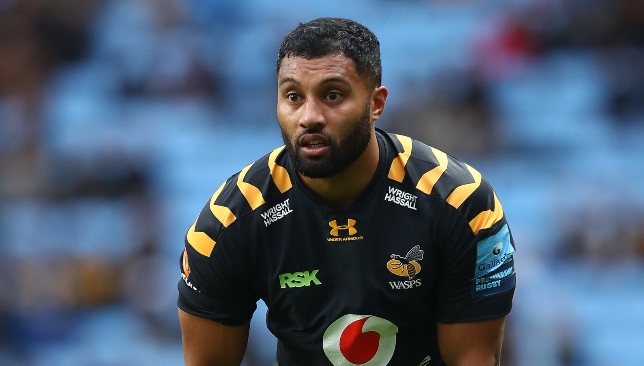
When James Lowe boarded a flight from Auckland to Dublin three years ago to sign for Leinster, he put his dreams of playing for the All Blacks aside so that he could help support his family.
His mother had suffered a stroke leaving her unable to work and, as a result, his family came into financial trouble. Staying in New Zealand with the Chiefs would have proved selfish, even if it meant pursuing his life-long dream.
It is a tough decision for any young man to turn on his childhood aspiration, however, the lure of a handsome offer in Ireland was his opportunity to give back to his family.
The Nelson native has since proven to be a menacing presence and fan favourite during his time in Dublin, scoring 28 tries in 43 matches. As a result of his class, an Ireland call-up awaits later this year via the residency rule.
Previously it had been a rarity for any New Zealand players to leave the country while still relatively early into their respective careers.
The lure of the All Blacks jersey has a strong pull for any athlete and was enough to keep players at home until they reached their pensionable years.
However, times are slowly changing, and more younger players are beginning to take up contracts ashore. It is a trend that is only going to continue.
If you are third or fourth choice in a certain position and an offer comes up in Ireland, England or France, then why wouldn’t you seize the opportunity of earning more money and playing in a different country. Sometimes these offers may only come around once.
Learning about a new culture, expanding your horizons, learning from new players and doing some travelling in the break of a season all add to the decision to switch abroad.
Everyone weighs up what is best for them and, over the years, players have left because they want to do what is best for their families.
For players of Maori and Polynesian heritage, it is a massive part of their culture. It’s never an easy decision to leave New Zealand Rugby but family is pretty important for a lot of guys.
Charles Piutau is an example. He grew up as the youngest of 12 living in a four-bedroom house in the south Auckland suburb of Mangere.
After earning 17 All Blacks caps as a 23-year-old, he left the Blues to sign for Wasps in 2015. Now five years on, he is the highest-paid player in the Premiership, earning a reported £1m per season with Bristol.
On the Northern Hemisphere stage, Piutau is an electric player and one that can make the magic happen whenever he has ball in hand. If he remained in New Zealand, and international selection went in his favour, there is a chance he could have amassed 50 caps. Hindsight, however, is a wonderful thing.
It just goes to show that even when players are young and still promising enough to make an impact at international level, rugby is not everything. And with the game not lasting forever, players need to do the best to look after their families.
Similarly, Lima Sopoaga’s dreams of representing the All Blacks at a World Cup were dashed when he signed for Wasps as a 27-year-old in 2018.
After making 18 international appearances, the Wellington man moved to the UK to secure the financial future of his family, knowing he only has a limited time span to use his talents on the field.
“Guys in New Zealand who are second or third string, we’re not getting paid the same as the Beauden Barretts. I fell into that category, I’ve no qualms about it, that’s the way it goes,†he said at the time of his decision.
Leaving New Zealand means players are not considered for international selection until they return home. Australia give dispensation to players who have won 60 caps and South Africa 30. In Ireland and England, if you play outside your respective country, then you are not considered for selection either.
Malaki Fekitoa (25) and Steve Luatua (26) left Kiwi shores at a time when they should have been in the prime of their careers. Both had plenty to offer in the lead up to the 2019 World Cup. However, the allure of a deal abroad was simply too attractive than being just a fringe player.
Every player has a different story and different reasons for their departure. Money is a driving factor, but to accuse any man of personal greed is unfair, especially when you don’t know someones personal situation.
You have to be happy for players if they can make a better life for their families. Every sports star has a short career and, such is the unpredictable nature of rugby, you need to make the most of those precious chances in front of you.
Proposed stadium is part of the “early vision” for Crossford Bridge Community Sports Village
Last Updated: 11/06/20 12:37pm
The Premiership side moved to the AJ Bell stadium in Eccles in 2012
Sale Sharks have revealed proposed plans for a new state-of-the-art stadium which would see them return to their hometown.
The club say the proposed stadium is part of the “early vision” for Crossford Bridge Community Sports Village – a hub designed to bring together people of all ages, abilities and backgrounds.
The plans would see the Gallagher Premiership club move from its current base in Salford to a ground they say would provide “world-class hospitality” in Old Trafford.
“These exciting plans give us an opportunity to lay down roots and establish an accessible, long-term home for Sale Sharks that we can all be proud of,” the club said in a statement.
“From both our elite men’s and women’s teams to the Sharks Community Trust; being a part of this vision will mean we can have a positive impact in Sale for years to come.
“From the 22nd June, we will be asking fans to share their feedback and suggestions for our new home.”
A video posted on Sale’s Twitter account claims the prospective Sports Village will be ‘”a catalyst for the local economy” and “a place that inspires the next generation”.
Bloodborne remaster will be coming to both PS5 and PC, according to new reports.
Last week’s postponed PS5 event would have been more than just a reveal of the hardware. It would also have included glimpses of some of the upcoming games. According to a new report Bloodborne may be getting remastered for the next gen Sony console. Sony may also bring the Bloodborne remake to the PC.
How Bloodborne started
Bloodborne is an action role-playing game from the studio behind Dark Souls and Sekiro: Shadows Die Twice. It was released on PS4 in 2015 and is one of the best selling PS4 exclusives of the generation.
“Hunt your nightmares. A lone traveller. A cursed town. A deadly mystery that swallows everything it touches,†reads the official description.
“Face your fears as you enter the decaying city of Yharnam, a forsaken place ravaged by a terrible, all-consuming illness. Scour its darkest shadows, fight for your life with blades and guns and discover secrets that will make your blood run cold – but just might save your skin …â€
The release of the main game was followed by an expansion titled The Old Hunters. It’s likely the rumoured remake would contain both the original and expansion game.
Industry insider confirms Bloodborne remake
Industry insider Sloth Mom tweeted: “So, about that Bloodborne PC port. You would’ve been hearing about it today anyway, because as far as I understand it, it was due to be announced at the now-delayed PS5 event that was scheduled for today.â€
Her tweet continued: “Now, I said earlier I’d share more info about it. So, what I can confirm is that it’s not just a PC port of Bloodborne, what was supposed to be revealed today was a Bloodborne Remastered/HD edition that was coming for PS5 and PC. I don’t know of any release date as of yet.â€
New company on board
A brand new studio will handle Bloodborne remaster.
In a follow up tweet, Sloth Mom writes: “The last detail I’ll share is that FromSoft themselves are not doing the port, but the company doing the remaster is one that I have a huge amount of faith in judging by other games they’ve ported. I will not share who that company is, but you sincerely won’t be let down.â€
Sony is also said to be working on a remake of Software’s PS3 hit Demon’s Souls which first appeared in 2009. The development of the new and improved Demon’s Souls will allegedly be handled by Shadow of the Colossus Remake studio Bluepoint Games.
This content has been created as part of our freelancer relief programme. We are supporting journalists and freelance writers impacted by the economic slowdown caused by #lockdownlife.
If you are a freelancer looking to contribute to The South African, read more here.
The coronavirus pandemic has spurred the world’s wealthiest into putting their contingency plans into action. Silicon Valley’s tech gurus have decamped to doomsday bunkers in New Zealand, while in Europe, controversy has sprung up over a private virus testing site in a billionaires’ compound on the Riviera.
While most French hospitals struggled to handle the influx of Covid-19 patients, the mega-rich living in palatial villas at Les Parcs de Saint-Tropez didn’t have that problem. The denizens of the ultra-luxury community—a group which includes steel magnate Lakshmi Mittal and Francis Holder, the founder of the Paul bakery chain—have access to a special medical unit well-equipped to test them and their friends for antibodies against the coronavirus.
If the private infirmary has been held out as an example of how the well-to-do are getting special treatment that’s making it easier for them to weather the public health crisis, the pandemic has nevertheless struck a blow to the luxury sectors which not only cater to the tastes of the 1%, but employ thousands of European workers. The yachting industry, in particular, has been rocked to its core.
Monaco, which is still hoping to hold its world-famous yacht show in September, barred its wealthy residents from taking their yachts out and is restricting boats’ access to its port. The Principality’s ban follows a broader pattern: one by one, Mediterranean countries have closed their borders and their ports. Billionaires hoping to escape on their superyachts would have trouble getting to them in the first place—and those who are already on board their luxury ships are having trouble finding marinas that will allow them to dock. That’s to say nothing of the problem of staffing the boats—many yachts still out to sea are running on a skeleton staff, as workers are too concerned about their health to sign on to a long voyage.
Yacht brokers, meanwhile, are counting on a moderate recovery in the fall to salvage a dismal 2020. Jonathan Beckett, the CEO of industry titan Burgess, predicted in late March that some of the world’s most expensive superyachts could be soon be up for sale as owners’ finances come under strain. Beckett’s words seem to have been prophetic: a number of high-profile boats have come on the market in recent weeks for intriguing reasons.
In an astonishing announcement, the custom-built Luminosity, “one of the greenest gigayachts to dateâ€, is up for sale just weeks before her scheduled delivery to her anonymous owner. The fact that, after waiting 5 years for the 107 metre Luminosity—which features everything from a swimming pool which converts to a dance floor at the push of a button to a “virtual forest†where “e-flowers†open and close in response to motion—her owner is putting her on the market without ever enjoying the stunning craft is a sure sign that the coronavirus pandemic has even disrupted the lives of the elites cocooned in their sumptuous villas.
Other luxury vessels, meanwhile, are changing hands for more conventional reasons than the coronavirus pandemic. Russian oligarch Oleg Burlakov sunk a fortune into the eco-yacht Black Pearl, named after the ship in the Pirates of the Caribbean franchise. Dubbed “the most spectacular sailboat in the worldâ€, the sleek steel and aluminium ship has carbon fibre solar masts permitting her to cruise no matter the direction of the wind.
Burlakov, however, is now embroiled in protracted divorce proceedings after having been spotted with younger model Sofiya Shevtsova. Legally, Burlakov’s wife is entitled to a large portion of the family assets—something which Burlakov is reportedly trying to sidestep by reregistering the Black Pearl under the name of one of his relatives, Nikolai Kazakov. The transfer has put the Black Pearl’s future in doubt, as Kazakov is by all accounts not a wealthy man and does not seem to have the funds to maintain the 106-metre-long vessel.
Matters of the heart may be the culprit in yet another recent yacht listing. In mid-April, former Italian prime minister—and the world’s 190th richest person— Silvio Berlusconi listed his superyacht Morning Glory for sale. Morning Glory has a particularly storied history—Berlusconi bought the Italian-built ship from media mogul Rupert Murdoch, who married his third wife Wendy Deng onboard, back in 1999. Since then, the “bunga bunga†king has enjoyed summers onboard cruising the Mediterranean, and has spent huge sums on refitting the ship, which now boasts a freshly repainted hull, new engines and entirely redone rigging.
Berlusconi hasn’t offered a reason for parting with the luxury vessel—but it’s possible that his romantic troubles have played a role. Just last month, the former prime minister split from Francesca Pascale, his partner of 12 years. The twice-divorced octogenarian politician, who apparently asked Pascale to marry him “every day†while they were together, has already moved on to an even younger flame—Marta Fascina, a 30-year-old MP in his Forza Italia party.
Another jewel of the yacht world in engaged in a bitter falling-out. Twin brothers David and Frederick Barclay, who for years have managed a business empire including the Ritz in London and the Daily Telegraph, have shared their sleek yacht Lady Beatrice, named after their mother, since 1993. The brothers were once inseparable—living together in a castle on their private island, Brecqhou.
This brotherly affection has now imploded in spectacular fashion, after David’s youngest son Alistair was caught secretly recording his uncle Frederick in the Ritz’s conservatory. A lengthy legal battle between the twins is now on the cards, and the Ritz—the crown jewel of the brothers’ assets—was recently sold to an unnamed Qatari businessman. Other parts of the Barclay twins’ business empire are likely to be parcelled off as well, including the Lady Beatrice.
Amidst these family dramas, the global pandemic will only put further pressure on the yacht market, and aficionados are certain to see some exceptional superyachts listed on the secondary market in the coming months.
We use cookies on our website to give you the most relevant experience by remembering your preferences and repeat visits. By clicking “Accept”, you consent to the use of ALL the cookies.
This website uses cookies to improve your experience while you navigate through the website. Out of these, the cookies that are categorized as necessary are stored on your browser as they are essential for the working of basic functionalities of the website. We also use third-party cookies that help us analyze and understand how you use this website. These cookies will be stored in your browser only with your consent. You also have the option to opt-out of these cookies. But opting out of some of these cookies may affect your browsing experience.
Necessary cookies are absolutely essential for the website to function properly. These cookies ensure basic functionalities and security features of the website, anonymously.
Cookie
Duration
Description
cookielawinfo-checbox-analytics
11 months
This cookie is set by GDPR Cookie Consent plugin. The cookie is used to store the user consent for the cookies in the category "Analytics".
cookielawinfo-checbox-functional
11 months
The cookie is set by GDPR cookie consent to record the user consent for the cookies in the category "Functional".
cookielawinfo-checbox-others
11 months
This cookie is set by GDPR Cookie Consent plugin. The cookie is used to store the user consent for the cookies in the category "Other.
cookielawinfo-checkbox-necessary
11 months
This cookie is set by GDPR Cookie Consent plugin. The cookies is used to store the user consent for the cookies in the category "Necessary".
cookielawinfo-checkbox-performance
11 months
This cookie is set by GDPR Cookie Consent plugin. The cookie is used to store the user consent for the cookies in the category "Performance".
viewed_cookie_policy
11 months
The cookie is set by the GDPR Cookie Consent plugin and is used to store whether or not user has consented to the use of cookies. It does not store any personal data.
Functional cookies help to perform certain functionalities like sharing the content of the website on social media platforms, collect feedbacks, and other third-party features.
Performance cookies are used to understand and analyze the key performance indexes of the website which helps in delivering a better user experience for the visitors.
Analytical cookies are used to understand how visitors interact with the website. These cookies help provide information on metrics the number of visitors, bounce rate, traffic source, etc.
Advertisement cookies are used to provide visitors with relevant ads and marketing campaigns. These cookies track visitors across websites and collect information to provide customized ads.