Tuesday, May 5, 2026

IND-SAT 2020 postponed due to coronavirus pandemic; exam likely to be held in July, says HRD Minister Ramesh Pokhriyal – Firstpost

0

The Indian Scholastic Assessment or IND-SAT has been postponed to July. The exam was earlier scheduled to be held on 30 May. HRD Minister Ramesh Pokhriyal Nishank tweeted that a new date for the exam will be announced soon.

The minister posted that the decision for the postponement of the exam has been taken considering the current COVID-19 crisis and upon receiving requests from many international students.

As per a report in The Indian Express, IND-SAT is a standardised online test for students who are seeking scholarship with Study in India or SII. The medium of the paper is English and it constitutes multiple-choice questions which have to be completed in 90 minutes. The paper cover topics like Verbal, Logical and Quantitative Reasoning.

While Verbal constitutes 40 questions, Quantitative and Logical sections will have 25 questions each. Each question will carry one mark. There is no negative marking.

Union finance minister Nirmala Sitharaman had introduced the IND-SAT exam in her union budget speech on February 1. According to her, the IND-SAT exam will be held for Asian and African students for scholarships to Study in India.

According to a report in The Hindustan Times, the exam will be conducted across the various Asian and African countries. These include India, Bangladesh, Bhutan, Ethiopia, Indonesia, Kenya, Nepal, Rwanda, Sri Lanka, Tanzania, Uganda, Mauritius and Zambia.


Source link

EU recovery fund plan ‘absurd,’ Orbán says

0

Hungarian Prime Minister Viktor Orbán | Sean Gallup/Getty Images

Hungarian PM complains scheme would mean ‘financing the rich from the money of the poor.’

By

Updated

The European Commission’s proposal to allocate a large portion of a €750 billion recovery fund to relatively well-off countries is “absurd and perverse,” Hungarian Prime Minister Viktor Orbán said Friday.

“Financing the rich from the money of the poor is I think not a good idea,” Orbán told state-owned Kossuth Rádió.

Under the Commission’s proposal, unveiled this week, the EU would raise €750 billion on the markets and distribute the money as a mix of grants and loans to member countries. The bloc would repay the grants over 30 years, starting in 2028.

The largest beneficiary of the plan would be Italy, which would be eligible for accessing up to €172.7 billion out of the €750 billion, according to Commission figures seen by POLITICO. Spain would be the second-largest beneficiary, receiving a maximum of 140.4 billion, followed by Poland with €63.8 billion.

Hungary would be eligible for a total of €15 billion — €8.1 billion in grants and €6.9 in loans.

Orbán raised concerns about Hungary participating in guaranteeing EU borrowing.

“The situation is that the new distribution system that they presented to us is an absurd and perverse solution, because it gives more resources to the rich than to the poor,” Orbán said.

While noting that there is a need to study the Commission proposal, Orbán raised concerns about Hungary participating in guaranteeing EU borrowing.

The proposal would mean “you as a Hungarian citizen need to take responsibility for the repayment of Greek, Italian or French debt, and if they can’t, you pay it back,” Orbán said.

The prime minister also announced a new “national consultation” where Hungarians would receive questions by post, including on Hungarian-American businessman George Soros’ idea of perpetual bonds, which Orbán referred to as “debt slavery.”


Source by [author_name]

The Plot To Steal Your Unemployment Benefits

President Donald Trump wants workers to be “warriors” willing to risk their lives returning to their jobs, even though officials in his own administration fear a coronavirus resurgence if people let up on social distancing. 

Trump can’t force states to reopen, and he can’t force people to go out to restaurants. But he does have some leverage over workers. 

Congress created expansive new unemployment benefits that Trump’s Department of Labor, in concert with state workforce agencies, is trying to withhold from people who won’t return to their jobs ― even if it’s not safe. 

Kristina Kozak of Salt Lake City started receiving unemployment benefits in April after she was furloughed from her job at REI. This month, with stores reopening in a limited capacity, the company asked her to come back. But she has asthma, upper respiratory issues and a compromised immune system due to a rare form of lipodystrophy that causes problems with her internal organs. Going back as the pandemic continues seemed like a risk.

“Any sickness I get goes right to my chest,” said Kozak, 46. “I tend to get a lot sicker than other people.”

She said she called the Utah Department of Workforce Services and explained her health problem but was still told she’d probably lose benefits if she refused the job. The agency sent a form for her health care provider to fill out to document her health problems. But they said they needed it back by May 31, and she couldn’t get a medical appointment until June 3. 

Now she’s trying to decide whether to take medical leave, which would allow her to keep her health insurance but with substantially less income, or to return to work and risk exposure to the coronavirus. The other option would be to quit the job and lose her health insurance and probably also her unemployment benefits. 

Her attempts to get ahold of anyone at the state office who might be better able to clarify her options have been unsuccessful. 

There are supposed to be exceptions for people like Kozak.

When Congress passed the $2 trillion Coronavirus Aid, Relief and Economic Security (CARES) Act in March, it added $600 per week to unemployment benefits and broadened eligibility to include people who are not eligible for regular benefits, such as the self-employed, gig workers and people who quit their jobs because of the pandemic. 

The extra money and new criteria were supposed to help people stay home to help slow the spread of the coronavirus. 

The Department of Labor has specifically said that someone is eligible for benefits under the new rules if they refuse to return to their job because a health provider has advised them to self-quarantine due to a “serious health condition” causing a compromised immune system. It’s one of several criteria requiring self-certification, meaning the applicant attests to their doctor’s advice and a note from the doctor shouldn’t be necessary. But many states have failed to make this policy clear. 

An unprecedented 40 million Americans have applied for unemployment benefits over the past few months, and the vast majority of the claims are for regular benefits rather than the special Pandemic Unemployment Assistance (PUA), the formal name of the benefits with the broader eligibility criteria. 

Kozak is receiving regular state-funded unemployment insurance, which typically bars eligibility to people who quit their jobs. If she’s deemed ineligible for the regular benefits, she would theoretically become eligible for the pandemic benefits, which would pay the same amount, including the extra $600. 

Kevin Burt, director of the unemployment insurance division at the Utah Department of Workforce Services, said someone with underlying health problems wouldn’t necessarily lose their state benefits for turning down work ― contrary to what Kozak said she was told. 

Burt said the department considers someone’s health risks if they say they had good cause to refuse employment, “and those that are verified as high risk are approved for good cause and can remain on their state unemployment benefits with no need to apply” for the Pandemic Unemployment Assistance. 

In a letter to Labor Secretary Eugene Scalia last week, Senate Democrats said the department ought to make sure states “proactively” help people switch from regular to pandemic benefits if they have to turn down an offer due to an underlying health condition. The Centers for Disease Control and Prevention has said people with moderate to severe asthma or compromised immune systems are at higher risk of severe illness from COVID-19, the disease caused by the coronavirus. 


Labor Secretary Eugene Scalia, right, joins President Donald Trump during a daily coronavirus briefing last month at the White House. Senate Democrats have asked the Labor Department to help eligible people switch from regular jobless benefits to special pandemic unemployment aid.

The department has not responded to the letter. A spokesperson noted to HuffPost that the department has provided guidance to states on administering regular unemployment insurance in the context of the pandemic and that “good cause” provisions allowing people to refuse work and keep their benefits are a matter of state law. The spokesperson also acknowledged that workers may still be eligible for the PUA benefits if they refuse work, depending on “fact-specific circumstances.”

But the spokesperson declined to comment on whether the department should make sure eligible workers don’t miss out on benefits for no good reason. 

Scalia boasted in April that he had made sure Uber and Lyft drivers would qualify for the new pandemic unemployment assistance. But as of last week, nine states had not managed to start paying the PUA benefits to anyone at all. 

Scalia has seemed more concerned that there might be loafers abusing the system. The Labor Department’s most recent guidance to states told them to encourage employers to notify them of anyone refusing to return to their job, since cracking down on fraud is a “top priority” for the department. 

Millions of people who think they’re eligible for pandemic unemployment assistance are going to be disappointed, said Indivar Dutta-Gupta, co-director of the Georgetown Center on Poverty & Inequality in Washington, D.C. 

“If this were a Clinton or Biden administration we wouldn’t be having this conversion,” Dutta-Gupta said. “They would have issued guidance to states saying, ’You can’t take people’s benefits away if they don’t feel safe.” 

I don’t want to think about drowning in my own lung fluids or renal failure.
Nancy Russell

Utah put out a press release encouraging employers to notify the state of such job refusers while burying information about possible exceptions in a document answering frequently asked questions for employees, which specifies that anyone who claims they’re at high risk of serious illness better have some medical documentation to prove it. 

Some states are less strict. The California Employment Development Department, for instance, has said workers can refuse to go back to work and keep their regular unemployment benefits if their job isn’t essential. The Texas Workforce Commission has outlined legitimate reasons for job refusal for anyone at risk of serious illness or who lives with someone who is. 

Several workers around the country have told HuffPost they just don’t know whether they can keep their benefits if they refuse to go back to their jobs, despite their health conditions. When they try to call their state workforce agency, they can’t get an answer ― and often can’t get an actual  human being on the line. 

Nancy Russell said she resigned in April from her job at an AIDS service organization near her home in Waterville, Maine. She said she’s HIV-positive and recently finished radiation for breast cancer. She loved her job but thought it would be too risky to continue being around co-workers and clients. 

Russell, 77, said she filed an unemployment claim in April and has spent hours on the phone trying to reach someone at the Maine Department of Labor but was told that because she’d voluntarily quit, she couldn’t get benefits. She said she received a letter this week notifying her the department had scheduled an interview to review her case ― on July 21. 

“If I was younger and didn’t have Social Security, what would I do? Lose my house?” she said. 

Still, the decision to quit working wasn’t that difficult. 

“I don’t want to think about drowning in my own lung fluids or renal failure,” she said. “No, thank you.”

The first person to tell someone whether they’ll be able to keep their unemployment benefits is often their own employer, since employers are notified of claims each week and have the power to contest them. 

Mark Sheets of Lisbon, Ohio, works for a company that repairs high-tech gadgets inside people’s homes. He’d been furloughed and receiving unemployment since April, but his employer has asked him to return to work, which involves house calls. Since he has diabetes, he didn’t think that was a good idea ― but he said his manager told him he’d be fired and lose his benefits if he didn’t come back. 

“I believed him, and then I decided to go to a couple different websites and researched what my rights were,” Sheets said. 

He said he’d got a note from his doctor ordering him to stay home but spent hours on the phone trying to figure out how to get the note to the Ohio Department of Job and Family Services. He said that when he most recently logged on to the department website, where he certifies his continued eligibility each week, there was a form for his doctor to fill out. So he called his doctor’s office and filled out the form with the doctor’s secretary on the phone. 

“I want to work,” he said in an email. “I just don’t want to be laying in a hospital bed on a ventilator, near death, wishing I had made a better choice.”

A HuffPost Guide To Coronavirus


Source link

MLMs Are Using Coronavirus Anxiety To Exploit The Quarantined And Unemployed

The salesman had an enticing offer: For a fee, aspiring entrepreneurs could join him in a low-risk, work-from-home business venture with unlimited earning potential — even as the coronavirus pandemic upended millions of people’s financial futures, plunging families across the country into debt. “You’re quarantined in your house,” he declared, and selling Primerica life insurance could be a chance to “be greedy when others are scared.”

This pitch from Daniel Alonzo, Primerica’s poster child, was part of a promotional webinar filmed in April that seized on COVID-19 anxieties to draw new sellers into Primerica’s multi-level marketing (MLM) empire. It’s a tactic that’s being employed by a striking number of distributors from various MLMs, who shill products or services directly to consumers on behalf of the companies while recruiting as many additional sellers as possible. Now, amid an economic crisis, they are pushing their business opportunities as fast-track tickets to financial freedom.

The reality is much different. Inside the multibillion-dollar MLM industry — where commissions are filtered through a pyramid-like structure of independent, non-salaried sales force members who pay to play — at least 99% of recruits end up losing money, according to a report published by the Federal Trade Commission. 

Whether they’re selling insurance, essential oils, skincare kits, dietary supplements, hair products, makeup, household items or leggings, MLM distributors’ incomes are contingent upon their ability to bring new people into the enterprise. Each distributor receives a portion of their “downline” recruits’ commissions while forfeiting a portion of their own commissions to the “upline” individual who recruited them, and so on. Many MLMs also require distributors to purchase their inventory and then resell it.

It’s a highly controversial compensation system that has left many in financial ruin — in extreme cases, liquidating their assets or taking out second mortgages on their homes — as they’ve struggled to work their way up the chain. Meanwhile, the companies at the top grow rich; Primerica reportedly rakes in millions of dollars in fees from its distributors every month.

Under the weight of such pressure, MLM distributors are notorious for resorting to predatory methods to lure in new downline members under false or misleading pretenses. And now, as jobless claims top 40 million, many distributors are spreading wild and unsubstantiated earnings claims on social media to recruit new sellers.

“Tens of millions of Americans are out of work and trying to make ends meet. It’s a very susceptible population, and what’s happening is certain MLM companies and distributors are preying on those vulnerabilities and deceptively saying that you can make money if you become a distributor — which, as a general matter, is just not true,” said Bonnie Patten, the executive director of nonprofit watchdog Truth in Advertising. 

The pandemic is also creating a whole new potential customer base of people who are terrified of contracting the potentially deadly virus. Many MLM distributors are touting fake COVID-19 cures that appear to run afoul of federal truth-in-advertising laws.

Grand Claims About Miracle COVID-19 Treatments

The FTC sent warning letters to 10 MLMs last month concerning false and misleading claims from distributors — and in a few cases, official company marketing channels — about income opportunities and products’ abilities to ward off COVID-19. It was the agency’s first batch of warning letters to address claims related to the economic fallout from the crisis.

“Living in quarantine and where 14 million people applied for unemployment just last week,” an Arbonne cosmetics distributor posted online. “Turn a small investment into six figures.”

“I can tell you that there’s thousands of people that are out of work right now. They’re all looking for a way to go earn money. This is a great stimulus package, because you get to teach somebody how to go earn $1,730 literally in their first 10 days in the business,” claimed a distributor for ketogenic supplements firm Pruvit.

“Everyone’s getting stimulus checks right now,” stated a video that weight loss company It Works! posted to its corporate Facebook page. “There is no better investment you could do.”

“HOW WILL YOU FIGHT OFF CORONA? USE NUTRABURST-CHAGA,” a distributor for Total Life Changes, a wellness MLM, urged in an online post. 

“Want to join me in drinking Zeal to combat the Corona Virus?” asked a Zurvita distributor, who sells nutritional supplements for the firm. “Learn how to be your own Corona Virus Super Hero!”

Under the FTC Act, claims about business opportunities’ “potential to achieve a wealthy lifestyle, career-level income, or significant income” can be unlawful if they don’t reflect the experience of an average participant. It’s also illegal to advertise “that a product can prevent, treat, or cure human disease” without scientific evidence; no product has been scientifically proven to prevent, treat or cure COVID-19, according to the Food and Drug Administration.

Reached for comment, the FTC referred HuffPost to a statement from Andrew Smith, the director of the agency’s Bureau of Consumer Protection: “MLMs and other companies that distribute their products through networks of distributors are responsible for the product and earnings claims those distributors are making,” Smith said. “During this health and economic crisis, we are on the lookout for false income claims for work-at-home opportunities, in addition to spurious health claims that products can treat or prevent COVID-19.”

In the end, consumers pay the price of MLMs’ failures to police their representatives’ advertising efforts — an issue that long predates the COVID-19 outbreak, said Patten.

“The inappropriate income claims [from MLM distributors and officials] are not new,” she said, “but they’re now using the pandemic as a hook to draw more people in.”


A ‘Cultlike’ Mentality

Jessica, a 35-year-old makeup artist and aesthetician from Mississippi, first got involved with MLMs as a single mother in 2012. A co-worker had recommended that she join Arbonne as a downline distributor to earn some extra cash. It sounded like an ideal way to supplement her income, so she paid a fee to sign up and hoped for the best. It was the first of three MLMs, including Nu Skin and Primerica, that she would work under in a five-year period.

Things didn’t go as planned: “I didn’t end up recruiting anyone,” said Jessica, who asked to be identified by her first name only to protect her privacy. She said she lost money in each role, but feels “very lucky” that her losses were minor compared to other MLM distributors’ experiences.

Now an anti-MLM advocate, Jessica says she’s not surprised that so many distributors appear to be taking advantage of the pandemic for their own gain. She describes the industry workforce as a “cultlike” movement that lures people in with a dream of financial prosperity before hanging them out to dry. A number of books and studies have also drawn comparisons between the techniques that MLMs and cults use to court new members and maintain their loyalty. As of 2018, there were 6.2 million MLM distributors in the U.S., three-quarters of whom were women.

“So often, these women are desperate,” said Jessica, who works with an activist group called Americans Against Multi Level Marketing. “A lot of MLMs have a minimum amount [of inventory] you have to order every month to stay active. If you don’t sell that, you end up just spending more and more money. Then you’re left with a pile of products on hand, which in some cases can expire. They’re desperate to get their money back.” 

This desperation is undoubtedly fueling the wave of MLM distributors’ opportunistic, unsubstantiated health and earnings claims tied to COVID-19, she said.

“They will use anything. They’ll even use death — anything they can to recruit or sell.” 

Some distributors have been asking people in their social media networks for cash donations, which they claim they will use to buy supplies or care packages from their MLMs to give to frontline health care workers, CNBC reported. Experts told the news outlet that such requests are marketing ploys intended to boost the distributors’ sales volumes, and that people wishing to support doctors and nurses should donate to reputable aid groups.

In recent years, the rise of social media has made it much easier for MLM distributors to connect with potential customers and recruits. The anti-MLM community refers to distributors as “huns” because they so often pop into people’s DMs, or direct message inboxes, with pitches that open with the greeting “Hey hun!” But as lawsuits accusing MLMs of operating exploitative compensation schemes continue to mount, social media has also facilitated grassroots pushback against the industry. In Facebook groups such as “Sounds like MLM but ok,” which has more than 170,000 members, women speak out against the MLMs they used to shill for.

“Never in my life did I think I would have to argue with a ‘friend’ for 4 hours about [haircare MLM] Monat,” reads a recent post, which features screenshots purporting to show a conversation with a pushy Monat distributor. “MLMs are really out here turning people into heartless huns.”


Has The Industry Heard The Warning Shots?

The coronavirus pandemic has served as a resounding wake-up call for the MLM industry, according to attorney Kevin Thomson of Thompson Burton PLLC, who represents MLM companies.

“It was actually a pleasant surprise to see [the FTC] try to educate the marketplace through warning letters, and it was very effective,” Thompson said. “It led to a lot of activity in the industry and a really good discussion about, ‘OK, clearly health claims and income claims need to be reined in and put under control.’”

A number of MLMs have recently taken steps to keep their distributors in line during the coronavirus outbreak. 

Rodan + Fields, which was among the MLMs that received warning letters from the FTC, sent a letter to its distributors instructing them to “not link challenges created by the COVID-19 pandemic and/or economic situation in any way to the R+F business opportunity in any of your communications on or off social media.” It also ordered them to avoid using words including “quarantine,” “recession” and “shutdown” in their marketing efforts.

Jeunesse added a disclaimer label to the home page of its website, urging distributors to “not misrepresent our products” with claims about treating COVID-19. Other MLMs have adopted measures such as Zoom compliance trainings for distributors, and have invested in software to find and flag online posts containing problematic claims, Thompson said.

The Better Business Bureau’s Direct Selling Self-Regulatory Council, along with the Direct Selling Association, which lobbies against MLM regulation, have also stepped in to remind distributors to exercise caution when making marketing claims.

“We have the obligation [and] the opportunity to give accurate information. Similarly, we have to make sure we don’t give misinformation — about what our products do, about our opportunity — particularly at a time like this to not be seen [as] or in fact [be] taking advantage of a crisis situation,” DSA President Joe Mariano said in a company video. “We’re going to be very, very vigilant … about making sure that our sales folks are accurate in what they say about their products, especially when it comes to this virus and what they might or might not do.”

These efforts indicate a broader trend of MLMs taking accountability for their distributors’ claims — a trend that will continue beyond the pandemic, Thompson asserted. 

“What happened with COVID, companies that really had a loose connection with the field, they weren’t able to stop the claims,” he said. “Now I think they’re taking it more seriously. I think actually, COVID shocked the companies and the industry to take the statements made by their distributors more seriously.”

“We’ve found that it’s a game of whack-a-mole,” she said. “Historically, when MLM companies are presented with a sampling of inappropriate income claims [from their distributors], they’ll work to take those down, but then others will just pop up.”

The MLM industry’s response to the FTC’s warning letters is a good start, Patten added, but she’s “not holding [her] breath” for lasting change.


Source by [author_name]

They Were Fervent Trump Supporters. Then Coronavirus Hit.

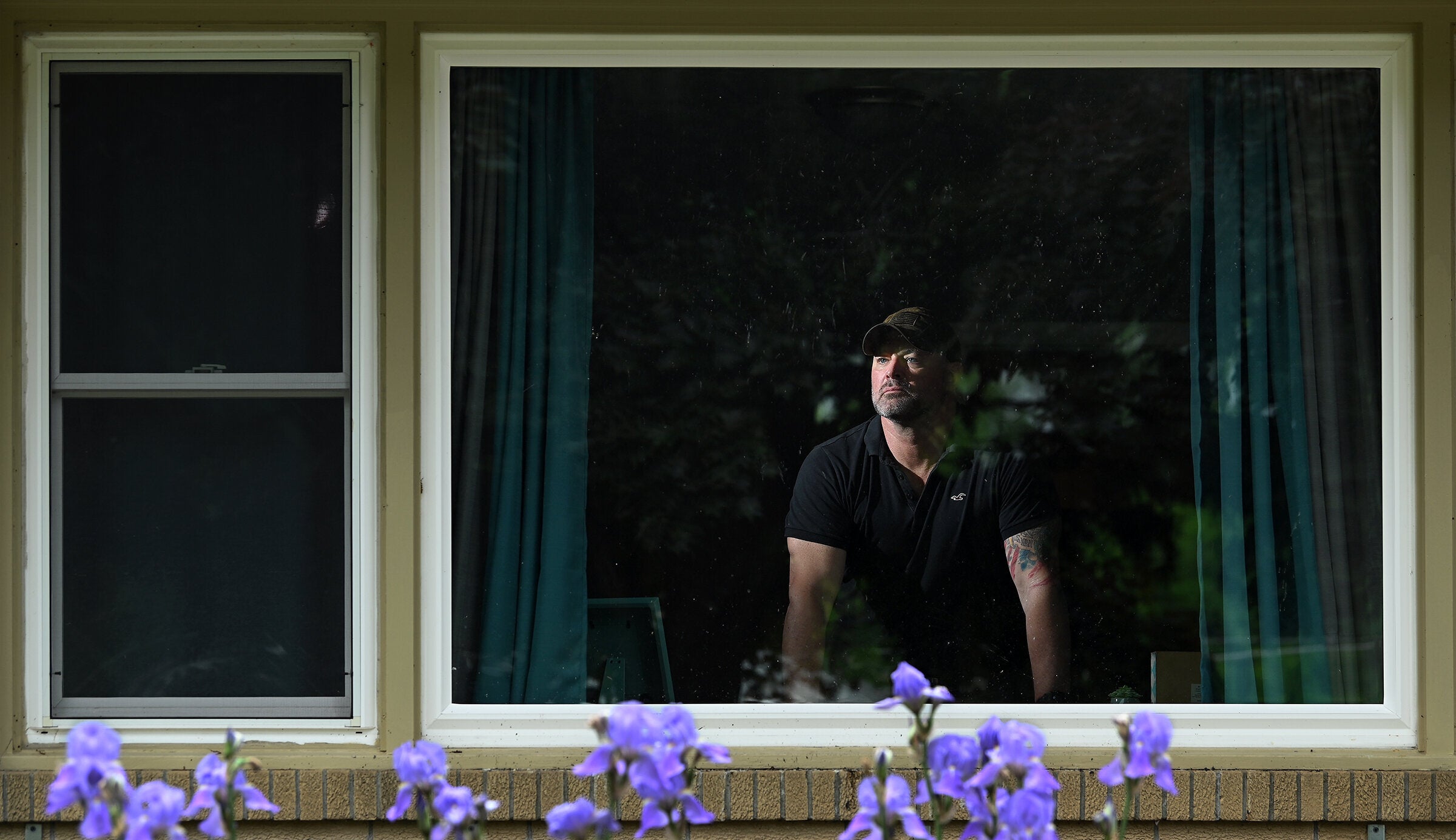
Above: Vincent Harris of Missouri pictured in front of a flag at half-staff to honor U.S. victims of COVID-19.
Credit: Jill Toyoshiba for HuffPost

In his northern Missouri town of about 6,000, Vincent Harris suspects he was one of the most vocal supporters President Donald Trump had there.

The 54-year-old Navy veteran was a self-described “deplorable” (a reference to Hillary Clinton’s notorious dig at Trump supporters in 2016). He fiercely defended the #MAGA mindset on social media, acting as one of the president’s model “keyboard warriors.”

But his staunch support for Trump began to slip as the coronavirus began to spread.

“Up until that time, I felt like the press had been uncharacteristically hard on him,” Harris said. For him, Trump’s “disregard for science” amid a pandemic marked a turning point that warranted national scrutiny.

Harris grew frustrated and discouraged as he watched Trump contradict the country’s top public health experts from the White House podium, downplaying the threat of the virus in the U.S. and hawking unproven treatments.

“I think what some may perceive as attacks from the media now are very fair, are accurate and are pointing out the inconsistencies that are incredibly dangerous from a public health perspective,” said Harris, a lifelong Republican.

Older Americans were key to securing Trump’s victory in 2016. But some ― including Harris, who supported the president in the last election ― aren’t so firmly in his camp this time around, a shift that could present a hurdle for Trump as he seeks a second term.

Among voters 45 to 64 years old, Trump outperformed Clinton by a 4-point margin, according to the Cooperative Congressional Election Study, a survey of more than 64,000 voters organized by Harvard University and administered by YouGov. The same survey showed Trump won voters 65 and older by a hefty margin of about 13 points.

This time around, according to a FiveThirtyEight average of national polls, voters 55 and older are almost evenly split between Trump and former Vice President Joe Biden.

Biden’s appeal to older voters, especially to those who are 65 and older, had been evident long before the United States’ first documented COVID-19 death in February. But Trump’s handling of the coronavirus crisis could push even more of those voters toward the presumptive Democratic candidate. The vast majority of Trump voters are likely to stay with him, but in a close election, even a small erosion in support could prove important.

He acts like everything comes down to money, like he doesn’t really care about the people.
Melody Paquin

A survey conducted by HuffPost earlier this month showed 45% of voters aged 45 to 64 disapprove of Trump’s response to the pandemic, compared to 54% who approve. The objection is stronger among voters 65 and older, with 56% who disapprove compared to 41% who approve.

Still, Trump maintains strong backing overall from those who voted for him in 2016, according to the poll. Just 12% of Trump voters disapprove of his response, with a staggering 85% who approve, the poll showed.

Melody Paquin of Barrow County, Georgia, is one of the former.

“He acts like everything comes down to money, like he doesn’t really care about the people,” Paquin, 69, said. “I have a daughter who is a nurse, and she puts herself at risk all the time. So if she can do that, why can’t he man up and do his job in a professional manner?”


Melody Paquin of Georgia says she voted for Trump because he was a businessman, but his response to the coronavirus has made her question his judgment.

Paquin said she’s been a strong Republican for as long as she can remember and was first drawn to Trump because he was a businessman. But his initial decision to publicly shrug off the virus’ potential threat, followed by his push to reopen the country despite a dearth in testing capacity and hospital preparedness, repelled her in recent months.

“Testing, testing, testing ― if that would have been done very early on, we wouldn’t have the mass number of deaths that we have had,” Paquin said.

“He was running his mouth about everybody having [personal protective equipment] while my own daughter in a big hospital was having to reuse masks,” she added. “He just lied and lied and lied.”

Paquin said she would rather vote for Sen. Bernie Sanders — who dropped out of the race for the Democratic nomination last month — than for Biden. But she added that she isn’t ruling out voting for a Democrat in 2020. She indicated she would consider voting for almost anyone who isn’t Trump and who tells the truth (including actor Sean Penn, apparently).

Starting To Question Things

Like Paquin, Harriette Sucher, a 61-year-old in Northern California, voted for Trump because of what she considered to be his business acumen. She said she “started to question things” when Trump appeared to ignore the warnings coming from Chinese doctors about the virus. His dubious suggestion that injecting disinfectant might help COVID-19 patients recover didn’t help.

“I started seeing a less intelligent man who’s not understanding the simple science,” Sucher said. She added: “It really matters how we handle this COVID-19 pandemic as a nation and how our leaders handle it. This disease does not know political boundaries.”

Sucher isn’t sure whom she’ll vote for in November. There’s a slight chance she’ll go for Biden, but she worries about his age, she said.

The decision is more straightforward for others, such as 51-year-old Stephanie Rivers of western Massachusetts. She’s one of roughly 40 million Americans who have lost their jobs in the midst of the economic crash caused by the pandemic.

“I looked to our president to guide us and make hard decisions to protect Americans, but what I saw and heard from him was anything but leadership,” said Rivers, an independent who has voted for both Republicans and Democrats in the past.

She said she supported Trump in 2016 because she felt he offered a better plan for job creation and economic stimulus than Clinton. But his botched response to the virus — including offering misinformation and frequently lambasting the media — caused her to withdraw her support. Barring the emergence of a third-party candidate, she said she’ll likely vote for Biden this year.

HuffPost heard from several past Trump voters who cited his rejection of science amid the pandemic as their top reason for dumping him in 2020. Of course, this isn’t the first time the president has undermined his own scientists.

Trump has kneecapped U.S. environmental policy, pulled out of an international climate agreement and buried his own government’s global warming report, which warned of catastrophic consequences for failing to act.

What I’m seeing from some of the people who are ardent supporters of Trump is very synonymous with cult behavior.
Vincent Harris

Asked why, if science was his biggest concern, he didn’t speak out against the president sooner, Harris pointed to his exasperation with Democrats. He said he was so angered by their accusations of Russian collusion against Trump’s 2016 campaign and the negative impact it had on the president’s ability to fulfill campaign promises that he was able to look past the president’s potential shortcomings.

Plus, the threat of the pandemic feels more immediate than global warming, making it a concern that’s easier to push to the back of his mind, Harris said.

Vincent Harris said he wasn't ready to commit to voting for Joe Biden in the upcoming presidential election, but is no longer


Vincent Harris said he wasn’t ready to commit to voting for Joe Biden in the upcoming presidential election, but is no longer a Trump supporter. 

Paquin believes Trump is committing “political suicide” with the way he’s handling the coronavirus crisis. Harris, however, appears unconvinced that the president’s rhetoric will be reflected in the larger pool of past Trump voters. 

He said he turned many people onto Trump, but those same people didn’t follow him when he began questioning the president’s coronavirus response. Friends he’s had for 40 years asked whether he had lost his mind, he said.

“If you would have asked me before this pandemic … if Trump followers were cultish, I would have said, ‘That’s ridiculous,’” Harris said. “At this point, I would tell you that what I’m seeing from some of the people who are ardent supporters of Trump is very synonymous with cult behavior.”

HuffPost received several emails from Trump voters who said they believe he’s done a stellar job navigating the pandemic. Others said they aren’t thrilled with his response but will stick with him for other reasons, namely his support for Israel and his tax cuts.

Neither Paquin nor Harris felt ready to commit to voting for Biden in November. But both suggested it seemed unlikely they could cast a ballot in favor of Trump, a man they once believed would bring spirited change to the country.

“This guy is refuting one of the most knowledgable disease experts in the world in the middle of a pandemic,” Harris said, referring to Dr. Anthony Fauci, a leading infectious disease expert on the White House’s coronavirus task force.

“I will take a president who embraces science over a president who rejects science any day,” Harris added, “even if they are a Democrat. Even if that means having to vote for Biden.” 

Ariel Edwards-Levy contributed reporting.

A HuffPost Guide To Coronavirus


Source by [author_name]

How the EU fails on #money-laundering

0

EU member states undoubtedly sighed in relief when the European Commission announced a €1.85 trillion economic recovery package to help the bloc through the coronavirus-induced economic slump in the coming years. As Commission president Ursula von der Leyen rightly argued, the package should be “Europe’s moment” – which makes the fact that this moment of triumph is blighted by the EU’s ongoing inability to fight money-laundering effectively just the more regrettable.

At a time when Brussels should be praised for proposing an unprecedented budget, it continually fails to plug financial leaks that have cost the EU untold billions over the years. The issue came to the fore again earlier this month, when the EC presented its updated list of “high-risk third countries that pose significant threats to the financial system of the Union” on May 7. The list includes 20 countries, such as Afghanistan, Barbados and Mongolia, while five countries were removed from it for this year’s edition.

The list drew immediate, wide-spread criticism because of its methodology, which was published that same day and has been regarded as seriously flawed for years. The blacklist, officials state, is compiled according to purely technical parameters, partially based on those of the the Financial Action Task Force (FATF). However, a closer look exposes that politics plays a much bigger role than officials are willing to admit.

Most blatant is the fact that the list is by definition restricted to non-EU countries – a rather self-righteous omission based on the premise that EU members’ extensive due diligence makes money-laundering nearly impossible within the EU. Yet even Brussels itself acknowledges that this is hardly true. Case in point is a Commission report from 2019 which explicitly highlighted that Europe’s legal frameworks suffers from several structural weaknesses, resulting from member states’ divergent approaches to regulating financial flows and implementing anti-money-laundering policy.

While this allows countries like Germany, France, Luxembourg and others to portray themselves as free of money-laundering contrary to realities on the ground, perhaps the most problematic issue is the politicized decision-making surrounding the list. As a recent EUObserver analysis shows, technical considerations alone rarely form the basis for the EU’s risk assessment. As a consequence, “It’s more significant who’s not on the [EU] list than who’s on it.”

Even casual observers may notice the suspicious absence of such countries as Russia, China or Saudi Arabia from the blacklist. The reason for this is simple: EU member states have consistently voted against their inclusion for fear of causing diplomatic backlash. Russian institutions and former Soviet countries have played an important role in many of the more recent banking scandals on EU territory. But because Russian banks and the European financial sector are deeply connected, it’s obvious why the EU shies away from calling Moscow out.

The clearly political undercurrents of Brussels’ anti-money-laundering policy were also starkly on display in the case of Saudi Arabia. In a direct threat to EU policy-makers, Riyadh warned of “severe negative consequences” if it were to appear on any high-risk list. A few months later, evidently spooked member states simply scrapped the document and killed the list, vary of the adverse impact on bilateral business contracts.

While these countries are thus regarded as “clean” for all intents and purposes, those who eventually are placed on the list are treated with almost palpable contempt. Worse, they’re usually added without being informed of it in advance and without a chance to discuss improvements made or challenge its inclusion in the first place. Such allegations are neither new nor limited to smaller countries. When the EC classified several US territories as problematic, the US Treasury prominently lamented the lack of opportunity to officially debate with the EU and challenge the inclusion. Though Washington pulled its weight to get off the list, less powerful countries don’t have this recourse, nor the means to contest Brussels on that front.

Given all these obvious shortfalls in form and substance, it’s clear that the list is a far cry from what it purports to be. A lot of power now rests with the EU Council and the chairs of the European Parliament’s committees on Economic and Monetary Affairs (ECON) and Civil Liberties, Justice and Home Affairs (LIBE) – who have until June 7th to approve or reject the list.

They should consider that while such criticism is uncomfortable, it’s needed for the EU members to reconsider their approach and truly strengthen the bloc’s international standing as a role model in the fight against money-laundering.


Source by [author_name]

Afghan forces killed as gov’t urges Taliban to extend ceasefire

At least 14 members of the Afghan army have been killed in a Taliban attack as the Afghan government said the Eid ceasefire was not over yet.

The Ministry of Defence said on Friday members of the Afghan army were killed in the province of Paktiya. Three others were also wounded in the attack that was also confirmed by the Taliban.

More:

A day earlier, the Taliban killed at least 14 people from the security forces in northern Parwan and western Farah provinces.

Afghanistan’s National Security Adviser (NSA) spokesperson Javid Faisal nevertheless wrote in a tweet on Friday that the “detente” which started during the Eid holiday, marking the end of Ramadan, was continuing.

“The ceasefire is not over yet; there have been violations because it is a complicated technical process that requires good coordination between both sides,” Faisal said.

Earlier, Faisal had urged the Taliban to extend the three-day ceasefire, which came into effect on Sunday to mark the Muslim festival of Eid al-Fitr.

“It is important to extend the ceasefire and, to avoid bloodshed, the Afghan government is ready to extend it,” the NSA spokesman told a news conference on Tuesday.

Despite the violence, a prisoner swap crucial to the start of peace talks between the warring sides in Afghanistan has continued.

Taliban delegation in Kabul

The Taliban, which launched an armed rebellion after it was toppled from power by a US-led invasion in 2001, has remained silent on government appeals for an extension of the ceasefire.

Meanwhile, a five-member Taliban delegation arrived in Kabul on Thursday to work with a government team on the release of prisoners on both sides, spokesmen for both sides said on Twitter.

A US-Taliban agreement signed in February in Qatar’s capital, Doha, stipulated that the Afghan government would release up to 5,000 Taliban prisoners while the Taliban would free about 1,000 Afghan security forces personnel.

But the prisoner swap has been delayed as Afghan President Ashraf Ghani refused to release all 5,000 Taliban prisoners at once. So far, Kabul has freed about 3,000 Taliban inmates, while the armed group had released about 300 Afghan security forces it held captive.

On Tuesday, the Afghan government freed 900 Taliban members from prison, the biggest such release yet, as part of a prisoner swap under the Doha agreement.

Following their release, the Taliban said on Thursday it had released 80 more Afghan security forces. That number brought the total number of released prisoners by the Taliban to 347.

The delegation will also discuss the announcement of the long-delayed intra-Afghan talks, which was also one of the elements of the Doha agreement, with the government.

Violence after ceasefire ends 

Skirmishes between Taliban fighters and Afghan security forces recommenced following the end of the three-day truce at midnight on Tuesday.

“Taliban attacked checkpoints in the Syagird district of central Parwan province late on Wednesday night,” a spokeswoman of the province’s governor said.

Taliban spokesman Zabiullah Mujahid, meanwhile, said the government had carried out air raids on Wednesday in the southern province of Zabul despite the group’s fighters not having carried out any attacks.

As per the February agreement, the US is expected to withdraw its forces after nearly 19 years in Afghanistan, leaving the Afghan government to negotiate a peace deal with the armed group to end the war.

US President Donald Trump on Tuesday renewed his desire for a full military withdrawal from Afghanistan but added that he had not set a target date.

“We’re there 19 years and, yeah, I think that’s enough … We can always go back if we want to,” Trump told a White House news conference.

The US has already begun to withdraw its forces. By the second quarter of 2021, all foreign forces are supposed to withdraw, ending the US’s longest war.


SOURCE:
Al Jazeera and news agencies

Source link

Qld uni activist suspended for two years

A student activist highly critical of the University of Queensland’s ties to Beijing has been handed down a two-year suspension from the institution.

Drew Pavlou faced a disciplinary hearing on May 20 at the university over 11 allegations of misconduct, detailed in a confidential 186-page document, reportedly linked to his on-campus activism supporting Hong Kong and criticising the Chinese Communist Party.

The university ordered his suspension on Friday after the 20-year-old philosophy student left the previous hearing after about one hour, citing procedural unfairness.

UQ Chancellor Peter Varghese said on Friday he was concerned with the outcome of the disciplinary action against Mr Pavlou.

“There are aspects of the findings and the severity of the penalty which personally concern me,” Mr Varghese said in a statement.

“In consultation with the vice chancellor, who has played no role in this disciplinary process, I have decided to convene an out-of-session meeting of UQ’s Senate next week to discuss the matter.”

The University of Queensland has faced media scrutiny for its relations with the Chinese government, which has co-funded four courses offered by the university.

The institution is also home to one of Australia’s many Confucius Institutes – Beijing-funded education centres some critics warn promote propaganda.

Source by [author_name]

A Son’s Long Struggle to Clear His Family’s Name Is Only Half Won

0

SEOUL, South Korea — The soldier spoke in a shaky voice, describing how he had lived like a beggar in South Korea and smoked “cigarette butts thrown by American G.I.s.” As he told listeners over the radio, he had fled his South Korean unit in Vietnam, defecting to the “bosoms” of North Korea.

South Korea labeled the 23-year-old soldier, Ahn Hak-soo, as a defector, and his family members as potential enemies of the state. His brother, Ahn Yong-soo, said that when he was a teenager, he was tortured ​by military intelligence agents who used electricity or water laced with salt and pepper​. Later, he said they forced him to quit his job as schoolteacher.

South Korea, which once victimized innocent citizens in the name of guarding against the Communist North, is still struggling to come to terms with its past.

Nearly 320,000 South Korean troops served in Vietnam, the largest foreign contingent fighting alongside the Americans. But when they withdrew in 1973, their top commander, Lt. Gen. Lee Se-ho, claimed that no South Korean soldier was held prisoner. Mr. Lee’s command insisted that several missing soldiers, including Hak-soo, were not prisoners of war, but either deserters or defectors not worth repatriating, according to declassified documents.

Mr. Ahn helped shatter that official narrative.

In 2009​, South Korea finally recognized Hak-soo as a prisoner of war, the first Vietnam War veteran so designated by the country. The government now believes he was captured by Vietcong guerrillas and abducted to North Korea, which used him for propaganda​.

“In South Korea, few have been interested in ​Vietnam War ​P.O.W.’s,” said Mr. Ahn, 67, a Christian pastor. “People considered being held prisoner by the enemy shameful and dishonorable.”

Mr. Ahn continues to fight for a formal investigation and an apology.

After more than 20 lawsuits, ​South Korean courts recognized Mr. Ahn as a victim of torture​ and paid him $73,000 in damages but refused to reinstate him as a schoolteacher. Another court ​denied awarding compensation​ for his family’s sufferings​​, accepting the government’s argument that there was no evidence of wrongdoing and the statute of limitations​ had long expired. North Korea has ​not admitted to kidnapping his brother​ or confirmed his fate​.

“The South Korean government clearly neglected its duty to protect its own citizens,” said Heo Man-ho, a political scientist at Kyungpook National University.

“At least Ahn Hak-soo had a brother who has fought tenaciously to clear his name,” he added, “but no one has stepped forward for other Vietnam War soldiers who were recorded as killed in action but likely ended up in North Korea.”

Mr. Ahn’s fight is part of the country’s broader reflection over past human rights violations​ that officials justified by pointing to the Communist threat from the North. In May, South Korea’s Parliament passed a bill to relaunch the Truth and Reconciliation Commission; the commission’s investigations into such violations had been halted in 2010 ​under a conservative ​government.

Mr. Ahn plans to take his family’s case to the commission​​.

“When my brother turned up in North Korea​, it​ was enough for the authorities to label him a defector,” he said. “​And our ​​entire ​family was shattered.”

Hak-soo, the second child in the family of five sons in Pohang, South Korea, was dispatched to Vietnam in 1964 as a radio man with the First Korean Mobile Army Surgical Hospital near Saigon, now Ho Chi Minh City. In his last letter home, he said he would return on Sept. 16, 1966. He went missing a week before ​on a trip to pick up medical supplies.

During the Cold War, South Korea blacklisted families whose relatives ended up in North Korea, making sure that they did not advance in its staunchly anti-Communist society. Counterespionage agents surveilled them, often extracting false confession​s through torture that they were in contact with their relatives in the North.

After Hak-soo showed up in North Korea, Mr. Ahn’s father was forced to quit as a primary school principal. Mr. Ahn, then a teenager, was called “commie’s little brother” by his high school teachers.

The Defense Security Command, the counterespionage arm of the military, had its undercover local office adjacent to his school. When Mr. Ahn was outside, he said, armed officials there would peek over the wall and hail him over for interrogation.

“An​ agent put a pistol on my head and pulled the trigger,” Mr. Ahn wrote in “Whitewash and Truth,” a​ memoir he published in 2014. “It had a tremendous impact — as if my brain exploded in a terrible sound of death.”

When Mr. Ahn became a primary schoolteacher in 1975, the agents​ appeared at his school in Seoul, interrogating and beating him in the janitor’s office. He was forced to resign five years later and sign a document telling him to keep quiet about what happened — or he would be punished for “an act that benefits the enemy.”

Mr. Ahn has moved his family 31 times, but he said the agents followed him like “leeches.” In 1984, he flew to Britain to study divinity at the University of Aberdeen and later at Cambridge. Government agents showed up there, too — an incident so traumatic that Mr. Ahn had to curtail his studies and return home for medical treatment, a South Korean pastor who befriended him in London said in a signed statement submitted to courts.

The Defense Security Command put Mr. Ahn’s family under surveillance until at least 1993, according to files from the organization, which was reorganized and renamed in 2018 as part of an reform of the once-infamous military spy agency.

Mr. Ahn was thinking of emigrating abroad for good in 2008 when a reporter sent him a 380-page file of recently declassified Foreign Ministry documents that mentioned his brother’s name. ​Hopeful that he could force some change, he filed several freedom of information requests with ​military and intelligence agencies.

In the documents, he found that his brother’s unit in Vietnam had hushed the disappearance for weeks.

One army document said that Hak-soo “went over” to North Korea “disgruntled.” One said he had run up “a large debt because of his complicated relationships with women,” so he “defected” and then was “kidnapped” to North Korea.

Another document said it was clear that he was “kidnapped” to the North, but still called him a “defector.” Some documents misstated Hak-soo’s home address, age and military serial number, as well as the ​year he went missing.

He also learned from the files that a North Korean spy, who defected to South Korea in 1976, told his interrogators that Hak-soo was executed in ​​1975 after a failed attempt to flee the North through the border with China. In the military file, the former spy, Kim Yong-kyu, was quoted as saying that Hak-soo “regretted defecting to the freedom-less North.”

Mr. Kim testified before a government panel in 2009, saying that North Korea lied when it said the soldier defected to the North. The panel ultimately ruled that Hak-soo was abducted, a ruling that forced the military to recognize him as its first P.O.W. in Vietnam.

Such cases, said Han Sung-hoon, a sociologist at Yonsei University in Seoul, show how anti-Communist agencies have defended their actions by “regenerating an antagonistic relationship with North Korea, even fabricating spy cases if needed.”

Mr. Han, who had served in the Truth and Reconciliation Commission, said the investigations of human rights violations have often been stymied by the reluctance of perpetrators to come clean for fear that they would be “branded betrayers and ostracized.”

Mr. Ahn is undeterred. He has continued to collect documents and statements from anyone who had information about his brother, which he plans to present before the newly revived commission.

“Both Koreas used and then abandoned my brother,” Mr. Ahn said.

Source link