Monday, May 4, 2026

Just over 1,020 medical interns now registered

The Medical Council has reminded interns of ethical duty to care for their own health

About 1,020 new interns have been registered by the Medical Council so far for 2020.

Aside from the newly graduated doctors, the Council has also registered an additional 393 doctors so far this year, who are returning to practice, coming out of retirement or returning to Ireland from abroad as part of the response to the national pandemic.

The doctors who have returned temporarily are to remain on the register for two more months to the end of July, or any other date to be determined by the Minister for Health, Simon Harris.

Last year, President of the Medical Council, Dr Rita Doyle, spoke to incoming interns at the National Intern Gathering organised by the National Doctors Training & Planning unit.

This year, with the Covid-19 restrictions in place, she has instead written to each medical intern to congratulate them on their graduation as they embark on their medical careers, amid the challenges of Covid-19.

The letter urges each intern to make sure they have their own GP and underlines their ethical duty to care “to care for yourself”.

valerie.ryan@imt.ie

Source link

TDs: Publish new mental health strategy document

0

‘Updated mental health policy critical to Programme for Government talks and post-Covid-19 planning’

A cross-party group of TDs is calling on the Government to publish immediately an updated version of the mental health strategy document, A Vision for Change.

In a letter to the Minister for Health Simon Harris and Minister of State for Mental Health and Older People Jim Daly, as well as a number of Fianna Fáil, Sinn Féin, Green Party, Social Democrats, and independent deputies, said an updated mental health policy was critical to Programme for Government talks and post-Covid-19 planning.

The letter was signed by James Browne, Fianna Fáil; Pat Buckley, Sinn Féin; Mattie McGrath, Independent; Denis Naughten, Independent; Carol Nolan, Independent; Róisín Shortall, Social Democrats; and Ossian Smyth, Green Party.

They wrote: “Following Minister Harris’ statements in the Dáil on May 14th and 21st, expressing eagerness to engage with parties on when the refresh of A Vision for Change should be published, we are writing to inform you that we believe that the refresh of A Vision for Change should be published immediately.

“The publication of the refresh is urgent both in the context of the Programme for Government talks and to allow for immediate and cohesive post-Covid-19 planning for mental health services and support across the country.”

The letter was published on the website of campaign group Mental Health Reform, the national coalition on mental health which represents more than 70 organisations.

According to the Health Service Executive, A Vision for Change was developed by an expert group of health service managers, representatives of voluntary organisations and service user groups and health researchers to foster positive mental health across communities and help provide accessible, community-based, specialist services for people with mental illness.

peter.doyle@imt.ie

Source link

Perfectly preserved ancient Roman mosaic floor discovered in Italy

0

Written by Rob Picheta, CNN

A beautiful and remarkably well preserved mosaic floor from ancient Rome has been discovered by archaeologists in northern Italy.

The stunning discovery, made in the township of Negrar, north of Verona, comes almost a century after the remains of an ancient villa were found on the site.

Pictures of the floor posted by the town’s officials show its intricate patterns and colorful detail, much of which has been preserved perfectly through centuries.

The floor was buried underneath a vineyard in the hilly region, officials said.

Photo posted to Facebook by the town of Negrar, Italy, where a mosaic floor has been discovered underground. Credit: Comune di Negrar di Valpolicella/Facebook

They wrote that “after countless decades of failed attempts,” archaeologists had uncovered “part of the flooring and foundations of the Roman Villa located north of the capital, discovered by scholars over a century ago.”

The team’s objective was to “identify the exact extension and exact location of the ancient construction,” they added in the statement online.

The town will now work to ensure the floor can be seen by the public, officials said, but they warmed: “The result will not come soon and significant resources will be needed.”

Ancient sites in Italy are starting to slowly reopen as the country comes out of its lengthy coronavirus lockdown.

Shortly before the pandemic hit Italy and forced nationwide closures, the famed House of Lovers in Pompeii was reopened after 40 years following an ambitious restoration project.


Source link

Europe’s Grand Reopening Begins With a Whimper

0

Last week, bars, restaurants, cafes and pizzerias across Italy threw open their doors, inviting the public to celebrate the end of two months of confinement and start getting back to some semblance of normal life.

The result, so far, has been a disaster.

Customers have been in short supply, proceeds have been meager, and costs are on the rise. Businesses have reported a 70% drop in turnover compared to before the coronavirus pandemic, according to a survey by FIPE, the Italian Federation of Public Establishments — the result of new social distancing requirements as well as lingering fears about the virus’ spread.

Business owners see little hope of the situation improving anytime soon. There are no tourists in the historic centers of major cities, and many office workers are continuing to work from home, leaving cafes and restaurants mostly empty. 

Moreover, the coronavirus seems to have fundamentally changed the Italian lifestyle — at least for now. With establishments forced to limit capacity, it’s difficult for people to imagine having the kind of leisurely, convivial lunches and dinners that have long characterized the Italian way of dining out.

“Unfortunately, the short to medium term outlook is negative, there is no doubt about it,” Luciano Sbraga, FIPE’s deputy director, told HuffPost Italy. “We expect to see an improvement in September and into the fall.”

Even then, however, any increase in economic activity could quickly be undone by a second wave of coronavirus infections.

“This is the real danger,” Sbraga said. “It would be the final blow to the industry, and one from which we would never recover.”


A cafe facing the Pantheon in Rome on May 20. Without tourists or office workers, many restaurants and bars remain empty.

The situation is similar in France, where cafes and restaurants have been struggling as well.

The Café des Anges, a normally bustling restaurant in the 11th arrondissement of Paris, has pivoted to preparing takeout orders, which it didn’t offer before the coronavirus pandemic.

”It is worth it to get back in touch with people, and it puts a little bit of money in the till,” Virgil, the manager, told HuffPost France.

But, he said, the cafe’s current business is down to just 4% or 5% of what it usually does.

“It’s better than not being open, but it’s not sustainable for very long,” Virgil said.

The French government is expected to allow restaurants, bars and cafes in so-called “green” zones, where coronavirus cases are sufficiently low, to welcome guests again starting on June 2. But this easing of restrictions won’t necessarily help restaurants bounce back.

“Quite honestly, if we wanted to reopen tomorrow, even if full capacity were allowed, it would never be reached,” Virgil said. “There is no one in the neighborhood at the moment, the offices are empty, people have not returned to work. Normally, it is office workers who fill the restaurant. And we don’t have tourists, either.”

The European Commission has estimated that European hotels and restaurants will lose half their income this year, and certain destinations that are particularly reliant on the tourist economy will suffer even more.

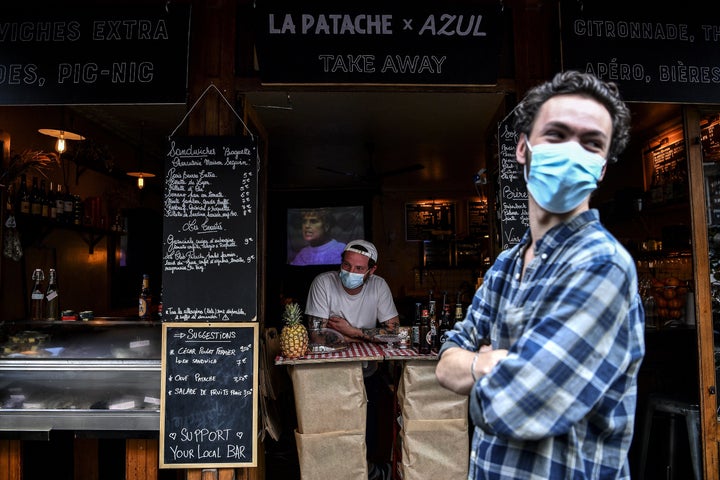
A bartender selling take-away drinks and food waits for customers behind a makeshift counter along the sidewalk in Paris on M


A bartender selling take-away drinks and food waits for customers behind a makeshift counter along the sidewalk in Paris on May 9.

Many European nations are planning to open their borders to international travelers in the coming days and weeks, in the hopes of saving the summer tourism season.

In April, the Commission announced the need for a “Marshall Plan” to revive European tourism, and plans to organize a special European tourism summit in the months ahead.

Even if travelers manage to get over their coronavirus fears, however, travel operators worry that new health and safety restrictions at bars, restaurants, hotels and beaches will be a buzzkill.

“We had plenty of complaint letters from people  . . .  who were abroad as lockdown came down because they couldn’t go in the pool or weren’t allowed to the beach,” Simon Cooper, chief executive of the online travel company On the Beach, told the Financial Times.

“You wouldn’t book a holiday where that will be an outcome. Would I want to even sell a holiday like that?”

In the United Kingdom, the government is considering adding an extra bank holiday in October — a proposal from the official tourist agency, VisitBritain, to help offset the losses the tourism industry has suffered during the coronavirus pandemic.

The government has yet to rule on the proposal. But even if the extra holiday is approved, it’s uncertain whether Britons would take advantage of it.

According to a recent YouGov poll, only 4% of Brits said they would use the extra holiday to travel abroad, and just 8% said they would go on holiday domestically.

Far more — 27% of respondents — said they would just stay home.

With reporting from HuffPost Italy and HuffPost France.

A HuffPost Guide To Coronavirus


Source link

China approves Hong Kong draft security law

BEIJING — China’s government passed the first hurdle of enacting a draft security law for Hong Kong on Thursday, legislation that critics warn would erode human rights protections and the territory’s unique status.

The move has prompted widespread concern about Beijing’s increasing influence on the semi-autonomous region.

On Wednesday, Secretary of State Mike Pompeo warned that the law would mean that Hong Kong no longer qualifies for its special status under United States law.

That might open the door for the U.S. to end or at least alter the special economic and trading relationship that it currently has with Hong Kong. President Donald Trump said Wednesday ahead of the vote that he will issue a response before the end of the week.

Hong Kong’s pro-democracy activists, who in recent days have taken to the streets in protest, spoke out against the move.

“Today’s decision is a direct assault on the will” of Hong Kongers, Joshua Wong, an activist who rose to prominence during widespread demonstrations in 2014, said on Twitter. He warned the legislation “might kill Hong Kong’s democratic movements.”

Its passage was no surprise and hours beforehand, Pompeo tweeted Wednesday that “the United States stands with the people of Hong Kong.”

A joint statement by the foreign ministries of Canada, the United Kingdom and Australia said that China’s passing of the draft law was “in direct conflict with its international obligations.”

It calling on China to rethink the legislation, which it said raises the prospect that Hong Kongers might be prosecuted “for political crimes, and undermines existing commitments to protect the rights of Hong Kong people.”

China’s annual National People’s Congress approved the framework of the law by 2,878 votes to 1. It will now go to senior party officials in the Standing Committee of the NPC to be fleshed out.

It is set to tackle issues such as secession, subversion, terrorism and foreign interference, and comes after a year of anti-government protests that at times brought Hong Kong to a standstill.

Legal experts say it is unclear whether once passed in Beijing, the law will also need to be approved or implemented by Hong Kong’s Legislature.

Either way it represents a major turning point in China’s handling of the territory.

Some analysts see it as China losing patience with Hong Kong’s failure to adopt national security legislation on its own after anti-government protests swept the city last year.

Hong Kong, once a British colony, was handed back to China in 1997 on the agreement that it would retain for at least 50 years extra freedoms distinct from those of mainland China.

This was called “one country, two systems,” and stated that Hong Kong would keep its own, more liberal systems of government, the judiciary and economy.

Tara Joseph, president of the American Chamber of Commerce in Hong Kong, described Beijing’s draft law as marking “the end of an era” for the region.

“Hong Kong, in many ways, has become the new Berlin: the new meeting point of a big argument of big disagreement between two major powers, China and the United States,” she said. “We can expect a lot of friction here as a result.”

Backed by the U.S. and other Western governments, activists are worried that Beijing is now trying to snuff out the freedoms that it promised decades ago.

“Hong Kong is not as free as it was before,” said one demonstrator, part of a group of dozens of people who had gathered in downtown Hong Kong on Thursday. Asking to be identified as Wong for fear of retaliation, he said that Hong Kong’s government was now just “the puppet of Beijing” and that it was “harming our basic values, harming our freedom, harming our democracy.”

Another demonstrator, Simon Ho, an information technology worker, said that it was “too late to change, but we still need to express to the government that we really do not like this law.”

According to Bonnie Glaser, a senior adviser at the Center for Strategic and International Studies think tank, the passage of the draft law shows that the Chinese Communist Party has weighed-up the risks and considered them acceptable to achieve their goals.

“It was potentially too embarrassing to Xi Jinping to see surrounding the elections in September, another round of very violent protests that they just couldn’t control,” Glaser said, referring to the Chinese president. She said the coronavirus was an “accelerant” emboldening China’s foreign policy.

Janis Mackey Frayer reported from Beijing; Justin Solomon from Hong Kong; and Alexander Smith and Adela Suliman reported from London. Reuters contributed to this report.

Justin Solomon contributed.


Source link

‘Social distancing’: how a 1950s phrase came to dominate 2020

As schools prepare to reopen, many wonder how small children are expected to maintain “social distancing”. Some French teachers have been isolating their charges within little plague squares chalked on the playground. But maybe the choice of the phrase “social distancing” in the first place has been counterproductive.

If “social distancing” sounds to you more like snubbing or ghosting a friend, you are right. It was a 1957 collection of work by sociologist Karl Mannheim that first described it as a way to enforce power hierarchies. “The inhibition of free expression can also serve as a means of social distancing,” he wrote. “Thus, the higher ranks can constrain themselves to preserve a certain kind of deportment or dignity.” In doing so, they distance themselves socially from the plebs.

It was only in the mid-2000s that “social distancing” was adopted for pandemic measures, but it is potentially alienating: after all, we are not actually advised to distance our social selves, only our bodies. So perhaps we should all adopt the clearer alternative preferred by, among others, the Irish government: “physical distancing”. Physical distancing might lead in some sad cases to social distancing, too, but it’s not the same thing.

• Steven Poole’s A Word for Every Day of the Year is published by Quercus.

Source link

Artist Hijacks Eerily Empty Tourist Sites With Colorful Tribute To Frontline Workers

0

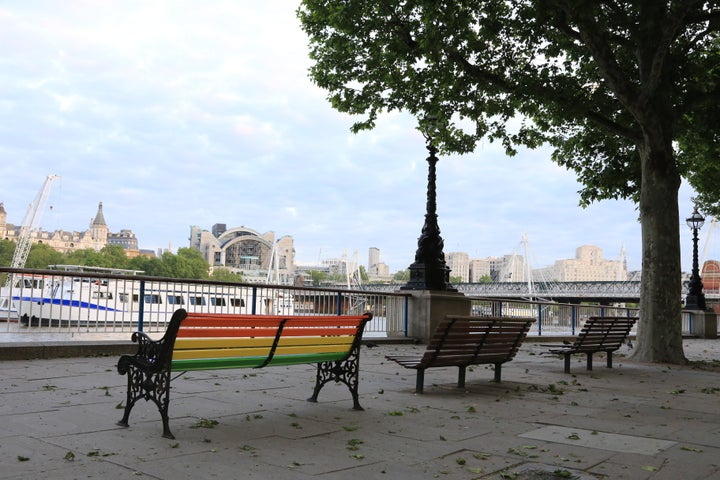
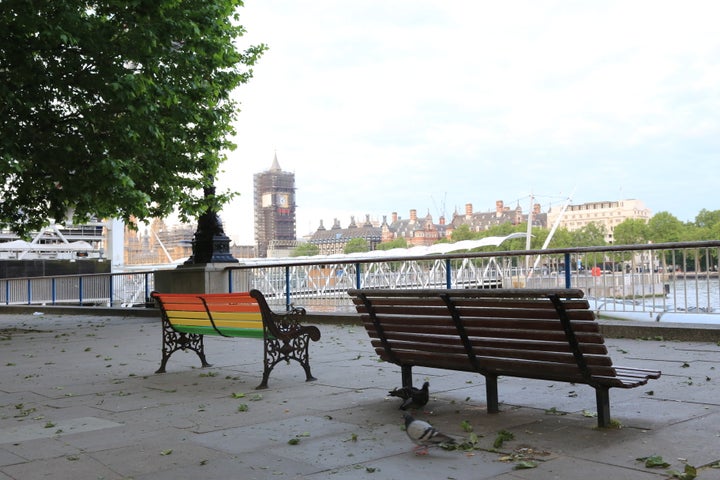
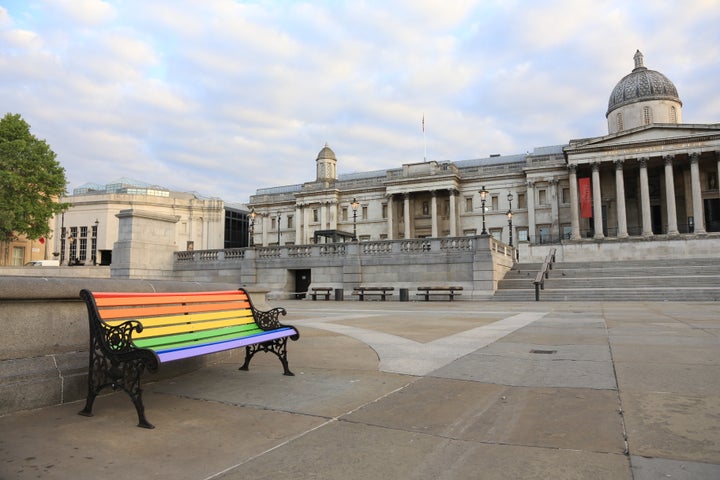
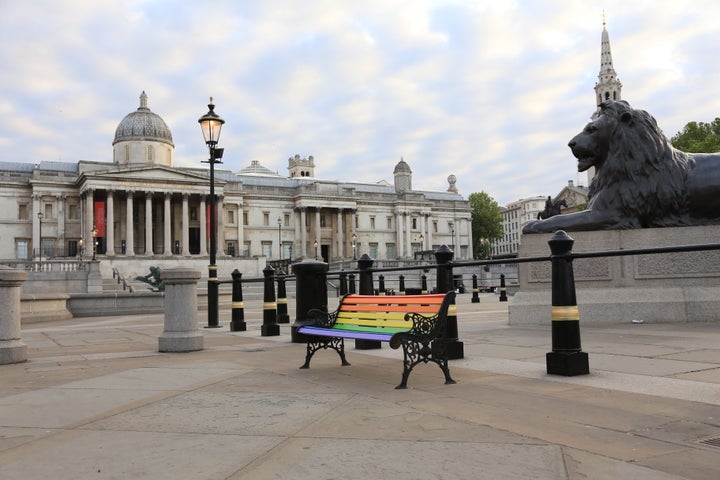
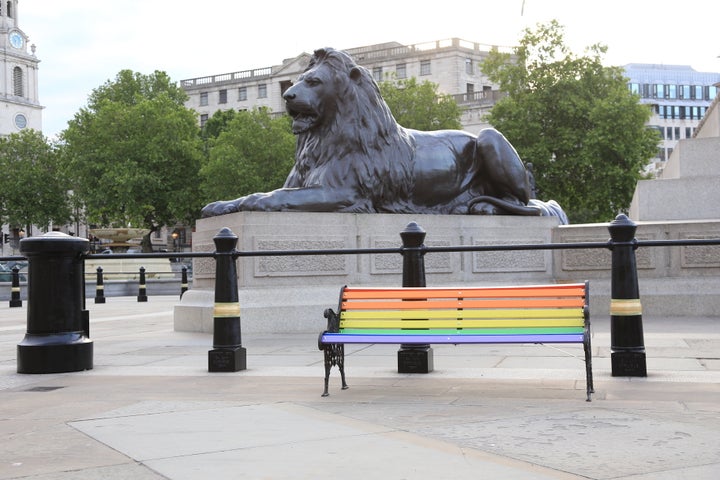
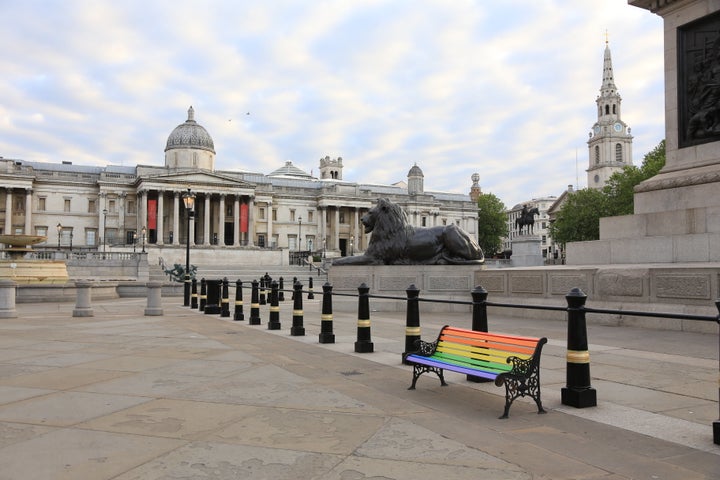
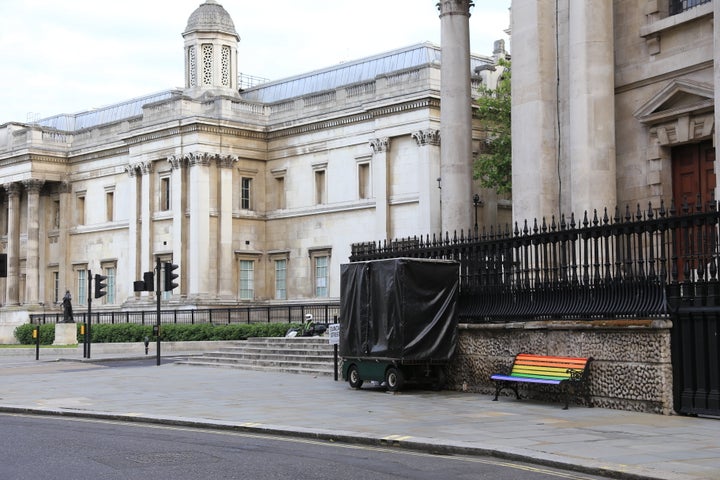
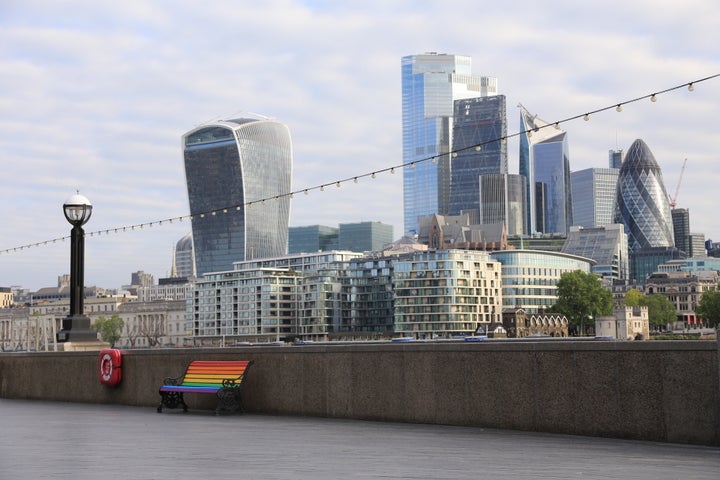
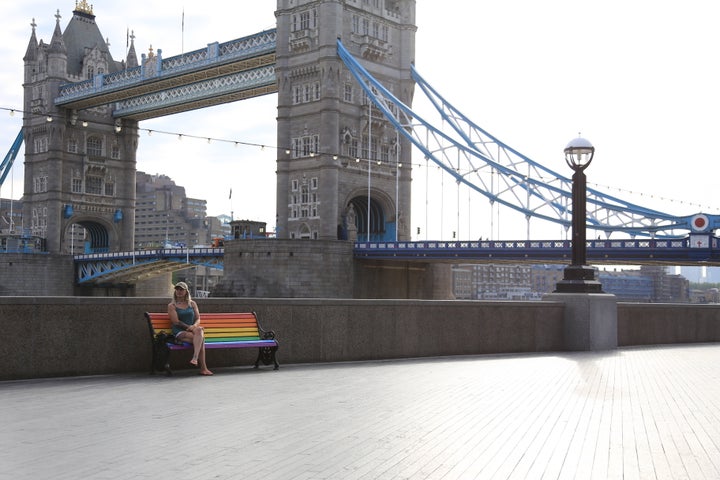
Brightly colored street benches are being left around London in honor of workers on the front lines of the coronavirus pandemic.

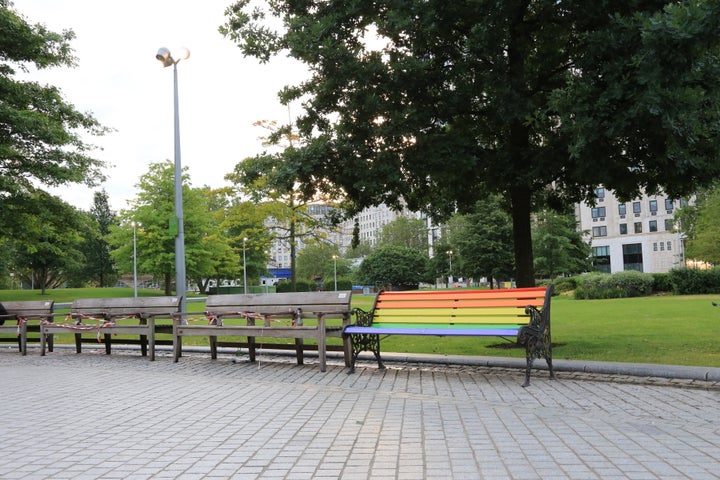
Artist Paul Insect this week deposited five benches — each painted in the colors of the rainbow — at tourist sites across the capital as a tribute to those “who have kept England running” amid the lockdown, reported ITV News.

Photographs that Insect shared to Instagram on Wednesday showed the furniture in situ at usually bustling hot spots that, because of the public health crisis, are now mostly deserted.

“London has never looked so good as it does now”, said Insect, who collaborated on the project with the Block London furniture company.

“The streets are clean and the views are unbroken by people,” the artist said in a statement to HuffPost. “A perfect time to be exploring your city wherever you are, of course with the correct social distancing.”

The benches had been intended to “become a place for people to pause and reflect on the past couple of months as our cities begin to slowly open up again,” Insect said. 


Paul Insect

However, Insect on Thursday morning shared video of what appeared to be security guards removing one of the benches he’d placed near City Hall.

“It seems like London did not like the benches I left. As they have all disappeared,” he wrote on Instagram.

It was unclear who was responsible for the removal of the bench, or if the other benches were also taken. Insect’s publicist did not immediately respond to HuffPost’s request for further information.

Paul Insect


Paul Insect

More than 37,000 people have died from the coronavirus in the United Kingdom, the second-highest death toll in the world following the U.S., where it topped 100,000 on Wednesday.

Britain’s Prime Minister Boris Johnson has faced widespread criticism over his handling of the outbreak. He initially downplayed the threat but later became infected and was hospitalized for a week.

Johnson eased restrictions earlier this month, but was accused of sending mixed messages. He is now embroiled in a scandal over his top adviser, Dominic Cummings, who he has refused to fire despite his flouting of lockdown rules.

Check out more photographs of Insect’s benches here:


A HuffPost Guide To Coronavirus


Source link

Iran arrests man over ‘honor killing’ of 14-year-old daughter

May 28, 2020

The murder of a 14-year-old girl in Iran who ran off with an older man has renewed calls for the government to impose harsher punishments on so-called honor killings. 

In mid-May, Romina Ashrafi fled the town of Talesh with her 34-year-old boyfriend, Bahamn Khavari. They were apprehended by police less than a week later. 

Under Iranian law, girls as young as 13 can marry, although the average age is 23.  

Police turned Ashrafi over to her father, even though the teenager said she feared for her life, Iranian state media reported.  

Her father, Reza Ashrafi, is accused of beheading his daughter while she was sleeping May 21. Local media reported he used a farming sickle in the slaying. 

He is currently in custody and faces up to 10 years in prison if convicted of murder.  

The killing has prompted outrage nationwide, and Iranian President Hassan Rouhani has reportedly urged his Cabinet to fast-track legislation that would impose harsher punishments for honor killings. 

There are no government statistics on the number of women and girls who die in honor killings each year in Iran. The US State Department notes the practice occurs most often among rural and tribal populations.

In a statement, Amnesty International wrote it was “appalled that the Iranian authorities repeatedly ignored Romina’s pleas for protection from her violent and abusive father.”

The rights group called on Iran’s authorities to criminalize domestic violence and to ensure accountability that doesn’t resort to the death penalty. 

Reza Pahlavi, the exiled son of Iran’s last shah, wrote on Twitter that the country’s regressive laws enabled Ashrafi’s murder. 

“Laws that permit domestic violence, honor killings, child abuse & child marriage do not belong in the 21st century,” he wrote. “The solution is a return to secular law.” 


Source link

Spain’s government lashes out at Nissan over Barcelona factory closure

0

The closure of the Nissan factory in Barcelona is hardly a surprise | Lluis Gene/AFP via Getty Images

The government thought the factory’s future was ‘guaranteed.’

Nissan said Thursday it would close its plant at Barcelona’s Zona Franca, threatening about 3,000 jobs and triggering a scramble among politicians to figure out a contingency plan.

Nissan’s Chief Executive Makoto Uchida confirmed the closure during a video press conference on Thursday in which he announced sweeping restructuring. That’s a major blow for Spain’s Prime Minister Pedro Sánchez, who had insisted earlier this year that the factory’s future was “guaranteed.”

“We considered various measures in Barcelona and although it was a very difficult decision we intend to close the plant,” said Uchida.

On Wednesday, Nissan agreed a new cooperation program with Renault that will see the French carmaker take the lead in Europe as the whole auto industry grapples with expensive shifts in electromobility and autonomous driving systems, as well as the impact of the pandemic.

The closure of the Barcelona factory, which dates back to 1920 but has only been owned by Nissan since 1980, is hardly a surprise. The site had been operating far below its maximum capacity since 2012 and concerns over its viability increased months ago when Nissan cut 600 jobs to reduce costs.

However, Nissan said it will keep open its Sunderland factory in the U.K., despite fears that Brexit could lead to its closure. Its peer Honda last year announced plans to close its Swindon plant in the U.K. by 2022, costing 3,500 jobs.

Auto failure

In its announcement on Thursday, Nissan said it will now redirect its resources toward Japan, China and the United States, giving ground to Renault in Continental Europe.

The production of vans will be shifted from Barcelona to Renault’s French factories.

The decision is a big blow to manufacturing and employment in Spain’s northeastern region of Catalonia, where carmaking has been a crucial sector for decades. About 3,000 direct jobs and between 25,000 and 30,000 indirect jobs depend on Barcelona’s Zona Franca factory.

The decision also represents a failure for Sánchez after months of intense negotiations to persuade Nissan to keep the factory open.

“We regret this decision by Nissan … despite the enormous efforts by the government to keep the business going,” Spain’s Foreign Minister Arancha González said.

Spain insists that saving the Barcelona site is still possible if Nissan were to apply a viability plan developed jointly with the Spanish Ministry of Industry and the Catalan regional government. Spain and Catalonia had offered an injection of up to €100 million — about a third of what Nissan needed to invest to build a new electric vehicle at the Barcelona factory that would ensure its long-term viability.

Spain is determined not to make Nissan’s exit easy. The government argues that closing the factory would cost the company more than €1 billion in compensation to workers and suppliers, as well as the repayment of €25 million in taxpayer money handed to Nissan over the last 12 years. Madrid says that it would be cheaper for Nissan to invest and save the site.

The government also warned that leaving Barcelona and Spain equals “abandoning the European Union, with the consequent reputational damage in a market of more than 500 million people.”

Economic Affairs Minister Nadia Calviño said Thursday the government wants to discuss “an alternative solution” for the Zona Franca site with Nissan and has proposed the creation of a working group.

Unions plan street protests after weeks of being banned from doing so because of Barcelona’s lockdown restrictions. A strike that began on May 4 is set to continue.

“Nissan’s workers will not rest until they persuade the multinational to keep industrial operations in Spain,” said the CCOO union.

Nissan’s decision does not directly affect the future of the company’s other sites in northern Spain, including Ávila, where it produces spare parts, and Cantabria, where it manufactures electric vans.

Aitor Hernández-Morales contributed reporting.


Source by [author_name]

Coronavirus Outbreak: Goa National Games postponed indefinitely due to COVID-19 pandemic – Firstpost

0

The much-delayed 36th National Games, scheduled for October-November in Goa, was on Thursday postponed indefinitely due to the COVID-19 pandemic.

The Indian Olympic Association (IOA) recently asked the Goa government that it must host the National Games as scheduled from 20 October to 4 November this year.

However, a spurt in the number of novel coronavirus cases has led to a postponement.

Representational image. Reuters

“The National Games organising committee has decided to postpone National Games due to COVID-19 pandemic,” Goa’s deputy chief minister Manohar (Babu) Ajgaonkar, who also holds the sports portfolio, said in a statement shared by IOA President Narinder Batra.

“… Committee to hold meeting in September end and decide on fixing dates for National Games. (Goa) Government to take advice from Union Sports Ministry, need four months advance notice to organise games,” he added.
The previous edition of the Games was held back in 2011 in Jharkhand.

Updated Date: May 28, 2020 18:56:31 IST

Tags :

36th National Games,

Coronavirus Outbreak,

Indian Olympic Association,

Jharkhand,

Manohar Ajgaonkar,

Sports Ministry,

SportsTracker


Source link