Tralokinumab achieves primary and secondary endpoints in three Phase 3 trials on moderate-to-severe atopic dermatitis
LEO Pharma A/S has announced results that its investigational medicine tralokinumab 300 mg, administered subcutaneously every two weeks, demonstrated to be both efficacious and exhibited a profile and severity of adverse events (AEs) similar to/comparable to the placebo group with or without concomitant use of a topical corticosteroid (TCS).
The three Phase 3 trials, (ECZTRA 1-3) for the treatment of adults with moderate-to-severe atopic dermatitis (AD), were presented online at the 78th Annual Meeting of the American Academy of Dermatology.
In all three trials, tralokinumab met its primary endpoints at week 16 as assessed by the Investigator Global Assessment score of clear or almost clear skin (IGA 0/1) and at least a 75 per cent improvement in the Eczema Area and Severity Index score (EASI-75). Tralokinumab also demonstrated improvements in secondary endpoints, including the extent and severity of skin lesions, pruritus (itch) and health-related quality of life measures at week 16, when administered once every two weeks with or without concomitant TCS use.
Prof Alan Irvine, Professor of Dermatology, Trinity College Dublin said: “Patients with AD can go through life with physical, social and mental challenges associated with their condition, so it is hugely important that there are more treatment options available. The fact that this treatment is the first to target interleukin-13, a key driver of the underlying chronic inflammation in AD, is a very exciting prospect.â€
In the ECZTRA 1 and 2 monotherapy trials, more than half of the patients treated with tralokinumab 300 mg every two weeks who achieved a clinical response at week 16 (IGA 0/1 or EASI-75), maintained response at week 52 without any use of TCS.
In the ECZTRA 3 combination trial, significantly more patients treated with tralokinumab plus TCS achieved IGA 0/1 (39%) and/or EASI-75 (56%) at week 16 as compared with patients treated with placebo plus TCS (26% and 36%; p=0.015 and p<0.001 for IGA 0/1 and EASI-75, respectively).
In addition, most patients who responded at week 16 maintained response at week 32 when continuing with two different dosing frequencies of tralokinumab. Nine out of 10 patients who responded at week 16 and were then randomised to continue with tralokinumab every two-week dosing plus TCS maintained clear or almost clear skin at week 32, while eight out of 10 patients who responded at week 16 and were then randomised to continue with once every four-week dosing plus TCS maintained clear or almost clear skin at week 32.
“The hallmarks of atopic dermatitis are intense itch, discomfort and pain, and skin inflammation,†said David McMahon, Chief Executive Officer of the Irish Skin Foundation.
“With very few therapeutic options available, treating moderate-to-severe AD can be complex and challenging. There is an urgent need to offer further treatments to alleviate the relentless burden of the physical day-to-day management of AD.â€
(Press Association) Johnny Depp “is not and never has been a wife beater†and his libel action against The Sun newspaper is “not a case about money†but about “vindication,†his lawyers have told the High Court.
In a written opening note at the start of the three-week trial in London, the actor’s lead counsel, David Sherborne, said the Hollywood star has come to court “to clear his reputationâ€.
More from Deadline
He also argued that Depp’s ex-wife, actress Amber Heard, has “invented these stories of serious violence†and that she was the “abuser†in the relationship.
Depp, 57, is suing the tabloid’s publisher, News Group Newspapers, and executive editor, Dan Wootton, over an article which called him a “wife-beater.†The article related to allegations made against Depp by Heard, 34, that he was violent towards her during their marriage – claims he strenuously denies.
In his written opening remarks, Sherborne said that one of the issues the court needs to decide is “whether the allegations published by the defendants are true.†“If it finds that they are untrue, as we say they are, then the court will proceed to make an award of damages,†he said.
“It will come as no surprise to hear that this is not a case about money. It is about vindication. Mr Depp has made that clear at various hearings. That is why he has come here – to clear his reputation.â€
In his note, Sherborne gave a summary of the main allegations of domestic violence at the heart of the case. He said it is Depp’s case that he “did not attack Ms Heard on these occasions or at all.â€
“Ms Heard has invented these stories of serious violence,†the barrister said. “He (Depp) is not and never has been a wife-beater. Indeed, he says that it was Ms Heard who was the one who started physical fights, who punched or hit him (and there was little he could really do to stop this); she was the abuser, not him. And the contemporaneous evidence fully supports that, as the court will hear.â€
Sherborne said the article written by Wootton “repeated Ms Heard’s allegations, referring to what he described as ‘overwhelming evidence’ in her favour, in an obvious attempt to confirm categorically in the readers’ minds, several million readers’ minds, that these appalling and serious allegations of criminality were trueâ€.
He added that Wootton and The Sun newspaper “also chose to make deliberate and highly topical references to the #MeToo and Time’s Up movements†as well as to disgraced film mogul Harvey Weinstein.
Sherborne went on: “The starkly contrasting nature of the evidence given by Mr Depp and Ms Heard is one of the defining features of this case, and the court will obviously need to resolve their conflicting testimonies. There is no real room for a middle ground here.
“One side is plainly lying, and to an extraordinary extent. Either Ms Heard’s allegations are true, in all their various forms now, and therefore Mr Depp has chosen to launch and pursue a lengthy libel claim despite knowing that the article which forms the subject matter of the claim is completely true.
“Or, as we say, Ms Heard has concocted them, embellishing and adding to them over the years … which means that Mr Depp is right in seeking vindication before this court from a hugely influential newspaper that sought to act as judge (and jury) by endorsing and convicting him in relation to Ms Heard’s allegations, not to mention demanding an end to his career as the punishment he supposedly deserved.
“You might be forgiven for wondering why would Mr Depp put himself through all of this process otherwise, i.e. if he were in fact guilty. That is the determination for this court. Mr Depp is either guilty of being a wife beater for having assaulted his ex-wife on numerous occasions, causing the most appalling injuries, or he has been very seriously and wrongly accused.â€
In its opening argument, News Group Newspapers lawyers said the description of Depp as a “wife-beater†was accurate.
In a written opening note, Sasha Wass QC, barrister for News Group Newspapers, said: “The defendants will demonstrate that the description of Mr Depp as a ‘wife beater’ is entirely accurate and truthful.
“They will show that the sting of the articles is correct – namely that the claimant beat his wife Amber Heard, causing her to suffer significant injury and on occasion leading to her fearing for her life.
“This defence is supported by witness testimony, medical evidence, photographs, video, audio recordings, digital evidence and Mr Depp’s own texts.â€
In her note, Wass described Heard as an “intelligent and independent woman who has developed her own career as an actressâ€.
She said: “Her independence and self-determination gave rise to a series of conflicts between the two, with Mr Depp seeking to control Ms Heard’s social life and career choices. Ms Heard was forging her own way in the acting profession and was not content to play the role of a supplicant consort.
“As a result of her having her own career, disputes between the two increasingly arose where Ms Heard’s professional life clashed with Mr Depp’s desire to dominate the relationship.
“These conflicts manifested themselves in arguments where Mr Depp became abusive and aggressively jealous, on occasion falsely accusing Ms Heard of having sexual relationships with her co-stars. Matters were not helped by the generational difference between Ms Heard and Mr Depp which fuelled Mr Depp’s insecurity.
“This exacerbated his well-documented dependence and excessive abuse of alcohol and controlled drugs which dated back to Mr Depp’s time as a young man.â€
Wass said that during the relationship, Ms Heard was “understanding and supportive†of all Depp’s attempts to rehabilitate himself†and during the early period of his attempts to “kick his addiction†he was “appreciative†of her support.
But she said that on occasions, when he “failed to control his alcohol and substance abuseâ€, Depp “turned his rage and frustration on Ms Heard, berating her and launching into a variety of vile, crude and unreasonable accusations.â€
Wass said: “On such occasions, Mr Depp’s aggression typically descended into physically destructive behaviour, including the use of violence against her. His ‘wife-beating’ behaviour included throwing objects at her, slapping her across the face, kicking her, gripping her around the throat and threatening to kill her.
“In periods of sobriety following Mr Depp’s destructive rages, he recognised the problems he faced, apologised to Ms Heard and blamed what he described as ‘his illness’. He referred to his drunken and violent persona as ‘the monster.’
“When sober, Mr Depp was capable of kindness, charm and generosity. The side of character which he described as ‘the monster’ was jealous, controlling, violent and savage. It is these characteristics which qualify him for the term ‘wife-beater’.â€
New €16 million international research consortium aims to improve treatment of obesity
Prof Carel le Roux
A new €16 million EU and industry supported international research consortium, SOPHIA (Stratification of Obese Phenotypes to Optimize Future Obesity Therapy), was launched recently.
University College Dublin (UCD) joins the international, public-private research consortium ‘SOPHIA’, which aims to improve risk assessment of complications of obesity and predict treatment response for people with obesity.
SOPHIA (https://imisophia.eu/) includes 29 leading partners from civil society, academia, and industry in 12 countries, including UCD.
The €16m in funding for this five-year project has been granted from the Innovative Medicines Initiative (IMI), a joint undertaking of the European Commission and the European Federation of Pharmaceutical Industries and Associations (EFPIA); JDRF (formerly the Juvenile Diabetes Research Foundation); the Obesity Action Coalition; and T1D Exchange.
SOPHIA is to provide evidence-based classification of predictors for obesity complications and response to obesity treatment, while also identifying and charting models for sustainably developing treatment pathways that would be valuable for patients, healthcare systems, researchers, and clinicians.
“Our mission within SOPHIA is to enable healthcare professionals to reliably predict the complications of obesity and who will respond to treatment,†said Prof Carel le Roux, Professor of Experimental Pathology at UCD, and Coordinator of SOPHIA.
SOPHIA is also to investigate health outcomes in people with obesity who have type 1 diabetes (T1D). “This is a really exciting new field opening up as 15-20 per cent of patients with type 1 diabetes are developing obesity,†he added.
SOPHIA Project Leader Dr Marianne Ølholm Larsen Grønning of Novo Nordisk added: “SOPHIA is an important step towards understanding obesity better. The collaboration between academia, industry and associations promises strong and unique results.â€
According to Dr Sanjoy Dutta, JDRF, Vice-President of Research: “With the statistical power afforded by such a large European collaboration, we will be able to investigate the two-way relationship between obesity and type 1 diabetes and ultimately be able to make valid predictions about health outcomes in this traditionally underappreciated population.
“Since recent epidemiological data indicate that nearly half of adults with T1D in some European countries have overweight or obesity, it is critical for the T1D community to address this challenge.â€
The project is to last until May 31, 2025 and the first milestone is already planned for this coming September.
U.K. Secretary of State for International Trade Liz Truss | Christopher Furlong/Getty Images
Liz Truss said Saudi Arabia has a ‘genuine intent’ to comply with human rights laws.
LONDON — The U.K. has restarted selling weapons to Saudi Arabia — one day after it sanctioned senior figures in the Kingdom over their suspected involvement in the murder of journalist Jamal Khashoggi.
International Trade Secretary Liz Truss said Britain will begin clearing a backlog of arms export licenses after it reworked its method to assess whether the Middle Eastern nation is committing human rights violations in Yemen.
The Court of Appeal said in June that the U.K. had not gone far enough in assessing whether specific incidents during the war with Yemen constituted breaches of international humanitarian law (IHL).
In response, the U.K. looked again at alleged violations with fresh criteria, and despite finding some “possible†breaches, concluded that there were no “patterns, trends or systemic weaknesses†in the Saudi approach.
In a written statement to parliament, Truss said any possible breaches were “isolated incidents†and that “Saudi Arabia has a genuine intent and the capacity to comply with IHL.â€
She added: “On that basis, I have assessed that there is not a clear risk that the export of arms and military equipment to Saudi Arabia might be used in the commission of a serious violation of IHL.â€
The decision comes after Britain launched its new sanctions regime on Monday and announced that 20 Saudis linked to the murder of Khashoggi, a prominent journalist who was killed in Istanbul in 2018 were on the list.
They included Ahmed Hassan Mohammed Al Asiri, the former deputy head of the intelligence services, and Saud Abdullah Al Qahtani, a former adviser to the Saudi crown prince.
Can it really be three months ago that Matt Hancock responded to the government’s failure to provide care home workers with adequate PPE by announcing what he called “a new brand� This, you might dimly recall, was a small lapel badge for care home workers. Its prophylactic properties were unclear, though it was certainly intended to throw a ring of steel around Hancock, who at least managed to get his hands on one. Unfortunately, owing to a second supply problem, the government promptly struggled to even provide care workers with the badge. Despite all this, plenty of people dismissed critics of the badge-based response as sneerers.
We must hope to hear from them again now the government is officially blaming care home workers for the deaths of people in care homes – and, presumably, blaming care home workers for the deaths of care home workers themselves. According to Boris Johnson, a Cobra-dodging handshake-nut who was blamelessly “mugged†by the virus himself, “too many care homes didn’t really follow the procedures in the way that they could haveâ€. Oof. This is quite the blame-game from a government that operated a formal procedure of discharging more than 25,000 people from hospitals into care homes without testing them for coronavirus. You could say that care home residents are still living with the consequences of that decision, were it not for the fact that so many of them ended up dying from it.
Either way, the prime minster’s shithousery led to a veritable explosion from Mark Adams, the chief executive of leading social care charity Community Integrated Care, who said this morning : “We’re almost entering an … alternative reality where the government set the rules, we follow them and they don’t like the results and they then deny setting the rules and blame the people that were trying to do their best.â€
A statement with which my only cavil is: enterING? I fear we have been plunged into this alternative reality for some time now. If you’re looking for “a new brandâ€, call it the Mattrix. Needless to say the government’s next weaselling out of responsibility has been to say that Johnson didn’t mean what people are saying he meant, even though those were literally the words he said. Perhaps they’ll get away with it. In fairness, the prime minister’s oratorical style increasingly provokes questions. Namely: can you feel your arm? Does your vision seem affected? Can you name the current prime minister? (I’m going to shock us all: it’s actually you.)
So yes: we are where we are. And yet: need we be? Is it too much to want to live in a country where the government doesn’t describe its own pandemic response as whack-a-mole? I mean, guys … Go to the fairground. No one wins whack-a-mole. Only people who’ve had 12 pints of scrumpy believe they can execute a precise and targeted approach to emerging outbreaks of mole. That’s how the circus folk have set it up: you’re never going to win the giant teddy, yes? You’re going to flame out below the threshold for a tiny teddy, shake your head, think about asking the carnival operator for your money back, have a look at him, think better of it, then make the same mistake all over again trying to shoot some ducks through a gun barrel with a 20-degree bend in it. Whack-a-mole? You might as well describe your contact tracing strategy as Find the Lady.
Speaking of which, no sooner have the pubs opened than the first few are forced to close again, after punters tested positive for coronavirus. A number of pubs are now beginning the process of contacting people who spent “Independence Day†with them. Please take a moment to enjoy the bathos. A few months ago, government ministers were honking daily that we were going to invent our own world-beating test and trace app, a state-of-the-art public health strategy that has now been delegated to the manager of the Fox and Hounds in Batley.
Still, it was interesting to see how enthusiastically the British government promoted last Saturday as “Independence Dayâ€, considering that what is traditionally celebrated on Independence Day is the pleasure of no longer being ruled by the British government. If only the British ruling class of 1776 had thought of it, they could have placated the 13 American colonies with a haircut and some Jägerbombs.
Ultimately, it will stand as a lasting tribute to Johnson’s priorities that he opened the pubs before the schools. Perhaps the government’s hope is that if you ban education for long enough, you drive it underground and make it someone else’s problem to administer. Perhaps even now, pubs are beginning to operate illegal education stills. To gain access to the old speakeasies, customers in the know would often pass a book across a decoy store counter. Our best hope now is that children are entering pubs and ordering a pint of snakebite, which is the signal for the bar staff to furtively slide back the spirit optics to reveal a door to a hidden cellar classroom where illicit learning is being dispensed. The alternative reality is that the future of an increasingly lost generation of schoolchildren is still in the hands of Gavin Williamson and Boris Johnson. What an intensely sobering thought. You can see why this is an administration that reflexively understands theirs is a governing style best enjoyed very drunk indeed.
After Sanjay Leela Bhansali, filmmaker Shekhar Kapur will also be called to record the statement.
Filmmaker Sanjay Leela Bhansali recorded his statement regarding Bollywood actor Sushant Singh Rajput’s suicide case on Monday. As per PTI, Bhansali has reached the station with his legal team. The Bandra police are also probing angle of potential professional rivalry in his suicide case. The director was questioned for three hours at Bandra police station and then one hour at Santa Cruz police station under the zonal DCP Abhishek Trimukhe.Â
— IndiaTV ShowBiz (@IndiaTVShowbiz) July 6, 2020
Sushant Singh Rajput was supposed to get Ram Leela and Bajirao Mastani from Sanjay Leela Bhansali’s production house but things didn’t materialise. Reportedly, Sushant had even auditioned for SLB’s TV show Saraswatichandra but could not become a part of the same. The friendship between the duo began from there. Sandeep Ssingh, Sushant’s friend, who was the CEO of Bhansali’s production house at that time, reportedly said that the whole team had told Sushant that he was made for the big screen.
30-35 questions were asked to Bhansali. One of the questions was that did Sushant went into depression because he was replaced in Ram Leela and Bajirao Mastani. Bhansali was asked did he ever had words with Sushant regarding this? Replying to which, the filmmaker said, he neither dropped nor replaced Sushant from any of his films. Bhansali said he first met Sushant during the casting of Saraswati Chandra in 2012. Though they couldn’t work together for the show, the filmmaker was impressed with his acting skills and wanted to work with him.
Sushant was the first choice for Ram Leela but back in 2013, the actor was under three-films contract of YRF. Hence, he refused the offer. However, Sushant had regrets regarding the same. Sushant was preparing for Shekhar Kapur’s film Paani, a Yash Raj Films’ project, when he got an offer for Bajirao Mastani. Again, due to conflicting schedules, the duo couldn’t work together.Â
Bhansali said, “I knew Sushant as an actor like I know other artists. He was not close to me to share his feelings. Hence, I never came to know what’s happening in his life. I did not know about his depression”.
After 2016, Bhansali and Sushant met during 3 events but they didn’t talk about any projects.
After Bhansali’s statement, it can be said that Sushant was quite ambitious regarding Shekhar Kapur’s Paani, a mega-budget project. In fact, YRF spent 5-7 crores on pre-production work. However, due to creative differences between Shekhar Kapur and Aditya Chopra, the project couldn’t see the light of the day. Yash Raj’s casting director Shanoo Sharma was also summoned for interrogation on June 27. She had worked with Sushant for Shudh Desi Romance and Detective Byomkesh Bakshy.
Â
Filmmaker Shekhar Kapur will also be called to record the statement. After Sushant’s demise, he wrote on Twitter: “I knew the pain you were going through. I knew the story of the people that let you down so bad that you would weep on my shoulder. I wish I was around the last 6 months. I wish you had reached out to me. What happened to you was their Karma. Not yours. #SushantSinghRajput”.Â
I knew the pain you were going through. I knew the story of the people that let you down so bad that you would weep on my shoulder. I wish Iwas around the last 6 months. I wish you had reached out to me. What happened to you was their Karma. Not yours. #SushantSinghRajput
The packs contain information and support to help asthmatics stay safe during this Covid-19 pandemic
Click to enlarge
The Asthma Society of Ireland has partnered with CarePlus Pharmacy to supply free Covid-19 health packs to people with asthma in Ireland.
This Covid-19 Health Pack initiative is only the first step in a new partnership between CarePlus and the Asthma Society.
People with asthma and their families and friends can pick up Covid-19 Asthma Health Packs for free from the 64 CarePlus pharmacies nationwide. The packs contain information and support to help people stay safe during this Covid-19 pandemic.
The resources within these packs were put together with the assistance of members of the Asthma Society’s Medical Advisory Group. They draw on expertise from the Health Service Executive (HSE) and the National Respiratory Clinical Programme, including some of the top respiratory healthcare professionals in the country.
These packs consist of patient education materials on asthma or chronic obstructive pulmonary disease and Covid-19, as well as information on general asthma management, dealing with an asthma attack by the 5 Step Rule, gardening with asthma and hay fever, and details of key services offered by the Asthma Society during this pandemic.
CarePlus pharmacists will be on hand to help asthma patients with advice on asthma management and to address their concerns.
Brand Manager Carla Crerar said: “Community pharmacies play a key role in providing support to vulnerable members of the community, and this initiative will enable us to reach and support more asthma patients, and their carers, who may have additional concerns around the current pandemic.â€
The producers of ‘Neighbours’ say the show will continue filming as metropolitan Melbourne goes into a six-week lockdown later this week.Â
Australia’s longest-running soap shoots its external scenes in Pin Oak Court in the suburb of Vermont South and its internal scenes at studios in Forest Hill, about 18km east of Melbourne’s CBD.Â
“Neighbours will continue under its current production model adopted when Stage 3 restrictions were first introduced in Victoria,†the show’s production company Fremantle Australia said in a statement to HuffPost Australia.Â
“The strict health and safety measures we have adhered to for the past 11 weeks will be maintained, ensuring the well-being of our cast and crew remains intact.â€
Channel 10 TV show ‘Neighbours’ will continue filming as metropolitan Melbourne goes into a six-week lockdown later this week
Since returning to filming in April, the cast and crew have been practising social distancing, with no kissing allowed on set. Instead of extras, crew members have been appearing in the background of scenes. Â
The cast and crew have been isolated into three distinct groups, while ‘camera trickery’ has made the actors look a lot closer than they are.
“There will be no more than 100 people a day in any area, we’ll implement the four-square-metre rule and the one-and-a-half-metre social distancing rule,â€Â Chris Oliver-Taylor, chief executive of Fremantle Australia told ABC in April.
“We’re going to assume if someone does get sick we don’t need to shut the entire shoot — we just close that group and carry on.â€
Lockdown measures were announced in Melbourne on Tuesday, confining residents to their homes unless undertaking essential business for six weeks, as officials scramble to to contain a coronavirus outbreak.
The decision, which affects around 4.9 million people, was announced just hours before the busy border between Victoria and New South Wales is scheduled to close for the first time in a century.
From midnight on Wednesday, everyone in Melbourne will be required to stay home unless travelling to work, studying, shopping for food or attending medical appointments.
Restaurants, cafes and bars will be able to provide takeaway service only, gyms and hair salons will be closed, household gatherings limited to two people and the current school vacation will be extended.
Victoria was responsible for 191 of the 199 new cases reported nationally on Tuesday, the biggest one-day rise since early April. The spike has worried officials, even though the national total of almost 8,800 cases and 106 deaths is far below many other countries.Â
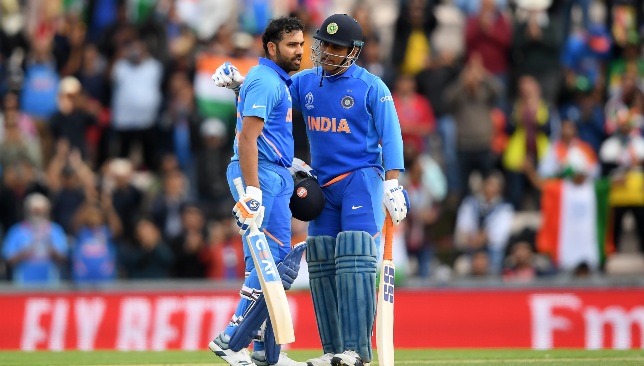
MS Dhoni did not arrive in international cricket with a bang and he is one of 74 players who have been dismissed on the very first ball of their debut. It was a run-out in Chittagong that saw the future India skipper walk back for a duck in his maiden innings for the country. For a man who carved a reputation as one of the quickest runners between the wickets, a run-out could ironically also be his final dismissal in international cricket.
It has been nearly a year since Martin Guptill’s bullet throw caught Dhoni agonisingly short at the crease, and with it signalled a crushing end to India’s hopes of clinching a third World Cup title. The veteran wicketkeeper-batsman has not featured in India blues ever since, with a cloud of uncertainty constantly hovering over his international future.
With Dhoni keeping his cards close to his chest by avoiding the media glare, speculation over his India career has been rife as ever. Some speculate that the Ranchi man has already retired and is slipping away quietly without the fanfare. Others think that the stalwart will walk out for one final hurrah in the 2020 T20I World Cup in Australia.
However, with COVID-19 wreaking havoc on future plans, another late twist could play spoilsport to any remaining India ambitions of Dhoni. The organisers of the World Cup in Australia are expected to call off the tournament in the coming days, and that will likely scupper any plans of a potential farewell tournament for the former India skipper.
Even though he might never turn out for India again, Dhoni’s legacy as one of the greatest skippers ever will remain a lasting and glittering one. His win record will in all probability be surpassed by his successor Virat Kohli, but the current India captain is a long way off when it comes to matching Dhoni’s title-winning pedigree.
Kohli has arguably the greatest Indian pace unit of all time at his service and a world-beater of an opener in Rohit Sharma. That the India skipper is on the way to establish himself as the greatest ODI batsman of all time makes the team’s title drought all the more surprising. In his tenure, the Men in Blue have developed a notorious habit of slipping up at the final hurdles of major ICC tournaments. The 2019 World Cup semi-final exit at the hands of New Zealand is only the latest in a series of disappointments which have hurt Kohli’s image as the leader of a team with a billion-plus expectations.
Being in the hot seat of a team like India is no easy job, as many before Dhoni and Kohli have realised the hard way. Leading a cricket frenzied nation successfully requires a larger than life personality, and it is one Dhoni has carried with an almost stoic like confidence since being thrust into the role unexpectedly.
No one expected a man from a small town in India to be handed the reigns of the national team just three years after making his international debut. That he was announced as the skipper for the inaugural T20I World Cup in 2007 was somewhat fitting. It was a format which was still alien to most of the cricketing public, and one which India and the BCCI had never really taken seriously.
To give Dhoni the keys of a highly rejigged India team for the tournament only served to further enforce the notion that BCCI’s priorities lay elsewhere. However, Dhoni’s India scripted a fairytale triumph against all odds in South Africa and sparked a revolution which would lead to the birth of the Indian Premier League in the following year. By beating arch-rivals Pakistan in an epic finale to lift the title, Dhoni’s men propelled the T20 format from a novelty to one which has become a mainstay in cricket.
His calm demeanour behind the stumps even in the tensest of situations led to the birth of the ‘Captain Cool’ moniker, and it is a name which has stuck with Dhoni ever since. The due reward for superseding expectations in South Africa was a subsequent promotion to skipper in the ODI and Tests formats. He took to the role immediately in his own inimitable style.
A storied tenure ensued which saw him become the first skipper in history to lift every ICC title including the Test mace. The iconic image of him hitting the winning six to clinch the 2011 World Cup title on home soil will forever be the defining memory of Dhoni’s career. His contributions towards Indian cricket in a remarkable spell as captain are unparalleled and many.
Taking over a team stacked with legends on the wrong side of 30, Dhoni rebuilt the team seamlessly while cultivating a winning culture which was never previously associated with Indian cricket. Disrupting the dominance of Australia, Dhoni’s India transformed themselves into a team befitting of a country rightly billed as cricket’s superpower. The World T20, 2011 World Cup and 2013 Champions Trophy are just the superficial denominators of Dhoni’s impact on Indian cricket. His persistence with a struggling Rohit Sharma for years is what resulted in the opening monster that the 33-year-old has now become.
Kapil Dev taught Indian cricket how to dream by lifting the 1983 World Cup at Lord’s. Sourav Ganguly showed India will not be bullied anymore after waving his shirt in the balcony of the same iconic venue in 2002. However, it was Dhoni who pushed India to consistently dine at the high table after years of underachievement in terms of silverware. His stellar finishing abilities, lightning quick reflexes behind the stumps and an uncanny ability to guide his bowlers with surgical precision were ever present in a captaincy tenure which extended to 2016.
One of the great traits for any leader is the ability to extract the maximum from every resource at their disposal, and this is one area where Dhoni succeeded like no other. Among others, he was able to instil belief and confidence in players like Joginder Sharma and Yusuf Pathan to perform at the highest level in crunch situations.
Not all that he touched turned to gold and there were several disappointments too in Dhoni’s spell as captain. The loss in the 2015 World Cup semi-final would have hurt, as well as eight back-to-back Test defeats overseas. A home Test series defeat at the hands of England in 2012-13 was another setback that tarnished his reputation. However, the good handsomely outweighs the bad in Dhoni’s case and it will be his unprecedented achievements which will stand the test of time.
As a charismatic leader who did things in his own way, it is no wonder that Dhoni’s cult of personality has spawned a biopic and multiple biographies even before his retirement. Kohli has the ‘in your face’ aggression of Ganguly as a leader, but the India star will do well to replicate the calmness under the pressure of Dhoni. If Frank O’Hara’s famed book ‘Meditations in an Emergency’ was a person, it would certainly be MS Dhoni.
We might have potentially seen the last of Dhoni in international cricket, but Indian cricket will forever be indebted to the man who won everything there was to win.
We use cookies on our website to give you the most relevant experience by remembering your preferences and repeat visits. By clicking “Accept”, you consent to the use of ALL the cookies.
This website uses cookies to improve your experience while you navigate through the website. Out of these, the cookies that are categorized as necessary are stored on your browser as they are essential for the working of basic functionalities of the website. We also use third-party cookies that help us analyze and understand how you use this website. These cookies will be stored in your browser only with your consent. You also have the option to opt-out of these cookies. But opting out of some of these cookies may affect your browsing experience.
Necessary cookies are absolutely essential for the website to function properly. These cookies ensure basic functionalities and security features of the website, anonymously.
Cookie
Duration
Description
cookielawinfo-checbox-analytics
11 months
This cookie is set by GDPR Cookie Consent plugin. The cookie is used to store the user consent for the cookies in the category "Analytics".
cookielawinfo-checbox-functional
11 months
The cookie is set by GDPR cookie consent to record the user consent for the cookies in the category "Functional".
cookielawinfo-checbox-others
11 months
This cookie is set by GDPR Cookie Consent plugin. The cookie is used to store the user consent for the cookies in the category "Other.
cookielawinfo-checkbox-necessary
11 months
This cookie is set by GDPR Cookie Consent plugin. The cookies is used to store the user consent for the cookies in the category "Necessary".
cookielawinfo-checkbox-performance
11 months
This cookie is set by GDPR Cookie Consent plugin. The cookie is used to store the user consent for the cookies in the category "Performance".
viewed_cookie_policy
11 months
The cookie is set by the GDPR Cookie Consent plugin and is used to store whether or not user has consented to the use of cookies. It does not store any personal data.
Functional cookies help to perform certain functionalities like sharing the content of the website on social media platforms, collect feedbacks, and other third-party features.
Performance cookies are used to understand and analyze the key performance indexes of the website which helps in delivering a better user experience for the visitors.
Analytical cookies are used to understand how visitors interact with the website. These cookies help provide information on metrics the number of visitors, bounce rate, traffic source, etc.
Advertisement cookies are used to provide visitors with relevant ads and marketing campaigns. These cookies track visitors across websites and collect information to provide customized ads.