Republican Sen. Thom Tillis’s first ad of the general election struck familiar tones for a politician aiming to reintroduce himself to the electorate. The ad, which depicts a young family moving into a mobile home, is meant to play up Tillis’s working-class roots as unemployment skyrockets due to the coronavirus pandemic.Â
“Rental houses in Louisiana, trailer parks in Florida and Tennessee. We moved seven times before I was 16, living paycheck to paycheck,†Tillis says in the 30-second ad, which ran for most of June. “We will build this economy back, and I’ll remember who needs it the most.â€Â
In the ad, titled “Humble,†Tillis says he grew up with “strong parents and humble people in humble places.â€Â
But a new digital ad from Cal Cunningham, the former military prosecutor and state senator who won the Democratic nomination to challenge Tillis, notes the Republican, when he was serving as speaker of the North Carolina House of Representatives in 2013, voted to hike taxes on mobile home buyers like the ones he grew up with.Â
That year, as part of a tax reform law that cut corporate and income taxes that passed mostly along party lines, Tillis voted to scrap a $600 cap on the sales tax a mobile home buyer would need to pay, and to double the sales tax rate on mobile homes from 2% to 4.75%.
At the time, mobile home sellers in North Carolina said that a typical four-bedroom, double-wide home would cost about $80,000. Before the Tillis-supported law, a buyer would pay $600 in taxes. After the law went into effect, they would pay $3,800. At the time, mobile home dealers told localmedia outlets, the law would hurt their mostly low-income customers.
“When Thom Tillis got elected, he hiked taxes on mobile homes and gave billions in tax breaks to his corporate donors,†a male narrator says in Cunningham’s ad. “So when he says he’s one of us, remember Tillis works for them now.â€Â
Later in 2014, Tillis also supported a law to exempt 50% of a mobile home’s purchase price from sales taxes. But the net effect still caused taxes on most new mobile homes to increase.Â
In a statement, Tillis spokesman Andrew Romeo said the Republican would be happy to compare his record on taxes to Cunningham’s.
“Senator Tillis cut taxes both as Speaker and in the Senate, while Cal Cunningham voted to raise taxes when he was in the state Senate and would do so again in Washington,†Romeo said. “There’s only one candidate in this race that’s consistently fought for pro-jobs policies that put more money into the pockets of hardworking North Carolinians and that’s Senator Tillis.â€Â
The issue isn’t academic in North Carolina. At the time of the law’s passage, census data indicated the state had nearly 600,000 mobile homes, which made up 13.5% of available housing, the fifth-highest percentage of any state in the country.Â
Public surveys indicate Cunningham and Tillis are in a tight race. Republicans hold a 53-47 edge in the Senate, and a win for Cunningham is considered a necessity if Democrats hope to overtake the upper chamber’s Republican majority.Â
Calling all HuffPost superfans!
Sign up for membership to become a founding member and help shape HuffPost’s next chapter
Leading universities and major technology companies agreed on Tuesday to back a new project intended to give academics and other scientists access to the computing resources now available mainly to a few tech giants.
The initiative, the National Research Cloud, has received bipartisan support in both the House and the Senate. Lawmakers in both houses have proposed bills that would create a task force of government science leaders, academics and industry representatives to outline a plan to create and fund a national research cloud.
This program would give academic scientists access to the cloud data centers of the tech giants, and to public data sets for research.
Several universities, including Stanford, Carnegie Mellon and Ohio State, and tech companies including Google, Amazon and IBM backed the idea as well on Tuesday. The organizations declared their support for the creation of a research cloud and their willingness to participate in the project.
The research cloud, though a conceptual blueprint at this stage, is another sign of the largely effective campaign by universities and tech companies to persuade the American government to increase government backing for research into artificial intelligence. The Trump administration, while cutting research elsewhere, has proposed doubling federal spending on A.I. research by 2022.
Fueling the increased government backing is the recognition that A.I. technology is essential to national security and economic competitiveness. The national cloud legislation will be proposed as an amendment to this year’s defense budget authorization.
“We have a real challenge in our country from China in terms of what they are doing with A.I.,†said Representative Anna G. Eshoo, Democrat of California, a sponsor of the bill.
Funding for the project, the terms for paying the cloud providers and what data might be available would be up to the task force and Congress.
“This is a logical first step,†said Senator Rob Portman, Republican of Ohio, another sponsor of the proposed law. “The task force is going to have to grapple with how you pay for it and how you govern it. But you shouldn’t have to work at Google to have access to this technology.â€
The national research cloud would address a problem that is a byproduct of impressive progress in recent years. The striking gains made in tasks like language understanding, computer vision, game playing and common-sense reasoning have been attained thanks to a branch of A.I. called deep learning.
That technology increasingly requires immense computing firepower. A report last year from the Allen Institute for Artificial Intelligence, working with data from OpenAI, another artificial intelligence lab, observed that the volume of calculations needed to be a leader in advanced A.I. had soared an estimated 300,000 times in the previous six years. The cost of training deep learning models, cycling endlessly through troves of data, can be millions of dollars.
The cost and need for vast computing resources are putting some cutting-edge A.I. research beyond the reach of academics. Only the tech giants like Google, Amazon and Microsoft can spend billions a year on data centers that are often the size of a football field, housing rack upon rack with hundreds of thousands of computers.
So there has been a brain drain of computer scientists from universities to the big tech companies, lured by access to their cloud data centers as well as lucrative pay packages. The worry is that academic research — the seed corn of future breakthroughs — is being shortchanged.
Academic work can be crucial particularly in areas where profits are not on the immediate horizon. That was the story with deep learning, which dates to the 1980s. A small band of academics nurtured the field for years. Only since 2012, with enough computing power and data, did deep learning really take off.
There have been smaller efforts for university research to tap into the big tech clouds. But the current concept of an ambitious public-private partnership for a National Research Cloud came in March from John Etchemendy and Fei-Fei Li, co-directors of the Stanford Institute for Human-Centered Artificial Intelligence.
They posted their idea online and sought support from other universities. The academics then promoted the idea to their political representatives and industry contacts.
The federal government has long backed major research projects like particle accelerators for high-energy physics in the 1960s and supercomputing centers in the 1980s.
But in the past, the government built the labs and facilities. The research cloud would use the cloud factories of the tech companies. Academic scientists would be government-subsidized customers of the tech giants, perhaps at rates below those charged to their business customers.
Many university researchers say that buying rather than building is the only sensible path, given the daunting cost of hyper-scale data centers.
“We need to get scientific research on the public cloud,†said Ed Lazowska, a professor at the University of Washington. “We have to hitch ourselves to that wagon. It’s the only way to keep up.â€
Just six months ago, the World Health Organization got a troubling report from Chinese health officials. A mystery pneumonia had sickened dozens of people in Wuhan. That virus, which had crossed from an unknown animal host to humans, has now upended lives worldwide with head-spinning speed.
Although virologists had long warned of the pandemic potential of some coronaviruses circulating in bats in China, the virus launched a shock-and-awe attack that researchers and public health workers are still scrambling to understand and control (SN: 11/30/17). That attack has upset everything from day-to-day life to entire economies, and turned the routine — going to school, popping into a restaurant, hanging out with friends — risky. The world today is a far different place than when the first reports of an odd pneumonia in Wuhan, China, made the news.
Now countries have begun to reopen, with fingers crossed that they have a handle on the virus, called SARS-CoV-2. Many are quickly learning that they can’t let down their guard. Officials in Beijing, for instance, reinstated a limited lockdown June 13 in the area around Xinfandi market in response to a cluster of COVID-19 cases. And after New Zealand eradicated the virus and lifted restrictions on June 8, officials confirmed two new cases on June 15 in infected travelers from the United Kingdom.
Other countries never got their outbreaks under enough control in the first place. For instance, while the increase in COVID-19 cases in parts of the United States has ebbed, the number of infections in other places largely spared in the spring, including Texas, Florida and Arizona, is now spiking.
With unprecedented efforts to study the virus and its impacts, scientists have learned an extraordinary amount in an extraordinarily short period of time and overturned some early assumptions. In the beginning, public health officials made recommendations on how the virus might behave and how best to protect oneself from it based on past experiences with two of the pathogen’s close relatives — severe acute respiratory syndrome coronavirus, or SARS-CoV, and Middle Eastern respiratory syndrome coronavirus, or MERS-CoV. But some of those initial assumptions turned out to be wrong, and there’s still much that researchers need to figure out.Â
What a difference six months makes
Here is a look at how scientists’ understanding of the virus has evolved in the six months since its discovery.Â
Then
In the first days of the pandemic, Chinese officials reported that the new coronavirus doesn’t easily transmit from person to person.Â
Then
Coronaviruses like SARS and MERS tend to infect deep in the lungs, so the new coronavirus is probably spread mainly by people with symptoms, such as a cough, or during such medical procedures as being intubated.
Now
In addition to lung cells, SARS-CoV-2 can also infect cells in the nose, which may explain how people can transmit it to others before feeling sick. Talking or breathing may be enough to spread the virus.
Then
The earliest signs of illness include fever, shortness of breath or cough, the U.S. Centers for Disease Control and Prevention listed in January.
Now
A wider range of symptoms, including fatigue, diarrhea and body aches, can suggest a person has COVID-19. One of the clearest signs may be loss of smell and taste.
Then
Older people above age 65 are at highest risk for developing severe disease.
Now
Age is still a risk factor for severe symptoms, but underlying conditions like high blood pressure, obesity and diabetes also boost risk. Racial disparities have also come to light. In the United States, Black, Indigenous and Hispanic people are getting infected or dying at higher rates than white people.
Then
Children are largely spared from the disease.
Now
This is still true relative to other age groups, though researchers aren’t sure why. But low risk doesn’t mean no risk. Some children can develop a dangerous inflammatory condition linked to COVID-19.
Now
With social distancing and contact tracing, many places, including China, South Korea and New Zealand, have brought the infection rate from two to three down to below one. But in certain regions, including India, Latin America and parts of the United States, people may still be passing the virus on to more than one other person. And without stringent public health measures in place, large gatherings have led to clusters of infections.
Then
Of people who test positive for the virus, around 4 percent die.Â
Now
Death rates vary due to in part to differences in testing among countries. (For example, if only people with severe disease get tested that might inflate the case fatality rate.) Pinpointing a global rate won’t be clear until the end of the pandemic. But antibody testing has allowed scientists to estimate that the infection fatality rate — a measure that includes people who were not tested, perhaps because they had mild or no symptoms — may be around 0.6 percent in some places.
Then
Only sick people should wear masks, according to guidance from WHO and the CDC.
Now
With data showing asymptomatic people can spread the virus, both agencies now recommend that all people wear masks in public. The effectiveness of fabric masks was in question early on, but studies now suggest that these masks can help curb transmission of the virus — if most people wear them.
Then
There are no treatments for infected people and no vaccines to curb the virus’ spread.Â
Now
After a rapid push to test existing drugs against the new coronavirus, some have shown promise, while others fell out of the running. Remdesivir may speed recovery in sick patients. Dexamethasone may reduce the risk of death. The malaria drugs hydroxychloroquine and chloroquine have shown no benefit for infected people. More than 150 coronavirus vaccines are in development, with 20 in clinical trials in people.Â
So what don’t we know yet?
Six months is an incredibly short time to have learned as much as researchers have about a new virus. But there’s still much to learn. Some questions simply take time to answer.Â
For example, it’s still unclear why the new virus is so much more contagious than its SARS and MERS relatives — each of which have infected fewer than 1,000 people. It’s also unknown how often asymptomatic people spread the virus (SN: 6/9/20).
Some scientists continue to probe how the virus gets in and out of cells and what types of cells it can infect, from lung cells to those in the intestine. Others are on the hunt for what animal the virus jumped into people from, which can help scientists understand how the virus made the jump and guide policies to monitor those animals for related coronaviruses.
In terms of the disease itself, researchers still don’t know how many virus particles a person must be exposed to in order to get sick, or why some people become severely ill and others don’t. Some patients — even those with milder symptoms — may still have long-term health problems after they recover (SN: 4/27/20). And although people who recover appear to make antibodies that protect against a reinfection with the virus, only time will tell how long that immune protection might last. Answers to these and other questions are crucial to those planning how to safely reopen businesses and schools.
One thing scientists do know is that the coronavirus isn’t going away any time soon, if ever. It will take herd immunity, when at least two-thirds of a population has immunity against the virus either because they have been infected or there is a vaccine, to finally begin to curb the pandemic. Both of those goalposts are still far off for now, though some have said there could be a vaccine by the end of the year. As we head into the next six months, researchers will keep learning new things about the virus as quickly as possible. And so the sprint becomes a marathon.
Tina Hesman Saey contributed to this story.
Trustworthy journalism comes at a price.
Scientists and journalists share a core belief in questioning, observing and verifying to reach the truth. Science News reports on crucial research and discovery across science disciplines. We need your financial support to make it happen – every contribution makes a difference.
Susie Jones, founder of cyber security startup Cynch Security, questioned how the government’s cash splash would prevent small businesses from clicking on a malicious link.
“This is all about very technical solutions and the government needs to invest in a broad campaign to help people understand how they put their own business and person at risk by not taking security seriously.”
Susie Jones, founder of Cynch Security, said the government needs to include small businesses. Credit:Justin McManus
Meanwhile, Pieter Danhieux, co-founder and CEO of cyber security startup Secure Code Warrior, said there was an opportunity for private companies and government to work together on the cyber threat-sharing platform and startups needed to be included in Australia’s cyber security response.
“I am hoping that money won’t all go to the foreign multinationals and will flow to the Australian startup community and Australian companies.” “It is an opportunity for startups to start building technology.”
He added that Australia’s response needed to include upskilling and training people in cyber security. Growth network AustCyber has indicated Australia needs an extra 17,600 cyber security professionals by 2026.
Professor Matt Warren, director of the RMIT University Centre for Cyber Security Research and Innovation said the announced funding doesn’t do enough to address skill shortages.
“The problem is that government is in competition with Australian industry to recruit these professionals. Australia needs to develop its cyber security workforce from a sovereignty perspective in order to safeguard and protect Australia into the future,” he said.
“In order to promote cyber security as a profession, the Commonwealth should either make scholarships available for students to study cyber security, or reduce the cost of cyber security courses.”
Cyber security startups have reported an increase in online attacks during the coronavirus pandemic with high profile businesses hit including beverage giant Lion and miner Bluescope.
“The reality is cyber criminals take advantage of a crisis,” Ms Jones said.
Research published on Tuesday by IBM and the Ponemon Institute shows businesses are struggling to implement effective cyber security plans amid fast-moving attacks and a proliferation of complex security tools.
Loading
The annual Cyber Resilient Organisation Report indicates there has been a 44 per cent growth since 2015 in the number of organisations with incident response plans, but that over those same five years organisations’ ability to contain an attack has declined by 13 per cent.
“Complexity is slowing them down,” IBM Security’s Australian CTO Chris Hockings said. “With the continued adoption of cloud environments, and just the proliferation of security products. They have up to 45 different security tools, on average.”
On the contrary, adversaries were only getting more agile.
“Attackers are not constrained by existing IT solutions that they need to remain available for business continuity,” Mr Hockings said. “They’re uninhibited in terms of their ability to consume new innovation more quickly.”
Cara is the small business editor for The Age and The Sydney Morning Herald based in Melbourne
Tim is the editor of The Age and Sydney Morning Herald technology sections.
An employee works on production line for wind turbines at a plant of China Construction Equipment and Engineering in Nanjing, Jiangsu Province of China. Photograph: VCG/Getty Images
Good morning, and welcome to our rolling coverage of the world economy, the financial markets, the eurozone and business.
Some upbeat economic news from China is cheering investors on the final day of June, boosting optimism that the world economy is turning the corner.
China’s factories grew at a slightly faster pace this month, according to China’s National Bureau of Statistics. Its Purchasing Manager’s Index has risen to 50.9 from 50.4 in May (anything over 50 indicates growth).
It’s the fourth month of (modest) growth in a row, as China emerged from the lockdown imposed to curb the spread of Covid-19 in January and February.
Chinese manufacturers reported that supply and demand are starting to pick up, leading to more new orders. However, new export orders are still down, meaning factories are still shedding jobs.
In a statement, NBS official Zhao Qinghe said there was still much uncertainty about the economic outlook, with small Chinese companies finding conditions particularly tough.
Services companies also strengthened, with the official non-manufacturing PMI rising to 54.4 in June from 53.6 in May. That’s the best reading of the year.
Julian Evans-Pritchard, senior China economist at Capital Economics, explain:
“The latest survey data suggest that economic growth accelerated in June thanks to a faster recovery in manufacturing and services, alongside continued strength in construction activity,
The recovery should remain robust in the coming months as strong infrastructure spending offsets external weakness.â€
MacroMarketsDaily (@macro_daily)
ICYMI: There were further modest signs of recovery in China this month, with the official NBS non-manufacturing PMI rising to a 7-month high of 54.4 in June, while the manufacturing PMI edged higher to 50.9 pic.twitter.com/MZoBNNUd3Q
Following an unexpected surge in US home sales on Monday, this may bolster hopes that the world economy may be gingerly emerging from the coronavirus slump.
European stock markets are expected to rise a little this morning, at the end of one of the strongest quarters in decades.
By my reckoning, the FTSE 100 has gained almost 10% since the start of April – its best quarter since 2010. Europe’s Stoxx 600 has rallied by over 12% during the quarter – the best since 2015, while Wall Street has enjoyed its strongest gains since 1998.
Astonishing, really, given the world is still gripped by the Covid-19 pandemic. Clearly the unprecedented stimulus from central banks has reassured investors, even though a V-shaped recovery looks rather unlikely.
And most markets are still deep in the red for the year, due to the crash in February and March.
HONG KONG — A new strain of the H1N1 swine flu virus is spreading silently in workers on pig farms in China and should be “urgently†controlled to avoid another pandemic, a team of scientists says in a new study.
The newer strain, known as G4 EA H1N1, has been common on China’s pig farms since 2016 and replicates efficiently in human airways, according to the study published on Monday. So far, it has infected some people without causing disease, but health experts fear that could change without warning.
“G4 viruses have all the essential hallmarks of a candidate pandemic virus,†the study said, adding that controlling the spread in pigs and closely monitoring human populations “should be urgently implemented.â€
The study, published online in the journal Proceedings of the National Academy of Sciences, is based on the surveillance of pigs in 10 Chinese provinces from 2011 to 2018. In the last three years of the study, researchers collected 338 blood samples from workers on 15 pig farms and 230 from people in nearby households.
The study found that 10.4 percent of the workers and 4.4 percent of the others tested positive for G4 EA H1N1, and that workers between the ages of 18 and 35 tested positive at a higher rate: 20.5 percent.
Predicting risk is not a precise science, but close attention to the virus would be advisable, said Ian H. Brown, the head of the virology department at Britain’s Animal and Plant Health Agency and one of two scientists who reviewed the paper before it was published.
“It may be that with further change in the virus it could become more aggressive in people much as SARS-CoV-2 has done,†Dr. Brown said in an email on Tuesday, referring to the new coronavirus.
The study was sent for review in early December, weeks before the coronavirus outbreak in the Chinese city of Wuhan began making global headlines.
Li-Min Huang, director of the Division of ​Pediatric Infectious Disease​s at National Taiwan University Hospital, said that a crucial next step would be finding out whether any of the infected workers at the pig farms had contracted the virus from humans, as well as whether any had spread the virus to their families.
“It’s a very important study, and the virus looks quite dangerous,†Dr. Huang said. “We need to be worried about any disease with the potential to spread human to human.â€
Eurasian variations of H1N1 have been circulating in pigs in Europe and Asia for decades, the study said, but the incidence of G4 viruses in farmed Chinese pigs with respiratory symptoms began rising sharply after 2014.
Recent evidence “indicates that G4 EA H1N1 virus is a growing problem in pig farms, and the widespread circulation of G4 viruses in pigs inevitably increases their exposure to humans,†it said.
The study was a collaboration among government agencies in China, including the Center for Disease Control and Prevention, as well as the World Health Organization, scientists from several universities in China and the University of Nottingham in Britain. Dr. Brown teaches at the University of Nottingham but was not involved in the research.
The H1N1 virus that caused a pandemic in 2009 had a relatively low fatality rate, estimated at 0.02 percent. By contrast, the fatality rate of the 1918 flu pandemic was about 2.5 percent of its victims. But that virus killed an estimated 50 million, perhaps more, because it infected so many people and spread at a time when medical care was cruder.
Determining the fatality rate of the new coronavirus is a key question for epidemiologists, but one they may not be able to answer until the pandemic has ended.
Swara Bhasker comes to the defense of Karan Johar, Alia Bhatt after Sushant Singh’s death
Swara Bhasker, one of Bollywood’s most vocal stars, is lashing out at all those who are blaming some of the industry’s bigwigs for the death of Sushant Singh Rajput.
A video of the Veere Di Wedding actor has gone viral where she can be seen defending filmmaker Karan Johar and actors Alia Bhatt and Sonam Kapoor in the midst of the entire debacle that has enveloped the industry.
“We should have difficult conversations but there is a civilised way to do it. Right now, things are being said, and people are being blamed but Karan being vilified is unnecessary. I don’t think Karan, Alia (Bhatt), Sonam (Kapoor) had anything to do with what happened with Sushant’s career. It’s not a fair accusation,†says Swara in the video.
“In the video, one can see that Karan is accepting that he might have chosen people who were right in front of him and things should change. I would like to give him credit for engaging with the issue. But the way things have happened was quite sad.
“It’s disgusting that Sushant’s death is being used for ulterior motives by some people. We must give Sushant dignity in his death and celebrate his life. He was a tremendous artiste.â€
She further went on to lay emphasis on mental health saying: “One shouldn’t trivialise it by saying, people get depressed because they weren’t invited for a party or because someone gave a stupid answer about their on a chat show. If that is your understanding, then you don’t know what depression is.â€Â
Bollywood actor Sushant Singh Rajput died by suicidde on June 14 in his apartment in Mumbai. His death shook the entire nation. According to reports, the actor was suffering from depression for the past six months and was being treated for the same. The case of his death is being currently investigated by the police.Â
The police have been recording the statements of people who were close to the late actor including his family, friends, colleagues and house help. On Tuesday, Sushant’s co-star Sanjana Sanghi, from his last film Dil Bechara, arrived at the Bandra Police station to record her statement. Dil Bechara  directed by Mukesh Chhabra is Sanjana’s debut film. The director also gave his statement to the police.Â
Sushant Singh Rajput’s close friend Rhea Chakraborty also recorded her statement with the police where she claimed that the two were planning on getting married. She also said that they were living together during the lockdown, but had moved out after they had a fight.Â
Meanwhile, Dil Bechara starring Sushant Singh Rajput and Sanjana Sanghi will be released in Disney+ Hotstar in the coming months. The film will be available for free in memory of the late actor.Â
If there is one mistake that will likely haunt Rep. Eliot Engel (D-N.Y.) for years to come, it was when a live TV broadcast captured him begging to speak at a June news conference about vandalism in the Bronx.Â
The problem wasn’t that he wanted to speak. It was why he wanted to: “If I didn’t have a primary, I wouldn’t care,†he said.Â
The moment was pivotal in the race, in large part because Engel’s challenger, Bronx middle school principal Jamaal Bowman, had the infrastructure in place to take advantage of it.Â
Within 24 hours, Bowman’s campaign tapped into its deep Rolodex and email list for more than $107,000, making it the best fundraising day of the campaign.
Meanwhile, an independent expenditure operation erected by the Working Families Party and Justice Democrats, the left-wing group that recruited Bowman, blanketed the airwaves with 30-second TV spots casting the remarks as evidence of Engel’s indifference to the concerns of New York’s 16th Congressional District. The groups had already decided to hit Engel over the related issue of his absence from the New York City district during the height of the pandemic based on polling that showed it ranked as a higher concern among voters than the 16-term incumbent’s hawkish foreign policy record or ties to Wall Street and other corporate donors.
Those investments bore fruit on June 23 when Bowman took a 25-percentage-point lead over Engel in the in-person vote. Given the extremely low chance that Engel’s performance among absentee voters is strong enough to close that gap, Bowman ― and the activist left rooting for him ― declared victory. Local authorities will begin counting absentee ballots later this week.
The all-but-official victory is a testament not just to the salience of Bowman’s progressive platform and the hunger for new representation in a majority-minority district, but also the maturation of a progressive insurgency that boasted a fraction of the sophistication and resources just two years ago. Â
Despite an electoral record that is mixed at best, the left wing of the Democratic Party has been busy learning from its mistakes and building professional tools capable of matching the establishment’s might.
“We’ve been intentional about building infrastructure and an ecosystem that can take on decades worth of the establishment’s,†said Alexandra Rojas, executive director of Justice Democrats. “As progressives, if we’re not investing in media apparatus, polling apparatus, our ability to do research, in addition to the incredible field work that prioritizes talking to voters, then we’re not going to be able to mount serious challenges.â€
SAUL LOEB via Getty Images
Justice Democrats identified Rep. Eliot Engel (D-N.Y.) as a ripe target because of, among other things, his district’s racial diversity and the low turnout in his recent elections.
A Grassroots Movement Turns Professional
Sens. Elizabeth Warren (Mass.) and Bernie Sanders (Vt.), who had been the left’s preferred candidates for the Democratic presidential nomination, shared a disdain for the traditional campaign playbook. Warren never hired a pollster to test which messages resonated most with voters, a decision many veteran strategists regard as disastrous. Sanders agreed to fund consistent internal polling this cycle only after a senior adviser threatened to quit if he would not do so. He declined to seek the endorsements of many politicians and refused to adjust his messaging when he emerged as a front-runner.
Many left-wing candidates and elected officials are instinctively suspicious of the kind of scientific campaigning that more moderate Democrats have used to run elections for decades. Figures like Sanders have thrived by defying conventional wisdom about what is necessary to win, so they question even the more innocuous elements of traditional campaigning.Â
“We need to reject corporate candidates,†said Monica Klein, a progressive communications consultant whose clients include the New York Working Families Party, which endorsed Bowman in February. “But too often, progressives are also throwing tried-and-tested campaign tools out the window: polling, focus groups, message testing, normal relationships with the media.â€
From the start, Bowman and the groups working with him were determined not to make that mistake.Â
Ahead of the 2020 election cycle, Justice Democrats collaborated with the polling firm and think tank Data for Progress to help craft a system for ranking Democratic House seats based on their ripeness for a primary challenge.
Incumbent Democrats were given a numerical score reflecting the relative conservatism of their voting record and views, their seniority among House Democrats, their membership in centrist caucuses, the youthfulness and racial diversity of their district, the number of competitive elections they had survived and the typical turnout in their elections. For example, the two groups gave higher scores to white people representing majority-minority districts but also for seats with lower turnout, which tends to mean it would take less money to amass a winning number of votes.Â
Engel struck us as particularly viable because of the primary system in New York. Sean McElwee, Data for Progress
Engel, an older white man representing a majority-minority district and a member of the business-friendly New Democrat Coalition, fit several of the criteria. Despite a domestic policy record that had been trending leftward in recent years ― he is a co-sponsor of “Medicare for All†legislation and the Green New Deal resolution ― as House Foreign Affairs Committee chairman, he was best known for his hawkish foreign policy views. And in a district with about 251,000 active registered Democrats, 11% of those eligible voters cast ballots in Engel’s 2018 primary.
In New York, unlike states with “open†partisan primaries, only registered Democrats can cast votes in Democratic primaries, making the pathway that much more accessible for a newcomer hoping to amass more votes than Engel.
“Engel struck us as particularly viable [for a primary challenge] because of the primary system in New York being a first-round, winner-take-all, closed primary,†said Sean McElwee, a co-founder of Data for Progress.Â
Other districts had a similar demographic profile but lacked a challenger of Bowman’s quality.
Billy Easton, then-executive director of the Alliance for Quality Education, a New York group that advocates for greater and more equitable state funding for public schools, nominated Bowman to run for the seat as part of a thorough recruitment selection process administered by Justice Democrats. Bowman, a teacher turned principal who founded the public middle school Cornerstone Academy for Social Action (CASA), had been active with AQE, rallying with parents to demand more money for education.Â
Justice Democrats was impressed with Bowman’s charisma and the sincerity of his progressive convictions. They also saw the advantage of a figure with a natural base of support in the northeast Bronx, where CASA is located.Â
“Our whole case was that Jamaal could build a coalition similar to the Obama coalition: young people, people of color and older white liberals tired of a 31-year incumbent,†said Waleed Shahid, communications director for Justice Democrats.Â
Tasos Katopodis/Getty Images
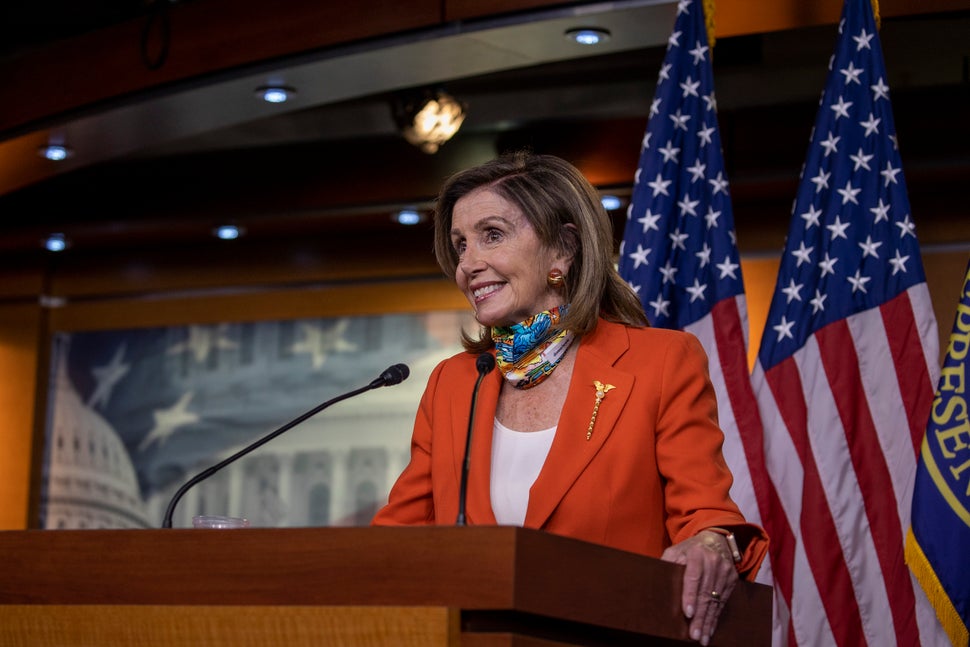
House Speaker Nancy Pelosi (D-Calif.) addresses reporters on Friday. House Democrats’ campaign arm has a policy of refusing to work with vendors that aid primary challengers.
The DCCC Blacklist BacklashÂ
Justice Democrats was founded by alumni of Sanders’ 2016 presidential bid, including Rojas, who were interested in taking the “political revolution†that Sanders had initiated to the halls of Congress. Initially starved for cash and media attention, they struck gold in June 2018 when Alexandria Ocasio-Cortez, a candidate they had recruited, unseated then-House Democratic Caucus Chairman Joe Crowley of New York.
But replicating the winning formula would take some trial and error. For one thing, Justice Democrats concluded that it was no longer worthwhile to endorse 70 candidates, as it had during the 2018 cycle. It instead announced that it would be focusing on recruiting primary challengers for a handful of safe House Democratic seats where they could not be accused of jeopardizing the party’s prospects in the general election.
The goal was to elect more members like Ocasio-Cortez and the rest of her “Squad†― Rashida Tlaib (Mich.), Ilhan Omar (Minn.) and Ayanna Pressley (Mass.) ― in the hopes of eventually creating a cohesive bloc of progressive lawmakers capable of dictating policy within the House Democratic Caucus. (With more than 95 members of varying ideologies, the Congressional Progressive Caucus is rarely equipped to play that role.)
“There are some good people who want to push for stuff, but they don’t have the backup right now to do anything big,†Saikat Chakrabarti, a founder of Justice Democrats and then-chief of staff to Ocasio-Cortez, said in a November 2018 call with activists. “So we need new leaders, period. We’ve got to primary folks.â€Â
The DCCC inadvertently created an ecosystem that ended up fostering a lot of innovation. Sean McElwee, Data for Progress
Justice Democrats would no longer have the element of surprise that it enjoyed during Ocasio-Cortez’s run, when Crowley and his allies underestimated its strength.
But it had new advantages at its disposal. In the intervening years, a network of left-wing campaign vendors has cropped up to serve the nascent sector of progressive candidates. That boomlet ironically accelerated when the Democratic Congressional Campaign Committee (DCCC), the House Democrats’ campaign arm, announced in March 2019 that it was blacklisting any consultants who worked for candidates challenging incumbent House Democrats.Â
The move forced many already progressive consultancies to pick sides, prompting them to specialize in progressive campaigns. It was a new space with fewer of the old players and, for the firms willing to risk banishment from the establishment, more room to experiment. And progressive candidates looking for consultants willing to work for them needed only to look on DCCCBlacklist.com, a website Justice Democrats erected just for the purpose.
“The DCCC inadvertently created an ecosystem that ended up fostering a lot of innovation,†McElwee said
Many of the firms are run by veterans of the 2016 Sanders campaign or other left-wing races that have taken place since then. Connor Farrell, the former finance director for Dr. Abdul El-Sayed’s unsuccessful 2018 bid for governor of Michigan, founded the fundraising firm Left Rising, which ran Bowman’s fundraising. In 2019, Rebecca Katz, a former adviser to then-Senate Democratic Leader Harry Reid (D-Nev.) and New York gubernatorial challenger Cynthia Nixon, founded New Deal Strategies, which would handle Bowman’s press and communications in conjunction with Shahid.
Data for Progress, Bowman’s pollster, began conducting its own polling in January. And Luke Hayes, who became Bowman’s campaign manager in December, previously ran Tiffany Cabán’s nearly victorious run for Queens district attorney and New York state Sen. Alessandra Biaggi’s successful bid to unseat the former head of the GOP-aligned Independent Democratic Conference.
For months, Bowman’s campaign relied on a system of volunteer-heavy canvassing that progressive campaigns often think of as their secret weapon against establishment Democrats with other advantages. Bowman began using data accumulated during his field work to identify what would become his core voters ― the “Obama coalition†of young progressives, people of color and older white liberals. Â
Jeenah Moon/Getty Images
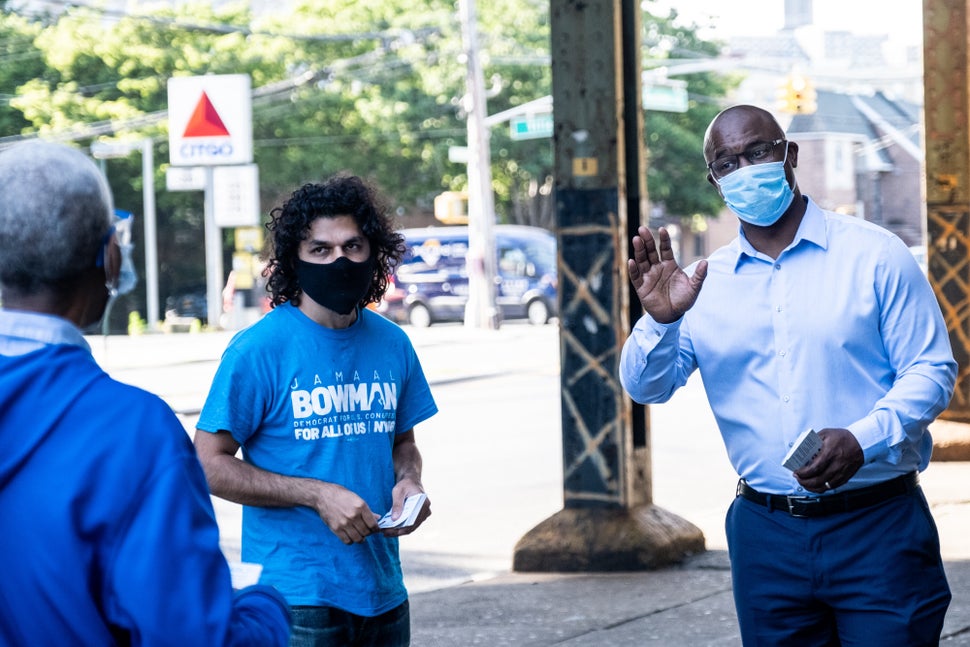
Jamaal Bowman, right, greets people outside a subway station in the Bronx. His presence in the district became a key way to distinguish himself from Rep. Eliot Engel (D-N.Y.).
All the while, Bowman raised money at a steady clip. Thanks to Justice Democrats’ growth and the increased interest in progressive candidates, he hauled in more money in his first week on the campaign trail ― $71,000 ― than Ocasio-Cortez had in the first six months of her bid.Â
Bowman also began picking up critical endorsements, including from the New York Working Families Party, a pillar of progressive politics in the state that had spawned its own ecosystem of campaign professionals and loyal elected officials over the course of two decades. (Ava Benezra, Justice Democrats’ campaigns director, had cut her teeth running WFP’s 2018 legislative primaries, which successfully ousted six former members of the GOP-aligned Independent Democratic Conference in New York’s state Senate.)Â
The WFP’s influence was apparent early on: New York City Public Advocate Jumaane Williams, a longtime WFP ally and the highest-ranking Black elected official in New York City, joined the group at its endorsement news conference in February, lending Bowman critical mainstream legitimacy. The group would later advise the New York State Nurses Association, a labor union and member group of the WFP, on how to manage its endorsement of Bowman ― a deviation from the establishment to which the union was unaccustomed.Â
The institutional left was also united in Bowman’s race, thanks in part to WFP’s role as a coalition builder. Andom Gebreghiorgis, Bowman’s prime progressive competitor, withdrew from the race in early June following conversations with Sochie Nnaemeka, the New York WFP’s state director. It was a contrast to what happened nearby in the 15th Congressional District, where divisions spawned an 11-person free-for-all primary that risked clearing a path for an anti-gay New York City councilman.
This campaign was a real model of how different organizations with different strengths can work together in pursuit of a common goal. Sochie Nnaemeka, New York Working Families Party
“This campaign was a real model of how different organizations with different strengths can work together in pursuit of a common goal,†Nnaemeka told HuffPost.
Still, the campaign had to adapt to a number of challenges, including local and national media outlets’ reluctance to take Bowman’s bid seriously. New Deal Strategies, which had four people working on Bowman’s campaign, worked hard to cultivate a relationship with the Riverdale Press, an in-district newspaper with 10,000 paper subscribers. Bowman also had success publishing op-eds, writing in Chalkbeat in January about ways to address the trauma experienced by impoverished students, and on NBC News in March about how he had felt the effect of heavy-handed policing practices, including New York City’s notorious stop-and-frisk policy.Â
“Almost everyone who wrote about Jamaal said ‘no’ first,†Katz recalled.
Then came the COVID-19 pandemic, which initially seemed like it would deprive Bowman’s campaign of a key asset by prohibiting in-person canvassing.Â
But it ended up providing him the chance to show his support for the people of the district and bring Engel’s weakness into sharper relief. Bowman’s team pivoted to phone-banking, ultimately making an estimated 1 million calls; 850,000 of them were conducted by volunteers associated with the Sunrise Movement, the youth-led climate action group. He held regular video discussions of policy with activists that he posted on Facebook, as well as tutorials for parents seeking tips about in-home education during the quarantine.
And Bowman began joining the protests of nurses at local hospitals who were angry at the shortage of personal protective equipment. His participation in those demonstrations helped him win the support of NYSNA, the nurses union that endorsed him in late May.
New York’s 16th District is the site of New York’s first COVID-19 “cluster,†and it would become one of the hardest-hit parts of the state as the pandemic progressed. Over the course of the campaign, Bowman and his aides had been hearing from constituents and local activists that Engel did not spend very much time in the district. A poll the campaign conducted in early May found Engel leading Bowman 43% to 13%, but with 43% of voters undecided. The same batch of polling found that shining a light on Engel’s perceived absence from the district resonated more with voters than other negative messages.
But to fully take advantage of Engel’s absenteeism, the campaign wanted independent verification that he was not in the district during the quarantine. It pitched reporters on a research memo documenting Engel’s fight with the state of Maryland to preserve a tax break he received for maintaining his primary residence in the state, and it obtained his address in Potomac, Maryland. A story in The Atlantic added fuel to the fire when the reporter knocked on Engel’s door in upscale Potomac, Maryland, and the congressman answered. Â
Jonathan Bachman / Reuters
Alexandra Rojas, head of Justice Democrats, got involved in politics as a volunteer for Bernie Sanders’ 2016 campaign. Her decision to embrace super PAC spending proved pivotal.
Getting On TV Early
Another weighty decision by Justice Democrats laid the groundwork for Engel’s “hot mic†moment to seal his fate. The group decided that it would try to pre-empt last-minute attacks from Engel and his allies on the TV airwaves by erecting a super PAC independent of the campaign that would not be subject to the contribution limits ― or disclosure requirements ― of ordinary campaign spending.
To get the project off the ground, Justice Democrats dumped in a sizable chunk of its own grassroots fundraising money and tapped a small network of high-dollar donors, ultimately raising more than $920,000. The Working Families Party joined them in the effort, chipping in more than $400,000. (The identities of the two groups’ donors will become public in July when official disclosures are due.)
Super PACs have long been anathema on the left, given their association with the influence of corporations and wealthy individuals. And Bowman made his refusal to accept corporate PAC money a key point of contrast with Engel.Â
But Justice Democrats, which had run an independent digital ad campaign to blast moderate Democrats during the presidential primary, could not rely on other groups to do the heavy lifting for Bowman. The public school principal lacked the mainstream institutional support of other left-wing candidates, such as Texas attorney Jessica Cisneros. Rojas concluded that in the absence of structural changes to the campaign finance system, Justice Democrats needed to do all it could to elect its preferred candidates.Â
We can really say we are using every single tool in our arsenal to put our candidates over the top. Alexandra Rojas, Justice Democrats
“We can really say we are using every single tool in our arsenal to put our candidates over the top,†she said.
The independent expenditure effort, led by Helen Brosnan, who helped terminally-ill progressive activist Ady Barkan create a PAC during the 2018 midterm elections, had already prepared a TV spot blasting Engel for staying in Maryland when the “hot mic†moment handed them new material that complemented the narrative they were trying to establish.
Bowman’s allies would end up being on the air defining Engel for at least a week unanswered before the Democratic Majority for Israel PAC began its own TV campaign backing Engel. The pro-Bowman ads were also on television for nine days by the time early in-person voting began on June 13.Â
Bowman effectively won the race in that period from late May to mid-June. An internal poll that the campaign publicized on June 17 showed Bowman leading Engel by 10 percentage points ― a remarkable turnaround from early May, when Bowman’s team had kept the figures private.Â
“Am I sorry we didn’t get on TV earlier? Yes, I am,†Mark Mellman, executive director of Democratic Majority for Israel, told HuffPost. “That was a very critical period in the campaign.â€
Mellman, whose group spent almost $1.6 million trying to reelect Engel, blamed the campaign, however, for failing to define the race on the airwaves on its own. He estimated that his group spent five times as much on television as the campaign spent directly.
“No independent expenditure can make up for candidate and campaign problems,†he said.
Andrew Burton/Getty Images
Rabbi Avi Weiss, center, a prominent Jewish leader and pro-Israel activist in the Bronx’s Riverdale neighborhood, said Bowman’s “comments on Israel have fallen far, far short.”
Threading The Israel Needle
Even before Bowman formally jumped in the race, he was aware that Engel’s support for Israeli government policies were likely to become an issue in the race. Engel’s hawkishness on the Israeli-Palestinian conflict, which put him to the right of former President Barack Obama, had earned him critics on the left but deep support from Jewish institutions.
The district’s population is 12% Jewish ― six times more than it is nationally. But, more important, New York’s 16th District is home to large concentrations of Modern Orthodox Jews, many of whom are hard-line Israel backers with records of political giving and organizing to match.
Knowing that he would need to have a better understanding of concerns specific to the Jewish community, Bowman sat down before announcing his run with Rachel McCullough, political director of The Jewish Vote, an arm of the left-wing group Jews for Racial and Economic Justice.
McCullough gave Bowman, who had had limited interactions with the Jewish community up to that point, a crash course on Jewish history and anti-Semitism. Bowman agreed to read JFREJ’s 44-page primer on anti-Semitism and conducted a “book report†for McCullough days later, summarizing what he had learned and analyzing the text’s contents.
“What especially touched him was our analysis of collective trauma and the ways that trauma continues to shape Jewish communities and Jewish politics to this day ― here at home in New York and in Israel-Palestine and beyond,†McCullough recalled. “It really drove home for me that this was a pretty special candidate.â€
Bowman also met with Peter Beinart, a seasoned progressive journalist and prominent Jewish critic of the Israeli occupation. Â
Although Beinart would not comment on his conversations with Bowman, the Bronx educator ended up adopting positions that mirror Beinart’s. Both men have staked out stances that are well to the left of the Democratic establishment but still shy of the Palestinian solidarity movement’s most radical demands.
What especially touched him was our analysis of collective trauma and the ways that trauma continues to shape Jewish communities and Jewish politics to this day. Rachel McCullough, The Jewish Vote
Bowman stuck with the mainstream preference for a two-state solution rather than embracing some activists’ desire for a single, bi-national state. And he declined to sign on to the Boycott, Divestment and Sanctions movement, even as he promised to protect its participants’ freedoms before the law. His most ambitious stance was calling to “seriously consider†placing tougher conditions on U.S. financial aid to Israel to better safeguard the human rights of Palestinians and discourage Israeli settlement expansion.
“Especially at this moment when Israel is on the verge of annexing the West Bank and driving a stake into the two-state solution,†putting tighter strings on U.S. aid is “not a radical position,†Beinart said.
In addition, Bowman spoke one-on-one with a number of rabbis in the district, including Steven Exler, who leads the Hebrew Institute of Riverdale, a prominent Modern Orthodox synagogue.
Stephanie Keith via Getty Images
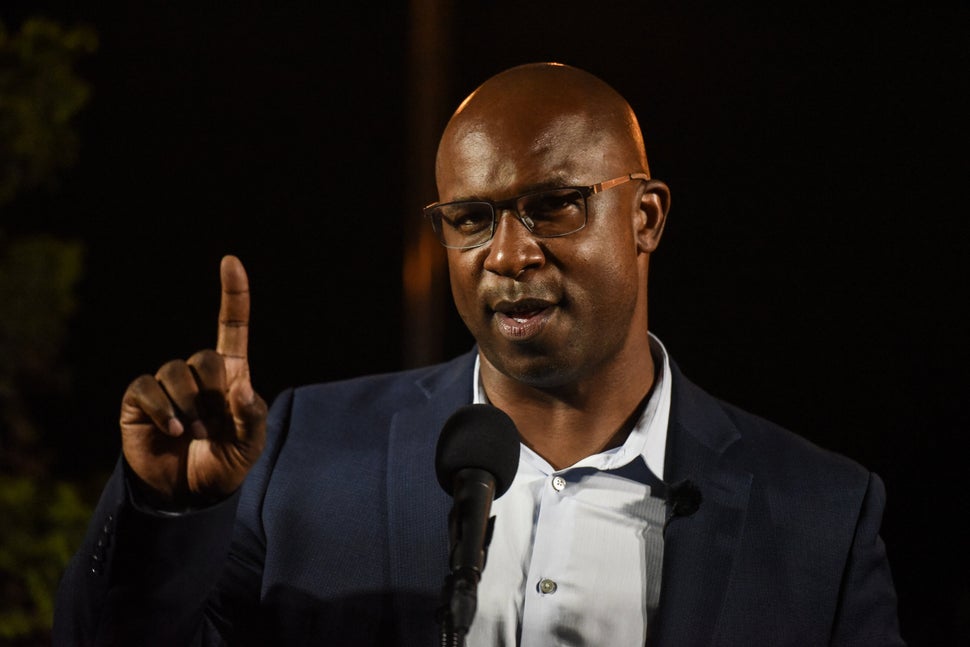
Jamaal Bowman addresses supporters on election night in Yonkers, New York, last Tuesday. He received the endorsement of The Jewish Vote group in a district that is 12% Jewish.
Bowman’s efforts to build relationships in the Jewish community and educate himself on U.S. policy toward Israel did not inoculate him from an offensive launched by pro-Israel groups that totaled $2 million.Â
It gave him the tools, however, to respond with confidence and show that the Jewish community was not uniformly behind Engel. The Jewish Vote endorsed Bowman in December, mobilizing more than 100 of its members in New York’s 16th District to form Jews for Jamaal. When a Democratic Majority for Israel PAC ad blasted Bowman for occasionally falling short in his tax payments to New York state over the years, Jews for Jamaal members responded with a video accusing the group of employing racist dog whistles.
In response to an open letter from Exler’s predecessor, Rabbi Avi Weiss, that blasted Bowman for his positions on the Israeli-Palestinian conflict, Bowman penned his own open letter in the Riverdale Press. “I believe firmly in the right of Israelis to live in safety and peace, free from the fear of violence and terrorism from Hamas and other extremists, and support continued U.S. aid to help Israel confront these security challenges,†he wrote. “I also believe that Palestinians are entitled to the same human rights, safety from violence and self-determination in a state of their own.â€
Mellman argues that the fallout of the race for the Democratic Party’s more conservative pro-Israel camp is limited because of how little the issue actually came up during the race. But he conceded that Bowman “did work to obfuscate the difference†between his positions on U.S.-Israel relations and Engel’s.
“The average voter would have no way of knowing if there was any difference between the candidates on that issue,†Mellman said.
Calling all HuffPost superfans!
Sign up for membership to become a founding member and help shape HuffPost’s next chapter
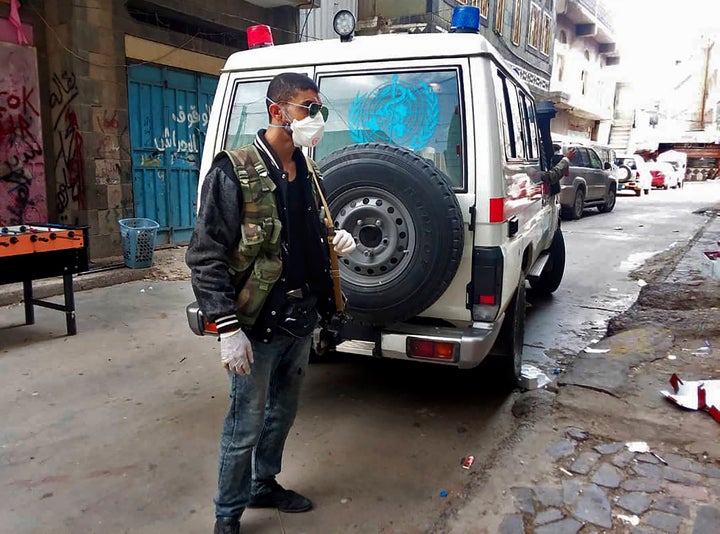
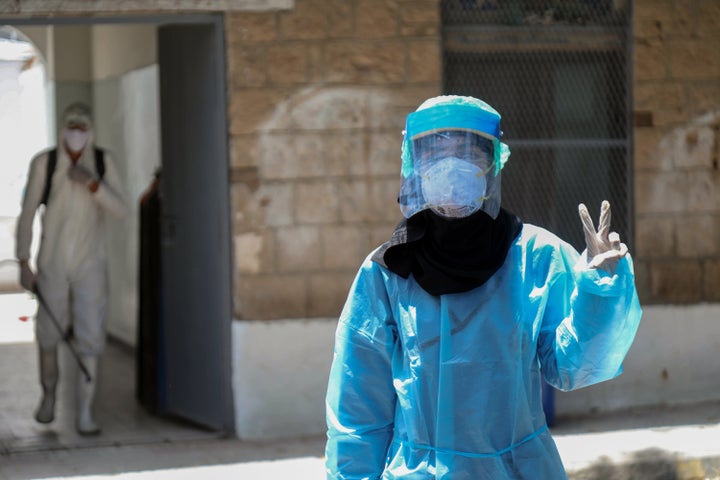
In Yemen, the coronavirus pandemic is overwhelming hospitals and cemeteries. More young people are dying there than in most other countries, and the virus is spreading so fast the World Health Organization believes it could infect nearly the entire Yemeni population.
Meanwhile, almost everyone who is in a position to prevent a catastrophe is instead making the situation worse.
The Houthis, the armed group under whom most Yemenis live, are refusing to acknowledge the extent of the outbreak and threatening people who do, fueling panic and conspiracy theories among the public while they seek to protect their own power. The Houthis’ opponents ― Yemen’s internationally recognized government, along with Saudi Arabia and the U.S. ― are failing to provide the level of needed aid or to halt bombings and a blockade of Houthi-controlled areas, causing inflation and mass hunger that makes many Yemenis especially vulnerable to COVID-19.
Both sides of the conflict are ignoring pleas for a ceasefire, and one fighting force, a coalition of southern Yemenis supported by the United Arab Emirates, has escalated an offensive against fellow anti-Houthi fighters since Yemen reported its first coronavirus case in April. None of the governing authorities across Yemen are seriously enforcing policies to limit the virus’ spread ― imposing a greater burden on a health care system that has already lost half its capacity to the war and now has 700 ICU beds and 157 working ventilators for a nation of 30 million, according to the United Nations.
The money they have spent to destroy the lives of people in Yemen ― if they spent one tenth, one hundredth of that to develop Yemen, Yemen will be an ally to them for the rest of their history. Aisha Jumaan, president, Yemen Relief and Reconstruction Foundation
The WHO predicts a coronavirus death toll of at least 65,000 in Yemen unless officials change course, its representative in the country told the medical journal The Lancet. Amid the added strain on health care resources, experts also expect more deaths among Yemenis with ailments other than COVID-19, like endemic cholera, malaria, diphtheria or dengue, and those hurt by recent cuts to humanitarian food programs.Â
Just as powerful Yemenis and international players previously decided to turn Yemen into a battleground, they now seem committed to letting thousands of Yemeni families suffer ― showing that even a shared global challenge like a pandemic can’t end the country’s treatment as a global punching bag.
“The money they have spent to destroy the lives of people in Yemen ― if they spent one tenth, one hundredth of that to develop Yemen, Yemen will be an ally to them for the rest of their history,†said Aisha Jumaan, the president of the Yemen Relief and Reconstruction Foundation.
The leaders in Sanaa, Washington, Riyadh and elsewhere who will decide Yemen’s future still have a chance to get it right. But time is running short.
Refusing To Take Responsibility
The Houthis took over Yemen’s capital city of Sanaa in September 2014, despite advice not to do so from their patron, Iran. Wary of Iran’s reach, Saudi Arabia, the UAE and their allies began fighting the militants six months later to shore up the Houthi’s Yemeni opposition. Military and intelligence support from the U.S. and other wealthy Western countries has been crucial to their intervention.
Each of those players has worsened the coronavirus pandemic for Yemen.Â
The U.S. has provided more than $2 billion in aid to the country since 2015. But it began changing its approach just as the global pandemic grew. In late March, the U.S. cut off tens of millions of dollars in humanitarian assistance over Houthi interference in its delivery. Weeks later, Trump’s decision to end funding for the WHO worsened a funding crunch for the body, which began to wind down payments to thousands of Yemeni health workers and support for nearly 200 hospitals.
The State Department announced nearly $225 million in emergency food aid for Yemen, where millions live in famine-like conditions, and a $1.7 million donation specifically for coronavirus relief in early May. Â
Yet it’s hard to know if that support is reaching the people who need it most, particularly the majority of the population living in Houthi-controlled areas, lawmakers and activists say. On May 12, six senators asked Trump administration officials to clarify what assistance they had allowed to continue for humanitarian reasons and whether that included material to counter the coronavirus like personal protective equipment and ventilators, as well as details about where in the country the $225 million is going.Â
Anadolu Agency via Getty Images
A malnourished infant at a hospital in Sanaa, Yemen, in the fall of 2019. Mass hunger in the country has reduced people’s capacity to fight diseases like the novel coronavirus.
The Houthis have now agreed to partially change their approach to aid, according to the U.N. Humanitarian groups also wrote a joint missive urging a more generous U.S. response, which congressional staffers are using to pressure the Trump administration, said Hassan El-Tayyab of the Friends National Committee on Legislation.
At a U.N. fundraising event for Yemen on June 2, the U.S. did not announce further funding. Another top supporter of the Saudi-led campaign in the country, Britain, promised more than $200 million, while fellow backer France pledged less than $10 million.
The UAE, which continues to fund allies in Yemen despite officially withdrawing from the country’s civil war, offered no support, either. (The country says it has previously donated over $6 billion.)Â
The event ultimately raised $1.35 billion ― far less than the $3.2 billion a similar drive raised last year.
Saudi Arabia offered a fresh $300 million. The kingdom has continued its blockade of much of the country, which slows down vital imports like medicine and spare parts for equipment such as ventilators, and only paused its fight with the Houthis for a few weeks, recently resuming airstrikes that have become notorious for killing civilians.Â
In April, during that brief halt in fighting, UAE-backed separatists clashed with Saudi-backed forces and began a campaign to take over southern regions that continued for nearly two months.
“The country urgently needs a nationwide ceasefire and it has to be agreed by all warring sides,†said Abdulwasea Mohammed, the policy lead in Yemen for the charity Oxfam. Â
The Houthis are scrambling to ensure the coronavirus outbreak does not threaten their rule or weaken their ability to withstand the U.S.’s partners in Yemen. As deaths mount in the crowded areas under their control, grave-diggers and guards at cemeteries have been instructed to say the dead are “unidentified bodies from the war,†The Associated Press revealed, and authorities rarely tell families whether it was the virus that claimed their loved ones.
Burials are being spread throughout graveyards to avoid drawing attention to how many are taking place, residents told the AP, and health workers are being harassed and facing delays in getting permits, The Lancet reported. “The authorities are trying to hide but every day there are more dead bodies and it is out of control,†a worker told the medical journal.
By making it hard to speak openly about the virus ― to the extent of refusing to release statistics on COVID-19 cases ― the Houthis have created an environment in which paranoia and disinformation can thrive. Many living under Houthi rule now believe they have told health workers to give patients lethal “mercy†injections.
“Whoever spreads this rumor is a criminal with every meaning of this term,†Jumaan said. The conspiracy theory both endangers medical professionals and makes sick people less likely to seek treatment, she noted.
A doctor in the port city of Hodeidah recently told Jumaan a story that showed how those claims had affected the situation: A patient who entered a hospital with coronavirus symptoms brought armed escorts who told medical staff that if he died, they would be killed.
ASSOCIATED PRESS
This May 2020 photo provided by a Yemeni community activist shows a man waiting for an ambulance to collect the body of a COVID-19 victim after medics declined to take the body in the Houthi-controlled city of Ibb, Yemen.
The Houthis’ key foreign ally, Iran, is struggling with its own resurgent coronavirus outbreak; after it supplied the militants with weapons for years, Tehran has said little about helping them face the pandemic.
Meanwhile, the militia is inflaming the conflict. As Houthi officials suppress the truth about the toll of COVID-19, they are suggesting that the U.S. is benefiting from the outbreak. Last week, they said they launched one of their biggest missile strikes on Saudi Arabia since the beginning of the civil war ― and promised more to come.
Confronting A New Challenge
A deadly and far-reaching initial wave of COVID-19 is now indisputable in Yemen, aid groups and experts say.
Measures to limit infection like lockdowns are only partially enforced, and most Yemenis cannot afford to stay home because of their dependence on meager daily earnings, Oxfam’s Mohammed said.
The systems that are supposed to inhibit the crisis are breaking down. Some of the 59 isolation units established by the WHO are admitting more people than they can safely handle and running low on personal protective equipment, Mohammed told HuffPost.
Authorities have turned the first quarantine facilities for people entering Yemen ― primarily migrants from the Horn of Africa seeking to travel onward ― into a “breeding ground†for the virus with policies like putting more than six people in each room, Jumaan of the Yemen Relief and Reconstruction Foundation said. Those detainees, many of them infected, were not stopped from leaving for activities like shopping, which is how some began to buy medicine from Jumaan’s nephew, a pharmacist in the area. He soon infected his entire household, including his elderly parents.
Medical “facilities are already overwhelmed,†Tamuna Sabadze of the International Rescue Committee, which operates an isolation facility and a network of clinics in southern Yemen, wrote in an email.Â
“Suspected COVID-19 patients are being turned away … while people with other illnesses are being turned away from clinics which have been designated COVID-19 only,†Sabadze continued. “Doctors and nurses do not have sufficient PPE to continue treating the increase in patients with COVID-19 symptoms, and the severe lack of testing means COVID-19 is spreading undetected.â€
Some health care workers are staying home because of the shortage in gear, she added. The virus has already killed dozens of them, local unions told the AP.
Trump’s decision to end funding for the WHO worsened a funding crunch for the body, which began to wind down payments to thousands of Yemeni health workers and support for nearly 200 hospitals.
And for many Yemenis, medical care is not an option. “People who do get to the hospitals represent a drop of the total number who actually die from COVID,†Jumaan told HuffPost.Â
Along with inflation and poverty produced by the blockade by anti-Houthi forces, the collapse in normal governance has ended health care subsidies and made treatment significantly more expensive, respiratory specialist Hakeem Al-Jawfy recently told Science magazine.
Even when infected Yemenis do receive clinical attention, their chances of survival are often low after years of living in increasingly desperate conditions. In the southern port of Aden, mortality rates among people infected with COVID-19 are among the highest in the world, United Nations Secretary-General Antonio Guterres said earlier this month. The city saw more than triple its normal death rate for the month of May, according to research that an adviser to the local government shared with The New York Times.
Dwindling international aid will make the health care system weaker. It also threatens more basic programs that could help with the outbreak. Funding cuts could end water and sanitation services for 6 million people, including 3 million children, within days, said Muhammed of Oxfam, which runs hygiene and water programs, including in camps for the hundreds of thousands of Yemenis displaced by the war. Large parts of major cities may also soon lose access to water, he added.
Despite shortages and tough odds, many Yemenis are trying to put up a strong fight against the virus. A number of graduates from an epidemiology training program supported by the U.S. Centers for Disease Control and Prevention are now in top posts in health policy, said Jumaan, who initiated the program in 2010. Hundreds of rapid-response teams developed with U.N. help to tackle cholera are attempting to trace COVID-19, Altaf Musani, the head of the WHO office in Yemen, told Science.
AHMAD AL-BASHA via Getty Images
A health worker in Taez, Yemen, on June 21, 2020.
Jumaan is in frequent contact with medical staff across the country, particularly in laboratory settings, through WhatsApp groups she set up to coordinate sharing medical supplies and other aid.
“The camaraderie is much stronger now,†she said, describing discussions about how to improvise personal protective equipment and to share essential equipment across the lines of the conflict to prevent shortages.
“It’s been extremely heartwarming … even though these technical people are under different political powers, they don’t really give a damn,†Jumaan added.Â
But in a situation as dangerous as Yemen’s predicament has become, even solidarity and specialized skills are not always enough.
In a separate training program Jumaan runs now, one young trainee has lost two brothers to the virus. Fourteen days after the death of her second brother, the trainee developed COVID-19 herself. “I told the trainer just leave her alone,†Jumaan said. “This is not important anymore.â€
Calling all HuffPost superfans!
Sign up for membership to become a founding member and help shape HuffPost’s next chapter
We use cookies on our website to give you the most relevant experience by remembering your preferences and repeat visits. By clicking “Accept”, you consent to the use of ALL the cookies.
This website uses cookies to improve your experience while you navigate through the website. Out of these, the cookies that are categorized as necessary are stored on your browser as they are essential for the working of basic functionalities of the website. We also use third-party cookies that help us analyze and understand how you use this website. These cookies will be stored in your browser only with your consent. You also have the option to opt-out of these cookies. But opting out of some of these cookies may affect your browsing experience.
Necessary cookies are absolutely essential for the website to function properly. These cookies ensure basic functionalities and security features of the website, anonymously.
Cookie
Duration
Description
cookielawinfo-checbox-analytics
11 months
This cookie is set by GDPR Cookie Consent plugin. The cookie is used to store the user consent for the cookies in the category "Analytics".
cookielawinfo-checbox-functional
11 months
The cookie is set by GDPR cookie consent to record the user consent for the cookies in the category "Functional".
cookielawinfo-checbox-others
11 months
This cookie is set by GDPR Cookie Consent plugin. The cookie is used to store the user consent for the cookies in the category "Other.
cookielawinfo-checkbox-necessary
11 months
This cookie is set by GDPR Cookie Consent plugin. The cookies is used to store the user consent for the cookies in the category "Necessary".
cookielawinfo-checkbox-performance
11 months
This cookie is set by GDPR Cookie Consent plugin. The cookie is used to store the user consent for the cookies in the category "Performance".
viewed_cookie_policy
11 months
The cookie is set by the GDPR Cookie Consent plugin and is used to store whether or not user has consented to the use of cookies. It does not store any personal data.
Functional cookies help to perform certain functionalities like sharing the content of the website on social media platforms, collect feedbacks, and other third-party features.
Performance cookies are used to understand and analyze the key performance indexes of the website which helps in delivering a better user experience for the visitors.
Analytical cookies are used to understand how visitors interact with the website. These cookies help provide information on metrics the number of visitors, bounce rate, traffic source, etc.
Advertisement cookies are used to provide visitors with relevant ads and marketing campaigns. These cookies track visitors across websites and collect information to provide customized ads.