Statins Tied to Significantly Lower Death Rate From Ovarian Cancer

0

MONDAY, June 22, 2020 (HealthDay News) — Statin drugs, used for decades to treat high cholesterol, may also reduce deaths for women with ovarian cancer, a new study suggests.

“These drugs are appealing as they are widely used, inexpensive, and well-tolerated in most patients. The associated reduction in ovarian cancer mortality is promising,” said lead researcher Dr. Kala Visvanathan, a professor of epidemiology and oncology at Johns Hopkins Bloomberg School of Public Health in Baltimore.

She pointed out that drugs to combat ovarian cancer are sorely needed, given its reputation as a “silent killer.”

That’s because “there are no proven screening strategies” to catch ovarian tumors early, Visvanathan said, “so the disease is typically diagnosed at an advanced stage, when surgery is often not an option.”

In the new study, her team collected data on more than 10,000 women with ovarian cancer who were part of a Finnish national cancer registry. Among these women, more than 2,600 had used a statin, and 80% used so-called lipophilic statins, such as simvastatin and lovastatin — a form of the drug that dissolves within fats.

Using of any type of statin was linked with a 40% lower death rate, compared with women not using statins, Visvanathan and colleagues found. The use of lipophilic statins, specifically, were tied to a 43% risk of dying from ovarian cancer, the researchers found.

The most significant reductions in death after using statins were among women with specific subtypes of ovarian cancer — high-grade serous carcinoma (a 40% reduction) and endometrioid ovarian cancer (50% reduction).

Even women who started using lipophilic statins after being diagnosed with ovarian cancer had a lower odds of dying, the researchers noted.

The results of the study were scheduled to be presented June 22 at an online meeting of the American Association for Cancer Research.

“Our results provide further evidence in support of the clinical evaluation of lipophilic statins as part of the treatment of ovarian cancer,” Visvanathan said in a meeting news release. Still, the results need to be confirmed in clinical trials and other populations before becoming part of standard practice, she said.

Dr. Veena John is head of gynecologic medical oncology at Northwell Health Cancer Institute in Lake Success, N.Y. Reading over the new findings, she said it “supports many other studies that have shown statins as an active agent in treatment of ovarian cancer.”

John agreed that while the results of this retrospective study are “exciting,” what’s really needed is a gold-standard prospective clinical trial, where patients receive either a statin or a placebo and their outcomes are then tracked over time.

“At this time there is not enough evidence to start prescribing statins to prevent or treat ovarian cancer,” John said, but she is “looking forward to a randomized prospective study to confirm these findings.”

Study results presented at medical meetings are typically considered preliminary until published in a peer-reviewed journal.

— Steven Reinberg

MedicalNews
Copyright © 2020 HealthDay. All rights reserved.


SLIDESHOW


Signs of Cancer in Women: Symptoms You Can’t Ignore
See Slideshow

References


SOURCES: Veena John, M.D., system head, gynecologic medical oncology, Northwell Health Cancer Institute, Lake Success, N.Y.; June 22, 2020, press release, American Association for Cancer Research

Source link

Does Bad Sleep Make Grumpy People? – MedicineNet Health News

0

TUESDAY, June 23, 2020 — Not getting enough sleep can kill your mood the morning after, Norwegian researchers report.

“Not in the sense that we have more negative feelings, like being down or depressed,” said lead author Ingvild Saksvik-Lehouillier of the Norwegian University of Science and Technology in Trondheim. “But participants in our study experienced a flattening of emotions when they slept less than normal. They felt less joy, enthusiasm, attention and fulfillment.”

For the study, 59 volunteers spent seven nights in their own beds and slept as long as they usually do. Next, they slept two hours less than normal for three nights.

On several mornings, participants were shown more than 300 pictures on a computer screen over 14 minutes. They were asked to tap the space bar whenever an image did not contain an “X” — a test of accuracy and responsiveness.

The reaction time was faster after the participants had been sleep deprived, “but the error rate went up,” said Saksvik-Lehouillier, an associate professor of psychology. “It seems that we react more quickly to compensate for lower concentration. Then there’ll be more mistakes.”

The takeaway: It may be smart to avoid activities that require a high level of accuracy after a night of short sleep.

Other research has found that sleep deprivation may have the same effect on driving, for instance, as alcohol does.

Participants did better and better each day they took the test after sleeping normally but scored worse each day after less sleep, the study found.

The study volunteers also answered questions about their emotions — both positive and negative.

The researchers didn’t find clear differences when it came to negative emotions, but positive feelings scored worse after just one night of reduced sleep and dropped even more after three nights.

“We already know that fewer positive emotions have a major impact on mental health. We also know that poor sleep is included in virtually all mental health diagnoses,” Saksvik-Lehouillier said in a university news release.

But not everyone needs to sleep seven or eight hours a night, she said.

“The most important thing is how you feel,” Saksvik-Lehouillier said. “If you’re in a good mood and alert when you get up, those are indications that your sleep habits are working for you.”

The findings were published recently in the journal Sleep.

— Steven Reinberg

MedicalNews
Copyright © 2020 HealthDay. All rights reserved.


QUESTION


Why do we sleep?
See Answer

References


SOURCE: Norwegian University of Science and Technology, news release.


Source link

Millions of U.S. Coronavirus Cases in March Weren’t Diagnosed: Study

0

TUESDAY, June 23, 2020 (HealthDay News) — An estimated 8.7 million Americans are believed to have been infected with the new coronavirus in March, but more than 80% were never diagnosed, researchers report.

They examined U.S. Centers for Disease Control and Prevention data on people with flu-like illnesses who were seen by doctors or at clinics but not diagnosed with coronavirus, the flu or any other viruses that typically circulate in winter, CNN reported.

There was a huge surge in such cases in March, according to the study published June 22 in the journal Science Translational Medicine.

Only 100,000 cases of the new coronavirus were officially reported in March, and the total number of cases reported in the United States was only 2.3 million as of Monday.

“We found a clear, anomalous surge in influenza-like illness [ILI] outpatients during the COVID-19 epidemic that correlated with the progression of the epidemic in multiple states across the U.S.,” Justin Silverman, of Penn State University, and colleagues wrote, CNN reported.

“The surge of non-influenza ILI outpatients was much larger than the number of confirmed cases in each state, providing evidence of large numbers of probable symptomatic COVID-19 cases that remained undetected,” they noted.


Copyright © 2019 HealthDay. All rights reserved.

Source link

Amid Jumps in COVID-19 Infections, U.S. Health Officials to Testify in Congress

0

By Robin Foster and E.J. Mundell
HealthDay Reporters

TUESDAY, June 23, 2020 (HealthDay News)

As 29 U.S. states and territories posted spikes in new COVID-19 cases on Monday, the country’s top health officials prepared to testify before Congress on their handling of the coronavirus pandemic.

Dr. Anthony Fauci, the nation’s top infectious disease expert, and Dr. Robert Redfield, director of the Centers for Disease Control and Prevention, will appear before the House Energy and Commerce Committee on Tuesday, The New York Times reported. Adm. Brett Giroir, once the administration’s testing “czar,” and Dr. Stephen Hahn, the commissioner of the Food and Drug Administration, also plan to testify.

In a statement sent to the committee before the hearing, the CDC said that “COVID-19 activity will likely continue for some time,” potentially exacerbating the flu season and straining beleaguered hospitals, the Times reported.

“This could place a tremendous burden on the health care system related to bed occupancy, laboratory testing needs, personal protective equipment and health care worker safety,” the agency wrote.

As health officials continued to worry about future spikes in COVID-19 infections, case counts surged across the country, particularly in the South, Midwest and West.

On Sunday, the World Health Organization recorded the largest single-day worldwide increase in coronavirus cases, with Brazil and the United States logging the biggest jumps in infections.

More than 183,000 new cases were reported around the globe in the past 24 hours, with Brazil’s daily tally hitting 54,771 and the United States following closely behind with 36,617 new cases, CBS News reported. More than two-thirds of new COVID-19 deaths were reported in the Americas, the network reported.

Experts say rising case counts reflect both more testing, as well as the spread of new infections. In the United States, the resurgence in infections isn’t a “second wave,” but instead a continuation of the first wave of outbreaks, they noted.

“When you have 20,000-plus infections per day, how can you talk about a second wave?” Dr. Anthony Fauci, the nation’s top infectious diseases expert, told the Associated Press. “We’re in the first wave. Let’s get out of the first wave before you have a second wave.”

Floridians, in particular, could be in peril, with experts warning it could become the next U.S. epicenter as citizens flocked back to beaches, restaurants and bars. On Monday, the state passed 100,000 cases. In Oklahoma, cases are up 110% from last week, CNN reported.

New study suggests millions infected unknowingly in March

Meanwhile, a new study suggests that as many as 8.7 million Americans came down with coronavirus in March, but more than 80% of them were never diagnosed, CNN reported.

A team of researchers looked at the number of people who went to doctors or clinics with influenza-like illnesses that were never diagnosed as coronavirus, influenza or any of the other viruses that usually circulate in winter. There was a giant spike in these cases in March, according to the study published June 22 in the journal Science Translational Medicine.

Only 100,000 cases were officially reported during that time period, and the United States still reports only 2.3 million cases as of Monday. But there was a shortage of coronavirus testing kits at the time, CNN reported.

The team turned to CDC data collected from each state for influenza-like illness. The agency asks doctors to report all cases of people coming in for treatment for fever, cough and other symptoms caused by influenza.

“We found a clear, anomalous surge in influenza-like illness [ILI] outpatients during the COVID-19 epidemic that correlated with the progression of the [coronavirus] epidemic in multiple states across the U.S.,” the researchers wrote.

“The surge of non-influenza ILI outpatients was much larger than the number of confirmed cases in each state, providing evidence of large numbers of probable symptomatic COVID-19 cases that remained undetected,” they added.

“The findings support a scenario where more than 8.7 million new SARS-CoV-2 infections appeared in the U.S. during March and estimate that more than 80% of these cases remained unidentified as the outbreak rapidly spread,” said Justin Silverman, of Penn State University, and colleagues, CNN reported.

Masking, social distancing

Meanwhile, White House Trade Advisor Peter Navarro said that the federal government was working to replenish the national stockpile of medical equipment and supplies in preparation for another surge of the virus this fall, the newspaper reported.

“We are filling the stockpile in anticipation of a possible problem in the fall,” Navarro told CNN. “We’re doing everything we can.”

Reimposing prior precautions could turn some states’ rising numbers around, experts say.

“Uniform masking would go a long way,” Dr. Scott Gottlieb, former commissioner of the U.S. Food and Drug Administration, said during an appearance on “Morning Joe” on Thursday.

Dr. Peter Hotez, of the Baylor College of Medicine in Houston, said, “I don’t see any option other than to start re-implementing significant levels of social distancing.”

Hotez told CNN, “Things opened up prematurely. We didn’t complete that social distancing period that we needed to do, and now we’re seeing this very sharp acceleration.”

By Tuesday, the U.S. coronavirus case count passed 2.3 million as the death toll passed 120,300, according to a Times tally.

According to the same tally, the top five states in coronavirus cases as of Tuesday were: New York with more than 393,200; California with more than 184,600; New Jersey with over 169,400; Illinois with over 138,600; and Texas with over 119,600.

An old drug brings new hope

There was some good news last week, however. Researchers at Oxford University in England announced that dexamethasone, a widely used, low-cost steroid, appears to cut the death rate for ventilated COVID-19 patients by one-third. It also lowered the death rate for patients who require oxygen (but are not yet on a ventilator) by one-fifth, the Times reported.

“Bottom line is, good news,” Fauci, who directs the U.S. National Institute of Allergy and Infectious Diseases, told the AP. “This is a significant improvement in the available therapeutic options that we have.”

On Thursday, another weekly batch of new jobless claims suggested that the damage the pandemic has wrought on the U.S. economy may be slowing. Roughly 1.5 million people filed for state unemployment insurance — bad news, but at least a decline from the 6 million claims seen in a single week in March. More than 45.7 million claims have been filed over the past 13 weeks, NPR reported.

“We’re slowly seeing the labor market recovery begin to take form,” said Robert Rosener, an economist at Morgan Stanley, but “there’s still an enormous amount of layoffs going on.”

Meanwhile, the search for an effective vaccine continues. The U.S. Department of Health and Human Services (HHS) said in late May that it would provide up to $1.2 billion to the drug company AstraZeneca to develop a potential coronavirus vaccine from Oxford University, in England.

The fourth, and largest, vaccine research agreement funds a clinical trial of the potential vaccine in the United States this summer with about 30,000 volunteers, the Times reported.

The goal? To make at least 300 million doses that could be available as early as October, the HHS said in a statement.

The United States has already agreed to provide up to $483 million to the biotech company Moderna and $500 million to Johnson & Johnson for their vaccine efforts. It is also providing $30 million to a virus vaccine effort led by the French company Sanofi, the Times reported. Moderna said a large clinical trial of its vaccine candidate could begin in July.

Nations grapple with pandemic

Elsewhere in the world, the situation remains challenging.

Even as the pandemic is easing in Europe and some parts of Asia, it is worsening in India. The country has loosened some of the social distancing enacted in the world’s largest lockdown, even as cases surge. As of Tuesday, India had over 440,000 cases, a Johns Hopkins tally shows.

Brazil has also become a hotspot in the coronavirus pandemic, with over 1.1 million confirmed infections by Tuesday, according to the Hopkins tally. U.S. President Donald Trump has issued a ban on all foreign travelers from Brazil because of the burgeoning number of COVID-19 cases in that country, CNN reported.

Cases are also spiking wildly in Russia: As of Tuesday, that country reported the world’s third-highest number of COVID-19 cases, at over 598,800, the Hopkins tally showed.

Worldwide, the number of reported infections passed 9 million on Tuesday, with more than 472,500 deaths, according to the Hopkins tally.

MedicalNews
Copyright © 2020 HealthDay. All rights reserved.

References


SOURCES: Associated Press; The New York Times; CNN; CBS News

Source link

Your Genes May Affect How You’ll Heal If Wounded

0

MONDAY, June 22, 2020 (HealthDay News) — Your genes may have a big impact on bacteria in your wounds and how quickly you heal, new research shows.

The researchers said their findings could help improve wound treatment.

Chronic wounds — ones that don’t show signs of healing within three weeks — can be costly, and bacterial infection slows the process.

A range of bacterial species are present in chronic wounds, but it’s not clear why certain ones are found in some wound infections and not others.

In order to learn more, the researchers investigated the link between genes and bacteria diversity in chronic wounds.

They linked variations in two key genes — TLN2 and ZNF521 — to both the number of bacteria in wounds and the abundance of harmful ones, primarily Pseudomonas aeruginosa and Staphylococcus epidermidis.

Pseudomonas-infected wounds had fewer species of bacteria — and wounds with fewer species were slower to heal, the investigators found.

The results suggest that genetic variation influences the types of bacteria that infect wounds as well as the healing process.

The study by Caleb Phillips, an assistant professor of biology at Texas Tech University in Lubbock, and colleagues was published online June 18 in the journal PLOS Pathogens.

The authors described their study as the first to identify how genes influence wound bacteria and healing.

“This study demonstrates the ability to find variants in people’s genomes that explain differences in the microorganisms that infect their wounds. Such information is expected to guide new understanding about the mechanisms of infection and healing, and the establishment of predictive biomarkers that improve patient care,” the authors said in a journal news release.

— Robert Preidt

MedicalNews
Copyright © 2020 HealthDay. All rights reserved.

References


SOURCE: PLOS Pathogens, news release, June 18, 2020


Source link

Severe COVID-19 Raises Odds for Dangerous Heart Conditions 10-Fold

0

By E.J. Mundell
HealthDay Reporter

TUESDAY, June 23, 2020 (HealthDay News)

Doctors have long noted links between severe COVID-19 and heart trouble, but a new study helps quantify the magnitude of the problem.

The study of hundreds of hospitalized patients found that cardiac arrest and heart rhythm disorders are 10 times more common among COVID-19 patients requiring intensive care than among other hospitalized COVID-19 patients.

Just why the risk soars so high in the ICU isn’t clear, but it’s likely tied to the stresses of advanced illness, not a direct activity of the new coronavirus upon the heart, said study senior author Dr. Rajat Deo. He’s a cardiac electrophysiologist and associate professor of cardiovascular medicine at the University of Pennsylvania School of Medicine.

“Non-cardiac causes such as systemic infection, inflammation and illness are likely to contribute more to the occurrence of cardiac arrest and arrhythmias than damaged or infected heart cells due to the viral infection,” Deo said in a university news release.

A cardiologist unconnected to the new report agreed.

“We know that critical ill patients with COVID-19 have what we call a systemic inflammatory response, which creates a ‘cytokine storm,'” said Dr. Satjit Bhusri, from Lenox Hill Hospital in New York City. “This massive immune response, it appears, is the cause of the increase in heart rhythm disorders, rather than virus itself.”

The new study included 700 COVID-19 patients, mean age 50, who were admitted to the Hospital of the University of Pennsylvania between early March and mid-May. More than 70% of the patients were Black.

Overall, nine patients suffered cardiac arrest; 25 developed the irregular heartbeat known as atrial fibrillation; nine had clinically significant bradyarrhythmias (slow heart rhythms); and 10 had “non-sustained ventricular tachycardia events” — a rapid heart rate that stops by itself within 30 seconds.

Of the patients in the study, about 11% were admitted to the ICU. The only cases of cardiac arrest occurred among patients in the ICU, according to the findings published June 22 in the journal Heart Rhythm.

All of this echoes early reports that had suggested there was a high rate of heart rhythm problems among all COVID-19 patients, even those who are relatively young.

“In order to best protect and treat patients who develop COVID-19, it’s critical for us to improve our understanding of how the disease affects various organs and pathways within our body — including our heart rhythm abnormalities,” Deo said.

Dr. Laurence Epstein is system director of electrophysiology at Northwell Health in Manhasset, N.Y. Reading over the new findings, he said that the high rate of heart arrhythmias in COVID-19 “is not surprising given the severity of illness in many hospitalized COVID patients.” He noted that the rate of atrial fibrillation described in the Pennsylvania study (3.6%) is actually much lower than the rate of 19% he’s witnessed among Northwell Health patients.

And what about any long-term consequences for survivors?

“More research is needed to assess whether the presence of cardiac arrhythmias have long-term health effects on patients who were hospitalized for COVID-19,” Deo said. “In the meantime, it’s important that we launch studies to evaluate the most effective and safest strategies for long-term [anti-clotting] and rhythm management in this population.”

MedicalNews
Copyright © 2020 HealthDay. All rights reserved.

References


SOURCES: Satjit Bhusri, M.D., cardiologist, Lenox Hill Hospital, New York City; Laurence Epstein, M.D., system director, electrophysiology, Northwell Health, Manhasset, N.Y.; University of Pennsylvania, news release, June 22, 2020


Source link

Honduras President Hernandez Needed Oxygen to Battle Coronavirus, Doctor Says

0

FILE PHOTO: Honduras’ President Juan Orlando Hernandez speaks during a joint message with U.S. Department of Homeland Security (DHS) acting Secretary Chad Wolf (not pictured), at the Presidential House in Tegucigalpa, Honduras January 9, 2020. REUTERS/Jorge Cabrera

Hernandez announced last Tuesday that he had been infected, along with his wife and two aides, saying his symptoms were mild and he would work remotely, but later went to hospital.

  • Reuters TEGUCIGALPA
  • Last Updated: June 24, 2020, 12:29 PM IST

Honduran President Juan Orlando Hernandez needed oxygen after being hospitalised with the coronavirus last week, a military doctor said, warning that the leader remained in a “delicate” situation and would need to stay in hospital.

Tuesday’s remarks by Lieutenant Colonel Juan Diaz, who works in the military hospital in the capital, Tegucigalpa, offered the first public glimpse of the seriousness of Hernandez’s medical condition, stemming from treatment for pneumonia.

Diaz said the president’s condition was “somewhere between a good state and feverish with trouble breathing”, adding, “There is a clear improvement.”

Hernandez announced last Tuesday that he had been infected, along with his wife and two aides, saying his symptoms were mild and he would work remotely, but later went to hospital.

After he arrived with a cough, breathing problems and signs of inflammation, doctors at the hospital adjusted his medication, “including the application of oxygen”, Diaz said. It was not clear if Hernandez was still receiving oxygen.

They also changed his intravenous drip, he said, adding that Hernandez was in a stable but delicate state.

The health woes have been a fresh blow for the 51-year-old Hernandez, who has faced increasing domestic pressure after a drug trafficking investigation in the United States that swept up his brother threatened to engulf him as well.

Honduras has reported 13,943 infections and 405 deaths in the pandemic. But many Hondurans disobeyed the lockdown and the figures are likely to underestimate the impact of the outbreak.


https://pubstack.nw18.com/pubsync/fallback/api/videos/recommended?source=n18english&channels=5d95e6c378c2f2492e2148a2&categories=5d95e6d7340a9e4981b2e10a&query=Coronavirus+Outbreak%2CHonduran+President+Juan+Orlando+Hernandez%2CHonduras%2CHonduras+Coronavirus+Outbreak%2CJuan+Orlando+Hernandez&publish_min=2020-06-21T12:29:36.000Z&publish_max=2020-06-24T12:29:36.000Z&sort_by=date-relevance&order_by=0&limit=2

Source link

One in four EU citizens would bribe a public official: poll

0

Almost half of Europeans under 30 consider bribing a public official OK | Michal C izek/AFP via Getty Images

The degree to which corruption is deemed acceptable varies greatly between countries, however.

By

Updated

One in four EU citizens think it’s acceptable to sometimes bribe a public official to expedite urgent administrative matters, according to a survey by the EU’s Fundamental Rights Agency published Wednesday.

Almost half of Europeans under 30 consider bribing a public official OK, the poll found, although there are large differences between countries regarding the degree to which corruption is deemed acceptable.

While more than half of respondents in Slovakia, the Czech Republic and Croatia — and 48 percent in France — would consider resorting to bribery when dealing with officials, only one in five or fewer think the same way in Sweden, Malta, Finland and Portugal.

As for human rights, the poll found that in 11 of the 27 EU members, at least 50 percent of respondents “agree or strongly agree” that human rights abuses are not really a problem in their country, instead believing that’s something that happens elsewhere.

Meanwhile, nine in 10 respondents said human rights are important for creating a fairer society in their country, ranging from 76 percent in Hungary to 96 percent in Malta, and two thirds said human rights have meaning in their everyday lives.

At the same time, more than two thirds also said that some take unfair advantage of human rights, and a third agreed with the statement that “the only people who benefit from human rights are those who don’t deserve them, such as criminals and terrorists.”

The latter view is more common among the elderly — 38 percent of people over 65 said they agree with the statement, compared to 27 percent of people aged between 16 and 29.

The survey was conducted in 29 countries — the 27 EU member states, the U.K. and North Macedonia — between January and October 2019, polling between 1,000 and 3,000 respondents per country.


Source by [author_name]

Asia-Pacific stock markets highest since March despite Covid-19 fears – business live


A man walks past an electronic stock board showing Japan’s Nikkei 225 index at a securities firm in Tokyo today Photograph: Eugene Hoshiko/AP

Good morning, and welcome to our rolling coverage of the world economy, the financial markets, the eurozone and business.

Investors continue to be torn by optimism that the world economy is healing, and anxiety that a surge in Covid-19 cases could trigger fresh lockdowns and a deeper recession.

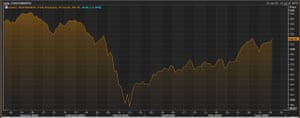
Overnight, Asia-Pacific stock markets have nudged their highest levels since early March, when the pandemic was gripping global markets. South Korea’s Kospi 200 is the best performer, jumping by 1.8%, while Australia’s S&P/ASX gained 0.2% and China’s CSI300 index picked up 0.3%.

This has pushed the MSCI index of Asia-Pacific shares outside Japan up 0.5% to its highest since pandemic lockdowns first cratered markets in early March, Reuters reports.


MSCI Asia-Pacific index

The MSCI index of Asia-Pacific stocks (ex-Japan) Photograph: Refinitiv

Jingyi Pan, market strategist at IG, says there are uncertainties of the lingering impact from the global pandemic, but….


Despite evidence of virus surges across the US, the market’s faith in reduced likelihood of the return of massive lockdowns had enabled investors to largely shrug off that concern.

Europe, though, is expected to dip around 0.6% at the open, after seven US states reported their highest coronavirus patient admissions in the pandemic so far.

Arizona, Arkansas, California, North Carolina, South Carolina, Tennessee and Texas –which also confirmed a record daily case increase on Tuesday – each admitted record numbers of infected people to hospital, the Washington Post reported.

California saw record infections, too, with more than 5,000 in a single day for the first time, as Arizona, Nevada and Missouri also reported record case increases.

Fiona Cincotta of City Index explains:


Reopening optimism is showing signs of fading with European stocks pointing to a lower open following two days of gains. The same stubborn optimism that saw Asian stocks creep up to 4-month highs overnight is not being felt here in Europe.

A quiet economic calendar will leave risk sentiment in the driving seat.

White House health adviser Dr. Anthony Fauci has also focused minds on the crisis, by warning that parts of the US are beginning to see a “disturbing surge” of Covid-19 cases.

IGSquawk
(@IGSquawk)

European Opening Calls:#FTSE 6293 -0.43%#DAX 12484 -0.32%#CAC 5005 -0.26%#AEX 572 -0.46%#MIB 19793 -0.25%#IBEX 7422 -0.23%#OMX 1677 -0.39%#STOXX 3288 -0.32%#IGOpeningCall


June 24, 2020

Shares are being supported by some better-than-expected surveys of purchasing managers released yesterday, showing that the UK’s factory sector has stabilised and France’s companies were growing again.

Hopes of another US stimulus package are also putting a floor under shares. US treasury secretary Stephen Mnuchin has suggested new legislation could be brought forward next month, telling reporters:


“We’re talking about a bunch of different ideas that we may need to do in another bill, and we want to take our time and make sure we’re thoughtful.

“So whatever we do it’ll be much more targeted, much more focused on jobs, bringing back jobs and making sure we take care of our kids.”

RANsquawk
(@RANsquawk)

– US Treasury Secretary Mnuchin said the administration is very seriously considering another stimulus bill and that the bill may pass in July


June 24, 2020

Coming up today

The International Monetary Fund will issue new economic forecasts later today, which may give an even gloomier view of the outlook than back in April.

As Bloomberg predicts:


Two months after its dire predictions of the steepest recession in almost a century, the International Monetary Fund will release new global economic forecasts this week that will probably look even worse.

Officials at the Washington-based Fund have warned that a revised outlook due on Wednesday may feature a more pessimistic view than in April. Back then, they said the “Great Lockdown” caused by the coronavirus would force a global contraction of 3% this year.

A gloomier forecast might reflect their assessment of the severity of damage caused by the widespread shutdown in activity. The U.K. economy, for example, instantly shrank by a fifth in April alone.

Bloomberg Economics
(@economics)

Two months after its dire predictions of the steepest recession in almost a century, the IMF will release new global economic forecasts today – here’s what to expect https://t.co/C4yytlVmdg pic.twitter.com/amk5c72RLP


June 24, 2020

We also get new business confidence reports from France and Germany, which may show a pick-up in morale.

The agenda

  • 7.45am BST: French business confidence for June. Expected to rise to 80 from 70.
  • 9am BST: IFO survey of German business climate for June. Expected to rise to 85 from 79.5
  • 2pm BST: IMF releases updated World Economic Outlook
  • 3.30pm BST: US weekly oil inventory statistics


Source link

#DigitalFinance – Commission holds closing pan-European conference following outreach events

0

The European Commission hosted the closing conference of the 2020 Digital Finance Outreach (DFO) event in Brussels on 23 June. This conference was the final in a series of 19 national events organized together with member states, which took place from February to June 2020. More than two thousand participants in the areas of Fintech and digital innovation in the financial sector took part. These events have provided an opportunity to gather views of key stakeholders in digital finance from across the EU. They have also helped to create awareness about the Commission’s ongoing and forthcoming work on digital finance.

An Economy that Works for People Executive Vice-President Valdis Dombrovskis said in his keynote speech: “To stay ahead of the game and compete globally, Europe must make the most of digital opportunities. Digital is the future of finance. We have been gathering many views and ideas on how we can best harness of the innovative potential of digital finance. Embracing digital finance and making it mainstream will also help to create jobs and economic growth for Europe as our countries recover from the coronavirus pandemic. At the same time, we need to continue regulating and supervising risks appropriately. Strong regulation and supervision are key to preserving trust in finance, both for traditional and for new players. ”

A full press release is available here. 

Source by [author_name]