Beachside vacations may seem like a distant memory during coronavirus lockdowns, but in Seoul’s Gangnam District, the ocean has come to the city.
A giant wave has appeared on the LED façade of the city’s SMTown COEX building, South Korea’s biggest digital billboard. The anamorphic illusion rears up before crashing into the surface of the screen, making the two-dimensional wraparound display seem more like a large tank.
Appearing for exactly one minute every hour, the simulation is so realistic it looks as if water is about to pour over the heads of people who pass through the busy commercial square.
Titled “WAVE,” the project was designed by d’strict — a firm that specializes in using immersive technology to create public art. The project took four months to execute from start to finish, including three months of digital design work to make sure it achieved the desired effect.
“We want to create overwhelming experiences,” said Jun Lee, Business Development Director at d’strict. “Waves are beautiful and dynamic in themselves but we chose them as our subject because they evoke feelings of comfort — which is much needed now.”
Social media split on whether it was relaxing or stressful. One user compared it to the inside of a washing machine while another mused that it was like a “self quarantined sea.”
The screen, measuring 80 by 20 meters (262 by 66 feet), is a popular platform for brand advertisements, K-pop videos, and more recently, digital art installations.
The creative project is the latest addition to d’strict’s portfolio, which includes commercial work and outdoor installations, for clients such as Samsung and LG.
This summer, d’strict is expected to launch an art- and technology-inspired indoor theme park on Jeju Island, featuring a holographic theater among other anamorphic spaces.
This article has been updated to reflect the inspiration behind d’strict’s upcoming venture.
Prime Minister Boris Johnson said on Wednesday (20 May) a “world-beating†programme to test and trace those suspected of having been in contact with people who have tested positive for COVID-19 would be in place by 1 June.
Britain is currently testing the app – based on Bluetooth – on the Isle of Wight off the southern coast of England where the government says more than half the residents had downloaded it.
James Brokenshire, the junior interior minister in charge of security, said there were technical issues with the app but that traditional measures would be used until it works.
“The track and trace system is going to be ready,†Brokenshire told Sky News.
“We obviously want to see that the app is put in place well and effectively, learning from the experience on the Isle of Wight and dealing with all of the feedback that we’re receiving on some of the technical issues, to ensure that the app is as strong as we can make it.â€
When asked directly if the system could work without the app, he said: “Yesâ€.
Tracking and tracing those infected is seen as crucial to preventing a deadly second wave of the outbreak – and thus getting the economy working again after the lockdown.
But Britain’s system has been dogged by criticism: opposition lawmakers said an earlier promise of a nationwide roll-out of a National Health Service (NHS)-developed smartphone app had slipped from the middle of this month.
The NHS Confederation, a group which represents the health service’s organisations, said the United Kingdom is at risk of a second jump in cases without clarity on government strategy.
“The relaxation of restrictions based on scientific advice is the right approach but it must be accompanied by an effective test, track and trace strategy which enables us to monitor local spread of the disease,†the confederation said.
“To achieve this we must have national, local and cross-agency involvement. Without this, we do face the risk of a second wave of infections.â€
When asked about a trial in Britain of anti-malarial drug hydroxychloroquine, the drug U.S. President Donald Trump says he takes, Brokenshire said that all drugs were tested carefully. When asked if he would take it, he said he felt there was no need to make such statements.
His comments come after Trump on Tuesday defended taking hydroxychloroquine to try to ward off the novel coronavirus despite medical warnings about its use.
“I’m taking hydroxychloroquine,†Trump, 73, said on 18 May. “All I can tell you is so far I seem to be OK.â€
Brokenshire also said restrictions on arrivals in Britain from overseas would be introduced early next month. He declined give any further details.
“Even something as simple as having joint cutlery on a table won’t be able to exist anymore,” she said. “A simple buffet won’t exist anymore. A communal food bowl won’t exist.”
Venues will be required to ensure patrons are seated before they are served and distanced in line with a four-square-metre requirement.
It comes one week after cafes and restaurants were allowed to reopen with 10 patrons, provided they served food. However, many venues decided against reopening because the 10-person limit was not financially viable.
Deputy Premier John Barilaro said the announcement would allow regional NSW to embrace visitors when the restrictions on travel are also lifted on June 1. “We’ve opened up the regions and now it’s our happy hour, it’s time to wine and dine,†Mr Barilaro said.
Treasurer Dominic Perrottet said the announcement meant NSW was leading the nation in terms of reopening the economy.
“There are about 280,000 people employed in this sector of the economy and allowing venues to safely cater for more customers will provide another boost to business and jobs,” he said.
He said the government’s decision to lift the limit to 50 patrons would help save thousands more jobs than if the next limit had been set at 20 patrons.
Under the restrictions, venues will not be permitted to take group bookings above 10 people.
The government agreed to take the step after negotiating with the Australian Hotels Association and ClubsNSW.
Clubs and RSLs that have multiple restaurants, cafes or bars on site will be able to seat 50 patrons at each venue.
NSW Treasurer Dominic Perrottet having a beer with the owner Justin Small at The Balmain last week. Credit:Edwina Pickles
Claude Tropea, owner of Stanley Street institution Bill & Toni’s Italian Restaurant, said the increase to a 50-patron limit would allow him to hire back four or five staff.
“It’s not just the staff. We’ve got customers showing up these days hoping to sit and we can’t accomodate them,†Mr Tropea said.
“It’s been very difficult, very stressful.â€
Hotels Association NSW chief executive John Whelan said the move was a “important and a positive step forward†for NSW pubs.
“The entire hospitality sector has been hard hit by the COVID-19 crisis with hotels shut down across NSW and 94 per cent of our workforce of 75,000 stood down or terminated,†he said.
Lisa Visentin is a state political reporter at The Sydney Morning Herald.
The mayor of a community near Dallas is under fire for writing that women shouldn’t lead the City Council’s invocation because of a Bible passage that says it’s shameful for women to speak in church.Â
“All I ask is that those leading the public prayer be young men,â€Â Wylie Mayor Eric Hogue wrote in an email to a member of the City Council who requested an invocation from members of a student group called Youth With a Mission, according to local media.Â
“I just was flabbergasted,†one of his constituents, Mary Shaddox, told KXAS-TV Fort Worth. “It’s 2020.â€Â
Hogue wrote that he takes the Bible literally and cited two biblical passages forbidding women to speak in church.Â
He noted that 1 Corinthians 14:34-35 states:
“Let your women keep silence in the churches: for it is not permitted unto them to speak; but they are commanded to be under obedience as also saith the law. And if they will learn anything, let them ask their husbands at home: for it is a shame for women to speak in the church.â€
And he said 1 Timothy 2:11-12 warns:
“Let the women learn in silence with all subjection. But I suffer not a woman to teach, nor to usurp authority over the man, but to be in silence.â€
KXAS noted that in Hogue’s 12 years as mayor, he has never selected a woman to read the invocation. However, he told the local CBS station that he hasn’t stopped women from delivering the invocation when they were selected by others.Â
“Yes, there have been multiple women that have led the prayers,†he said, adding that he has always been respectful “when a lady has showed up.â€Â
He told WFAA-TV, the Dallas ABC station, that he believes women can serve as president, CEO and school superintendent… but not preacher.Â
“If you attend Church of Christ, there will not be a female preacher. There will not be a female song leader. There will not be a female that leads the prayer,†Hogue told the WFAA, but he said there are “ladies that teach other ladies†as well as children’s classes.
Hogue is not running for reelection, but a local conservative Facebook group called Befuddled by the Clowns said the city shouldn’t wait for a new election and urged Hogue to step down.
Calling all HuffPost superfans!
Sign up for membership to become a founding member and help shape HuffPost’s next chapter
Former Vice President Joe Biden’s campaign removed the press from a fundraising call with Wall Street donors on Thursday shortly before the presumptive Democratic presidential nominee began taking questions from those on the line.
It was the first time Biden has limited media access to a virtual high-dollar fundraiser, Bloomberg News noted, and it drew criticism from reporters covering his campaign who said it went against his pledge of transparency.
“This pool report was written based just on his opening remarks because your pooler was quickly kicked off the phone call when Biden said he was ready to take questions from any of the 25 donors present, a move that goes against traditionally covering these pooled fundraisers in their entirety,†NBC’s Marianna Sotomayor, the reporter representing news organizations who covered the event, wrote. “Also, reporters heard Biden over the phone, not through Zoom as has been common practice in the virtual campaign era.â€
The event was hosted by the heads of three investment banking firms: Roger Altman of Evercore, Blair Effron of Centerview Partners and Deven Parekh of Insight Partners.
Biden’s campaign has been quite good about opening fundraisers so the public can get a sense of what he says to wealthy donors
Not tonight. @MariannaNBCNews, the pool reporter representing news organizations, was kicked off as he started taking questions from Wall Street donors pic.twitter.com/HpocNaed7u
Biden said last year that he would open all of his big-donor fundraisers to the media, and his campaign team said at the time that the move reflected a “commitment to transparency.â€
His campaign said Thursday’s fundraiser featured a “new format†when asked why reporters weren’t allowed to listen in to the question-and-answer portion, signaling Biden might limit press access in the future to court big-ticket donors. The campaign did not reply to HuffPost’s requests for a transcript of the questions or a list of those who attended the fundraiser.
“Tonight’s event was a new format as we enter a new phase of the general election campaign,†Rufus Gifford, Biden’s deputy campaign manager, said in a statement. “But we will continue to ensure press access to our virtual finance events as part of our campaign’s commitment to transparency ― one that vastly exceeds anything that Donald Trump and his campaign have offered the American people.â€
Reporters were able to listen to Biden’s opening remarks, during which he addressed what he called “anxious times†and lambasted Trump’s leadership throughout the pandemic that has infected more than 1.5 million people in the U.S.
“You know when Trump ran in 2016, he promised to stand up for the ‘forgotten man,’†Biden said. “As soon as he got elected, he sure as hell forgot them quick enough. Now we’re seeing the telltale signs of Trump-o-nomics in the way that he’s implemented this stimulus. No strings, no oversight, no [inspector general], no accountability, and is setting up what I would call a corrupt recovery.â€
Trump does not usually allow reporters to report on his own fundraisers, but many in the Democratic race had pledged to open up their own fundraisers during the 2020 election cycle.
Biden has been aggressively fundraising since Sen. Bernie Sanders (I-Vt.) ended his own Democratic presidential bid, seeking to build a war chest to counter the sizable fundraising arm wielded by Trump. The former vice president raised more than $60 million in April with the Democratic National Committee.
Calling all HuffPost superfans!
Sign up for membership to become a founding member and help shape HuffPost’s next chapter
Locusts, COVID-19 and deadly flooding pose a “triple threat” to millions of people across East Africa, with the World Bank announcing a US$500 million (A$762.3 million) program for countries affected by the historic desert locust swarms.
A new and larger generation of the voracious insects, numbering in the billions, is on the move in East Africa, where some countries haven’t seen such an outbreak in 70 years. Climate change is in part to blame.
The added threat of COVID-19 imperils a region that already was home to about 20 per cent of the world’s population of food-insecure people, including millions in South Sudan and Somalia.
Yemen in the nearby Arabian Peninsula is also threatened, and United Nations officials warn that if locusts are not brought under control there, the conflict-hit country will remain a reservoir for further infestations in the region.
Lockdowns imposed for the COVID-19 pandemic have slowed efforts to combat the locusts, especially imports of the pesticides needed for aerial spraying that is called the only effective control.
“We’re not in a plague, but if there are good rains in the summer and unsuccessful control operations, we could be in a plague by the end of this year,” Keith Cressman, senior locust forecasting officer with the United Nations Food and Agriculture Organisation, said.
He later told a UN briefing in New York that “the locust invasion is most serious now in Kenya, Somalia and Ethiopia” and is also “very serious in southern Iran and in parts of Pakistan”.
Locusts, COVID-19 and deadly flooding pose a “triple threat” to millions of people across East Africa (AP)
Starting in June, Mr Cressman said, the locusts will move “from Kenya to throughout Ethiopia as well as to Sudan, perhaps West Africa” and the swarms in southern Iran and southwestern Pakistan “will move to India and Pakistan in the border areas.”
He said the latter “could be supplemented by other swarms coming from East Africa, or coming from northern Somalia”.
He said the FAO is appealing for tens of millions of dollars of additional funds for operations in Kenya, Somalia and Ethiopia that will now be extended to Yemen, Iran, to Pakistan and if need be to West Africa.
In West Africa, he said, there’s a risk that the locusts could make their way in the coming months into the sprawling and arid Sahel region just south of the Sahara Desert, he said.
Chad, Niger and Mauritania could be affected —another burden for a region under growing threat from extremist attacks.
The FAO is preparing to increase its appeal for aid to US$310 million (A$472.6 million) as the livelihoods of millions of people across Ethiopia, Kenya and elsewhere are at stake, including farmers and herders.
Already about 400,000 hectares of land have been protected from the locusts, or enough crops to feed about five million people, said Dominique Burgeon, FAO’s director of emergencies, “but it is only one part of the equation”.
The number of locusts continues to grow despite the control efforts, and if that work is not sustained, the combined threat with COVID-19 and flooding “could have a catastrophic effect,” FAO director-general Qu Dongyu said.
The FAO in its latest assessment says the situation in parts of East Africa remains “extremely alarming” because new swarms will form from mid-June onward, coinciding with the start of the harvest season for many farmers.
The World Bank’s new US$500 million (A$762.3 million) program will benefit affected countries in Africa and the Middle East, and Uganda, Kenya, Djibouti and Ethiopia benefit from an initial disbursement of US$160 million (A$243.9 million).
Some of the money will go directly to farmers as cash payments. Plans to help Yemen and Somalia are at an “advanced stage,” the bank said.
“This food supply emergency combined with the pandemic and economic shutdown in advanced economies places some of the world’s poorest and most vulnerable people at even greater risk,” World Bank Group president David Malpass said in a statement.
The recent floods in parts of East Africa have killed nearly 300 people and displaced 500,000, slowing locust control work and increasing the risk of the virus’ spread, according to the International Federation of Red Cross and Red Crescent Societies.
“We are facing an unusually complex humanitarian situation,” Simon Missiri, the group’s Africa director, said in a statement.
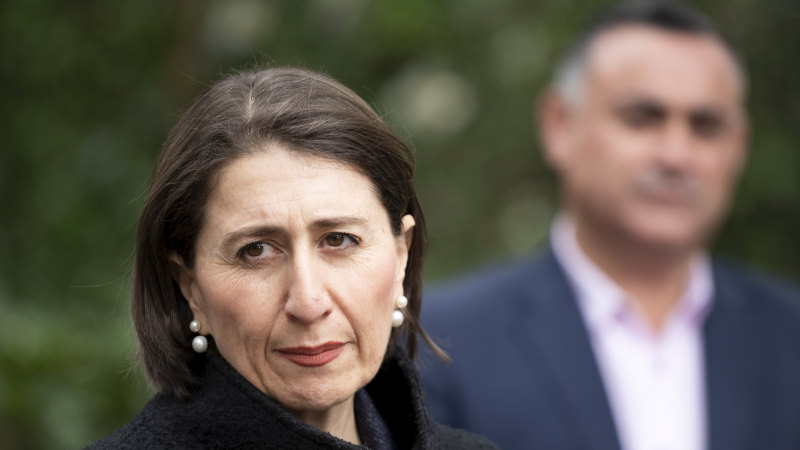
NSW will allow 50 patrons in pubs cafe and restaurants from June 1, Premier Gladys Berejiklian confirmed on Friday. Â
“This will be with very strict guidelines in place. It has to be in adherence to the four-square-metre rule,†she said.Â
“Some venues are small in space. They will only be able to have as many customers as is allowed in that space according to the four-square-metre rule.â€Â
Berejiklian said venues will only be able to take bookings of up to 10 people and every patron must be seated. Â
“You have to be seated at a table, even if it’s a pub. You have to be seated at the table, you have to be served at the table,†she added.  Â
“There is no mingling, no standing around.â€Â
Deputy premier John Barilaro said June is a time to help the hospitality industry “fill their registers.â€Â
“We’ve opened up the regions and now it’s our happy hour, time to wine and dine,†he said.Â
We want to see people visiting the regions visiting hotels, pubs, clubs, restaurants and cafes.â€
A woman died in a Sydney hospital Thursday night bringing the national death toll to 101.Â
Face-to-face teaching is set to resume around the country at the end if next week.Â
South Australia has brought forward the lifting of restrictions, with restaurants and cafes able to seat up to 20 people at a time. Â
“We are allowing those businesses that have been trading with 10 outdoors now to have 10 indoors also with alcohol. So a small step,†SA Premier Steven Marshall said.Â
“Our major step, of course, is occurring on 5 June when we will be allowing indoor dining with alcohol right across the state.â€
Charles Dunst is an associate at LSE IDEAS, the London School of Economics’ foreign policy think tank.
No matter how you look at it, China’s treatment of Australia during the coronavirus crisis is a cautionary tale.
After incompetently letting the coronavirus loose on the world, Beijing slapped tariffs on Australian barley this week in an unmistakable show of muscle after Australian Prime Minister Scott Morrison said last month that he wanted an independent inquiry into the COVID-19 outbreak.
For the Chinese Communist Party (CCP), the move is obviously intended as a warning for other leaders considering standing up to Beijing. For European countries like Germany, the Netherlands and Italy, which export billions of dollars worth of goods to China every year, it should serve as a wake-up call about what it means to be dependent on Chinese trade.
Beijing has said the tariffs are a response to what it considers “dumping†by Australian barley producers. But it comes just weeks after the Chinese ambassador to Australia threatened a Chinese boycott in response to Morrison’s comments: “Why should we drink Australian wine? Why eat Australian beef?â€
The fact that China, itself a trade surplus country, is willing to use punitive trade actions as a first-resort response should indeed alarm Beijing’s European partners.
The editor-in-chief of the state-run Global Times newspaper then described Australia as “chewing gum stuck on the sole of China’s shoes†(an attack that is particularly aggressive in Asia), adding: “sometimes you have to find a stone to rub it off.â€
When Canberra pressed forward with its calls for an inquiry, Beijing suspended imports from Australia’s top meat processing facilities and imposed the tariffs on barley — measures that could cost the country upward of $500 million annually.
European exporters dependent on China are similarly exposed to the CCP’s pressure. Given Beijing’s now-demonstrated willingness to retributively leverage trade relationships for political purposes, China’s European partners should seriously reconsider their own economic interdependence with the country and think about careful decoupling from the Asian giant’s economy.
Australia’s relationship with China soured in 2018 when the former banned the effectively Chinese state-owned company Huawei from its nascent 5G network. Despite American lobbying and cybersecurity fears, the European Union ruled out banning Huawei, leaving the decision to individual member countries.
German operators Deutsche Telekom, Vodafone and Telefonica are all Huawei clients. German Chancellor Angela Merkel favors a level playing field for all providers, although some within her party favor banning the company. But when Germany debated Huawei, China’s ambassador there threatened “consequences†if Germany excluded the telecoms giant from its market.
Germany’s hesitance to ban Huawei, likely due to fear of Chinese retribution, will surely be augmented by China’s aggressive approach to Australia. These fears are not misguided, given that Germany exports some $95 billion of goods, namely cars and vehicle parts, to China every year — and that a disturbing percentage of that could disappear at the snap of the CCP’s fingers.
Germany is not the only vulnerable European state. Italy exports around $16 billion of goods to China annually. Dutch exports to China are worth around $12 billion per year.
For these and Beijing’s other European trade partners, Chinese billions come at a moral cost: placation of the CCP, a repressive regime currently carrying out a cultural genocide of China’s Uighur Muslims.
Such placation was perhaps best evinced in late April when European Union officials bowed to CCP pressure and softened their criticism of China in a report on disinformation.
“China has continued to run a global disinformation campaign to deflect blame for the outbreak of the pandemic and improve its international image,†the initial report said. After China got wind and threatened the European Union, Brussels’ senior officials ordered revisions “to soften the language.â€
European appeasement of the CCP is no accident; it is the result of European leaders’ economic calculations. Many European governments are now in too deep and simply do not want to deal with the financial headache of falling out of Beijing’s good graces. China, in response to any perceived slight, could impose damaging tariffs on German car parts, Italian cars or Dutch malt extract.
China’s harsh treatment of Australia — at a moment when the latter faces its worst economic conditions since the Great Depression — further serves Beijing’s aims by demonstrating its global power and heightening European concerns, thus preemptively shutting many European mouths from criticizing the CCP.
Australian Prime Minister Scott Morrison antagonized Beijing | Rohan Thomson/Getty Images
The fact that China, itself a trade surplus country, is willing to use punitive trade actions as a first-resort response should indeed alarm Beijing’s European partners. It should also prompt them to prepare punitive economic policies, such as tariffs on Chinese goods that recipient states can easily find elsewhere. This could have a substantial impact, given that annual Chinese exports to Germany are worth around $110 billion, for instance.
Such a response, however, requires European leaders to wake up from their dream of liberal internationalism, recognize the reality of Chinese authoritarianism and reevaluate their countries’ relationships with a great power whose illiberal ruling regime demands complicity. Trade with China is deeply intertwined with the CCP’s construction of an illiberal Sino-centric world order. Europe can no longer pretend otherwise.
Europe’s leaders would be wise to pursue careful decoupling or at least preemptively prepare retaliatory steps — lest they find themselves coerced into the Beijing’s illiberal global order or reduced to gum on the sole of the CCP’s shoe.
Michael Bradley via Getty ImagesPrime Minister Jacinda Ardern. (Photo by Michael Bradley/Getty Images)
New Zealand is considering distributing free cash directly to individuals as a way of policy stimulus to help boost the economy reeling from a COVID-19 pandemic driven contraction, Finance Minister Grant Robertson said on Friday.
At a regular news conference Robertson was asked to share details about the government’s plans for launching ‘helicopter money’ – whether it would be the central bank printing money and distributing it or the government increasing its borrowing and then handing it out.
Robertson said the concept was being discussed but “it’s not something that has got to that level of discussion at all.â€
“I am pretty keen on making sure that fiscal policy remains the role of the government,†he added.
The idea of helicopter money, or dumping cash unexpectedly onto a struggling economy, is slowly gaining currency among economists and policymakers as the pandemic looks to inflict the worst blow to global growth since the Great Depression in the 1930s.
None of the wealthy countries have embarked on it, though, citing risks such as central bank independence and the risk of flaring long-term inflation.
In a helicopter money drop, a central bank would directly increase the money supply and, via the government, distribute the new cash to the population with the aim of boosting demand and inflation.
The extra cash will be a boon for New Zealand’s export-reliant economy which is expected to contract a massive 21.8% in the current quarter due to the shock from the outbreak and tough measures to contain it.
In a bid to cushion the blow, the Reserve Bank of New Zealand (RBNZ) has slashed its official cash rate to a record low 0.25% and doubled its bond buying programme last week to NZ$60 billion and flagged a potential shift to negative interest rates.
The government is also splashing out cash, having appeared to contained the coronavirus after one of the strictest lockdowns that lasted more than a month.
Â
(Reporting by Swati Pandey; Editing by Kim Coghill)
Anosmia is the medical name for a sudden loss of smell | Image via iStock
Declassified
Smell can play an important role in politics.
Welcome to Declassified, a weekly column looking at the lighter side of politics.
(Important note: I’m not a doctor but I have set my Zoom background to ‘operating theater’)
Somebody notify Ed Sheeran fans! Having no sense of taste has been added to the U.K.’s coronavirus symptoms list. The move came weeks after experts first raised concerns that many cases were being missed because a lack of taste wasn’t part of the British government’s definition of what patients may experience when suffering with COVID-19.
Now, anyone suffering a sudden loss of taste should self-isolate for seven days to reduce the risk of spreading the infection, according to England’s deputy chief medical officer, Jonathan Van-Tam. The same applies to anyone experiencing a sudden loss of smell or, to use its medical name, anosmia (and I always thought Anosmia was one of Jacob Rees-Mogg’s children). Mind you, not being able to smell could come in handy, as the U.K. is considering testing sewage for the presence of the coronavirus as part of its national epidemic-monitoring program.
Of course smell can play an important part in politics. According to a study published in the American Journal of Political Science, people are more attracted to those who share their political views. The researchers found that greater “disgust sensitivity … predicts more conservative positions, particularly around issues involving morality and sexual reproduction.”
Researchers at Magna Graecia University of Catanzaro, Italy, also found a link between a person’s sensitivity to certain smells and them being sympathetic to right-wing views.
So if you want to avoid rabid right-wingers, make sure you have a piece of blue cheese in your pocket at all times.
And of course, with crushing inevitability, you can buy a Donald Trump fragrance, which is presumably 90 percent hydroxychloroquine and, in the words of one Amazon reviewer, “kind of smells like urine.”
CAPTION COMPETITION
“Hand it over, little girl or I’ll close down your school!”
Thanks for all the entries. Here’s the best from our post bag (there’s no prize except for the gift of laughter, which I think we can all agree is far more valuable than cash or booze).
“Is a game of limbo out of the question?” by Aleksandra Chadaj
We use cookies on our website to give you the most relevant experience by remembering your preferences and repeat visits. By clicking “Accept”, you consent to the use of ALL the cookies.
This website uses cookies to improve your experience while you navigate through the website. Out of these, the cookies that are categorized as necessary are stored on your browser as they are essential for the working of basic functionalities of the website. We also use third-party cookies that help us analyze and understand how you use this website. These cookies will be stored in your browser only with your consent. You also have the option to opt-out of these cookies. But opting out of some of these cookies may affect your browsing experience.
Necessary cookies are absolutely essential for the website to function properly. These cookies ensure basic functionalities and security features of the website, anonymously.
Cookie
Duration
Description
cookielawinfo-checbox-analytics
11 months
This cookie is set by GDPR Cookie Consent plugin. The cookie is used to store the user consent for the cookies in the category "Analytics".
cookielawinfo-checbox-functional
11 months
The cookie is set by GDPR cookie consent to record the user consent for the cookies in the category "Functional".
cookielawinfo-checbox-others
11 months
This cookie is set by GDPR Cookie Consent plugin. The cookie is used to store the user consent for the cookies in the category "Other.
cookielawinfo-checkbox-necessary
11 months
This cookie is set by GDPR Cookie Consent plugin. The cookies is used to store the user consent for the cookies in the category "Necessary".
cookielawinfo-checkbox-performance
11 months
This cookie is set by GDPR Cookie Consent plugin. The cookie is used to store the user consent for the cookies in the category "Performance".
viewed_cookie_policy
11 months
The cookie is set by the GDPR Cookie Consent plugin and is used to store whether or not user has consented to the use of cookies. It does not store any personal data.
Functional cookies help to perform certain functionalities like sharing the content of the website on social media platforms, collect feedbacks, and other third-party features.
Performance cookies are used to understand and analyze the key performance indexes of the website which helps in delivering a better user experience for the visitors.
Analytical cookies are used to understand how visitors interact with the website. These cookies help provide information on metrics the number of visitors, bounce rate, traffic source, etc.
Advertisement cookies are used to provide visitors with relevant ads and marketing campaigns. These cookies track visitors across websites and collect information to provide customized ads.